
加载中...
共找到 25,643 条相关资讯

Matthew Diczok, head of fixed income strategy, Merrill and Bank of America Private Bank said the market doesn't expect their to be a sustained increase in energy. he world's bond markets were whipsawed by unusual volatility as investors rushed to bet on higher interest rates after key central banks signaled fresh concern the surge in oil prices will deliver an inflation shock.


Schwab Asset Management CEO and CIO Omar Aguilar talks about how clients are positioning themselves as war risks linger. He says risk aversion has been "increasing dramatically" for the last few weeks. He speaks on "Bloomberg Surveillance."
Federal Reserve Vice Chair for Supervision Michelle Bowman joins ‘Mornings with Maria' to discuss easing bank capital rules, the Fed's outlook on economic growth, and rising risks from private credit, AI investment and global tensions.
Seaport Chief Equity Strategist Jonathan Golub says global markets are taking volatility in stride. He says if markets were panicking, stocks would be lower.

Only six market corrections have turned into bear markets—or periods when the market is down by 20% or more—since 1974, according to Charles Schwab. There have been 27 market corrections since November 1974, and the latest to become a bear market came during the pandemic in 2020 and during the global financial crisis in 2007.
Previously an advocate for rate cuts, Federal Reserve Governor Christopher Waller said in a CNBC interview that recent developments in the labor market as well as the uncertainty of the war with Iran require a more conservative approach. "It doesn't mean that I'm going to stay put for the rest of the year," Waller said on "Squawk Box.

Christopher J. Waller, a Federal Reserve governor, said he would support rate cuts later this year if the labor market continued to weaken.

Geopolitical tensions are easing as the U.S. and Israel signal de-escalation, reducing oil price pressures. The Fed's proposal to lower bank capital requirements aims to boost lending, especially for smaller banks and the housing market.

As the hedge fund industry hovers near an all-time high of roughly $5 trillion in assets, up from about $600 billion at the turn of the century, it has recently experienced a moderate drawdown across most strategies in the first half of March 2026. If this is not a short-lived disruption, and losses deepen into sustained double-digit declines, will the implications for the industry resemble those experienced during the 2008 financial crisis?
Wall Street opened lower on Friday as the escalating conflict involving Iran approached its fourth week, unsettling energy markets and forcing investors to reassess expectations for interest-rate cuts by the Federal Reserve. Dow Jones Industrial Average, S&P 500, and Nasdaq 100 all opened lower.
The pressure on Trump to deescalate in the Middle East is building. Markets need to be convinced oil is back below $100 forgood before they can rally concertedly.
Federal Reserve Governor Christopher Waller on Friday expressed caution about current conditions but still sees the opportunity for interest rate cuts as the year goes on. In a CNBC interview, the policymaker said "if things go reasonably well and the labor market continues to be weak, I would start advocating again for cutting the policy rate later this year.
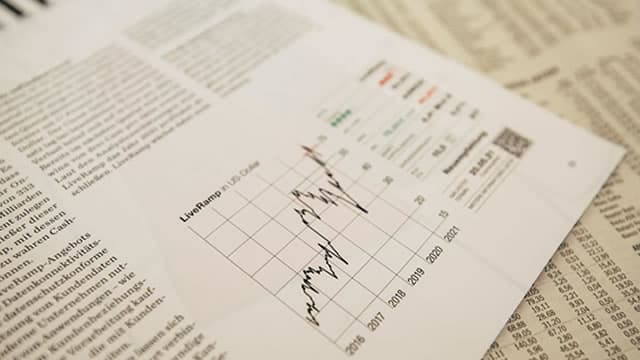
Bond markets across the globe are under pressure, but the U.K. government bond market is under attack like no other.
These are the three key "red lines" that must be defended to keep the financial markets stable: WTI below $100, 10Y yield below 4.30%, and S&P 500 above 200dma. Over the near term, these three red lines can be defended, as a matter of national security, amid the war with Iran.
Amanda Bankel's doctoral thesis explores why low-carbon technologies like solar panels do not spread as quickly as expected, even when they are affordable and technologically mature. The study shows that the problem is often not the technology itself, but rather how markets develop in practice.
The Federal Reserve doesn't need to raise interest rates because inflation is likely to cool in the second half of the year, said Federal Reserve governor Christopher Waller.
As of March 20, 2026, three stocks in the information technology sector could be flashing a real warning to investors who value momentum as a key criteria in their trading decisions.
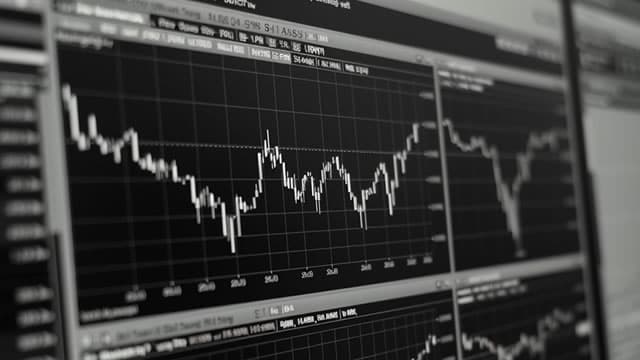
The risk of persistent inflation arising from the escalating war with Iran was strong enough to convince an influential Federal Reserve policymaker to switch his support to keeping interest rates on hold from cutting them this week, he said on Friday, as market expectations for the U.S. central bank's next move shifted rapidly toward a hike in borrowing costs.
Wall Street fears higher prices and slower growth will sink all stocks — but small-caps and housing hold their own.

Here's a conundrum for investors: How can the energy sector gain a whopping 33% this year — but the S&P 500 is down 3%?