
加载中...
共找到 25,649 条相关资讯

Wall Street closed lower on Thursday as rising oil prices and escalating geopolitical tensions in the Middle East dampened investor sentiment and clouded the outlook for interest rate cuts. The S&P 500 fell 0.27% to 6,606.49, while the Nasdaq Composite slipped 0.28% to 22,090.69.


Dow industrials fall more than 200 points, now standing 8% off their record high.
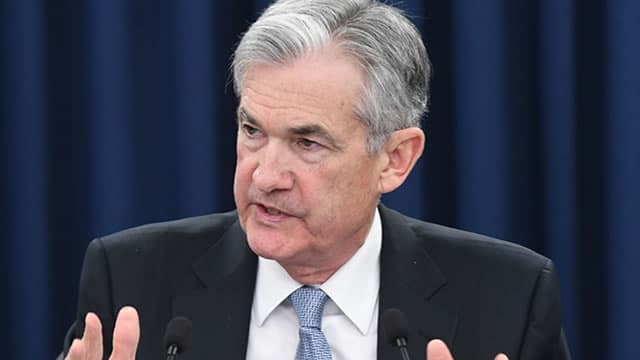
#FedMeeting #InterestRates #Inflation With an oil shock hitting, the Fed is navigating the tricky combination of slowing growth and rising inflation. As Fed Holds Steady, Oil Spike Has 2026 Rate Cut Expectations Shrinking Fast.

The market is mostly analyzing two stories in isolation. One is the AI infrastructure boom, and the other is the quiet stress beginning to show up in private credit.

Paul Gruenwald from S&P Global Ratings says an energy supply shock is forcing central banks into a cautious stance as inflation pressures build.

Even savvy institutional investors are wary of “buying the dip.”

Barry Knapp believes the recent market pullback is just a part of the full plunge. He explains how investors are mispricing a "Trump put" and doesn't think the Fed is offering enough of a "cushion" to soften a blow to its dual mandate.
Operator: Greetings, and welcome to the Titan Machinery Inc. fourth quarter fiscal 2026 earnings call. At this time, all participants are in a listen-only mode. A question-and-answer session will follow the formal presentation. It is now my pleasure to introduce your host, Jeff Sonnek of ICR. Thank you. You may begin. Jeff Sonnek: Thank you. Welcome to the Titan Machinery Inc. fourth quarter fiscal 2026 earnings conference call. On the call today from the company are Bryan J. Knutson, President and Chief Executive Officer, and Bo Larsen, Chief Financial Officer. By now, everyone should have access to the earnings release for the fiscal fourth quarter and full year ended 01/31/2026. If you have not received the release, it is available on the investor relations tab of Titan Machinery Inc.’s website at ir.titanmachinery.com. This call is being webcast, and a replay will be available on the company’s website as well. In addition, we are providing a presentation to accompany today’s prepared remarks, which can be found on Titan Machinery Inc.’s website at ir.titanmachinery.com. The presentation is directly below the webcast information in the middle of the page. We would like to remind everyone that the prepared remarks contain forward-looking statements and management may make additional forward-looking statements in response to your questions. These statements do not guarantee future performance and therefore undue reliance should not be placed upon them. These forward-looking statements are based on current expectations of management and involve inherent risks and uncertainties, including those identified in today’s earnings release and presentation, and in the Risk Factors section and other of Titan Machinery Inc.’s reports filed with the SEC. These risk factors contain a more detailed discussion of the factors that could cause actual results to differ materially from those projected in any forward-looking statements. Except as may be required by applicable law, Titan Machinery Inc. assumes no obligation to update any forward-looking statements that may be made in today’s release or call. Please note that during today’s call, we may discuss non-GAAP financial measures including results on an adjusted basis. We believe these adjusted financial measures can facilitate a more complete analysis and greater insight into Titan Machinery Inc.’s ongoing financial performance, particularly when comparing underlying results from period to period. We have included reconciliations of these non-GAAP financial measures to their most directly comparable GAAP financial measures in today’s release. At the conclusion of our prepared remarks, we will open the call to take your questions. I will now turn the call over to the company’s President and CEO, Bryan J. Knutson. Please go ahead, Bryan. Bryan J. Knutson: Thank you, Jeff, and good morning to everyone on the call. I will start today with an update on our inventory optimization progress and operational focus areas, and then discuss the current environment across our segments before turning the call over to Bo for his financial review and comments on our fiscal 2027 modeling assumptions. Fiscal 2026 was a year where our team executed at a high level in a difficult environment. For the full fiscal year, we reduced total inventory more than $200 million, surpassing our $100 million target that we announced at the beginning of our fiscal year and our updated $150 million target we revised last quarter. Our inventory peaked in 2025 due to the heavy influx of equipment shipments as some supply chains normalized post-pandemic, and since that time, we have reduced total inventory by $625 million over this eighteen-month period. I am extremely proud of the disciplined work our team has done across all of our locations to make that happen in what continues to be a very challenging demand environment. This progress illustrates our intense focus on creating a more resilient enterprise and positions us well for strong results when market conditions improve. Importantly, the quality of our inventory has improved meaningfully. It is leaner, it is fresher, and it has a better mix of in-demand categories. But we are not done. We still have work to do across certain used equipment categories and some of our slower-moving seasonal new equipment categories. As we head into fiscal 2027, our focus shifts from inventory reduction toward product mix optimization as we look to continue to improve inventory turns through minimizing aged inventory and thus decreasing interest expense. Our customer care initiative remains central to our operating strategy and continues to demonstrate its value while at the bottom of the equipment cycle. Our parts and service businesses are currently generating over half of our gross profit dollars, providing critical stability in these tough times our industry is currently facing. Our customer care initiative keeps us closely engaged with our customers, allowing us to add value to their operations and positioning us well for when equipment demand eventually recovers. With our hard work and dedication to superior customer service, we expect stability in our parts and service business in fiscal 2027 despite another expected decline in equipment industry volume in North America. With that, I will turn to our segments. In domestic ag, the environment continues to be very challenging for our grower customers ahead of the upcoming planting season. Our OEM partners are calling this year the trough of the cycle, and the guidance we are providing today reflects that. Commodity prices remain well below breakeven for most growers, which continues to be the fundamental issue facing the industry. When you add in persistently high interest expense, increased input costs, and limited government support, we expect many growers to remain conservative in 2027 in terms of their equipment purchasing decisions. With respect to potential government support, seeing E15 passed into law is currently our customers’ biggest priority, followed by further adoption of biodiesel and sustainable aviation fuel, or SAF. Allowing E15 usage year-round would help alleviate the ongoing oversupply of corn and assist with energy independence. Furthermore, recent spikes in diesel prices highlight the need for increased production of domestic biodiesel. In construction, infrastructure and data center work continues to provide a solid baseline of activity, but residential demand remains softer. Many of our customers are cautiously optimistic as they look at their schedules for the year ahead. Despite the mixed outlook in the end markets we serve, we remain optimistic about the long-term fundamentals of this business, which is underpinned by ongoing housing shortages, infrastructure spending, and continued data center construction. In Australia, the market conditions have been similar to what we are seeing domestically but exacerbated by elevated input costs for diesel fuel and urea. However, after two years of historically low industry volumes, we are starting to see some more encouraging signs, and recent rainfall has helped improve soil conditions and farmer sentiment after an extended period of dry weather. Overall, our expectations are for modest industry volume growth in fiscal 2027. We continue to like our position in Australia. It is a major agricultural export market with strong fundamentals, and our dual brand strategy with Case IH and New Holland, which is now available in six of our fifteen rooftops, gives us more reach and more ways to serve our customers across our footprint. In Europe, we are pleased to have the majority of our German divestiture behind us, with some remaining wind-down activities carrying into the first quarter. As we head into the spring planting season in our Eastern European markets, we are cautiously optimistic that we will see modest improvement in industry volumes coming off of trough levels but expect them to remain well below historical averages in Romania and Bulgaria. The modest overall industry volume growth should partially offset an expected year-over-year decline given the normalization of our Romanian business, which had an exceptionally strong prior year driven by the EU subvention programs. In closing, I want to express my sincere appreciation to our entire team. We dramatically surpassed our inventory reduction goals and made meaningful improvements to our operations, and we did it while maintaining the exceptional customer service that differentiates us in the market. Our team’s focus and dedication throughout this year is what made our successes possible. We are executing on our initiatives, managing what we can control, and positioning the business to perform well as market conditions improve. With the actions we have taken thus far, we will emerge from this period a stronger company. I will now turn the call over to Bo for his financial review. Bo Larsen: Thanks, Bryan, and good morning, everyone. Starting with our consolidated results for the fiscal 2026 fourth quarter, total revenue was $641,800,000 compared to $759,900,000 in the prior-year period, reflecting a 14.6% decrease in same-store sales driven by weaker demand in our domestic ag, construction, and Europe segments, partially offset by growth in our Australia segment. Gross profit for the fourth quarter was $87,000,000 compared to $51,000,000 in the prior-year period, and gross profit margin was 13.5%, approximately double last year’s rate. The year-over-year improvement primarily reflects the lapsing of inventory impairments and other inventory reduction efforts in the fourth quarter of the prior year that significantly compressed equipment margins. Equipment margins in the fiscal 2026 fourth quarter continued to face pressure from softer retail demand and remaining aged inventory; however, margins have improved as inventory has returned toward healthier levels. This equipment margin improvement is expected to continue in fiscal 2027. Operating expenses were $95,700,000 for the fourth quarter of 2026, down slightly from the prior-year period. Our headcount and discretionary spending continue to be down year over year as a result of disciplined expense management. Floorplan and other interest expense was $9,600,000, representing a decrease of approximately 27% on a year-over-year basis and a decrease of 13% on a sequential basis. This progress reflects the significant reduction in interest-bearing inventory levels over the past year. In the fourth quarter, net loss was $36,200,000 with loss per diluted share of $1.59, which includes the recognition of a $0.78 non-cash valuation allowance that resulted in an increase in income tax expense. Importantly, I would note that this allowance was greater than our initial expectation, which called for a $0.35 to $0.45 headwind that was built into our adjusted EPS guidance on the third quarter call. Big picture, it is non-cash and does not impact our operating performance or our cash flows. However, it is an important variable influencing our reported results versus the expectations we set; hence, my emphasis to ensure the linkage is clear. Adjusted net loss, which excludes charges related to our German divestiture and related wind-down activities but includes recognition of the $17,800,000 non-cash valuation allowance I just mentioned, was $32,500,000, or a loss of $1.43 per diluted share. This compares to last year’s fourth quarter adjusted net loss of $44,900,000, or $1.98 per diluted share. To summarize, our underlying revenue and profitability was in line with what we had expected, as evidenced by looking at our pretax loss, which, in addition to being consistent with our expectations, has improved significantly versus the prior-year period. Now turning to a brief overview of our segment results for the fourth quarter. Our Domestic Agriculture segment realized sales of $406,700,000, reflecting a same-store sales decline of 22.8%, driven by continued softening in equipment demand as a result of weak grower profitability. Segment pretax loss improved to $9,900,000 compared to adjusted pretax loss of $56,300,000 in the fourth quarter of the prior year, reflecting the actions we have taken to accelerate inventory reductions and the resulting improvement that we have achieved over the past twelve months. In our Construction segment, same-store sales decreased 4.6% to $90,200,000, driven by lower equipment sales. Our inventory reduction initiatives have weighed on equipment margins in this segment as well. Adjusted pretax loss was $1,000,000 compared to a $1,100,000 loss in the fourth quarter of the prior year. In our Europe segment, sales increased 5.2% to $68,800,000, which included a $4,300,000 net benefit related to foreign currency fluctuations. On a constant currency basis, revenue was more or less flat year over year, reflecting the normalization of demand following the EU Subvention Fund-driven strength, which ended in the third quarter of this year. Pretax income for the segment was $1,800,000 compared to a pretax loss of $1,800,000 in the fourth quarter of the prior year. Excluding restructuring and impairment charges associated with the Germany divestiture, adjusted pretax income was $5,400,000 in this year’s fourth quarter. In our Australia segment, sales increased 16.7% to $76,100,000 compared to $65,300,000 in the fourth quarter last year, including a negligible foreign currency impact. Pretax income for the fourth quarter of 2026 was $2,500,000 compared to $2,300,000 last year. Now briefly summarizing our full-year fiscal 2026 results, total revenue was $2,400,000,000 for fiscal 2026 compared to $2,700,000,000 for fiscal 2025. Adjusted net loss for fiscal 2026 was $50,600,000, or a $2.22 loss per diluted share, which includes the non-cash valuation allowance but excludes the charges related to the Germany divestiture I discussed earlier. This compares to an adjusted prior-year net loss of $29,700,000, or a $1.31 loss per diluted share. Now on to our balance sheet and inventory position. We had cash of $28,000,000 and an adjusted debt to tangible net worth ratio of 1.7 times as of 01/31/2026, which remains well below our bank covenant of 3.5 times. For the full fiscal year, total equipment inventory decreased by $201,000,000 to $725,000,000. As Bryan described, this more than doubled our $100,000,000 target for the year. It is a meaningful accomplishment in this environment, and it positions us well heading into fiscal 2027. Importantly, as part of that inventory reduction, we saw significant improvement in the amount of aged equipment we have on our lots. Aged equipment, which we consider to be equipment that we have had longer than twelve months, peaked in fiscal 2026 and declined by approximately 45% to $174,000,000 in the second half of this fiscal year. This improvement in the health of our inventories has started to show up in higher equipment margins in the back half of the fiscal year, but we still have work to do on reducing the amount of aged equipment we have, and we are confident we will continue to make progress on that in fiscal 2027. With that, I will finish by sharing our initial outlook for fiscal 2027. Starting with our top-line modeling assumptions across our segments, for the Domestic Agriculture segment, we expect revenue to be down in the range of 15% to 20%, which is consistent with the depressed cash crop industry outlook we have discussed today. Looking ahead, we believe we are back in sync with broader industry dynamics following our aggressive inventory reduction activity over the last year and a half. Our Construction segment is expected to be in the range of flat to up 5%, which aligns to the more favorable industry fundamentals that are benefiting from infrastructure and other sector-specific tailwinds. Our Europe segment is expected to be down in the range of 20% to 25%. This decline reflects our exit from Germany, which contributed approximately $50,000,000 of revenue this past year, and reflects the normalization of sales in Romania following the strong performance of fiscal 2025. As a reminder, this segment grew 45% in fiscal 2026. Excluding this difficult comparison, we expect modest improvements in industry volumes off cyclical lows, but the Eastern European market remains challenged by the same broader ag cycle dynamics as our Domestic Agriculture business. For our Australia segment, we expect revenue to be up in the range of 10% to 15%. This growth includes activity from the acquisition we completed last fall and the modest improvement in industry volumes that Bryan previously mentioned. From a margin perspective, our fiscal 2027 assumptions consider consolidated full-year equipment margin to be approximately 8.4%, which compares to fiscal 2026’s full-year consolidated equipment margin of 7.3%. This margin assumption reflects improved inventory health but still factors in the need to finish driving down aged inventory, and it also reflects broader industry expectations that North America industry volumes will be down 15% to 20%, which implies the lowest level since the 1970s. Given that context, we are happy with how well we are positioned to manage through the trough and confident we will return to normalized equipment margin levels as industry conditions improve. Operating expense dollars are expected to decrease year over year, although we will continue to invest in our customer care strategy, which is supporting stability in our parts and service businesses, and overall operating expenses are expected to be approximately 17% of sales. Floorplan interest expense is expected to decline by approximately 25% following the significant inventory reduction that we achieved last year. In absolute terms, interest expense will continue to decline as we further reduce aged inventory throughout the year. Bringing it all together, we are introducing a fiscal 2027 modeling assumption range of an adjusted loss of $1.25 to $1.75, which compares to the $2.22 adjusted loss we realized in fiscal 2026. It is worth noting that given the U.S. tax valuation allowance that was booked this quarter, we will have a very low tax rate for fiscal 2027, with most of the tax expense and/or benefit being recognized in our international segments. We also thought it would be helpful to provide some specific below-the-line expectations in our press release to help bridge to our adjusted EPS outlook. Further, we have also added adjusted EBITDA to our outlook to help provide a clear view of the operating performance we are achieving today and as we look into the future as the cycle unfolds. So, we are also guiding to adjusted EBITDA in the range of $17,000,000 to $29,000,000, which compares to the $13,900,000 we generated in fiscal 2026. In summary, despite the expectation for historically low industry volumes for our Domestic Agriculture segment, we are positioned to benefit from the aggressive inventory reduction we have taken over the last couple of years. Thematically, this positions us to improve margins this fiscal year and begin building back our earnings power at an accelerated pace as the cycle eventually turns back in our favor. For the time being, we continue to set prudent expectations and look forward to demonstrating our execution in the quarters ahead. This concludes our prepared comments. Operator, we are now ready for the question-and-answer session of our call. Thank you. Operator: We will now be conducting a question-and-answer session. If you would like to ask a question, please press 1 on your telephone keypad. A confirmation tone will indicate your line is in the question queue. You may press 2 to remove yourself from the queue. For participants using speaker equipment, it may be necessary to pick up the handset before pressing the star key. One moment please while we poll for questions. Our first question comes from the line of Liam Burke with B. Riley Securities. Please proceed with your question. Liam Burke: Thank you. Good morning, Bryan. Good morning, Bo. Bryan J. Knutson: Morning. Liam Burke: We are looking—I mean, we were looking at a best case in the corn pricing of about $5. It is inching up there. It is improving directionally. Not at $5 yet, obviously. But is there any movement by the farmer community to start getting interested in loosening the purse strings? Or does it have to be at $5 and above where everybody gets comfortable on the equipment purchase? Bryan J. Knutson: Yes. There has definitely been some upside here in the last week or two in the market, so that has been positive to see. Like you said, for a lot of growers, we are still below breakeven at these levels. And then you just take some of the uncertainty as well. So, you know, possibly somewhere between another $0.50 and a buck on corn here, which, with certain fundamentals coming together, looks like there is a possibility for at this point. So that too looks more optimistic than even a month ago, so we will see where that tracks. And then just consistency as well, just at this point with the long-term fundamentals that are in place, the current supply and demand, and the oversupply we have of corn and soybeans, directionally they are looking at, you know, just a short-term spike does not give them a lot of confidence. But as things progress here, if the conflict continues on and we see increased stability there and, again, prices uptick further, that definitely will help confidence, and that is something that we are monitoring closely. You know, we have also been to D.C. quite a bit in the last year lobbying for our farmers and trying to do what we can for commodity prices. We will be there again next week. Friday, March 27 next week, there is a Celebration of Agriculture Day at the White House that we are looking forward to. And as we get near the end of the month here, there should be some stuff coming out with the RVOs, and we have been really pushing for E15, passing that into law and greater adoption, and all the benefits that could come with that for reducing prices at the pump as well as energy independence, and, again, helping alleviate some of the ongoing oversupply of corn. Liam Burke: Great. Thank you. And understanding that the timing of an upcycle is difficult to predict, but you are comfortable in some future upcycle that you are sized right to maximize the leverage in how the business is run? Obviously, you have been managing for the down cycle, but you are in a position to maximize the upside leverage? Bo Larsen: Yes, absolutely. I mean, as we stand here today, we are excited as we look forward. Just for a little bit of context in terms of the guidance for this year, North America industry volume down 15% to 20%—what does that really mean? Well, calendar year 2025, the year that just ended, industry volume on the major categories that help drive our business was already 10% lower than the trough in calendar years 2015–2016, and so this year, if you assume that down 15% to 20%, you are talking about industry volume 25% lower than the prior trough. So as we stand here as well positioned as we are, obviously, we want the P&L to reflect more, but we are extremely confident in terms of how quick that can turn around and really flexing our muscle on the upside as things improve even modestly in the right direction. So, sure, everything we have been working towards the last two years is not just about managing the downside, but it is about making sure that we are running things ready for when things do turn around. All of our efforts on customer care strategy, driving the parts and service business—how do we support customers well, how do we gain maximum share of wallet by delivering what they need—all of that stuff is coming along, and I can appreciate that it is not necessarily something that you or investors get to see every day. But we just get more and more confidence and more excitement about the team we have, the playbook that we have been executing, and how well positioned we are to really show our strength as ultimately, you know, growers get support in the right direction and they see improved profitability. Liam Burke: Great. Thank you. Operator: Thank you. Our next question comes from the line of Ted Jackson with Northland Securities. Please proceed with your question. Ted Jackson: Thanks very much. I have got a few. I am going to start with the bigger one, then some that are just more around the model. On the larger, you know, in terms of the guidance that you have set, I am curious with regards to what is baked into it rather than just the OEM guides itself. I mean, are you assuming that China comes in and honors its commitments to buy more beans as we roll through 2027? And is there anything baked into it with regards to E15 or the aviation fuel? That is my first question. Bryan J. Knutson: Yes. Thanks, Ted. Yes, so generally speaking, what we do have baked in is that China essentially honors the commitments that have been put out there, not materially any more or less than that. Certainly, if they did come to the table with more, that would help. And then nothing on E15, so certainly that would be a shot in the arm and upside to what we have guided. Ted Jackson: And then just another one kind of at a macro level. With the war we have with Iran, which is, you know, now we are in the several weeks of it, have you noticed any perceived shift in terms of sentiment within your territories with regards to that? I mean, you know, all I get is stuff out of the paper, and I live in a pretty left-leaning local paper environment, so most of what I get is pretty negative with regards to the farmer, but is the farmer feeling anything in terms of impact at this point with regards to higher fertilizer prices, diesel prices? I mean, we are not even in the planting season. I mean, has there been some kind of shift, some kind of additional concern? Just a little color there. Bryan J. Knutson: Yes, certainly a few moving pieces there, and even differences from our U.S. farmers to our Australian farmers. So just looking at some of the routes through the Strait of Hormuz there, and you look at that impacting fertilizer and fuel prices even more for our Australian customers, still able to get it, but certainly a delayed and elevated pricing. And then with similar impacts to Europe and then the U.S. there. So those are some additional increases to input costs that are already high. You look at over the years here, fertilizer has been the input that has generally gone up the most and has the most impact on their P&L. And so with that becoming harder to get here and fertilizer further is also a negative. But overall, actually, as the corn market and other commodities tick up here and kind of follow along with the price of crude, that has an opportunity to be a positive as that expands and maybe potentially here outpaces the increase in inputs, which is certainly a likely scenario. So there is definitely a number of things in play there, Ted, but a scenario where it actually is likely potentially more positive for our growers. Ted Jackson: Would you think it would be neutral and it may be more positive? But it sounds like it seems like in your view at worst, it is a net— Bryan J. Knutson: Yes. I think it depends how long it lingers on and what happens with the commodity markets there. It does start to spread a bit. So as corn goes to—if corn were to go to six, and then it lingered on further and potentially to seven, as an example, it starts to pull away from what the increase in fertilizer prices has been, especially for a lot of our growers here in the U.S. and the Midwest. They prebuy a good chunk of their fertilizer, so it could end up being more of a 2027 calendar impact for them on that. So, again, as weird as it sounds, there is some upside potential there depending on how this plays out for our growers. Ted Jackson: Okay. And then just a couple of model questions, and I will let other people take over. Bo, I was curious what the view was for CapEx for 2027 and then maybe a discussion about tax rate given all the kind of moving parts in there either at a percentage rate or something around a dollar. Bo Larsen: Yes. So first for CapEx, I mean, in this environment, as you would imagine, being prudent and pulling back. So excluding any investment in rental fleet, which kind of comes in and out, we are guiding to about $15,000,000 of CapEx, really just pulling back to prudent levels there a little bit on facility and some vehicles, for example, but smaller than I would say would be typical. From a tax rate perspective, there can certainly— I mean, as a general statement, the tax rate in the U.S. is expected to be near zero. There will be a little bit of noise there with some deferred, but essentially, the valuation allowance is largely wiping that out. And given the significance of the U.S. to the rest of it, it really drags the whole thing down near zero. So in the release, we have guided to a range of $0 to $1,000,000 of total tax expense. From an Australia perspective, no real noise there; you can think about their rate in that 30% range. And then from a Europe perspective, again, their blended rate in the high teens is what I would expect. Balancing all out, a lot of this stuff is netting down close to zero would be our expectation for the year. One more thing on that too, I guess, just to make it clear: the need for a valuation allowance is kind of an established standard that has been out there in terms of a three-year rolling loss. We went through the same thing in the last downturn, put on a valuation allowance, and a couple years later took it off. You know, the cyclicality of our business and especially from a dealer P&L perspective, some could certainly argue that this three-year rule is not necessarily accomplishing what it is trying to. And long story short, all I am trying to say is high degree of confidence that a couple years later, we are going to take that back off, and you are going to see a big positive, which, of course, we will call out as releasing the valuation allowance. Ted Jackson: Okay. Thanks for the answers. I will get out of line. Thank you. Operator: As a reminder, if anyone has any questions, you may press 1 on your telephone keypad to join the queue. Our next question comes from the line of Ted Jackson with Northland Securities. Please proceed with your question. Ted Jackson: Dang. I own you guys. Well, let us talk about some sports stuff. Now other questions for you, Bo, to turn the model. So again, depreciation and amortization, and then the impairment charges. Can you give some kind of color on what you see there rolling through in 2027? And then over on OpEx, when I think about OpEx, you are going to have OpEx down. You are going to have investments, though, and some other things. So I assume the down is on sales commissions given the volumes, but maybe talk a little bit about how, as you think about sales—typically, you kind of thought about your sales portion of your OpEx or your selling commission being about 25% of equipment gross margin, but does that kind of assumption still hold as we think about 2026? Or given the weak volumes, are you going to have to kind of make up a little bit to make sure those guys get a living? Those are my next two questions. Bo Larsen: Yes. So I will break those into pieces. You will have to remind me if I forget one. I will start on the commission side of things. Recently, our commission has been north of that 25% mark. In a healthy environment with normal margins, it is in that 25%. So I would say we are coming down closer to the 25%. We have been elevated above that but kind of normalizing here as our margins are coming up. So that is how I would think about that from a commission perspective. You know, just broadly on OpEx—and, again, this is not just something that changes in a month. We have been at this now over the last couple years as we have looked at where the industry has been going and what we have needed to do. Largely speaking, the rest of our OpEx is people, and it is our people that are helping support our customers. So we have managed headcount down prudently. But back to the question that kind of started all of this—are you guys positioned for when things turn around—and that is the balance that you have to strike. We have got a great team that supports our customers well across our entire footprint and all of our geographies, and just managing prudently down as much as we can but without overdoing it, that is kind of the balance we have struck. So that drives a lot of the decline in OpEx there. So from a 17% perspective, in absolute dollar terms, I feel good about the work we have done. The 17% is more reflective of the pullback we are expecting here in North America ag. Remind me where we started here—you had two others. Ted Jackson: Yes. I asked just about, kind of just picking in 2027, how to think about depreciation and amortization as we are driving through towards our EBITDA numbers. And then, you know, for the last several quarters, a lot of impairment charges rolling through. Are we going to continue to see that through 2027? Or is that going to dial back? Bo Larsen: Yes. Good question. So a good portion of the impairment charges were specifically related to the Germany divestiture and wind-down activities. There is a small amount of Germany activity left here this year. I do not expect it—it will be a negligible P&L impact. And then from other impairments, I would say expecting that to be a little bit lower as well, I mean, south of $2,000,000 in total is kind of the thought process there, just as you are looking at your normal impairment analysis based on where you are at from an industry perspective. So yes, I guess relief in that regard. And then—sorry, there was one other one here. What did you say before that? Ted Jackson: No, I just kind of asked—I had you, and it seems like it is my Q&A. I have just kind of decided I would ask what you thought depreciation, amortization might be. Bo Larsen: Yes. Depreciation and amortization has been kind of in the mid-thirties, $35,000,000-ish. Expecting it to come down slightly, really not changing drastically there. Ted Jackson: Okay. And then the impairment, just to make sure I understand, when I think about 2027 aggregate across the year, you see like a continued amount of small impairment charges of roughly $2,000,000 across the whole— Bo Larsen: Yes, and that is really fairly similar to what this year was ex-Germany activity as well, so not much there. Ted Jackson: Okay. I noticed I am the only guy getting Q&A out before and after the—right—prewriting my questions. So, hey, well, you know, one thing, just taking the opportunity for the broader audience and all of the analysts covering us—across our sales mix by geography: ag down 15% to 20%, CE flat to up 5%, Europe down 20% to 25%, Australia up 10% to 15%. Blended average, wise, midpoint of the guidance implies revenue down 14% to 15%. But I would say, as we have thought about it—and it is certainly not a perfect science quarter to quarter—I am thinking more Q1 down like 20%-ish and Q2, Q3, Q4 somewhere in the down 12%–13% range that gets you to the full year. In other words, Q1 comp down sharper, and just wanted to call that out so people work that into their expectations. If you think about just how the cadence of last year was, first half had about 47% of our revenue, whereas historically, it is about 45%, and that was just the theme of last year and kind of softening as we went through the year, so normalizing that a bit. Just wanted to put that out there. Bo Larsen: Hey, that does bring up one kind of just little tip and tiny question. You know, you typically do have a stronger fourth quarter. You did have one this year. I would assume most of it this year was less about farmers coming in flush and buying and more about Titan Machinery Inc. trying to push off in your efforts to take your working capital to where you want it to be. So, one, am I correct with that? And then, two, as I think about 2027, I mean, we are going to be at a point where I would imagine by the time we exit the year, recovery or not, your inventories are going to be aligned. The trough is well beyond a typical trough of a cycle. Do you see in the fourth quarter of this year—how are you going to have more of an impact with regards to some of the things with big, beautiful build that you would see a little bit more of a flush from the farmer in the fourth quarter 2027? So those are my two. It is kind of a little color maybe on 2026 and how you think about 2027 in the fourth quarter. Bryan J. Knutson: As you pointed out, Ted, in Q4—again, I just give tremendous compliments to our team and the discipline that we did. When we came out at the beginning of the year with our $100,000,000 inventory reduction target, that was an extremely lofty goal, and our team more than doubled that reduction. That was due to our efforts in, you know, really boots on the ground and creative marketing campaigns and pulling growers off the sidelines and getting rid of that excess inventory. So, great execution. And like you said, that was not just farmers coming in in Q4 and looking to purchase. And then as we— that does, again, position us tremendously well. Yes, I think you hear that confidence from us, how good we feel about where our business is positioned right now. We have got a little bit of cleanup yet to do in a select few categories and some certain seasonal new equipment categories. We will work through that here throughout this year, but that is really fine-tuning. Every dealer I have ever seen always has a mix of that in any economy. So we are just going beyond even what we normally would do. We are just getting into an extremely healthy state here. So we are positioned when this does uptick, and we have done many of the things internally—very stringent cost controls and expense reductions, as Bo pointed out. And we will stay lean here, and then, as it recovers, which at some point it will, as we talked about, the replacement demand just continues to grow here and just waiting for that uptick in profitability for our growers, as it depends on the commodity prices and, again, how that ties back to the supply and demand ratios. And then our cattle producers, livestock producers, are still sitting quite well, and we look forward to that continuing. The more years that they do well, the more they will start to spend, so there is certainly potential there. And then the fundamentals in construction—you know, there is a big data center that has been going on here for a while two hours south of our office, and an hour and a half here another one going up right in Fargo that is starting here, a $3,000,000,000 data center, and, again, throughout our Midwest footprint. And then just overall, some of the things with infrastructure and, at some point here, we have got to address the residential housing shortage, so that is also a good long-term fundamental for construction. So there are a lot of good fundamentals in play here. Again, we will see what happens with the commodity prices and with the RVOs here, especially in, potentially, as I mentioned, as soon as March here. E15 is a great opportunity for our country, and it is right there, and it would really help alleviate this oversupply. And if we address some fertilizer constraint and price issues, which, again, through further research and development and some other things could help with, then the table is really set. I mean, the American grower can raise a lot of corn if given the opportunity, and we can supply the world a lot of corn and beans and other commodities. And the way the equipment is advancing and how professional our growers are— the stage is set very well here. As we go into 2027, our company has never been positioned better. Bo Larsen: One more thing real quick just from a Q4 perspective. Q4 is a big presale quarter, and it was last year as well, so a lot of equipment that was being delivered was deals that were being discussed in the summer and early fall. So I would point to the same thing here. This summer and early fall will really set the stage for what the end of the year looks like. Obviously, there can be some incremental buying at end of the year, and there always is, but that is a big one. We set prudent expectations based on where the market is at today. Bryan mentioned several factors; we have talked about several factors today that can move it north of that. We have set expectations based on what has materialized thus far. But, as usual for every year here, as we really get into the summer and we see what that presale looks like, we work with OEMs to really see where the market is—that will set the stage more for what the back end of the year looks like. Ted Jackson: Okay. Thanks for everything. Bryan J. Knutson: Thanks. Ted Jackson: Thank you. Operator: And we have reached the end of the question-and-answer session. Therefore, I will now turn the call back over to management for closing remarks. Bryan J. Knutson: Again, I just want to thank our team for their buy-in, tremendous execution, and discipline to make the hard decisions and put forth all the effort they did to position us where we are today. And I thank everybody on the call for your participation and look forward to updating you next quarter on our results. Operator: Thank you. And this concludes today’s conference, and you may disconnect your line at this time. Thank you for your participation. Have a great day.

Operator: Hello, and welcome to the Darden Restaurants, Inc. Fiscal Year 2026 Third Quarter Earnings Call. Your lines have been placed on listen-only until the question-and-answer session. This conference is being recorded. If you have any objections, please disconnect at this time. I will now turn the call over to Courtney Aquilla. Thank you. You may begin. Courtney Aquilla: Thank you, Kevin. Good morning, everyone, and thank you for participating on today's call. Joining me are Rick Cardenas, Darden Restaurants, Inc.'s President and CEO, and Rajesh Vennam, CFO. As a reminder, comments made during this call will include forward-looking statements as defined in the Private Securities Reform Act of 1995. These statements are subject to risks and uncertainties that could cause actual results to differ materially from our expectations and projections. Those risks are described in the company's press release which was distributed this morning and in its filings with the Securities and Exchange Commission. Supplemental materials containing information shared on today's call are available on the Financials tab in the Investors section of our website at darden.com. Today's discussion includes certain non-GAAP measurements, and reconciliations of these measurements are included in that presentation. Looking ahead, we plan to release fiscal 2026 fourth quarter earnings on Thursday, June 25, before the market opens, followed by a conference call. During today's call, all references to industry results refer to the Black Box Intelligence casual dining benchmark, excluding Darden Restaurants, Inc. During the fiscal third quarter, average same-restaurant sales for the industry decreased 1.2% and average same-restaurant guest count decreased 3%. Additionally, median same-restaurant sales for the industry increased 0.6% and median same-restaurant guest counts decreased 2.9%. This morning, Rick will share some brief remarks on the quarter and Raj will provide details on our third quarter financial performance and share our updated fiscal 2026 financial outlook. I will now turn the call over to Rick. Rick Cardenas: Thank you, Courtney. Good morning, everyone. We had a very strong quarter. We generated $3.3 billion of total sales, 5.9% higher than last year, driven by same-restaurant sales growth of 4.2%. We have been consistently outperforming industry same-restaurant sales and this quarter our gap widened as each of our four largest brands exceeded the industry by more than 400 basis points. All of our segments delivered positive same-restaurant sales as our restaurant teams continue to be brilliant with the basics, once again leading to impressive guest satisfaction scores. Our restaurant teams' ability to consistently deliver exceptional guest experiences is enabled by historically high team member and manager retention levels that we are seeing across our businesses. We began the quarter with very strong holiday sales and several of our brands generated record Valentine's Day sales, reinforcing that guests choose the brands they trust for these special occasions. We also opened 16 new restaurants during the quarter and we remain confident in our ability to deliver our planned openings for the fiscal year. Olive Garden delivered positive same-restaurant sales of 3.2% for the quarter, driven by strong operational execution, even with three fewer weeks of price-pointed promotions than last year. The restaurant teams are focused on ensuring every guest is offered a free refill on breadsticks and soup or salad. This led to new all-time high guest satisfaction scores for service, and matched their all-time high for overall guest satisfaction. In January, Olive Garden completed the rollout of the lighter portion section of their menu, adding seven more dishes under $15. This platform provides their guests with more choice by offering additional smaller portions of popular dishes at a lower price, and is offered in addition to Olive Garden's regular portion sizes. Since these are existing menu items, there is minimal operational complexity and the restaurant teams can execute at a high level. The lighter portion section of the menu is clearly resonating with our guests and their restaurant teams. In February, fan favorites returned with Four-Cheese Manicotti for a limited time starting at $12.99. Olive Garden also reintroduced two past favorites, Ravioli di Portobello and Braised Beef Tortelloni, meeting strong guest affinity for familiar, craveable dishes. Building on last year's successful reintroduction, Olive Garden recently launched Buy One Take One, and is extending the offer for one additional week versus last year. With the same starting-at price point of $14.99, guests can choose one entree for their dine-in experience and then they take a second entree home. To give guests even more reasons to enjoy it, this year's offer features a new Rigatoni alla Vodka entree for a limited time. Olive Garden is supporting Buy One Take One with increased media. At LongHorn Steakhouse, strict adherence to their strategy rooted in quality, simplicity, and culture continues to drive their momentum as they delivered same-restaurant sales growth of 7.2%. The LongHorn team is deeply committed to ensuring every item they serve meets their high quality standards. Already this year, they have recertified every manager on their culinary standards and during the quarter, their directors of operations completed hands-on culinary training in order to expertly assess and coach the behaviors that drive consistent execution. LongHorn people bring the brand to life in their restaurants, and their culture remains a clear differentiator in earning strong team member loyalty, which in turn helps drive guest loyalty. During the quarter, LongHorn was recognized as one of the Best Places to Work by Glassdoor. This award is particularly meaningful as winners are determined solely based on the feedback provided by team members. LongHorn also celebrated five new Grill Master Legends during the quarter. This program is a great example of the intersection of quality and culture, celebrating team members who have each grilled more than 1,000,000 steaks over the course of their career, a milestone that typically takes more than 20 years to reach. Same-restaurant sales for the fine dining segment grew 2.1% for the quarter. All three brands in this segment delivered positive same-restaurant sales, driven by strong private dining sales growth at The Capital Grille and Eddie V’s, and the continued success of the three-course fixed price menu at Ruth's Chris Steak House. Within our other business segment, same-restaurant sales grew 3.9% during the quarter, driven by very strong performance at Yard House and positive same-restaurant sales at Cheddar's Scratch Kitchen and Seasons 52. The Yard House team has done a great job of leveraging their competitive advantage of a socially energized bar and distinctive culinary offerings with broad appeal, to drive strong demand for Yard House as a social gathering space. During the quarter, more than half their restaurants set new daily sales records on Valentine's Day. At Cheddar's, the team remains focused on strengthening their competitive advantages of wow price and speed. During the quarter, they maintained their number-one ranking for affordability among major casual dining brands within Technomic's industry tracking tool. I am proud of our performance this quarter and confident in our ability to build on our sales momentum. We remain focused on executing our proven strategy, enabling us to grow sales, increase market share, and make meaningful investments in our business while returning capital to shareholders. We also continue to work in our pursuit of our shared purpose to nourish and delight everyone we serve. One of the ways we do this for our team members and their families is through our NexCore Scholarship Program. Next month, the Darden Foundation will award more than 90 post-secondary education scholarships worth $3,000 each to the children of Darden team members. This is the fourth year of the program and over that time, we have awarded more than $1,000,000 worth of scholarships, helping them reach their educational goals. Finally, I want to thank our team members for their continued hard work and dedication to creating memorable experiences for our guests every day. On behalf of our leadership team and the Board of Directors, thank you for everything you do. I will now turn it over to Raj. Rajesh Vennam: Thank you, Rick, and good morning, everyone. As Rick mentioned, in the third quarter, we generated $3.3 billion of total sales, 5.9% higher than last year driven by same-restaurant sales growth of 4.2% and the addition of 31 net new restaurants. Our same-restaurant sales exceeded the industry benchmark by 540 basis points during the quarter. Our sales momentum was strong throughout the quarter as we further expanded our positive gap to the industry. Winter weather negatively impacted same-restaurant sales by approximately 100 basis points for the quarter, with more than 40% of our restaurants having to close temporarily in January during winter storm Turn. Underlying strength, sales adjusted for weather, were greater than 5%, a strong performance in what is traditionally a high-volume quarter. Overall, our teams did a great job managing the business through the volatility created by weather. Third quarter earnings were in line with our expectations, delivering mid-single-digit earnings per share growth. Adjusted diluted net earnings per share from continuing operations of $2.95 were 5.4% higher than last year. We generated $579 million of adjusted EBITDA and returned $300 million to our shareholders this quarter by paying $173 million in dividends and repurchasing $127 million in shares. Now looking at our adjusted margin analysis compared to last year, food and beverage expenses were 50 basis points higher, primarily due to elevated beef costs, driving total commodities inflation of approximately 5% for the quarter. Restaurant labor was 20 basis points lower, driven by productivity improvement, as pricing was in line with total labor inflation of 3.3%. Marketing expenses were 10 basis points higher, consistent with our expectations due to incremental marketing activity. Restaurant expenses were 10 basis points lower due to sales leverage. This resulted in restaurant-level EBITDA of 21.0%, 30 basis points lower than last year, as our pricing was 40 basis points below inflation. Adjusted G&A expenses were flat to last year. Leverage from sales growth was offset by 20 basis points of unfavorable mark-to-market expenses on our deferred compensation. Due to the way we hedge mark-to-market expense, this unfavorability is fully offset in taxes. As a result, our adjusted effective tax rate of 12.1% was 130 basis points lower than last year. We generated $341 million in adjusted earnings from continuing operations, which was 10.2% of sales. Looking at our segments, all segments grew sales and segment profit dollars for the quarter driven by positive same-restaurant sales. As Rick mentioned, we continue to make meaningful investments in the business, such as the lighter portion section of the Olive Garden menu. This, along with our measured approach in reacting to elevated beef costs, resulted in headwinds to segment profit margin for the quarter relative to last year. Total sales for Olive Garden increased by 4.7%, driven by strong same-restaurant sales growth as well as the addition of 17 net new restaurants. The sales momentum continued from prior quarters with same-restaurant sales that outperformed the industry benchmark by 440 basis points. Olive Garden delivered a strong segment profit margin of 23.0% for the quarter, which was only 10 basis points below last year. This includes approximately 40 basis points of margin investment related to the addition of the lighter portion section of the menu and the impact of delivery fees. At LongHorn, total sales increased 11.2%, driven by same-restaurant sales growth of 7.2% and the addition of 22 net new restaurants. A sustained sales and traffic outperformance resulted in same-restaurant sales exceeding the industry benchmark by 840 basis points and same-restaurant traffic exceeding by 640 basis points. The LongHorn team remains focused on their strategy, driving strong results and delivering segment profit margin of 18.6%, despite elevated beef costs. Total sales in the fine dining segment increased 4.3%, driven by positive same-restaurant sales of 2.1% and the addition of two net new restaurants. The segment profit margin of 22.0% was 50 basis points lower than last year. The other business segment sales increased 3.2%, with positive same-restaurant sales of 3.9%, partially offset by the permanent closure of Bahama Breeze restaurants. Segment profit margin of 15.6% was flat to last year. Turning to our financial outlook for fiscal 2026, we have updated our guidance to reflect year-to-date results and expectations for the fourth quarter. We now expect total sales growth for the year of approximately 9.5%, same-restaurant sales growth of approximately 4.5%, approximately 70 new restaurant openings, commodities inflation of approximately 4%, an effective tax rate of approximately 12.5%, and adjusted diluted net earnings per share of $10.57 to $10.67, including approximately $0.25 related to the addition of a fifty-third week. For the fourth quarter specifically, our annual outlook implies total sales growth of 13% to 14.5%, which includes the extra fiscal week; same-restaurant sales growth of 3.5% to 5% incorporates the strong trends we have seen through the first three weeks of March; and we expect adjusted diluted net earnings per share between $3.59 and $3.69. As previously announced, we have completed the exploration of strategic alternatives for the Bahama Breeze brand and determined that 14 locations will permanently close and the remaining 14 will be converted to other Darden Restaurants, Inc. brands over the next 12 to 18 months. We believe the commercial locations are great sites that will benefit several of the brands in our portfolio. Our team members remain a priority throughout this process. A majority of team members, including more than 70% of managers who are impacted by the permanent closures, have already been placed in new roles within the Darden Restaurants, Inc. portfolio. Additionally, we intend to keep the restaurant teams from the conversion locations with the new brand or other Darden Restaurants, Inc. brands. We do not expect these actions to have a material impact on our financial results. Now looking forward to fiscal 2027, I would like to provide our thoughts on a few items. First, we expect to open between 75 and 80 new restaurants, in addition to converting 14 Bahama Breeze locations to other Darden Restaurants, Inc. brands. Next, we expect to spend approximately $850 million of capital on the following: approximately $475 million for new restaurants; approximately $25 million for the 14 Bahama Breeze conversions; and approximately $350 million related to ongoing restaurant maintenance, refresh, and technology. Finally, we anticipate an effective tax rate of approximately 13.5% for fiscal 2027 and total interest expense of approximately $200 million. In closing, I want to commend our teams for their efforts in serving our guests. Their dedication is reflected in the strong financial results we deliver and our continued outperformance to the industry. We remain confident in our ability to grow sales, manage costs, and deliver value to our guests and shareholders. We will now open for questions. Operator: Thank you. We will now be conducting a question-and-answer session. Our first question today is coming from Brian Bittner from Oppenheimer. Your line is now live. Brian Bittner: Thank you. Good morning. Just as it relates to your same-store sales guidance, the implied outlook for the fourth quarter is that 3.5% to 5% range, which is very impressive. And that is happening despite much tougher comparisons, I think, of nearly 400 basis points in the fourth quarter. I think investors, in general, have been pretty worried about this multi-quarter stretch of tougher comparisons upcoming. So can you help us understand what you believe is driving the ability to lap these so far at least with such ease, particularly at Olive Garden? Rajesh Vennam: Good morning, Brian. Let me start. As we look at guidance for next year, people are looking at this quarter-to-quarter, tougher comparisons versus last year. But the way we think about it is what are drivers of the business, and how do we continue to build growth over time through the initiatives we have. I think we have shown that over time, we achieve what we commit to. We have been able to show that we can grow. And so as we look specifically with respect to Olive Garden, last year you said it is a tougher compare. But if you think about the drivers of growth last year, they were primarily two. One was Buy One Take One returning for the first time since COVID, and second was the first-party delivery. Well, those two are still in place today. And we are extending our Buy One Take One by an additional week, and Rick mentioned we are also supporting that with additional media. So we build a plan and we build an estimate based on the initiatives we have in place, taking into consideration the macro factor. And I think we feel good about what we are guiding here. And I do not know if you want to add. Brian Bittner: Thanks for that, Raj. And just my quick follow-up is related to the relationship of pricing and inflation. Can you talk about that as we are moving forward into fourth quarter and then into 2027? I know you are not giving exact guidance for next year yet, but you had some pretty meaningful gaps in that dynamic throughout this year, which seem to be narrowing now. So maybe you can just put some color on that for us. Rajesh Vennam: Yes, Brian. Look, I think we have had a pretty big underpricing of inflation through the first three quarters. As we get to Q4, we expect our pricing to catch up to inflation. We expect overall inflation to be in the mid-3s and our pricing to be in the mid-3s. And if you look at our implied guide for Q4, you can see the power of that. When we start getting pricing close to inflation, you see the margins grow meaningfully, and that is what you are seeing in the implied guidance for the fourth quarter. We will share more about next year, but I think the way to think about it is we have given ourselves a lot of flexibility by underpricing inflation over several years. And we feel like we have more power than anybody else in terms of being able to price to cover inflation. It is more of how we choose to run the business, and we have always been focused on long term. To the extent we are achieving our long-term framework of 10% to 15% TSR by not having to price as much, then we do that. But I think you will hear more in the June call. Our framework calls for 10% to 15%, and that is what we aim to deliver. Operator: Thank you. Next question is coming from David Palmer from Evercore ISI. Your line is now live. David Palmer: Thanks. Quick question and a follow-up. How would you generally explain the same-store sales growth gap between LongHorn and Olive Garden? Is that really simply about the energy around protein and perhaps a little bit of the underpricing of beef costs lately? Or do you think there is something else that would explain the gap that we see between those two brands in terms of comps? Rick Cardenas: Yes, David. I will start by saying LongHorn has been on a very long path to continue to improve their business to make sure that the guests get a great quality product every day. You heard that in some of the prepared remarks. They have also significantly underpriced beef costs versus the grocery store over time, so the guests are getting an amazing value when they go to LongHorn to eat. Going back to the quality, they have done an amazing job in cooking their steaks. Guests want to come to a restaurant, and if you cannot cook a great steak, why are you open? And LongHorn cooks a great steak very close to 100% of the time, and when they do not, they take care of the guest. The gap between Olive Garden and LongHorn is going to fluctuate. This quarter, LongHorn had to get a little bit more pricing than Olive Garden did. They had a little bit more traffic growth than Olive Garden did. I am not sure they were impacted quite as much by the weather as Olive Garden was. As you think about all of those things, we do not worry about one brand outperforming another brand. We have a portfolio of great brands. There are going to be quarters that one brand outperforms another one, just like we generally outperform the industry. We are very pleased with both of our brands, both Olive Garden and LongHorn, in the performance they have had. I think those can explain some of the big differences. And if Raj wants to add anything else, Rajesh Vennam: The only thing I will add is, as Rick mentioned, we also manage brand-specific strategies. Some of the things we do are depending on how we look at our performance across the portfolio. There were three fewer weeks of price-point promotion at Olive Garden, and that is a decision we made because of how strong we felt the quarter was going to be. That alone is probably about 100 basis points impact to Olive Garden's comps. David Palmer: Right. That is helpful. Do you see the gap between those two brands growing? Or you just called out a reason why it might narrow, but we see the comparisons getting tougher for Olive Garden. So I know that there is going to be concern that that growth gap will widen against the tougher comparisons. Do you see that gap widening or perhaps narrowing off of some of those artificial hurts that happened in the last quarter? And I will pass it on. Rick Cardenas: Well, David, again, we are not as concerned with the gap widening or narrowing in our brands as long as the brands continue to grow. The important gap widening for us is Olive Garden's gap to the industry, and Olive Garden's gap to the industry widened in our third quarter. LongHorn's gap widened even more. In the long run, though, the law of large numbers suggests Olive Garden and LongHorn will probably converge over time. I cannot say it is going to happen in Q4. I cannot say it is going to happen next year. Over time, as long as we are not doing anything significantly different in promotional cadence or other things, you would expect those gaps to narrow a little bit. Maybe LongHorn will be above Olive Garden for a while. We just cannot tell you exactly when that will converge. Operator: Thank you. Next question today is coming from Lauren Silberman from Deutsche Bank. Your line is now live. Lauren Silberman: Thanks a lot. Congrats on the quarter. I am going to start with the increasing gas prices. It sounds like you really have not seen much of an impact, given the quarter-to-date strength. But any thoughts on whether there could be a delayed reaction from consumers? And any color on what you have seen historically with high gas prices and how that has impacted different brands? Rick Cardenas: Yes, Lauren. As quite a few of you have written, the data does not show a really strong correlation between gas prices and restaurant spending. Historically, higher gas prices have had more of an impact on durable goods and less of an impact on services. I have been through a number of these cycles. When there is a sudden and significant price increase in gas, there can be a brief pullback, but that is usually a few weeks. If you recall, the sudden increase in gas prices was a couple of weeks ago. We still had a pretty darn good quarter. The biggest driver we see in traffic for restaurants is GDP. If gas prices remain high for a long period of time and make a big impact to GDP, there may be some softness. In general, we are not too worried about gas prices and we will be able to react however we need to if they stay really high for a while. Lauren Silberman: Great. Thank you for that. And just a follow-up on the Q4 guide. The 3.5% to 5% is fairly wide. Any color on what you are embedding through the rest of the quarter? I know there are a lot of moving pieces. Just trying to understand high end versus low end versus current trend. Thank you. Rajesh Vennam: Yes, Lauren. We are trying to embed that there is still some uncertainty, and the range is there to capture that level of uncertainty. We feel like we are in a good place quarter-to-date, and that is taken into consideration. We are also taking into consideration the environment out there and making sure that we do not overpromise. We are being thoughtful and taking into consideration all the factors that are out there. Operator: Thank you. Next question is coming from Christine Cho from Goldman Sachs. Your line is now live. Christine Cho: Hi, thank you so much. I would like to discuss beef prices, particularly as we look ahead to FY2027. I think last call you mentioned you are starting to see some green shoots, but it seems spot prices are still trending upwards and news of the strike also seems to be an incremental headwind. Could you share your directional thoughts on beef and your locked-in rates for the next few quarters ahead? Thank you. Rajesh Vennam: Hey, Christine. Let me start by saying as far as fiscal 2027, we want to wait till June to provide more specifics. For Q4, we have 80% to 85% fixed-price coverage. This is really good coverage relative to the recent past. We have not been able to cover that much in the last several years, so that is a good thing. We are starting to see some willingness from suppliers to contract further, so we have started to lock in some things for fiscal 2027, probably well ahead of where we would have been a year ago or the last few years with respect to the next year. I want to wait till June to really share more specifics. Regarding price, there are a lot of dynamics happening on the supply side. We are not expecting things to get significantly better on the supply side. There is still double-digit demand destruction that we are seeing even in February in retail. Ultimately, where it lands will depend on what happens with demand as prices go up. Christine Cho: Thank you so much. I would also like to circle back on the lighter portion menu rollout at Olive Garden. Any color on how the incidence rates trended since the launch? And is the mix impact tracking in line with your expectations? Also, any new learnings on the guests that are choosing these items? Does the uptake appear primarily value-driven or more health surge/GLP-1 motivated? Thank you. Rick Cardenas: Hey, Christine. We finished the launch in January, with the rest of divisions going live, and those divisions are seeing the same trends as the divisions that we launched earlier. The good news is we are seeing increased frequency in the guests that are ordering these lighter portions. We are seeing huge value scores and huge scores for portion size. It is a combination of many things. We know that the Olive Garden menu has abundant portions, and abundant means different things to different people. When you get as much soup or salad as you want and as many breadsticks as you want, a lighter portion may be all you are looking for. Whether it is GLP-1 related or not, I do not think it is just GLP-1s. I think a lot of people want smaller portions if you get all these other things. As I said, portion size ratings have gone up significantly and value ratings have gone up significantly for those items. We have seen increased frequency in the guests that are ordering it. It is a significant increase in frequency. A lot of the preference is happening at the weekend lunch when we do not have a lunch menu, so there is a good reason for this lighter portion menu. Finally, the mix impact is about what we thought it would be. Raj mentioned what the margin impact of the mix was, but the mix impact is about where we thought when we first launched the menu. Operator: Thank you. Next question today is coming from Chris Carroll from KeyBanc Capital Markets. Your line is now live. Chris Carroll: Hi, good morning. So how should we think about marketing expense now in 4Q in the context of the updated guidance you provided this morning? I presume you will wait to provide any detail on marketing expense for fiscal 2027 in June. Any thoughts on how you are thinking about marketing at a higher level here in a potentially more volatile macro backdrop would be helpful. Rajesh Vennam: Yes, Chris. We have been very clear throughout the year that we expect marketing to be within 10 basis points as a percent of sales versus last year. That is how we are looking at it because one of the things we had this year that we mentioned along the calls was we had an RFP for media-wide that translated into meaningful cost saves, actually north of 10 basis points as a percent of sales. That is helping us increase marketing activity. Even in quarters where you do not see growth as a percent of sales, we are actually buying more because we had those savings to help. Chris Carroll: Okay. Got it. Thank you. And then to give Olive Garden a little bit of a break here and change directions, can you comment on the improvement that you saw in the fine dining segment? How are you thinking about the segment going forward? How much of a benefit to the comp in the quarter was from the strong Valentine's Day that you mentioned? Thanks. Rick Cardenas: Yes, Chris. As we mentioned, fine dining— all three fine dining brands were positive same-restaurant sales in the quarter. It was not just driven by Valentine's Day. I do not think that would be a meaningful driver—maybe tens of basis points for the whole quarter for Valentine's Day. We had really good private dining, as we mentioned, for The Capital Grille and Eddie V’s. The three-course price fixe menu for Ruth's Chris is really resonating. We ran it for, I think, five or six weeks this quarter, and it is resonating with guests. We are seeing guests that were lapsed to Ruth's Chris come back and we are seeing guests that have ordered that come back. We think this is a good platform for them. We are pleased that all the brands in fine dining were positive this quarter. It has been a little bit of time since that has happened. We cannot tell you what we think going forward, but everything we have is contemplated in our guide, and our guide is a strong guide. I would think that fine dining would be doing okay in the fourth quarter. Operator: Thank you. Our next question today is coming from Sara Senatore from Bank of America. Your line is now live. Sara Senatore: Quick housekeeping. I think I missed it. Can you run through the price and mix that were in the comp and maybe give a little bit of color? I think you mentioned LongHorn had more price than Olive Garden, but how did the brands compare to the average? Rajesh Vennam: Yes, Sara. At the Darden Restaurants, Inc. level, our comps were 4.2%. Our check growth was 3.5%. Pricing was basically 3.4%, so 10 basis points of positive mix. Looking at Olive Garden, their pricing was 2.8%, but they also had catering help. Catering grew by about 130 basis points, which we do not count as traffic, but for all practical purposes, that is increasing traffic. If you take that into consideration, their traffic was up basically 100 basis points. They had some investment, like we talked about, the investment in lighter portions impacted the check by roughly 60 basis points. Uber fees helped a little bit with about 50. The way we look at it is Olive Garden's comps—while the traffic we print might be negative 0.4%—when you add back the weather and the catering, basically a positive 2% comp on traffic. For LongHorn, the same-restaurant sales of 7.2% included traffic of 3.3% and the check growth of 3.9%. Pricing was 4.4%, so they had a negative mix of 50 basis points. Sara Senatore: Okay. Thank you. That is very helpful. In terms of the decision to run fewer weeks of price-pointed promotions, as you said, maybe 100 basis points, but then this quarter running an extra week of the Buy One Take One and supporting it with more marketing—presumably, all those things were planned well in advance. I just wanted to confirm that because I was not sure if the decision to go from fewer weeks last quarter to one more week this quarter indicated something about the promotional intensity or what the results were versus your expectation. Just trying to reconcile those two decisions or maybe just tougher compares or something else entirely. Curious about that. Rick Cardenas: Yes, Sara. As big as Olive Garden is, we cannot move on a big dime. We had planned both of those things quite a while ago. We had planned running fewer price-pointed weeks in Q3 and planned on adding a week of Buy One Take One in Q4 well early in this fiscal year, maybe even before the fiscal year started. The reason that we moved the three weeks out—we eliminated a promotion in the third quarter—was because we believed that weather would get back to a normal five-year average, and so we would have some weather tailwinds for us this quarter. There were headwinds, so that was something that happened. If—and Raj mentioned what would have happened if there was not that kind of weather headwind—we would have had a 2% comp in traffic. We plan these long time ahead of time. This is not a reaction to promotional intensity anywhere else. If you recall, when we added Never-Ending Pasta, we came back, I think it was seven weeks, maybe eight weeks, and then within a year or two, it was up to twelve. That was a planned decision we made. I cannot tell you the Buy One Take One will get to twelve weeks, but I can tell you that when we launched Buy One Take One last year, we never intended it to be as short as it was. Operator: Next question today is coming from Jon Tower from Citi. Your line is now live. Jon Tower: Hey, thanks for taking the questions. Maybe starting, could you dig into the delivery for Olive Garden during the quarter? I think you have been running about 4% mix last period. Did much change? And going forward, how are you thinking about pulsing it as you are moving into the fourth quarter? Obviously, there is a different macro dynamic happening right now and there is the delivery fees on top of it. I am curious if there is going to be a brighter spotlight on that relative to previous quarters? Rick Cardenas: Yes, Jon, a couple of things. Uber was 4.7% of sales for Q3. We did do some media support. When we took that four-week promotion out—so three weeks less price-pointed—we took that one out in January. We replaced it with just a delivery message that had no offer. It was just, “Hey, Olive Garden delivers.” Then in February, we added an offer to the Olive Garden delivery—free delivery like we did last year. Last year in Q3, we were roughly 0.8% in delivery. Last year in Q4, we were 3.5%. You saw that big jump when we started marketing delivery in Q4. In Q4 this year, I am not going to tell you if we are going to do marketing for delivery, but if we do, it would be a secondary message. I would think the jump in delivery from Q3 this year to Q3 last year will not be the same in Q4 because that is when we had the big spike. We still believe that delivery should be a little bit higher than last year. Jon Tower: Okay. Great. It sounds like the lighter portion menu at Olive Garden is a success early on. As you are looking across the rest of your brands, is that an opportunity to bring to other brands within the portfolio, or are the guests just a little bit different? Rick Cardenas: Yeah. We have said this before. I think LongHorn has done some of this already. LongHorn did this at lunch years ago, and lunch is growing pretty fast with a good lunch platform—smaller items, sandwiches, etc.—that has grown over time. They already have different sizes of some steaks. If you think about their filet, they have two different size filets. They have sirloins. They have two different kinds of ribeyes—one is bone-in, one is not. They have different sizes for chicken, different sizes for salmon. They have a lot of that already. They are looking at other things that they can do to bring portions that might not be as big for people that do not want such big portions. The same thing with Ruth’s Chris: if you think about the three-course price fixe menu at Ruth's Chris, it is one of their smaller filets, etc. We have opportunities in all of our brands to look at something like this. It might not be as broad as we do at Olive Garden because most of these menus in other brands have a variety of sizes. Operator: Thank you. The next question today is coming from Brian Harbour from Morgan Stanley. Your line is now live. Brian Harbour: Yes, thanks. Good morning, guys. Maybe I will ask the income cohort question. Anything that you would call out about income bands that may have shifted in the quarter? Also in fine dining, is there any group that you think has come back more? Rajesh Vennam: Hey, Brian. From an income perspective, we are seeing growth across all households with income above $50k, and the biggest growth is coming from households over $150k. That is generally what we are seeing across all brands. In fine dining, we are seeing decent growth as we go above $150k as well, but $200k-plus is where we are seeing the most growth. That is where we see even bigger disparity between the below $75k, below $100k, and then the above $200k or $150k. Brian Harbour: Okay. Got it. Thanks. Raj, directionally, it is still your expectation that food cost pressure continues to diminish a bit into the fourth quarter. Also, is there any reason that with the sales you are doing, there would not be a little bit more leverage on the other restaurant expenses at this point? Rajesh Vennam: I think we would expect to get some. Let me step back. I hate for us to talk about a specific line item in the P&L because there are multiple variables that can play a role in where we land for the end of the quarter. As we look at the business, the guidance that we provided for the fourth quarter implies margin growth, and we are going to get it from probably pretty much every line on the P&L. It does not have to end up that way. Ultimately, we look at what is the bottom line. I think we are going to show EBIT margin growth. Operator: Thank you. Our next question is coming from Jeffrey Bernstein from Barclays. Your line is now live. Jeffrey Bernstein: Great. Thank you very much. First question is on the fiscal 2026 guidance. I know there is only one quarter remaining, but you raised the total revenue growth guidance, you raised the comp and the unit growth guidance. Ex the incremental nickel from the fifty-third week, it seems like the implied fourth quarter EPS guidance is still somewhat in line with the Street. I am wondering how you think about what is preventing the greater EPS upside, especially as total inflation guidance seems to be unchanged. Trying to get a sense for how you think about that going from the top line to the bottom line as we think about the upcoming quarter? Rajesh Vennam: Hey, Jeff. Look, I do not want to explain the Street's model. I am focused on what we built as a plan. If you look at our initial guidance at the beginning of the year, we said our guidance was $10.50 to $10.70. As we got through the year, our inflation was a lot higher than we thought, and we did not price for all of it. We had better comps than we thought in the plan, and so we took up comps to reflect that. Ultimately, we are still delivering on the higher end. If you take the midpoint of it, it is higher than the midpoint of what we initially guided. The delta on the fifty-third week is just a function of— we had approximately $0.20 and now we are saying approximately $0.25. If you think about how the rounding works, a couple of pennies could make it approximately $0.20 versus approximately $0.25. Do not read this as a $0.05 delta. It could be one to two pennies because of how it rounds. That is why we said approximately. I will leave it at that. Jeffrey Bernstein: Got it. So it sounds like greater comp, greater inflation, net-net still a strong earnings year. As I think about that going into next year, I appreciate the color on the unit growth and the CapEx spend. More broadly speaking—and I know it is just directionally at this point—is it fair to assume you think fiscal 2027 growth is in line with your long-term algorithm? It seems like entering fiscal 2027 with comps above the 1.5% to 3.5% long-term target. Maybe you could share the current annual EPS sensitivity to an incremental point of comp. Any color at least directionally on how we should think about fiscal 2027 versus the long term would be great. Rajesh Vennam: Jeff, we will share more about fiscal 2027 later, but we are targeting to stay in that framework, or at least achieve what we said is part of the framework: 1.5% to 3.5% for comps and 3% to 4% for new restaurant growth. As you look at the initial indication for fiscal 2027, excluding the Bahama Breeze impact, we would expect it to be in that range of 3% to 4% for new unit growth contribution. Part of the other framework is EBIT margin flat to positive 20 basis points to get us to that EPS growth plus dividend yield of 10% to 15%. That is what we would plan for. Any given year, it might be a little bit different, but that is what we target long term. At this point, I do not see a reason why we would not be there, but we will give you an update in June. Operator: Our next question today is coming from James Salera from Stephens. Your line is now live. James Salera: Good morning. Thanks for taking our question. Raj, earlier you had talked about double-digit demand destruction at retail for beef. I cannot help but draw a line between the strong results at LongHorn and then that commentary. Are you able to give us any context? Are you seeing consumers who forego buying beef at the grocery store then showing up at LongHorn in a way that is actually a tailwind to your traffic at LongHorn because they are nervous about preparing it, so they show to have you prepare it for them instead? Rick Cardenas: Hey, this is Rick. In times of high beef prices in the grocery, you generally see a little bit more consumer going to a restaurant to get their steak. A consumer has to cook a very expensive steak at home, and if they mess it up, they still have to eat it. When a consumer goes to a restaurant and orders a steak and we mess it up, we eat it, and they still eat a great steak. I think that is part of the reason, but I cannot tell you that we have data to say that a consumer says, “I saw this price in the grocery store. I decided not to do it. I am going to go to LongHorn instead.” We have great data. We have the best data and insights in the space, but we do not ask our guests that question, so we do not know. James Salera: And then maybe one follow-up question. Given the traffic outperformance for Darden Restaurants, Inc. as a whole relative to the industry, how much of that is incremental frequency from existing guests who are satisfied with the menu innovation and some of the portion size offerings versus you winning share from other peers within the group? Rajesh Vennam: We are getting from both. When we look at our frequency, we are seeing frequency increase across the portfolio from the guest. We are also getting new guests. It is a combination. The data we look at probably shows a little bit more from increased frequency—call it 60/40, 65/35 in that range. Operator: Thank you. Our next question today is coming from Andrew Charles from TD Cowen. Your line is now live. Andrew Charles: Great. Thank you. Rick, catering at Olive Garden continues to grow nicely despite lapping several quarters since large growth began. What do you attribute that to? Rick Cardenas: Hey, Andrew. Growth at Olive Garden is about execution. Catering growth. Olive Garden is a great deal, and we do an amazing job at getting it to the guest at the exact time they want it. We have a good digital platform to do it. Catering is a very strong support for us, and it is probably one of the best values at Olive Garden. We have a delivery part of catering that we do ourselves. Delivery is our highest-rated part of anything we do at a la carte. What guests want for catering is they want to make sure they get the food that they ordered, they get it on time, and it is a great value. Olive Garden checks all three boxes every time. Andrew Charles: Gotcha. And then, Raj, is it fair to assume that a good portion of the converted Bahama Breezes will be Olive Gardens, given similar square footage combined as well as Olive Garden being one of your highest ROIC brands for new stores? Rick Cardenas: Yes, Andrew, this is Rick. I would not say it is fair to assume that most of the conversions will be Olive Garden. There are 14 conversions. Olive Garden is pretty much almost everywhere Bahama Breeze is. I would say it is fair to assume that Olive Garden will have a couple maybe, but not a lot of them. Thank you. Operator: Our next question is coming from David Tarantino from Baird. Your line is now live. David Tarantino: Hi, good morning. First a clarification on Raj's comments about next year and the total shareholder return being in line with your normal framework. Are you adjusting for the lapping of the fifty-third week, or maybe you do not need to adjust and still hit that target range? Could you clarify whether we should be making any adjustments to your comment? Rajesh Vennam: Yes, David. We always look at it on a 52-to-52 because that is the right comparison. What is the fifty-third going to look like? You will find out in June. Long term, 52-to-52 is the right comparison. David Tarantino: Great. Thank you. My real question, Raj, is about the commodity cost outlook. I appreciate you do not want to give specifics for next year, but directionally, is the spike in oil prices and hence distribution cost going to have any material impact on the outlook for commodity costs for you and for the industry for that matter? You probably have a competitive advantage with your supply chain, but any thoughts on that topic would be helpful. Rajesh Vennam: David, I do not want to speculate, but if you look at where we are expecting the inflation for commodities for this year to be, which is 4%, our thinking from where we are sitting now for next year—directionally—should be better than that, even with some of the recent news. We will provide an update in June. Operator: Thank you. Our next question is coming from Danilo Gargiulo from Bernstein. Your line is now live. Danilo Gargiulo: Thank you. Rick, I was wondering if you can elaborate more on the turnover rate being particularly low. Is that a function of what you are doing, where you are in the market, or is that something that you are seeing across the board for the industry? Was that the primary driver for the labor productivity improvement that you have seen this quarter? If that is the case, for how long do you expect low turnover to last? Rick Cardenas: Yes, Danilo. Our turnover—our retention—has continued to outpace the industry. Ours is getting better faster than the industry is. I would attribute that to a great employment proposition that we provide. We give our team members opportunities to grow, and that gives them a chance to come into the industry and get life-changing manager jobs and above. Almost all of our brands are at record turnover levels, and the ones that are not are pretty close. The industry data is getting a little bit better. When we think about labor, low turnover helps labor costs because you have more productive employees doing the job. You have less need to hire and train. We still train, but we cross-train them. We spend less money on new hire training. That should help us as long as we keep our turnovers moving in the right direction. Then our labor productivity should get slightly better. We may invest some of that. As we mentioned, we always find ways to invest in the guest. If we get some things that are much better than we would expect, we would probably give some of that back to the consumer in the form of either better service, better pricing, or better food. Danilo Gargiulo: Thank you. From Raj's comments earlier, one could infer that maybe 2027 could be more elevated pricing versus 2026, a little bit above inflation perhaps. Historically, with pricing above inflation, the guest count could be more at risk. What kind of initiatives, even at a high level, do you think you could be deploying in 2027 to perhaps counterbalance this and still have a guest-driven growth for your brands? Thank you. Rajesh Vennam: Danilo, let me start and then maybe Rick can add. I do not want to signal anything specific to 2027 with respect to pricing versus inflation. What we are talking about is we have given ourselves a lot of room since COVID by underpricing the full-service CPI by almost 1,200 basis points, even grocery by 400 basis points. We feel like if we need to take price, we can take it, and we can be smart about it without impacting the guest. Part of the reason being, cumulatively, we are in a much better place. Our relative value position is really strong. We do not necessarily think if there is a year where we take a little more, or actually in line with price, that all of a sudden becomes a headwind to guest count. That is not how we view it. Rick Cardenas: Yes, and Danilo, I would add that even if we price at inflation and we anticipate commodities being a little bit better over time, then it would not be a huge price for next year if we do that. We keep investing in our team, in our product, in what we serve to the guest. Those investments build on themselves over time and guests notice the value that they get. Most of our brands are at record high guest satisfaction, record high affordability, record high value scores for those brands. We have continued operational execution. As we have said, we will continue to look at our media spend and become more effective with that media spend, but still increase slightly—about 10 basis points or so. We will probably do the same thing next year, could be even more depending on how impactful that marketing spend is. We should have some things that help counterbalance anything we do with price. As Raj said, we do not think what we would do with price would be a tremendous drawdown to the guest count. Operator: Thank you. Our next question is coming from Gregory Francfort from Guggenheim Partners. Your line is now live. Gregory Francfort: Hey, Rick. This may be a little bit out of left field, but I am curious your thoughts on some of these AI tools that are coming on, how much you are using them at corporate, what that is unlocking for you from an analytics perspective. Any thoughts on what may be changing inside your business with what is going on? Rick Cardenas: Yes, Greg. Not quite out of left field. I am going to start by saying that at the core, we are and we always will be a hospitality-driven company, which means you need people. We are a people-focused business, so we are going to need them. Our team is doing an incredible job every day. We are using AI and machine learning to give our managers a much better forecast of their business so they can schedule better. We are using tools to help them write better schedules. They can order food better. The best thing you can do as a manager is to have a great forecast so you can staff your restaurant right and have the right amount of food. We are doing things here in the support center to improve on tasks that are repetitive, using AI to start projects faster and get things done faster. We have yet to take any jobs out because of AI. We have 200,000 employees in this company and only about a thousand of them work here. The other 200,000 work in the restaurant, and I would say we are probably not going to lose any team members in the restaurant because of AI. We are going to make their jobs better. We are going to make the guest experience better. Ultimately, the approach for AI for us is about amplifying the expertise of our people, not replacing them. It helps us deliver on exceptional service and that is what we will keep doing. We have a great team in IT here, over 200 people strong, and they are using it to write code faster, to get a lot of savings in what they do so that we can have more tools for our teams at a faster pace. Even some things that we have been looking to do for years that we were struggling to get done, AI is getting it done a lot faster. That is where you are going to see the benefit of AI. You probably will not see it specifically because it is not going to be necessarily guest-forward. Gregory Francfort: Thanks for the perspective. Appreciate it. Rick Cardenas: Sure. Operator: Thank you. Our next question is coming from Jeff Farmer from Gordon Haskett. Your line is now live. Jeff Farmer: Thanks. You mentioned that Uber was roughly 4.7% of mix at Olive Garden. I am curious in terms of the concept's total off-premise mix, including to-go and catering. Rajesh Vennam: Yes, Jeff. We are 29%. That is about three points higher than last year. Last year was 26%. Recall, Q3 is typically high off-premise because of catering we talked about earlier, and generally a high off-premise quarter. Jeff Farmer: And then the same question for LongHorn off-premise mix? Rajesh Vennam: I think LongHorn was 15% for the quarter, which was a point higher than last year. Operator: Thank you. Next question is coming from Dennis Geiger from UBS. Your line is now live. Dennis Geiger: Curious if any updated thoughts on tax rebates, stimulus benefits, or any latest expectation you have based on anything you have observed so far to date? Rick Cardenas: Yes, Dennis. It is still early. Most of the refunds are going to happen in March and April, but we did see some of the refunds coming in in February. We know that per recipient, the tax refunds are higher. Everything we know is contemplated in our guidance. Last thing I will say is we do know that when checks drop, we see the impact. We had some of that impact in February, but it was pretty small amounts in February. Dennis Geiger: Great. Thanks, Rick. Then quick on the operational stuff and that speed of service initiative, which I know is longer term in nature. I feel like I have observed it in the Olive Garden. Any update to share there and where the guest and the employee feedback is, if anything to share? Rick Cardenas: I am glad you experienced it at Olive Garden. They really started to make a good push on it in Q3. They are doing some things in different restaurants to test initiatives to get the roadblocks out of the way for speed. At Olive Garden, there are 50,000 servers. How do you convince 50,000 people that they have to change the way they do things, and then help give them the tools to do that? They do not have to be technology tools. How do you get the soup, salad, and breadsticks out faster—the first course out faster? How do you ensure that you give the guest the speed and the pace that they want? Olive Garden is making some moves, and those moves are going to get even bigger in the upcoming quarters, and our other brands are following suit. Olive Garden is moving a little bit earlier, but the other brands are going to get there. Our goal is to get this experience in the time that the guests believe is ideal. Right now, the ideal time is a little bit faster than what all of casual dining is doing, and it is a little bit faster than where we are. We are going to get to the ideal time. It is going to take a while. The guest impact of that will be seen two different ways. In the short term, it is going to be better throughput on the high-volume days. In the long term, it is going to be guests coming to us for occasions they were not coming before. That second one is long term, and it is going to take a while. It is going to take time for the guests to realize, “I have 45 minutes to go to lunch in total, and I need to get in and out of there in 30. Can I do it?” If they do not believe they can do it today, I want them to believe they can do it in a few years. When they can, they are going to come back a lot more often. I just use lunch as an example. It is not just about lunch. Operator: Thank you. The next question is coming from Andrew Strelzik from BMO Capital Markets. Your line is now live. Andrew Strelzik: Hey, thanks for taking the question. Apologies if I missed this, but you lowered the commodity inflation guidance from 4% to 5% down to 4%. What was the driver of that within the basket? Was that more 3Q related or 4Q related? Related to that, keeping the overall inflation at 3.5%, was there anything as an offset to the lower commodity inflation, or is that just rounding? Rajesh Vennam: Yes, Andrew. It is really rounding because we see approximately 3.5%. When you look at commodities specifically, there was some favorability. Most of the favorability versus the prior estimate is in beef. We expected Q4 to be more in the double-digit range, and it ended up being high single-digit. We had some favorable dairy that is helping partially offset. Those are the two drivers in terms of the change. Again, we are talking about tens of basis points of change because we were saying earlier 4% to 4.5%, and we are now approximately 4% for the year. Andrew Strelzik: Okay. And then, with the step up in new units for next year, I know it is only a handful incrementally, but should we assume that most of those are Olive Garden and LongHorn? Or is that more broad-based? Anything to call out there? Thank you. Rajesh Vennam: It is a little bit more. As we look at 75 to 80, I would say 50 to 55 is going to come from those two brands. Yard House, Cheddar's, and Cheddar’s (Cheddar's Scratch Kitchen) will probably all have mid-single-digit unit growth in number of units. The rest will come from fine dining. Rick Cardenas: I would add, over the long term, you should see more of our growth as a percent coming from the smaller brands. Think about Cheddar's, Yard House, and Cheddar’s—they have to be at the higher end of our framework or more. Olive Garden is going to be within that framework somewhere, probably at the lower end. In order to get to that framework and to get a more balanced portfolio, those other brands are going to grow faster over the long term. In the first few years, Olive Garden is going to drive some of the growth. Operator: Thank you. Next question today is coming from John Ivankoe from JPMorgan. Your line is now live. John Ivankoe: Hi. Thank you so much. The question is on operations. Obviously, perfect is impossible in the real world. What percentage of restaurants do you think are operationally excellent today, and the converse of that is the percentage of restaurants where you may have an opportunity to significantly improve your operational performance, especially as the labor market might be more willing for you to do so? Rick Cardenas: Hey, John. I cannot give you an exact number, but let us use the 80/20 rule. I would say 80% of restaurants are operating great and maybe 20% have some room to improve. It is probably less than that. Our dissatisfaction—which we measure as part of guest satisfaction—at our brands is pretty much at all-time lows. I am talking about low single-digit dis-sats in our big brands. That is pretty amazing when you consider where dissatisfaction rates can be in casual dining and any dining. Rajesh Vennam: Or any service. John Ivankoe: Definitely. Some people are not going to be happy with perfect, so low single digits is very good. Separate question in the interest of time. Greg asked about AI at a corporate level. You mentioned having AI-driven forecasts for general managers. Within quick service, a number of companies are talking about assistance for the general manager to help them do their jobs better, even beyond forecasting—labor allocation, food prep, what have you. Does that make sense for casual dining broadly? Does that make sense for Darden Restaurants, Inc.? Is that something you might be on and see as an opportunity? Rick Cardenas: Absolutely, John. I did mention forecasting, but it is also about food prep and labor management and other things. I probably did not put it all in there, but it is all part of that. Whatever we can do to make the general manager and the restaurant manager's job easier, to get them out of the office and with our guests and with our team members, is what AI can help do. What I did say is we will not have it to our guests who are actually seeing it in their face, but we are using a lot of that already. Operator: Thank you. Our next question is coming from Brian Vaccaro from Raymond James. Your line is now live. Brian Vaccaro: Hi, thanks. Just a quick one for me. It is really a question on the casual dining segment. It is striking how your outperformance gap has widened significantly in recent quarters. Maybe talk about this widening gap between the winners and losers in the segment. Are you starting to see a tick up in closures, or think we might be on the precipice of seeing that? Any other thoughts you have on this widening gap? Rick Cardenas: Hey, Brian. I am really pleased with our gap. That gap keeps widening. There are winners and losers in every industry, especially in categories like ours, which are not super high-growth categories. There are always going to be winners and losers, and we plan to be winners. Are we seeing a lot more closings? I would not say we are seeing more closings. We are seeing some bankruptcies, but that generally happens over time. We have been on the precipice of a big closing for years, and maybe one day it will happen. I just do not know. I do not know what other companies are thinking about in their plans in the future. Restaurants that continue to lose margin and continue to lose traffic eventually cannot pay their rent. Some of those will close. The good brands will pick up the slack and add restaurants. We are going to keep performing the way we have no matter what the situation is out there. If restaurants close, we will be the beneficiaries. Brian Vaccaro: Alright. That is helpful. Last quick one, Raj. Where do you see your G&A shaking out for the year in your updated guidance? Rajesh Vennam: Yes, Brian. We are still looking at approximately $500 million for the full year. Q4 implies higher G&A in Q4 for a couple reasons. One, we have an extra week—call it roughly $10 million. Because of the growth we have, as you look at year-over-year growth on sales and earnings, that leads to higher incentive comp. We have pretty strong growth implied, especially on earnings in Q4. Between those two, Q4 is probably roughly about $30 million higher than Q3. Brian Vaccaro: Thank you. Operator: We have reached the end of our question-and-answer session. I would like to turn the floor back over to Courtney for any further or closing comments. Courtney Aquilla: This concludes our call. I want to remind you that we plan to release fourth quarter results on Thursday, June 25, before the market opens, with a conference call to follow. Thanks for participating. Operator: Thank you. That does conclude today's teleconference webcast. You may disconnect your line at this time and have a wonderful day. We thank you for your participation today.
Operator: Good day, and thank you for standing by. Welcome to the Taysha Gene Therapies, Inc.'s full-year 2025 financial results conference call. At this time, participants are in a listen-only mode. After the speakers’ presentation, there will be a question-and-answer session. You would then hear an automated message advising your hand is raised. To withdraw your question, please press 11 again. Please be advised that today’s conference is being recorded. I would now like to hand the conference over to your speaker today, Hayleigh Collins, Senior Director of Corporate Communications and Investor Relations. Please go ahead. Thank you. Good morning, and welcome to Taysha Gene Therapies, Inc.'s full-year 2025 financial results and corporate update conference call. Earlier today, Taysha Gene Therapies, Inc. issued a press release announcing financial results for the full year ended December 31, 2025. Hayleigh Collins: A copy of this press release is available on the company’s website and through our SEC filings. Joining me on today’s call are Sean Nolan, Taysha Gene Therapies, Inc.'s Chief Executive Officer; Sukumar Nagendran, President and Head of R&D; and Kamran Alam, Chief Financial Officer. We will hold a question-and-answer session following our prepared remarks. On today’s call, we will be making forward-looking statements, including statements concerning the potential of TSHA-102, including the reproducibility and durability of any favorable results initially seen in patients dosed to date in clinical trials, including with respect to functional milestones, to positively impact quality of life and alter the course of disease in the patients we seek to treat; our research, development, and regulatory plans for our product candidates, including the timing of initiating additional trials, reporting data from our clinical trials, and making regulatory communications with the FDA on the regulatory pathway for TSHA-102; the potential for the product candidate to receive regulatory approval from the FDA or equivalent foreign regulatory agencies; our ability to realize the benefits of Breakthrough Therapy designation for TSHA-102; our ability to drive long-term value for stockholders; and the market opportunity for our programs. This call may also contain forward-looking statements relating to Taysha Gene Therapies, Inc.'s growth, forecast cash runway and future operating results, discovery and development of product candidates, strategic alliances, and intellectual property, as well as matters that are not historical facts or information. Various risks may cause Taysha Gene Therapies, Inc.'s actual results to differ materially from those stated or implied in such forward-looking statements. For a list and description of the risks and uncertainties that we face, please see the reports we have filed with the SEC, including in our Annual Report on Form 10-K for the full year ended December 31, 2025, that we filed today. This conference call contains time-sensitive information that is accurate only as of the date of this live broadcast, March 19, 2026. Taysha Gene Therapies, Inc. undertakes no obligation to revise or update any forward-looking statements to reflect events or circumstances after the date of this conference call, except as may be required by applicable securities laws. With that, I would now like to turn the call over to our CEO, Sean Nolan. Sean Nolan: Thank you, Hayleigh. On to our full-year 2025 financial results and corporate update conference call. On today’s call, we will begin with a brief update on recent clinical, regulatory, and commercial readiness activities. Then Dr. Sukumar Nagendran, our President and Head of R&D, will provide a clinical update on the TSHA-102 program. Kamran Alam, our Chief Financial Officer, will follow up with a financial update, and I will provide closing remarks and then open the call up for questions. 2025 was a year of significant execution for Taysha Gene Therapies, Inc. We announced compelling REVEAL Phase 1/2 data across pediatric, adolescent, and adult patients with Rett syndrome treated with TSHA-102, received FDA Breakthrough Therapy designation for TSHA-102, and secured written FDA alignment on our REVEAL pivotal and ASPIRE trial designs, paving the way for a potentially streamlined path toward BLA submission. This progress has set the stage for what we expect to be a transformative year ahead for Taysha Gene Therapies, Inc. as we focus on completing the pivotal development of TSHA-102 and bolstering our commercial readiness efforts as we advance towards potential registration. We have maintained ongoing, constructive dialogue with the FDA over the past two years, which has enabled alignment on a pathway that we believe reflects the rigorous, systematic data collection and well-controlled study design and endpoints required by the FDA for a robust, data-driven application. In 2025, we finalized alignment with the FDA on our REVEAL pivotal trial protocol and statistical analysis plan in support of our planned BLA submission, and we were pleased to initiate the pivotal trial in 2025 with the dosing of our first patient. Multiple patients have now been dosed in the trial, with enrollment advancing across multiple sites. We remain on track to complete dosing in 2026. Importantly, both high- and low-dose TSHA-102 continue to be generally well tolerated, with no treatment-related serious adverse events or dose-limiting toxicities observed in the patients treated in both the REVEAL Phase 1/2 and REVEAL pivotal trials as of the March 2026 data cutoff. In addition to initiating our REVEAL pivotal trial, we recently received FDA clearance to initiate the safety-focused ASPIRE trial, following written FDA alignment on the ASPIRE trial design and data for inclusion in our BLA submission to support a broad label for TSHA-102 for patients aged two years and older with Rett syndrome. ASPIRE will enroll three females with Rett syndrome aged two to less than four years, evaluating the safety and preliminary efficacy of a single intrathecal administration of the high dose of TSHA-102, 1e15 total vector genomes scaled to account for the lower brain volume in the two to less than four-year-olds. The written alignment we reached with the FDA outlines that our planned BLA submission will include a minimum of three months of ASPIRE safety data, while the efficacy in the two to less than six-year-old population will be extrapolated from the data collected in the REVEAL pivotal trial to support the broad label. We are on track to complete dosing for ASPIRE in 2026. We believe this recent FDA alignment on ASPIRE, together with the alignment on a six-month interim analysis for the REVEAL pivotal trial, potentially streamlines our path toward BLA submission for TSHA-102. In 2026, we attended a Type C meeting with the FDA and reached written alignment on the CMC requirements for our planned BLA submission. Specifically, we further aligned with FDA on our proposed comparability approach between TSHA-102 material derived from the clinical and final commercial manufacturing processes. The FDA agreed that the approach may support pooling data from the REVEAL Phase 1/2 trials with data from the ongoing REVEAL pivotal trial and the ASPIRE trial for the planned BLA submission. Importantly, we believe this creates flexibility and will further strengthen the overall dataset for the BLA package by including longer-term data and enabling a comprehensive assessment of safety and efficacy data that has been generated across the entire development program. Additionally, the FDA endorsed our proposed process performance qualification, or PPQ, campaign strategy to support process validation for the BLA submission. This included the stability data package, the potency assay strategy, and the execution of BLA-enabling PPQ lots using the commercial manufacturing process, which we expect to initiate in 2026. This feedback aligns with the agency’s January 2026 guidance aimed at increasing flexibility on requirements for cell and gene therapies to advance innovation. With this alignment, we are confident that our CMC activities are on track to support our planned BLA submission in step with the pivotal dataset readout. We truly appreciate the consistent, constructive, and collaborative interaction we have had with the FDA to date and believe our regulatory progress highlights the strength of our data-driven approach and further supports our goal to bring TSHA-102 to patients with Rett syndrome as safely and expeditiously as possible. We will continue to engage with the FDA as we prepare for our planned BLA submission. In addition to our clinical and regulatory progress, we have continued to bolster our commercial readiness activities. As a reminder, Rett syndrome is a devastating, rare, and progressive neurodevelopmental disease with high unmet need and a profound lifelong burden for patients and caregivers. It is well-characterized clinically, defined by impairments across multiple clinical domains, including fine and gross motor function, communication, autonomic function, and seizures. While Rett syndrome is a heterogeneous condition that presents with different levels of clinical severity based on each patient’s distinct genetic background, natural history data show that patients follow a common trajectory regarding the achievement of functional developmental skills, with the likelihood of spontaneous gain or regain of developmental milestones falling to approximately zero after six years of age. The multi-domain impairments result in loss of independence, with most individuals requiring 24/7 care and lifelong support for daily activities, such as eating or sitting up, severely impacting quality of life for patients and caregivers. This burden and the limitations of currently approved therapies, which focus on symptom management and do not address the underlying genetic root cause, have created strong urgency for new treatment options capable of delivering functional improvements. We believe this urgency, combined with the estimated 15,000 to 20,000 patients with Rett syndrome across the U.S., EU, and UK, underscores the substantial market opportunity for TSHA-102. Within the U.S. specifically, patient estimates range from 6,000 to 9,000 patients based on claims data and epidemiology data. Because Rett syndrome is a neurodevelopmental condition, and based on the Phase 1/2 data we have reported to date across pediatric, adolescent, and adult patients, we believe that most patients with Rett syndrome can meaningfully benefit from treatment. TSHA-102 is uniquely designed to address the root cause of Rett syndrome and, as such, has the potential to meaningfully alter the natural history of the disease and offer patients the opportunity to achieve functional milestones that would otherwise not be possible according to natural history. Recently completed market research reinforces this opportunity, as it demonstrated high anticipated demand from both clinicians and caregivers in the U.S. and a clear preference for intrathecal administration. The research findings are compelling for two main reasons. First, the research suggests that clinicians anticipate broad adoption of TSHA-102 across pediatric and adult patients with Rett syndrome. Caregivers similarly indicated that they would actively pursue an improved gene therapy with a target product profile consistent with TSHA-102. Caregivers emphasized that improvements in existing function or the achievement of new functional gains would be meaningful for individuals with Rett syndrome, as they translate into greater independence in daily living, such as speaking in phrases, walking with support, or finger feeding, which we have observed in patients treated with TSHA-102 in REVEAL Part A. Second, clinical outcomes will be the ultimate driver; however, market research indicated that clinicians and caregivers strongly prefer intrathecal administration over direct-to-brain CNS delivery, citing its familiarity, accessibility, and scalability, enabling the potential to safely and efficiently treat patients across institutions, from large centers of excellence to regional and local institutions. This facilitates broad patient access. Specifically, intrathecal administration, as it is used to deliver TSHA-102, is a routine, minimally invasive delivery approach that does not require a surgical suite or delivery by a neurosurgery expert. This enables the potential for TSHA-102 to be delivered as an outpatient procedure, which in turn may meaningfully expand the treatment footprint, given that administration in the commercial setting will not be limited only to centers of excellence. We believe this broader footprint would enable us to reach patients where they are already receiving care and support, and this is scalable as adoption and demand grow. Finally, as we advance towards registration, we are continuing to build out our internal commercial infrastructure. To that end, we recently appointed Brad Martin as Senior Vice President of Market Access and Value, further strengthening our commercial leadership team. Brad brings over two decades of leadership experience in market and commercial strategy, pre-commercial and product launch planning, as well as payer and health system engagement within the gene therapy space. He previously held senior roles at Neurotech Pharmaceuticals, Sarepta Therapeutics, and AveXis. At AveXis, he played a crucial role in securing market access for the blockbuster gene therapy Zolgensma, for the treatment of spinal muscular atrophy. We plan to continue to build out commercial capabilities as we prepare for a potential commercialization, and we expect to share additional details on our TSHA-102 commercial strategy in the second half of the year. I would now like to turn the call over to Sukumar to discuss progress on the clinical front in more detail. Suku? Thank you, Sean. Sukumar Nagendran: As Sean mentioned, we believe we have made significant progress on advancing our Phase 1/2 program and the FDA alignment. As a reminder, we presented data from Part A of the REVEAL Phase 1/2 trial last year, demonstrating a 100% response rate from the 10 treated patients in both low- and high-dose cohorts. An 83% response rate was seen at six months post-treatment, with five out of six patients gaining or regaining one or more milestones defined across the six treated high-dose patients. In addition to the 32 developmental milestones, an average of approximately 19 gains per patient as captured by validated clinical assessments. We have observed a consistent pattern of early gains that was sustained, with additional gains over time. We will provide the six-month interim analysis for the REVEAL pivotal trial and efficacy data across all 12 pediatric patients treated in REVEAL Part A in the second quarter of this year, and all patients will average 12-month follow-up time points across multiple clinical outcome measures, as well as continued well-tolerated safety profile. Today, on the trajectory of the gain, loss, and regain of development provided for TSHA-102, the combined likelihood of spontaneous milestone gain or regain drops to 6.3% after age six compared to rates as high as 85% between the ages of one and five years. These findings align with our own analysis, which allows us to generate data across the broader population while significantly mitigating statistical risk by enrolling 15 patients aged six to less than 52 years in the developmentally regressed population of Rett syndrome, the population with the most stable baseline and lowest spontaneous improvement rate. Importantly, this design enables us to test our response rate against the known hypothesis of 6.7% at age six and older. As Sean mentioned, we have dosed multiple patients in our REVEAL pivotal trial. Enrollment continues to advance across multiple clinical trial sites. We expect to complete dosing in the REVEAL and ASPIRE studies in 2026. We believe our ongoing dialogue with the FDA over the last two years supports the potential path to registration. Looking ahead, we remain focused on our clinical trial execution and data generation as we work to complete patient enrollment and advance towards registration. We believe the thoughtful, data-driven approach we have taken in designing and executing our pivotal development strategy positions us to deliver. I would now like to turn the call over to Kamran to discuss financial results. Thank you, Suku. Kamran Alam: Research and development expenses were $86,400,000 for the year ended 12/31/2025 compared to $66,000,000 for the year ended 12/31/2024. The $20,400,000 increase was primarily driven by higher compensation expenses due to increased research and development headcount. Clinical trial and GMP expenses also increased during the year ended 12/31/2025 due to clinical trial activities in the REVEAL studies and BLA-enabling PPQ manufacturing initiatives. General and administrative expenses were $33,900,000 for the year ended 12/31/2025 compared to $29,000,000 for the year ended 12/31/2024. The increase of $4,900,000 was primarily due to higher compensation expenses and higher legal and professional fees, as well as debt issuance costs incurred in connection with the 2025 Trinity term loan that are recorded in general and administrative expense under the fair value option. Net loss for the year ended 12/31/2025 was $109,000,000, or $0.34 per share, compared to a net loss of $89,300,000, or $0.36 per share, for the year ended 12/31/2024. As of 12/31/2025, Taysha Gene Therapies, Inc. had $319,800,000 in cash and cash equivalents. During the fourth quarter, we raised an additional $50,000,000 in gross proceeds by utilizing our at-the-market, or ATM, equity offering program, with proceeds intended to support a potential commercial inventory build in 2027. We expect that our current cash resources will be sufficient to fund planned operating expenses into 2028. I will now turn the call over to Sean for his closing remarks. Hayleigh Collins: Sean? Sean Nolan: Thank you, Kamran. The progress we made in 2025 has set the stage for what we expect to be a transformative year ahead as we advance towards registration, and our confidence in a differentiated TSHA-102 gene therapy candidate continues to strengthen based on the recent developments highlighted today. With a favorable tolerability profile demonstrated to date, continued patient enrollment, and a well-defined regulatory and commercial path, we believe TSHA-102 has the potential to meaningfully address the genetic root cause of this devastating disease and provide meaningful benefit to a broad population of patients with Rett syndrome using a minimally invasive delivery approach. On behalf of the entire Taysha Gene Therapies, Inc. team, we remain committed to bringing a potentially transformative therapy to the Rett syndrome community. I will now ask the operator to begin our Q&A session. Operator: Thank you. Star 11 on your telephone and wait for your name to be announced. To withdraw your question, please press 11 again. Our first question comes from the line of Kristen Kluska with Cantor Fitzgerald. Your line is now open. Kristen Kluska: Hi, good morning everybody, and congratulations on all the progress. So you had a lot of comments about why the community might favor intrathecal administration. I wanted to first ask if you believe the community has a good understanding of why this route of administration gets to the brain. And then also, you listed several reasons why this might be more favorable. I am curious, both from the clinician standpoint as well as the parent or caregiver, if there is one item on that list that is standing out more than others. Thank you. Sean Nolan: Yeah. Kristen, thanks for the question. You know, I would say that the support for IT, there were manifold reasons why people wanted to go down that route. The most obvious is everyone can relate to a lumbar puncture. Right? I mean, most of the moms out there have undergone that to some extent. People are familiar with it. They know it is not scary. And I think the most interesting thing is people are taking what I think is a very pragmatic approach. They are basically saying, hey, listen. The clinical data are going to be the most important thing, and if the data are, let us say, equal, then I am going to go do the least invasive approach I can for the person that I love, for the very simple reason that it does not involve drilling burr holes and going into the ICU and having a neurosurgeon involved. As they learn more about that, I think they are just like, hey, you know what? If all things are equal here, at a minimum, then I am going to take what I feel is the safest approach and the easiest approach. I think from the clinical perspective, it is the same kind of a logic set where they are saying, listen. Ultimately, it is going to be the clinical data that is going to carry the day. But based on what we know right now, it is easy for us to do this lumbar puncture. And when they start to talk about the practical logistics of the sites, the throughput necessary for intrathecal delivery done in an outpatient is much easier to manage. You do not have to schedule suite time, surgeon time, things like that. So they are saying, in terms of being able to broaden the reach, go to regional and local hospitals, and make sure that, broadly, the Rett community has access to this therapy, it is a much easier route of administration to administer and provide great care to their patients. Hopefully, that helps. Kristen Kluska: Okay. Thanks. And just on that point, they do understand that this route of administration is reaching the brain, right? Sean Nolan: Yes. We did not get into—we did not explain to them the biodistribution. They are basically making the leap that if I administer it that way and the clinical data are good, it is going to where it needs to go. They do not care about biodistribution. They care about the fact that, is my loved one going to get better or not? And they are judging that based on the clinical data, which, you know, the product profile is just the data that we have shown to date. So we feel very—like, we were not surprised by these results at all, frankly. And I think it makes a lot of sense when you take a step back and just digest it all. Kristen Kluska: Thank you, Sean. Sean Nolan: Thanks, Kristen. Thank you. Operator: Our next question comes from the line of Salveen Richter with Goldman Sachs. Your line is now open. Salveen Richter: Good morning. Thanks for taking my questions. With the appointment of Brad Martin as Head of Market Access and Value, what will the first priorities be in this role? What are the key aspects of market access that Taysha Gene Therapies, Inc. should be focused on initially? And secondly, can you frame expectations for the update on longer-term safety and efficacy data from Part A? How many patients will we see, what kind of duration of follow-up, and what you are looking for in terms of the efficacy profile? Thank you. Sean Nolan: Yeah. Thanks, Salveen. To start with the second part of the question first, what you can expect to see is—to take a step back—last time we reported data, it was 10 patients, and at the high dose, we had six months of data on five of the six patients. So what we are planning to do in the Q2 update, you will see data on all 12 Part A patients, and we will have a minimum of 12 months of data on all patients. The report out will be inclusive of the primary endpoint, which would be milestones. We are also going to give an update on the skills, the improvements. That is the data that we presented at CNS last year. You will see the CGIs. You will see the R-MBA. So you will get a very comprehensive picture of the dataset. And what we hope to show is what we have been able to demonstrate to date, which is that the early improvements are sustained and we continue to see deepening of response over the course of time. If you remember, the first patient we dosed, by the time we report this data, will be about three years post-dose. So we are starting to generate some nice durability data, which is fantastic. As it relates to what the market access team is doing, there are a lot of steps to take, of course. We generally begin by making sure we are mapping out where the patients are. And then, what is the mix of the payers, so how much commercial pay is there? How much Medicaid pay is there? And then what we will do is make sure from a site activation perspective that we are thinking about the right way to roll this out. So as an example, because of our market research and what we have seen on the route of administration, what is going to be really nice is that we are going to be able to essentially get to the regional and local hospitals. We want to make sure, though, that we roll this out in a very thoughtful manner and anyone using TSHA-102 is very educated on how to do this, knows how to manage gene therapy patients, and that we are comfortable with them and their institution doing that. So part of it is mapping all that out so that we have a good sequence to the flow. And then, you know, beginning to work with the payers and talking to them about the market size, talking to them about the clinical data. And the approach that we have taken historically, Salveen, has been get in early with the payers, be very transparent about what type of—what is the volume of patients that they could potentially see, educate them on the disease state, and educate them on your dataset, and really just take them along on the journey. So we look to build relationships with the payers, and that is what the nice thing about Brad is—he has those relationships. He has done this multiple times. And it is never too early to start on this. You really want to get in as early as you can to really pave the road so that there are no surprises on the back end. Operator: Thank you. Our next question comes from the line of Biren Amin with Piper Sandler. Your line is now open. Biren Amin: Yeah. Hi, guys. Thanks for taking my questions. Congrats on all the progress. Sean, I noticed that the company had a successful Type C meeting with FDA this quarter on CMC for TSHA-102. So maybe on the BLA PPQ lots that you are initiating in the second quarter, when would these complete? And if the REVEAL interim data are positive, how soon do you think you can file the BLA after the interim data? Thanks. Sean Nolan: Hey, Biren. Can you repeat the first question? Yeah. So on the BLA-enabling PPQ lots that are initiating in the second quarter of this year, when would these complete? Kamran, do you want to take that? Kamran Alam: Yeah. Sure, Sean. So, Biren, nice to talk to you. Yeah. So the PPQ lots will be completed by end of this year. And in terms of the alignment with FDA, I will turn it over to Sean. Sean Nolan: Yeah. I think, Biren, the plan we have would be we can do the analysis, the interim analysis, once all patients dosed in the pivotal are at six months. That is when the blind would get broken. Obviously, that is going to be dependent on the last patient dosed. Right? So that is going to happen sometime in the second quarter, based on everything that we are tracking to, which looks good. And then we have to adjudicate all that data. We have to make sure it is correct. The next step, we would sit down with the FDA, go through that data with them, and work to align them on what the next steps could potentially be. Right? And so, post that and post getting minutes, we would come back to the market and give you the update. The reason we do not want to say what the data are before we meet with the FDA is that that is only half the story. Right? So we think it is important to meet with the FDA. And I think there are a couple of potential avenues that could happen. Right? I mean, the best-case scenario would be the agency is very pleased with the data and they tell us to proceed to file on the six-month dataset, in which case we would work to do that immediately. So to be clear, what we are doing in the background—we are writing the CMC modules, the preclinical modules. Those will be in the can and done. So if we get the clearance on the clinical, that would be the only piece that we would have to write, and then we could file the BLA and things would move forward relatively quickly. Another scenario could be the agency says, look, we think the data are good. Historically, we have always liked to see 12 months of data. We would like to see 12 months of data. In that instance, we would make the case, well, okay. But then let us start the rolling submission because we have got all this other stuff done. You already know the primary endpoint has been met. You are looking for some additional time. Okay. Now we would have made the case that the durability from Part A we can now pool based on our recent update on CMC would help us with that case upfront, the six-month course of action. But if they want that, I think even in that scenario, again, the only thing that they would have to review would be the clinical module at the end. So that still pulls things up a couple of quarters. And then the last scenario would be they want to do things the traditional way and wait for 12 months. I think even in that scenario, the nice thing about the interim data—and again, we would share this with the market—is that I believe what we would be able to show is that the product works. You have met the endpoint. You have met the statistics of things. Now it is just time and execution, which I think the market would respond very favorably to as well. So the way I look at it is the FDA gave us the option to do the interim analysis. I believe it is based on the data that we showed in the early responses that we showed and the rigor in which the data were collected. So, look, we have got a few good cards to play here, and we are looking forward to it as we step it through 2026. Biren Amin: Perfect. Thanks for taking my questions. Sean Nolan: Thanks, Biren. Operator: Thank you. Our next question comes from the line of Tazeen Ahmad with Bank of America. Your line is now open. Tazeen Ahmad: Hey. Good morning. Thanks for taking my questions. Can you talk about what you think the potential read-through from the recent negative opinion for Daybue from CHMP has for your program and also whether this changes what you think the commercial opportunity in Europe is? And related to that, what is your alignment currently with EU regulators on that? Sean Nolan: Sure, Tazeen. I do not think there is a read-through based on what happened to Acadia. For those of you that have been around since Suku and I joined the management team here, back in the days when everyone talked about CGI and RSBQ, we were on the opposite side of that, if you remember. For gene therapy, you had to be able to demonstrate that the eye could see that truly had impact on the patient and the caregivers and it was unequivocal. And so, we feel the data that we are generating is very unique. And really no one has been able to demonstrate restoration of function in a neurodevelopmental disease before, and we are able to do that in multiple patients and across multiple clinical domains. And we have got natural history that is absolutely stellar. It is unequivocal. I think Jeff Neul’s paper reinforces everything that we have done from a strategic perspective and supports our thesis on things. And then if we are able to demonstrate what is happening with the primary endpoint and people gaining these milestones, but then beyond that, what we are trying to emphasize on the script is when you look at milestone gains outside the primary endpoint, and you look at improvements that people are having, it is almost 20 per patient so far. That is based on what we reported last year. So it is a significant impact that you cannot ignore. And the other thing too I would point to in the natural history data—there is R-MBA data. So we can demonstrate in multiple ways against natural history how we are changing the course of disease and how this is a transformational treatment, which then gives us the power to capture value through price in a very meaningful way and get reimbursed for it. If you take a look at what happened with Sarepta, up until they had some of the unfortunate safety things, their launch was going great. And I would argue that the data that we are generating is quite demonstrable. We are not having to talk about a scale. We are not having to talk about a one- or two-point change in the North Star or a one-point change in the CGI. The payers do not care. The payers want to see functional gains. They want to see concrete improvements. That is what is going to lead to getting you approved. Hope that helps. Tazeen Ahmad: Yeah, Sean. And maybe just a quick follow-up. On Europe again, usually there is a pretty deep discount on price. But, again, just given that there would be a lack of therapies available, do you think that strengthens your position on pricing when it comes time to that? Sean Nolan: Yeah. I mean, I think we are going to be in a very strong position on price because of the data that we have and because of the high unmet need in the disease state. So we feel that—we are—obviously it is early days to get into what the actual price will be. But I think with where we sit and the data that we are capturing, and the fact that it is happening across multiple domains, and no matter what COA we are looking at, all the needles are moving in the right direction in a meaningful way, I think we will be able to capture the appropriate value. Sukumar Nagendran: Thank you. Operator: Our next question comes from the line of Maury Raycroft with Jefferies LLC. Your line is now open. Maury Raycroft: Hi, good morning. Congrats on the progress and thanks for taking my question. For the REVEAL Part A update first half of this year, do you plan to provide a sub-analysis showing the proportion of patients that achieve more than one developmental milestone by 12 months? And are you planning to show any patient-level data with vignettes? And if so, how are you setting expectations for number of patients and milestone gains that you can show in that update? Sean Nolan: Thanks, Maury. Yeah. To take the second part of your question first, we will likely highlight a couple of patient vignettes. And just to give you some perspective on why we show the data like we do, number one, we are going to have 12 patients’ worth of data. This drug is going to get approved or not approved in the aggregate. Right? The aggregate data is what you get approved on. So I think making sure it is clear—and we will share every endpoint that we are effectively capturing—and then the investor will get to judge the data and the probability of success in getting approved. So we think that is the most important thing. We think that is where the emphasis should be. I think highlighting a couple of patient vignettes would be helpful to basically show the early improvement and then the sustainability and the deepening of response over time, getting into more specifics about what is actually happening on a patient basis. So if we say that people are effectively gaining about 19 to 20 skills or milestones and improvements, let us tell you the story of what that looks like. Now if I did that for 12 patients, we would be on the call for five hours. So that is why we do not want to go through all 12 patients. We just want to highlight a couple things. And then, again, based on the aggregate, you can say, hey, I like this data or I do not like this data. But we think that is the right way to portray it. Can you remind me the first part of your question? Maury Raycroft: Yeah. Just some sort of a formal sub-analysis showing the proportion of patients that achieve more than one developmental milestone by 12 months. Sean Nolan: We will take that into consideration. We are still working on the ultimate way to portray things. We have got a few ideas on how to get at—you know, we have gotten some feedback from investors on what they would like to see. So we will take all that into consideration, and we look forward to that update. Maury Raycroft: Got it. Likewise. Okay. Thanks for taking my questions. Sean Nolan: Thanks, Maury. Operator: Thank you. Our next question comes from the line of Gil Blum with Needham & Company. Your line is now open. Gil Blum: Good morning, and allow me also to add my congratulations on the progress. Just a couple ones from us. So as it relates to your recent update on the ASPIRE study, was this in line with prior expectations? Was this faster, or this is just, you know, run of course here? And our second question, it is good to see submissions using your RMAT designation of the CMC materials. This is a known issue in this space. Are you guys going to receive any feedback on what you have already submitted ahead of completing your filing, or is this just going to happen later? Thank you. Sean Nolan: Okay. Let us take the ASPIRE. I would say—and Suku, jump in—I would say we got a pleasant surprise in that initially what we proposed to the FDA was a study of two to less than six-year-olds, and the FDA came back and said, listen, the brain volumes of a five-year-old and a four-year-old are effectively the same as a six-plus, so we feel that that data are already being captured and collected, and therefore they just wanted us to focus on the safety of the two- and three-year-old because they do have less brain volume. And so that was the experiment that they wanted us to run. We did recommend the three-month, and they agreed with that. I do not know, Suku, if there is anything else you found interesting about that whole thing? Sukumar Nagendran: No. I would add to that, Sean, that it is clear that the FDA is pretty comfortable with our safety and efficacy data up to a six-plus age group, and they are willing to let that dataset be used for the less than six. I mean, that two- to three-year-old, as you pointed out, because of the brain volume adjustment that is needed, they felt that was the appropriate age group for us to give them a small sample set on safety. And that could potentially be more than adequate for a complete BLA filing. Sean Nolan: Yep. Yep. And, Gil, your question about the CMC—can you just restate that? Gil Blum: Yeah. Just wondering because you have an RMAT designation, is there any feedback the FDA could provide you on what you have submitted ahead of completing your filing, or is that not part of—thanks. Sean Nolan: So, I mean, we have got—because of Breakthrough, it is an additional way to get access to the FDA. So we do have our first Breakthrough meeting with the agency coming up, and there will be more of those along the way. But we will use that to have a discussion around potential BLA submission scenarios and working to get at your question, which is, you have seen CMC, you have seen our preclinical—just working to gain alignment on the completeness of the packages that we are putting together and what we share with the FDA. So I think we are going to have really good line of sight to where we stand. CMC is a good example. We could not be in a better position right now. So back when we did our first commercial lot, the agency said they deemed that the clinical lot and the commercial lot were analytically comparable. Now that we have done more lots, they are continuing to say that. And now they are saying, if you continue to demonstrate this through PPQ, you can pool your data from Part A and from the pivotal and from ASPIRE because the product is the same. So that is the best you can possibly have right now, and I think that is an example of working closely with the agency. I know that they feel like there is nothing more on the preclinical side that needs to get done. It really is just generating the pivotal data and the ASPIRE data are going to be the last aspects of the submission package. Gil Blum: Excellent. Very helpful. Thank you. Sean Nolan: Thanks, Gil. Operator: Our next question comes from the line of Chris Raymond with Raymond James. Your line is now open. Chris Raymond: Hey, thanks guys and congrats from us on the progress. Just have maybe a competitive two-part question, I guess, and maybe also wanted to drill down a bit on the BLA filing timing question. So Neurogene has made some comments in the past couple weeks to the effect that the six-month time endpoint—from—they have gotten word from FDA that that is not clinically meaningful. And, Sean, I think I have heard you say, you know, the difference here is you guys will have 12-month data from Part A to supplement, and that is kind of the difference maker. But I guess, is that the only difference maker or, you know, is there potentially something else, like maybe the risk-reward of the therapy or other factors? And then the second point is—you got my attention with some of your market research commentary. And I think it is an aspect that could be pretty important. You know, you are talking about intrathecal administration being able to reach patients outside of large centers of excellence, and being able to dose patients at the community center. Do you have any detail around the breakdown of patients between these centers of excellence and out in the community, and from just sort of the setup there commercially, just assuming both therapies are on the market at some point? Sean Nolan: Yeah. I can say that the research we have done to date shows that about 50% of the Rett patients are associated with a center of excellence. That means that over the course of one year, there is one visit to the center of excellence. So that does not necessarily mean that it is the most convenient place for them to get the therapy. And put it another way, there are 50% more patients outside of the COEs. So we think it is very important to make sure that there is a network of care that gets to where the patients are. And so with the data we have, we are able to map where the patients are, and then we are going to take a very thoughtful approach about working through access to care and making sure that the people that are using this are well trained, the facility has the right mechanisms in place to support gene therapy and things of that nature. But what is nice about the intrathecal route is it allows us to broaden that footprint in a relatively straightforward manner. And getting access to patients is the most important thing. Suku, let us tag team the question on the meaningfulness of six months. I mean, I can just say the FDA never said that to us. So every case is unique. I guess the simplistic way I would answer that question is it depends what data you are generating in the first six months. And I think if those data are compelling from a clinical perspective, then the agency is going to take note. Sukumar Nagendran: Yeah. What I would add to that, Sean, is that I have not seen any data from Neurogene’s initial studies that show that they have actual clinical efficacy in the first six months post-dosing. And most of their clinical impact appears to come much later, maybe 10 months post-dosing. Usually, FDA looks at proof of concept before they agree to an earlier analysis. And we have six-month interim analysis from our Part A data that is more than convincing, that allowed them to say, yes, we can evaluate and bring the dataset in for actual review and approval if necessary. And then the second component is they always wind back to the construct because Neurogene’s construct is single-stranded. And single-stranded constructs usually take much longer to come together in the nucleus of the cell of interest and actually become efficacious from a protein production standpoint. So I think that may have played a role in also the six-month interim analysis being given to us while in that case there may have been some pushback. Sean Nolan: Yeah. The other thing too, just to highlight, Chris, Daybue got approved on 12-week data. So I think it is really just what is being demonstrated at a point in time. Right? We—Yep. Hope that helps. Chris Raymond: Yeah. Sure. Operator: Thank you. In the interest of time, we ask that you please limit yourself to one question. Our next question comes from the line of Jack Allen with Baird. Your line is now open. Jack Allen: Congrats on the progress made over the course of 2025. I wanted to ask briefly about how enrollment is going in the pivotal studies and what aspects you are looking to screen these patients on the basis of. Can you talk a little bit about the pre-dosing period in the trial and how you are identifying patients that are really apt for the clinical studies that you are enrolling right now? Sean Nolan: Well, Suku, we can tag team this. I would say, number one, Jack, there is consistency between Part A and Part B in that the severity of the patients is still a CGI-S between four and six. We did—one of the things we did—we have not provided the number—but one of the things we did put in the pivotal protocol is that, of the 28 milestones, there needs to be a certain number of open milestones to get into the study from a screening perspective. So that is probably the most interesting aspect of things that you are looking at. Suku, you want to talk about the enrollment and the progress that we are making? Sukumar Nagendran: Yeah. So, Jack, I mean, we have dosed multiple patients already. Multiple sites are active, and we are—frankly, I would say—we potentially have more patients than we need to actually screen and go forward. And we are well on our timeline when it comes to dosing all 15 patients and actually having results, hopefully, for the six-month interim analysis by the end of this year. I think that is where things are progressing at the present time. Sean Nolan: Yeah. Jack, I think one thing that is really important is that the training at the sites is super important, meaning we have created a standalone DMA. Right? That is the Developmental Milestone Assessment—our name for that—call it a new COA that we developed to standardize the data collection of the milestones. And the FDA—that was really where they spent most of their time with us—was how are you going to systematize and make sure that the data collection are rigorous to make sure that we understand at baseline what a patient could and could not do and then you replicate that in a consistent manner every single time you conduct the DMA. So that is really—Suku’s team has done a stellar job in activating the sites and training the sites and getting them up and running. But that really is, in our discussions with the agency, a fundamental aspect that we wanted to make sure we had our hands tightly around. Jack Allen: Great. Congrats on all the progress. Sean Nolan: Thanks, Jack. Operator: Our next question comes from the line of Yanan Zhu with Wells Fargo. Your line is now open. Yanan Zhu: Hi. Thanks for taking our questions. Wanted to follow up on the pooling of data between the Phase 1/2 and the pivotal study, given that that sounds like something—you know, why you did—that is why you did the manufacturing comparability study. So in what form will the data be pooled? Are we talking about a supportive dataset separate from the top primary endpoint analysis, or could the two studies combine into one and give one number in a label? And then I have one additional question. Thanks. Sean Nolan: I would, at a high level, say what the pooling allows you to do is multiple types of analyses looking at the totality of your data. So you can pool for safety. You can pool for efficacy. You can pool for age distribution. You can pool for a lot of different things. And the agency is going to do all those things anyway. The fact that you have got the ability to do that, though, does create the ability for you to support further your package because you have got different and, I would say, additive analytics that you can utilize to support the package that you are making. I do not know what else you would add to that, Suku. Sukumar Nagendran: Well, Sean, I would not add much else other than to say it gives us a comprehensive, large dataset in this rare disease of Rett syndrome that allows us to look at, as you said, multiple analyses, but also duration of efficacy, and impact on multiple milestone achievements over time. So I think it is a pretty comprehensive strategy that we have come up with. And frankly, the FDA agrees with us, given that they agree that, from a technical aspect, the clinical lots and the commercial lots that they are studying are both equitable. So I think it is a huge win for us to move this forward in a rapid manner. Yanan Zhu: Right. Thanks. Congrats for the ability to do that. And my follow-up question is on expectations for the upcoming data update. Now with 12 months of data on the milestones, what is the expectation for patients continuing to gain milestones between six and 12 months? And is there any chance to observe a loss of milestones, or is that captured in the data so that we have a sense of true durability? Thank you. Sean Nolan: Yeah. Yanan, we would expect that there are continuous gains that happen, continuous improvements that occur over the course of time. So that is what we would anticipate seeing in this dataset. I would say, in terms of loss of gains and things like that, it is not what you would anticipate. I can say that, you know, sometimes on the day of assessment, you can see something may not be demonstrated. Like, if one of the girls has the flu or a UTI, it is very possible that they are not feeling well, and they are not going to demonstrate something. It does not mean they lost it. And I can just say in what we have reported on to date, we have never seen a loss of any gain. So we will work to highlight that when we give the update in the first half. Kamran Alam: Thank you. Operator: Our next question comes from the line of Whitney Ijem with Canaccord Genuity. Your line is now open. Whitney Ijem: Hey, guys. I am going to ask one ASPIRE question in two parts. First is just to double check on the language around the extrapolation, is there any nuance there or like math involved, or is it just that the REVEAL efficacy will be assumed for the ASPIRE population? And then the second question is just on dosing in ASPIRE. I think there was mention of a scaling based on brain volume. So any color you can give on that? Sean Nolan: Yeah, Whitney. There is really no math on the extrapolation. It was really just whatever you see in the six-plus, that is going to get extrapolated into the younger age group. So that is where the alignment is with the agency. It is at a macro level. And then on the second part of the question on the scaling, yeah, it is a very consistent mathematical equation that you use from the preclinical to get to your human equivalent dose. And we will be using that same calculation in the two- to three-year-old. So, Suku, I do not know if there is anything more you would add to that. Sukumar Nagendran: All I would add, Sean, is that the calculation for the two- to four-year-olds is essentially equivalent to the 1e15 dose from an efficacy standpoint when we look at our preclinical models. Sean Nolan: Right. So in terms of what they are getting— Sukumar Nagendran: Exactly. Sean Nolan: Yes. Exactly. Sukumar Nagendran: So that makes sense, Whitney. So a two-year-old, even though they are getting less of a dose, it is equal to the 1e15 in a larger person. So they are getting the same therapeutic effect. Sean Nolan: Effect. Right. Whitney Ijem: Yep. Understood. That makes sense. Thanks so much. Sean Nolan: Thank you. Thank you. This concludes the question-and-answer session. I would now like to hand the call back over to Sean Nolan for closing remarks. Sean Nolan: We appreciate everyone taking the time to listen to our 2025 update and corporate update as well, and look forward to making progress throughout the year and providing an update in Q2. Take care, everyone. Operator: This concludes today’s conference. Thank you for your participation. You may now disconnect.
Operator: Good morning, and welcome to the Ocean Power Technologies Fourth Quarter and Full Fiscal Year 2025 Earnings Conference Call. A webcast of this call is also available and can be accessed by a link on the company's website at www.oceanpowertechnologies.com. This conference call is being recorded and will be available for replay shortly after its completion. On the call today are Dr. Philipp Stratmann, President and Chief Executive Officer; and Bob Powers, Senior Vice President and Chief Financial Officer. [Operator Instructions] Now I am pleased to introduce Bob Powers. Please go ahead, sir. Robert Powers: Thank you, and good morning. After the market closed yesterday, we issued our earnings press release and filed our annual report on Form 10-K for the period ended April 30, 2025. Our public filings are available on the SEC website and within the Investor Relations section of the OPT website. During this call, we will make forward-looking statements that are within the safe harbor provisions of the Private Securities Litigation Reform Act of 1995. Forward-looking statements may include financial projections or other statements of the company's plans, objectives, expectations or intentions. These statements are based on assumptions made by management regarding future circumstances over which the company may have little or no control and involve risks, uncertainties and other factors that may cause actual results to be materially different from any future results expressed or implied by such forward-looking statements. Additional information about these risks and uncertainties can be found in the company's Form 10-K and subsequent filings with the SEC. The company disclaims any obligation or intention to update the forward-looking statements made on this call. Finally, we posted an updated investor presentation on our IR website. Please take a moment to review it as it provides a nice overview of our company and strategy. Now I am pleased to introduce Dr. Philipp Stratmann. Philipp Stratmann: Good morning, and thank you for joining us today. Fiscal 2025 was a transformational year for OPT. We delivered real measurable value in a global market undergoing rapid change, and we entered fiscal year '26 positioned to lead in the sustainable data-driven blue economy. Today, I'll walk you through our most important achievements, the momentum they've created and the opportunities ahead as we execute our strategic growth plan. In fiscal '25, OPT was granted a U.S. Department of Defense Facility Security Clearance at the Secret level, a milestone that significantly expands our eligibility for classified defense work. This clearance not only affirms OPT's compliance with federal security protocols, but also opens the door to high-value multiyear programs where few companies are even allowed to compete. It expands our addressable market and deepens our partnership potential. Let's talk about backlog and visibility. I'm incredibly excited to announce that we entered fiscal '26 with $12.5 million in funded backlog, the highest in our history. This reflects multi-quarter fulfillment of both international defense and commercial contracts and signals strong customer confidence in our solutions and our ability to execute. It is a clear indicator that our strategy is working and that demand is real and growing. Over the past year, we deployed our artificial intelligence capable Merrows and WAM-V platforms across the Middle East, Latin America and the Indo-Pacific, establishing a meaningful global footprint in allied defense and commercial markets. These deployments validate not just demand, but our readiness to deliver. They demonstrate that our autonomous platforms can operate across maritime, surface and subsea domains in some of the world's most demanding environments. That's real-world mission relevance and it sets us apart. We also expanded key partnerships with defense, drone and subsea leaders, including Red Cat, Teledyne Marine and regional integrators in the Middle East and Latin America. These partnerships extend our reach, improve integration and distribution and help reduce customer acquisition costs. They are a force multiplier for OPT, enabling faster scale, broader validation and deeper market access, especially in regions where local partners accelerate our credibility. OPT's WAM-V platforms were selected to participate in the U.S. Navy's Project Overmatch autonomy exercises, one of the Pentagon's most advanced and future-focused initiatives. Our involvement speaks volumes. It reflects a high-trust relationship with the Navy, confirms our alignment with multi-domain interoperable system goals and positions OPT for access to future large-scale defense procurement channels. This year's performance reflects the strength of our disciplined operating model. We're executing with a streamlined team and leaner OpEx structure, yet delivering more for our customers, our partners and our shareholders. By aligning resources with top priorities, we've increased our operating efficiency without compromising our delivery capability or innovation road map. This positions us not only to weather volatility, but to scale with purpose as demand accelerates. We view this phase of lean execution not as a constraint, but as a foundation. With core systems, processes and leadership in place, we are prepared to scale responsibly as opportunities mature. We have retooled our go-to-market engine with purpose and position. Under new leadership, our sales organization has been redesigned to drive mission alignment, speed and scale, not just transactions. We've upskilled the team, deepening their ability to engage on operational needs and procurement realities across defense and maritime domains. At the same time, we've expanded internationally, matching talent to strategic growth corridors in NATO aligned Latin America and Middle Eastern markets. Complementing this internal transformation is a growing network of region-specific resellers, force multipliers who understand local dynamics and are helping us deliver OPT solutions faster and further than ever before. This is not just a strategic investment. It's already delivering results. We're seeing improved customer engagement, higher win rates and increasing traction in markets where we previously had limited presence. This go-to-market evolution is a foundational pillar of our growth strategy, enabling us to solve real-world customer missions at scale. We are taking some important steps to reduce our customer acquisition costs. First, as I just mentioned, we have repositioned our commercial team to place greater emphasis on achieving more scalable, repeatable sales. Second, we are expanding our dedicated demonstration fleet to accelerate customer engagement and close new business in less time and with greater efficiency. Finally, we have realigned our operations and development teams to drive best-in-class customer experience through more innovation and enhanced operational execution. In turn, that empowers us to concentrate more on deepening relationships with existing customers and expanding value-added services like training. Our commitment to continuously strengthen our commercial effectiveness and operational agility underscores our professionalism and readiness as a leading provider in autonomous maritime systems. Becoming an AUVSI Trusted Operator marks an important milestone in this evolution. Additionally, I want to highlight a significant milestone that speaks to the discipline and maturity we're building across OPT. Just 2 weeks ago, we achieved ISO 9001 certification for our quality management system, a globally recognized benchmark for excellence in engineering, manufacturing and service delivery. This is not just a compliance achievement. It is a reflection of OPT's evolution into a scalable, repeatable and process-driven provider of maritime solutions. Whether we are deploying a WAM-V for autonomous ISR missions activating a PowerBuoy for persistent offshore power or integrating Merrows to enhance maritime domain awareness. We are now doing so under a globally standardized framework of quality and continuous improvement. For our customers, ISO 9001 is often a prerequisite for long-term engagement. It is a signal that we're not just innovative but dependable at scale. In fact, we're already seeing this resonate with procurement teams who have told us that certification materially strengthens our position in upcoming opportunities. Internally, this also reinforces our operational foundation as we expand internationally and engage with increasingly complex supply chains and mission profiles. It's about delivering excellence consistently, which is exactly what the market demands from the next generation of maritime intelligence providers. We believe this certification will meaningfully support our growth strategy while deepening the confidence of our partners, investors and customers alike. Finally, fiscal year 2025 brought headwinds, particularly in defense, where election-related uncertainty and the pending administration transition delayed procurement activity. Combined with broader macroeconomic volatility, these factors slowed pipeline conversion, resulting in revenue below expectations and a shortfall against our Q4 calendar '25 profitability target. Still, OPT ended fiscal '25 with strong momentum, record backlog, a growing pipeline and increasing demand across core markets. These results reflect the strength of our positioning and the resilience of our team. We remain confident that fiscal '26 will mark a step function in execution as we advance towards sustained growth, profitability and long-term value creation. In closing, we have turned the corner. OPT is no longer just about wave energy. We provide full-service maritime domain awareness that is persistent and deployed from platforms that enable multi-asset capabilities. We have become a multi-solution platform company, one that's enabling customers to operate further offshore, stay deployed longer and lower costs through intelligent autonomy. Our strategy has been simple but disciplined, diversify, scale and improve margins. We've moved beyond grant-funded R&D into real commercial contracts. We've expanded into defense, energy and international markets, and we're focused on repeatable, scalable services that drive long-term value. We're not pitching potential, we are executing. Every contract validates our pioneering efforts to develop our model. We are well positioned to meet all challenges in our prosperous horizons and capitalize on the heavy lifting completed to date. The technology has proven is continuing to accelerate. The customers are buying. With capital in hand, platforms in the water and a growing global footprint, OPT is no longer proving it's scaling. Thank you for your continued support. I will now turn it over to Bob, who will walk through our financial performance in more detail. Robert Powers: Thanks, Philipp. Let's begin with our financial performance for the year. Fiscal 2025 was a record year for revenue. We generated $5.9 million, a 7% increase over the $5.5 million recognized in the prior year. What makes this growth especially meaningful is that it was achieved alongside a 26% reduction in operating expenses, which I'll cover in more detail shortly. The revenue growth reflects the strength of our strategy, the discipline of our execution and the growing demand for OPT's autonomous and maritime solutions. One of the biggest drivers was our expansion in Latin America, which made a meaningful contribution to both our FY '25 revenue and the $12.5 million in backlog Philipp referenced. This underscores our focus on diversifying revenue across high-growth international markets, and we believe it sets the stage for future expansion. Looking ahead, scaling revenue remains a key priority as we convert backlog into deliveries and expand into new channels. Our focus remains squarely on delivering consistent performance and long-term value for shareholders. Turning to expenses. Operating expenses for fiscal 2025 totaled $23.4 million, down 27% from the $32.2 million in FY '24. This $8.8 million reduction reflects deliberate organization-wide efforts to optimize headcount, reduce third-party costs and tighten expense control across all functions. This level of cost discipline, combined with top line growth shows that we're building a model with meaningful operating leverage, a critical step towards sustainable profitability. As a result, our loss for the year improved by 22% from $27.5 million to $21.5 million. This progress shows we're staying disciplined with spending while still growing the business and meeting our customer commitments. On the balance sheet, as of April 30, 2025, our total cash position, including cash, restricted cash, equivalents and short-term investments stood at $6.7 million compared to $3.2 million for the close of FY '24. Just after year-end, we further strengthened our liquidity by securing a $10 million unsecured debt financing from an institutional investor. This investment represents a clear market endorsement of OPT's platform, technology road map and long-term value creation strategy. Their participation not only bolsters our capital base, it also equips us to execute on our record backlog, scale up international operations and pursue near-term profitability with greater confidence. On cash flow, net cash used in operating activities for the year was $18.6 million, an improvement of over 38% compared to the $29.8 million in FY '24. This reduction reflects the impact of our cost management initiatives, but partially offset by final payouts related to bonuses and earn-outs accrued in the prior fiscal year. That concludes our financial update. We're encouraged by the demand signals we're seeing across defense and commercial markets and energized by the progress we've made. As Philipp noted, new initiatives, particularly our strategic partnerships and international deployments position us to capitalize on momentum, expand our customer base and continue advancing towards scalable recurring growth. As we move into Q1 of FY '26, our focus is on executing backlog deliveries, converting demonstrations into multiyear deals and maintaining tight expense control. Thank you again for your support. Operator: [Operator Instructions] Our first question is coming from Glenn Mattson from Ladenburg Thalmann. Glenn Mattson: Congrats on the strong growth in backlog and pipeline. I'm curious a little bit more about the pipeline. Just can you give us some understanding and background about how you compile that number and just some background around the conversion and how well -- how mature some of that is? So just color on that would be great. Philipp Stratmann: Yes, absolutely. Glenn, thanks for being on. The way -- as you've seen, the way we look at our pipeline, it is everything that is an actual opportunity where we're under discussions with a customer. With the retooling of the commercial team, and you've seen we recently onboarded a new SVP for Commercial, Jason Weed, who's a retired U.S. Navy captain and others that we've brought on. We've really positioned the company to now start increasing and accelerating the conversion rate as we're looking at what is a qualified opportunity or opportunity under negotiation with the customer to then focusing on the delivery portion of the pipeline and then converting that to revenues. With the key appointees in the present administration in place, we feel very confident about seeing an increase in the conversion rates. And equally, as the world starts recognizing that a hybrid fleet and unmanned operations in the ocean are a critical portion of operations, we look forward to participating in that. So I think as we stated, these are qualified opportunities, opportunities under negotiation, and we are increasing -- or we're feeling confident about increasing the conversion rate as we move through the current fiscal year. Glenn Mattson: And then I guess as a follow-up, the -- you've done a great job cutting costs. Can you just talk about your capacity and ability to meet demand should it accelerate faster than you expect or... Philipp Stratmann: Yes, absolutely. We've got -- obviously, we've got the facility in New Jersey, where we got just under 60,000 square feet. We got our smaller prototyping facility in the Bay Area in Northern California. And under the leadership of our operational team, we have redesigned the layout of parts of our facilities so that we can scale up more quickly. But obviously, as you pointed out on the cost cutting, we're doing so in a way that is conscious of working capital. so that we can convert as and when required without front-loading too much into inventory prior to starting the conversion. Operator: Next question is coming from Peter Gastreich from Water Tower Research. Peter Gastreich: Peter from Water Tower. So congratulations to the team on your results and executing on your strategy in 2025. It's really great to see this meaningful momentum in your backlog and also the cost cuts. It looks like you're well positioned starting off in 2026. I just have a couple of questions. One on the backlog and the other is on the gross margin. Just related to the backlog, could you talk -- first of all, so thanks for the previous question on that as well. But could you please talk about the breakdown of the backlog in terms of product type? Any type of color you can give on that would be great. Philipp Stratmann: Thanks for being on, Peter. And it is -- what we are pleased with in the backlog is the fact that it is a very healthy split between buoys, vehicles and associated services. What we're also starting to see, and as I mentioned in my remarks earlier, with becoming an AUVSI Trusted Operator, we're seeing an uptick in service revenues related to training that are sitting in -- starting to sit in backlog and certainly sitting in the pipeline. So we feel good about the fact that this is not based on one single one of our solution, but truly is part of what we set out to do, which is deliver autonomous persistent and resident ocean intelligence, whether that is buoys, vehicles, enabled software that sits at the edge across them or whether it is services that are related to getting these items deployed. Peter Gastreich: Okay. And yes, just a question on the gross margin. So over the last year, your gross margin was on the decline and -- just looking out towards your backlog right now and eventually having that feed through, how should we be thinking about how your gross margin would be evolving sort of broadly going forward? Philipp Stratmann: Yes. I think we're seeing an uptick again where gross margin is going to start heading. Some of that has been related to the fact, as Bob mentioned, we've been working on projects such as Overmatch and others, which have been revenue generating, but more focused on larger scale demonstration efforts. As we transition further into operational use of the systems, we look forward to seeing that corresponding uptick in gross margins, which are driven to some extent by the service revenues that I just mentioned as those, a, they're recurring; and b, they do carry with them a higher gross margin when we start delivering them. Operator: Thank you. We reached the end of our question-and-answer session. I'd like to turn the floor back over for any further or closing comments. Philipp Stratmann: Thank you for being a shareholder and for supporting our ongoing growth and execution of our strategy. We look forward to continuing to deliver for you, our customers and all of our stakeholders. Thank you. Operator: Thank you. That does conclude today's teleconference and webcast. You may disconnect your line at this time, and have a wonderful day. We thank you for your participation today.
Operator: Good day. And welcome to the Chicago Atlantic BDC, Inc. Fourth Quarter 2025 Earnings Conference Call. All participants will be in listen-only mode. After today’s presentation, there will be an opportunity to ask questions. To ask a question, you may press star then 1 on a touch-tone phone. To withdraw your question, please press star then 2. Note that this event is being recorded. I would now like to turn the conference over to Tripp Sullivan. Please go ahead. Tripp Sullivan: Thank you. Good morning. Welcome to the Chicago Atlantic BDC, Inc. conference call to review the company’s results. On the call today will be Peter S. Sack, Chief Executive Officer; Thomas Napoleon Geoffroy, Interim Chief Financial Officer; and Dino Colonna, President. Our results were released this morning in our earnings press release, which can be found on the Investor Relations section of our website and in our supplemental earnings presentation filed with the SEC. A live audio webcast of this call is being made available today. For those who listen to the replay of this webcast, we remind you that the remarks made herein are as of today and will not be updated subsequent to this call. Before we begin, I would like to remind everyone that certain statements that are not based on historical facts made during this call, including statements related to financial guidance, may be deemed forward-looking statements under federal securities laws because such statements involve known and unknown risks and uncertainties that could cause actual results to differ materially from those expressed or implied by these forward-looking statements. We encourage you to refer to our most recent SEC filings for information on some of these risks. Chicago Atlantic BDC, Inc. assumes no obligation or responsibility to update any forward-looking statements. Please note that the information reported on this call speaks only as of today, 03/19/2026. Therefore, you are advised that time-sensitive information may no longer be accurate at the time of any replay or transcript reading. I will now turn the call over to Peter S. Sack. Please go ahead. Peter S. Sack: Thanks, Tripp. Good morning, everyone. During the fourth quarter and the full year, the results continued to demonstrate that Chicago Atlantic BDC, Inc. is a uniquely positioned BDC investing primarily in direct loans to privately held companies in niche markets with the goal to deliver an attractive return while creating downside protection. We are one of the only public BDCs that is primarily focused on and able to lend to cannabis companies. We also focus on pockets of the lower middle market commonly overlooked by capital providers. We believe that this differentiation provides uncorrelated, distinct credit opportunities. Net investment income for the fourth quarter of 2025 was $0.36 per share and $1.45 for the full year, demonstrating the potential of the business model to generate a yield to book value of 2.7% for the fourth quarter and 11% for the year. During the fourth quarter, we executed on our pipeline, funding $31.7 million across seven new investments, including four new borrowers, effectively utilizing additional capacity on our credit facility. During the fourth quarter, the broader BDC market was impacted by negative sentiment among investors, with many more BDCs trading below net asset value by the end of 2025. Investors placed less reliance on book value as a primary valuation metric and focused more on potential dividend cuts and losses in existing loan books. They were concerned that the fraud in the private credit markets may have led to looser underwriting standards, potentially pressuring portfolio performance and driving higher defaults. Additionally, the drop in the Fed Funds rate in December has caused fears that this will weigh on earnings and dividends. Meanwhile, in global markets, companies operating in the software industry, which were heavily backed by private credit, fell out of favor with the perception that AI would eliminate the need for their services. And now there are developing concerns about the banks that have backed private credit. It is clear to us that Chicago Atlantic BDC, Inc. stock is being influenced by negative sentiment currently surrounding the private credit markets. I think it is important for us to reiterate how differentiated Chicago Atlantic BDC, Inc. is from the rest. Chicago Atlantic BDC, Inc. operates within a unique intersection of credit: the emerging sector of the U.S. cannabis industry and lower middle markets underserved by other capital providers. Our thesis is simple. We apply best-in-class sector expertise, highly developed relationship-based sourcing capabilities, and fundamental credit and investment principles to make debt investments to borrowers with limited sources of debt capital. We take advantage of limited lending competition to structure, first, what we believe to be differentiated downside risk in senior secured positions and, second, a highly outsized return profile relative to broader credit and lending portfolios. Our portfolio has extremely limited overlap with other private credit managers, and the drivers of current private credit market pressure simply are not relevant to us. We have limited exposure to software, receivable factoring, and no exposure to recent examples of fraud in some large syndicated facilities. Our focus areas have not experienced an over-allocation of capital leading to compressed yields that we see across other sectors of private credit. Our strategy is built on a disciplined focus on credit and collateral. We work collaboratively with our borrowers to create value, and our work is executed by a team of originators and underwriters with deep industry and rigorous risk management expertise. The metrics speak for themselves, so I will call out a few. The public BDC industry data points that I am about to mention are taken from Raymond James’ BDC Weekly Insights as of 03/13/2026, and Oppenheimer’s BDC Quarterly report as of 12/16/2025. Our weighted-average yield on debt investments as of 12/31/2025 was 15.8%, compared to 10.8% for the average public BDC. 99.5% of our portfolio is senior secured, compared to other BDCs that have an average of 24.9% exposure to subordinated debt, equity, and JV investments. 73% of the portfolio at par is either fixed rate or floating rate at floor, insulating the company against a drop in interest rates. Only 27% of the portfolio is impacted by a further decline in interest rates. We calculate that a 100 basis point drop in rates only impacts NII of the company by approximately 1%. Only 3% of the portfolio is currently exposed to the software industry. Our unique investment strategy is focused on underserved markets, providing no overlap in investments made by any other public BDC that we are aware of. We conduct full due diligence on new credits ourselves instead of relying on underwriting conducted by bankers or co-investors, and we carefully monitor the performance of each of our portfolio companies ourselves. The portfolio is under-levered with only $25.0 million of debt at quarter end and with a 0.08x debt-to-equity ratio. This compares with the BDC average of 1.2x debt-to-equity. Assuming full utilization of our $100.0 million credit facility during the year, we would still be well below industry averages of leverage. Lastly, we have no nonaccruals compared with an industry average of 3.3% of cost. Today, we announced a $0.34 dividend, marking the sixth consecutive quarter at that rate. Total dividends paid out for the year now total $1.36 per share. The platform is performing well, exceeding returns from the larger BDC market with low downside risk and an expanding opportunity set. Recent M&A in the cannabis market has increased our pipeline for 2026. In addition, in recent months, there has been positive momentum in cannabis policy. At the federal level, there was a meaningful shift in December 2025 with the current administration committed to pursuing the reclassification of cannabis from Schedule I to Schedule III. While this is not federal legalization, rescheduling would represent a significant federal policy change. As I have said before, rescheduling would dramatically increase cash flow after taxes for our borrowers. In the short term, this would translate into higher equity valuations of both public and private cannabis companies. There would likely be increased M&A activity and higher capital expenditures driven by the higher free cash flow of operators, leading to greater opportunity for our platform. In the medium and long term, there is lingering uncertainty that would continue to limit investment until federal regulators put in place a regulatory framework for cannabis as a Schedule III substance. This continued ambiguity will continue to create challenges for U.S. public listings and access to debt markets. We highlighted a slide in this quarter’s supplemental on how this may set the stage for improved industry economics without opening the door for increased lending competition. We believe that Chicago Atlantic BDC, Inc. is well positioned to benefit from these developments, although the success of our strategy is not dependent on these changes. We manage the business assuming the regulatory environment does not change. With this mindset, we will continue to pursue higher yields in niche markets where we believe the risk/reward is attractive, deploying available liquidity, all while continuing to build a portfolio with strong credit metrics and protections. We have carved out a unique strategy with above-market returns, opportunity for growth, and limited competition. We have demonstrated that this strategy delivers positive results. I will now turn the call over to Thomas Napoleon Geoffroy to discuss the numbers in greater detail. Thomas Napoleon Geoffroy: Good morning. Thanks, Peter. I want to highlight the investor presentation that was filed with the SEC this morning that serves as our earnings supplemental. I will start with the investment portfolio. We have 39 portfolio company investments. 25% of the portfolio is invested in non-cannabis companies across multiple sectors. The average credit investment size is approximately 2.4% of our debt portfolio at fair value. 73% of the debt portfolio is insulated from further rate declines due to either fixed rates or floating-rate floors. The gross weighted-average yield of the company’s debt investment portfolio is approximately 15.8%, which is in line with last quarter’s yield, and none of our loans are on nonaccrual status. As of 12/31/2025, the company had $25.0 million of debt outstanding, all of which was drawn from the revolving line of credit. As of 03/18/2026, the company had approximately $47.5 million of liquidity, comprised of $25.5 million of borrowing capacity under its $100.0 million credit facility, subject to borrowing base and other restrictions, and approximately $22.0 million of cash on the balance sheet. We started 2026 with ample liquidity and lower leverage than other BDCs, providing us the flexibility to deploy additional capital strategically. Financial highlights for the fourth quarter were: gross investment income totaling $14.2 million, compared to $15.1 million for the third quarter. The net decrease in investment income of approximately $0.9 million from the prior quarter was primarily due to one-time fees from unscheduled repayments recognized in the third quarter of approximately $2.0 million, which were partially offset by increases of approximately $0.7 million in amendment and origination fees and an increase of $0.4 million of interest income for the fourth quarter. Net expenses for the quarter were $5.9 million, compared to $5.6 million in the third quarter. Net investment income for the quarter was $8.3 million, or $0.36 per share, compared to $9.5 million, or $0.42 per share, in the third quarter. The decrease again was primarily due to the impact of one-time fees earned in the third quarter. Net assets totaled $303.4 million at quarter end. Net asset value per share was $13.30, compared to $13.27 in the third quarter. At quarter end, there were 22.8 million common shares issued and outstanding on a basic and fully diluted basis. I will now turn it over to Dino to talk about our originations efforts. Dino Colonna: Thanks, Tom. During the fourth quarter, we funded $31.7 million in new debt investments to seven portfolio companies. Four of these investments are new borrowers to the BDC. Of these new debt investments, 100% were senior secured, and 89% are floating-rate loans at their floor at quarter end. During the fourth quarter, we also had loan repayments and amortization totaling approximately $11.0 million, which included paydowns of $8.1 million. As of the end of the fourth quarter, there were approximately $25.0 million in total unfunded commitments for the portfolio. To date in 2026, we have funded $93.9 million in new investments to seven borrowers, of which three were new to the BDC. Included in this was a refinance of $38.3 million to our largest borrower. We are excited to have delivered a bespoke solution to the company that met their needs while maintaining an attractive and well-structured investment for the portfolio. We have had $55.7 million in payoffs from borrowers quarter-to-date, resulting in approximately $40.0 million in net originations thus far in 2026. The pipeline across the Chicago Atlantic platform as of quarter end, which includes cannabis and non-cannabis opportunities, totaled approximately $732.0 million in potential debt transactions. The breakdown of the opportunity set includes approximately $616.0 million in cannabis opportunities and approximately $116.0 million in non-cannabis opportunities. As Tom mentioned, we have approximately $48.0 million of liquidity to grow the portfolio, but as always, we will maintain our disciplined approach to underwriting and structuring investments that deliver above-market risk-adjusted returns. We have had to show patience in the past when the markets around us seemed to underprice risk, and that patience has paid off, because we have the portfolio strength and liquidity to go on offense when many other private credit managers are busy playing defense. Both the cannabis and non-cannabis verticals continue to perform well within the portfolio, while demand for new debt capital within the lower middle markets remains healthy. As Peter mentioned, recent M&A activity in the cannabis industry has been a positive for our pipeline. Our disciplined and thoughtful approach to sourcing and structuring investments has resulted in a portfolio with low correlation to other asset classes and the broader private credit markets. This differentiated portfolio has been intentionally constructed and is a direct result of how we approach creating value for our investors, and that includes investing in underserved market niches, which allows for favorable downside protection with pricing power. We have a limited reliance on sponsor-driven deal flow, so we tend to maintain control over underwriting, structuring, and documentation, and we believe that not chasing the ultra-competitive parts of the market translates to better credit performance in the long run. We perform our own rigorous due diligence on all of our investments, and our strategy remains almost entirely focused on first-lien senior secured loans that are structured with lender-friendly covenants. The underlying strength of the portfolio and structural protections from further interest rate risk have allowed us to continue to generate a stable and durable dividend. The underlying loans in the portfolio also continue to demonstrate significant health overall, with low net leverage, high interest coverage, and no nonaccruals. There is also no overlap with investments made by other public BDCs that we are aware of. And finally, the portfolio is underleveraged compared to industry standards. Periods of macro uncertainty tend to expose underwriting shortcuts and reward discipline. Market anxiety today is real; our consistent, repeatable approach has positioned us well for what we believe is an increasingly attractive deployment environment. We do not compete by chasing large sponsor-driven deals or by stretching on leverage, structure, or pricing. Our focus remains on disciplined sourcing, conservative structuring, and rigorous underwriting. It is how the platform was built, and it is how we intend to grow. We believe this approach has produced and will continue to produce an idiosyncratic credit opportunity that targets above-market returns with a strong emphasis on capital preservation. Thank you for your continued support. We look forward to updating you again next quarter. Operator, we are now ready for questions. Operator: Thank you. We will now begin the question-and-answer session. To ask a question, you may press star then 1 on your touch-tone phone. If you are using a speakerphone, please pick up your handset before pressing the keys. If at any time your question has been addressed and you would like to withdraw your question, you may do so at that time. We will pause momentarily to assemble our roster. The first question today comes from Pablo Zuanic with Zuanic and Associates. Please go ahead. Pablo Zuanic: Thank you, and good morning, everyone. Just a two-part question. First, in terms of housekeeping, when you talk about the $732.0 million pipeline, is that for Chicago Atlantic Group as a platform or for LEND specifically? And then I was looking at the third quarter press release. I do not think a pipeline number was given then, but if you can talk about how much the pipeline grew between November and now, March, that is the first part of my question. The second part is that I know you addressed it in part, but we had this executive order talk about rescheduling. How are discussions playing out with potential borrowers? Has there been a cadence change? Maybe there were a lot of discussions in December and January, but here we are in March, and we still do not have news on rescheduling. Has that changed? If you can talk about the cadence and how the discussions have changed with operators in general. Thank you. Dino Colonna: Thanks, Pablo. On the pipeline, that is across the entire platform, and last quarter we reported approximately $600.0 million of a pipeline, so that is a nice increase to the $700.0 million and change we just mentioned. Peter S. Sack: Thanks. I will start with your last question, Pablo, as it relates to pipeline. Rescheduling, I think, has breathed a new, fresh air of optimism into the industry. We are seeing it from a couple of perspectives. We are seeing greater eagerness to execute on consolidation, as larger players see potentially a short window and execute acquisitions before rescheduling becomes effective. And then on the supply side, we are seeing greater eagerness of operators who have stayed on the sidelines, not pursuing exits in a very low valuation environment, starting to cross the sidelines and consider exiting or selling their businesses. All of that volume and transaction activity is positive for Chicago Atlantic BDC, Inc. because it creates more new opportunities to provide financing. And then, difficult to quantify across the industry, we are seeing a general stronger willingness for operators to invest in their businesses and invest in growth. Pablo Zuanic: And just to follow up on that same point at the state level, given the news flow in Virginia—Pennsylvania is more of a question mark—do you want to highlight any states where you are seeing more activity in terms of potential catalysts at the state level? Peter S. Sack: The thoughts are still early in Pennsylvania, but there is certainly eagerness in Virginia. I think the consolidation tends to be focused on states where the fundamental economics are attractive. We are still seeing lots of consolidation activity in Ohio, Missouri, and Maryland to some extent, and more mature states that have seen stabilization in their markets, including legacy states like Colorado and California. Pablo Zuanic: Thank you. And then, in terms of the credit facility, you gave the numbers for March 18—$100.0 million in total. Is there room to increase that revolver in 2026, or would that be difficult right now? Peter S. Sack: It certainly is possible, and there are other options of financing available to BDCs, including unsecured financing. Pablo Zuanic: But obviously issuing equity would not be an option given the discount to par value, right? Peter S. Sack: Right. Pablo Zuanic: Okay. Thank you. And then, I totally agree with the fresh air and new optimism in the industry, of course. But when I look at some of your new loans in the fourth quarter—about $14.0 million on a new company—there was just one new borrower on the cannabis side and, I think, three on the non-cannabis side. I do not know what that ratio is for the first quarter. I am just trying to say, yes, we have to focus on the par value, so there was more lent to cannabis than to non-cannabis, but in terms of operators, it seems that you are increasing much faster the number of borrowers in terms of operators on the non-cannabis side versus cannabis. Do you want to share some light on that? Or just by definition, loans to smaller to middle-market companies in non-cannabis will be smaller than cannabis loans? Dino Colonna: It is more the latter, and our non-cannabis positions in that portfolio are going to reflect a much more diversified portfolio of positions and issuers than our cannabis positions. Pablo Zuanic: And then you spoke about the first quarter new loans. You mentioned a bespoke solution for one of your operators. Do you want to share more color in terms of what that was specifically, and maybe on the borrower? Peter S. Sack: I am reluctant to provide the borrower’s name because we have not disclosed it in a specific filing. But in this case, this was a first-out/last-out financing in partnership with a large financial institution. We are finding that as the industry matures, partnership with bank partners can provide both attractive return and risk profiles for lenders such as Chicago Atlantic BDC, Inc., while also providing increasingly competitive and sustainable credit facilities for some of the larger, most creditworthy operators in the space. Pablo Zuanic: I am going to have two more questions, and apologies if there is anyone else on the queue. In terms of repayments that we saw in the fourth quarter and the ones we have seen so far in the first quarter, does that come out to be a bit of a surprise? At least in terms of my modeling, it is a lot more than I had expected, and I do not understand what is driving that. Or is it just normal for the course of business? Peter S. Sack: As far as payoffs in Q4, the payoffs have been idiosyncratic across a fairly large number of borrowers with relatively small individual positions. But I do think it is reflective of that broader transaction activity that has accelerated within the market. Broader transaction activity means both more frequent financing opportunities but also more frequent refinancing opportunities of our existing portfolio. With regard to originations and payoffs as a subsequent event, the large origination and the large paydown were connected and were the same borrower. Pablo Zuanic: Okay. That is good. Thank you. That is all for me. Operator: The next question comes from Mitchell Penn with Oppenheimer. Please go ahead. Mitchell Penn: Morning, guys. I am just following up on Pablo’s question. You talked about the states. Is it possible to get disclosures on which states these companies are in? Peter S. Sack: We will explore that for next quarter. Mitchell Penn: A second question: can you remind us, in terms of your valuations—BDCs all employ third-party valuation services, and they use them in different ways—can you walk us through how you use third parties and valuation services for your portfolio? Because it is a little different than most of the BDCs, as you mentioned. Peter S. Sack: We utilize a third-party valuation provider to value every position each quarter. Other BDC managers opt to use third-party advisers, in some cases, for each position only once per year, relying on internal evaluations through the balance of the year. We have opted to provide a more transparent and consistent approach. Mitchell Penn: Got it. Thanks. And my last question: what percent of the portfolio overlaps with REFI? Peter S. Sack: We have not published that number historically. I think we would take it under consideration for next quarter in conjunction with your question on state-by-state exposure. Mitchell Penn: Okay. Thanks. That is all for me. Thanks so much, guys. Peter S. Sack: Thank you, Mitchell. Operator: The conference has now concluded. Thank you for attending today’s presentation. You may now disconnect.
Operator: Good day, everyone, and welcome to the Movado Group, Inc. Fourth Quarter 2026 Earnings Conference Call. As a reminder, today's call is being recorded and may not be reproduced in full or in part without permission from the company. At this time, I would like to turn the conference over to Allison C. Malkin of ICR. Please go ahead. Allison C. Malkin: Thank you. Good morning, everyone. With me on the call today are Efraim Grinberg, Chairman and Chief Executive Officer, and Sallie A. DeMarsilis, Executive Vice President and Chief Financial Officer. Before we get started, I would like to remind you of the company's safe harbor language I am sure you are all familiar with. The statements contained in this conference call which are not historical facts may be deemed to constitute forward-looking statements within the meaning of the Private Securities Litigation Reform Act of 1995. Actual future results may differ materially from those suggested in such statements due to a number of risks and uncertainties, all of which are described in the company's filings with the SEC, which includes today's press release. If any non-GAAP financial measure is used on this call, a presentation of the most directly comparable GAAP financial measure to this non-GAAP financial measure will be provided as supplemental financial information in our press release. I will now turn the call over to Efraim Grinberg, Chairman and Chief Executive Officer of Movado Group, Inc. Efraim Grinberg: Thank you, Allison. Good morning, everyone, and welcome to Movado Group, Inc.'s fourth quarter and full year conference call. Joining me today is Sallie A. DeMarsilis, our Executive Vice President and CFO. After our prepared remarks, we will be glad to take your questions. After a challenging fiscal 2025, we are pleased to return to growth in fiscal 2026. Revenue increased 2.7% to $171,300,000 and adjusted operating income grew 28.7% to $34,800,000, reflecting strong execution across our strategic priorities. These results exceeded our expectations and improved as the year progressed, with fourth quarter sales up 5.6% to $191,600,000, led by our U.S. wholesale and retail business. Adjusted operating income grew by 6.2% for the quarter to $14,400,000. We also generated strong operating cash flow of $57,900,000 and ended the year with $230,000,000 in cash and no debt, which gives us significant flexibility as we move forward. These results were helped by a strong euro, offset somewhat by the impacts of a very strong Swiss franc. During the year, we advanced our strategic priorities, which focused on four key areas. Let me discuss highlights of each. First, putting the customer at the center of everything we do. This focus continues to guide how we operate across all channels. Digitally, we strengthened our engagement with consumers, and we are seeing the benefits of a more connected omnichannel approach. From a category standpoint, we saw continued strength in both the fashion watch and accessible luxury segment in the U.S. Importantly, we are seeing increased participation from younger consumers, along with a strong return of women into the category driven by smaller case sizes and jewelry-inspired designs and fresh styling. In our company stores, we delivered a strong holiday season with sales up 9% for the fourth quarter driven by higher average selling prices, improved merchandising, and better in-store execution. Our teams have done an excellent job elevating the consumer experience at the point of sale. Second, delivering consumer- and brand-focused innovation. Innovation was a major driver of our momentum, particularly in the fourth quarter. Across our portfolio, traditional watches are resonating strongly, especially with younger consumers who are responding to new shapes, sizes, and design expressions. Within the Movado brand, we had an excellent quarter. Wholesale sales grew over 25%, and our e-commerce business increased 18%, reflecting the success of our brand refresh initiatives we began implementing about eighteen months ago. From a product standpoint, we had a number of exciting highlights, including continued strength in our mini bangle collection, which is performing very well with women across multiple shapes; strong demand for our Movado 1917 Heritage Collection, which is resonating with both men and women; ongoing growth in higher price point automatic watches, led by the Museum Classic Automatic; and encouraging traction in jewelry, particularly with our Ono collection. Looking ahead, we are excited about the pipeline of innovation we will bring to consumers. We will be introducing Valeura, a beautiful new women's Museum watch; expanding our Movado Bold offering with Verso S; and launching a new heritage model inspired by the original Movado Kingmatic. We are also expanding our jewelry collections, including our new Curve line for women. Our licensed brands also delivered strong innovation and growth. Coach performed very well, driven by Gen Z engagement and the continued success of the Sami family, along with Caddie and Reese. We are clearly capturing the momentum of the parent brand with Gen Z consumers. Hugo Boss saw strong momentum with Grand Prix and growth in women's with the May collection. Lacoste continued to perform, led by the LC33 and strength in men's jewelry, particularly the Metropole bracelet. In Tommy Hilfiger, we are seeing a strong response to new shapes, smaller case sizes, and trend-right design. In Tommy Hilfiger men's, we have also seen success with Oxford, inspired by the traditional Oxford shirt. In Calvin Klein, we saw a strong reaction to our innovation in watches with the introduction of our new Pulse Mini, our unique circle-in-the-square watch design. We also received a favorable response to our CK Motion for him and believe that men's represents a significant opportunity going forward. Finally, Olivia Burton continued its growth in both the U.K. and the U.S., driven by Mini Grove and Grosvenor, supported by our Mini to the Max campaign. Overall, we are very encouraged by the return of consumers to the fashion watch category, particularly women, and we believe we are well positioned to capitalize on that trend. This brings us to our third strategic priority: connecting with consumers through compelling storytelling across digital and communication platforms. This is an area where we have made meaningful progress. During the holiday season, our Movado campaign featuring brand ambassadors including Ludacris, Christian McCaffrey, Julianne Moore, Jessica Alba, and Tyrese Halliburton performed very well. What made it effective was the authenticity of the storytelling, with each ambassador sharing how they personally connect with our brand. We amplified this across digital channels, social platforms, and through influencers and content creators, allowing us to reach consumers in more relevant and engaging ways. Looking ahead, storytelling will be even more important as we celebrate Movado's 145th anniversary. We are developing a series of campaigns that highlight our Swiss heritage, craftsmanship, and the growing interest in our vintage timepieces, which we believe will further strengthen our emotional connection with consumers. As a company, we will also be amplifying our investments by expanding our consumer insights capabilities, further reinforcing the importance of placing the consumer at the center of each of our brands' universe. And finally, driving profitability and strengthening our gross margins. This remains a key focus for us. Despite external pressures, including tariffs, we were able to maintain stable gross margins while significantly increasing operating income. This reflects the disciplined execution of our teams across pricing, sourcing, product mix, and cost management. As we move forward, our initiatives are clearly focused on improving profitability. This includes continuing to shift our mix towards higher-margin products; driving more full-price sell-through through stronger brand positioning while reducing promotional activity; and improving efficiency across our supply chain and operations. We see a clear path to margin expansion over time as we continue to execute against these priorities. Overall, we are very pleased with the momentum in the business as well as the strong execution and collaboration our teams have demonstrated in advancing our strategic initiatives. The investments we have made over the past several years are delivering results, and we believe we are well positioned for continued growth. At the same time, we remain mindful of the broader environment. The conflict in the Middle East has introduced additional uncertainty in global markets. We are closely monitoring the situation while supporting our teams and partners in that region. I will now turn the call over to Sallie A. DeMarsilis to review our financial results in more detail. Then we will be happy to take your questions. Sallie A. DeMarsilis: Thank you, Efraim, and good morning. For today's call, I will review our financial results for the fourth quarter and fiscal year. My comments today will focus on adjusted results. Please refer to the description of the special items included in our results for the fourth quarter and full year of fiscal 2026 in our press release issued earlier today, which also includes a table for GAAP and non-GAAP measures. We were very pleased with our overall top-line performance for fiscal 2026, which delivered 2.7% growth over fiscal 2025 and included a year-over-year increase of 5.6% in the fourth quarter. For the fourth quarter of 2026, sales were $191,600,000 as compared to $181,500,000 last year, reflecting growth in our own brands, licensed brands, and in our company stores. In constant dollars, net sales increased 1.8%. By geography, U.S. net sales increased 11.2%. International net sales increased 1% compared to the fourth quarter of last year, with strong performances in certain markets such as Europe and Mexico, offset by a weaker performance in the Middle East, where we are making progress rebuilding this important market. On a constant currency basis, international net sales decreased by 5.9%. We held gross margin nearly flat at 54.1% of sales as compared to 54.2% in the fourth quarter of last year. We absorbed increased U.S. tariffs with favorable channel and product mix, increased leverage of lower fixed costs over higher sales, and the favorable impact of foreign currency exchange rates. Operating expenses were $89,300,000 as compared to $84,800,000 for the same period of last year. The increase was driven by higher performance-based compensation, partially offset by a planned reduction in marketing expenses. Higher sales and gross margin dollars more than offset the increase in operating expenses, resulting in operating income increasing $900,000 to $14,400,000 compared to $13,500,000 in 2025. We recorded approximately $600,000 of other non-operating income in 2026 as compared to $1,400,000 during the same period of last year. Income tax expense was $17,000,000 in 2026 as compared to $3,100,000 in 2025. Net income in the fourth quarter was $13,000,000, or $0.57 per diluted share, as compared to $11,500,000, or $0.51 per diluted share, in the year-ago period. Now turning to our fiscal year results. Sales were $671,300,000, an increase of 2.7% from fiscal 2025. In constant dollars, the increase in net sales was 1%. U.S. net sales increased by 4.3%. International sales increased 1.6% but decreased 1.5% on a constant currency basis. Gross profit was $363,600,000, or 54.2% of sales, as compared to $353,100,000, or 54% of sales, last year. The increase in gross margin rate was due to favorable channel and product mix and increased leverage of lower fixed costs over higher sales, partially offset by increased U.S. tariffs and the unfavorable impact of foreign currency exchange rates. Operating income was $34,800,000, or 5.2% of sales, compared to operating income of $27,100,000, or 4.1% of sales, in fiscal 2025. We recorded approximately $4,500,000 of other non-operating income in fiscal 2026, which was primarily comprised of interest earned on our global cash position, as compared to $6,600,000 during the same period of last year. Net income was $30,400,000, or $1.34 per diluted share, as compared to net income of $25,400,000, or $1.12 per diluted share, in the year-ago period. Now turning to our balance sheet. Cash at the end of the fiscal year was $230,500,000, and we had no outstanding debt. Accounts receivable were $102,000,000 as compared to $93,400,000 at the same period of last year. This increase was driven by timing and the mix of our business. Inventory at the end of the fiscal year, which included $3,100,000 of IEEPA reciprocal tariff, was $158,300,000 as compared to $156,700,000 at the same period of last year. Capital expenditures were $4,500,000, and depreciation and amortization expense was $9,400,000. As it relates to share repurchases, during fiscal 2026, we repurchased approximately 208,000 shares. As of 01/31/2026, we had $46,100,000 remaining under our 12/05/2004 authorized repurchase program. Subject to prevailing market conditions and the business environment, we plan to utilize our share repurchase plan to offset dilution in fiscal 2027. Given the current economic and geopolitical uncertainty, including the unpredictable impact of the current Middle East conflict and ongoing tariff developments, the company has elected to not provide a fiscal 2027 outlook at this time. We will now open for questions. Thank you. Operator: We will now be conducting a question-and-answer session. If you would like to ask a question, please press 1 on your telephone keypad. A confirmation tone will indicate your line is in the question queue. You may press 2 if you would like to remove your question from the queue. For participants using speaker equipment, it may be necessary to pick up your handset before speaking. One moment, please, while we poll for questions. Our first question comes from the line of Owen Rickert with Northland Capital. Please proceed with your question. Owen Rickert: Hi, Efraim. Hi, Sallie. Thanks for taking my questions here. First for me, Movado.com grew 18% in 4Q 2026. What is driving that strong performance? Is it traffic, conversion, higher ASPs, or is it a combination of all of that? And maybe how are you thinking about the D2C mix of the business longer term? Efraim Grinberg: Thank you for that question, Owen, and good to talk to you. We see a number of things driving it, and I think you actually touched on all of them. It is a higher level of engagement from consumers and the connection that Movado is making with new innovation and shapes and sizes across our product segments, also driving higher price points with the growth of automatic watches, particularly for men. We are really encouraged. I think D2C will continue to play a significant role in our business, but so will our wholesale business. We saw growth in most of our biggest customers, particularly during the fourth quarter, and a lot of those trends continued into the first quarter. It is exciting to see the engagement across the Movado brand. Owen Rickert: Got it. And secondly for me, U.S. net sales grew about 11.2% in the quarter. Can you break down how much of that growth was volume-driven versus price-driven, and how you expect that mix to evolve throughout fiscal year 2027? Efraim Grinberg: I think it is mostly volume-driven. We passed some very minimal price increases last year, mostly to try to offset tariffs somewhat. We have passed a second price increase in the first half of this year across multiple brands. We are really looking at the consumer returning to the fashion watch category as well as the accessible luxury category, particularly in the United States. As I highlighted in my comments, we see the strength of women in the category, and they are the main shoppers in the marketplace. It is great to have them back after a long period of time where there was probably less interest in watches from women, but to see younger women lead that effort in brands like Coach and Movado is really exciting. Owen Rickert: Great. And then you called out tariffs as a partial offset to gross margins during the quarter and the year. Can you quantify the total tariff drag on gross margin in basis points for fiscal year 2026? And then, if possible, what is embedded in your internal planning assumptions for fiscal year 2027? Sallie A. DeMarsilis: Sure, Owen. I will take that and hopefully get you all the information you are looking for. The IEEPA tariffs this past fiscal year hurt us in our cost of goods sold by about $10,000,000. In basis points for the year, it was 150 basis points. It was a little more than $3,000,000 a quarter toward second, third, and fourth quarter of this year, just based on the timing of it. So the fourth quarter was impacted by about 180 basis points in gross margin. That recaps what happened this past fiscal year. Going forward, we have some information now and are using our current tariff information in our current plans for the next fiscal year, which is closer to about a 10% tariff on top of what is a normal duty. Efraim Grinberg: Correct. Sallie A. DeMarsilis: Hopefully, that answers what you are looking for. Owen Rickert: Absolutely. Thank you. And then lastly for me, you repurchased roughly 208,000 shares in fiscal 2026. Under that current program and given the approximately $46 million remaining and strong cash balance, what would accelerate the pace of buyback activity? Efraim Grinberg: It is a combination of factors. We are always very prudent with our cash balances and want to make sure that the dividend is solid, and it has been and continues to be important for us, and I believe important for our shareholders. Then we try to offset dilution with our share repurchases. I would expect that to occur as we move forward, especially with our significant cash balances. Owen Rickert: Great. Thanks for taking my questions. Efraim Grinberg: Thanks, Owen. Thank you, Owen. Operator: Our next question comes from the line of Hamed Khorsand with BWS Financial. Please proceed with your question. Hamed Khorsand: Good morning. I will start with a follow-up on the tariffs. I know last year you had been highlighting maybe potentially saving because of the revision to the Swiss tariff. Do you think that still exists now, and how much of that would be able to help in this fiscal year? Efraim Grinberg: Good to talk to you today, Hamed. At one point, for about a six-week to two-month period, Swiss tariffs went to 39%. We brought in very little during that period of time with the idea that 39% tariffs would not be long lasting. I do not think we will see a major benefit this year because we did not bring in a lot of inventory at those types of tariff, only on things that we needed to have in a timely manner. If anything, it might have caused our inventories to be a little lower at the end of the year and as we entered this year, particularly in the Movado brand, which is the one that was most impacted by the 39% tariff rates. The new tariff rate the Swiss and the U.S. agreed to was a 15% tariff, but right now, it is a 10% plus about 6% to 8% duty rate on top of that. We do not really know which one will be the permanent tariff rate going forward. As we highlighted in the comments, there is still a lot of volatility around tariffs because there is a statute being used to impose the current 10% rate that is above the current duty rates, whereas the 15% was an all-inclusive rate when the Swiss and the United States negotiated that. Hamed Khorsand: Given the high growth rate out of your wholesale segment, is that because you think your wholesalers and retailers were underinvested in inventory and they are catching up, or was that driven by demand? Efraim Grinberg: It was really driven by demand. It was driven by sell-through, and we still have retailers right now chasing inventory, and that is one of the things that we are focused on because sales were better in Q4 in Movado, particularly in the wholesale channel. We are focused on rebuilding our inventory and accelerating the delivery of those products on our best-selling products in Movado. Hamed Khorsand: And my last question is, given the increase in number of units sold and how much you should be producing, will there be some sort of operational efficiency here? Efraim Grinberg: Ultimately, as volume increases—and we did benefit, I believe, this year a little bit from leveraging our supply chain infrastructure over greater volume—as volume increases, it should help to leverage our gross margin and cost of goods sold. Hamed Khorsand: Are you assuming anything in 2027 right now? Efraim Grinberg: Sallie, I will turn that over to you. Sallie A. DeMarsilis: As Efraim mentioned in his comments, we are focused on improving our profitability, and as part of that, we are looking at the efficiencies that you were just talking about through supply chain or other operations. We do not provide forward-looking outlook, but it is something our teams are focused on, and what you just mentioned is very much a part of it. As demand grows, you can get leverage on your purchases and so forth with increased units. Hamed Khorsand: Okay. Great. Thank you. Operator: We have no further questions at this time. Mr. Grinberg, I would like to turn the floor back to you for closing comments. Efraim Grinberg: Thank you. I would like to thank all of you for joining us today. We are really pleased with how our year turned out and where our brands stand right now. We hope that this conflict is short-lived and that business can return to a somewhat normal basis on a global basis. Thank you again for participating today. Thank you. Operator: Ladies and gentlemen, this does conclude today's teleconference. You may disconnect your lines at this time. Thank you for your participation, and have a wonderful day.
Operator: Hello, and welcome, everyone, to the Lands' End, Inc. fourth quarter and fiscal year-end 2025 earnings call. Later, you will have the opportunity to ask questions during the question and answer session. Please note this call is being recorded. We are standing by if you should need any assistance. It is now my pleasure to turn the meeting over to Tom Altholz. Please go ahead. Good morning. Tom Altholz: And thank you for joining us this morning for a discussion of our fourth quarter and fiscal 2025 results, which we released this morning and can be found on our website, landsend.com. I am Tom Altholz, Lands' End, Inc.’s Senior Director of Financial Planning and Analysis, and I am pleased to join you today with Andrew McLean, our Chief Executive Officer, and Bernie McCracken, our Chief Financial Officer. After the prepared remarks, we will conduct a question and answer session. Please also note that the information we are about to discuss includes forward-looking statements. Such statements involve risks and uncertainties. The company's actual results could differ materially from those discussed on this call due to such differences including, but not limited to, those items noted and included in the company's SEC filings, including our Annual Report on Form 10-Ks and Quarterly Reports on Form 10-Q, and our Solicitation/Recommendation Statement filed on Schedule 14D-9 on March 11, 2026. The forward-looking information that is provided by the company on the call represents the company's outlook as of today, and we do not undertake any obligation to update forward-looking statements made by us. Subsequent events and developments may cause the company's outlook to change. During this call, we will be referring to non-GAAP measures. These non-GAAP measures are not prepared in accordance with generally accepted accounting principles. A reconciliation of non-GAAP financial measures to the most directly comparable GAAP measures can be found in our earnings release issued earlier today, a copy of which is posted in the Investor Relations section of our website at landsend.com. With that, I will turn the call over to Andrew. Andrew McLean: Thanks, Tom, and good morning, everyone. The fourth quarter was a turning point for Lands' End, Inc. as we returned to top-line growth driven by our most significant businesses and capped off the year in which we strengthened the foundation for sustainable, profitable, long-term growth. During the quarter, we also announced a transformative transaction with WHP Global, which we are confident builds on that platform and will help deliver compelling value for shareholders. More on that in a moment. We delivered 5% comp growth, driven by strong execution across our owned, licensed, and marketplace businesses. GMV grew by mid-single digits in the fourth quarter, reflecting broad-based momentum and increasing relevance of the Lands' End, Inc. brand. Seeing that momentum show up clearly across the business, our third-party marketplace business grew mid-single digits, led by double-digit growth at Amazon where our iconic Bedford quarter-zip sweater was the number one pullover on Amazon during Black Friday weekend. Our business in Europe delivered high single-digit comps, reversing a multi-quarter trend, as we reenergized our customer file and delivered on our solutions focus. Our school uniform channel sustained double-digit growth, building on another successful back-to-school season. In our U.S. consumer business, our solutions-based products and franchises continue to resonate. Iconic products, including Christmas stockings and canvas pocket totes, were both up double digits year over year, and we saw strength across our weatherproofed assortment as well. Increased investment in digital marketing accelerated customer acquisition, delivering measurable results by year end. We acquired 20% more new-to-brand households in Q4 versus last year, our strongest performance since the pandemic, and ended the year with positive new-to-brand growth overall. And we are not just adding customers, we are leveraging the household. Lands' End, Inc. is increasingly a multigenerational brand serving grandmother, mother, and granddaughter. We also leaned into brand building in new ways, launching our holiday shop earlier and activating experiences like our chaotically customized New York pop-up, which further helped introduce Lands' End, Inc. to new and younger customers, driving awareness and engagement across social platforms. Our product franchises continue to differentiate Lands' End, Inc., and they are driving profitable growth. As noted, we moved quickly to spot and lead the quarter-zip trend that took off on TikTok over the holidays, and it became a number one item across multiple customer touch points. In women’s wear, our “owning the weather” strategy is working. Feather-free outerwear and Drifter sweaters delivered best-ever sales and best-ever margin fourth quarters. Turning to our adjusted EBITDA, as we closed out the year, we made a deliberate choice to prioritize growth and set the stage for long-term value creation. We delivered $102 million in adjusted EBITDA for the full year, up 10% from last year and in line with our expectations. The key takeaway here is that we executed our strategy, delivered significant growth, maintained a disciplined approach to expenses, and strengthened our financial foundation to generate ongoing momentum. We are well positioned heading into 2026, and I could not be more confident about the opportunities ahead for Lands' End, Inc. and the value-creation potential for our investors. That is important perspective in the context of the transaction we announced with WHP Global. It is a partnership we are executing from a position of strength. This partnership with WHP Global, which includes the creation of a joint venture to monetize and build on our IP through licensing, is compelling for our shareholders and other stakeholders. It is designed to do several things at the same time: unlock near- and long-term value, accelerate brand licensing growth, materially strengthen our balance sheet, and expand our strategic flexibility as the same operating company our customers know and love. The WHP Global team, led by Yehuda Shmidman, has a successful track record licensing and growing a number of diverse and well-recognized brands like ours. We expect their deep expertise will further expand Lands' End, Inc. into new categories, channels, and internationally, creating incremental long-term, higher-return growth opportunities for Lands' End, Inc. shareholders. As part of this strategic transaction, Lands' End, Inc. will contribute its intellectual property to the JV and receive $300 million in cash proceeds from WHP for WHP’s controlling 50% stake in the JV. After the transaction closes, we plan to use the majority of the cash proceeds to retire our term loan in full. Let me reiterate, the transaction will leave us with zero term loan debt and markedly reduced interest expense. This immediate balance sheet reset will provide the opportunity to evaluate and execute on potential investments, including investing in our direct-to-consumer and outfitters growth and capital allocation alternatives that drive long-term shareholder value. This is not a sale of the whole company. Under our long-duration license agreement, Lands' End, Inc. will pay royalties to the JV and, in return, receive roughly 50% of both our royalty payment and other royalty payments received by the JV net of JV expenses. Additionally, WHP has launched a tender offer to purchase approximately 2,200,000 shares at $45 per share, a substantial premium to the pre-transaction trading levels. This purchase of Lands' End, Inc. stock represents WHP’s further commitment to the success of Lands' End, Inc. as a whole, validating our belief in the strength of our business. Finally, there is significant upside potential for Lands' End, Inc. shareholders to participate in the WHP monetization event, including an IPO or sale of WHP. Specifically, Lands' End, Inc. may exchange its 50% stake in the joint venture for shares in WHP Global itself at the same valuation multiple as WHP receives as part of its monetization event. This is notable, as IP companies like WHP Global have historically raised capital at valuation multiples in the mid to high teens, higher than typical retail apparel companies. Overall, this partnership validates both the lasting strength and the tremendous opportunity ahead for the Lands' End, Inc. brand. We believe in the company and our shareholders, and we look forward to completing the transaction in the coming weeks and continued growth of our brand thereafter. I will now turn it over to Bernie to discuss our performance in more detail. Bernie McCracken: Thank you, Andrew. For 2025, total revenue was $462,000,000, an increase of 5% compared to 2024. GMV grew mid-single digits driven by strong performance in our Outfitters, third-party marketplace, and U.S. e-commerce businesses. Gross profit increased by 4% compared to last year. Gross margin in the fourth quarter was 45%, a slight decrease of approximately 30 basis points year over year, driven by tariff headwinds partially offset by our solutions-focused go-to-market strategy. When excluding the impact of the unmitigated IEPA tariffs, gross margin increased by approximately 140 basis points to 47% compared to the prior year. Our U.S. e-commerce business grew 5% compared to Q4 2024, with record new-to-brand acquisition up 20% year over year. Third-party marketplace revenue grew 4%, led by Amazon, which was up double digits year over year. Nordstrom also delivered strong outerwear results. We began to see the benefits from the transformation work in our European e-commerce business as sales grew 9% during the fourth quarter. SG&A expenses increased by $12 million year over year. As a percentage of net revenue, SG&A increased approximately 90 basis points, primarily driven by increased marketing spend to drive new customer acquisition and incentive accruals, partially offset by leverage from revenue growth and operational efficiencies. We delivered adjusted EBITDA of $47 million, which represents a 9% increase compared to the prior year. For the fourth quarter, we had adjusted net income of $24 million, or $0.76 per share. As Andrew stated, we capped off a year where we strengthened the foundation for sustainable, profitable growth across the company. For fiscal 2025, we delivered GMV growth in the low single digits, a gross margin increase of approximately 80 basis points to 49%. When excluding the impact of the unmitigated IEPA tariffs, gross margin expanded by approximately 180 basis points to 50%. Adjusted EBITDA increased by 10% to $102 million, with adjusted EBITDA margin increasing by approximately 90 basis points to 8%. The increase was primarily driven by the expansion of our licensing and Outfitters businesses and continued gross margin expansion. Adjusted net income increased by over 100% to $27 million, with adjusted earnings per share increasing by $0.46 to $0.86. Moving to the balance sheet, inventories at the end of the fourth quarter were $269 million compared to $265 million a year ago. When excluding the impact of IEPA tariffs on our inventory position, inventory in the fourth quarter decreased 2%. In terms of our debt, at the end of the fourth quarter, our term loan balance was approximately $234 million, and we had zero borrowings on our ABL. Turning to the pending transaction, we will use the majority of the $300 million in cash proceeds from the WHP transaction to fully repay our term loan, leaving us with no term loan debt, enhanced liquidity, and significantly reduced interest payments. As Andrew noted, this balance sheet transformation will provide more flexibility to the company as we consider and pursue opportunities to enhance shareholder value. In addition to Lands' End, Inc. paying royalties to the JV, excess cash generated by the JV will be distributed quarterly to both Lands' End, Inc. and WHP based on the ownership split, less expenses of the JV. This includes royalty income from Lands' End, Inc. and other licensees of the JV. Finally, as a reminder, we have $9 million remaining on our existing share repurchase program. As outlined in our earnings press release, and as a result of the previously announced joint venture with WHP Global, we are not providing forward financial guidance at this time. With the closing of the transaction anticipated by the end of our first quarter, we expect to provide financial guidance with the release of our first quarter results. With that, I will turn the call back to Andrew. Andrew McLean: Thanks, Bernie. So here is what investors should expect from us in 2026. First, we will maintain our focus on driving profitable customer growth, improving acquisition, retention, and lifetime value through smarter marketing, better personalization, and a stronger digital experience. Second, we will keep raising the bar on product and innovation, leaning into franchises and solution-oriented assortments that are clearly resonating. Third, we will stay disciplined on costs and execution, continuing to fund growth while building operating leverage. And fourth, we will expand the brand’s reach, particularly internationally, through licensing and third-party marketplaces, and with WHP’s platform and global expertise, we can move faster into new categories and geographies. To support that growth agenda, we are also excited to welcome Sarah Sylvester as Chief Marketing Officer. This is a new role for Lands' End, Inc. and reflects our commitment to building brand awareness and accelerating growth. Sarah brings more than two decades of marketing leadership experience, most recently at Victoria’s Secret Pink, and we are confident she will make an immediate impact. As Bernie referenced, we are looking forward to discussing our strategy and outlook in more detail on our first quarter earnings call following the close of the WHP transaction. During that enhanced earnings call, we will walk through our priorities and what we believe is a clear path to long-term shareholder value creation. Let me close with the headline. Lands' End, Inc. is well positioned in 2026 and beyond, as highlighted by our growing operational and financial strength. Our fiscal 2025 performance, together with the opportunity to deliver outstanding value through the partnership with WHP and our strengthened balance sheet, give us great confidence in the future of this iconic company. In addition to established long-term GMV growth, in 2025, we returned to revenue growth and proved the model across channels. We delivered positive performance across the business, including 5% comp growth in the most recent quarter, and we did it with momentum coming from multiple engines: Outfitters, marketplaces, and our own digital businesses. Just as important, we strengthened the health of the business. Customer acquisition accelerated. We acquired 20% more new-to-brand households in Q4, and our product-led, solutions-based approach continued to win across multigenerational customer segments. Now we are entering fiscal 2026 with a clearer financial profile and more strategic flexibility. With the WHP transaction, we will be well positioned to drive real growth while also investing in our future. We are excited to work with the WHP team and take the Lands' End, Inc. brand to new levels. We are confident that this transaction and all that it enables will result in a better company for customers, a better company for partners, and, importantly, a better company for shareholders. As always, we will be guided by a fierce adherence to taking actions that improve our earnings power and delivering outstanding shareholder value. Thank you to our teams and customers. And with that, we will take your questions. Operator: Thank you. And we will take our first question from Marni Shapiro with Retail Tracker. Your line is now open. Marni Shapiro: Hey, guys. Congratulations. This is so exciting. Congratulations on the hire of Sarah. I guess, Andrew, I have a big-picture question. I know you are going to discuss strategy once the deal closes, but the hire of Sarah is a big deal for Lands' End, Inc. From my vantage point, you guys have been very quick on marketing already online, especially, you know, St. Patrick’s Day, you were right there with the green set. It was fantastic. I guess, how should we think about it differently? Is this external reach? Is this influencers, events? Could you talk a little bit about where your head is at with that? And then just one very quick one on the WHP deal. Will you guys be able to work with them closely to make sure that any deals that they sign align with your brand vision for Lands' End, Inc. going forward so that they do not go off and do something that is not within what works for the brand? I am assuming yes, but I just want to ask the question. Andrew McLean: Hey, Marley. How is it going? Hey. It is nice to hear from you. Let us start with the WHP question. It is a great question, and obviously that came into how we selected our partner. We did not want to go with any partner; we wanted to go with a partner that was like-minded and saw the world in the same way as us. So that made that part of the negotiation really easy. You are not going to find the brand distributed through your local car wash kind of thing. So we feel good about it. And actually, the message really is one of amplification. We view the partnership with WHP as being one that can really amplify and grow the licensing business that we had already successfully put in place. Actually, that sort of turns to your next question, which is what Sarah is going to be doing, and that is really about amplification. Lands' End, Inc. has not had a CMO in ten years, and marketing had been split somewhat between creative and performance. Since I have come in, we have been reuniting that and really getting more focused around the customer. We have our solutions; we are ready for life’s every journey, and that puts the customer at the center of everything we do. But underneath Sarah is some great talent. We have brought John Caruso in, and I think you have probably seen the impacts of his work over the last few months as he has joined us. In particular, I can point to the CDK on Instagram that we did where we caught the trend and we went with it. Same with St. Patrick’s Day. And actually, that ripples all the way through our business now where we do not run in silos, we run as a company. So if you think about what we did with the quarter-zip during the fourth quarter and hit that trend head on, you and I talked; you saw that coming through on the homepage, where we converted the homepage overnight to really reflect what was in the market. And for us, as we bring Sarah in, it is about bringing our existing customer along—they are still incredibly important to us—by adding a new and younger customer and really pulling all the strands together. And I have said this from our own licensing business and I will say it again from the WHP transaction: when we are distributed widely, more people are seeing the brand, more people will come and see the website that we run, and I think they will be more impressed. Then, as we continue to amplify what we are doing with WHP, we will amplify what Sarah and her team are doing to really broaden that reach. And I looked at the May catalog yesterday. We were doing sign-off on that. You are going to be blown away by it. Some of the changes that we are already starting to put in place are incredible. So it is traditional media that we have used. It is newer media. It is a broader reach. It is an amplification story. I am really excited about this year. Marni Shapiro: Oh, well, congratulations. I wish you luck, but it looks fantastic. Fantastic. Thanks, guys. Thanks, Bonnie. Operator: Thank you. And we will take our next question from Dana Telsey with Telsey Group. Your line is now open. Dana Telsey: Hi, good morning, everyone. As you think—one of the interesting numbers that you mentioned there, Andrew, was the, I think it was 20% new-to-customer file, that you grew the customer base this year. Who were those customers? Is it a different demographic, the same demographic? And does this mean that your overall customer file grew? And then on just—I know you are not giving guidance, but any general themes of puts and takes on margins as we go through the year? Whether it is tariffs, whether it is what is happening with energy prices, and how you are thinking, given the solutions-based offering, how you are thinking about pricing this year? And just lastly, Europe—big turnaround in Europe—what are you seeing there? And then the Amazon piece up double digits. You mentioned Nord—I think last quarter you mentioned Macy’s. How are those third parties doing? Thank you. Andrew McLean: Okay. I am going to try and hit them all, Dana. I was writing like fury as you were asking those questions. Yes, the customer file started growing again, and I think that has been really important—that we have started to establish a really solid core of customers. And I think as we look at it, we have spent a lot of time segmenting this file and making sure that they get segmented messages and we can increase that reach. There was a point I made in my commentary, and it was that we are approaching the whole household, and that was not a trivial point. That was a really important point where we want to be a broadly distributed brand with real broad reach. And we have product and solutions and franchises to do that. So that notion of hitting grandmother, mother, and granddaughter is absolutely key for us. And we test it out. We are testing it out physically. We are testing it out in our e-commerce strategies. And one of the places that you would have seen it was within our chaotically customized Christmas store—say that fast—in SoHo, where we really were able to welcome, in particular, mothers and daughters. Mother would bring in her tote bag and we would embroider that. Granddaughter would come in and pick up a new tote. And the ability to customize, I think, is one of our secret weapons that we are really able to bring to the fore. As we have been through a process over the last year, I think everyone is aware of that. One of the things that came out of it is that we have a real competitive advantage in our ability to customize. And customization is really the future because it is a form of personalization. So if you look at the dots that we are joining—where we brought Sarah in, we brought John Caruso in, we have upped the intensity of that marketing team, we have been working on our product franchises—and we are putting together a view of a different and a differentiated customer, approaching each segment and giving them more of what they want. You will see that continue across the year. Now this year, we will make a move to Shopify and replace our back end with SAP, and that is going to give us even more opportunity to drive that customization. And then I think the amplification we get with WHP and the distribution we get will further open us up to a broader array of customers. So that customer that is coming in is younger. That customer that is coming in is just as wealthy in their own way, and they have significant opportunity. And we are generating them from all of our businesses. And I hope we would be remiss if we did not mention that many of them come in through our school uniforms. And you saw the school uniforms business was strong. And it is—like, that is a great customer to come to us, and that is a 40. In terms of the year, there are lots of—we will give full guidance on it. I would say the jumping-off point for it is the $102 million that we just reported for the year 2025. We expect that we will be building on that, and I think we will look forward to discussing that in more detail. In terms of how we think about the tariffs and the war that is going on, we are not seeing any impact from the war on the business right now in the U.S. As the notion—and we are seeing this in European media outlets—as the notion of fuel shortages, fuel rationing, airline flights being canceled, starts to take more grip in Europe, we are seeing some agitation from some of our more economically disadvantaged customer groups. We will continue to watch that. We have not seen that in the U.S. It would be, again, remiss of me not to say that we are not watching for it, and we are going to take action around it. But that is certainly a challenge to come. With regard to tariffs, we have been very aggressive with tariffs, and I think that the team has done a wonderful job. We brought in a new Head of Sourcing, Matt Filvecchio. Matt is a very tenured, seasoned executive, joins us from, latterly, J.Crew, and I think he is going to really help us get to grips further with the tariffs so that we can mitigate those in the business. I think you asked me about Amazon being up double digits. I mean, we took a conscious decision to drive Amazon. We see a new customer there. We see a younger customer there. And they are very trend driven. We are going to continue to follow that customer and do that in a profitable way—more excited about where the future can go with Amazon—and continue to believe in opening up to this notion of convenience. And I think if I had to pick out a couple of threads for 2026 overall, clearly, we want to stand for our franchises. Clearly, we want to reach beyond our existing customer cohort and reach a younger customer. And I think the third part of this is we want to deliver on our promise of convenience. I think convenience is going to be incredibly important to the customer and something that they will be willing to pay for and, at the very least, expect. Now I am conscious I might have missed some of your questions, Dana, so I will give you a second to come back to me. Dana Telsey: The only other thing I wanted to know: on the European business—well, you mentioned the European business and the strength there—anything else on any other wholesale customers to mention? And then, Bernie, just obviously debt repayment—anything we should be thinking about on the balance sheet as we go through the year? Thank you. Bernie McCracken: Sure. I think as we have noted, as part of the WHP deal and when it closes, we will be paying off our long-term debt, which will then, of course, create flexibility for us to now pursue other opportunities to drive shareholder value through capital allocation alternatives. So we are pretty excited about the flexibility this will give us going forward. Yes. We would expect to come out of this and be— Andrew McLean: —a growth company, Dana. I think for Lands' End, Inc., sort of unshackled from debt, there is real opportunity for our shareholders out there, and our every intention is to go get it. Thank you. Operator: Thank you. Our next question comes from Eric Beder with SCC Research. Your line is now open. Good morning. Eric Beder: Good morning. Can you talk a little bit about what is driving the turnaround in Europe? I know you changed a lot of things there. And are pieces of that transferable to potentially the U.S. business or other international businesses? Andrew McLean: So, Eric, and good morning. Eric, I have been clear since I came into the business about a couple of things on Europe. One is that I always wanted it to be more elevated than the U.S. to provide cachet. That we are known as a sophisticated European brand, and that carries through to our customers in the U.S. I think the second part is I always wanted to use it to test out concepts and test ideas that can be carried and transferred back to the U.S. And I think back in the fourth quarter, we achieved both of those. We got back to very much a focus on our franchises. And actually, we led that, if you look at the business, with really the reintroduction of our tote bag and the personalization that comes with that to reach wider into the customer cohort. We also reengineered our catalogs and tested out new ideas in those, as well as the notion of a lot more dynamic content around video versus static images that we have tended to use in the U.S. So you will see transfer of that actually come back. On the flip side of that, we do have stronger franchises in the U.S. and continue to want those to grow in Europe. And a lot of our plans really focus around taking some of those franchises and continuing to lean into them. The most obvious one being the one I have just discussed, which is the tote bag, which is so iconic here in America but has not really had the legs internationally for us. That can be incredibly powerful once we start to get behind that. So we were pleased with a get-back-to-basics in Europe, get focused around the customer in Europe, get focused around personalization in Europe, and where we took that. And the results came through really strongly for us. We had three, quite frankly, very difficult quarters followed by a really strong fourth quarter. And I appreciate the forbearance of the team in working through that. I think they did a really nice job. And now it is for us to build on that for this year. And I think, absent more fuel shortages than anything else that is out there, all things being equal, we can take a good run at that. Eric Beder: Great. And in terms of personalization, I know that you have leaned a lot more into Q4—the shops and other pieces. Is that one of the demographics of that customer—does that customer become—is that a younger customer? How should we be thinking about that? Because I know it has definitely continued into spring to push into that beyond just the tote into other apparel categories. Andrew McLean: Well, I will finish up on Q4 because it is definitely not into the spring, but the Christmas stocking sales that we had were absolutely incredible. I mean, to have the Christmas stocking—a nice program for us, but it has not traditionally been a huge, huge program—be a top-five program over holiday was really incredible for us. So that is all about personalization. And in terms of who we are seeing, we are using our marketing to reach wider than we traditionally have. So this is not about just getting them for the grandkids. This is about the grandkids themselves coming in and getting more. And actually, the way we met the younger customer is we have widened the amount of embroidery that we can do. So our one image for the fourth quarter was actually a sausage dog, and I think that was really, really cute for us. I think that there was incredible opportunity for us to just expand beyond where we have been, which was traditionally—you put “Mom,” “Dad,” “Grandpa,” whatever the kid’s name on it. We are now really starting to flex the muscle we have with personalization, and that is a real competitive advantage for us in 2026 to continue to lean into that. And I think you will see more from us, and you will see us understand how we can really bring that to the market. So there is good news in there. Eric, go—just to finish, the tote will be ubiquitous. But if you look at the Christmas shop that we had, we embroidered cashmere. I think there are very few people doing that right now. I think that is a competitive differentiator as well. So another franchise starts to fall into line on that program with value added to be layered on top. Bernie? And then, Eric, to add to that, Bernie McCracken: the infrastructure we have the benefit of is from our school uniform and our business-to-business that built the infrastructure of embroidery capabilities so that the rest of the business now gets the benefit in the U.S. DTC business, and the marketplace businesses eventually will all benefit from having that—on top of having that younger customer in that uniform business that also we can attract through our personalization. Eric Beder: Great. Last one. Cannot not mention Outfitters. That was a great quarter. You picked up share from school uniforms, and obviously, you picked up some larger B2B clients. What is the potential here, and are we just scratching the surface somewhere? Andrew McLean: And thank you. Yes, I have always been a fan of Outfitters. You and I have talked about this quite a lot. I think that Outfitters, once we got it firmly in its lane and behind the franchise where it can excel, the sky has become the limit. Our teams just got back from a sourcing trip in India with one of our major airline partners, and they could not be happier about the breadth that we are able to offer and the opportunity that we are creating for their employees. And, you know, I will say it again because it is worth noting: the amplification that you get from having 100,000 airline employees who are somehow connected to the brand of Lands' End, Inc. is really powerful and widens the reach of where we can go. So I would continue to watch this space. I would continue to look for us to add major partners throughout the year. And you are absolutely right. I think this can power through because, you remember—and it is worth saying because we do not talk about it that much—we sign long-term contracts. So it is very sticky business. The switching costs tend to be quite high, or the barriers to switching tend to be quite high, and so once you lock in, you can have them for many, many years. And I think there is a real power in what is almost a subscription business. Bernie McCracken: I think it is also important to note, Eric, it being a differentiator in any industry is important, and in that industry, we tend to be the only one bringing a brand to the game. So that has proved very successful with our large consumer business and our larger partners as they want to do well for their employees, and they want to bring a brand name to that employee and make them feel proud of what they wear. Eric Beder: Great. Thank you, and good luck for 2026. It will be a fun year. Andrew McLean: Thanks. Take care. Thanks, Eric. Operator: Our final question comes from Steve Silver with Argus Research. Steve Silver: Thanks, operator. Thanks for taking my questions, and congratulations on all the recent events. Guys, you talked about recently the goal of the company to modernize its infrastructure and its software platforms, and suggested that maybe some of those decisions might have been on hold while you were under the strategic review last year. I am just curious as to whether any of those activities have now started since the deal was announced, or if they are just waiting until the deal closes, and really what the timeline for implementation might look like just to really get updated with these systems. Andrew McLean: We will have replaced our existing back-end infrastructure with SAP before we go into peak later this year, and we will have moved our front end of the consumer business onto Shopify. So, again, that is going to happen before peak. During the process that we went through over the last year, we stopped, pending the outcome of that. But we did not stop—well, we stopped across the company; we did not refrain from continuing the desktop work that was key to making sure that we stayed on time. And then as we announced the transaction with WHP, we restarted the heavier lifting to make sure that we could be timely, to be in place before we get to peak. We feel good about where we are at. There is always risk associated with it in these really big projects, but I think they are really important for the company. We are well along, feel good about it. I think the opportunity to further leverage our infrastructure that they provide is not just an SG&A game; it is also a revenue and margin game for us as well. Steve Silver: That is helpful. Great. And one more, if I may—it is probably very little you can say about it at this point—but given the prospect of eliminating the term loan and really giving the company a flexibility that it has not had in quite some time, is there any low-hanging fruit in terms of strategic opportunities for growth? Andrew, you mentioned that you are going to be looking at Lands' End, Inc. now as being more of a growth company. Is there anything, even just category-wise, that you are thinking, just in terms of what some of those opportunities might be to invest in growth? Andrew McLean: I do not blame you for asking, Steve, but we are going to have an extended—we are going to have an extended Q1 call, and we will look forward to sharing with you then. It is the obvious question. You are right to ask it. And we will look forward to our next call. Steve Silver: Fair enough. Thanks again, and congratulations. Andrew McLean: Thank you. Thank you. Operator: This does bring us to the end of our question and answer session, as well as Lands' End, Inc.’s fourth quarter and fiscal year-end 2025 earnings call. We appreciate your time and participation. You may now disconnect.
Operator: Ladies and gentlemen, thank you for standing by, and welcome to the Intuitive Machines, Inc. Fourth Quarter and Full Year 2025 Conference Call. At this time, all participants are in a listen-only mode. After the speakers' presentation, there will be a question-and-answer session. To ask a question during the session, you will need to press star 1 on your telephone. You will then hear an automated message advising that your hand is raised. To withdraw your question, please press star 1 again. Please be advised that today's conference is being recorded. I will now turn the conference over to Stephen Zhang, Head of Investor Relations. Please go ahead. Stephen Zhang: Good morning. Welcome to the Intuitive Machines, Inc. fourth quarter and full year 2025 earnings call. Chief Executive Officer, Stephen Altemus, and Chief Financial Officer, Peter McGrath, are leading the call today. Before we begin, please note that some of the information discussed during today's call will consist of forward-looking statements, setting forth our current expectations with respect to the future of our business, the economy, and other events. The company's actual results could differ materially from those indicated in any forward-looking statements due to many factors. These factors are described under forward-looking statements in the company's earnings press release and the company's most recent 10-Ks and 10-Qs filed with the SEC. We do not undertake any obligation to update forward-looking statements. We also expect to discuss certain financial measures and information that are non-GAAP measures as defined in the applicable SEC rules and regulations. Reconciliations to the company's GAAP measures are included in the earnings release filed on Form 8-Ks. Finally, we posted an earnings call presentation to our website which provides additional context on our operational and financial performance. You can find this presentation on our investor relations page at intuitivemachines.com/investors. I will now turn the call over to Stephen Altemus. Stephen Altemus: Good morning, everyone. 2025 was a transformational year for Intuitive Machines, Inc. We began with a focus on execution and growth. As we look back and reflect we completed our second lunar mission, expanded into national security space programs, closed the acquisition of Kinetics Aerospace, and announced the acquisition of Lantaris Space Systems. Looking forward, these acquisitions significantly expand our scale, addressable market, and growth opportunities. As a result, we expect 2026 revenue to approach $1 billion, nearly a 5x increase from 2025. Our combined portfolio has a diversified revenue mix with approximately 40% commercial business, 40% civil space, and 20% national security customers, evolving towards a balanced portfolio across all three customer bases. Today, the United States' strategic importance of the moon continues to intensify with the President's executive order to lead the world in space exploration and return Americans to the moon by 2028. To do so, NASA is currently preparing for Artemis II while reformulating Artemis III. In parallel, the agency has increased the cadence of robotic and human missions going to the moon to compete with China. Our strategy will continue to be moon-first infrastructure, and we are focused on growing the business across all space domains: LEO, GEO, cislunar, and out to Mars and beyond. Through our early missions, we established the technical foundation of the company with a mission-driven model where revenue was tied to a concentrated customer base and mission outcomes were binary, like delivering NASA payloads to the lunar surface. These early delivery missions under CLPS established one of the first commercial pathways to the moon and we believe give us a competitive advantage to future growth in the space domain. Our mission built the operational expertise required for long-duration, persistent, infrastructure systems that will support sustained surface operations. At the same time, Lantaris Space Systems was operating on a larger scale, more established spacecraft platform market, with its 300 series, 500 series, and 1,300 series satellite systems which operate in more mature, expansive markets with consistent and predictable revenue generation. Historically, the Lantaris model was straightforward: build reliable, cost-effective spacecraft to a customer's specifications and hand it over for operational life which should exceed 10 years. Bringing these capabilities together, both Intuitive Machines, Inc. and Lantaris, creates a fundamentally different company. Today, we are focused on taking proven production platforms and applying them to new growth markets as a prime operator. Our operating model is organized around three integrated capabilities. They are to build, to connect, and to operate space infrastructure. Build is where we design, manufacture, and deliver spacecraft, landers, satellites, surface systems, propulsion and avionic systems, for government and commercial customers. This represents our business today. Starting later this year with IM-3 or Mission 3 and our first lunar data relay satellite, our connect capability integrates deployed assets into communications, navigation, command, control, and data relay networks that enable persistent connectivity. Our Near Space Network Services contract, which includes data services, navigation, and timing capabilities, accelerates how quickly we can reach our third capability, which is to operate. This is where we provide mission operations, hosted payload services, and other infrastructure-based offerings like the Lunar Terrain Vehicle services. As we look at these three capabilities—build, connect, operate—each progresses the business towards higher-margin services, anchored by multibillion-dollar recurring revenue programs like LCBS, the TDRS service, Mars Telecom Network service, and Fission Surface Power. With the combined power of Intuitive Machines, Inc. and Lantaris, the company can now pursue opportunities as a prime for defense programs, proliferated network infrastructure, and other infrastructure operations with higher procurement win probabilities, driven by our scale, our technologies, and capabilities. Our current execution is grounded in the work our teams are building today for LEO, GEO, and lunar domains. In low Earth orbit, our team continues to execute under the Space Development Agency's proliferated warfighter space architecture. Deliveries of the final 300 series satellite buses under Tranche 1 Tracking Layer are underway, with launch expected later this year. Work also continues on Tranche 2 and the recently awarded Tranche 3 Tracking Layer programs, which support proliferated constellations designed to detect and track missile launches. The 500 series platform, currently supporting high-resolution Earth observation for Vantor, formerly Maxar Intelligence, is part of a NASA-selected team for the Earth Dynamics Geodetic Explorer mission called EDGE. This award demonstrates how the 500 series spacecraft design can support commercial imaging, science missions, and national security applications. Moving outward to geostationary orbit, the 1,300 series spacecraft is the industry's most proven GEO communications platform. Operating companies rely on these satellites in geostationary orbit as part of a multibillion-dollar communications market. Over the last 40 years, Lantaris has served customers as the world leader in geocommunication satellites, with over 3,000 aggregate years on orbit with 99.99% operational availability. The 1,300 series production line includes EchoStar, DISH Network, and two SiriusXM satellites. EchoStar 25 successfully launched last week. Our team is currently performing the satellite's on-orbit system checks before starting high-power direct-to-home broadcast services across North America. SiriusXM 11 is undergoing final performance and integration testing with shipment expected in the second quarter. Production of SiriusXM 12 continues in parallel. Satellites in this class are designed to operate for more than a decade and support services such as broadband connectivity, media distribution, aviation communications, and enterprise networks on Earth. Based on the 1,300 series, and designed for NASA's Lunar Gateway Station, this first-of-a-kind Power and Propulsion Element is the highest-powered solar electric propulsion spacecraft ever built. NASA has invested over $1 billion in the PPE and the system is nearly complete. In January, the agency announced the PPE successful power-up confirming its ability to provide power, high-rate communications, attitude control, and the ability to maintain and maneuver between orbits. In the second quarter, we will integrate the spacecraft's rollout solar arrays in preparation for final delivery to NASA. We have the ability to leverage the spacecraft design for future applications. At our Texas headquarters, with new expertise provided from Lantaris, we are building our first lunar data relay satellite and expect that satellite to launch with our IM-3 mission, which we believe will start the operational task orders portion of the $4.82 billion Near Space Network Services contract. We expect this first of five satellites to support future lunar missions which are all progressing through testing and integration in preparation for our next two contracted delivery missions. IM-3 is progressing well, as all robotic mechanisms from our Maryland facility delivered in the fourth quarter. Now our team is working on lander assembly, integration, and test for the mission later this year. IM-4 remains on track for 2027, and the mission plan includes flying two additional lunar data relay satellites to open more connect services under the Near Space Network Services contract and recognize higher-margin revenue servicing, specifically NASA's Artemis IV human landing mission. The lunar data relay satellites are our first connected space infrastructure assets. They are connected to Earth by our partners' global ground stations. Collectively, this forms a secure space data network, a communications navigation architecture we intend to offer as a subscription data service with recurring revenue in conjunction with pay-by-the-minute operations. We believe most of the market understands networks being provided for Earth from space, whether it is internet, satellite radio, or broadband. It is important to understand the distinction, however. We are creating a network for space from space—an internet for the solar system. Today, NASA provides that capability through the Deep Space Network. Spacecraft operators request time on that network and pay for access to communicate with their deep space missions. Deep space communications bandwidth, though, is limited and is multiple times oversubscribed. For example, NASA has indicated that live video from Artemis II will likely be transmitted at a low resolution. Intuitive Machines, Inc. is working to solve that challenge. Higher data rates require our relay satellites and additional communications infrastructure operating between the moon and Earth. On Earth, Intuitive Machines, Inc. is expanding its network coverage, adding a new ground station partnership in Australia, and working to upgrade additional partner facilities around the world. The Australian just successfully downlinked data from the James Webb Space Telescope, confirming that it can operate within NASA's existing network and reduce its bandwidth constraints. For space, Intuitive Machines, Inc. continues to evolve globally, signing a strategic agreement with Leonardo and Telespazio to connect our lunar relay systems together and support European exploration missions. The next phase for the company is to operate the built and connected spacecraft as long-term infrastructure. The immediate opportunity for that model is already captured in the Near Space Network Services contract. While the always-on network provides subscription-based data connection, additional value comes from operating hosted payloads and sensors to create new markets for science, reconnaissance, and exploration. The near-term catalyst for higher-margin infrastructure operations is surface mobility. The Lunar Terrain Vehicle program is structured as a long-duration service where the provider builds, delivers, and operates the vehicle on the surface over many years. When selected, the vehicle will become a mobility infrastructure asset on the moon connected to our space data network generating recurring revenue for NASA and commercial customers over time. Moving forward, the company sees growth opportunities from an operator's perspective. These opportunities include tracking and data relay satellite services, Mars Telecom Network Services, and the Missile Defense Shield program, while also adapting the 1,300 series spacecraft class for Space Force for highly maneuverable satellites and evolving our satellite platforms for applications in the burgeoning orbital data center market. To support these growth opportunities, last month we completed a $175 million strategic equity investment to advance communications data processing networks, including extending flight-proven satellite platforms. Intuitive Machines, Inc. intends to invest in expanding its Near Space Network Service and establish a solar system internet. Through investments in the Lantaris platforms, and specifically the 1,300 series, the company believes it can grow market share in geostationary orbit, expand capability around the moon, extend capability to Mars, and support emerging high-power on-orbit data processing and edge computing. I will now turn the call over to Peter McGrath for the financial results. Peter McGrath: Thank you, Steve. Thanks to everyone joining us today. As Steve mentioned, we made strategic moves last year to transform Intuitive Machines, Inc. to become the next-generation space prime, providing delivery, data, and infrastructure services, emphasizing growth in communications, navigation, and space data network for defense, civil, and commercial markets. The decision to acquire Lantaris positions the company for sustainable long-term growth. As a reminder, we closed the Lantaris acquisition on January 13. Therefore, the 2025 financials do not include Lantaris. Q4 financials do include the impact of Kinetics, which was completed on October 1. Before reviewing the quarter, I want to highlight earlier this month we were awarded a multiyear contract as part of the Space Development Agency's Tranche 3 Tracking Layer, which expands our roles supporting the national security space architecture. This award reinforces our diversification and market expansion into national security programs, supporting sustained long-term growth in backlog and revenue. Back to the quarter, Q4 2025 revenue was $44.8 million, driven primarily by CLPS, ALMS, and NSNS execution. While Q4 revenue reflected program timing and government budget delays, we exited the year with strong contract momentum and major awards already announced in early 2026. Since year end, we were awarded the SDA Tranche 3, as referenced, and we expect decisions on large programs, including Lunar Terrain Vehicle services and NASA's CLPS CT-4 mission. O&M revenue was $14.7 million in the quarter. For the year, excluding revenue was up approximately 65% year over year, driven by continued growth across all key programs such as CLPS, the LTV work we were doing, and NSNS. Q4 gross margin came in strong at $8.5 million, which represents a 19% positive gross margin. The gross margin improvement was driven primarily by higher-margin services revenue such as NSNS as well as continued cost reductions across our fixed-price contracts. Q4 was also our first quarter with Kinetics, and as previously discussed, Kinetics historically generates approximately 14% positive EBITDA and even higher gross margins. SG&A was $40.2 million in the quarter, including $10.8 million of acquisition-related transaction costs associated with the Lantaris acquisition. We also increased IRAD investment to align with our long-term growth strategy. Excluding these costs, underlying operating expenses remain consistent with prior quarters as we continued investing in program execution and infrastructure to support growth. Operating loss for the quarter was $33.1 million versus a loss of $13.4 million in 2024, driven primarily by acquisition-related transaction expenses as well as continued investment in program execution and infrastructure to support the company's growth. Adjusted EBITDA was negative $19.1 million in the quarter, compared to negative $11.2 million last year, driven primarily by growth investments I just mentioned. Operating cash used was $7.3 million in the quarter, with capital expenditures of $15.6 million, primarily for our first NSNS satellite, resulting in negative free cash flow of $22.9 million in the quarter. For the year, free cash flow was negative $56 million, an $11.7 million improvement versus 2024. Free cash flow improved year over year despite higher capital investment in the NSNS constellation. This improvement was driven by $43.3 million less operating cash used, partially offset by a $31.5 million increase in capital expenditures. We ended the year with a cash balance of $583 million, which includes $15 million of cash outflow for the acquisition of Kinetics. Since year end, $430 million of the cash was used for the acquisition of Lantaris, along with additional post-close reconciliations that align with the $450 million cash portion of the purchase price. We have a transition service agreement in place that will continue through the third quarter. As Steve mentioned, in February we completed a $175 million capital raise anchored by institutional investors to strengthen the company's balance sheet and provide capital to support the continued execution of our growth strategy. Following this capital raise and outflows related to the Lantaris acquisition, our cash balance as of February was $272 million. As a reminder, this includes additional acquisition-related transaction and integration costs, as well as the start of some investment costs we outlined as part of our recent capital raise. Following the acquisition and our recent capital raise, we believe we have sufficient liquidity to fund current operations while continuing to invest in strategic growth initiatives. Backlog at year end was $213.1 million, compared to $235.9 million in 2025, reflecting the timing of several large program awards that were delayed by the government shutdown and appropriations process. Approximately 60% to 65% of our backlog is expected to be revenue in 2026 and the remaining 35% to 40% in 2027 and beyond. Q4 backlog includes $22 million of new bookings, driven primarily by NSNS, as the fourth quarter is typically where we see the largest re-up in task orders for the following year. As of February month end, our combined company backlog is estimated at $943 million, which includes the recent award SDA Tranche 3 Tracking Layer contract, which was originally expected in Q4, but does not yet include key upcoming awards such as the next CLPS mission, LTV, Golden Dawn, and other commercial satellites. Looking ahead, we expect additional backlog growth for several large multiyear NASA and national security programs currently moving through the government procurement cycle, including NASA's lunar terrain vehicle services, the next CLPS mission, Golden Dawn Initiatives, and the next phase of Fission Surface Power and orbital transfer vehicle programs. We will also continue to bid on large GEO bus via the 1,300 series platform. Historically, these were roughly one to two new satellite buses per year, which provides a solid base for our commercial market. As part of our growth strategy, we are making investments to increase flexibility of the satellite on orbit through the introduction of digital processors, which we believe increases future market share opportunities. This, along with other investments in the 1,300 series satellite, will expand our total addressable market. As of March 11, our total shares outstanding are 216.8 million, with 159.4 million shares of Class A and 57.4 million shares of Class C. This includes the shares issued for both the Lantaris acquisition as well as the $175 million capital raise. Moving on to guidance, 2026 will be a transformational and record year for the company. With the acquisition of Lantaris completed in January, Intuitive Machines, Inc. enters 2026 as a fundamentally stronger, more competitive, and more diversified space infrastructure company. Intuitive Machines, Inc. now operates across all space domains—from lunar services to proliferated national security space architectures and commercial GEO platforms—which, when combined, significantly expands both our addressable market and revenue base. For 2026, we expect revenue in the range of $900 million to $1 billion, representing a transformational step up in scale for the company. Importantly, roughly two-thirds of our expected 2026 revenue is already supported by contracted backlog, giving us strong visibility into our outlook. On the profitability side, we expect continued margin improvement and are targeting a positive adjusted EBITDA for the full year. The primary drivers are scale from the Lantaris acquisition, expected growth in higher-margin service revenue such as NSNS and navigation services, and continued operational efficiencies across our fixed-price contracts. Since closing the Lantaris acquisition on January 13, we continue to finalize the combined company pro forma financial presentation and expect to provide that additional detail shortly. Before we get to Q&A, I want to take a moment to highlight our strong financial performance in 2025. We were able to grow the top line across all our key programs while expanding gross margins, offsetting the impacts of ALMS and the government shutdown. On the cash side, we continue the trend of reducing free cash flow burn year over year while simultaneously investing in growth and CapEx for our NSNS constellation. Adjusted EBITDA profitability and positive free cash flow continues to be in sight, supported by higher-margin service growth. To accelerate that growth, we made very strategic and targeted acquisitions this year. These acquisitions have further diversified the business to more evenly split between civil, defense, and commercial. With the acquisition of Lantaris and strong momentum across national security, civil, and commercial markets, Intuitive Machines, Inc. has entered 2026 as a more competitive and diversified space infrastructure company with size and scale. We believe this positions us to deliver record revenue, achieve positive adjusted EBITDA, and continue scaling our role in the emerging space economy. With that, operator, we are now ready for questions. Operator: Thank you. And a quick reminder before we start the Q&A, please limit yourself to one question only. Use your keypad to raise your hand. And if you would like to withdraw your question or your question has been answered, please press 1 again. We will now open for questions. Our first question comes from Josh Sullivan from JonesTrading. Please go ahead. Josh Sullivan: Hey, good morning. I just wanted to key in on the Lantaris integration. Where are you ahead of schedule? Where are the hurdles, and what has been the customer response? Stephen Altemus: The integration of Lantaris with Intuitive Machines, Inc. is going very well, Josh. The customers are all excited about the opportunities that the business combination creates. We are working on a transition service agreement with Vantor, the parent, to carve out things like the IT, the accounting system, the payroll system, and make sure that those systems are fully up and running so that the business can stand alone and be merged with Intuitive Machines, Inc. All that is going well ahead of schedule. There was a plan for a nine-month period of time for that transition to occur, and, as I said, we are well ahead of schedule. We are really excited about the combination and what the future holds for us. Josh Sullivan: Great. Thank you for the time. Thank you. Operator: Our next question comes from the line of Suji DeSilva from ROTH Capital. Please go ahead. Suji DeSilva: Good morning. You talked about national security growing in the mix and trying to make it sort of a third, third, a third across the company. Can you talk about the key programs, if you have won them or if you have in the pipeline, to help increase the national security in the mix? Stephen Altemus: We talked about the Space Development Agency's Tracking Layer Tranche 1, 2, and 3. Tranche 3 is the latest award with L3Harris for 18 satellites. We just announced that here recently, and there is a potential to upsize those satellites. In addition, we have proposals in for Golden Dome to build 300 series satellites for those programs. In addition, we have another orbital transfer vehicle development undergoing. We have been through Phase 1 and Phase 2, and we are expecting award or advancement to Phase 3. We have been through critical design review, and now we are headed to the next phase to full development of that transfer vehicle. We are very excited about the potential here in national security space and some of the developments we are doing and the proposals we have in the mix. Suji DeSilva: Thanks, Steve. And then on calendar 2026, your revenue guidance there—talk about the linearity perhaps, Pete, first half versus second half, given you have backlog visibility. And what would drive potential 2026 upside in your guide? And just maybe you can touch on LTV and where they are in the program selection process. Peter McGrath: I will start the last one. Our understanding is they are ready to make an award decision on LTV. It is just timing. We are waiting to hear when they actually make that award. In terms of the revenue guidance, I would say it is pretty level throughout the year. Just note that when we talk about integrating Lantaris into our financials, the acquisition was closed on January 13, so we lose about half a month of January in revenue from them. You will have that one anomaly probably in January, but beyond that you will see a pretty steady state through the year. Stephen Altemus: And in terms of upside, Suji, against the guidance there is potential, as the Artemis program reformulation occurs. You have seen the Administrator call for acceleration of some of the Artemis missions. Part of our Near Space Network contract—if they want to restructure that and accelerate that—there might be some upside this year associated with acceleration to support the near-term Artemis missions. Suji DeSilva: Okay. Thanks. Congrats on the progress. Stephen Altemus: Thank you. Operator: Our next question comes from the line of Andres Sheppard from Cantor Fitzgerald. Please go ahead. Andres Sheppard: Hey, everyone. Thanks for taking our questions and congratulations on a great quarter and on the acquisition. I will limit myself to one question just to be respectful of my peers. I will maybe ask a two-part question, if I may. Steve, you touched on this in your prepared remarks a little bit. Maybe for those that are less familiar with Lantaris, at a high level, what are the things that Intuitive Machines, Inc. can do now that maybe it could not do previously? And the second part of the question coming back to the LTV: it looks like we are awaiting an imminent decision. Do we have a sense of how that decision might be determined? In other words, are we expecting perhaps two award winners, or a primary and backup? Just a little more color there on the latest. Thank you. Stephen Altemus: Andres, good morning. Concerning the LTV in particular, Pete mentioned that briefly. I think the Artemis II mission and the reformulation of Artemis III, IV, V, and VI was the priority for the agency, and now you will see—we expect you will see—follow-on procurements at the next level coming out here shortly. We have been waiting. As you know, we believe the decision has been made. There was an opportunity; the bid asked for one and a half awards, which means one primary award and a half of an award to have a hot backup contract, if you will. We will wait and see. There is a potential—the agency likes to have competition—so there is a potential there will be two full awards. We will just have to wait and see. But we feel it is imminent. That is all the words we are getting at this point. We will be standing by and waiting for the good news. Now for the other question—what can I do now with Lantaris? It is very exciting. We think about the series of satellite buses, the production line, the capabilities that that company has, the high reliability that they have with their satellites in orbit. We take that capability and we add it to our data relay constellation. Providing satellites in and around the moon gives us also an opportunity to repackage the Power and Propulsion Element and offer that in different markets, whether it is a comm node around the moon, a data center kind of construct, or nuclear propulsion. There are a lot of different things that can be done—versatility—by putting the innovation that Intuitive Machines, Inc. brings to all the markets with that reliable, production, high-quality satellites. We are very excited to get moving on the growth initiatives across commercial, civil, and national security space. Peter McGrath: I will add we have already submitted two proposals post closing that we probably would not have submitted if we had not had a combined company. Andres Sheppard: I see. Wonderful. Excellent. Well, thank you, Steve. Thank you, Pete. Congrats again on the quarter. We will pass it on. Stephen Altemus: Thank you. Operator: Our next question comes from the line of Austin Moeller from Canaccord Genuity. Please go ahead. Austin Moeller: Hi. Good morning. I was just wondering if you could talk about some of the operational changes that have been made at Lantaris to make the business better positioned to perform on firm fixed-price contracts, given the possibility of cost overruns during production depending on what kind of bus it is? Stephen Altemus: Morning, Austin. Chris Johnson, the President of Lantaris, has done a fantastic job streamlining the business, making it efficient, eliminating terms and conditions in some older contracts that were onerous for the business. They have streamlined production. They have invested in the 300 series, and we have seen that produce programs in national security space. They bid in the appropriate margins and have the right-sized workforce and the right-sized facility complement. I am very proud of the work they have done, and it was an opportunity for Intuitive Machines, Inc. to come in and acquire the business when it was on its feet, strong, and producing. The future is very bright for us as a combined business. Austin Moeller: Great. Thanks for the color. Operator: Our next question comes from the line of Edison Yu from Deutsche Bank. Please go ahead. Edison Yu: Hey, thank you for taking our question. There has been a lot of talk about data centers in space. You just talked a lot about connectivity on the moon, Mars, solar system. How do you think about this type of architecture in terms of what it looks like, and are there certain technical capabilities that Lantaris brings that you can perhaps highlight? Thank you. Stephen Altemus: Good morning, Edison. I think there is a lot of difference of opinion on where the actual customer base will be for on-orbit data centers and what the architecture for on-orbit data centers will be. We are studying that very carefully right now. I think what Lantaris brings to the table is this Power and Propulsion Element—the most powerful power-generating spacecraft ever built—that has the ability to be a node in a data center. If you think about data centers in particular, there is the storage element, the transmission element, and the edge computing element or the high-speed computing. I think edge computing in space and doing decision-making in space is the key to the future of data centers, as opposed to replacing terrestrial-based data centers. I am skeptical about large, extremely large proliferated constellations in low Earth orbit. They have their challenges, both in power generation and in thermal management. Thinking about it with a set of large and small nodes together, maybe up in the GEO belt, is probably a better architecture, and that is where we are aiming at this point. Operator: Our next question comes from the line of Jonathan Siegmann from Stifel. Please go ahead. Jonathan Siegmann: Good morning, Steve, Pete, and Steve. Thanks so much for taking my question, and congratulations on closing the acquisition in a busy couple of months. One more question on LTV. I thought the Artemis restructuring was all positive for your markets, but the actual acceleration of Artemis V, which I understood is the mission that the LTV was supposed to be launched on, and the delay in the award—can you talk about whether there is enough time to complete it when it is awarded? Or is this something that is going to change the structure or the exact mission? Thank you. Stephen Altemus: We expected award in the November timeframe, and so there are several months' delay in the award. In our construct, what we proposed was a delivery on a SpaceX Falcon Heavy with a lander. It is called Supernova. It is our heavy cargo lander, derived from our Nova-C lander, which has been to the South Pole twice. We are in charge of our own destiny flying on Falcon Heavy—non-related to Artemis directly. We are not tied to the sequence of events for Artemis V. We are flying independently per our architecture, and that gives us an edge to move that around and be in more control of the schedule. I do not see any significant delays to what we proposed. Jonathan Siegmann: Fantastic. And I will just slip in another one that we got that I did not have a great answer for. We have seen some second thinking about the transport layer by the SDA and relying on SpaceX constellation. Our understanding is the Tracking Layer, however, is completely independent of that. I was hoping you could confirm that thought and explain a little bit about why the Tracking Layer that you participate on is not really in the threat of being outsourced to an existing constellation. Thank you again. Stephen Altemus: You are correct in that the Tracking Layer is not affected here by this thinking, and all indications from the customer are that it is going to continue and continue to grow and be replenished as we move forward. I do not have any insight into those discussions internally to the government or with SpaceX, so I cannot comment on that in particular. Operator: Our next question comes from the line of Michael Leshaw from KeyBanc Capital Markets. Please go ahead. Michael Leshaw: Hey, good morning. I wanted to ask on the space superiority executive order that was signed in December, and the strong support there for establishing a lunar presence. Did that pull forward any of your longer-term growth initiatives? Obviously, there could be some near-term challenges with the government shutdown, but does the administration's support for a lunar presence accelerate any initiatives or shift your focus at all? Thanks. Stephen Altemus: We are working directly with NASA to look at ways to move efforts forward faster. The agency is coming out with some streamlined acquisition guidelines to be able to let procurements out faster and is asking for commercial companies to figure out ways to bring investment to the table, to add to the federal dollar, to speed up development activities to accelerate our presence in space and accelerate astronauts' boots on the moon. Our efforts are specifically focused on putting in the necessary infrastructure in and around the moon to enable sustained presence at the moon. The executive order that was signed is complementary to our work; our business is complementary to that executive order, and we are aiming to support it as best we can. Operator: Our next question comes from the line of Ronald Epstein from Bank of America. Please go ahead. Smith Styro: Hi. Good morning. This is Smith Styro on for Ron today. I just wanted to ask about how you see the competitive landscape evolving given the reformulation of Artemis, increased interest from SpaceX, Blue Origin, and some other players. Is it more challenging? Do you see opportunities for extended applications? Any color you can give around that. Stephen Altemus: From what I understand about NASA's plans for the lunar economy and space exploration, the Administrator has called for a higher cadence of missions to fly more equipment to the moon to learn about sustained presence on the moon. There will be more rovers, more landers, more satellites in and around the moon as a result of this push for sustained presence on the moon. I think that is excellent news for Intuitive Machines, Inc. The vendor pool from CLPS 1 will persist to CLPS 2.0. All the authorization and appropriations language that we have seen includes the follow-on CLPS, and we have heard from the Administrator that he would like to see a launch a month to the moon in the future. Calling for that kind of cadence of missions and repetitiveness really does improve reliability in our systems and allows us to grow a more sustainable business. We are very excited about it. Operator: Our next question comes from the line of Griffin Boss from B. Riley Securities. Please go ahead. Griffin Boss: Hi, good morning. Thanks for taking my question. I want to dig a little bit deeper into what you just mentioned there, Steve, on CLPS 2.0. I know we are patiently awaiting LTV and other contracts like CT-4 or GX, others, but CLPS 2.0 is a new one on the horizon. Obviously, there was an RFI out earlier this year. I am sure Intuitive responded to that. Do you have any insight where that stands or, more definitively, what the scale and scope could be, acknowledging that CLPS 1.0, I think, was about $2.5 billion? Do you have any insight as to if that scale for CLPS 2.0 will increase given the increased cadence of lunar landing that the Administrator has talked about? Stephen Altemus: I do expect CLPS 2.0 to be larger than CLPS 1. We have introduced ideas in our RFI response to the agency and some white papers—unsolicited—to increase the cadence of missions, and we are seeing that that is what is being called for. We have to think through how to increase production to meet that cadence of missions. We have requested things like block buys where you can buy several missions at a single time, and that would increase production rates and increase supply chain throughput. We have also introduced the concept of heavier cargo because we will be bringing bigger and larger elements to the surface, much like LTV, and so the call for heavier cargo is necessary, and we put that input in also. Larger vehicles. What else is interesting is the move from the Science Mission Directorate—CLPS 1.0 was part of the Science Mission Directorate. We have seen that move over to the Exploration Mission Directorate, and so you will see more engineered systems, surface infrastructure systems being called for in CLPS 2.0. The exact dollar amount—I am not certain what that will be as the agency figures out how it is going to rejigger their budget. But it is all positive from what I am hearing. Griffin Boss: That is great color. Thank you, Steve. Appreciate you taking the question. Operator: Our next question comes from the line of Jeffrey Van Rhee from Craig-Hallum. Please go ahead. Daniel (for Jeffrey Van Rhee): Good morning. This is Daniel on for Jeff. Just on the organic growth profile, I know you said previously Lantaris had been running around $630 million in revenue. I do not know if you have an updated number for full year 2025, but on a combined basis, it looks like maybe it is around teens organic growth for 2026. Maybe just walk in our expectations on organic growth. Peter McGrath: By the way, we have not provided year end yet. We are closing out our performance here, and we should have them out near term. That will give you the 2024–2025 year-end combined. In terms of growth, when we look at our guidance, we are looking at it as a combined company now. There is a lot more integrated capability that we are bringing forward, so it is a little harder to parse it out. Arguably, of it, you are looking at about 66% of the revenue coming out of Lantaris and the other 33% coming out of us. That is a rough magnitude kind of look. We will get more granularity after you see the pro formas and as we move into visibility through the quarters. Operator: Thank you. Operator: Our next question comes from the line of Greg Pendy from Clear Street. Please go ahead. Greg Pendy: Hey, thanks for taking my question. Just a quick one here. I think you had addressed the low-hanging fruit on NSNS given bandwidth constraints at Deep Space Network for the initial launch and also how commercial has only grown. But could you touch on the defense side? Hearing a lot how the moon is the ultimate high ground, and how that demand for NSNS may have changed from where it was a year ago, given what other countries might be doing with their ambitions on the moon. Thanks. Stephen Altemus: As far as international business goes, you heard us announce a strategic partnership with the Italian companies, Leonardo and Telespazio. They have an ESA-funded program called Moonlight to put communications satellites and some navigation satellites around the moon for European business. We struck a partnership to tie our networks together so the networks are larger. We are also working initiatives with JAXA Japan to do a similar thing, to create a standard and to create coverage in a way that supports the Japanese market, the European market, and the U.S. market combined. That is very exciting for us, and we are clearly seen as a leader here, setting the tone for how these networks will evolve and be interconnected and interoperable. On the national security side, space domain awareness is of critical importance, and having assets in and around the moon and lunar space is very important for understanding what the traffic model is around the moon and where things are moving. There has been expressed interest in using our network for those reasons also. Operator: That is very helpful. Thanks a lot. Okay, and that concludes the Q&A portion of this call. I will now turn it back over to Stephen Altemus for any closing remarks. Stephen Altemus: Thank you for your questions today, everyone. You heard our strategy, and at its core, it is about building a business with greater durability and higher value over time. We are executing on our strategy and moving from single mission-based operations towards long-duration infrastructure services. That is the path we are on, and that is how we are thinking about the company's future. The future is bright. Thank you very much today. You will be hearing more from us in the future. Operator: The meeting has now concluded. Thank you all for joining, and you may now disconnect.
Operator: Good day, everyone, and welcome to the Destination XL Group, Inc. Fourth Quarter Fiscal 2025 Financial Results Conference Call. Today's call is being recorded. At this time, I would like to turn the call over to Ms. Shelly Mokas, Vice President of Financial Reporting and SEC Compliance at Destination XL Group, Inc. Please go ahead, Shelly. Shelly Mokas: Thank you, and good morning, everyone. Thank you for joining us on Destination XL Group, Inc.'s Fourth Quarter Fiscal 2025 Earnings Call. On our call today are our President and Chief Executive Officer, Harvey Kanter, and our Chief Financial Officer, Peter Stratton. During today's call, we will discuss some non-GAAP metrics to provide useful information about our financial performance. Please refer to our earnings release, which was filed this morning and is available on our Investor Relations website at investor.dxl.com for an explanation and reconciliation of such measures. Today's discussion also contains certain forward-looking statements concerning the company's long-range strategic plan and expectations for comparable sales and other expectations for fiscal 2026. Such forward-looking statements are subject to various risks and uncertainties that could cause actual results to differ materially from those assumptions mentioned today due to a variety of factors that affect the company. Information regarding risks and uncertainties is detailed in the company's filings with the Securities and Exchange Commission. I will now turn the call over to our CEO, Harvey Kanter. Harvey? Harvey Kanter: Thank you, Shelly, and good morning, everyone. I appreciate all of you joining us today for our fourth quarter 2025 earnings call. To begin, I want to provide a quick update on the merger agreement with FullBeauty Brands that we entered into on 12/11/2025. Since that date, we have been diligently working with our advisers, our attorneys, and the FullBeauty team to work through key deliverables required between signing and closing. A proxy statement will outline the combined company pro forma financials, the background, and rationale for this merger, and other information useful to investors will be one of the most critical elements to present to our shareholders as we seek their support for this merger. One key gating element to completing the proxy is the filing for our fiscal 2025 Form 10-K, which we expect to be completed later today. We are hopeful that the preliminary proxy statement will be completed and filed within the next 30 days, and we expect the transaction to close in 2026, subject to customary closing conditions and shareholder approval. As we move through this process, we will continue to provide updates as appropriate. I want to thank all of our employees for their hard work and dedication to our company as we work through this transaction. Now the second topic that I wanted to talk about is our operating results for year-end 2025 and early fiscal 2026. I expect many of you saw our press release from earlier this morning where we reported for 2025 that our comparable sales decreased 7.3% and our full-year comparable sales decreased 8.4% as compared to fiscal 2024. Prior to the severe arctic weather event in mid-January, which disrupted much of our nearly 300-store fleet, our Q4 quarter-to-date comp sales were down 5.8%. As we moved into 2026, we are optimistic. Our optimism is driven by the improved sales momentum that continued into February and improved to a negative 1.3%, and March is following a similar trend. Our expectations for 2026 are for continued comp sales improvement over the first two quarters, moving to breakeven before summer's end, and turning positive later this year. We have seen improvements in traffic to stores and average order value, which are both contributing to our recent trends. While we are only halfway through the first quarter, we are encouraged by the trends we have observed quarter-to-date. The positive shift in sales is a welcome departure from the major storylines in fiscal 2025, which reflected the ongoing challenges facing the big and tall retail sector. Given the directionally improving sales shift, we are continuing to focus our efforts on our strategic initiatives: FitMap, assortment, and strategic promotions, which are the elements we believe will provide a reason for the more discerning consumer to shop and purchase at greater levels. At the same time, we are and will remain highly oriented around our regimen and the discipline we have as the core pillars for running Destination XL Group, Inc. Our discipline to regimen revolves around tightly managing our expenses, proactively driving very structured inventory receipt flow and investment, and our work to protect margins in response to tariffs and promotions. The fruits of this as we exited fiscal 2025 were a clean inventory position, no debt, and $28.8 million in cash and investments, which provides flexibility and resilience as we navigate the year ahead. As I noted earlier, we are continuing to focus our efforts on our strategic initiatives: FitMap, assortment, and marketing, which we believe are the elements that matter most to our customer and our future. We have rolled out FitMap more broadly across the chain, expanded our private brand offerings, and sharpened our promotional cadence. We have enhanced the launch of our customer loyalty program and deepened our strategic relationship with Nordstrom. We believe the actions taken throughout 2025 have positioned us to capture a larger share of big and tall demand over time as we move forward. In 2026, at the highest level, our strategic focus remains to stabilize the business and continue to drive back to profitable growth. That means staying close to our customers, carefully controlling costs, leveraging our inventory, and being prudent with how, where, and when we invest cash and our capital. We know we must drive top-line revenue in the short term to deliver greater value, while continuing to build the long-term growth drivers: brand building, improved access and convenience, and a continuously better digital and loyalty experience. With that high-level voice-over now complete, I plan to focus on just two areas for the remainder of the call. First, I will provide a more detailed update about our performance in Q4 and highlight a few specific areas where we have made progress against our strategic plan. Second, I will outline in greater detail our plans, priorities, and the catalysts that we either have launched or are in the process of launching in fiscal 2026. We are not providing specific forward-looking financial guidance for fiscal 2026 at this time, but we will revisit this after completion of the merger. To start with a quick review of the fourth quarter, our comparable sales declined 7.3%, with stores down 8.6% and direct down 4.3%. The progression in comp sales across the quarter was mixed, with November down 5.3%, December down 6.1%, and January down 12.9%. As I have already noted, our sales results in January were impacted by severe arctic weather, but we have rebounded nicely in 2026. The sales story in Q4 was driven largely by traffic pressure in stores, with conversion holding up better than traffic and the average transaction value relatively steady but with a small uptick. In the digital business, performance was most impacted by a slight decline in conversion, reflecting both demand softness and a highly competitive promotional environment. During the holiday period, we again used targeted loyalty and strategic promotion events to provide customers with incremental value, and we saw periods where those offers helped improve engagement and sales efficiency. These results reinforce our view that to drive the top-line improvement in the near term, we need a disciplined, surgical promotional approach in 2026, focused on the cohorts and categories where the returns are strongest, while continuing to protect the long-term health of the brand. Another element that we managed well despite the challenging environment is inventory. Our inventory balance at the end of Q4 was $73.5 million, down 2.6% from $75.5 million last year and down approximately 28% from 2019. Our clearance penetration was 9.9% compared to 8.6% a year ago and remains below our historical benchmark of approximately 10%. Our buying strategy has remained deliberately cautious to mitigate risk while staying agile enough to flex up if demand improves. The team's discipline in receipt management and using selective markdowns to avoid any buildup of excess inventory, while working to protect merchandise margin, continues to be an important strength for Destination XL Group, Inc. When we look at our quarterly results through our merchandising lens, once again we saw our private brands outperform our national collection brands. Casual pants, denim, and tailored clothing were strong performers this quarter, and our Oak Hill tech pant continues to stand out. As we move from Q1 into Q2, we are excited about the bigger launch of ThermoChill, which incorporates technical fabrics more broadly than just the pants and shorts from the initial launch. Conversely, sport shirts and knit shirts were more challenging as classifications. National collections did improve over the prior quarter driven by more strategic use of promotion, with a more focused and disciplined framework that emphasizes relevance and value. We must continue to evolve our promotional strategy to drive stronger engagement with those customers who are more influenced by pricing. The next area I want to cover is new store openings. Our consumer research has consistently reinforced that better access to stores remains one of our more meaningful opportunities. Big and tall consumers tell us they do not shop with Destination XL Group, Inc. because there is no store near them or no store conveniently near them. Those insights continue to support a long-term opportunity to expand our footprint, which we have done over the last 24 months and opened 18 new stores in attractive white space and more highly penetrated markets across the U.S. This past year, we continued to improve access by opening eight new Destination XL Group, Inc. stores, converting two Casual Male retail stores and one Casual Male outlet to Destination XL Group, Inc. retail stores, and converting two Casual Male outlets to Destination XL Group, Inc. outlets. As we have shared in the last few earnings calls, given current economic headwinds, we paused further new store openings for this year. Our short-term store development plans will be more focused on converting a few remaining Casual Male stores to the Destination XL Group, Inc. format, store relocations, and other capital projects needed to maintain our existing store portfolio and distribution center, along with technology-related projects that support our business. For fiscal 2026, we expect capital expenditures to range from $8 million to $12 million, net of tenant incentives and primarily for technology and other infrastructure-related projects. Another strategic initiative that we continue to be excited about is our alliance with Nordstrom. We remain active on Nordstrom's online marketplace and continue to refine our assortment, onboarding initial brands and styles as we learn what resonates with the Nordstrom consumer. Customers primarily discover our products through nordstrom.com search and browse, and we continue to collaborate with Nordstrom on a more robust go-to-market plan that includes personalized content and email support. While this channel remains a relatively small percentage of total sales, we remain very optimistic about its long-term growth potential. I would now like to provide some color on the key strategic initiatives we are advancing in 2026 to strengthen our market position, improve the customer experience, and drive more profitable growth over time. These initiatives are grounded in the work we have done across FitMap, assortment, marketing, and technology, and they are designed to address both the opportunities of the big and tall category and the realities of today's environment, including heightened promotional pressure, tariffs, pricing headwinds, and demand shifts tied to GLP-1 usage. I will walk through each initiative now at a high level. First is scaling FitMap as a fleet-wide differentiator and activating marketing to increase adoption. Second, continuing to evolve our assortment, rebalancing our brand portfolio, expanding private brands, and strengthening opening price points to enhance value perception. Third, marketing: a more disciplined promotional framework and an evolved CRM and loyalty approach. Lastly, a dedicated effort around the digital experience, driving improvements informed by a comprehensive UX audit across discovery, product, and checkout. Now let me turn to FitMap, which we believe is one of the most differentiated assets in the big and tall space. FitMap is our proprietary contactless digital sizing technology for which we hold an exclusive license for Big and Tall Men until 2030. It captures 243 unique measurements and provides personalized size recommendations across 29 brands, helping remove one of the biggest friction points in apparel shopping: uncertainty around fit. Over the past three years, we have developed and tested FitMap, and to date, we have scanned more than 63,000 customers. We have now completed our initial rollout, and FitMap is live in 188 stores, and the mobile application is live as well, with our latest size recommendation engine allowing the in-store scan experience to align with the online fit recommendation tool. The result is a more seamless, consistent guest journey across channels. In 2026, the focus shifts from rollout to activation, and we are approaching that through a few concrete strategies. First, we are working to increase guest-level scanning penetration, both in stores and online, so more customers enter the FitMap ecosystem. Higher penetration supports better conversion, lower returns, and increased multichannel engagement. That will require operational reinforcement, associated coaching, and the right incentives to make scanning a natural part of the selling process. Second, we are using some of our marketing dollars to launch a marketing campaign to build awareness of FitMap, highlighting the benefits of scanning and reinforcing Destination XL Group, Inc.'s leadership in fit innovation. We began with an email program to generate early learnings and refine our messaging, and those insights now will inform the broader campaign. Third, we plan to test FitMap-enabled promotions, using scanning insights for personalized offers, loyalty-driven incentives, and targeted outreach to scanned guests, so we better understand how FitMap can drive incremental revenue and strengthen loyalty. We are already seeing promising signals in the data. Using lookalike modeling, we continue to observe that scanned guests deliver higher customer value and higher average order value than their control groups. Importantly, a meaningful driver of lift is what happens on the day of the scan, where associates are able to convert the fit moment into a broader outfitting moment, increasing units per transaction and average unit retail. We are also beginning to see a greater share of the incremental lift occur online after the scan experience, which is exactly the omnichannel behavior FitMap is designed to unlock. The next initiative I want to cover is assortment, specifically how we are rebalancing our brand portfolio, expanding private brands, and sharpening our opening price points to strengthen value perception. Over the next two years, we are strategically evolving the assortment to further prioritize private brands. Private brands deliver consistent fit, give us greater flexibility to balance trend with core essentials, and enhance value for the customer while generating higher margins, from 57% at the start of fiscal 2025 to more than 60% in fiscal 2026 and over 65% in fiscal 2027. To support that shift, we are reducing investment in underperforming national brands and redeploying that inventory and marketing capacity towards higher-return opportunities. We are doing this in a more disciplined way, aligning sales and inventory, driving productivity and faster turns, and leaning into the categories where we see momentum, such as casual bottoms, denim, and activewear across key private brands. This portfolio rebalance improves inventory efficiency, supports stronger GMROI, and gives us more control over storytelling and fit innovation both in store and online. Within that assortment work, opening price points remain an important part of the strategy. We will continue to broaden a more comprehensive opening price point offer to lower barriers to entry, respond to shifts in buying behavior, and further improve overall price-value perception. Combined with more intentional brand and product marketing, along with clear in-store presentation that reinforces each private brand's role, these actions are designed to build loyalty, drive customer acquisition, and position Destination XL Group, Inc. as the destination for big and tall men who want great style, great fit, and great value. Now let me provide you a little greater color on marketing, starting with promotions, then CRM and loyalty. Our view is to win a greater share of the big and tall market we must show up with value in a way that is relevant and targeted without undermining the brand. Over the past year, we have been refining our promotional approach with a more strategic framework where promotions are managed as a distinct category with clear objectives around timing, product focus, and customer targeting. The goal is to maximize the return on every markdown while supporting our broader strategic priorities. Within that framework, you should expect three complementary motions. First, what we call always-on value: everyday value-driving initiatives aimed at specific cohorts, available when the customer is ready to shop. We have intentionally moved away from broad storewide and sitewide discounting and toward offers that improve acquisition, increase shopping frequency, and reinforce confidence that Destination XL Group, Inc. is competitively priced. Second is the surgical use of targeted promotions by leveraging customer segmentation and behavioral insights. In 2026, our CRM approach is focused on improving performance in key lifecycle and behavioral segments where we see potential to change FOP behavior in a meaningful way. The intent is to deliver more personalized communications by brand, category, and shopping mission so that customers get offers that they feel are relevant and not generic. Third is loyalty. We see loyalty as an important lever to increase repeat revenue and reward our best customers. While our top tiers are performing and we continue to test incremental benefits, we also recognize that engagement in our classic tier has been limited. Addressing this challenge is part of the broader CRM work I just described, improving how we activate customers earlier in their lifecycle and giving them clear reasons to come back. Furthermore, we continue to build on enhancements to Destination XL Group, Inc. Rewards, including capabilities to make it easier for customers to earn and redeem benefits, and exploring additional tiering options over time. The key is to execute the vision while driving discipline in markdowns and responsibly deploying promotion where the returns are greatest. We do expect some margin pressure from the incremental promotions, but we continue to view a portion of these markdowns as a form of marketing investment to acquire and retain customers. Finally, let me shift to the digital experience. In 2026, our focus is to drive higher conversion and customer confidence through a simpler, more intuitive shopping journey. We are leveraging a comprehensive UX site audit to prioritize the highest-impact improvements and to further inform a focused roadmap across discovery, product detail, and checkout. This is practical work, reducing friction, clarifying navigation, and making it easier for customers to find the right product and the right size quickly. A few specifics: we are elevating our visual presentation with updated photography standards that create a more aspirational and less clinical experience across key parts of the site. We are also prioritizing improvements that reduce checkout friction and support more seamless site-to-store behaviors. Over time, personalization and shopping assist capabilities, including thoughtful use of GenAI, can help customers discover products faster and shop with greater confidence, especially in categories where fit drives decision making. We are also reshaping our demand generation mix. We transitioned to an affiliate agency at the end of the third quarter, and our new agency is helping overhaul the program from one that leans heavily on coupons and rewards to a more balanced approach that prioritizes reach and new customer acquisition. In parallel, we are building new affiliate and influencer programs designed to broaden awareness and introduce Destination XL Group, Inc. to more big and tall men who may not yet be in our ecosystem. I will now turn the call over to Peter Stratton for the financial results. Peter Stratton: Thank you, Harvey, and good morning, everyone. I appreciate all of you joining us on the call today. I am going to take a few minutes to provide you with some additional color on our fourth quarter and full-year financial performance. Let us start with sales for the fourth quarter, which came in at $112.1 million as compared to $119.2 million in 2024. Comparable sales decreased 7.3% for the quarter, with stores down 8.6% and the direct business down 4.3%. For the full year, total sales were $435.0 million compared to $467.0 million last year, and comparable sales decreased 8.4%, with stores down 6.9% and direct down 11.8%. Moving past sales, our financial statements include some wins and some challenges, which I will highlight for you next. Starting with gross margin, for 2025, gross margin inclusive of occupancy costs was 40.8% compared to 44.4% in 2024. The rate declined primarily due to lower merchandise margin and occupancy deleverage on lower sales. For the full year, gross margin inclusive of occupancy was 43.4% compared to 46.5% last year, again reflecting occupancy deleverage and the impact of tariffs and promotional markdown activity partially offset by a favorable mix shift toward private brand merchandise. The impact of tariffs on merchandise margins was 110 basis points in the fourth quarter and 50 basis points for the full year. As we enter 2026, we are continuing to monitor the situation with tariffs. Our sourcing exposure to any single country remains limited, as we have always had a broad and diversified supplier network. We believe the direct impact from tariffs under currently understood scenarios is manageable. We are also staying close to our national brand partners to understand how they are navigating tariffs and what, if any, impact that could have on pricing. We have taken selective price increases on certain programs this year, we have renegotiated cost sharing with our suppliers, and we have remained agile to opportunistically relocate programs across the globe. Our sourcing and merchandising teams are actively tracking developments and preparing mitigating actions as needed. Moving on to SG&A, SG&A expense for the fourth quarter was 42.4% of sales compared with 41.7% in 2024. For the full year, SG&A expense was $187.4 million, down from $198.3 million, or 5.5%, as compared to fiscal 2024. As a percentage of sales, SG&A expenses were 43.1% of sales compared with 42.5% last year. Marketing costs were 6.3% of sales for the fourth quarter, compared to 6.2% a year ago, and 6.1% of sales for the full year compared to 6.8% last year. On a dollar basis, marketing costs were down $5.2 million for the year. Adjusted EBITDA for the full year was $1.6 million compared to $19.9 million last year. We ended the year with $28.8 million of total cash and investments and no outstanding debt, with excess availability under our credit facility of $55.1 million. I also want to call to your attention an important judgment that we made in Q4 regarding our deferred tax assets. As we have discussed, the challenges we have faced in the big and tall sector over the past two years have weighed heavily on our operating results and contributed to our net operating loss in fiscal 2025. Realization of our deferred tax assets, which primarily relate to net operating loss carryforwards, depends on the generation of future taxable income. While we believe that profitability will return over the longer term, our current year net operating loss coupled with our near-term forecast presents sufficient negative evidence, which outweighs available positive evidence regarding the realizability of our deferred tax assets. Accordingly, we took a noncash charge of $20.4 million in the fourth quarter to establish a full valuation allowance against our deferred tax assets. The valuation allowance has no impact on our tax returns, cash taxes paid, or our ability to utilize our NOLs. I am now going to turn it back over to Harvey for some closing thoughts. Harvey? Harvey Kanter: Hopefully it is clear, and as I noted at the end of our prior earnings call, our team is working hard to navigate the cycle with discipline. We expect that the operating rigor we have in place and the foundational work we completed will position us to benefit meaningfully when demand improves. We remain excited and optimistic about the FullBeauty merger, the growth opportunities in the broader inclusive apparel sectors, and what we believe it will return to our shareholders. Lastly, as I wrap up and before we take questions, I want to thank the Destination XL Group, Inc. team that I work with every day. Their hard work and dedication in the stores, in the distribution center, in the corporate office, and in the guest engagement center provide the level of optimism for the opportunity ahead. The passion and commitment our team has for our underserved consumers is our reason for being, our purpose, and why we do what we do. Thank you for all your hard work and your commitment in our pursuit of serving big and tall men and making Destination XL Group, Inc. the place where they can choose their style and wear what they want. We will now open for questions. Operator: If you would like to ask a question at this time, please press 11 on your telephone and wait for your name to be announced. To withdraw your question, please press 11 again. Our first question comes from Jeremy Hamblin with Craig-Hallum. Jeremy Hamblin: Thanks for taking the questions. I wanted to ask a bit more about the FitMap technology, for which I think you have a license for the next five years. To give us a sense for the momentum that is building in that particular technology, I think you said you have scanned 63,000 customers to date. The rollout is live in 188 stores. Can you give us a sense for the incremental velocity? Of the 63,000, how many were scanned in 2025, and what type of training needs to be offered for your sales associates managing stores to maximize the opportunity behind that? Harvey Kanter: Jeremy, it is Harvey Kanter. I will attempt to walk you through that, and then Peter will supply any greater level of insight beyond what I remember to share. We have had FitMap moving forward in the most demonstrative way since September or October. I do not recall the exact specific cadence, but I will remind you that generally it was 25, 50, 62, 88 stores. That is how it went down in terms of the stores. Then the 88 up to 188, which was the 100 more stores, was really February and March completion. I think we literally just finished the last eight stores in the last 10 days, and we are now at 188 stores, and that is what we expect to be maturity, at least for the time being. The elements that we have been encouraged by as we have moved through this process: first is to get more people scanned, then from scanning to look at incremental revenue, the value of that consumer in the prior 12 months and in the post 12 months, which obviously is literally 24 months of time. For lack of a better way to say it, we have gone slow to go fast. When I say that, we did not get overly aggressive with respect to what we thought would happen. We were thoughtful. It is not overly intense in its capital or cash requirements to roll out to more stores, but what is more intense is the training and the process of engagement. Equally important is bringing the technology forward in more meaningful ways, which we have now done, inclusive of any mobile device. Initially it was the iPhone, which is the majority of how consumers engage with us in a mobile setting, and then Android in the last 30 days has been finalized. The reason I walk you through some of these elements is there are a lot of moving parts, and the thing that is probably the most challenging is getting trained and up to speed to ensure that our measurements, which are literally 243 digital measurements, standing there in your bike shorts, which takes less than 90 seconds, are right. If those measurements are not right, whether it is the custom-made clothing, which is something that we are delivering typically in three to four weeks to consumers based on ordering, which they have the capacity to order with different models and buttons and cuts and trim, or the application being used via the app at home, and then in both cases, the 29 brands we are mapping to, which is basically if you are buying something that might be Brooks Brothers, which is a more traditional block in terms of the way the style executes, you might be 2X, but if you are buying Hugo Boss, which is more European-inspired in its fit, you might be a 3X. The need to have each one of those independent sizes across all 243 measurements accurate and then apply that to the mapping or the custom is a process which we have just begun in earnest to train our team about. Our hope and expectation is incrementally we see double-digit incremental revenue from each customer in the 12-month post-scanning period. The customer value, post-scanning is measurably improved. The average transaction value for that scan and each purchase is greater. The frequency of shopping with us is greater. The units per transaction are greater, and the repeat rate of that customer coming back is greater. Directionally, the customer that has been scanned in the aggregate has done all of those things I just referred to. They are shopping with us more frequently. They are spending more money. They are buying more things. They are spending more money on day of visit. They are converting, and they are being scanned, in many cases, for custom-made clothing, which is delivered in three to four weeks. Those all add up over time, in our view over the next 12 to 24 months, to be a tremendous opportunity to grow the comp in those stores and to determine whether or not in smaller stores with less traffic, we can still bring forward an incremental T&L outcome. That would be the goal. I think I have covered pretty much all of it. Peter, if there is something else that I missed, feel free. There is a lot of ground there. Jeremy, why we are most excited is the proprietary element through the period of time we talked about into 2030 gives us an ability, which actually the provider has discussed on a podcast. I remember him saying they think they are so far ahead in the technology that by the time people catch up to where they are, they will be even farther down the road. That was in response to a question in that podcast where the interviewer asked the founder of the company we partnered with. That founder said, we think we are so far ahead that we are happy to share this because it was built around a belief that people buy clothes and then throw them away and fill landfills, and that is not great. His view was we are providing a way to get people to buy the clothes they want in the styles and sizes that fit in a way that no one else can, and we are happy to share that with others because by the time they catch up to us, our technology platform will be that much farther down the road. It represents a great opportunity for Destination XL Group, Inc., and the exclusivity of what it provides to engage customers is powerful. Jeremy Hamblin: That is intriguing. It has been tough out there in the big and tall market overall, not just for Destination XL Group, Inc. I wanted to get a sense for, as we enter 2026, the promotional environment that you are seeing. You noted that your customers have been gravitating a bit more towards private brands and away from the national brands. Can you give a sense for the competitive responses that you are seeing from other retailers in the big and tall category at store level, but also in what you are seeing in the online channel of business? Harvey Kanter: It is Harvey Kanter again. I will talk you through this, and then Peter can backfill at a level that makes sense. What we believe is that our customer, who is in the sea of all apparel—women’s, kids, men’s, men’s big and tall—is one of the categories that is probably most impacted by customer malaise and a reduced desire to spend money on clothing. He does not shop as frequently as a normal men’s customer, and not as frequently as a women’s customer. When you think about the multiple elements we are all living through and the volatility—whether it is tariffs, the impact of GLP-1 drugs, which we believe is having an impact in terms of the customer’s weight and how they are thinking about clothing, or the price of gas, food, groceries, going out to eat—all those variables are affecting the sector. A belief we have shared before is at some point he has to come back. He needs clothes. He has shopped for need, not want. He may still be shopping for need, not want for a period of time, but at some point, he needs clothes. He is wearing them out. We see certain elements like that. It may be remarkable, but our underwear business is strong right now. That is one of the markers that we look at to see he needs clothes and he has not bought them, and he will come back. There is a belief that he will come back in a period of time. Government subsidy and then lack thereof, inflation, interest rates, GLP-1 drug impact—there are a lot of moving components, including tariffs and what we have had to do to try to navigate and offset at some level. Looking backwards 12 months, who knows what will transpire in the next 12 months. When you put all that together, it is having an impact on a customer who does not love to shop. Our view, and we can see it, is the reason we called out the arctic challenge in January. We just reported November and December; we were basically minus six-ish. January became minus 12.9%. That impacted a quarter that was looking more like minus five and change to become minus seven and change. We did see, as we reported this morning, negative 1.3% in February, which is encouraging. That is a 600-basis point improvement from the quarter or even a 400-basis point improvement from the impact of the weather. Although you have not asked the question, I will lead you here. We are seeing some of the same challenge right now, literally a 1,000-basis point difference in regionality in the Northeast and Southeast and Midwest at moments in time as the storms pass through, and they have been significant. There are a lot of moving parts, and I cannot give you a black-and-white answer. We expect to move to breakeven before the summer, and then throughout the summer improve to the point we are driving comps in the back half of the year. Six weeks in, our business is better than six months ago and even four or five weeks ago in January. Got it. Jeremy Hamblin: And then a question on the private label or the private brand initiative. Going from 57% of inventory mix private brand to 65% in 2027, what would you expect the gross margin impact of that initiative to be over the course of those two years? Harvey Kanter: I will talk about it at a high level, and then Peter will circle back. The reality is our national brands on an IMU basis hover in the mid-50s. Our private brands on an IMU basis are in the mid-70s. There is a distinct starting point differential. The consumer is buying private brands mostly because they represent higher quality and a better fit, and that is because we are defining that very specific fit, whereas the national brands work with us, but they all have their own view of what that fit looks like. The value we are bringing to market is a demonstrably lower absolute price point. When you compare the quality and the fit, those values are enhanced. Ultimately, that gives us the ability to assort more deeply. We are bringing in more inventory, and we have the capacity to promote that product at some greater level in a profitable situation versus national brands. The flip side is national brands are at a higher price point. That is not to say we are getting out of national brands, but generally we are trying to navigate a different view of national brands. If we cannot get them to sell through prior to a markdown or liquidation, then that margin that is already initially short becomes that much shorter when you have to accelerate markdowns to manage that inventory. Peter might have more specifics, but net-net, it starts out higher and it ends higher, and the mix you have alluded to moves from 57% to hopefully 67% or greater. That 10-point differential on what literally is a 15- to 20-point differential on IMU does mean something to us. Peter Stratton: Harvey, I think you more or less answered it. Going from the mid-50s up to the mid-70s is how I would think about it, Jeremy. That will vary depending on what the product is, but at a very high level, I think that is a fair way to represent it. Jeremy Hamblin: So just to clarify, from a gross margin perspective, you would say maybe it could be 100 to maybe even 200 basis points to gross margin? Peter Stratton: It could be. I do not want to put a number out there so discretely because, as we have been talking about earlier, we have definitely been more promotional this year. You have seen that in the merchandise margins. There are different puts and takes, but overall, we should end up in a net positive the more that we shift to private label. Jeremy Hamblin: Understood. Alright, last one for me. In terms of looking at the store fleet today and the pausing of opening new units, which makes sense, how should we be thinking about the fleet? Obviously, economics have been impacted negatively by the comps and the lower margins. What are we thinking in terms of rightsizing the store fleet in 2026? Harvey Kanter: In 2026, we are not moving anywhere. We will look and hopefully reengage in 2027 with consideration of more stores. The answer to the question is based on the customer. We have direct shipments, and we can look at our direct business, which is roughly 30% of our revenue, and look at whether we are shipping to places we do not have store representation. In other markets like Houston, which we have used before as an example, Sugar Land in the southwest corner of Houston was not a geography within the Houston area that we were covering well. We clearly did, through our CRM analysis, see customers coming from there and how far they were traveling. That will drive what we would call white space opportunities in markets that we exist already, or potentially markets that we do not exist in vis-à-vis the direct business. What we have articulated before is we do not believe we are a 600- to 700-store chain. We do believe that we could be 325 to 350, maybe 400 stores, but we have not defined that specifically as much as generally saying that based on our research—which was fact-driven—customers have told us literally nearly 50% of the reason they do not shop with us is there is no store near them, or one-third of customers who do not shop with us said not conveniently near them. That is direct feedback that says if we open a store near you, we should see the market improve, and we do see that. You mentioned our stores initially did not open at the level that we expected. We think that is part and parcel of the overall sector challenges, but we can tell you with confidence and data that our stores continue to move towards maturity. The maturity curve is probably longer than we had hoped for and believed, but they are not standing still. They are continuing to move based on awareness, customer trial, and repeat rates, and improve as a performance of units overall with the 18 stores we have opened. Jeremy Hamblin: Got it. Thanks for taking my questions. Harvey Kanter: You bet. I think we are up to Keegan. Michael Baker: Hey, it is Michael Baker. Can you hear me? Peter Stratton: Hey, Mike. How are you? Harvey Kanter: First, before I ask a question, are you willing to talk about anything around the FullBeauty transaction? Sometimes management teams say we are not talking about it until it is closed. If you are, I would ask a couple questions on that. Mike, we have talked about the proxy coming out hopefully in a not too distant period of time in the future. At the moment, that is the extent of what we are going to talk about relative to that. There is a lot of information in there, which I think will be informative, but nothing beyond that on today's call. Michael Baker: Okay, just wanted to clarify that. Then a couple other quick ones here. When you have these storm events like you saw in January, you are a Northeast retailer and you see these types of things a lot. What is the recapture rate, or do you see a rebound, or does that typically end up being lost sales? Harvey Kanter: We see a rebound. I do not know that we can tell you it is one-for-one, but when you literally do not open 124 stores on a day—and in January, I know that number—it was 124. The next day was 84. Two days in a row, nearly a third of the chain. We can see the customer rebound. We can see a little bit of movement online, but we can definitely see a rebound. Is it one-for-one and we get it all back instantaneously? No, but we do see a rebound. Weather has been so drastic. Literally yesterday versus the day prior in the Southeast and the Northeast had just terrible winds and snow. We literally see thousands of basis point movement because of the stores not opening or not pulling. Michael Baker: I am in Boston. You are right. I felt that yesterday. One other one I wanted to ask you. You had mentioned in the answer to one of the previous questions an impact from GLP-1. I remember at one point the idea was customers would change sizes but still be within the big and tall ecosystem, so it might actually be a positive. I am not sure it is playing out like that. Can you talk about the impact of GLP-1, what you are seeing, and how that compares to your original thesis? Harvey Kanter: It has definitely evolved. I was in the stores last week traveling with our Chief Stores Officer and spent a lot of time in the California market. My commentary is anecdotal because we are unable yet to document some of the things we believe. We have done primary research, we have bought secondary research, and we have consumer research, and none of it is demonstrative at the greatest level that we feel has a very high correlation. Anecdotally, we did not think it was going to be impacting the business as much as we think it is today. I cannot characterize what that means in basis points. It is not like a 20% decline. What we see is that our consumer coming in is more needs-driven. He is on a weight-loss journey. In some cases, he may have bought Polo and Psycho Bunny, and now he is buying Harbor Bay. When asked, he says he is losing weight on GLP-1 drugs, and he is not uncomfortable telling us that. He says when he is done, he will come back to Polo, but right now he is going to buy Harbor Bay because it is great quality and a great shirt. It is literally $20-some versus Ralph Lauren might be $120. He is not done with his journey. We are seeing some customers size out of our size range or at least, competitively, they can shop at Nordstrom, which is a partner of ours, or Macy’s or other retailers because they are now a 1X as opposed to a 3X or 4X. We are also seeing a lot of customers that might be a 6X that are now at 3X. They are moving around. We have been told and see customers that are moving down in size, but also for whatever reason decide to get off the drugs, and they are moving back up. There is a lot of volatility. I do not know that we are going to see stabilization of the consumer relative to GLP-1 drugs for some period of time. We think it might be as much as 25% of our customers using them. Typically, weight loss of any kind, up or down, is a friend of ours. Right now, we are in a pattern where they are losing weight and they are trying not to buy clothes until they are done with that journey. We do think it will come back. We think it is a sector issue as opposed to doing something materially wrong or it being materially more competitive than it has been. There are benefits for our guests and customers in general losing weight and being healthy. We are navigating through that. Hopefully I have answered your question. It is a moving target, and there is not a black-and-white answer yet. Michael Baker: Thanks. That is clear. Appreciate the color. Harvey Kanter: Thank you all for joining our call today. We will talk with you next quarter, and I wish you the very best for spring. Stay warm. Michael Baker: Take care. Thank you. Operator: This concludes today's conference call. Thank you for participating. You may now disconnect.
Operator: Good morning, everyone, and welcome to the Solo Brands, Inc. Fourth Quarter and Full Year 2025 Financial Results Conference Call. All participants will be in a listen-only mode. After today's presentation, there will be an opportunity to ask questions. Please also note today's event is being recorded. At this time, I would like to turn the floor over to Mark Anderson, Senior Director, Treasury and Investor Relations. Please go ahead. Mark Anderson: Thank you, and good morning, everyone. We appreciate you joining us for the Solo Brands, Inc. conference call to review the 2025 fourth quarter and full year results. Joining me on the call today are the company's President and Chief Executive Officer, John Larson, and Chief Financial Officer, Laura Coffey. This call is being webcast and can be accessed through the Investors portion of our website at investors.solobrands.com. Today's conference call will be recorded. Please be advised that any time-sensitive information may no longer be accurate as of any replay or transcript reading date. I would also like to remind you that the statements in today's discussion that are not historical facts, including statements about future financial and operating performance, liquidity and cash flows, covenant compliance, and strategic transformation goals, are forward-looking statements and are made pursuant to the Safe Harbor provisions of the Private Securities Litigation Reform Act of 1995. Forward-looking statements, by their nature, are uncertain and outside of the company's control. Actual results may differ materially from those expressed or implied. Please refer to today's earnings press release for our disclosures on forward-looking statements. These factors and other risks and uncertainties are described in detail in the company's filings with the Securities and Exchange Commission. Solo Brands, Inc. assumes no obligation to publicly update or revise any forward-looking statements. Management will refer to non-GAAP measures, and reconciliations to the nearest GAAP measures are included at the end of our earnings release. We expect to file our Form 10-K in the coming days, which will include additional details on our financial results. Finally, the earnings release has been furnished to the SEC on Form 8-K. Now I would like to turn the call over to the company's CEO, John Larson. John Larson: Thank you, Mark, and good morning, everyone. Thank you for joining us today and for your continued interest in Solo Brands, Inc. Laura and I will begin by reviewing progress on the 2025 initiatives and provide some initial commentary on 2026 before opening the call to analyst questions. Since stepping into the CEO role in 2025, first on an interim basis in February and permanently in June, we have focused on executing a product-led turnaround while building a structurally leaner, profit-driven business. While this transformation is still in its early stages, I am encouraged by our progress simplifying the business, significantly reducing our cost structure, and generating positive operating cash flow for the third consecutive quarter. We believe that 2025 was a revolution and not a renovation—one defined by meaningful enterprise-level actions that position the company for the future. First, we reset the company's capital structure through a comprehensive refinancing. Next, our New York Stock Exchange listing was reinstated and our ticker symbol was changed to SBDS. Building a durable platform for growth required a comprehensive reset of the business at the Solo Stove division. We started by repairing relationships with retail partners by introducing greater discipline in marketing, pricing, and promotional activity, while prioritizing cash flow and bottom-line profitability. At the same time, we accelerated and, in some cases, added new innovative products to Solo Stove's product portfolio. Across Solo Brands, Inc., we consolidated operations during the year and reduced our run-rate SG&A by more than 30%, with further actions planned for 2026. But this is not just a cost exercise. We are reengineering how the company operates, elevating discipline, accountability, and decision-making across critical processes. In parallel work streams, we made strategic investments for the future across all of Solo Brands, Inc., building a strong pipeline of new product launches scheduled in 2025 that continues into 2026. Together, I believe these actions have repositioned the business with greater discipline, clarity, and a clear line of sight to profitable growth. In 2025, we delivered $317 million in net sales, introduced five new products, and maintained stable gross margins. While sales declined in the Solo Stove segment, Chubbies delivered more than 9% year-over-year growth driven by solid online demand and growth in our strategic partnerships. We continue to build and scale omnichannel brands supported by a product pipeline with strong momentum and durability. Reflecting the strength of that innovation, one of our Solo Stoves, the all-new Summit 24 smokeless fire pit, was recently reviewed by Forbes and named its best choice in the category for the year. The recognition underscores our team's dedication to innovative design, functionality, and high quality. If you recall, we reset our balance sheet in early 2025, which drove roughly $75 million of operational cash flows, primarily settling legacy accounts payable balances. Beyond the first quarter, we generated nearly $30 million in operating cash flow, delivering three consecutive quarters of positive cash generation. We believe this is clear evidence of a significantly improved operating model anchored in disciplined cost management and enhanced working capital management. We intentionally realigned pricing and promotional activity of Solo Stove to reinforce pricing integrity and reset retail partnerships. While this significantly impacted near-term sales results, it established a more disciplined foundation to support current and future retail partnerships. We generated roughly $19 million of adjusted EBITDA for the year and delivered a 52% increase in fourth quarter adjusted EBITDA, underscoring the operating leverage in our model as these changes take hold. We are clearly product-led, but disciplined in how we grow. Every launch must be margin accretive, supported by pricing integrity and coordinated promotions with partners to drive long-term value to our customers. In February, we launched a new women's swim brand that we believe is a natural extension of Chubbies. Over the years, many of the women who bought Chubbies for the men in their lives began asking for swimwear built with the same confidence, personality, and attention to fit but explicitly designed for women. Cheeky's is now sold through both direct-to-consumer channels and select retail. We believe it is important to keep the model intentionally simple: a relentless focus on customers and partners, and the launch of products that matter, measured by profitability and cash generation. With that, I will hand it to Laura for the financials. Laura Coffey: Thank you, John, and good morning, everyone. Let me start with a quick discussion of our previously announced corporate transaction. In December, we simplified our organizational structure by eliminating the Up-C structure, generally limiting the cash impact of the tax receivable agreement, and moving to a single class common stock effective 01/01/2026. We believe this streamlined structure is more attractive to investors and enhances good corporate governance. Before turning to the fourth quarter results, I want to provide some additional context for our ongoing transformation. Fiscal 2025 was a year of significant transformation across our organization. Changes to our sales, marketing, and retail partner strategy, as well as meaningful improvement to our internal operation, under John's leadership, significantly improved our ability to generate cash while working to build a sustainable business for the long term. We started by fundamentally reshaping our go-to-market strategy, changing how we reach customers, engage with partners, and generate sales. Given the magnitude of the transformation over the past year, we continue to focus on year-over-year performance while also monitoring sequential progress. With that perspective in mind, let me walk you through our fourth quarter results. Consolidated sales were $94 million, down 34.5% versus the prior-year quarter, driven by declines in direct-to-consumer (DTC) and retail sales channels, particularly within the Solo Stove segment. While fourth quarter sales were seasonally higher than quarter three in absolute dollars, we narrowed the year-over-year percentage decline by nearly 10 percentage points compared to the third quarter, reflecting meaningful progress. Adjusted gross margin for the fourth quarter was 61%, flat versus a year ago and up by 40 basis points from quarter three. With more disciplined, predictable pricing and promotional cadence, we expect further margin stability in 2026. As a result of our transformation initiative, we reduced fourth quarter SG&A expenses by 38.8% year over year, reflecting meaningful structural cost reductions across the organization. We lowered marketing and distribution costs and tightened overall expense. Distribution expenses decreased in line with lower sales volumes while marketing and other operating expenses declined through more disciplined, efficiency-focused spending. Restructuring and impairment charges totaled $75.5 million in the fourth quarter, of which $74.1 million was a non-cash impairment charge. In 2024, restructuring and other one-time charges were $52.5 million, the majority of which represented non-cash impairment charges in that quarter. Net interest expense for the quarter was $7.4 million, reflecting interest paid in kind on the term loan. We utilized the revolver during the fourth quarter and ended the year with no outstanding balance. We reported a net loss of $83.2 million in the fourth quarter, driven primarily by the non-cash impairment charges and restructuring costs previously discussed. Our non-GAAP adjusted net income was $2.3 million for the period, flat compared to a year ago but a significant sequential improvement from an adjusted net loss of $11.9 million in 2025. Adjusted EBITDA for the quarter was positive $9.6 million, or 10.2% of sales. This represented a significant 52% year-over-year improvement and a reversal of the negative EBITDA reported in the third quarter. Importantly, we generated positive operating cash flows for the third consecutive quarter, demonstrating the improved discipline and cash conversion of our operating model. During the last March 2025, we generated positive operating cash flow aggregating $28.6 million. These results are encouraging and reflect the progress in repositioning Solo Brands, Inc. as a structurally leaner, profit-focused organization. Full-year sales were challenged in 2025 due to the transformation initiatives at Solo Stove, resulting in net sales of $167.2 million. In contrast, Chubbies delivered full-year sales of $122.9 million, representing 9.1% growth. We launched five new Solo Stove segment products in 2025, and we are encouraged by online customer engagement through our DTC channel during the fourth quarter holiday selling season. We are continuing to engage with retail partners as they plan their 2026 assortment across Solo Stove, Chubbies, and our water sports brands. On the balance sheet, we ended the year with $20 million in cash and cash equivalents. Through disciplined working capital management and leaner operations, we reduced inventory balances by nearly 25% year over year. This improvement reflects tighter inventory planning, improved supply chain discipline, and our focus on converting earnings into cash. We will continue to monitor cash and inventories closely and are carefully managing all of our working capital. Our debt structure includes a $240 million term loan and a $90 million revolving credit facility, both of which mature in 2028. We ended the year with no borrowings outstanding under the revolver, and our weighted average interest rate for the year was 6.63%. At the end of the year, the term loan had $253.1 million outstanding, with a weighted average interest rate of 8.97% for the year. As of December 31, we are in compliance with all financial covenants and have no significant debt maturity until 2028. This provides both strength and flexibility as we execute the business's strategic transformation. A few other final topics to cover. We continue to closely monitor tariff exposure, including pursuing refund opportunities if and where applicable, while leveraging our diversified sourcing strategy to mitigate risk. Our approach to capital allocation remains disciplined. This year, we expect to invest approximately $34 million in growth capital, primarily focused on new product innovation that supports our long-term strategic priority. These investments support our innovation pipeline across Solo Stove, Chubbies, and water sports, which remain an important driver of future growth. We are also continuing to right-size our structure to align with today's demand environment, with sustained focus on profitability, efficiency, and cash generation. We believe that the ongoing execution of our profit-focused operating model positions us to improve our performance and deliver attractive long-term returns for our shareholders. Finally, as a reminder, the first quarter is our seasonally lightest sales quarter, and retail sell-ins with our partners occur during the quarter with related cash receipts recognized in the second quarter. As a result, we plan to utilize our revolving credit facility during the quarter and expect to repay those borrowings as cash is generated in the following quarters. This concludes my prepared remarks. John? John Larson: Thanks, Laura. In 2025, we set out to fundamentally transform the organization without overpromising, and the progress is tangible. Three consecutive quarters of positive operating cash flow and more than 50% improvement in fourth quarter EBITDA underscore that our actions are having a significant positive impact. Our methods and objectives are simple: stem the sales decline, invest in profitable growth, and convert revenue into earnings and cash more efficiently. Looking ahead to 2026, we have a clear focus on profitability at the channel, market, and product level. We plan to continue to invest in innovation across Solo Stove and Chubbies and have expanded our water sports assortment through our strategic partnership with Costco. In addition, DICK'S Sporting Goods, Scheels, Ace Hardware, and REI remain important strategic retail partners for our brands. We are also pursuing international opportunities where returns justify the investment and will remain disciplined in converting revenue growth into positive earnings and cash. Last week, we launched a significant lineup refresh at Solo Stove featuring a new fire pit series, a new griddle, and more cooler offerings. At Chubbies, we reimagined our iconic men's shorts for our fifteenth anniversary and extended the celebration with the launch of Cheeky's, our new women's swim brand. All of our lifestyle brands are unique, fun, and playful, encouraging consumers to enjoy the outdoors more during leisure time. The team and I are building a strong foundation that positions the company to be structurally leaner and more profitable, driven by disciplined expense management, cash generation, the strength of our brands, and communities. With continued execution, this platform is expected to drive sustainable long-term growth and lasting shareholder value. To close, we encourage investor engagement and look forward to speaking with new and existing investors. We plan to host two days of one-on-one meetings at the upcoming ROTH Conference on the West Coast in March. Please contact our IR team if you would like to meet with us or connect in person at the conference. With that, operator, I would like to open the line for questions. Operator: At this time, we will begin the question-and-answer session. Please pick up the handset prior to pressing the keys to ensure the best sound quality. Once again, that is star and then one. Our first question today comes from William Hamilton from Kestrel Partners. Please go ahead with your question. William Hamilton: Good morning, and congrats on the profit improvements. I was wondering if you could give us a sense as to how the categories performed across your different brands in the fourth quarter so we can get a sense as to market share changes for the Solo Brands, Inc. portfolio? John Larson: That is a good question, Will, and good morning. Thank you for taking the time. On the fire pit side, it has been pretty flat in terms of the category itself, but there is a lot of low-end competition. If you look throughout Amazon, there is a tremendous amount of low-end knock-off products that certainly do not meet our quality standard. I would say from a market share standpoint on units, we are certainly down, but at a much higher AOV, so we are performing fairly well there. When you look at Chubbies, it definitely has some market share gains in the areas with some of the new introductions they had on shorts lined last year. Although a small piece of the overall apparel category, there was some market share improvement there. William Hamilton: Okay, thanks. I know you have been focused on new products—maybe you could elaborate a little bit more as to how they performed in the quarter and how that informs your thoughts on 2026, and if you could share what percentage of fourth quarter sales were from these new products, or what would be, in your mind, success in 2026 for the new products in terms of share of revenue? John Larson: Great question. I am assuming you are focused a little bit more on Solo Stove with that, given the number of products we did launch. If you look at our sales in Q4, approximately 25% of the sales were from new products, given the number of products we launched. We did just launch a number of new products last week as well. We completed the full line of the all-new Summit series of fire pits. We added a portable steel fire 22" griddle, as well as adding a smaller cooler. I was just looking through it last night in detail. Over the last four or five days, six of our eight top-selling SKUs are products we have launched since the fourth quarter of last year, so we feel the reception has been fairly strong. The underlying question is the underlying demand on core products that we had, our core fire pits. That is a highly durable, long-lasting product. That is why our customers love it so much. For us to expand sales, we really need to sell accessories related to those products, try to reinvent the category, which we have done with the Summit series, and then those customers that love us so much—really try to move them into the adjacent categories, and that is what we are trying to do with those new products. William Hamilton: Got it. Okay, thank you. Last question just on OpEx. You obviously cut a lot last year. I think you indicated in your remarks you might be cutting more. How much restructuring or cost cutting is left, and could you give us some color on that? John Larson: I think I mentioned that at the end of third quarter as well. As we did see revenue decline in Q3, it became obvious that we need to be a structurally smaller, leaner, profitable company. We are using tools available to us—AI we view as a great tool for building efficiency. We are definitely looking at cost reduction in the coming year. We have not come out with the exact numbers, but structurally we are taking a significant amount out in payroll, just as we did last year. I believe in Q4, payroll was down about 27% year over year, and the rest of the initiatives that we put in are coming in. We will have that full run rate for 2026, but we are leaning down even further. I look at the consumer environment here—it is a little uneven. Customers are selective. Our AOVs are up, so the people who do want to shop are spending more. At the low end of discretionary spending, there are some costs moving forward. We are setting up the company to operate without counting on revenue to go up dramatically to drive our business model—just becoming leaner and really rightsizing the company at the right level. We are still investing in innovation, with new products coming out, and pushing in some new categories as we discussed earlier. William Hamilton: Alright. Thanks. Good luck. John Larson: Thank you, Will. Operator: Next question comes from Mitchell Sacks from Grand Slam. Please go ahead with your question. Mitchell Sacks: Hi. Can you talk a little bit more about the reset that you did in 2025 and what your concerns are for 2026 with all the different things that you have been doing from a cost-cutting and new product stance? John Larson: I am sorry, I did not hear the first part of your question, Mitchell. It kind of cut out. Mitchell Sacks: Yes. So you guys did a pretty good reset of the business in 2025—how you operate the business. Just talk about what your concerns are in 2026, what opportunities you see, and what the risks are. John Larson: Sure. I think there is a little bit of risk with the consumer market. We are not sure exactly what is going to happen with what is going on geopolitically in the world. Definitely, a reset in 2025. As I look at 2026, the challenge facing us is how do we stem the revenue decline in the Stove division and how do we begin to increase. That is why we are aggressively launching significant new products in adjacent categories. The griddles have been really well received. The small griddle is looking like it is very hot out of the chute, so we feel good about that. I think the all-new fire pit line has immediately moved up in our top sellers DTC after launching it just last week. That is the challenge. We are set up to flow through any revenue gains—they will flow right through the bottom line very efficiently and into cash flow because we have reduced our cost structure so dramatically. I look at that as our challenge right there. Thanks. Operator: Ladies and gentlemen, there are no additional questions at this time. I would like to turn the floor back over to John Larson for any closing remarks. John Larson: Thank you for continuing to follow our company, and we look forward to providing our first quarter results and updates on strategic initiatives in a couple of months. Have a great day. Operator: With that, we will be concluding today's conference call and presentation. We thank you for joining. You may now disconnect your lines.
Operator: Good day, and welcome to the Gold Royalty Corp. Fourth Quarter 2025 Results Conference Call. All participants will be in a listen-only mode. After today's presentation, there will be an opportunity to ask questions. Please note this event is being recorded. I would now like to turn the conference over to Mr. David A. Garofalo, Chairman and CEO. Please go ahead, sir. David A. Garofalo: Thank you, operator. Good morning, ladies and gentlemen. Thank you for participating in today's call to review our fourth quarter and 2025 results. Please note for those not currently on the webcast, a presentation accompanying this conference call is available on the Presentations page of our site. Some of the commentary on today's call will include forward-looking statements, and I would direct everyone to review Slide 2 of the presentation, which includes important cautionary notes. Speaking alongside me on today's call will be Andrew W. Gubbels, Chief Financial Officer; John Griffith, Chief Development Officer; and Jackie Przybylowski, Vice President, Capital Markets. Last week, we marked the five-year anniversary of Gold Royalty Corp.'s IPO. I am so proud of our team and what we have accomplished in our short history. We started in March 2021 with 18 royalties on non-producing assets and no revenue. Today, we boast a portfolio of 258 royalties and streams, including eight cash-flowing assets, and we continue to selectively acquire accretive assets including Pedra Branca in late 2025 and an additional royalty in Borborema, as John will walk through shortly. From no revenue in 2021, we passed through an important inflection point in 2025. We are proud to report a third consecutive quarter of positive free cash flow as well as another quarter of record revenue, adjusted EBITDA, and operating cash flow. These cash flows are a manifestation of the tremendous potential we saw from the assets as we have been carefully curating our portfolio over the past five years. Potential which is not yet fully realized as we have tremendous growth and value creation still to come. Our balance sheet has been strengthened as Andrew will discuss later on this call. We ended the year with no debt or convertible debentures, over $12,000,000 in cash, a fully undrawn credit facility, and outstanding common share purchase warrants continue to be deeply in the money. This strong balance sheet will allow us to continue to acquire accretive assets and to consider returning capital to our shareholders. With that, I will pass the call over to Andrew W. Gubbels to discuss the details of our fourth quarter results and our outlook on Slide 5. Andrew W. Gubbels: Thank you, David, and good morning, everyone. We are pleased to report new records for revenue and adjusted EBITDA in the quarter and for the full year 2025. Adjusted EBITDA was $3,200,000 in the fourth quarter, up from $2,500,000 in the previous quarter and up from $1,900,000, or $1,200,000, in the comparable quarter in 2024. Total revenue, land agreement proceeds and interest was $5,200,000, translating to 1,255 gold equivalent ounces (GEO) in the quarter. For the year ended 2025, we generated $17,800,000 in total revenue, land agreement proceeds and interest, and $9,800,000 of adjusted EBITDA, a 38,104% increase from the comparable period in 2024, respectively. This record year reflects the contribution of higher cash flows from the assets we added to the portfolio over the past few years and a continued focus on maintaining consistent low operating costs. The consecutive quarters of positive free cash flow improves our liquidity position and, importantly, provides a solid foundation for funding the business moving forward. Further, our balance sheet liquidity position was boosted meaningfully from the equitization of the $40,000,000 convertible debentures held by Queens Road Capital and Taurus Funds in November and an upsized $103,500,000 equity raise completed in December. The equity raise funded our $70,000,000 Pedra Branca acquisition, repaid the outstanding balance previously drawn on the RCF, brought in new institutional investors onto our share register, and left us in a positive net cash position at year-end. As we look forward to 2026, we remain well funded, having amended and upsized our credit facility to $150,000,000 in February and having acquired additional cash-flowing royalty on Borborema, we enter the year in a very strong financial position. As Dave alluded, with a self-funding business that generates consistent positive free cash flow, and a clean balance sheet, we now have the flexibility to execute our strategy in the long term. Our current intent is to maintain a modest cash balance and to allocate additional cash generated from operations towards growth opportunities where appropriate, while evaluating capital returns to shareholders in future periods. I will now pass the call over to our Chief Development Officer, John Griffith. John Griffith: Thanks, Andrew. Before the fourth quarter, Gold Royalty Corp. had not announced a material asset acquisition in over a year, demonstrating our disciplined approach as we have waited patiently for the right assets at the right time. On 12/08/2025, we announced the acquisition of royalties on Pedra Branca, which entitle us to 2.5% of net smelter returns from gold and 2% of net smelter returns from copper for the life of the mine. The Pedra Branca mine in Brazil is currently operated by BHP, although the asset has been sold to Corex Holding, a transaction which is expected to close this year. We are very excited to add this high-quality cash-flowing asset to our portfolio. For more information about Pedra Branca, please refer to our December 8 press release or our December 11 conference call. Links to both can be found on our website. Subsequent to year-end, on 01/14/2026, Gold Royalty Corp. announced that we had acquired an additional NSR royalty on Borborema. The 1.5% NSR royalty importantly marked our first successful co-investment with Taurus Mining Royalty Fund. Taurus acquired a 0.75% NSR and Gold Royalty Corp. acquired the same 0.75% NSR, bringing our total to a 2.75% NSR plus the royalty convertible gold-linked loan. We often get asked if there are still opportunities to acquire royalties and streams in the current environment of strong prices for gold, copper, and other metals. Our two recent transactions and other recent royalty and stream deals announced by our peers show that there definitely are. It is worth noting that both of our recently acquired royalties were acquired from third parties, the Pedra Branca royalty from BlackRock and the Borborema royalty from Dundee Corporation. Both of these were acquired in quasi-bilateral processes where we negotiated directly with the sellers. Across our peer group, we have also recently seen new streams written by mine operators, likely taking advantage of disparity between long-term outlooks for commodity prices between operators and streamers. And we have also witnessed corporate-level M&A. We continue to see growth opportunities across each of our four pillars of growth, namely third-party acquisitions, operator financings, corporate M&A, and our royalty generator model. And we continue to actively pursue these opportunities in a disciplined manner. I am pleased to say that we have a healthy pipeline of activities we are evaluating today. I will now pass the call to Jackie Przybylowski to review our guidance and to talk about some of our key assets. Jackie Przybylowski: Thanks, John. Along with our Q4 and 2025 results, we released our 2026 guidance and our longer-term 2030 outlook. We are expecting to report 7,500 to 9,300 GEO in 2026. At the midpoint of our guidance range, that is a 62% increase from our 2025 actual production of 5,173 GEO, including land agreement proceeds and interest. 2026 guidance assumes an average $5,150 per ounce gold price and an average $5.75 per pound copper price, consistent with consensus expectations. While our portfolio remains mostly gold linked, our gold equivalent ounce guidance figure has some sensitivity to commodity price assumptions. We receive royalties on copper at Cozamin and Pedra Branca, a stream on copper from Verus, for example. Further, we have converted land agreement proceeds and interest, which are paid in U.S. dollars, into approximately 684 gold equivalent ounces in our 2026 guidance at our assumed average gold price. To give the market an idea of the effective commodity prices on our guidance, we presented a sensitivity table in our press release last night, which we are also showing here on Slide 9. As you can see on this table, our guidance on a GEO basis would go up with a lower gold price, and would go down with a higher gold price, due to the mechanics of calculating gold equivalent ounces. Longer term, we have provided a five-year outlook for the second consecutive year. We expect 28,000 to 34,000 GEO in 2030, including approximately 600 GEO of land agreement proceeds and interest. At the midpoint, this represents a peer-leading over 490% increase relative to actual 2025 results. I also want to emphasize that our 2030 outlook continues to be mainly based on assets that are already largely de-risked. Over 70% of our growth to 2030 includes assets that are already permitted, financed, and built at least to a first phase. And including the low-risk construction of satellite deposits, de-risked assets represent over 90% of that growth. We also have a number of exciting updates in our earnings report, and I will just highlight a few on this call. Ora Minerals has signed its road relocation agreement, which immediately unlocked mineral reserves at Bo Beremet and will support expansion to 4,000,000 tonnes per year from the current 2,000,000 tonnes per year run rate. BPM Metals has restarted the Virus mine and expects to reach its full production run rate by year-end 2026. And on the projects front, Orla Mining released an updated feasibility study on South Railroad and expects to start construction midyear 2026 on receipt of final project permits. And BlackRock Silver received its Class II air quality and service disturbance permit, and the company believes that the permitting process is on schedule and expects to receive all permits by mid-2027. Please see our earnings release for additional asset updates. With over 250 assets in our portfolio, we continue to expect a steady stream of exciting positive news flow. I will pass the floor back to David for closing remarks. David A. Garofalo: Thank you, Jackie. There is indeed lots to get excited about as you look across our portfolio in the various high-quality assets ramping up and entering production. One of the key benefits to the diversified portfolio that we have assembled over the last five years is the steady flow of exciting growth catalysts at our underlying assets. These near-, medium-, and long-term catalysts will contribute to peer-leading growth that Jackie highlighted in our 2026 and 2030 outlooks. We continue to see compelling upside to our share price as our portfolio assets continue to develop and as the market gives us credit for this organic growth. Our valuation could be further boosted by accretive growth. We emphasize that we will remain patient and disciplined as we consider any acquisitions and as we review our capital allocation options going forward. As our share price has now been comfortably above our warrant price for some time, we think it is prudent to highlight this to any warrant holders on today's call. As of 09/30/2025, the company had 17,000,000 outstanding share purchase warrants, with each warrant exercisable into common shares at a US$20.2225 per share exercise price. The warrants are listed on the NYSE American under the symbol GROY.WS, and they expire 05/31/2027. For more information on exercising warrants, please see our second quarter earnings press release. We invite you all to join our Q1 2026 earnings call on May 7 and our annual Capital Markets Day in Toronto and online on June 18. Thank you everyone for tuning into the earnings call. We will now open for questions. Operator? Operator: Thank you. We will now begin the question and answer session. To ask a question, if you are using a speakerphone and you would like to withdraw your question, please press star then 2. Our first question will come from Heiko Ihle with H.C. Wainwright. Please go ahead. Heiko Ihle: Hey there. Thanks so much for taking my questions. I mean, we are in an environment of $4,600 gold, volatility in the last 24 hours has been insane. Crazy news all over the newspapers, you know, wars, geopolitical risks. You want to just walk us through your thought process that you apply to potential M&A and at discount rates that you assign to assets, given current geopolitical turmoil? And building on all of that—now leave it to that one question, given that is probably like four in one. And building on all of that, are you—are there certain countries that you may be more focusing on than you were, call it, six months ago or even three months ago than today? David A. Garofalo: Thanks, Heiko, and good morning. I will hand that off to John Griffith to respond to. Thank you. John Griffith: Heiko, I think you are absolutely right about the volatility and uncertainty in the current environment. But I do not think we can let that noise really, you know, influence our decision-making. We typically look at commodity prices on a consensus basis when we are evaluating opportunities and, because of that, and the dislocation between consensus and spot prices, we have seen that in many instances others have been willing to accept much lower rates of return on transactions than we otherwise would have. In other words, we are really staying disciplined and focused and we will remain that way during these uncertain times. So I do not think the current aberrations really change our view or strategy. And I think regarding geographies, we are very fortunate to have approximately 85% of our net asset value in North America and the remaining 15% in several jurisdictions as well. And I think we have no real pressure to go and deploy capital in parts of the world where risk is perceived to be volatile and a lot higher. Heiko Ihle: That is a very comprehensive answer. I appreciate it, and I will get back in queue. Operator: The next question will come from Tate Sullivan with Maxim Group. Please go ahead. Tate Sullivan: Hi, thank you very much. In your MD&A, you highlight the sensitivities to copper and gold prices given your current producing assets. Are you still focused mostly on copper and gold in terms of evaluating assets going forward? And did you demonstrate this consistency by selling the tungsten-related asset in the U.S. in the fourth quarter? David A. Garofalo: Thanks, Tate, and good morning. I will hand that off to John again. John Griffith: Sorry, the question—Tate, could you just repeat it, please? Tate Sullivan: Still focusing on copper and gold predominantly in what you are evaluating going forward. And just—I noted your—the tungsten asset-related sale in the fourth quarter as a demonstration of that strategy? John Griffith: Yeah. Sorry. I guess the focus for us remains very much on precious metals. We do feel very comfortable looking at what I would describe as the conventional or larger value LME-traded commodities such as copper, zinc, and nickel. And I think it also ties in nicely with our skill set. Both management and board have a lot of experience in building and operating mines in those various commodities. I do not think you are going to see us depart materially from that strategy unless we were potentially to acquire a larger portfolio of assets which had smaller, smaller commodity-focused assets that fell outside of that ambit, if you will. And, yeah, I think for us, the sale of the tungsten asset was certainly opportunistic. The party that acquired that asset is really focused on a more sort of esoteric perspective of building a non-precious metal, non-diversified royalty company, and they were willing to pay up for an asset that had very low value, little to no value, in our portfolio. Tate Sullivan: Okay. Thank you. And second for me, if I may—on, I mean, today’s gold price moved down as much as 7%. Can you comment on just what you think is behind that? And are you willing to comment on short-term market fluctuations, please? David A. Garofalo: Yeah. Tate, I think that is a great question. Ironically, I think it is because of the political turmoil. Quite often, we get asked, you know, why is not gold responding to, you know, war events or significant economic calamities? And I think typically what happens when those events occur is it becomes a risk-off trade and risk assets are sold, regardless of the underlying fundamentals. So I actually see events like this, like the Iran war or economic calamities, the great financial crisis or COVID for that matter, as distractions from the underlying fundamentals of the commodity. And I think in gold’s case, like every other risk asset being sold today, it is being sold off, but inevitably what happens—and invariably what has happened after these calamities in the past—is when the risk trade comes back on and capital starts to be put back to work, fundamentals come back into play. And the fundamentals for gold, in my view, are irrefutable, in that we are going to see continued and relentless debasement of fiat currencies given the absolute amount of debt that is being strapped on. In spite of the fact that we are seeing record revenues in the U.S., we are seeing still record fiscal deficits and continued compounding of unsustainable debt at the U.S. government level and, for that matter, across the Western world. And inevitably, that will lead to continued debasement of the underlying fiat currency to debase the debt. I think those fundamentals will come back into play. And gold, being the one currency that cannot be printed, cannot be debased, will inevitably go up as it has relentlessly for the last 50 years in spite of the volatility in the short to medium term. Tate Sullivan: Thank you for the portfolio comments and the gold. Have a good day. Operator: This will conclude the question and answer session. I would like to turn the conference back over to David A. Garofalo for any closing remarks. David A. Garofalo: Well, thank you all for your kind attention. If you have any follow-up questions, of course, Jackie is available at jackiep@goldroyalty.com, or any of us at firstinitiallastname@goldroyalty.com. If you have any other follow-up questions, we would be delighted to hear from you. I hope you have a good rest of your day in spite of the volatility in the markets. Operator: The conference is now concluded. Thank you for attending today's presentation. You may now disconnect.
Operator: Ladies and gentlemen, thank you for standing by. Welcome to the NeurAxis, Inc. fourth quarter 2025 financial results. At this time, all participants are in a listen-only mode. After the speakers' presentation, there will be a question-and-answer session. To ask a question during the session, you will need to press star 11 on your telephone. You will then hear an automated message advising your hand is raised. To withdraw your question, please press star 11 again. Please be advised that today's conference is being recorded. I would now like to turn the conference over to Ben Shamsian, Investor Relations. Please go ahead. Ben Shamsian: Thank you. Good morning, everyone, and thank you for joining us for NeurAxis, Inc.’s fourth quarter and full-year 2025 financial results and corporate update conference call. Joining us on the call today is Brian Carrico, CEO of NeurAxis, Inc., and Timothy Robert Henrichs, CFO of NeurAxis, Inc. At the conclusion of today's prepared remarks, we will open the call to questions. If you are listening through the webcast, please follow the operator's instructions, or you can send me an email at nrxx@listenpartners.com with your question. If you are dialed into the live phone line, you can again follow the operator's instructions. Today's event is being recorded and available through the webcast information provided in the press release. Finally, I would like to call your attention to the customary safe harbor disclosures regarding forward-looking information. The conference call today will contain certain forward-looking statements, including statements regarding the goals, strategies, beliefs, expectations, and future potential operating results of NeurAxis, Inc. Although management believes these statements are reasonable based on estimates, assumptions, and projections as of today, these statements are not guarantees of future performance. Time-sensitive information may no longer be accurate at the time of any telephonic or webcast replay. Actual results may differ materially as a result of risks, uncertainties, and other factors, including, but not limited to, the factors set forth by the company's filings with the SEC. NeurAxis, Inc. undertakes no obligation to update or revise any of these forward-looking statements. With that said, I will now turn the call over to Brian Carrico, Chief Executive Officer of NeurAxis, Inc. Brian, please proceed. Brian Carrico: Good morning, and thank you for attending our fourth quarter and full-year 2025 earnings call. During today's call, I will highlight the continued execution of our commercialization strategy for IV Stem, our neuromodulation technology for both the pediatric and adult patient populations. The continued execution has set the stage for the growth we expect in 2026. Today, we will recap Q4 and quickly turn to the first quarter, which I believe is most important and what everyone is looking to hear. To recap Q4 in a nutshell, we continued our commercial scaling strategy, we picked up 45 million covered lives for our proprietary PNFS technology, and were granted a federal FSS contract with IV Stem as our first listed product to allow our teams to sell within the VA. Following my remarks, Timothy Robert Henrichs, our CFO, will review our financial results for 2025. Let us first talk about the commercial execution of reimbursement progress. As we have mentioned in the past, the years leading up to January 1 focused on achieving two critical milestones: securing a Category I CPT code and obtaining written insurance policy coverage to enable widespread, sustainable growth. Once it became clear that the Category I CPT code would become effective on January 1, 2026, we implemented a more focused commercial strategy, and that strategy remained unchanged through the first quarter. The objective for the first quarter was straightforward: deploy the strategy, gather real-world data, and learn as much as possible about what drives adoption and what gaps remain. With the knowledge gained during Q1 to date, we now have a much clearer and more actionable growth roadmap. For the first time, the story has become significantly easier to understand. With a Category I CPT code in place, more than 100 million covered lives, our focus has shifted from access creation to execution, identifying what remains missing and closing those gaps to unlock maximum growth. Today, I will outline what we have successfully put in place, what we have learned, and where our execution efforts are focused going forward. Overall, I am extremely pleased with the first quarter performance across all fronts, including revenue progressions, stronger-than-expected operational fundamentals, and, importantly, the clarity gained around the remaining drivers of growth, which allow us to now begin deploying a more comprehensive commercial strategy. We will provide detailed KPIs and financial metrics on our next earnings call when we will have a full quarter of operating data. From an adoption standpoint, we are seeing excellent performance from accounts that have a Category I CPT code, strong medical policy coverage, a physician champion, and dedicated IV Stem clinic time each week. Conversely, institutions with only partial or limited policy coverage are submitting fewer patients, as physicians still perceive that a meaningful portion of patients lack reimbursement certainty. In line with our plan and expectations, overall patient submissions have increased significantly following the implementation of the Category I CPT code. While a small number of hospitals with strong policy coverage have not yet reached expected utilization levels, these cases are not representative of broader trends. As anticipated, expansion of our commercial footprint remains essential, and we will now begin to scale these capabilities alongside growing reimbursement access. Importantly, the most important piece of knowledge I set out to understand in Q1 was whether insurance companies without PNFS written policy coverage would cover IV Stem with the Cat I code, or if we would indeed need written policy coverage to see patients covered. We have confirmed that payers do not provide coverage based solely on the CPT code, and therefore, medical policy coverage remains essential. While I will not discuss specific payer negotiations today, we are very confident in our positioning with the remaining key payers. The potential impact is significant, particularly when considering the current submission growth is being driven by only approximately 10% of children's hospitals nationwide. Our strategy, therefore, remains laser-focused on expanding medical policy coverage while simultaneously increasing the commercial footprint. Securing additional payer coverage remains our highest priority. At the same time, our internal prior authorization team continues to expand, helping hospitals reduce administrative burden, improve reimbursement confidence, and ultimately increase patient access—a critical step toward broad national adoption. We continue to make meaningful progress with the nation's largest payers and remain in active dialogue as multiple payers approach scheduled medical policy review cycles through 2026. In late December, we announced policy coverage from a major national health insurer, spanning multiple states and representing about 45 million health plan members. Our advocacy efforts center around the urgent need for pediatric coverage and the clinical risks of the off-label drugs with FDA black box warnings. Based on external expert opinion, we believe we have the most comprehensive payer engagement effort in our industry. Discussions with payers have been constructive, and we are confident this multichannel approach will drive favorable policy consideration. That said, we expect policy changes and prior authorization improvements to unfold gradually, not overnight. I now want to focus on and highlight the catalyst for what we expect to be continued revenue growth in the coming quarters. Two elements remain key to IV Stem's success. First, the insurance coverage for access, which I just discussed in detail. Second, commercial footprint expansion in several areas. Now that we have 100 million covered lives and continue to see positive payer momentum supported by the clinical practice guidelines, commercial readiness for 2026 is paramount. In addition to the insurance element just mentioned, the commercial execution is equally important and the primary focus of our commercial team. As the new CPT code takes effect and coverage becomes more available, it is paramount for children's hospitals to have enough dedicated time slots each week to treat patients in need. Our commercial organization is fully aligned for the 2026 transition. We have prioritized target accounts based on their utilization potential and launched comprehensive education and outreach, including direct engagement with 75 children's hospitals who previously ordered IV Stem, which does not include new accounts in Q1; division chief meetings with detailed RVU and financial modeling, which will become more and more important; comprehensive partnership with NASBIG, beginning with the CME-accredited presentation—we did one in November and will do another one this spring; integrated marketing, which highlights the positive reimbursement shift, which appears as strong or better than we expected; field programs focused on the clinical and economic value of the new CPT code; and we are working closely with all stakeholders to ensure there are dedicated weekly time slots available for patient treatment with IV Stem. These coordinated efforts are cultivating awareness, positioning IV Stem for broad adoption now that the new CPT code has taken effect. Most importantly, these efforts require people, so we are in the process of hiring experienced and successful people on several fronts, including medical science liaisons to ensure our data is well known and top of mind; we are hiring market development specialists to ensure the financial stakeholders understand the positive economics behind the IV Stem procedure; a digital marketing expert focused on ensuring we have a presence in front of all patients and physicians; and salespeople to make sure we are covering all aspects. We will hire each position and duplicate those positions that are most successful in the areas where we have the most opportunity. This brings me to our commercial strategy for IV Stem in adults. As many of you know, the Category I code for IV Stem applies equally to adult patients, as it reflects the same physician work using the same device technology. What may be less widely understood, however, is that while IV Stem has FDA clearance for adult use, that clearance was based on extrapolation from adolescent clinical data rather than a large standalone adult randomized study. With that said, it is important to note that several studies using our technology have included young adults in their twenties. And, importantly, the underlying pathophysiology of these conditions is not meaningfully different between adolescents and adults. The FDA recognized this overlap, along with the alignment across Rome diagnostic criteria and the device's favorable safety profile, in supporting broader use. Nonetheless, broad medical policy coverage for adults is not expected in the near term. Based on what we learned during the first quarter, we believe payer coverage in the adult population will likely require completion of a large randomized controlled trial. Importantly, this does not change our execution priorities. Our primary commercial focus will remain within the children's hospitals, where coverage expansion continues to accelerate, as well as within the Veterans Administration system. That said, we are pursuing the adult IV Stem opportunity through two parallel strategic pathways. First, we have executed an agreement with the Cleveland Clinic to conduct a randomized controlled trial evaluating IV Stem specifically in adult patients with functional dyspepsia. This study is designed to generate the clinical evidence required to support future medical policy coverage. Second, as previously highlighted as one of our key fourth quarter milestones, we were awarded a Federal Supply Schedule, or FSS, contract enabling commercial access to the U.S. Department of Veterans Affairs. The VA health care system serves nearly 7 million active patients annually, with functional dyspepsia estimated to affect approximately 3% of this population. Given the typical adoption timelines within the VA, I did not expect Q1 orders. However, we are already seeing multiple facilities placing orders, with a growing number moving through the process. We are actively dedicating commercial resources to this channel to expand our sales footprint as utilization data and clinical adoption continue to develop. Stepping back, the most important point is this: the fundamental barriers that historically limited adoption are now being systematically removed. With the Category I code in place, expanding medical policy coverage, accelerating patient utilization, and a scalable commercial infrastructure now operational, we believe IV Stem has entered the early stages of its true commercialization phase. Execution is now the primary driver of growth. As coverage expands and utilization continues to scale across hospitals, payers, and federal health care systems, we believe the gap between clinical demand and current adoption will continue to close. Our focus remains disciplined, data-driven, and centered on building long-term sustainable value. To summarize what we learned in Q1 to date: children's hospitals that have strong insurance policy coverage, at least one physician champion, and adequate IV Stem clinic time are performing extremely well. The void of any one of these three is a barrier to making sure every child has access. Written insurance coverage is essential to patients being treated through insurance. We learned which gaps need addressed as clinical reinforcement to ensure all physicians are aware of the data, along with keeping IV Stem top of mind. We learned communication is key to understand which barriers or perceived barriers still exist. We learned the economics are very strong for the PNFS procedure in children's hospitals. Delivery of this information to the administrators and financial stakeholders in the children's hospitals will be a strong focus of our team going forward. And finally, revenue has been surprisingly better than I expected in Q1. It has also been heavier at the top than I expected, but that is great in the fact that we now know what a children's hospital with all pieces in place can do, and that is outstanding for our future. Make no mistake. We have work to do and gaps to fill, but the hurdles we face today are nowhere near the hurdles we have overcome to be in this situation. We have never been better positioned operationally, commercially, or strategically than we are today, and we believe the progress underway in 2026 represents the beginning of a multiyear growth cycle for the company. I will now turn the call over to our CFO, Timothy Robert Henrichs, to discuss the financials. Timothy Robert Henrichs: Thank you, Brian. And let me add my welcome to everyone joining us on this call. These financial results were included within our press release, which was issued earlier this morning, and were also provided in more detail within our 10-K. I will provide some additional details in key areas such as our financial results and liquidity position, as well as an outlook on certain areas. The 2025 marked the sixth straight quarter of double-digit revenue growth year over year. 2025 was a year of significant milestones for the company, including FDA indication expansion to functional abdominal pain and functional dyspepsia with associated nausea symptoms in both children and adults; IV Stem label expansion from 11–18 years of age to eight and up, including an increase of devices per patient for a course of treatment to four; the published NASPA and academic society guidelines; the new Category I CPT code and RVUs; the introduction of the RED device; an FSS contract; and, last but not least, medical policy coverage representing approximately 45 million health plan members from a major national health insurer in December. The accomplishments position the company extremely well as we continue to grow revenue with stronger gross margins and operating expense leverage. With that, I will go through the financial highlights in detail. Revenues in Q4 2025 were $968,000, up 27% compared to $761,000 in Q4 2024. Unit deliveries increased 35% compared to the prior year, due to volume growth from patients with full reimbursement health insurance; a market shift from our historical mix of the company's discounted financial assistance program outpacing the growth of higher-margin full reimbursement patients. In fact, 2025 marked the seventh straight quarter of double-digit unit growth. Although our average selling price in Q4 2025 was lower than in 2024, it reached its highest level in 2025, thanks to the mix shift to our more profitable reimbursement channel. As previously mentioned, we picked up our largest insurance payer in Q4, who gave immediate effect of full reimbursement that helped drive the mix shift. Given the Category I CPT code that went effective on January 1, we expect the positive mix shift impact on revenue will continue into the first quarter. Revenues in fiscal year 2025 were $3.6 million, an increase of 33% compared to $2.7 million in fiscal year 2024. Unit deliveries increased 44% due to both patients with full reimbursement health insurance coverage and those participating in our discounted financial assistance program, with the latter slightly outpacing on the growth front for the full year. Gross margin in Q4 2025 was 85.4% compared to 86.4% in Q4 2024. Despite the meaningful mix shift from discounted financial assistance to full reimbursement coverage in the quarter, the primary drivers for the 100-basis-point decrease are reserves established for excess and obsolescence inventory and the growth of the RED device in the quarter, which has a substantially lower gross margin than IV Stem. Gross margin in fiscal year 2025 was 84.2% compared to 86.5% in fiscal year 2024. Despite our increase in revenue, the 230-basis-point gross margin decline was due to higher discounting and growth in our financial assistance programs in particular during the first three quarters, and then excess and obsolete charges on inventory related to our RED device. Despite the decline in our gross margin in the fourth quarter, we expect to reverse that trend in 2026 as the new Category I CPT code became effective on January 1, which will transition currently discounted device sales to full reimbursement revenue with insurance coverage. Total operating expenses in Q4 2025 were $2.5 million, an increase of 20% compared to $2.1 million in Q4 2024. We measure and manage our operating expenses along three functions: selling, research and development, and general and administrative. As we continue to grow at a double-digit pace, we realize that investors will benefit from a more transparent presentation of our selling and research and development costs, as those are indicators of our future success. As a result, we reclassified $297,000 and $57,000 from general and administrative expenses into selling expenses and research and development costs, respectively, in Q4 2024 to conform to the current period presentation. Selling expenses in Q4 2025 were $518,000, a 31% increase compared to $396,000 in Q4 2024. The increase is due to sales commissions that are directly related to our higher sales volume, a temporary commission structure to facilitate growth and adoption in new states, and higher targeted marketing costs as we prepared for IV Stem's Category I CPT code that became effective on January 1. Research and development expenses in Q4 2025 were $137,000, an increase of 15% compared to $120,000 in Q4 2024. The increase is reflective of higher year-over-year spending on a medical research project. General and administrative expenses of $1.9 million in Q4 2025 were 17% higher than the $1.6 million in Q4 2024. The increase was due to the introduction of a long-term incentive plan in 2025 that did not exist in 2024, and third-party costs incurred to enhance the company's systems and internal control environment, partially offset by the absence of certain one-time, nonrecurring consulting and advisory costs incurred in 2024. Total operating expenses in fiscal year 2025 were $10.8 million, an increase of 14% compared to $9.5 million in 2024. As a note, similar to my comments earlier on the fourth quarter, we reclassified $1.1 million and $228,000 from general and administrative expenses into selling, and research and development costs, respectively, for the full fiscal year 2024 to conform to the current period presentation. The increase in operating expenses year over year was due to higher selling expenses from commissions, headcount, and marketing costs focused on health insurance carriers, and a one-time nonrecurring legal settlement. Our operating loss in Q4 2025 of $1.7 million was 17% higher compared to a $1.5 million loss in Q4 2024, and our net loss in Q4 2025 was $1.7 million, 18% higher compared to $1.4 million in Q4 2024. Our higher gross profit from increased quarterly sales year over year was offset by the higher operating expenses that I just discussed. Our operating loss in fiscal year 2025 of $7.8 million was 9% higher compared to a $7.2 million loss in fiscal year 2024. Our higher gross profit from increased sales year over year was offset by the higher operating expenses. Our net loss in fiscal year 2025 of $7.8 million was 5% lower compared to $8.2 million in fiscal year 2024, primarily due to higher sales and the absence of one-time nonrecurring settlements related to a convertible note dispute and certain pre-IPO Series A preferred stock shareholder claims incurred in 2024, partially offset by higher operating expenses. Cash on hand as of 12/31/2025 was $5 million. Our free cash flow in Q4 2025 was $2.5 million, higher than our core quarterly burn rate of $1.5 million, due to higher marketing expenses as we successfully focused on health care insurers for additional coverage and an inventory build to prepare for the increased demand in Q1 2026 related to the January 1 effective date of IV Stem’s Category I CPT code. Since then, we have improved our current liquidity position here in 2026 by raising an incremental $2.6 million through our at-the-market equity facility and the exercise of warrants. Our current cash balance is over $6 million. Given our current Q1 burn rate, our balance sheet provides us with sufficient capital to execute on our growth plans, with no near-term need for additional financing at this time. We still have approximately $1.2 million remaining in our existing ATM facility, which, if utilized strategically for further growth, would extend our liquidity position further, along with future warrant exercises. With that, I will turn the call back over to Brian. Brian Carrico: Thanks, Tim. To summarize, we are very happy with the way Q1 is coming along. I would just say that revenue, as I said, is better than I expected. Most importantly, we have learned what gaps need to be filled, and we can finally be able to turn this into the commercial strategy and hire the people to have the comprehensive footprint that we need. I will now turn this back to the operator, and I look forward to questions. Operator: Thank you. As a reminder, to ask a question, please press star 11, and to withdraw your question, please press star 11 again. The first question will come from Chase Richard Knickerbocker with Craig-Hallum. Your line is open. Chase Richard Knickerbocker: Good morning. Thanks for taking the questions, and congrats on all the progress here. Lots of things to go through, but maybe first, Brian, in Q1, can you give us a sense for the magnitude of inflection in PA requests and any improvement in PA rates since that Level I code? And then, last on that front, with that large payer win in Q4, can you confirm under that coverage policy that there is not a PA that is being required in the market right now? Thanks. Brian Carrico: Yes, Chase, good to talk to you. Two good questions. Let us first talk about the prior authorization. We do—and this number will change—but in the first quarter, if we did $100 in revenue in Q1, $20 is revenue that comes from accounts that we do the prior authorizations for. So I can only speak for what we see. We are continuing to do prior authorizations for more and more children's hospitals. The submission rate is up close to 10x from what we saw in 2025. That is first, which is outstanding. That does not mean the approval rate is that high. On the Q1 call, I will give more specifics about the exact numbers that we see, and I will also talk about approval percentage that we see. For example, if last year 1% of submissions were approved, and this year it is 2%—now those are just made-up numbers, and they are not even close to accurate—but I will give more information on the approval rate and percentage to give everybody a general idea along with some examples on the Q1 call. Regarding the large payer, that is correct. There is no prior authorization required from the large payer as long as they have the correct diagnosis codes in place. That has been very beneficial. I will go ahead and get ahead of one of these questions coming with that payer. Yes, of course we are seeing a direct effect from a revenue standpoint in certain areas where that payer has significant presence. But at the same time, we have countless children's hospitals that—let us just say their hospital has 20% or 25% of their patients with that payer. That sounds wonderful, but when the other 75% of their patients are not covered, they are still essentially not treating. Maybe one or two of their physicians are, but as a group, they are not treating because they still view this as a health equity issue. If the majority of their patients cannot have access to it, they are not giving access to even that small group. With bigger payers and additional larger payers coming on board, you will not just get the benefit of that new large payer. You will get the benefit of the payers we have plus the new one because they want to see that 50%, 60%, 70% of their patients are covered before they start to offer this across the board with all physicians from a referring standpoint. There are other small barriers that will just take time, and I can give more examples of those around IV Stem clinic time as we get further into the questions. Chase, I hope that answers your question. If not, I will go into more detail. Chase Richard Knickerbocker: No, good color. Maybe along those lines, on the number of accounts since January 1 with all these developments aligning, can you give us a sense for the number of new accounts? And then on your highest adopters—I think some of those have a fair amount of exposure to that payer you won at the end of the year—can you give us a sense for utilization trends there, if you have seen a meaningful inflection in Q1? It certainly sounds like you have, but maybe just some color there. Brian Carrico: Yes, it has been top heavy. I would just say that I have been pleasantly surprised with the children's hospitals that have access to and are heavy with that payer, and had IV Stem clinic time already built in. Those that can adapt to that and have physician champions are doing extremely well. But as I mentioned on the call, if they only have that one payer or they do not have the IV Stem clinic time put in place, I will give you an example. One of the states that is 80% that payer has submitted to us—just call it 20 patients in the first eight weeks of the year. You would think that 75%–80% of those patients would be from that payer, and it is not the case. Only 25% were. So let us use numbers of five out of 20. Of those patients, five were from that payer. The other 15 were other payers from around the country or other payers we do not have policy with. Although only 25% of their patients are with that payer, they are already booking IV Stems out to September. Now they are fixing that. They are adding more IV Stem clinic time. But when I spoke to the account last week, the director said, “We have to put together a plan. We have to present those to a committee, and that has to go to another committee. This is going to take until May or June.” The point is the good news is they are treating a tremendous amount of patients even though it is only 20% or 25% of their patients that are being approved. It takes time. These children's hospitals take time. The good news is that excellent financial story, which I referenced, and now that we have learned much more about the payments in the last four or five weeks, that becomes a much bigger piece of this story because it allows the children's hospitals to— they are not going to lose money, and in fact, they should be, as a general rule, in a very good financial position with the more patients they treat. So this is a win for the patient, a win for the facility. We need more policy coverage. But it is a long-winded way of saying that children’s hospitals that are heavy with the payer that we had—and look, we have got another 55 million covered lives—and we have seen great growth in some of those accounts where we already had that policy coverage, but the Category I code was missing, and now we are seeing a significant uptick in prior auth submissions. I think the overall message here is that as happy as we are with the accounts that are treating, there are still many treating no one, and that is outstanding news for the big picture. We feel very confident in our position with the larger payers, and that is all I am going to say. I knew for several months before we got the large payer in December that it appeared we were going to get that, and I did not say anything, and I am not going to say anything now about other payers and the position we are in. We feel like this should be the first-line treatment or a first-line option for these kids based on the evidence, and that is our stance. Again, a long-winded way of saying we are very pleased fundamentally when the pieces are in place, and when something is missing, at least now we know what is missing and how to address that, and we are doing so aggressively. Chase Richard Knickerbocker: Got it. I know you are not giving 2026 guidance at this time. I wanted to get some initial thoughts, if you have them. I understand it is very dynamic. Maybe the best way for me to ask it is: as we sit here in Q1—you had about a 20% sequential inflection from Q3 to Q4—with all this commentary, I would expect that materially accelerates. Any goalposts that you could give us for the revenue inflection that you are seeing thus far through Q1? Brian Carrico: No. I think I may have mentioned in Q4 that I thought Q1 had the potential to be light or in line with Q4 just because of the delay in prior authorizations in January and because of IV Stem clinic time getting set up, like the example I just gave. I am only going to say that I am pleasantly surprised. We have five or six weeks until the next call. I will just wait and give detailed KPIs. We are going to give some nice KPIs going forward that are relevant to growth and show the opportunity, and I am going to wait until then to do so. Chase Richard Knickerbocker: Great. Tim, just last one. Right way to think about SG&A growth in 2026 as you are expanding your commercial capabilities? Timothy Robert Henrichs: Yes. When we move into 2026, when you look at our three buckets, we have one large payer. It is not if, but when we get another large payer, we will then invest back into our selling expenses and our commercial team. Brian Carrico: But I— Timothy Robert Henrichs: I do not think that rate would be much different than the rate that we are seeing at our current pace. I do believe our R&D expenses will tick up because we are continuing to enhance the device here in 2026. From a G&A perspective, year over year, remember in 2025, we had a one-time nonrecurring legal settlement. The charge was about $630,000, so that will be a tailwind. That in and of itself would put us ahead of next year, but we have been really focusing on G&A expenses and either taking them down or keeping them flat so that we have the runway to invest in R&D and in selling expenses. I expect increases in selling. I expect increases in R&D. I am not expecting much of an increase per se in G&A, but that can all change for all the right reasons as we pick up additional health insurance coverage and need to invest in the business. I do believe we are going to get operating expense leverage. To your question, Chase, we are not going to add operating expenses anywhere near the pace that revenue is going to grow, and that is going to help us from a cash flow perspective as well. Chase Richard Knickerbocker: Great. Thanks, guys. Congrats again. Operator: Thank you. The next question is going to come from Lindsay Leeds with MicroCap Opportunities. Your line is open. Lindsay Leeds: Thank you, and congratulations on a strong Q4. I wanted to ask about the hospital rollouts. You were talking about a hospital that was scheduling all the way into September. What can you say about what kind of staff the hospital needs to schedule these, and what are the barriers to getting that program rolling? Brian Carrico: Well, those are two very separate questions. First, what staff is required depends on the size of the children's hospital, how many physicians are treating, and how many physicians are referring. We have children's hospitals with champions where there might be 25 or 50 physicians, and there are only one or two specific physicians that are treating IV Stem, and only their patients are treating IV Stem. This goes back to needing more and more IV Stem clinic time so that everyone can refer their patients, and we are working through that. The staff that is needed—you need a nurse practitioner or a physician's assistant or a physician to place the device. So that is important. From a barrier standpoint—and let me back up, Lindsay—if you have two new patients per week every week, then because there are four devices per week, that means you need two new patients per week. After four weeks, you have eight placements, and they continue to roll over. You would need, say, a Tuesday morning from 8:00 to 12:00. You need eight 30-minute slots. You would need to staff that, and this is where the economics come into play. That is our job to make sure that is clear as we meet with these children's hospitals. From a barrier standpoint, I mentioned an example a second ago of a children's hospital where they have known since February they were already booking out March, April, May; now they are into September. Now that they get to these committees, that should come back, and they should have plenty of time beginning in, let us call it, May or June at the latest. But then I expect they will need to expand again. When I look through Q1, we have some outstanding results, but I would argue that only one children's hospital is treating at capacity. Even that hospital—there are three or four or five large payers that they do not have, which means they are not even treating those patients. So no one is at capacity. When you talk about who is treating as many patients—every patient that they see that truly needs this—I would argue that only one children's hospital is doing so. That is very good news. This is very new. Having everything that they need in place is very new, and they still do not have all the payer coverage that they need. The barriers can be many, Lindsay. You are talking about the department. You are talking about the physicians and who is treating and who is referring. You are talking about the chief of the division. You are talking about the chair of pediatrics, the chief revenue officer, the VP of finance, the CFO. Depending on the size of the hospital, there could be many barriers, many committees that prevent this or slow this down regardless of the clinical need and the clinical demand. We are working through that. The good news is, at least at the top, there is no resistance there. It is a matter of process and time. This is where, now that we have the information—I have been very clear in the past about measuring twice and cutting once when it comes to spending money. Making sure you have a revenue source is important, and at least understanding the people that you need to put in place before you just go hire. The great news from Q1 is that it has been very clear to us, and we are aggressively hiring to fill these positions to be able to grow and make sure that we are covering 50, 75, 100, 125 children's hospitals. We will do that, and it is going to be a process. But fundamentally, it is better than expected in the places where we have the pieces in place. Lindsay Leeds: Okay. Thank you. Are you able to talk about your Veterans Affairs program? Will you be hiring additional staff in Q2, or do you know how long it will take you to know the trajectory of that rollout? Brian Carrico: Well, a few things about the VA. The response and the reception of this technology and the data behind the technology has been stronger than I expected—better than we expected. As I said on the call, I did not expect orders in Q1. The VAs, by nature, move a little slower, but we have seen several facilities order, and we are seeing reorders, which is excellent. As I see more facilities order and more reorders, we will be a little quicker to hire more people, and we are looking at a bigger-picture commercial rollout where we are considering making the reps that are covering the VA also cover children's hospitals. You start to have a national sales force and national payer landscape. It does not make sense to have—I am in Indiana, so I will use that as an example—it does not make sense to have someone in Indiana calling on the VAs and someone else in Indiana calling on the children's hospitals. We need to be able to scale the commercial operation. As we continue to transition throughout 2026, we will move towards that model. One thing that sticks out to me is there was an article I read two weeks ago about the VA: the FSS contract is just a license to go to the VA and be able to move the technology. I would argue that anytime you have an FDA indication, it is just a license to be able to go to the hospital and sell. This is really no different. Are there some barriers in the VA from a resource standpoint? Of course. There are resource barriers in children's hospitals. There are resource barriers everywhere. This has been no different, but I am pleasantly surprised with the uptick in response and positive feedback and initial adoption in the VA. So yes, as we move into Q2, I expect there will be additional hires. I expect by 2027 that we are beginning to marry the children's hospitals and the VA from a commercial standpoint. We will talk more about that as we get closer. Make no mistake. We have been very lean, and that is because we needed a revenue source in the Category I CPT code and an FSS contract. As lean and calculated as we have been, we are going to be measured and calculated going forward, but we are going to be very aggressive from a commercial standpoint. Lindsay Leeds: Excellent. Do you have any adult data at all that you are able to take with you to the Veterans Affairs hospitals to promote this IV Stem treatment, or are you basing that mainly on the pediatric data? Brian Carrico: There is no large randomized controlled trial yet. But there is absolutely adult data. First off, the fMRI data that was done at the Atlanta VA was done at the Atlanta VA, showing cognitive changes in patients using the technology. Many of our studies have patients in their twenties. From a pathophysiology difference, there should be no difference between a 21-year-old and a 45-year-old. The physicians have understood this, and we have gotten very little pushback on the fact that there is no large randomized controlled trial in adults. As I mentioned, we have begun that trial at the Cleveland Clinic in adults, and we expect that to be very meaningful. We are also expecting a publication in a study with patients up to 35 years of age in the coming months from an institution. On the surface, that might appear as a barrier, but it has not been a barrier to date, and I do not expect it to be a large barrier if you understand the science. Lindsay Leeds: Okay. Perfect. Thank you so much. That is all my questions. Operator: The next question comes from Karen Sterling with Kingswood Capital Partners. Your line is open. Karen Sterling: Thank you. Good morning. Hi, Brian. I would like to pick up where Lindsay left off on the IV Stem trial in adults. Could you give us a little bit more detail on how that trial is laid out and what your expectations are? How do you expect it to benefit the company going forward? Brian Carrico: I expect a large randomized controlled trial at the Cleveland Clinic with a sham arm, in addition to all the data we already have from a mechanistic standpoint. As I mentioned, the other study that is going to be published soon in patients up to 35 should be strong enough to convince the academic society, who in turn can request coverage from payers. I expect this to help gain us insurance policy coverage on the adult side. One thing I have not talked about is the amount of inquiries and requests from adult gastroenterologists to utilize IV Stem. The reality is it would be on a cash basis. There is no patient assistance program due to federal guidelines on the adult side now that there is a Category I CPT code. This is a cash pay, and there is no insurance coverage on the adult side. This is extremely important to us. It is why we are doing such a large study. From a medical device standpoint—look, this is not a pharmaceutical. It is not a drug. It does not have the same risk and side effects, of course, which is one of the many reasons that a pharmaceutical trial is so large. But for a medical device, from a power calculation standpoint, this will be a really strong study at the Cleveland Clinic, and that is the goal of the study. It may take, let us call it, 18 months to do this study. We will know more in the next 90 days about how many patients are being enrolled, and we will be able to have a closer idea and prediction as to when this study will be completed. Then, because we have the data and we already have the indication, we will be able to go directly to the insurance companies. Karen, that is the ultimate goal. This is an extremely large market opportunity. As we talked about earlier, this was the first FDA indicated, approved, or cleared treatment specifically for functional dyspepsia in adults. Right now, the focus is on the VAs, where there is an FSS contract, and we can help people. In the interim, the focus is on this study and ensuring that it is done as quickly and efficiently as possible. Karen Sterling: Got it. Okay. Apart from the approved indications in dyspepsia and IBS, do you have any plans for opening up additional expansion markets? Brian Carrico: Now are you talking about additional countries, or are you talking about additional indications? Karen Sterling: Additional indications. Brian Carrico: We have a few studies in place. We have the randomized controlled trial for cyclic vomiting syndrome, which would also be in children's hospitals—the same call point, pediatric gastroenterology. We have a couple of other studies that are underway. I would point to the cyclic vomiting syndrome study as potentially the most meaningful. Karen Sterling: Okay. Can you give us a timeline on that? Brian Carrico: That is probably also 18 months out, similar to the adult RCT. Karen Sterling: Okay. Perfect. Thank you. And— Brian Carrico: And it is on clinicaltrials.gov. There is another study in post-op pain at UPMC. It is about a 300-patient RCT showing opioid reduction or lack of opioid use—eliminating the use of opioids in open bowel surgery. That should be done this spring. There is a lot to discuss about that before I am going to discuss it publicly. Our focus is on the children's hospital. The opportunity there is incredible, and that is where our focus is. Karen Sterling: Thanks very much. Operator: Thank you. I am showing no further questions in the queue at this time. I would now like to turn the call back over to Brian for closing. Brian Carrico: Thank you. Thank you all very much for being with us today. I look forward to communicating with everyone again soon. If there are follow-up meetings or follow-up calls or additional questions, as most of you know, I look forward to those and am happy to meet. With that, have a great day. We will talk soon. Thank you. Operator: This concludes today's conference call. Thank you for participating. You may now disconnect.
Operator: Good morning, ladies and gentlemen, and welcome to the DarioHealth Corp. fourth quarter and year-end 2025 results conference call. At this time, all lines are in listen-only mode. Following the presentation, we will conduct a question-and-answer session. If at any time during this call you require immediate assistance, please press 0 for the operator. This call is being recorded on Thursday, 03/19/2026. I would now like to turn the conference over to Zoe Harrison, VP, Accounting and Corporate Development at DarioHealth Corp. Zoe, please go ahead. Zoe Harrison: Thank you, Operator, and good morning, everyone. Thank you for joining us today for a discussion of DarioHealth Corp.’s fourth quarter and year-end 2025 financial results. Leading the call today will be Erez Raphael, Chief Executive Officer of DarioHealth Corp. He will be joined by our President and Chief Commercial Officer, Steven C. Nelson, and Chen Franco-Yehuda, our Chief Financial Officer. An audio recording and webcast replay for today’s call will also be available online as detailed in the press release invite for this call. For the benefit of those who may be listening to the replay or archived webcast, this call is being held on Thursday, 03/19/2026. This morning, we issued a press release announcing our financial results for the fourth quarter and year-end 2025. A copy of the release can be found on the Investor Relations page of DarioHealth Corp.’s website. I would like to remind you that on this call, we will make forward-looking statements within the meaning of the federal securities laws. For example, the company is using forward-looking statements when it is discussing statements regarding the expected timing and contribution of agreements signed in 2025 to revenue in 2026 and 2027, anticipated revenue growth trends and the timing of acceleration during 2026, the size, composition, and potential conversion of the company’s commercial pipeline, expected onboarding, enrollment, ramp, and expansion of employer, health plan, and channel partner relationships, the anticipated benefits of the company’s multi-condition platform AI capabilities, DarioIQ, expectations regarding future operating efficiencies, margins, and operating expense reduction, the company’s expectation that it may reduce the operating loss by 30% in 2026, reach cash flow breakeven by mid-2027, and future strategic opportunities, including a sale, merger, strategic business combination, or continued execution of the company’s stand-alone strategy. Forward-looking statements are subject to numerous risks and uncertainties, many of which are beyond the company’s control, including the risks described from time to time in its SEC filings. The company’s results may differ materially from those projections. These statements involve material risks and uncertainties that could cause actual results or events to differ materially. Accordingly, you should not place undue reliance on these statements. I encourage you to review the company’s filings with the SEC, including, without limitation, the company’s Annual Report on Form 10-K, which identifies specific factors that may cause actual results or events to differ materially from those described in the forward-looking statements. With that, I will now turn the call over to Erez Raphael, Chief Executive Officer of DarioHealth Corp. Erez Raphael: Good morning, everyone, and thank you for joining us. 2025 was our strongest year on record for new business wins. We signed 85 new agreements against a target of four, more than doubling our goals, with average contract sizes running two to 10 times larger than our historical average. Annual revenue declined due to a single legacy client from the pre-acquisition period that decided not to renew the contract, a one-time situation unrelated to product performance or our value proposition. But the business underneath told a different story. Eighty-five new agreements signed, including wins with Florida Blue, UnitedHealthcare, and Premera Blue Cross, made 2025 our strongest year on record for new business. 2025 returned to sequential revenue growth, the trend we expected. On a year-over-year basis, our core B2B2C business delivered organic revenue growth excluding the revenue headwind related to the single industry client. While we do not provide formal guidance, I want to share how we think about the years ahead. Our existing contracts provide a stable foundation, booking agreements with built-in member growth and expansion opportunities. On top of that are the new clients we signed in 2025, many of which are still ramping enrollment and engagement. That new cohort becomes the growth driver for 2026. The 2025 season, DarioHealth Corp.’s strongest on record, generated $12.9 million in contracted and late-stage ARR, set to contribute revenue in 2026 and 2027. Beyond that, our pipeline of commercial opportunities has expanded to $122 million, establishing both new revenue visibility and a strong foundation for sustained growth. We expect revenue growth to continue in 2026 and build throughout 2026, with the second half of the year expected to show the strongest acceleration. A few years ago, when we defined our growth strategy in an evolving digital health market, we articulated a thesis built on two compounding layers that we believe would become a structural advantage for scale, and we were right. The first layer operates at the client level. Channel partnerships like Solara Health give us access to millions of covered lives through a single commercial relationship, eliminating the account-by-account selling that structurally limits our growth potential and reduces our cost of acquisition. The second layer operates at the member level. Our multi-condition platform means a far greater share of each account’s population qualifies for our solutions. A single-condition solution is relevant only to members with that one condition. Covering five conditions means a materially larger proportion of any account’s population is reachable. More members involved, more revenue generated. Together, one layer multiplies how many accounts we access; the other multiplies how many members we serve within each. That is the compounding. The market is validating this in real time. Employers have moved beyond the point-solution era. They are consolidating vendors and asking for integrated platforms that address multiple conditions with measurable outcomes. Nearly 80% of our pipeline of commercial opportunities now involves multi-condition deployments, and the most common request we receive is to manage diabetes, hypertension, and mental health through a single platform. This is one reason customers increasingly come to us rather than the other way around. The foundation that makes both vectors work is DarioHealth Corp.’s fully vertically integrated platform. In an era of generative and agentic AI, the vertical ownership from the device that generates the data to the AI that acts on it is itself a compounding advantage. The value of AI is driven entirely by the quality of the data it runs on, and DarioHealth Corp. owns this data from the ground up. Our data is generated, continuous, and proprietary. We own the underlying data infrastructure. We do not license it, rent it, or depend on third-party inputs. We believe that this strengthens our competitive position as AI becomes more powerful. DarioIQ, our AI-driven intelligence engine, trained on more than 13 billion real data points, is the product expression of that advantage, purpose-built on data that no competitor can replicate. Our advantage rests on three pillars: proprietary clinical data generated at the point of care, clinical credibility backed by 100-plus peer-reviewed studies, and deep integration with employers and the healthcare ecosystem. Together, they create a position that has the potential to compound with scale. This is precisely the model we built. The digital health market is consolidating around platforms that deliver measurable clinical and financial value. With our integrated technology, expanding distribution network, and rapidly growing client base, we believe that we are well positioned to lead the transition. With that, I will turn the call over to Steven. Steven C. Nelson: Thank you, Erez, and good morning, everyone. Erez described two compounding layers at the heart of our growth strategy. What I want to show you this morning is this thesis in action in the distribution partnerships we are scaling and the multi-condition demand we are seeing from employers and health plans. These are not separate dynamics. They are compounding each other, playing out simultaneously across our commercial book. Before walking through the commercial progress we are seeing across the business, I want to briefly step back and highlight what we believe is an important shift occurring across the digital health market. Employers, health plans, and pharmaceutical companies are all facing the same structural challenge: rising healthcare costs driven by chronic disease, combined with increasing complexity in how care is delivered and managed. As a result, buyers are increasingly moving away from fragmented point solutions and toward integrated digital platforms that can address multiple conditions while delivering measurable clinical and financial outcomes. We believe this transition is defining a new category within digital health: vertically integrated, multi-condition digital care platforms, where providers that can combine clinical engagement, behavioral support, and data-driven outcomes across multiple chronic conditions will increasingly become the preferred partners for employers and health plans. This is exactly what DarioHealth Corp. offers. With that context in mind, there are three areas I would like to cover this morning. First, the structural shift we are seeing in our go-to-market model as distribution increasingly moves toward large payer ecosystems and curated digital health networks. Second, the continued expansion of several of our most important channel partnerships and payer deployments. And third, there are several emerging opportunities we are evaluating that could open additional pathways for growth over time, and I will specifically cover one of these significant opportunities today. Taken together, these developments reinforce what we believe is an important inflection point for the company. Let me start by revisiting the theme we introduced during our last few earnings calls: the growing role of one-to-many distribution channels in our business. Historically, much of the digital health market operated through direct employer sales and individual point-solution deployments. What we are seeing now is a shift towards payer ecosystems and curated digital health networks that allow health plans and large employers to deploy integrated platforms across much larger member populations. The commercial model we are building allows DarioHealth Corp. to move from selling individual programs one employer at a time to becoming embedded within payer ecosystems that distribute digital health solutions across entire populations. During our last call, we discussed several examples of this strategy beginning to take hold, including our launch on UnitedHealthcare’s digital marketplace, our deployments through Solara Health supporting plans such as Premera Blue Cross, and our growing partnerships with Amwell supporting payer-sponsored digital health programs. Through these partnerships, DarioHealth Corp. now has access to more than 160 million covered lives through our distribution ecosystem. As these distribution ecosystems expand, each new payer or partner deployment has the potential to bring DarioHealth Corp.’s platform to significantly larger populations without requiring proportional increases in commercial infrastructure. These relationships dramatically expand our reach. A single distribution partner can unlock access to millions of covered lives and significantly accelerate our ability to scale. Importantly, we are also seeing continued commitment from our existing health plan partners. We are currently finalizing a three-year contract extension with Aetna and a four-year contract extension with Centene, reinforcing the long-term value these organizations see in the outcomes delivered through DarioHealth Corp.’s fully vertically integrated platform. What we are seeing now is the next phase of this strategy, where these distribution ecosystems begin to activate across additional health plans. For example, through our partnership with Amwell, Florida Blue selected DarioHealth Corp. as a part of its digital health ecosystem. The program is currently in migration and implementation phases, and we expect revenue from the partnership to begin contributing in 2026 as enrollment ramps, with broader expansion anticipated into the 2027 plan year. Florida Blue represents one of the largest and most influential Blue Cross Blue Shield organizations in the United States, and their selection reinforces the growing demand among major payers for a fully vertically integrated platform that can deliver measurable clinical and financial outcomes. In addition, our channel partner, Solara Health, recently announced that HCSC, the second-largest Blue Cross Blue Shield organization in the United States with approximately 25 million members, will be launching new digital health capabilities through its network beginning in January 2027. DarioHealth Corp. has been selected as a preferred in-network partner within Solara’s curated digital ecosystem supporting that rollout. We are also pleased to share that Amwell is preparing to launch another Blue Cross Blue Shield health plan relationship in July 2026, and DarioHealth Corp. has already been selected to be the preferred partner. We will share additional details as the program moves closer to launch. Finally, we are currently in the final stages of contracting with another distribution partner that we expect will become an important addition to our channel ecosystem. Through that relationship, we anticipate launching what would represent the largest fully insured client in DarioHealth Corp.’s history. Another area where we are seeing encouraging traction is within government-sponsored healthcare programs, particularly through the federal rural health transformation initiatives, a $50 billion program rolling out $10 billion in spending over five years. This program represents a major effort designed to improve healthcare access and outcomes in underserved rural communities across the United States. Today, DarioHealth Corp. is engaged in direct discussions with approximately 10 state offices that are evaluating digital health infrastructure as a part of rural health transformation planning. In parallel, we are working closely with one specific channel partner to ensure DarioHealth Corp.’s platform has exposure within broader proposals supporting these initiatives across the remaining 40 states. Turning now to our employer pipeline of commercial opportunities, demand for integrated digital health solutions continues to strengthen as employers seek measurable outcomes and simplified vendor ecosystems. In 2025, we added 85 new employer accounts, many of which have been onboarding and ramping throughout the first half of this year, providing an expanded base of recurring revenue entering the second half. For the 2026 benefit cycle, we are currently tracking 44 employer opportunities representing roughly $35 million in pipeline value. Looking further ahead to the 2027 cycle, we are already engaged in 58 additional employer opportunities representing approximately $19 million in pipeline value. Taken together, our total employer pipeline represents 102 opportunities totaling approximately $54 million in value. Importantly, the average size of these opportunities entering our employer pipeline today is materially larger than the accounts we have historically pursued—two to 10 times larger. In addition to employer demand, we are also seeing strong momentum across our health plan pipeline of commercial opportunities. Today, our health plan pipeline includes approximately 70 active opportunities representing roughly $33 million in pipeline value across national and regional payer organizations. Looking ahead to the 2027 planning cycle, we are also engaged in 11 additional early-stage health plan opportunities representing approximately $27 million in potential value. Taken together, our health plan pipeline now represents 81 opportunities totaling approximately $60 million in value. As we expand our presence within payer ecosystems, we believe that the scale of these health plan opportunities has the potential to continue to grow. Another area we are beginning to explore is within our pharma services segment. Historically, pharmaceutical companies have focused primarily on direct-to-consumer engagement or provider-based education models. What we are starting to see now is early interest from select pharmaceutical companies in exploring employer-based engagement strategies. Digital health platforms may help support patient identification, therapy adherence, and outcomes measurement. Today, we are in discussions with three pharmaceutical organizations evaluating whether employer-based engagement supported by digital health infrastructure could represent a viable commercial approach. At this stage, we view pharma as an emerging opportunity that we are actively evaluating rather than a core revenue driver today. Stepping back, what we believe is important for investors to understand is that DarioHealth Corp.’s commercial expansion today is being primarily driven by two core growth engines. Layer one, client scale, through channel partnerships that give us ecosystem-level access to millions of covered lives without proportional increases in our commercial infrastructure and related expenses. Layer two, member scale, through our multi-condition platform, which means a far greater share of each account’s population qualifies for DarioHealth Corp., generating more revenue from the same client base without acquiring a single new contract. These two layers compound together exactly as Erez described. One multiplies how many accounts we reach; the other multiplies how many members we serve within each. That compounding is already visible in our fourth-quarter numbers, and it will become increasingly visible as 2026 progresses. As these payer ecosystems activate and employer demand continues to expand, we believe the commercial foundation we have built positions DarioHealth Corp. to scale across significantly larger populations in the years ahead. I will now turn the call over to Chen. Chen Franco-Yehuda: Thank you, Steven, and good morning, everyone. In 2025, we delivered sequential revenue growth to $5.2 million in Q4 and posted our lowest operating expense run rate on both GAAP and non-GAAP bases since the Twill acquisition. That combination—growing revenue and declining cost—is the inflection we have been building towards. Revenue for the twelve months ended 12/31/2025 was $22.4 million, compared to $27.0 million in 2024. As Erez explained, this was driven entirely by a single legacy client non-renewal from the Twill acquisition, partially offset by organic growth. GAAP gross margin expanded from 49% in 2024 to 57% in 2025, primarily reflecting the reduction in technology amortization expenses. Our core B2B2C ARR business has sustained approximately 80% non-GAAP gross margin for two years, which we believe is the most representative measure of the underlying unit economics of our platform. On operating expenses, the improvement is significant and accelerating. For full-year 2025, total operating expenses declined by 31% to $49.3 million compared to 2024, and full-year non-GAAP operating expenses declined by $13.6 million, or 26% year over year, from $52.2 million to $38.6 million. In Q4 alone, GAAP operating expenses declined 28% to $11.4 million, and non-GAAP operating expenses also fell 28% year over year from $12.4 million to $9.0 million. Full-year operating loss improved by $21.0 million, or 37%, on a GAAP basis, and by $9.6 million, or 29%, on a non-GAAP basis. On cash, we ended 2025 with $26.0 million in cash and short-term deposits. Net cash used in operating activities declined from $38.6 million in 2024 to $25.9 million, a 33% reduction driven by the compounding effect of margin expansion, AI utilization, and cost discipline. Based on our contracted and late-stage ARR, growing pipeline of commercial opportunities, and continued OpEx reduction, we expect to narrow our non-GAAP operating loss by approximately 30% in 2026, targeting cash flow breakeven by mid-2027. A reconciliation of GAAP to non-GAAP measures has been provided in the financial statements table included in our earnings press release. An explanation of these measures is also included below under the heading “Non-GAAP Financial Measures.” With that, I will turn the call over to Erez for closing remarks. Erez Raphael: Thank you all for joining us today. 2025 demonstrated something important. The work we did to build a differentiated platform is now reflected in the demand we see, commercially and strategically. We entered 2026 with our strongest commercial pipeline ever, a record new business year behind us, and a fully vertically integrated platform whose competitive position deepens with each new member we add and each data point we generate. As a reminder, in September 2025, in response to multiple unsolicited inbound expressions of interest, DarioHealth Corp. engaged Lazard and established a special committee of our Board of Directors to consider a full range of strategic opportunities, including a sale, merger, strategic business combination, or continued execution of our stand-alone strategy. The process remains active, and we will provide updates when there is a material development to share. What is becoming increasingly clear is that DarioHealth Corp. is positioned to succeed in any scenario it chooses to pursue. We believe that the demand we see from the market—from payers, employers, and strategic partners—reflects what we have built: a platform that owns its data, compounds with scale, and delivers outcomes that no point solution can replicate. Before I hand it over to the Operator, I want to take a moment to thank the people who make this possible. To our employees, your dedication to our members and to each other is what drives everything we do. To our partners and channel ecosystem, your trust and collaboration are central to how we scale. And to our shareholders, thank you for your continued support and confidence in our platform and our mission. We look forward to sharing more progress with you on our next call. I will now turn it over to the Operator for the Q&A session. Operator: Thank you. Ladies and gentlemen, we will now open the call for questions. You will hear a prompt that your hand has been raised. Should you wish to withdraw from the polling process, please press star followed by the number two. If you are using a speakerphone, please lift the handset before pressing any keys. One moment, please, for your first question. Your first question comes from Charles Rhyee with TD Cowen. Your line is now open. Charles Rhyee: Yes, thanks for taking the questions, and congrats on the end of the year here. Obviously, pretty exciting in terms of the pipeline opportunities, obviously some big contracts starting to ramp up as you move through the course of the year. I think you had one big one, I think you just mentioned, starting here in January. Can you give us a little sense on how that is progressing, and maybe in broad strokes, how should we think about revenue growth in 2026? You have a sort of consensus number signaling significant growth here and just kind of get a sense of your comfort with that, and how should we think about the cadence of revenue growth as we go through the year? Erez Raphael: Thanks, Charles, for the question. Yes, so as we mentioned on the quarter, we had 85 wins, and we had $12.9 million in contracted and very late-stage opportunities. Obviously, not everything is going to be recognized for the full year. It will take time to implement. What we have already seen in Q1 is that we see growth between Q4 to Q1. Some of the implementation already started, so we are expecting growth. The growth is going to accelerate in the second half of the year. And when I am looking into the consensus of all the analysts that we have today, we feel comfortable with these forecasts that we see out there. We are not providing guidance, but we do think that what exists at the moment is something that the company feels comfortable with. And the way that we are operating is planning, obviously, to at least achieve a little bit above the consensus of the analysts that we have at the moment. Charles Rhyee: Appreciate that. In terms of the target of breakeven, it seems like that has been slowly getting pushed out a little bit. Can you give us a sense for what is kind of driving that? Is that just trying to take advantage of current pipeline opportunities and trying to stay on top of growth overall? Or anything that you can share regarding that? Erez Raphael: Yes, absolutely. It is going to be like 80% of the picture is the growth and 20% is to keep optimizing the OpEx. We did a lot of cost reduction in the last two years, as everyone knows. We think that with the implementation of AI and agentic AI that we are implementing, we will be able to push the cost down by another few percentage points year over year. But the bigger part of why we believe we can get to cash-flow positive is our ability to grow the top line. It is going to be the major part, and with what we have signed so far and what you see in the pipeline, we think that is something that will get us to the cash-flow positive point. The overall top line that we see that will take us there is somewhere in the range of $38 million to $42 million in revenues. That is the point where we think the business is going to be cash-flow positive. Steven, do you want to add something? Steven C. Nelson: Yes. Hi, Charles. Steven here. I just want to add one thing, which is as we have evolved these channel partnerships and brought them on, one-to-many, and as these health plans— you know, they are health plans, so we are dealing with large organizations—how do we weave our way in, and then the platform partners, whether it is Solara, Amwell, or others that we will announce. We have to structurally—and I talked about that in the call—get ourselves organized for that. So there are things that we have to do and prepare—normal ramp-up things, not large expenses, but work. And we need to get focused on what that work is, how we do it in a fluid way, because it needs to be repeatable, and it needs to continue with these channel partners as we move forward. So they have some changes that have altered our business in a good way, definitely noticeable in the contracts that we have won and, therefore, how we implement in an effective manner. But that takes a little bit of a pivot on how we have done it before. Now we are going more one-to-many, and so we are working on that work, being very mindful of OpEx, as the company has historically and as we have shown recently in the results. But we also need to make sure we are making the right investments in that business so those two-, three-, four-year agreements—which is what they come with—are sticky and longitudinal. It is very important that we reflect that as we think about our investment. Charles Rhyee: Great. And maybe one last question for me. As you know, being a preferred partner, and we think about HCSC, for example—obviously, that by itself is a big opportunity. What is the selection process there? Is it each member within HCSC can make a decision, or is it within even each of the Blue Cross Blue Shield plans within HCSC where their employer customers make a decision? Maybe talk us a little bit through how to take advantage of that opportunity. Is it more RFPs within that as well, or is it people can just select off a menu as they are selecting options? And then what is your assumption in terms of what you will be able to capture? Steven C. Nelson: Yes, so I will try to unpack that. I will probably go beginning to the end in terms of the capture rate. But I will start at the beginning first, which is: with our Solara partner—as you can go to Solara and see in their architecture and their website—we are a preferred partner. Just like using a doctor in a normal health network, there is in-network and there is out-of-network partners, and with Solara and what they bring on board, we are preferred. We are, quote-unquote, as I said in the script, in-network. It is a good way to look at it. Now, if I go to HCSC, the account, HCSC will have decisions that they make with Solara—not with us, but with Solara—when they look at how they want to move their books of business. And then, obviously, ASO or self-insured books of business, they get to make that call. So I am going to take a step up for a second before I round out that thought, which is this: just like any of the digital marketplaces that are coming forward, all the self-insured markets get to make a call. There is no more RFP. There is no more business to win, but they have to decide, do they want to go with something in-network, do they want to go with something out-of-network? Obviously, self-insured employers have to make that call on all their benefit design, just like normal health benefits. In terms of the fully insured book, or what HCSC or other Blues plans control, that is up to them. And so as they form those partnerships, we do get to work with them in that regard—how they want to construct the network, how we can work with them in general. So there are some variations there, Charles, that work across the board on all these. But within Solara’s partnerships, as they come up with recommendations with their partners, we, again, are preferred and in-network, which is important for us because that makes the decision very easy, easy to do business, start it up, run it in-network, and launch it. So we are working with them on that execution. They are a very large plan, both fully insured and self-insured. We think that there is plenty of business to be had there, for sure, and we are hopeful that through our preferred status, we will be able to shore that up and what it looks like for 2027. In terms of a capture rate, I do not say this flippantly, but obviously with that many millions of lives, with that size of share, us being in-network for any portion of that book is meaningful to a company our size, for sure. That also said, anything that they do in their fully insured book—Illinois, Texas, some of their larger states—would also be meaningful in that regard. So we are working across the board. I would close by saying capture rate on self-insured: we do normal predictive modeling accordingly. Nothing really changes in that regard. But keep in mind, with fully insured, we are often built into the product, and as I noted today, we are launching—not HCSC, I might add—but we will be launching our largest fully insured client January 2027 as well. Largest by far. Today, we have three accounts that are fully insured, smaller in nature, but we are moving forward with the fully insured piece of business in January. Charles Rhyee: Great. I really appreciate the comments. Thanks, guys. Operator: Your next question comes from Theodore Rudd O’Neill with Litchfield Hills Research. Your line is now open. Theodore Rudd O’Neill: Thank you, and congratulations on the good quarter. I have two questions this morning. The first is on operating expenses, which are down year over year substantially. How should we think about how that changes in 2026? And my second question is, the commercial pipeline here at $122 million—I looked back at last quarter’s press release, and it was $69 million—so there is a big uptick in the commercial pipeline value. I was wondering, is it changing definitions, or is that adding 2027 onto 2026? I am just wondering what the difference is there. Erez Raphael: Could you repeat that first one? Chen Franco-Yehuda: Yes. Good morning, Theodore. Thank you for your question. With regards to operating expenses, indeed, we reduced dramatically the OpEx during this year compared to last year, and we continue to reduce the OpEx. We mentioned several efficiencies—post-merger integrations, AI, etc.—which we expect to continue and see reduction in the OpEx through 2026. We also see that we can project that we can narrow the non-GAAP operating loss by 30% during 2026 compared to the full year of 2025. So that is for your first question. On the second question, I will let Steven respond. Steven C. Nelson: Yes, that is correct, Theodore. We did outline—you covered it at the very end there. What we have done is we are now including the 2027 year, so we are showing the combination of 2026 and 2027 in that regard. Last quarter, we talked about what was just in year 2026; now we are also doing a combined pipeline view. That is why I broke out in detail a little bit of the pipeline as well. Theodore Rudd O’Neill: Yes, I thought you covered it. I just wanted to ask it explicitly. So thanks very much. Erez Raphael: Thank you. Theodore Rudd O’Neill: You bet. Operator: Ladies and gentlemen, this concludes your conference call for today. We thank you for participating and ask that you please disconnect your lines.