
加载中...
共找到 25,625 条相关资讯
Indexes rebound from their 21-day moving average on Thursday.

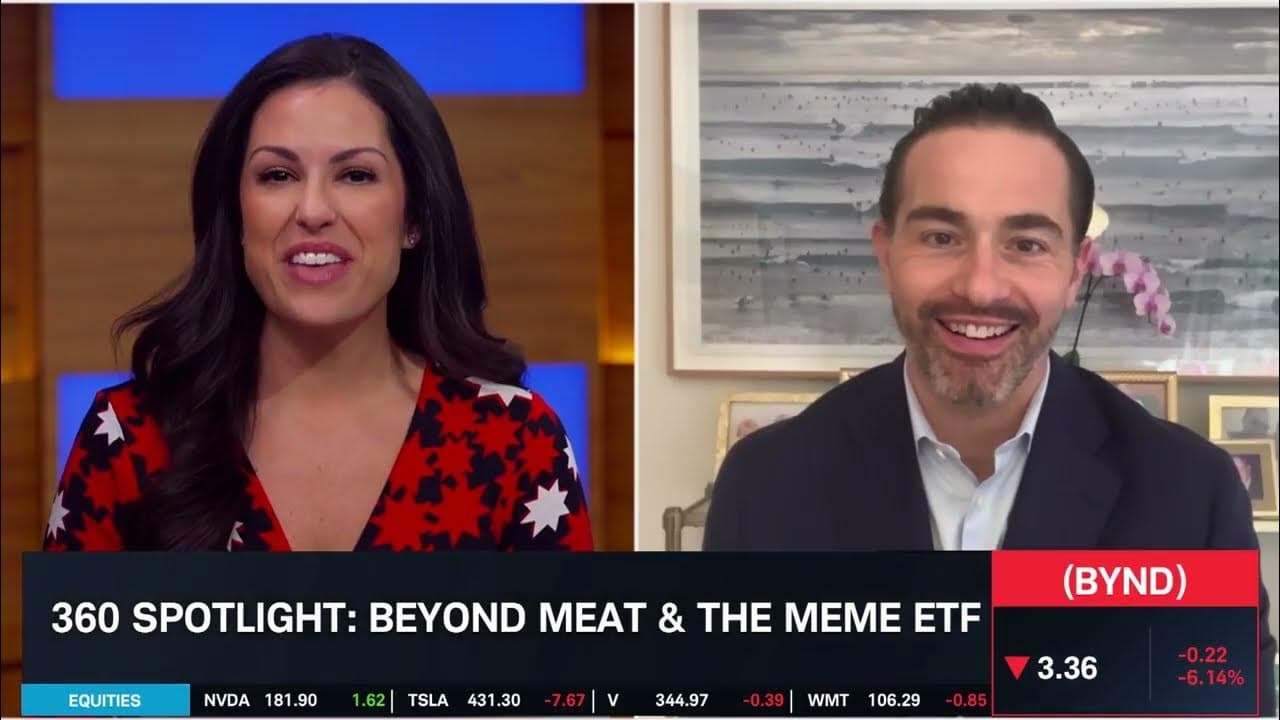
Dave Mazza of Roundhill Investments talks about his firm's MEME ETF after it added Beyond Meat (BYND) to the portfolio. The stock saw extreme volatility over the last few days, trading as low as 50 cents last Thursday, to as high as $8.86 in Wednesday's premarket hours.

On the 24th day of the government shut down, investors will get a dose of government data in the form of the CPI for September.
Comprehensive cross-platform coverage of the U.S. market close on Bloomberg Television, Bloomberg Radio, and YouTube with Romaine Bostick, Caroline Hyde, Carol Massar and Tim Stenovec.

Jeff Richards, Notable Capital managing partner, joins CNBC's 'Closing Bell' to discuss what he's watching for in tech earnings next week, what to expect, and much more.
Many institutional investors close their fiscal year on Oct. 31 and buy stocks at that time with excess cash.
Chris Verrone, Strategas partner; Abby Yoder, JP Morgan Private Bank; and Kevin Gordon, Schwab Center for Financial Research head of macro research strategy, join CNBC's 'Closing Bell' to discuss market outlooks.
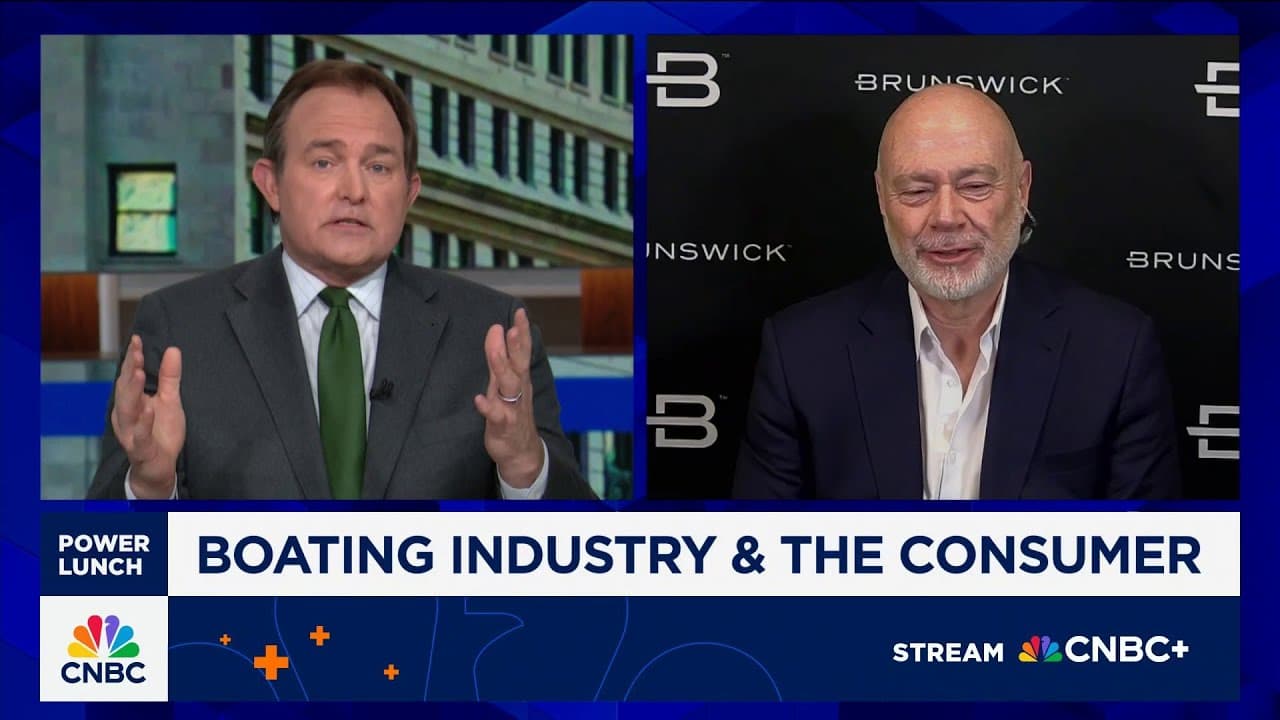
David Foulkes, CEO of Brunswick, joins CNBC's 'Power Lunch' to discuss outlooks on the consumer, the company's most recent quarter, and much more.

The yen's haven status in times of global stress is being threatened, all while a “widow-maker” trade is becoming increasingly lucrative. Here's what's happening in Japan's markets.

The S&P 500 Index (SPY) appears overextended, making a 3-5% correction likely before any potential year-end rally materializes. Recent sharp pullbacks in gold and Bitcoin may signal an impending risk-off move in equities, with technicals suggesting the market is due for profit-taking.

S&P 500 closes lower at 6,699 after disappointing earnings from Tesla and IBM. Geopolitical uncertainty and potential export curbs to China pressure risk sentiment.
Operator: Good morning, and thank you for joining Becle's Third Quarter Unaudited Financial Results Call. During this call, you may hear certain forward-looking statements. These statements may relate to our future prospects, developments and business strategies and may be identified by our use of terms and phrases such as anticipate, believe, could, estimate, expect, intend and similar terms and phrases and may include references to assumptions. Forward-looking statements are based on our current expectations and assumptions regarding our business, the economy and other future conditions. Because forward-looking statements relate to the future by their nature, they are subject to inherent uncertainties, risks and changes in circumstances that are difficult to predict. Our actual results may differ materially from those in forward-looking statements. Before we begin, we would like to remind you that the figures discussed on this call were prepared in accordance with International Financial Reporting Standards, or IFRS, and published in the Mexican Stock Exchange. The information for the third quarter of 2025 is preliminary and is provided with the understanding that once financial statements are available, updated information will be shared in appropriate electronic formats. [Operator Instructions] Now I will pass the call on to Becle's CEO, Mr. Juan Domingo Beckmann. Juan Legorreta: Good morning, everyone, and thank you for joining us today as we discuss Becle's third quarter 2025 results. In a challenging environment, we continue to strengthen our position in key markets, supported by the consistent execution of our strategic initiatives and the strength of our brand portfolio. Consolidated volumes increased by 3.7%, mainly driven by a 5.2% growth in our spirits portfolio. In the U.S. and Canada, Tequila remained the main growth driver, and we continue to protect long-term brand equity while prioritizing premiumization. In Mexico, our core categories continue to gain momentum, and we consistently outperformed the market, gaining share across most segments. Finally, EMEA and APAC delivered double-digit growth, supported by strong execution and healthy inventory levels. On profitability, our gross margin expanded by 300 basis points, reaching 56.1%, mainly reflecting our lower input costs and operating efficiencies. Additionally, EBITDA for the quarter reached MXN 3.5 billion, marking a 63.3% increase year-over-year. As we approach year-end, our priority remains balancing shipments and depletions while continuing to execute our premiumization strategy across all regions. I'm confident in our ability to close the year strongly and position ourselves for sustained growth in 2026. Thank you. With that, I'll turn it over to Mauricio Vergara to discuss our U.S. and Canada results. Mauricio Herrera: Thank you, Juan, and good morning, everyone. Please note that [indiscernible]. During the third quarter, the U.S. and Canada region continued to face a complex and highly competitive market environment, characterized by persistent pricing pressures, cautious consumer spending and evolving category dynamics. Despite these challenges, our team remained focused on disciplined execution. Net sales value declined 10.3% compared to the same period of last year, reflecting a 6.4% decrease in shipments and a 4.4% decline in depletions. This result was mainly driven by continued softness in our Ready-to-Serve portfolio and retail boycotts in Canada, which resulted in approximately 120,000 cases in lower shipments. Encouragingly, our full-strength spirits portfolio outperformed the region's overall trend, led by stronger performance in high-end tequilas, which continue to drive premiumization across our mix. In terms of consumer takeaway, our performance was in line with the overall market. According to Nielsen 13-week data through September 27, our spirits portfolio, excluding prepared cocktails, declined 3.5% compared to a 3.4% decrease of the total industry. Meanwhile, C-stores, which provides one of the most comprehensive views of the industry performance, shows that Proximo outperformed the broader industry within full-strength spirits, including the Tequila category, over the 3-month period ending in August. Our prepared cocktails portfolio continued to weigh on consolidated shipments, largely due to softness in our large-format Ready-to-Serve offerings. But in contrast, our ready-to-drink cans gained momentum versus the first half of the year, signaling a positive turnaround as we align our portfolio with evolving consumer dynamics. Within Tequila, we continue to observe intensified industry-wide pricing competition. Average tequila pricing in the market declined 7.9% versus last year as leading competitors implemented material negative price adjustments. In this environment, we have remained disciplined, focused on selective strategic promotions while maintaining an overall responsible pricing approach. Notably, small format offerings of our super-premium and ultra-premium brands continue to outperform, underscoring that consumers are seeking high-quality products while managing their spending. Our strategy to strengthen the on-premise continues to deliver results. On-premise shipments outpaced the off-premise, driven by initiatives that enhance brand visibility and consumer reach. Looking ahead, we anticipate improving long-term fundamentals in the U.S. spirits market, particularly within our focus categories. Premiumization continues to drive growth in Tequila, where demand for authentic high-quality brands remain robust. I will now turn the call over to Olga Limon to discuss the results for Mexico and Latin America. Olga Montano: Thank you, Mauricio, and good morning, everyone. In a challenging industry landscape, Mexico posted solid third quarter results. Even with constrained consumer demand, we outperformed in our key categories and continue to improve our leadership position. Net sales value increased 24.3% in the quarter, primarily driven by an increase in volume. This was further supported by a favorable product and channel mix as high-end Tequila outperformed the rest of the portfolio. Shipments in the quarter increased 18.3% year-over-year, driven by market share gains and an easy comparison against last year. As you recall, 2024 was a typical year marked by strong industry destocking. Compared to the third quarter of 2023, shipments grew 1%, demonstrating that we have returned to premarket contraction shipment levels, and we have done so with a normalized inventory position. Overall, inventory levels remain healthy and well balanced across channels as we head into the year-end. Our brands continue to gain market share in Mexico, reinforcing our leadership in both Tequila category and the broader spirits industry. According to [ Nielsen ], we grew in value 3.4% year-to-date compared to flat performance for the overall industry, while our volume rose 3.4% versus a 1.1% industry decline. These results underscore the strength and consumer appeal of our brands in the Mexican market. During the quarter, we took a strategic step to further optimize our portfolio with the sale of Boost, reinforcing our commitment to focus on our core spirits business. The fourth quarter of 2025 will serve as a transition period, during which we will continue to operate the brand in close collaboration with the buyer to ensure business continuity. As of January 1, 2026, Boost will no longer be consolidated in our financial statements. For reference, in 2024, Boost sold 938,000 9-liter cases, representing 3.7% of our consolidated volume and therefore, will impact our volume comparables in 2026. In Latin America, performance was strong, with shipments and net sales both increasing. We also achieved a double-digit increase in net sales value per case, reflecting the successful execution of our premiumization strategy. Despite persistent macroeconomic uncertainty, underlying trends continue to improve across the region, and we remain focused on disciplined pricing, protecting profitability and reinforcing our leadership position. I will now turn the call over to Shane Hoyne, Managing Director of the EMEA and APAC region. Thank you. Shane Hoyne: Thank you, Olga, and good morning, everyone. During the third quarter, we operated in a volatile trading environment influenced by macroeconomic uncertainty, aggressive competitive pricing and continued cost-of-living pressures. These factors led distributors to manage inventories cautiously. Even in this context, our premium spirits portfolio delivered solid results, driven by robust growth in super premium tequilas across key Asian markets and emerging EMEA countries. Shipments in EMEA and APAC increased 11% in the quarter. Asia remained a key growth engine, achieving double-digit growth in both shipments and depletions. Tequila remained our primary growth driver across the region with shipments up 20% year-over-year and super-premium tequila shipments accelerating 38%. These results demonstrate the strength of our premiumization strategy and the growing global appeal of our brands. Looking ahead, the fourth quarter will be a pivotal trading period. Through effective commercial execution and agile decision-making, we expect to maintain momentum in the EMEA and APAC region, backed by the strength of our portfolio and our disciplined focus on premiumization. We believe we are well positioned to deliver sustainable growth across the region. I will now hand over to Rodrigo, who will take you through the financial results. Rodrigo de la Maza Serrato: Thank you, Shane, and good morning, everyone. I will now walk you through the financial results for the third quarter of 2025. The company reported a 3.7% increase in volume, driven primarily by a 5.2% growth in our spirits portfolio, marking our first quarter of volume recovery since Q1 '23. Consolidated net sales were flat at MXN 10.9 billion, reflecting the continued impact of price normalization, geographic mix dynamics and unfavorable FX. This quarter marks our seventh consecutive period of year-over-year gross margin expansion, a significant achievement despite unfavorable regional mix and despite the appreciation of the Mexican peso, which represented a modest drag on margins. Despite these headwinds, we continue to benefit from lower agave-related input costs and ongoing cost efficiencies from strategic sourcing and manufacturing operations, resulting on a gross margin of 56.1%, an expansion of 300 basis points. A&P expenses declined year-over-year, reflecting our focus on strategic brand prioritization and disciplined resource allocation amid moderate demand. SG&A expenses also decreased as a percentage of sales as productivity gains and tighter cost controls more than offset inflationary pressures. EBITDA increased 63.3% year-over-year to MXN 3.5 billion, while the EBITDA margin expanded to 31.7%. This increase reflects both strong organic performance across the business and inorganic contributions. Turning to the financial results. We recorded a favorable swing of MXN 3 billion in the quarter, primarily driven by a MXN 2.5 billion gain from asset divestitures as well as MXN 188 million year-over-year foreign exchange gain, as the appreciation of the Mexican peso positively impacted our net U.S. dollar debt exposure. As a result, net income grew at triple-digit rate year-over-year, reaching MXN 4.1 billion. From a cash flow perspective, the company generated MXN 3.3 billion in net cash from operating activities, primarily reflecting strong profitability. Our cash balance increased MXN 5.1 billion relative to the end of the second quarter, mainly due to proceeds from the portfolio optimization activities. Our capital allocation approach remains consistent and disciplined. Every decision aims to support long-term value creation and sustainable growth. Our top priority continues to be investing in organic growth through brand prioritization, targeted A&P spending, innovation and R&D to ensure the continued strength and resilience of our portfolio. At the same time, we remain disciplined in managing our portfolio, acting decisively when brands no longer fit our strategic direction. The recent divestment of the Boost brand is a clear example of this, an action aligned with our ongoing efforts to sharpen our portfolio and exit noncore assets. Looking ahead, we will continue to explore value-creating investment opportunities, being mindful that our portfolio is unique and any acquisitions must be both strategic and accretive to the business. The following chart shows how our company is delivering on CapEx efficiency. The business is generating more EBITDA while requiring less CapEx to do so, demonstrating the success of our efficiency initiatives and our progress towards a more asset-light value-accretive operating model. Finally, our lease adjusted net debt-to-EBITDA ratio improved to 1.0x from 1.7x in the previous quarter, underscoring the strength of our balance sheet and our capacity to create long-term value. Overall, the step-up in underlying operating profit was the main driver behind a 160 basis points increase in ROIC compared to the same period last year. With that, I will now turn the call back to the operator for the questions-and-answer session. Thank you. Operator: [Operator Instructions] Our first question comes from the line of Ricardo Alves. Ricardo Alves: Ricardo Alves from Morgan Stanley. Impressive numbers. I had a couple of questions on the main positive surprise to us came on the gross margin, the 56% number in the third quarter, certainly very impressive. Is it possible to go a little deeper or to quantify any agave impact or raw materials in general that boosted your margin for the third quarter? Any color that you could share? Even if qualitative, in terms of how you're cycling the inventory of raw materials in the portfolio that you're selling today, that would be helpful. We've been talking about going back to that 60% gross margin or so for many years now, and it seems that we are approaching that. So any qualitative or if you're able to quantify in a way how you're cycling through the inventory of agave finished products? I think it would be helpful for us to have a better idea of how your profitability could shape up in 2026. That would be my first question. The second question, really impressive numbers in Mexico and Rest of the World. So I think that we have less concerns there. But I think that the U.S., I believe that one of the comments that you made is that the competition remains tougher in that market. So I wanted to focus on that market. We noticed that your unit revenue on a U.S. dollar terms was down, I believe, 5% in U.S. dollar. And we also assume that your product mix continues to improve in the U.S. So that would imply that there seems to be some discount activity on the spirits category. I just want to pick your brains on that to see if indeed, you're still seeing your competitors more aggressive in pricing. And if there is a light at the end of the tunnel here, maybe things are looking better as we go into the fourth quarter and shipments and depletions could be more aligned. So just trying to see if we are closer to a stabilization of the U.S. market. Rodrigo de la Maza Serrato: Thank you, Ricardo. This is Rodrigo. I will take the first question. In fact, yes, we're satisfied with the progress on gross margin. So far, we continue to cycle all the inventory, as you correctly mentioned. And I want to highlight that most of the benefit on gross margin is coming actually from agave-related input, everything that happens there in terms of the agave, the yields and also the manufacturing efficiencies that have been implemented through manufacturing investments. And so the main driver is that. On the contrary, we have, at least in this quarter, an unfavorable Mexico peso impact, driven by the appreciation of the peso, also mix -- unfavorable mix dynamics overall, given the U.S. results as a percentage of the total portfolio, plus, as you mentioned, the heightened promotional activity resulting in a lower price per case. Overall, that's what's driving the gross margin, which stands at 56%, which is quite positive. Mauricio Herrera: On your second question, Ricardo, this is Mauricio. You're right. The market continues to be extremely competitive. If you look at total Tequila, the overall pricing is down by almost 8%. So what we -- the approach we have had has been to actually indeed have some targeted promotional activity to remain competitive and protect our share in the marketplace, but without chasing competition. So our focus continues to be protecting our competitive position in the marketplace whilst protecting the brand equity for the long term. So we will refrain from chasing competition on the downside. We need to remain competitive, but our focus is really long-term equity growth in what I think will continue to be for the next year or so, a very competitive market environment. Ricardo Alves: That's helpful, Mauricio. Do you see any early indications that maybe the market is going to become more rational anytime soon? Or maybe the trends that we saw in the third quarter did remain the same into the fourth quarter? Mauricio Herrera: Look, based on what we're looking at all the data sources and for me, the most comprehensive one is [ DeepSource ], what we're seeing is a projection of next year of the market of our potentially continue to decline at a rate of 4.5%. So with that projection of the market, I would expect the market to remain extremely competitive as everyone will be focused on share. So I don't see the current dynamics changing at least for the next 18 months. Operator: Our next question comes from the line of Nadine Sarwat. Nadine Sarwat: This is Nadine Sarwat from Bernstein. Two for me, please. First, sticking to the U.S. on RTDs, I know that continues to be the main drag. It's been the case for quite some time. Although I believe in your prepared remarks, you did call out better momentum as you've adjusted your strategy. Could you please flash that out, what is this current strategy when it comes to the subsegment over the coming quarters? And what are you expecting the performance to be there? And then a second question, I appreciate the clarification of calling out Mexico shipments versus 2023. Could you just confirm or clarify that depletion number for Mexico so that we ensure we get the full picture? Mauricio Herrera: Thank you, Nadine. So in terms of your first question, this is Mauricio, on the U.S. RTDs, as I mentioned during the call, what continues to be a drag on our performance in [ RTS ], so which is the large formats, and that -- if you look at the marketplace, that continues to trend down as consumers are shifting to cans or RTDs. So when we talk about RTDs, we're talking mainly about cans. So what we are doing is changing and adjusting our portfolio with a lot of focus in RTDs, both in terms of execution format configuration, driving increased penetration across different channels. And we saw actually a big shift in the last quarter. We're showing growth of around 30% versus last year in our cans. So as we go forward, we will continue to drive not only execution, but also you would see innovation coming from us in that space, which is just pretty much adapting our portfolio to the evolving consumer needs. Olga Montano: As for the Mexico question, as we have already talked about, we had an easier comparable base in terms of shipments in the third quarter. So it's more meaningful to look at the year-to-date performance. In the year-to-date performance, where shipments are and depletions are broadly in line, we are up 4.7% year-to-date in shipments versus 2.5%, respectively, in depletions. So I hope that answer your question. Nadine Sarwat: Perfect. And then could you just remind us your split for -- of your RTD segment? I guess, how much is that large format versus RTS versus the cans, now that you've been implementing these changes? Mauricio Herrera: So still from a mix perspective, we still hold a large part of our mix in RTS, but our focus will then to continue to increase the mix now on RTD. So for now, our mix continues to be larger on RTS. We feel that the market will continue to evolve within the cans. And therefore, you would see in the future, our mix of RTDs/cans continue to increase relative to the large format. Operator: Our next question comes from the line of Froylan Mendez. Fernando Froylan Mendez Solther: Froylan Mendez from JPMorgan. A couple of questions. First, on a follow-up on the gross margin. Just trying to understand how sustainable is this margin gain from agave? Because if we look back in the previous quarters, it has been very volatile, let's say, the margin dynamic into the third quarter, I would have expected more of a headwind from FX, which was clearly offset by the agave. But is there any reason why the fourth quarter shouldn't be at least this 300 basis points gross margin expansion if similar volume conditions remain into the quarter? Or what are we missing to understand the gross margin dynamics into the fourth quarter into 2026? And secondly, into Mexico, I mean, it's very impressive to see the performance, given the weak economic backdrop in general in Mexico. Do you see any difference in the consumer behavior in Mexico versus what we see in the U.S. in terms of consumption per capita? Or what is driving this recovery in volumes in Mexico? Those two questions. Rodrigo de la Maza Serrato: Thank you, Froylan. I'll take the first question regarding the gross margin expectation. We will be facing a much more unfavorable situation from an FX perspective in the short term. Q4 comparable relative to last Q4 is going to be unfavorable as exchange rate was 20.1% on average. Other than FX, which could impact negatively the gross margin in Q4, we don't see any meaningful trend, changes regarding cost components. So besides that, that's the only impact that we, at this point, would be concerned about. Olga Montano: As for Mexico, we continue to see a volatile and challenging market environment and a very cautious consumer. We continue to see a contraction, but the good news is contraction at a slower rate. And also the good news is Tequila remains one of the few categories that is growing, and we are actually outperforming the industry within it. So that's what I can tell you. Fernando Froylan Mendez Solther: If I may just follow up, Rodrigo. So can I understand that the inventory that you are passing through the P&L is now at, let's say, a much lower cost versus what we have been seeing in most of the first half of 2025 and second half of 2024, so we are facing a real advantage on the cost side on agave from this point onwards? Rodrigo de la Maza Serrato: Yes. I think that sounds right, Froylan. Operator: Our next question comes from the line of Antonio Hernandez. Antonio Hernandez: This is Antonio from Actinver. Just wanted to see if you can provide more color on the lower A&P expenses as a percentage of sales, if this at all, maybe this is impacting maybe sales performance? And in which regions are you mostly lowering this expense? And what are your expectations going forward? Rodrigo de la Maza Serrato: Of course, Antonio. I'll take the question first. So A&P investment as a percentage of NSV is simply reflecting the more, let's say, some efforts in terms of efficiency on how we spend the A&P. But definitely, that's not a driver that we perceive is impacting top line performance in any of the regions. Antonio Hernandez: Okay. And these efficiencies are all over the place, I mean, in all the regions? Rodrigo de la Maza Serrato: Yes. Operator: Our next question comes from the line of Ben Theurer. Benjamin Theurer: This is Ben Theurer from Barclays. So I wanted to just understand a little bit and ask if there's more something in the pipeline. I mean, you've been divesting some of these like smaller noncore things. We've seen the Boost divestment. We have the Lalo brand this quarter. And we've seen this in the past by kind of like this review of the portfolio. So I just wanted to understand, as you look at the current portfolio in different regions, et cetera, specifically considering some of the softness also in RTD in the U.S., are there other things that you would consider as an asset for sale or like kind of like a noncore to kind of like really be able to focus and concentrate on the key things within Tequila, other tequilas and those other spirits that have been driving growth and have been doing better? Juan Legorreta: Yes. We -- this is Juan Domingo. Yes, we are continuing analyzing our portfolio and -- to see which brands should we invest more and which less and which brands so we can dispose. So yes, probably there will be more. Benjamin Theurer: Okay. And then I have one follow-up. Just as we look into the dynamics of spending on A&P over the last couple of quarters, it's clearly been, I would say, on the softer side. So as you look ahead, do you think this is a new level and new balance? Or as volume picks up and some of the momentum comes back up as we think into 2026 that you're probably going to be as well a little more on the upper end of what your usual guidance is for A&P? Mauricio Herrera: So this is Mauricio. So for the U.S., what we've been working on is a very disciplined approach to return on investment, making sure that we're understanding more and more what are the activities that are actually having the best impact in the marketplace. We continue to spend ahead of industry standards. So I think that we're actually in a very healthy level of spend, and our focus is more on understanding where can we put the dollars that will have the maximum return so we can drive efficiencies without compromising our -- how we compete in the marketplace. Operator: We have not received any further questions at this point. That concludes today's call. You may now disconnect.

Niina Ala-Luopa: Hello, and welcome to Vaisala's Third Quarter Results Call. I'm Niina Ala-Luopa from Vaisala's Investor Relations. And today with me in this call are President and CEO, Kai Öistämö; and CFO, Heli Lindfors. And like always, first, Kai will present the results, and then we have time for questions. Kai Öistämö: Hello, and welcome, everybody, from my side as well. Vaisala had a good third quarter, strong sales and profitability as the headline says. So, let's dive a little bit deeper where did it come from and what are the details behind. So, first notion, the net sales growth was strong, 13% in reported currency, which can be characterized really as strong sales in a quarter. The orders received simultaneously declined by 21% and leading into a decline in the order book. Whilst when going back to the financial performance, we maintained a very solid profitability, 18.2% EBITDA margin. And if I exclude extraordinary items due to the restructuring and so on, actually, the EBITDA margin was 20%, which I think is all-time high for us in terms of an EBITDA margin, if I recall right. Really happy on Industrial Measurements on the demand picture and now clearly also broader than earlier. And on demand and on the other hand, Weather and Environment side, more challenging market environment, and I'll talk about both in detail in the coming slides. And really happy on the subscription sales growth continued to be very strong, 57% year-on-year and also the underlying organic growth on a very healthy level. And as I said in the release already, it was great to see also subscription sales now contributing positively also to the profitability of the company. The market environment continued to be challenging. If you think about the entire third quarter within -- inside of the third quarter, we kind of we start -- it started with the tariff changes and kind of fixing the tariffs between Europe and U.S. And then at the same time, during the year, continued in the third quarter, the depreciation of euro vis-a-vis USD and Chinese yuan. So, the environment has many moving parts, and the depreciation of euro, dollar and renminbi really are things that don't often get talked about as much as the tariffs. But actually, if you think about it, like the magnitude of the depreciation of those currencies vis-a-vis euro, the impact actually is equal, if not greater, than what the tariff impacts actually are. So, it's good to remember that as well. And as I will conclude at the end of my presentation, the business outlook for the year 2025 remain unchanged. But before going into the numbers and performance of the company in more detail, good to look at a couple of words on strategy execution inside of the company and this time in terms of a couple, we picked a couple of kind of interesting launches that are reflecting also the strategy and strategy execution of the company. The first one, Vaisala Circular, it's a service product and the emphasis really is on the word product, where the industry measurement probes are recalibrated and provide a reuse service where the customers maintain a dedicated pro pools at our service centers. Essentially, what it means is that we have productized the calibration service in such a way that now we are selling always accurate on uptime and continuous operations in our customers' operations instead of talking about calibration or other technical terms. This is obviously kind of crucial in terms of selling services that how do you productize it, crucial for the customers to understand what's the value and crucial for our sales to actually then be able to communicate what the value is and what the customer should be paying for. So, kind of a great example of the things that we are doing to drive our service sales, both in Industrial Measurements where Vaisala Circular is an example of, but we are doing similar things also in the Weather and Environment side. Then on Xweather, the hail forecasts. Hail actually is one of the more difficult weather phenomena to actually forecast. And it's been really one of these places where -- one of the things that really is -- has been really a challenge for meteorologist for a long, long time. Super happy to report that now we have an Xweather hail forecast. And hail is really important in terms of the damage it causes for various kinds of a property or infrastructure. For us in Finland, the hail sometimes gets to be kind of pea size and even that can kind of cause some damage. But in more southern countries where more extreme weather and extreme thunderstones typically are when hails get to be baseball sized, they really can kind of create quite a bit of damage. And it really is like billions of dollars losses in various kind of places. The example we are showing here where we can apply the kind of capability to forecast and create alerts for hail is solar parks. And if you think about solar parks, there's a whole host of glass facing upwards. And in case of a hail that's really prone for damages. And if you think about solar parks, one of the features is also that in many cases, they actually track sun, i.e., they are turnable. So, in case of hail forecast, you can actually turn them sideways so you can avoid the damages. And there's a kind of a big market and unsolved problem that we are solving for here with hail forecast as an example. And then WindCube, the next generation. Here, this is really, again, a good example of how we push the boundaries of the technology with our own R&D. With this evolution on LiDAR technology, we can actually increase the distance out of which we can read the wind and the wind fields, increased data availability and much, much more robust performance in clean air and complex terrain environment. So significant step-up in terms of our performance, which I believe both demonstrates our capabilities and is important for that business and puts us squarely in the lead also from technology and solution and performance perspective in that business. Then moving on to the financials. So, starting with the group level, strong growth, as I said, with -- in both business areas. Orders received decreased as talked about, and I'll still kind of talk about that a little bit later when I go into the business areas because there's differences in performance side. Order book consequently kind of down from same time last year. And then net sales-wise, a very strong quarter, 13% up year-on-year. And if you take the constant currency side perspective, it would have been 16% up from year-on-year, same time, so third quarter last year. Gross margin, a bit down, and I'll give you -- it's easier to explain when I go through the different business areas. Nothing dramatic about that there. And then on the profitability side, as I said, if you exclude the restructuring side, actually the EBITDA margin being all-time high, at least in my recollection. And cash conversion, no news there remained on a strong level. Now going into Industrial Measurements, yet another strong quarter and really happy to note that now the positive results are coming from all market segments and all geographies. And super happy to see that now Asia performing really well compared to the same time last year, equally so -- almost equally so, Europe and at the same time the U.S. growth continuing. Obviously, in the U.S. and in China, for example, where the local currencies have devalued vis-a-vis euro, that has a negative impact. If you -- like if I take, for example, U.S. in a constant currency, year-on-year growth was 9% in Industrial Measurements in Americas region. And I promised to talk about the gross margin in the business area side. And if I take Industrial Measurement side first. So, first of all, what I forgot to say is the orders received actually increased on the Industrial Measurement side, corresponding to the net sales growth, actually a little bit more increased 9% year-on-year here when the net sales grew 6% in reported currencies. But back to the gross margin. So gross margin decreased a little bit. And this really is due to exchange rate impact, but clearly, kind of big part of the impact was the proportional impact on the U.S. tariffs. And here, maybe worthwhile kind of just pausing and explaining the math that we've said that we have been fully mitigating the tariff impacts in our business. And that means that we've raised the prices correspondingly to whatever the tariff costs have been. And if you think about how that math works, it means actually that the -- even if it's fully mitigated in absolute terms, since the divider and the above the line and below the line kind of when you do the division are added the same amount, the relative number actually goes somewhat down. So that's really like if you have time, just play with the math and you'll see what I mean. So that's a big part of the explanation. So, I am not worried. It's within the normal boundaries in terms of what the gross margin changes have been and it's worthwhile saying also that while we are in the Industrial Measurement side, it's obviously easier to kind of mitigate by price changes, extraordinary events like the import duties and such changes in import duty regimes compared to fluctuations in currencies. Since we price and any global company would do the same, price in local currency, you cannot go every time currency exchange rates go back and forth, go change the local pricing. Obviously, long-term, there are kind of pricing means to compensate this. But short-term, you cannot kind of react to all of this, and it would not be constructively taken either from a customer perspective. Then Weather Environment. In net sales, actually a great quarter and subscription sales-wise, equally so. At the same time, the orders received in decreased in Weather Environment, driven by a couple of things. There's a strong decline in renewable energy market, as we have been saying since the first quarter of this year. Nothing has really changed on that. And there was kind of a significant change in the market in the beginning of the year, and it continues to be on a low level, and we do not expect that to change in any time soon. And I'll come back to that in the outlook. And then likewise now in aviation and meteorology markets, there was a very strong comparison period and kind of big orders taken in the comparison period last year. But also this part of the market, when you take aviation and meteorology, there is a fluctuation between kind of natural fluctuation in those markets as well as this year, where there have been a couple of headwinds that we talked about before, one being the China investments due to a large extent, I would argue, to the fact of the cycle in terms of the 5-year plan this year being the last year of the 5-year plan and very often being the least investment in at least in this sector. So that we have seen that in declining order intake and then simultaneously, the administration changes and so on impact on delaying the order intake in this year in the U.S., which obviously is another contributor to this. And then there are kind of gives and takes on the rest of the market, which is within the kind of, I would argue, in the normal boundaries. And good to remember in the comparison period in the aviation and meteorology side on the back of really kind of a very strong now 2 years in terms of an order intake, really driven by the European stimulus fund on the radar networks in Southern Europe, most notably in our case was the big order that we got from Spain, but there were multiple other ones that we benefited from as well during the past year, 1.5 years that are still in our order book, and are being executed. Now on the gross margin side, a decrease of 3 percentage points. Sales mix, a stronger portion of the project revenues being recognized. So that's in plain English, what the sales mix means. And then same things as what I talked about in Industrial Measurement side on exchange rate and the U.S. tariff impacts, albeit somewhat less pronounced in case of Weather and Environment as the sales mix it's not as heavily weighted in euros and dollars or the U.S. business is a little bit less than what Industrial Measurement is. And then EBITDA percentage being on a very healthy level of 14.6%. I mentioned the cash flow continued on a good level. Here you see on the bridge on puts and takes on the cash flow and cash conversion being at excellent level of 1 and free cash flow around EUR 40 million during the period. Now if I look at the year-to-date, both net sales and profitability clearly improved during the first 9 months compared to the same time last year. And orders received did decrease by 13% year-on-year and while net sales grew by 9% year-on-year. And subscription sales, if I take the first 9 months of the year, almost incredible 58% up, obviously boosted by the acquisitions of WeatherDesk and Speedwell Climate, but also a great performance on the underlying organic growth. And then gross margin, slightly negative, again, same explanations that I went through. And then on EBITDA percentage and EBIT percentage up from comparable time or same time last year. And then worthwhile saying on the operating expenses, the restructuring costs, as I said, also in regards of this past quarter have been not insignificant as we have been adjusting our renewable energy business to the new market reality. And that's now behind us, that restructuring. And then acquired businesses and so on other explanations when you look at the year-on-year comparison on operating expenses. Financial position continued on a very good level, low leverage on the balance sheet, and we continue to have asset-light business model, no changes seen or foreseen in that. And on this page, I think it's good to note that the automated logistics center is now in a phase where we are loading it. So, it's actually fully in schedule, and we are putting material into that and starting to use it as scheduled in the fourth quarter of this year. And then also notable thing during the quarter was the acquisition of Quanterra Systems. Think about it this way that it's kind of an interesting team and technologies on monitoring CO2 fluxes, which means question whether individual geographic area, field or piece of land is a carbon zinc or carbon emitter, which a very interesting piece of technology, potential long-term kind of quite a bit of potential on that, and that was announced in September. Market and business outlook. We continue to see growth in industrial, instruments, life sciences and power, we continue to see roads as a stable marketplace. And then renewable energy, meteorology and aviation decline, and this is outlook for the rest of the year. And obviously, the renewable energy being kind of a clear change in the marketplace since the beginning of the year, whereas the meteorology and aviation now suffering a slightly different market conditions, as I explained before, in terms of the government subsidies and government incentives kind of on a lower level than when we compare to last year. And then on the business outlook, no changes to this. We continue to see the net sales to be between EUR 590 million and EUR 605 million and operating result being between EUR 90 million and EUR 100 million. With that, I want to conclude my prepared remarks, and I'll open up for any questions you may have. Operator: [Operator Instructions] The next question comes from Nikko Ruokangas from SEB. Nikko Ruokangas: This is Nikko Ruokangas from SEB. I have 3 questions, and I'll go one by one. Starting with Weather and Environment and orders, which you already discussed, and you told the reasons why they have now declined for a couple of quarters. But should we soon start to see the trend in orders happening there? Or has the demand continued sequentially weakening? And then do you think that the U.S. government shutdown could affect you now in Q4? Kai Öistämö: Yes. So obviously, kind of when we talk about we compare to year-on-year kind of things will obviously, when the comparables change, then that will change. Your question was on a sequential basis especially aviation, meteorology, things kind of come as they come. So even if there would be like numbers improvement or decline from one quarter to another, it would be hard to make a conclusion out of it since it's a lumpy business as a starting point. As I tried to explain on meteorology and aviation, it is more of a -- it's a bit of a cyclical business where now we have enjoyed, I would argue, almost like exceptionally high cycle in it for good almost 2 years. Now it's more on a normal basis, what it looks like. So, I would not be overly worried about it where I'm standing today. Then, on the U.S. government shutdown, it's a great question. And so, 2 comments on that. We've seen the budget proposal, and I would be actually happy, and this is the government's budget proposal, not minority budget proposal. I would be happy if and when that is approved. So, I have no issues with what is proposed. The shutdown itself, obviously, during the shutdown and getting a new order for next year since there's no budget approved nor and then there are a whole host of people furloughed. It's postponing things. If I look at bit on the history, typically, what has happened is that during this kind of U.S. government shutdowns, the orders will just come a little bit later in. But if I take kind of 12 months average or what kind of a little bit longer time series, it will normalize itself post the shutdown. So, it's like a little bit plowing snow in front of a snowplow kind of a thing, at least has been in the past. And we'll see how long it will last, it can stop tomorrow, or it can be continuing for some time. Nikko Ruokangas: Yes, I understand. Then on the guidance, as it indicates for Q4, clearly kind of year-on-year basis, weaker sales and EBITA development than now in Q3. So, is this basically explained by smaller project deliveries expected for Q4? Kai Öistämö: A big part of it is also very high comparable. If I actually go -- and I'm usually not doing this, I'll try to go back in my slides just to illustrate what I'm saying on this slide. And it's not this slide, here. So, if you look at this slide, it's kind of like highlights the unusual nature of the last year in terms of how the order intake kind of behaved and especially net sales behaved that we had a very weak first quarter, very strong second quarter, weak third quarter and a very strong fourth quarter. And if you went back into '23 or earlier years, typically, the second half, both quarters have been stronger. Typically, even the third quarter has been stronger than like second quarter clearly on an average year. So, there's a bit of when you compare to year-on-year kind of numbers, the anomality of last year makes it a bit harder this time around. Heli Lindfors: And I think the second topic is actually the FX that Kai was referring to earlier on. So, in the beginning of the year, the FX was still more similar level to last year, whereas now in the second half of the year, we see more of an impact of the volatility of the FX. So that will definitely be a factor in Q4 as well if the kind of rates remain as they are currently. Kai Öistämö: Correct. And it's again, a good illustration of that. If you go back and look at our second quarter results, we said that there was not really a material impact on FX yet. Nikko Ruokangas: Okay. So, this year, more normal seasonality expected than last. Kai Öistämö: Correct. Correct. Correct. Nikko Ruokangas: Then last one from me, at least at this point on cost side. So, you mentioned the EUR 3 million restructuring expenses. So, if we leave those out, so to me, it seems that your operating expenses were down in weather despite the acquisition or fixed expenses, but then clearly up in Industrial side. So, if you exclude those restructuring expenses, were those including something extraordinary? Or is it kind of describing the trends you are now having? Kai Öistämö: Yes, the extraordinary costs, as I said, was they were related to the restructuring that what I talked about in relation to the energy business and renewable energy business. So, I think your conclusion was exactly right. And like if you look at our numbers, and we have now a good trend also on the Industrial Measurement side, we have been a little bit longer kind of time series again, over the past 2 years where we had more modest growth, we were more conservative in spending and spending increases in Industrial Measurements. And now we see kind of clearly more growth opportunities and a bit more spending, not going wild, but a bit more spending on Industrial Measurement side. Operator: The next question comes from Pauli Lohi from Inderes. Pauli Lohi: It's Pauli from Inderes. I would start with this demand-related question. Have you seen any signs that the increased tariffs could start to dent the good market activity you have seen in the U.S. market or elsewhere compared to what we have seen already this year? Kai Öistämö: So elsewhere, I don’t see it go – it could have – now I understand your question. So okay, no, answer is no. We can't point anything in the U.S. or anywhere else, that would be at all related to tariffs. It's been more positive than what would have speculated pre-tariffs. Pauli Lohi: Well, that's definitely positive. And your scheduled deliveries for the rest of the year in the Industrial Measurements are a bit lower compared to Q3 last year. So, do you think that the current favorable market activity could still offset this? Kai Öistämö: No, Pauli, remember what Heli just said in terms of the exchange rate changes, which is, if you compare to last year, I think we are about 15, 16 points cheaper dollar than it used to be a year ago, and Industrial Measurements and Xweather are highly exposed to dollars. Heli Lindfors: Also, in dollars and renminbi. And especially for the Industrial Measurements, the renminbi is also very important currency. Kai Öistämö: So, it's not [indiscernible] then you can draw your own conclusions. I would not be worried about the demand picture per se. Pauli Lohi: Okay. Then, regarding the cost base, how large savings you expect from the recent restructuring on an annual level? Kai Öistämö: We have not communicated that. I'll put it this way that when we said in earlier quarters, similar calls, we've said that we are going to adjust our operating expenses to the level that matches the market picture on the renewable energy business. We've now done it. Pauli Lohi: All right. Then, regarding the new logistics center, do you expect any short-term cost-base increase or operational extra costs from starting to use the new center? Kai Öistämö: No, no, no. Absolutely not. Pauli Lohi: And do you see that it could provide any material financial benefits next year? Kai Öistämö: Over time, I think it clearly -- I mean, if you think about it now, fully automated material flow, it should yield into kind of a better rotation days, better management of the inventory, multiple benefits in terms of how much capital is tied into an inventory, and different tools also to optimize that inventory. So obviously, we have a business case, and over time, this is an investment where we expect a payback as well. Pauli Lohi: Okay. Finally, on Xweather, do you think that the current roughly double-digit organic growth rate is sustainable going forward? Taking into account the new product launches and maybe potential synergies from the recent acquisitions? Kai Öistämö: Yes. So, short answer, yes. And here also, short-term, we have to take into account the currency exchange rates when we look at the euro reported numbers. But typically, we do the pricing changes at kind of around the year-end in all of the businesses, well, at least Industrial instruments as well. So, we need to then see how those impact kind of going forward as well, depending on how the exchange rates then turn out to be. Operator: The next question comes from Waltteri Rossi from Danske. Waltteri Rossi: A few questions. First, about the Industrial Measurements orders in America. The report said that they grew slightly. I think the wording was a bit softened from the previous. So, have you seen any changes in the activity level in the Americas? Or is this only related to the FX? Kai Öistämö: So, I think I earlier said that it was a 9% on a constant currency level year-on-year. And if you look at the reported currency, it would have been 2%. So here, you see kind of direct impact on the currency exchange rate. I would be very happy with the 9%. I'll offer you that. Waltteri Rossi: Okay. Okay. Perfect. But you don't disclose how much the Americas is of the Industrial Measurements orders. Can you give us... Kai Öistämö: Not on orders and not on a quarterly basis, but it's clearly the biggest market that we have, and it's clearly north of 1/3 of Industrial Measurement sales. Waltteri Rossi: Okay. Okay. Then, about the Xweather business, it said that over the past quarters, it's actually been contributing positively at profitability. So, does that mean that the segment is now making positive operating profit already? And if so, are we talking about a low single-digit margin, or what? Kai Öistämö: We are not reporting that business separately. So, I will decline to answer you. So, we have not quantified. But contributing positively kind of would imply that it actually makes money. Waltteri Rossi: Yes, yes, sure. But I was just making sure that we're talking about EBIT on an operating profit level. But kind of... Kai Öistämö: Remember on the EBIT level, we did the acquisitions last year. And that's obviously kind of the amortizations of those assets raised the hurdle on one hand. But if you look at on an operating profit side, then that's what I'm referring to. Waltteri Rossi: Okay. Okay. So, we should still expect that you are continuing to invest in the growth of that business and shouldn't expect the profitability to kind of start to improve or scale up from now on? Kai Öistämö: Yes. Well, if software business grows 50% year-on-year, one should expect that it scales. Waltteri Rossi: All right. But you are still keeping the view that you are shifting focus from growth to clearly start improving the profitability side only later during this strategy period? Kai Öistämö: No. There's no shift between profitability and growth to be foreseen. It's always -- like when you are scaling a software business, it's always a kind of a trade-off, of how much you invest in the growth. And typically, in this kind of a software business, it really is investments into sales and demand generation rather than increasing the R&D when software businesses are scaling. And then the return on investment should be quite quick. And it's relatively easy to verify as well, kind of from a cost of acquisition side. If you kind of invest in customer acquisition cost, you can actually measure what the return on investment is, and it really should be quite quick. Waltteri Rossi: Okay. Okay. Lastly, as of now, earlier in the year, the expectations were kind of lowered because of the U.S. tariffs and how they will impact, especially the Weather and Environment public side sales. How would you describe the impacts of the tariffs on public sales this year today? Like, has your view changed since at all... Kai Öistämö: I would say no impact so far on the Weather and Environment sales in the U.S. from the tariff side. As you may recall, we did kind of a plan for the tariffs, and we mitigated the tariffs by actually shipping into our own warehouse in the U.S. so kind of that we have a little bit of time to pass the tariff costs into prices. And I think we are executing against that plan very well. Operator: The next question comes from Joonas Ilvonen from Evli. Joonas Ilvonen: It's Joonas from Evli. I have a couple of questions about Industrial Measurements. You already discussed this question of cost, but if I can come back to it. So, I think like R&D costs were down this quarter at a relatively low level. And of course, I think there's always a bit of like a quarterly variation when it comes to that. But then also you say -- and I saw your total OpEx still grew quite a bit, albeit it was still at a rather moderate level. But you mentioned this investment in sales and digital capabilities. So, my question is that how do you see the kind of overall Industrial Measurements investments continues to grow from now on? Like, do you expect it to grow basically at the rate of sales volumes? Kai Öistämö: If I take all kind of that will be a good approximation over time. Obviously, these things change over, like vary over quarters, and the quarters are not equally strong, and so on. So, kind of different quarters are a little bit different. But over time, that's a good proxy. Joonas Ilvonen: Okay. That's clear. And then you mentioned IM APAC growth that was especially strong. So, was this mainly due to China? Or were there any other countries there you would like to highlight, and which specific industry groups, like you mentioned, life science and power in your report? Kai Öistämö: Yes. As I said in the prepared remarks, if I start from the kind of latter side of the question, it came from all segments in the Industrial Measurement side. So, all market segments, grew. And it's both in China and outside of China. China did have a marked change compared to the second quarter, clearly having more market optimism in the third quarter, great to see. But it was not only in China, it clearly was outside of China as well. And if I pick one very interesting market, which continued to be strong is Japan, and where obviously, lots of industrial activity, and we have a great position in Japan in various different segments, but not only those 2 markets. It's broader than that. Joonas Ilvonen: All right. So, there weren't basically any kind of weaknesses in terms of geographic regions or... Kai Öistämö: No, no, not that I can think of. Joonas Ilvonen: Okay. That's clear. And maybe one last question. So, you already discussed this IM gross margin headwind due to exchange rates and tariffs. So, it's going to fade at some point, but did you comment on when exactly is it going to? Does it still continue over Q4 or into next year? I mean, considering how things look right now? Kai Öistämö: Yes. So, 2 things on, if you look at gross margin, and this was a bit on the net sales side as well, what I tried to say earlier, one thing is we -- and then they function differently if you think about FX and then the tariffs. The tariffs, what I said and what we've been saying all along, is that we fully mitigated that by raising prices. And that has kind of by itself a negative relative impact on gross margin. And I'll do you the math, pardon my details here. But if you think about that -- let's imagine that the transfer cost out of which the tariffs are counted would be 100 units. And then you put a 15% tariff on it. Now that cost would be instead of EUR 100 million, that will be EUR 115 million. And you fully move that into the sales price and let's do an easy math and call it like it's EUR 200 million and you put EUR 15 million on top of EUR 200 million. Now you fully mitigated it. And if you do the relative calculation, there is a negative impact on relative number. Joonas Ilvonen: All right. Kai Öistämö: Sorry about that. I think it's good to understand that that's when you -- and then on FX, as I said, you can't manage FX-related changes within a quarter or within a half a year. You cannot like fluctuate your local prices based on exchange rates. But we do try to be smart when we do the annual price increases as we do every year in the beginning of the year. So that's a chance of actually taking the currency exchange rates and our costs and everything else into account. Operator: [Operator Instructions] The next question comes from Matti Riikonen from DNB Carnegie Investment Bank. Matti Riikonen: It's Matti Riikonen. And sorry if I have to ask some questions again because I had to jump to another call for 15 minutes during the presentation. So, some of the questions might have been asked already. So, I start with the math question that Kai you just explained. So is it in rough terms, we are talking about that the price increase that you made, it covers the kind of cost price, but then the margin that comes on top of that doesn't follow. So, you are not getting the compensation for the lost margin compared to the normal situation where you put the kind of markup to the imported price. Kai Öistämö: Yes. And even if you put a markup to it, you can do the math in different scenarios, how much of a markup you need to do in a high gross margin business in order to kind of mitigate the gross margin if you -- and there's obviously a limit how much you can pass on the costs if you think about the tariff a drastic change in the middle of the year, it's what's acceptable from a customer side. So yes, in a way, what you asked for. And then I'll go back to what I just said that beginning of the year, we are going to review our prices anyway, and we are going to look at different kinds of costs and things that where do we put the prices going forward. Matti Riikonen: Yes. But basically, isn't it always so that when the new year begins, you are trying to kind of achieve the same profitability level or higher what it used to here. So, it takes some time for the following price increases to kind of correct the situation into what it was from there. Kai Öistämö: Yes. That being said, when the book-to-bill cycle is 3 weeks in the Industrial Measurement side, that's pretty fast. Matti Riikonen: Right. Then regarding the Weather and Environment, when you talked about received orders and how they were kind of suffering different things, you meant that there's also industrial cyclical fluctuations or I don't remember what the term that you used was. But what does that actually mean in the Weather and Environment business? So, what kind of industries are there on the customer side that are affected if you're not talking about the renewable business, which I would... Kai Öistämö: No, I was not talking about the renewables business. And maybe I'll just explain it a bit more. So, it's not really an industrial activity. Think about it this way that this is -- it's a relatively small market in the end, I mean, in the total market as we are the market leader in terms of an absolute market leader in this. So, you kind of -- it's a relatively small market. And then many of the products are having their natural cycles and sometimes they are quite long cycles. So, if I take the radars that we just sold, I'm not expecting the same kind of a complete renewal of Finnish network until 15 years from now or something like that. And here, relatively small individual things like the COVID-19 fund to renewal, which was used to renew Southern European radar network kind of increased the tide a bit and now the tide is kind of lower as we speak. But that has been a phenomenon, if you go on a longer-term kind of a history in meteorology and aviation that the relatively small 2 big airports get to be built at the same year, kind of increases the size of the market and the years are not exactly the same. So, this market kind of just has a phenomenon where there's a relatively small discrete demand changes change the size of the market somewhat. Matti Riikonen: Yes. Okay. And that clarifies because maybe the wording in the Finnish stock exchange release was about the industry and basically, it means the sector where you operate in the crisis. Kai Öistämö: Correct, correct. That's good. Thank you, Matti, well spotted. Matti Riikonen: If we then think that these sector changes tend to be quite slow and one year is not necessarily enough to make it go away. Are you afraid that this would continue also in 2026? I'm not talking about the order backlog, which you already have or the Indonesian order, which might come sometime next year, but basically new weather orders that you were -- or you are expecting every year. Is there a danger that we would see an even slower 2026 when it comes to new business? And if your order backlog is decreased this year, then, of course, you would have less to kind of deliver in '26 based on old kind of order backlog. Do you think that is a kind of risk that you would like to highlight? Or of course, you have to take a stance on that when you give the guidance for '26. But at least -- I mean, at this point of the year, you probably already know, and you have made some internal plans how it's going to be in the weather business in '26. So, any thoughts on that would be great. Kai Öistämö: Correct. Yes. So let me answer -- well, it's exactly like you said, we're going to give guidance next year when the time comes. But let's think about it this way that there are the product sales, which are selling to existing projects and existing customers and the fluctuation on that business is very small. The fluctuation really comes from the kind of new projects and bigger and smaller and so on. So, there's kind of a level that has been at least relatively stable in the past, and I don't see any changes why that assumption should be different going forward. But then how will individual projects come through and so that obviously will not only impact our sales but actually like if kind of a couple of big orders come -- big projects come in a half a year, that kind of theoretically means also irrespective of who wins that impacts the entire market as well. Matti Riikonen: All right. So we will wait for your guidance for '26 to see that what is your plan that you promise to deliver. Kai Öistämö: Correct. Matti Riikonen: Okay. I'm just saying that it doesn't look so good when this year, of course, the order backlog has been decreasing. And when you have basically negative outlook for all key metrological... Kai Öistämö: For the rest of the year. Remember the outlook. Matti Riikonen: What would need to happen that it would kind of recover to a normalized situation in '26. Do you foresee some positive changes to this current trend, which you have now said that will impact '25, but do you see some positive triggers that would change the situation for '26? Kai Öistämö: Yes. Like I said, so as the market impact -- market size is really individual like bigger orders can swing that different ways. So that's something that is, as you know, historically, it's really, really hard to say when certain things kind of come through. The pipeline remains on a good level on new projects. But kind of a flow through the pipeline continues to be very unpredictable as it has been in the past. So... Matti Riikonen: All right. Fair enough. Final question, you already touched the topic of Industrial Measurement and some investments in digital capabilities. Just out of curiosity, what kind of digital capabilities are you talking about? Kai Öistämö: So online as a sales channel, whether we talk about to our distributors or whether we talk about to the end users, especially on the services side. If you think about -- so today, it's mainly -- we don't have much of a sales through the digital channel. We are doing demand generation, but the actual sales transactions we do very little through digital channels and that capability we are building. And very important, like kind of first it will have an impact on the services delivery side. But longer term, I believe, like in any other business, obviously, kind of -- it will have an impact on our overall sales, I believe, as well. Matti Riikonen: Does that mean that the existing customers would kind of want or need a different approach to maybe order from you? Or does it mean that you are seeking new business through those channels? Kai Öistämö: I think in the end, it will be both. And I don't think any businesses will remain as they have always been, and I'll just use the car analogy here that nobody ever believed that a car can be bought online and look where we are today. Try to buy a Tesla offline, then they will throw you online. Operator: The next question comes from Waltteri Rossi from Danske. Waltteri Rossi: So just to still clarify the Xweather profitability question. I was actually -- I think I was talking about EBITDA and operating profit as a synonym previously. But just let's talk about EBITDA. So, is the Xweather currently contributing positively on EBITDA level? Kai Öistämö: Yes. Subscription sales to be specific. That's what we report today. We don't report separately Xweather. Operator: There are no more questions at this time. So, I hand the conference back to the speakers. Niina Ala-Luopa: Okay. That was our Q3 call. Thank you all for joining. Thank you for the questions. Thank you, Kai. And I would like to mention or remind that we will arrange a virtual investor event for analysts and investors on November 24. And there, Kai and our business area leaders will provide an overview of Vaisala's strategy and business areas. And you will find more information on the event on our investor website, vaisala.com/investors. But now thank you all for joining and have a nice rest of the week.
Operator: Hello, and welcome to Banc of California's Third Quarter Earnings Conference Call. [Operator Instructions] I'll now turn it over to Ann DeVries, Head of Investor Relations at Banc of California. Please go ahead. Ann DeVries: Good morning, and thank you for joining Banc of California's third quarter earnings call. Today's call is being recorded, and a copy of the recording will be available later today on our Investor Relations website. Today's presentation will also include non-GAAP measures. The reconciliations for these measures and additional required information is available in the earnings press release and earnings presentation, which are available on our Investor Relations website. Before we begin, we would also like to remind everyone that today's call may include forward-looking statements, including statements about our targets, goals, strategies and outlook for 2025 and beyond, which are subject to risks, uncertainties and other factors outside of our control, and actual results may differ materially. For a discussion of some of the risks that could affect our results, please see our safe harbor statement on forward-looking statements included in both the earnings release and the earnings presentation as well as the Risk Factors section of our most recent 10-K. Joining me on today's call are Jared Wolff, Chairman and Chief Executive Officer; and Joe Kauder, Chief Financial Officer. After our prepared remarks, we will be taking questions from the analyst community. I would like to now turn the conference call over to Jared. Jared Wolff: Thanks, Ann, and good morning, everyone. We're pleased to report another strong quarter for Banc of California with double-digit earnings per share growth and continued momentum across all of our key performance drivers. These results once again demonstrate the strength of our franchise, the consistent growth trajectory of our core earnings and the disciplined execution of our teams. Strong Q3 earnings per share growth of 23% quarter-over-quarter of $0.38 reflects our success in generating positive operating leverage and continuing to expand our net interest margin. Since the start of the year, our return on tangible common equity has grown 231 basis points to 9.87%, while EPS has increased nearly 50% since Q1. During the quarter, we also continued returning capital to shareholders in a meaningful way. We repurchased 2.2 million shares of our common stock in Q3. And overall, under our program, we bought back 13.6 million shares, more than 8% of our outstanding shares at an average price of $13.59, well below our tangible book value per share. Repurchases have totaled $185 million, more than half of our $300 million repurchase authorization. And even with this activity, our continued earnings growth has built CET1 to 10.14% at quarter end and tangible book value per share has also increased 3% quarter-over-quarter to $16.99. We will continue to be prudent with the remainder of our share buyback program and use it opportunistically while remaining focused on maintaining strong capital levels. Core deposit trends were positive with noninterest-bearing deposits up 9% and now represent 28% of total deposits. It was driven by both higher average balances and steady inflows of new business relationships. This strong core funding enabled us to further reduce broker deposits, which declined 16% from the prior quarter and lowered our total cost of deposits by 5 basis points to 2.08%. As noted in our investor deck, core interest-bearing deposits also increased when runoff of interest-bearing broker deposits is excluded. Our deposit strategy is both dynamic and flexible. While we continue to grow our core deposits, we will choose to shrink or expand other sources of deposits as needed, depending on pricing, our loan production and other liquidity needs. Loan production and disbursements remained healthy at $2.1 billion, with broad-based production from our business units. We purchased fewer SFR loans this quarter, down about $346 million from Q2 as yields contracted due to strong secondary market demand. Total loans declined about 1.6% from last quarter, mostly due to elevated paydowns and approximately $170 million of proactive payoffs of criticized loans, consistent with our strategy to maintain high-quality credit and exit credits that we believe are not meriting of long-term strength and support from us. Excluding that deliberate activity, our core loan portfolio was essentially flat. Pipelines remain strong, and we expect loan production activity to remain high. This strong loan production is one of the keys to the ongoing incremental growth in our earnings per share. The rate on new loan production remained healthy at 7.08%, well above the rate of loans that have been maturing. As a result, with strong loan production, even with elevated payoffs in the quarter, our balance sheet remixing accelerates our margin expansion. The loan sales we announced last quarter continued to proceed well. In Q3, we liquidated $263 million of held-for-sale CRE loans, largely through the execution of strategic sales within our targets and some proactive paydowns. We currently have $181 million of CRE loans remaining in HFS, and we expect to sell those over the next several quarters. Credit quality remained stable with criticized loans down 4% quarter-over-quarter and special mention loans down 24%. Classified loan balances increased this quarter due to a timing issue related to a $50 million CRE loan for which the borrower executed a contract for sale after quarter end as well as a revision to our risk rating framework for certain loans in the Venture Banking portfolio. It's important to mention that all of those loans are performing and on accrual status with no delinquencies greater than 30 days. The updated framework was procedural and not indicative of any incremental underlying credit weakness. Our allowance for credit losses increased to 1.12% of total loans or 1.65% on an economic coverage basis, reflecting our continued discipline to reserving and the strength of our credit profile. This was another great quarter for the company, a quarter that reinforces the positive trajectory we've established and the consistency of our performance. With a strong capital position, a valuable core deposit base and a proven team that executes with discipline, we believe Banc of California is well positioned to deliver sustainable high-quality earnings growth for many quarters to come. Now let me turn it over to Joe for some additional financial details, and I'll certainly be back to answer questions. Thanks. Joseph Kauder: Thank you, Jared. For the third quarter, we reported net income of $59.7 million or $0.38 per diluted share, which was up 23% from the adjusted EPS of $0.31 in the prior quarter. Net interest income rose 5% from Q2 to $253 million, and net interest margin expanded to 3.22% driven by higher loan yields and lower deposit cost. Our exit net interest margin at quarter end was 3.18%, which is normalized for excess accretion income in the quarter. We expect our margin to continue to expand from this level in the fourth quarter. Average yield on loans increased 12 basis points to 6.05%, reflecting the benefit of portfolio mix shift towards higher-yielding C&I loan categories, including Warehouse, Lender, Venture. Our loan yields also benefited from higher accretion income, which was up approximately $3 million from Q2 due to loan payoff activity. The spot loan yield at the end of the quarter was 5.90%, reflecting the impact of the September rate cut on the variable rate loans and normalization for accretion income during the quarter. Total loans ended the quarter at $24.3 billion, down slightly from last quarter, largely due to the intentional payoff activity and elevated paydowns that Jared mentioned. Excluding that, underlying core loan balances were stable. Deposit trends were strong as we saw favorable mix shift towards more noninterest-bearing deposits and reduction in broker deposits. As a result, cost of deposits declined 5 basis points to 2.08%. Our spot cost of deposits at 9/30 was 1.98%, and our cumulative beta in this down rate cycle for interest-bearing deposits is approximately 66%. The interest rate sensitivity on our balance sheet for net interest income remains largely neutral as the current repricing gap is balanced when adjusted for repricing betas. From a total earnings perspective, we remain liability sensitive due to the impact of rate-sensitive ECR cost on HOA deposits, which are reflected in noninterest expense. We expect fixed rate asset repricing to continue to benefit net interest margin as we remix the balance sheet with high-quality and higher-yielding loans. We have approximately $1 billion of total loans maturing or resetting by the end of 2025 with a weighted average coupon of approximately 5%, offering good repricing upside. Our multifamily portfolio, which represents approximately 25% of our loan portfolio has approximately $3.2 billion repricing or maturing over the next 2.5 years at a weighted average rate that offers significant repricing upside. Noninterest income was $34.3 million, up 5% from last quarter, primarily due to higher fair value adjustments on market-sensitive instruments. Normal run rate for noninterest income remains at about $10 million to $12 million per month. Noninterest expenses of $185.7 million were relatively flat across most expense categories as we continue to maintain disciplined expense controls while supporting our growth initiatives. The combination of stable expenses and higher revenue drove a more than 300 basis point decline in our adjusted efficiency ratio to 58%. We continue to make progress on expanding positive operating leverage while still investing thoughtfully in technology and talent to support future growth. We expect 4Q expenses to be consistent with prior quarters and be at or below the low end of our range as we continue to make progress on managing core expenses. As Jared mentioned, credit quality remained stable with net recoveries of $2.5 million and declines in our criticized loan balances. Provision expense of $9.7 million was largely related to portfolio growth and updates to risk ratings and the economic forecast. Our allowance for credit losses ended the quarter at 1.12% of total loans or 1.65% on an economic coverage basis, consistent with our prudent approach to credit management. Looking ahead, we remain on track with our 2025 guidance. We continue to expect loan growth for the full year to be in the mid-single-digit range and net interest margin to remain within our 3.20% to 3.30% target range for the fourth quarter. We also expect to maintain our strong capital and liquidity position while delivering steady high-quality earnings growth. With that, I'll turn it back to Jared. Jared Wolff: Thank you, Joe. This was another excellent quarter for Banc of California, one that highlights our strong performance, positive operating leverage and the consistency of our results. Since completing our systems conversion in the third quarter of '24 following our merger with PacWest, we have been building core earnings while improving the balance sheet, managing expenses and efficiently deploying capital. With 4 quarters of high-quality earnings growth under our belt and foreseeable EPS growth in sight, the track record and the path ahead should be very clear. Our teams continue to execute with discipline and focus, driving growth and continuing to build one of the best franchises in California and everywhere else we operate. We have a proven business model that is delivering high-quality earnings through a diversity of lending channels, a valuable and growing core deposit base of deep client relationships and a culture of performance and accountability. We believe the opportunity in our markets remains significant as we capitalize on the dislocation in the California banking landscape and win new relationships. We continue to add high-quality talent to support our growth as our teams continue to win new business and bring new relationships to the bank while serving our clients and keeping safety and soundness front and center. The consistency of our results, the strength of our balance sheet and momentum in our business demonstrate why Banc of California is well positioned to continue our success and why we're so confident in the long-term trajectory of our franchise. Thank you to our employees for their dedication and commitment to serving our clients and community each and every day. With that, operator, let's open up the line for questions. Operator: The first question comes from Jared Shaw with Barclays Capital. Jared David Shaw: Just to start off, the credit trends this quarter were really good. And Banc of Ca was pulled into sort of a story of the Cantor loans and I think, just sort of broader concern around NDFI lending and structure. And clearly, from the numbers you put up, you must feel that there's not a lot of loss there, and it feels like you have good collateral protection. Can you just give a little color on how you structured that exposure and why you feel that there's not loss there? And is that sort of reflective of the broader view of how you're going after some of the non-mortgage NDFI lending? Jared Wolff: So thank you for the question, Jared. When you say how we structured that, you're speaking specifically to what was mentioned in the articles? Jared David Shaw: Yes, in terms of like being able to get additional commercial real estate collateral and being sure that you have the senior lien position. Jared Wolff: Yes. So this is a really important distinction. The frauds that were mentioned with Zions, with Fifth Third, with Western Alliance fundamentally had to do with NDFI lending. And they were generally lending with collateral pools. We were mentioned because we had a loan to a related borrower. But our loan to that borrower was not an NDFI loan. It was a pure real estate loan. So we weren't lending on any collateral pool. This is a loan that was made -- we made a loan many, many years ago to -- on a hotel on the beach in Laguna. That loan has been on nonaccrual, has been classified, and we filed a lawsuit many quarters ago. It's been in our numbers. But that was not -- that had nothing to do with our NDFI lending. That was just a simple real estate loan. And so I would just say it was a real estate loan that the partners got into a business dispute. Clearly, some of the drama that was going on there affected what was going on elsewhere. But it's real estate. We're collateralized. We have a guarantee from the [indiscernible], but we're relying on the property to pay us back, which we think we're well secured, and we think there's plenty of collateral there. So it's important to distinguish that. When we look at our -- and I think Zions mentioned in their lawsuit that we were in first position, again, they were looking at loans that were in a collateral pool that we had lent on purely as real estate loans. And in fact, they were 2 single-family loans that are no longer in our portfolio. They were sold as part of a pool of single-family loans that was sold in connection with the transaction. So we weren't lending to these groups that seems to be caught up in the fraud and certainly not Tricolor or First brands, but as it relates to Cantor and the related entities, we never lent to any of those on an NDFI basis. Just that wasn't what we were doing. So let me just put that to bed. We're a real estate lender fundamentally to those folks, and we think we're well secured by real estate. And you perfect a first priority interest in the mortgage deed when you make a real estate loan, very easy. In terms of NDFI, we put a chart together in our investor deck, it's on Page 14. A significant portion of our NDFI lending is in mortgage warehouse and fund finance, which I think people have a strong understanding of. Our mortgage warehouse loans are -- we have a great team. It's really well done. We've had it for years. We put -- but we think we do all of these credits well, including our lender finance loans that are business credit, consumer credit and other mortgage credit. And when you strip out mortgage warehouse, fund finance and other mortgage credit, which is 11.6%, 13.7% of our 18%, you're left with less than 5% of our loans having NDFI exposure. But across the board, we've had a history of no losses over -- and I ask people to put in the 10-year historical loss rate so that we could go back as far as we can because PacWest has been doing this for a long time and mortgage warehouse at Banc of California has been in place for a long time. It's negligible. That's not to say you'll never have a loss, but I think that the way that we do it is very specific. One thing that's important to mention that we put in our deck, and I had our team go through what happened at the other locations without being critical of our peers who are very good lenders, but things happen. I said, what do we do that's different to protect ourselves? And they highlighted one of the things that we do is we have an in-house audit team that conducts anti-fraud measures, frequent testing of underlying collateral, cash collections, payment history, mortgage title checks. When we do -- when we take a collateral pool, we look at it ourselves, we sample it, we check the trustees, we check the perfection and make sure that we know what position we're in through a broad sample. So look, I don't want to be critical of my peers. They're all good lenders. I can only speak to our history, what we do and how we do it, and I feel very comfortable with what we do. Happy to -- let me pause there, Jared. Happy to answer more questions. Jared David Shaw: Yes. No, that was great color. I think good insight into how you're structuring it. Maybe just as a follow-up, shifting over to the margin. When we look at the guide for the margin of 3.20% to 3.30%, is that a good normalized level? Or as we sort of end the year and start looking into '26, how should we be thinking about margin, especially with the likelihood of some cuts? And I think your guidance does not assume cuts. Is that right? Jared Wolff: Correct. It doesn't assume cuts. So I'll start, and I'll let Joe chime in. So we -- certainly with -- we are liability sensitive when you factor in the ECRs. And so we do expect our margin to expand. The accelerated accretion we had last quarter was in the middle of the quarter, which is why it affected -- and it was -- it affected our overall margin. It took it to 3.22%. But when you strip it out, we were at about 3.18%, which is still a nice expansion from the prior quarter. So we see our margin continuing to expand. The question is at what pace. I'm pleased that our teams have been able to realize, I think, a pretty high level of beta as we're really being disciplined in terms of managing our deposit costs. So I expect whether we're going to achieve 66% or 50% is going to matter on a whole bunch of factors, but we certainly expect to achieve at least 50%, if not higher, going forward on our deposit beta. Our margin will continue to expand. And Joe and I were talking about this before the call. I mean, the biggest driver of our margin expansion seems to be our increased loan production, whatever it is in the quarter and how that is really replacing loans that are at much lower rates. One of the big shoulder bags we're carrying is this $6 billion multifamily portfolio that it will -- half of it matures or repays in the next 2.5 years. But that portfolio is at 25% of our balance sheet and it's -- of our loan portfolio, and it's at 4%. So even with rates coming down, our loans coming on are coming on at much higher rates. And even a lot of those loans happen to be floating rate loans, but they're still coming on at much higher rates. And generally, we'll have floors on those loans as well. Joe, anything to add there? Joseph Kauder: No, I think you captured it, Jared. As we look out into the future, your original question, I think, Jared, was, is it a solid run rate looking at 3.20% to 3.30%. I think that's a starting point. And then as Jared Wolff mentioned, I think we intend to grow it from there. And the loans -- obviously, the loan -- the remixing of the loans is a powerful accelerant to that. But then we also -- as we did this quarter, we're continuing to focus on growing noninterest-bearing and getting our cost of deposits and cost of funding down. And then you'll occasionally see some lumpy upside related to the accretion, which we had this quarter. So I think we're feeling pretty good about it. Jared Wolff: Jared, I think as we get to the fourth quarter, it's going to be easier -- get through the fourth quarter, it will be easier for us to give you a range guidance for the margin for next year because I imagine you're starting to look at that. I expect if we're 3.20% to 3.30% right now, we're going to end up -- obviously, we're going to end up there given that we are at 3.18% in the fourth quarter, and we don't even have a full quarter of rate cuts. And so we'll end up low 3.20s in the fourth quarter, most likely. And then I would expect the jumping off point for '26 is going to be 3.25% to 3.35% or whatever it is, that gives us some flexibility. Look, we're earnings first and margin second, but I think the margin will certainly continue to expand, and we should have more guidance as we get closer to the end of the fourth quarter. Operator: The next question comes from Timur Braziler with Wells Fargo. Timur Braziler: Maybe just back on that margin discussion. I guess just looking at margin kind of not the combined effect with the ECR reduction, just are you still liability sensitive from a margin standpoint or relative to the comments you just made, rate cuts are going to be punitive maybe upfront and then you get that ECR benefit on the back end? Jared Wolff: They're definitely not punitive to us. We are, at worst case, neutral with rate cuts when you take out ECR. And I'll let Joe correct me if I'm wrong there, but we believe that we really are fundamentally neutral that our deposits and loans are kind of repricing in balance and then ECR gives us that liability benefit. But our margin expansion is really being driven by this loan production that we're seeing. Joe, do you agree with that? Joseph Kauder: Yes, that's correct. We're -- right now, as we stand today, we're a neutral balance sheet if you were just to -- if you were to exclude the HOA deposits with the ECR benefit. Jared Wolff: And Timur, we kind of debate this internally. When you do these models, as you probably know, these IRR models, they rely on a static balance sheet. And nothing is ever static in a bank. So I always think that they're off in some way. And it's -- they're directionally accurate, but they're never truly accurate because the balance sheet is not static. And so the question is, which way is it off? I think we can drive more benefit because I guess that's the way my brain works, and that's where I'm going to drive results. But I tend to think that we can even on a static balance sheet or a slightly dynamic balance sheet without production, I think I can get more movement on deposit costs because that can drive cost down. We have to put in assumptions about what deposits are going to reprice and how they're going to reprice. And I tend to think that we can be pretty aggressive as long as we're doing well on our growth initiatives. So -- but the technical answer is we are completely neutral. Timur Braziler: Okay. That's good color. And then just looking at the third quarter deposit growth, particularly in DDA, I guess how much of that is tied to warehouse? There wasn't really an increase in related ECR costs. Was that more back-end driven and we might see the higher average balances impact 4Q numbers? Or was a lot of that growth kind of ex ECR driven? Jared Wolff: It wasn't -- you said warehouse, I think you meant HOA. It wasn't, if I understood your question correctly about whether it was HOA related, right? Timur Braziler: I mean just ECR-related deposits. Jared Wolff: Yes, the ECR is primarily in our HOA business. No, it really wasn't. We tend to see inflows of HOA at the beginning of a quarter and then they flow out through the quarter. And so you won't see kind of average balances grow tied to ECR. Also, our highest ECR cost is really associated with some larger depositors in HOA, and we have not been growing balances from them because we don't want to increase our cost and concentration. And so even if we were to grow HOA, we wouldn't see the same level of ECR cost come up. But -- so that's just some color on how we're growing our balances is the level of ECR that we're paying is not the same at new balances we're bringing in from HOA. Our team has done a great job of making sure that our ECR costs are not what they were historically. And we have some larger relationships that have some more expensive deposits, and we just don't want to grow those, right? And so we've been -- I would say that the deposit growth was pretty broad-based. I've been -- as I've said, I expect deposits over time to grow. We're working really hard at relationships. If people have been tracking kind of the ample reserve conversations at the national level and with the Fed policy, I mean, liquidity is tightening nationwide, and it's expected that the Fed is probably going to have to engage in some [ TOMO ] activity to kind of put some liquidity back in the market. That's consistent with what I've been saying for many quarters is that if we're flat when liquidity is coming out of the system, that we're winning because in many cases, deposits are down and your customers don't have more to give you. I would say this quarter was a great quarter. It was pretty balanced. We brought in a lot of new relationships. We did see some good activity from some existing clients as well. We'll see what shows up -- I'm sorry, in the Q3. So we'll see what shows up in Q4. But over time, I expect that we're going to continue to win on bringing new deposit relationships in. Operator: The next question comes from Matthew Clark with Piper Sandler. Matthew Clark: Just on the loan and deposit growth for the year, targeting mid-single-digit growth, it implies a decent step-up here in 4Q. Maybe just speak to the pipeline on both sides of the balance sheet and maybe mid-single digit is 4% to 6%, so 4% would kind of be in that range on the loan side. But on the deposit side, it just implies a steeper step up. Jared Wolff: Yes, you're right. I mean what we don't do is we don't pull away from goals. We'll measure ourselves and see how we did at the end of the year. But you're right, it would suggest that we'd have to have some outsized growth this quarter, and we'll see if we hit it. We're -- our teams are working hard. We might not, but I'm comfortable being measured against what we do. I think our shareholders are being rewarded by our growth in earnings. And I'd like to put out there all the initiatives that we have and how we're driving results for shareholders. And the market is what it is, the dynamics are what they are. I think on a core basis on the loan, when you strip out the loans that were sold, when you look at kind of core loan growth, we'll probably hit the 4% to 6% range. I think that's fair. Deposits are going to be a lot harder. So we'll see where we end up. But I just didn't feel like pulling back our goals. Our teams know what they are. They're out there working hard to try to deliver. Production has been fantastic. I've been really pleased with the production of our teams. Payoffs happen. But like I said, earnings are continuing to grow, notwithstanding that. So I'm very pleased with what we're doing so far. Joseph Kauder: Jared, I would just add also that we calibrate our deposits to our loans, right? So we don't want to have too many deposits. If we end up with excess deposits, we'll occasionally take measures that will optimize our balance sheet. But we can -- there's a spectrum of deposits. And if loan growth -- to the extent loan growth is robust in the fourth quarter, we can scale those deposits to fund that. Jared Wolff: Yes. No, Joe, that's -- I'm glad you mentioned that. It's one of the comments that I had in my prepared remarks, which is that we are pretty dynamic in managing the balance sheet to optimize earnings and not carrying cash at levels where we think we can get a better return somewhere else. And so -- and we'll let -- depending on what we see in terms of our flows, keeping our loan-to-deposit ratio and our liquidity levels in balance. Our team does a great job. Our treasury team does a phenomenal job with our finance team of really optimizing in a very dynamic way when we bring on broker deposits at what cost, for what duration, what do we need right now, depending on other deposit flows. And so I'm glad you brought that up, Joe. Matthew Clark: Great. And then just the other one for me on the Venture business, can you just provide a little more color on what changed in the way you're risk rating those loans that may have caused a little bit of creep in the classified? Jared Wolff: Yes. Sure. So we -- I mentioned this many quarters ago that we were going to get stricter on how we were internally grading ourselves because I feel like it's the best way to have an early warning system. So you can downgrade credits based on a new methodology, but it has nothing to do with the experience that you've seen to date of the credits, but it might mean that you're watching them more closely because we decide the environment or just our risk tolerance may have changed. And so the way that we're looking at venture credits fundamentally has to do with a matrix of a number of factors. It has to do with fundamentally, just to remind everybody what we do in Venture generally. So fund finance is capital call lines of credit. I think people are familiar with that. In Venture, where we have a disproportionate amount of deposits relative to our loans, we lend discretely. And generally, what we're doing in the Venture space is lending to give somebody a line of credit that bridges around of funding. When we bring in a relationship, they're giving us all of their -- let's say it's a company that has some great software and they just did a round of $20 million at a $200 million valuation. That $20 million is going to come into our bank and let's say, we bid on a line of credit and we won. That $20 million is going to sit in our bank. It's probably going to be $2 million or $3 million in their operating account and the rest is going to be in a money market account where they're getting some earnings because they need it because they're not profitable. They might have asked for a $5 million line of credit. That line of credit is going to not be used. It's a bridge facility that would only be used when they go out to raise capital if they need additional time. And what we monitor is the RMC, the remaining months of cash as they burn and make sure that we never have what's called crossover, which is when the debt is in excess of cash. As long as our debt remains less -- greater than the cash level and most of the time our debt is 0, we're fine. And we're benefiting from these deep relationships of treasury management and cards and all the other services we provide and the expertise that we provide that they certainly value. But they may say, "Hey, we're going to go to a round C. We've got lined up investor support. We're going to -- we need a little bit more time. We have 9 months of cash, and we think it's going to take us down to about 4 months of cash. Okay. And they're asking us and they're talking with us about whether or not they're going to borrow on that line of credit. And then it's a conversation, and we go in with our eyes open based on what we see there. And 99% of the time, it works out fine, but there have been circumstances when it doesn't. So what we've done is to tighten the requirements that we have for what we're looking at. We're looking at the sponsor support, the support of the VCs, we're looking at how they're doing relative to their business plan. We're looking at the remaining months of cash. We're looking at the cash to debt levels. We just tightened up the matrix, and that caused us to rate credits in a different way, and there's about 8 or 10 things that we look at. And it's hard for me to go deeper than that, Matthew, but I just want to give you some color. And so the credits could be the exact same credits and performing the exact same way, but under this new matrix. We might be looking at it a little bit differently, and it might trigger another conversation with the sponsor and the VC firm and that's just what we decided to do to tighten up our standards. Operator: The next question comes from David Feaster with Raymond James. David Feaster: I guess maybe touching on the loan growth side. If we think about the growth dynamics, obviously, payoffs and paydowns have been a headwind. If I was reading between the lines, it sounds like you're expecting production -- improving production to drive growth rather than really a deceleration in payoffs and paydowns. I guess, first, is that a fair characterization? And then secondarily, what do you see as some of the key drivers of that increase in production? And how is pricing today? Jared Wolff: Yes. Let me start at the back end of your question. So we see a very strong pipeline this quarter. It's looking really good. The fourth quarter tends to have good activity. It's obviously economy dependent. But right now, people seem to be doing well enough and active. And I think rate cuts generally will stimulate activity as well. So I think that probably bodes well for a good quarter. Pricing is holding up at 7.08% of new production. Yields is a little bit lower than prior quarters, but it's still really, I think, really, really good. And if I look at the yields that we got on production in our individual lending units, which I have right here, production yield really held up pretty well. I mean construction was flat, was almost -- was a little bit up. C&I was up, Venture was up. Warehouse was up. SBA was a little bit down. Equipment Lending was slightly down. Fund Finance was relatively flat. Lender Finance was down. So Lender Finance was down about over 50 basis points, and that's because it is -- those are floating rate credits pretty closely tied to SOFR. And so we were very active in the quarter. And so that would have brought some of it down. But overall, I think yields were pretty good in the quarter. We had 7.29% last quarter, and it was 7.08% this quarter. So -- but in the first quarter, it was 7.20%. So there was kind of a spike in the second quarter and then third quarter came down a little bit. And also rates tend to lag a little bit. So this quarter, we'll see where they are based on rate cuts last quarter. But overall, I think production levels are strong. It's hard to know where payoffs are going to be in any given quarter. Stuff just happens. It's a very dynamic active. Our clients are very active. We had one client that won a lawsuit. They brought in tons of deposits, and then they paid off a big loan that they had with us. And so it happens. We didn't know that, that was going to happen, and it did, that's fine. It's just normal. But we really try to save loans when we can see things that are going to pay off. If it's a multifamily payoff, we certainly want to bid on it. If it's a construction payoff, generally, we're happy with it, and we'll find new construction because some of those longer-term mini perms at low rates, we're just not going to do. And sometimes they're too large. Even though we're going to do the construction, that doesn't mean we're going to do the mini-perm. It's just there's much higher debt on the mini-perm, and it's just not something that we're necessarily prepared to do even if we did the construction. Sometimes we are, but not always. It just depends on the project. And so David, let me ask you to reframe -- I want to make sure I'm answering all of your question. Can you restate... David Feaster: Yes, the other part was just with the increasing production that you were talking about, what are some of the key drivers of that? Jared Wolff: In terms of the areas where we're lending, I mean, I think C&I overall is doing really well. So in California, across our commercial and community bank, we're seeing broad-based good production. And generally, in our middle market area, which is to companies that are a little bit more experienced, a little larger, we're seeing good production locally and even more broadly across California, we're getting referrals from our business units that -- for businesses that are all over the country, which is great. Lender Finance continues to shine. And one of the things that Ann mentioned in a note to me was that we provided back leverage for the loans sold last quarter that were Lender Finance, and that might have brought down the loan yields a little bit, too, because we provided good rates on those loans for the back leverage for the loans that were sold, but it was still well above the rates of loans paying off. So that might have contributed to Lender Finance rates being down a little bit. Let's see. We're still seeing a lot of construction demand in terms of low-income housing tax credit. That stuff just takes a while to pay up, but it's -- that's doing very, very well. And I would say that Warehouse, there's always people that are refinancing and buying homes even up or down, we seem to have good demand in Warehouse. So that's growing as well. So I'd say those are the drivers right now. Fund Finance is always pretty -- the other thing I would mention would be Fund Finance. It was not a big quarter for Fund Finance. It was one of their slowest quarters after really 3 really strong quarters. So we'll see what happens in the fourth quarter. I know they have some good fundings expected this quarter and Fund Finance could have a good quarter this quarter as well. But it was not a big contributor last quarter. David Feaster: Okay. And maybe shifting back, I mean, you guys have been very proactive managing credit. That's been a part of what the payoffs and paydowns that you're seeing, some of which you're pushing out. The industry is obviously hyper focused on the credit outlook today, just given some of the recent issues that we've seen in the industry. I think you kind of put the NDFI issue to bed. But outside of that, I mean, is there anything where you're seeing any pressures or that you're watching more closely or that maybe you're pulling back from just that risk-adjusted returns don't maybe make as much sense just given competitive dynamics or underlying issue? Just kind of curious if there's anything you're seeing. Jared Wolff: Yes. As strong as the market is, I would say the areas where we have been very cautious have been -- certainly, we have not backed off any of our office comments about. We still think that, that is -- I was at an event with one of the investment banks held with Blackstone, and Jon Gray was there speaking to a room full of CEOs about what they were seeing, and they're like doubling down on San Francisco right now, the San Francisco office market. Obviously, Midtown Manhattan has come back pretty strong. That said, we don't feel the need to be an office lender. We just don't. And let others do it. And so we have -- we're backing off that, even though we just signed a big lease downtown in Downtown Los Angeles, where we're moving in. And we're -- we have 2 offices that we consolidated in Downtown Los Angeles, got the same square footage a little bit more, got rooftop signage for less than we were paying for the other 2 buildings combined. So we're trying to be proactive and take advantage of it, notwithstanding that, and maybe because of that, I feel like I don't want to be a lender on office right now. And so we're not doing that. And I would say that anything that has government in it, any type of property with government, we're staying away from. And some of the things that we moved out of, we forced exits of properties where the government was a tenant, and I said, just get rid of it, tell them we're not going to renew the loan and just move it out. And that was some of the credits that went out in the quarter, at least one of them had a government tenant, and I said, just get out of it. It was a large tenant in the property, and I said, let's just move out of that property, but it was completely stable. So that's where we've been proactive as well. Operator: The next question comes from Chris McGratty with KBW. Christopher McGratty: Jared, on the -- I know you touched upon it in your prepared remarks, the buybacks, the opportunistic buybacks partly from private equity. How are you thinking about CET1 levels given the earnings improvement ramp, the growth you talked about and just in light of regulation? Jared Wolff: Yes. I mean I think the right number is between 10% and 11%. And I think more people are coming -- as I've said in prior quarters, I think more people are coming down to us than going up to above 11%. I had said before, I thought 10.5% was totally fine. And so we're between 10% and 10.5% now. And I think we've got plenty of capacity, and we're building up CET1 at faster than we're growing earnings due to some benefits that we have on the tax side that Joe can walk through. And so we're able to continue to grow CET1 while buying back stock. And we're completely undervalued, in my view, by a meaningful amount. And we've got to solve that by continuing to drive earnings growth. I think the market gets it, and we're going to continue to build on this track record. But I think we now have a track record. And I think the margin expansion is there. So -- but I don't want to lose the opportunity to take advantage of buying back our stock. And I think we're going to be plenty of opportunistic and be able to maintain capital levels in the right range. Christopher McGratty: Okay. Continuing to buyback. Got it. And then on the ECR betas, maybe a question on for Joe. I guess what are you assuming for betas on the ECR deposits? I may have missed that. Joseph Kauder: So it is approximately -- the way the contracts work is approximately 75% for every 100 basis -- for every basis point move. Christopher McGratty: Okay. And then, Joe, I have you, that Jared tease the tax -- the fund tax item. What should we be thinking about in terms of tax strategies, tax rates? Anything unusual? Joseph Kauder: No, I think 25% is probably a good tax rate for us moving forward. We do have a big DTA generated from net operating losses that have occurred in the past, also have a fair amount of tax credits, which have been built up through our low-income housing activities, et cetera. As we use those up, as we make money and we use those up, those -- the way the tax law works is there is a -- you're kind of restricted in the benefit of that deferred tax asset in your CET1. So as you use up the deferred tax asset, it comes back in, it gets recycled back through CET1. So our CET1 is probably growing a little -- is growing a little faster than our earnings as the amount of pullback from the NOL dissipates over time. It's pretty complicated, and we can get into it more if you want to get into it. Jared Wolff: Yes. I'm just interested if I think about utilization of it over the next couple of years, like how much of a CET1 benefit are we talking? Because I think it plays right into the buyback narrative. Joseph Kauder: Yes. Well, I think as part -- maybe as part of our earnings guidance for -- at the end of the year, maybe we'll put something together on that. Operator: The next question comes from Andrew Terrell with Stephens. Andrew Terrell: I had a question just around the classified loans. Jared, I heard you mentioned in the prepared remarks, the $50 million of the pickup sequentially was more of a timing issue. So I guess, one, should we expect classifieds moving down in the fourth quarter? And then I appreciate all the color on the venture business and the loan portfolio there. Any other areas left across the loan portfolio that you feel like you need to review kind of the matrix on risk rating? Anything we should expect incrementally there? Jared Wolff: I don't think so. So classified, the $50 million loan, they signed the contract to sell it for well above our loan amount post quarter end. So that will come out this quarter. I think the conservative thing to say is that classifieds will remain flat. But of course, I hope they go down. And I would want them to go down. But I have to -- things always pop up, and it doesn't mean you're going to have a loss, but stuff just happens. So Andrew, I want to be careful to say -- all things being equal, if we didn't have a dynamic balance sheet, yes, it would go down. I don't know, stuff happens, I don't know. It could go up. It could stay flat. But hopefully, it doesn't. I think our team is doing a really good job. And to your second question about are there other areas where we're doing reviews that could kind of impact our credit metrics? I don't think so. I think our team has kind of gotten through it all. And this -- we had been rolling out this venture thing over several quarters. And so this was just kind of the one that -- the quarter that had the most impact as we got through it and we started applying it. So I don't think there's going to be anything else. There's nothing else I'm aware of right now is what I would say. Andrew Terrell: Yes, I know it's been a focus for a while. Operator: The next question comes from Gary Tenner with D.A. Davidson. Gary Tenner: Most of my questions were asked, but I wanted just to ask about the timing of the buyback through the quarter. It looks like just based on the average purchase price, it was kind of weighted towards the last bit of the quarter after the stock had run up a little bit. Was that kind of delay just more of a function of getting visibility over where kind of growth in capital was going to go over the course of the quarter before you became more active later in the quarter? Or were there other... Jared Wolff: I don't know if I can confirm that, Gary, not because there's anything confidential there. It's just because I don't know that that's right. I'd have to go back and look at it. These are average prices that we're giving you and it affects how much was purchased when versus purchased elsewhere. And then also we had a block that we purchased from Warburg. So it's hard for me to confirm that. Joe, I don't know if you have any... Joseph Kauder: Well, in the deck on Page 24, we show how much we purchased and the average price. I'm not sure I understood the question. Gary Tenner: Well, the average price I think was [indiscernible], right? Joseph Kauder: Yes. Gary Tenner: And if I look at just kind of where the stock generally was over the course of the third quarter, and you didn't get kind of over [ 16 ], call it, until late August. And then it was kind of -- the stock was there through September. So that's what drove the question. Jared Wolff: Okay. So we -- your question was whether or not it was driven by making sure we had the right capital levels. I think that was the heart of your question, though, right? Gary Tenner: [indiscernible] Jared Wolff: Yes. So let me try to address that. We absolutely want to make sure that when we buy back our stock, our capital levels are going to be sufficient. And we -- so we definitely look at where do we think capital is going to be when we buy back stock. So that is part of our calculation. That is part of our analysis. So let me just say without saying when we bought stock, I will tell you that we definitely look at that. And that's probably a fair conclusion to make, but we obviously ended comfortably above. It's also pretty hard to calculate because of what Joe said about our dynamic range of our taxes and the NOLs that we have and how it impacts our CET1. And it's a little bit iterative how that calculation works and sometimes you don't have all the feedback. But I think what we experienced last quarter coming out of -- we were at 9.90% or 9.95% or wherever we were on CET1. Now that we're comfortably above 10%. I mean I think that, that might have been a 1 quarter kind of item that isn't really a concern going forward. Yes. And also, let me just say, look, we're always going to be looking at a variety of uses of our capital. We have $115 million left on our share repurchase authorization. It is unlikely that we will use all of it because we will retain some of it, but we do intend to be active when we believe that our shares are undervalued relative to other -- but we'll always be looking at other opportunities of what we could be using our capital for at any given time. And so they're not mutually exclusive, but our shares are, in our view, meaningfully undervalued. We're growing tangible book value at, I don't know, the past couple of quarters, it's been $0.25 plus per quarter. So it seems like knowing where we're likely going to end up, we can figure out like if we're not trading at $1.25, $1.30 or more of tangible book, which we should be given kind of our clear earnings path and the solid balance sheet that we have and the quality of the franchise and how big a footprint we have in California and how unique this is, I just think our stock is undervalued. So we'll be opportunistic. Operator: The next question comes from Anthony Elian with JPMorgan. Anthony Elian: Jared, just a direct follow-up to your comments you just made on the buyback, right? Why not be more aggressive here given the stock is still trading near tangible book value before you potentially get to that $1.25 or $1.30 of TBV. Is it just because you don't want to get below 10% CET1 and you want to retain some capital? Jared Wolff: Well, we might do exactly what you just said. I don't think it's prudent for us to tell the market exactly what we're doing and when we're going to do it because that generally tends to work against us. So just -- I'm sure you can understand that dynamic. I don't think we should be -- I want to make it clear that we will be opportunistic without saying exactly when we're going to do it. And I think we've done a really good job to date. If you look at the average prices that we bought at, I think people can say that we've been pretty effective at it overall with an average price of $13.59 for the total program. So you pick your spots and you pick your dynamics. But strategically, Tony, what you're saying is accurate, but I want to be careful about what I commit to one. Anthony Elian: That's fair. And then my follow-up, Joe, on the NIM guide, the 4Q NIM guide, I know you don't assume rate cuts. But if we do get a cut next week in December, could you quantify the impact that would have to the 3.20% to 3.30% guide? And then if we assume the forward curve next year, how would that impact the jumping off point of 3.25% to 3.35% you mentioned earlier? Joseph Kauder: Yes. So as we mentioned earlier, the -- our core net interest income is neutral, but we have the liability sensitivity in our HOA ECR book. The way the ECR deposits for HOA ECR deposits work is that they kick in the first day of the next quarter after the rate cut. So if there was -- if there's a rate cut upcoming here in the fourth quarter, we will not get benefit of that until January 1. So I would not assume that we would get much benefit in the fourth quarter from that rate cut. Jared Wolff: And then Tony was asking about how rate cuts affect our margin guidance. Anthony Elian: Specifically on the 3.20% to 3.30% NIM guide. Just if we do get the cut next week, I mean that's going to be more impactful coupled with the September cut. So how would that change? Jared Wolff: I think we have -- hold on, Joe, just one second. I think we have to see because so much of our NIM -- since we're kind of neutral, but for the ECR, which doesn't -- which is HOA, I think a lot of our NIM depends upon our loan production. Tony, so we -- and there's a little bit of a lag, right? And so we just have to see how that flows through. Joe, what do you think? Joseph Kauder: No, that's exactly right. It gets complicated because we can -- as the point or the discussion that Jared had earlier about the technical answer, the technical answer is pretty straightforward, which is that a 25 basis point rate cut for our ECR -- HOA ECR, it relates to about $6 million a year of pretax income. But there's other factors that factor in. If rates go down and there is -- economy stays strong, that should boost lending, that should have a benefit to us. Some of our loans -- a lot of our loans have floors in them. So when do we hit those floors and whatnot. So it's a little bit more complex than just saying that it's -- how fast can we bring down deposits, what kind of deposit beta can we get with our customers. It's a little bit hard, but I think the technical answer is what I said earlier. Jared Wolff: And Tony, the nontechnical answer is I expect that our margin will expand as rates go down because of our production and loans are coming on at higher rates than deposits are going -- and deposits are going down given stuff paying off. And so if we're at 3.20% to 3.30% now, and we think we're going to end the year in the low 3.20s, right, have a -- I don't know what it's going to be for -- whether it's 3.20%, 3.21%, whatever it is for Q4. And then off that 3.18% that we ended the quarter at. And then -- so that's your starting point for next year. We generally don't model rate cuts. We just -- we will a little bit, but we are slightly sensitive to them. So if the guide next year is 3.25% to 3.35% or whatever it is, I think we'll just kind of be updating it as we go from there. Operator: The next question comes from Tim Coffey with Janney. Timothy Coffey: Jared, if we were to look at your noninterest expenses and back out the earnings credit rates, they've been essentially flat the last year. And not to say that it hasn't been something that you've been paying attention to, but has something changed with your philosophy of cost control in the last year that has become more of an emphasis? Jared Wolff: I'll start, but Joe can provide the details. So first of all, I give a lot of credit to not only our finance team, but our entire company for being very thoughtful about how we manage expenses. I think there were a lot of expectations about the timing of hiring that changed. We've been adding bodies, adding great, great talent at all levels, but the timing has been more spread out as our teams have figured out ways to drive efficiencies. We're asking as we're budgeting for next year, we've asked everybody to think about where they're going to realize their benefits on gearing ratios as we've spent a lot of money on technology. And we've said to people, unless you're seeing a benefit of this technology, why are we doing it? So you need to factor into your hires for 2026. What benefits you're getting from technology and how you're gearing ratios, which we think about as the -- it's the number of portfolio managers you need for every lender. It's the number of relationship managers you need for every new client relationship you're bringing in. Whatever the ratios are, whatever the gearing ratio is, what benefits are we seeing from technology. It has to do with how we monitor and manage BSA, how we're using Copilot and ChatGPT, both of which are deployed company-wide. And our IT team has done a great job of training people on and making sure that we are using tools that can allow us to do things faster. I've told our teams like we're not looking to lay people off, but hiring might be slower because we don't need as many people as quickly. So I think some of it is timing, but our teams have really done a good job. Joe, I'm sorry for that long introduction. What's the actual answer? Joseph Kauder: No, I think you pretty much nailed it, Jared. We've been very disciplined about the headcount and about projects, and those are really the 2 drivers that move the needle in cost for us. And the -- on headcount, people have just been really thoughtful in the way they've gone about in areas where we needed to add people, maybe we found efficiency somewhere else to offset that. And on the projects, we start at the beginning of the year. We have a list of projects we want to do and it's detail and everything. But then as we get into them, we spend a lot of time and focus going through and sharpening our pencils and saying, okay, what do we really need to do? How can we do this in the most efficient and effective way? What are things that might be nice to have but not has to have that we can drop off of this project? And how do we get this done in a way that is the most effective for shareholders and for the bank. And we've done that and the team has done a really good job, as Jared pointed out, doing that. As we get into 2026, you'll see some step-up in cost for the normal wage inflation and those types of things and that some of the project spend investments we've made this year will start amortizing. But we think we're going to continue to focus on this and keep a really tight rein to make sure that our expenses don't grow in a way that is out of line with our revenue and we continue to increase our operating leverage. Jared Wolff: Tim, just another thought there. We have an initiative in the company called Better Bank. And we ask our employees to submit recommendations for improvement of anything that they see that they think is suboptimal. And we have a team that reviews those submissions, evaluates them, ranks them and then gives a response to the person that submitted it. And this is online for everybody to see in the company. So we're constantly improving the company. And I believe to my core that, that has actually created a ton of efficiencies in our company. When we have people that don't have to fill out the same forms that a third form when they've already filled out 2 others, they have the same information or they can get 2 forms down to 1 or we can do something faster for our clients so we can eliminate steps or get rid of things that just aren't necessary anymore because of our thoughtful employees who are on the front lines are saying, I can see a better way to do this and you actually listen to your team, you can create a lot of improvement. And I wouldn't look past that as also a reason why we've been able to keep costs in line. Timothy Coffey: Okay. That was great color. And then my next question has to be on the expense guide. I mean it's -- I don't think you're getting credit for your expense the fact that they've been flat for the last 4 quarters. So I'm kind of curious, it seems to me the guide for expenses is conservative. Is there -- are you expecting big investments in the business this next quarter, next year? Jared Wolff: Joe, go ahead. I mean... Joseph Kauder: Well, I think we just changed our guidance in the fourth quarter to say that we expect to be either at the low end or below the low end of the range. And I think we also further say somewhat consistent with what we've seen. So we're beginning to lean into that. And yes, I think it is fair to say maybe we've been a little conservative to date. Jared Wolff: Look, the project spend is real, Tim. Like if you ask people for a wish list of projects, it's pretty long, but our team is pretty mature, and they understand that like let's do a couple of things really, really well and not try to do everything. And like we'll tackle the next thing when we're done doing the first 5 things really, really well. And I've been at a couple of different companies and seen this managed. And generally, if you add up the number of projects, there are not enough man hours or people hours in the company to get it done in the time you want to get it done. And so if you're honest about it, you really don't have the people to get more than about 5 projects done in parallel and do them really, really well and on time that are significant. There's always small stuff going on and fixes here and there, but major projects, you got to -- it takes a smart dedicated group of people to do that, and they generally have day jobs as well. And so that's how we're trying to manage ourselves right now. Timothy Coffey: No, I can definitely understand that point. And then on the multifamily book, I mean, we talked about it earlier in the call, right? $6 billion, average yield around 4%. What strategies have you implemented to maybe bring forward some of those repricing time lines? Jared Wolff: Well, it's very hard to encourage somebody who's got a rate at 3.5% to reprice sooner, okay? What -- because market rates are much higher. Just taking one example. It could be 4%, whatever it is. But what we do look at is when loans -- we know which loans are coming off of their fixed rate period or are about to mature because oftentimes, these are 10-year loans with 5-year fixed rates or they're 5-year fixed rate loans. We will approach those borrowers and ask them if they are interested in working with us on a refi. And the benefit to working with us is they can do it with much lower documentation and lower fees and certainty. Fannie and Freddie are between 5.75% and 6% for a -- maybe 5.50% and 6% depending on the loan for a 5-year fixed rate loan. We're offering between 5.90% and 6.1% for a 3-year fixed rate loan with a different prepay. Fannie, Freddie will have a prepaid 54321 or something like that. They'll have lower fees, lower cost. They won't need a new appraisal. So there's a benefit to doing it with us even on a shorter duration. We've been successful about 1/3 of the time of the ones that we've gone to. Operator: And we have a follow-up from Chris McGratty with KBW. Christopher McGratty: Of course, I want to ask this respectfully. There's not a lot of banks at book value today, and we're in an M&A environment where good assets have bids. So can you balance buying your own stock versus partnering and bridging that gap to the 13% ROE a little quicker? Jared Wolff: Look, I understand why we're attractive and why people mention our name. We have a very valuable franchise that's scarce. We're growing like crazy in one of the most dense and attractive markets in the country. We've got a really talented team of people. So I get why people might say, but I've heard that forever wherever I've been. I think the most important thing that we can do is put our head down and run this company well like we're going to run it forever and take care of our shareholders and put our heads down and keep growing earnings and everything else seems to take care of itself. So that's what we're focused on. We're focused on growing this franchise and being really successful. And I don't think you're going to see any secret where we are, but our teams are doing a fantastic job, and we're really focused on delivering excellent results for our shareholders. Operator: This concludes our question-and-answer session and Banc of California's Third Quarter Earnings Conference Call. Thank you for attending today's presentation. You may now disconnect.
Denise Reyes: Good morning, everyone, and welcome to Nemak's Third Quarter 2025 Earnings Webcast. I am Denise Reyes, Nemak's Investor Relations Officer, and I am pleased to host today's call along with Armando Tamez, Nemak's CEO; and Alberto Sada, CFO, who are here this morning to discuss the company's business performance and answer any questions that you may have. As a reminder, today's event is being recorded and will be available on the company's Investor Relations website. Armando Tamez, our CEO, will lead off today's call by providing an overview of business and financial highlights for the quarter. Alberto Sada, our CFO, will then discuss our financial results in more detail. Afterwards, we'll open for a Q&A session, which participants may join live or submit written questions via the Q&A function. Before we get started, let me remind you that information discussed on today's call may include forward-looking statements regarding the company's future financial performance and prospects, which are subject to risks and uncertainties. Actual results may differ materially, and the company cautions you not to place undue reliance on these forward-looking statements. Nemak undertakes no obligation to publicly update or revise any forward-looking statements, whether because of new information, future events or otherwise. I will now turn the call over to Armando Tamez. Armando Tamez Martínez: Thank you, Denise. Hello, everyone, and welcome to Nemak's Third Quarter 2025 Earnings Webcast. This quarter, our top line remained stable compared to the same period of last year, supported by the continued resilience of the automotive industry. EBITDA declined 15% year-over-year, ending the quarter at $143 million. This change is primarily explained by a high comparison basis in the same quarter of last year when we benefited from one-time commercial adjustments as well as the typical seasonality of the third quarter, when summer shutdowns and major maintenance activity take place. While these dynamics were particular to this quarter, for the full year, we expect to achieve the high end of our EBITDA guidance, at $600 million with capital expenditures totaling $290 million. Our focus remains firmly on executing our strategic priorities and positioning the company for long-term value creation. In line with this commitment, we recently announced the agreement to acquire the Georg Fischer Casting Solutions' automotive business, a milestone that will mark an important step forward in strengthening Nemak's capabilities and a significant advancement in our strategic journey. Georg Fischer is an outstanding player in the industry and its capabilities are expected to be highly complementary to Nemak. This transaction is well aligned with our strategic focus and technical strengths in lightweighting. It will enhance our business profile and be accretive from both a commercial and operational standpoint. It will also expand our innovation platform and extend our reach in R&D, particularly in high-pressure die casting technology. Additionally, we will be able to broaden our product offering, particularly in high complex aluminum and magnesium parts for the e-mobility, structure and chassis application segment, which continues to offer ample potential for future growth. From a geographic perspective, the integration of Georg Fischer Casting Solutions will increase our footprint in Europe and China. The transaction perimeter includes: 2 manufacturing plants in Austria, 2 in Romania, a tool shop in Germany, an R&D center in Switzerland, 3 plants and a tooling shop in China and 1 facility currently under construction in the United States. This new plant will be dedicated to highly engineered structural components, and it is expected to begin operations during the second half of 2026. In addition to footprint diversification, this transaction will provide a valuable entry point to serve important Chinese OEMs, including BYD, Denza, Geely, Hongqi, Li Auto, Nio, Xpeng and Zeekr among others. Beyond the opportunities with new Chinese customers, this acquisition will also positively impact business with our existing Western customers. This includes Audi, BMW, Jaguar-Land Rover, Mercedes Benz, Porsche, Stellantis, Volkswagen and Volvo, among others, reinforcing our commitment to serve a diverse and globally-recognized customer base. As part of this transition process, we're eager to welcome a highly skilled and experienced management team, along with a dedicated workforce of approximately 2,500 employees. We look forward to the integration phase ahead and the opportunity to combine the strengths of 2 competitive and complementary cultures. The transaction remains subject to customary regulatory approvals across the various regions involved. While we expect to close by the end of the year, the timeline continues to follow the procedures established by the respective regulatory bodies. Moving on to commercial activity. During 2025, we have secured $250 million in awarded business across all our regions, 80% in the ICE powertrain segment and the remainder in the e-mobility, structure and chassis applications segment. These new programs will mostly reuse existing assets, deploying capital efficiently while continuing to deliver high-quality, cost-effective solutions to our customers. The new contracts also highlight the ongoing relevance of the ICE powertrain segment, whose lifecycle has been extended due to the current electric vehicle adoption trends. In line with this, we have also experienced robust demand for V8 and I-6 engines in North America. In other recent developments, I am proud to share that 4 of the 10 vehicles recognized in the 2025 Wards Auto Best Engines & Propulsion Systems include components manufactured by Nemak. This recognition reflects the trust that leading OEMs place in our technology as well as our ongoing contribution to efficient, high-performance propulsion systems. Notably, this year, hybrid powertrains dominated the list, underscoring the growing relevance of electrified solutions. Moving on to innovation. The integration of artificial intelligence is becoming increasingly essential to our efforts in this area. At Nemak, we are successfully embedding AI into our business practices to enhance decision-making and operational efficiency. A clear example of this is the evolution of our patented NORIS system, which stands for Nemak Online Realtime Information System. This system has been running successfully for over a decade as [indiscernible] information system. Recently, we introduced NORIS GPT, a new AI-powered layer that significantly enhance the system capabilities. Our manufacturing processes involve managing a wide array of variables and parameters. NORIS GPT enable us to quickly turn data into actionable insights, combining this enhanced information with domain expertise to deliver real business outcomes. This advancement reflects our ongoing commitment to innovation and our ability to leverage cutting-edge technologies to heighten our competitive position. Turning to our sustainability agenda. We continue to make meaningful progress in advancing responsible practices across our operations. Our commitment to the Aluminium Stewardship Initiative remains strong. And this quarter, we achieved 2 additional certifications under the performance standard at sites in Europe. In addition, our melting center in Mexico was certified under the Chain of Custody Standard. This is a key milestone in producing certified alloys for our casting facilities in the country. These milestones demonstrate our continuous commitment to integrating sustainability across our value chain. Moving forward, we plan to have the majority of our sites certified in the near future. This concludes my remarks. Thank you for your attention. I will now hand the call over to Alberto. Alberto Sada Medina: Thank you, Armando. Good morning, everyone. I will begin with an industry overview of the regions where we operate, followed by a discussion of our consolidated and regional financial results for the third quarter of '25. During the third quarter, the top line remained stable at $1.2 billion, on the back of sustained pricing and a favorable product mix. EBITDA decreased by 15% due to the effect from commercial negotiations in the third quarter of 2024, which elevated the comparison basis and extraordinary expenses during the period. During the quarter, we generated positive free cash flow on the back of operating results and a prudent approach to capital expenditures. In turn, this allowed us to maintain our net debt-to-EBITDA ratio at 2.5x. Turning to the automotive industry. During the third quarter, light vehicle sales in the United States showed a 5% year-over-year increase on a SAAR basis to 16.4 million units. This was mainly due to a pull-ahead effect prior to the phase out of the Inflation Reduction Act EV incentives and tariff potential impacts. Light vehicle production grew 3% year-over-year to 3.9 million units, driven by sustained demand. On a SAAR basis, light vehicle sales in Europe grew 2% year-over-year to 15.7 million units. OEMs continue to introduce less expensive trims, therefore, improving affordability. Light vehicle production in the region remain at 3.4 million units, similar to the same period of last year. In China, light vehicle sales on a SAAR basis increased 7% year-over-year to 28.6 million units, propelled by trade-in programs and government incentives. Light vehicle production increased 2% year-over-year to 7.4 million units, driven by stable domestic sales. In Brazil, light vehicle sales decreased 1% year-over-year and production increased by 3%, driven by export activity. Moving to Nemak's results. During the third quarter, Nemak's volume was 9.6 million equivalent units, in line with the same period of last year. Volume was driven by stronger production in North America and partially offset by lower production in Europe. Revenue was $1.23 billion, stable when compared to the same period of last year as updated pricing and the appreciation of the euro offset the absence of the one-off effect from commercial negotiations in '24. During the quarter, EBITDA was $143 million, a 15% decline year-over-year. This was due to the lack of commercial negotiations versus the same period of last year and launching expenses associated with the ramp-up of volumes and mix changes in certain platforms. In turn, the unitary EBITDA margin was $15 per equivalent unit. Operating income decreased to $26 million from $73 million in the same period of last year. The decline was mainly attributable to lower EBITDA and impairment charges of $17 million related to non-operating assets, primarily in North America. Net income increased to $25 million from $5 million in the same period of last year, reflecting lower net financing expenses and a favorable tax effect from foreign exchange movements, particularly the appreciation of the Mexican peso against the U.S. dollar, which more than compensated for lower operating income. The combined effect of disciplined execution and reduced financial expenses and capital expenditures allowed us to generate during the quarter, a free cash flow of $18 million. This is aligned with the business seasonality and our expectations for the year, and places us in a good position to continue reducing our leverage. In turn, by the end of September, net debt was $1.59 billion, $173 million lower than in the same period of last year. This is a testament to our disciplined capital allocation and operating efficiency, which more than offset the foreign exchange impact on our balance sheet from euro-denominated liabilities. Looking forward, debt reduction remains a key priority. At quarter end, the net debt-to-EBITDA ratio was 2.5x compared to 2.9x at the end of the third quarter of last year. Conversely, the interest coverage ratio was 4.9x compared to 5.0x in the same period of 2024. Our cash position at the end of September was $328 million. Capital expenditures during the quarter totaled $70 million, 27% lower than the same period of last year, in line with our disciplined investment strategy that prioritizes projects with adequate profitability. Moving on to the regional results. In North America, revenue rose 2% year-over-year to $651 million, supported by higher volumes. EBITDA decreased 14% to $67 million, mainly due to the absence of prior year commercial negotiations and additional costs associated with the volume ramp-up of specific platforms. In Europe, lower volume drove the 4% decline in revenue to $401 million. This decrease was partly offset by improved pricing and depreciation of the euro. In turn, EBITDA decreased by 26% to $50 million, mainly due to the lower volume and the absence of one-off customer payments following commercial negotiations on inflation compensations in 2024, which more than offset the benefit from the appreciation of the euro. In the Rest of the World, revenue increased by 3% to $175 million as lower volume was more than offset by an improved product mix. EBITDA of $26 million was 11% higher, driven by performance and product mix improvements. In relation to the acquisition of Georg Fischer Casting Solutions' Automotive Business, the enterprise value is $336 million. At closing, we will cover a payment of $160 million with existing cash. The remaining of the enterprise value is structured through a combination of holdbacks not related to performance, but subject to the absence of contingencies as well as a portion of assumed operating and financial liabilities. This portion of the transaction will be funded by a vendor-financing agreement. Overall, we continue to focus on maintaining profitability even when facing a very dynamic landscape in the automotive industry. We believe the diversification and potential synergies of the Georg Fischer acquisition will lead us to strengthen our value proposition. In conjunction with our customary disciplined execution, we believe these measures will enhance our business profile, delivering value to our stakeholders as we continue to make strides in our commitment to deleverage and create sustainable value for the future. I will now turn the call back over to Denise. Denise Reyes: Thank you, Alberto. We are now ready to move on to the Q&A portion of the event. Denise Reyes: [Operator Instructions] The first question is from Jonathan Koutras from JPMorgan. Jonathan Koutras: So, I have 2 questions on my side. The first one is on the recent developments on the supply chain side. There was the fire at the Novelis aluminum plant in New York last month, impacting Ford, which is an important client for Nemak. The question is, if you expect any impact or headwind in the fourth quarter volumes stemming from this aside from the typical seasonality? And the second question, Alberto flagged on the $17 million impairment in non-operating assets in the quarter. So just wondering if this is still related to the recent investments on the EV side and if we should expect a similar impairment in terms of magnitude during the fourth quarter or not? Armando Tamez Martínez: I will answer the first question related to the Novelis fire. Certainly, we have been in conversations with most of our customers that were, let's say, supplying metal sheet, aluminum metal sheet from Novelis. So far, we have not seen any volume reduction that has affected us. Actually, we continue with very strong volumes in North America. Our customers, in conversations with them, are telling us that they have other sources. Novelis is a supplier of the Detroit 3 and other OEMs. They told us, in the conversations that we have had with them that they have other suppliers and that they are looking how to expedite also the rebuild of the facility that was affected by this fire in the New York state where the plant of Novelis was located. But so far, we have not seen any effect. We will monitor this very closely. And in the event that we see any type of volume reductions, certainly, we will take the necessary steps to align our cost structure. Alberto Sada Medina: And related to your second question, Jonathan, related to the impairments. Yes, as you correctly pointed out, these impairments are related to assets, most of them associated with projects on the EV side that have not been used to the extent possible. And going forward, I mean, we will continue reviewing our asset base to make sure that we have the right accounting for all the assets that are currently being used. And those that will have no use would certainly be written off as we negotiate with our customers for compensations in that case. We review that, I mean, all the time. So, we will report in due course if we have more impairments to do in the fourth quarter. Denise Reyes: We have another question from Stefan Styk from Barclays. Stefan Styk: This is Stefan from Barclays. I have a few, if you don't mind. First one is, can you quantify the specific EBITDA impact this quarter from last year's commercial negotiations that you didn't have this quarter? Alberto Sada Medina: Well, yes, as highlighted, last year, particularly the second half was heavily influenced with commercial negotiations. And as we discussed, I mean, those were very intense processes with our customers that we concluded along the year. So, part of that was reflected on the third quarter of last year. Unfortunately, we cannot provide specific numbers on the potential benefit from those claims as those were confidential negotiations with our customers. But I can tell you, as indicated that -- yes, a portion of the difference between last year and this year is associated to that comparable that is favorably reflected on the third quarter of last year. We also experienced a little bit of additional costs in certain operations, particularly in North America, which also explains part of that difference. Stefan Styk: Okay. On the acquisitions front, just curious how you're thinking about the EBITDA contribution on a run rate basis after you close? I think you disclosed historical EBITDA figure with the purchase memo. But should we expect it to be above or below this? And what sort of ramp-up period are you expecting for integration after closing? Armando Tamez Martínez: Yes. Thank you, Stefan. As we have indicated already, we're in the process of getting all the necessary approvals by the different antitrust places. And once we get the full approval, which is expected to be at the end of this year, and this is what we are getting from our legal staff, once we have this -- let's say, complete approval on this acquisition, we will provide a guidance of the combined 2 companies, the Nemak and the new Georg Fischer acquisition. We expect to have that one, let's say, available to share during the first conference call that we will have scheduled for January. Stefan Styk: Okay. And then if I could just sneak in one more. On the new business that you disclosed, the $250 million in annual revenue going forward, can you give a bit more color on the contract structure on the volumes there and the length of the contracts? And then that's all for me. Armando Tamez Martínez: Yes. Approximately out of this $250 million worth of new business, 80% is related to extensions and new contracts or volume increases on the ICE or internal combustion engine platform. Those are very interesting contracts. And the interesting part is that we will use existing assets to produce these parts. And this is related, Stefan, to the change, especially here in North America related to the slowdown of the electric vehicle adoption. And some of our customers are increasing, let's say, production of big ICE and hybrid vehicles, and this is why we're getting additional volumes. And as I indicated, the beauty of this is that most of that will be absorbed with existing assets without any additional CapEx. And in the contracts, certainly, we're signing an extension and also with the new pricing that will be beneficial for Nemak. Denise Reyes: The next question is from Alfonso Salazar from Scotiabank. We'll move on with the next question. The next question is from Alejandro Azar from GBM. Alejandro Azar Wabi: I think I have 3 or 2 if I may. On the transaction with GF Castings, if you can give us a little bit more color on the contingencies, after you mentioned you are going to pay $160 million when the transaction closes and the rest over a 5-year period related to some contingencies. If you can give us more color on those related to what is? And my second question is also on GF Castings. If you can -- if the contracts that you're acquiring from this company have similar terms to the ones that you have in Nemak, I mean, pass-through, et cetera? And the third one would be, with this transaction, how does your capital allocation priorities change, thinking specifically on the refinancing or the maturing of the bond, if I'm not mistaken, that you have in 2028? And those are my 3 questions. Armando Tamez Martínez: Let me respond to first question, Alex, related to the structure of the acquisition of Georg Fischer. As you correctly pointed out, and as I indicated before, we are due to pay $160 million upon closing, upon getting the approvals from the regulatory agencies. And after that, we have a combination of -- a structure, which is a combination of holdbacks, vendor financing and assumed liabilities from the operation. So, it's a combination from all of those elements. I cannot disclose you all the elements because of confidentiality restrictions with the seller. But what I can tell you is that related to those contingencies, those are the type of elements that you normally have on an agreement, which have to do with unknown items or things that have not been adequately reflected on the structure or on the due diligence that may pop up in the future. So, I would say it's nothing different than what you would expect. And the structure certainly allows us to do an efficient execution of any contingency if they materialize. Alejandro Azar Wabi: And those contingencies have a 5-year, let's say, period? Alberto Sada Medina: Yes, what we have is 5 years. If any of the identified, let's say, conceptual contingencies materialize in the 5 years, we will deduct part of that from the pending payment. If they do not materialize, we'll pay them back to the seller. Armando Tamez Martínez: Related to the contracts, as it's normal practice when we're making an acquisition is that we are not allowed by the antitrust authorities to take a deep look at the contracts. However, in conversations with the management team from Georg Fischer, certainly what they are indicating is that they have similar contracts to the ones that we have in which they are getting the contracts for the lifetime of the vehicle line on the products that they are getting and also normal payment terms, not only in Europe, but also in China. This is what they have shared with us without getting into any specifics. Once we get, let's say, the approvals, certainly, we will take a look at all the specific commercial contracts and compare those against us. And certainly, if we see any difference, we will address those directly with the customers. Alejandro Azar Wabi: Okay. My worry was actually on China. Armando Tamez Martínez: Normally, in China, for the benefit of all the entire supplier base is that the Chinese government implemented a new policy in which the maximum payment terms now stands at 45 days, which is normal for China. As you know, we have already operations in China, and these are the normal payment terms that we have. And even with the Chinese customers, they have, let's say, similar contracts to the ones that we have with Western customers. Alejandro Azar Wabi: Okay. And on the capital allocation priorities? Armando Tamez Martínez: On the capital allocation, one of the things that we are expecting, Alex, is that since the 2 combined companies, once we get the approvals from the regulatory authorities is that we will use existing assets to reduce significantly the CapEx going forward. And in some of the due diligence that we have made, we have seen already the opportunities that eventually once we get the approval, we will capitalize in reusing existing assets and try to go forward, at least in our projections to reduce significantly the CapEx going forward, so that the company will generate higher free cash flow and we will be able to reduce our leverage sooner than originally expected. Alejandro Azar Wabi: Okay. Can I make one more question? Armando Tamez Martínez: Yes. Alejandro Azar Wabi: From your press release, you mentioned, if I'm not mistaken, it was 2024 or 2023 that Georg Fischer generated $91 million in EBITDA terms. I'm just curious, I understand that that $91 million does not include some plants in the U.S. So, is there any way that you can share with us that plant, how much of the production of Georg Fischer represents? Or I'm trying to get the potential from that point, let's say, like that. Armando Tamez Martínez: Yes. Just clarifying, Alex. Today, Georg Fischer is building a new facility in the state of Georgia. This is a state-of-the-art facility. Actually, we have visited all the facilities, and we were very impressed. This is a brand-new greenfield facility built in the state of Georgia to support one very important German OEM. And certainly, that facility will be operational in the second half of 2026. In this transaction, we excluded, or they excluded out of the deal a few facilities, 1 iron casting that was located in Germany that is not part of the deal and 2 small plants located in Italy that were for a different industry that -- those were not part of the transaction. Once we get the approvals from the regulatory bodies, we will be able to share exactly what is the projection on the EBITDA of the combined companies, Alex. Denise Reyes: There are no more live questions. We will now move on to the written question. We have 2 questions from Alfonso Salazar from Scotiabank. First, how do you see the outlook for Europe in 2026? And second, given the risk of a strict control of rare earth exports from China, how is Nemak and its main customers preparing for potential bottlenecks? Armando Tamez Martínez: Yes. Thank you, Alfonso. Certainly, this is new information that our customers are trying to, again, understand if there is any potential implications. I think they are trying also, as we speak, to look for alternatives for these semiconductors. And so far, I think that we have not seen a major effect related to this at this point in time. But certainly, we will monitor this very closely. And as always, part of our operational model, in the event that we start seeing a decline in volumes, we will immediately align with the normal cost reduction activities that we have as part of our business model. Denise Reyes: Thank you, Armando. There are no further questions at this time. And with that, we conclude today's event. I would just like to take this opportunity to thank everyone for participating. Please feel free to contact us if you have any follow-up questions or comments. This does conclude today's earnings webcast. Have a good day.
Operator: Good day, and thank you for standing by. Welcome to the Precision Drilling Corporation 2025 Third Quarter Results Conference Call and Webcast. I would now like to hand the conference over to Lavonne Zdunich, Vice President of Investor Relations. Please go ahead. Lavonne Zdunich: Good morning, and thank you for joining Precision Drilling's Third Quarter Conference Call and Webcast. Earlier this month, we announced the retirement of Kevin Neveu and the appointment of Carey Ford to President and Chief Executive Officer; Gene Stahl to Chief Operating Officer; and Dustin Honing to Chief Financial Officer. Kevin retires after serving as President and CEO for one of the longest tenures of any oilfield service CEO. We would like to thank Kevin for his many contributions during his time with PD. Before I pass the call over to Carey and Dustin today, I would like to recap some of our Q3 highlights. Precision Drilling activity outperformed industry and our U.S. drilling activity continues to grow. Our operating margins are resilient and within guidance. We increased our 2025 capital budget by $20 million to allow for 5 additional contracted rig upgrades as several of our Canadian and U.S. customers are taking a long-term view of demand for energy. And finally, we are on track to meet our 2025 capital allocation plans, having already achieved our debt reduction target. Please note that some comments today will refer to non-IFRS -- non-IFRS financial measures and include forward-looking statements, which are subject to a number of risks and uncertainties. For more information on financial measures, forward-looking statements and risk factors, please refer to our news release and other regulatory filings available on SEDAR and EDGAR. With that, I will turn it over to Dustin Honing, our new CFO. Dustin Honing: Thank you, Lavonne, and good morning or good afternoon, depending on where you're calling today. Our Q3 results demonstrate Precision's commitment to delivering on our strategic priorities and positioning the business for long-term success. We recorded adjusted EBITDA of $118 million, which equates to $129 million before share-based compensation expense compared with prior year EBITDA of $142 million. . In Canada, drilling activity averaged 63 active rigs, a decrease of 9 rigs from Q3 2024, resulting from customer projects being deferred to the upcoming winter season. Our reported Q3 daily operating margins were $13,007 a day compared to $12,877 a day in the third quarter of 2024, well within our prior guidance range. In the U.S., we averaged 36 rigs, an increase of 3 rigs from the previous quarter, primarily due to Precision's strength in gas-weighted basins. In Q3, daily operating margins for the quarter were steady at USD 8,700 a day compared to USD 9,026 a day in the second quarter, also within our prior guidance range. With favorable positioning in the U.S. natural gas market, we continue to add to our U.S. rig count, which has increased from a low of 27 rigs in Q1 to a high of 40 rigs today, a reflection of strong field performance recognized by our customers and the efforts of our sales team. While contract churn continues to challenge activity levels, we are encouraged by the quantity and quality of conversations tied to future opportunities in all basins. Internationally, Precision's drilling activity averaged 7 rigs, down from 8 rigs in prior year Q3. International day rates averaged USD 53,811 a day, an increase of 14% from prior year Q3 due to rigs recertification with nonbillable days recognized in 2024. In our C&P segment, adjusted EBITDA was $19.3 million, which compares to $19.7 million from prior year Q3. Our strong presence in Canada's heavy oil and unconventional natural gas markets combined with our favorable positioning in the U.S. has provided us the ability to capitalize on rig upgrade opportunities, underpinned by firm customer contract commitments. During the quarter, we increased our planned 2025 capital expenditures from $240 million to $260 million, comprised of $151 million for sustaining and infrastructure and $109 million for upgrade and expansion. The plan is inclusive of 5 additional contract-backed upgrades added this quarter. Our added contracted backlog in the third quarter far exceeds the increase in our 2025 capital plan, ensuring strong financial returns as we strengthen both the marketability of our rig fleet and customer alignment in key regions. Even with this increase in capital, we remain firmly committed to our strategic priorities. As of September 30, we've met our annual debt reduction target, reducing our debt by $101 million and are well on our way to allocating between 35% and 45% of our free cash flow to share buybacks. We have repurchased $54 million worth of shares during the first 9 months of the year. Moving on to forward guidance. I will begin with our expectations for the fourth quarter. While our outlook for the remainder of the year remains positive, it will continue to be commodity price dependent. In Canada, we are expecting activity for this year's winter drilling season to meet or slightly exceed last year's winter activity. Q4 rig counts should be similar to Q4 2024, which averaged 65 rigs. Keep in mind, this includes the seasonal slowdown for Christmas holidays. Our operating margins in Canada are expected to range between $14,000 and $15,000 per day. In the U.S., we expect to sustain the momentum we have experienced in the last 2 quarters with an average active rig count in Q4 within the upper 30s. For the fourth quarter, we expect our margins to remain stable, ranging between USD 8,000 and USD 9,000 per day. Moving to guidance for the full year. We expect depreciation of approximately $300 million and cash interest expense of approximately $65 million remaining unchanged from prior guidance. Our effective tax rate will be approximately 45% to 50% due to increased deferred income tax expense related to the momentum of our U.S. operations. Cash taxes are expected to remain low in 2025. And looking to 2026, we expect to return to our traditional effective tax range within 25% to 30% with cash taxes, again, remaining low. For 2025, we expect SG&A of approximately $90 million to $95 million before share-based compensation expense. We refined our share-based compensation guidance for the year and now expect to range in between $5 million and $30 million, assuming a share price of $60 to $100. Our long-term target to achieve net debt to adjusted EBITDA of less than 1x remains firmly in place as does our plan to increase our free cash flow allocated directly to shareholders towards 50%. Our net debt to trailing 12-month EBITDA ratio is approximately 1.3x with an average cost of debt of 6.6%, and we have over $400 million in total liquidity today. With that, I will pass it over to Carey. Carey Ford: Thank you, Dustin, and good morning and good afternoon. First, I would also like to acknowledge Kevin for his accomplishments and contributions to Precision over his 18 years as CEO. His commitment to high performance and ability to grow the business while navigating industry cycles have certainly left their mark on the company. We wish him well in retirement. Precision is today the leading land driller in Canada, a leader in drilling technology, a high-performance driller in the Middle East, a leading driller in the U.S. and the largest and highest performing well service provider in Canada. The company has a multiyear track record of generating sizable cash flows and now has a strong balance sheet approaching 1x leverage. In short, Precision is well positioned for its next phase of growth. Precision is undoubtedly one of the truly exceptional companies in the energy industry. What sets us apart is our culture, shared passion, commitment to supporting the field, enthusiasm for serving customers, and deep desire to be the best. Precision's culture, core values and people will continue to be the foundation for our success. For our investors, the Precision team will remain excellent stewards of capital and we'll follow through with our commitments, which include our plans for long-term debt reduction and increasing direct returns to shareholders. We will continue to be agile and run lean and we'll be prepared for whatever challenges the commodity market has in store for us. For our customers, we are committed to safety, consistency, reliability and technology that drives performance, reduces costs and delivers the highest quality wellbores. For our employees, Precision will continue to be a fantastic place to work, develop your career and call home. Case in point, Precision just completed a leadership transition in which the company filled 3 key positions, all with internal candidates, and our leadership team will not skip a beat. Gene, Shuja, Veronica, Tom, Darren and I have been working together on the leadership team for nearly a decade, and I look forward to the success this team will accomplish over the next stretch. I'm pleased to welcome Dustin to the executive leadership team as he steps into the Chief Financial Officer role. Some on the call will remember Dustin when he oversaw our investor relations and corporate development efforts over the 2018 to 2020 period. And over the past 5 years, Dustin has been a key driver of our financial performance working hand in hand with the sales and operations teams in both our Contract Drilling and Completion and Production services segments. I'm excited about Dustin's performance-driven mindset and his future contributions to Precision in his new role. I also want to extend my congratulations to Gene Stahl, on his new role as Chief Operating Officer. This is a well-deserved recognition of Gene's excellent leadership of Precision in the field with customers and within the industry. I'm truly honored to have the opportunity to lead such an outstanding team. As we dive into Precision's third quarter performance, I want to make sure for the listener that I link together how our competitive strategy, execution and capital deployment not only support the financial results, which we published, but also position Precision Drilling for future success. Three pillars of our strategy that underpin our performance are leveraging our scale, utilizing technology to drive rig performance and customer focus. I'll start with leveraging our scale. Precision is running 115 drilling rigs and 80 well service rigs today with rigs, support systems and over 5,000 employees serving customers across North America and the Middle East. Our scale enables us to seize opportunities and secure attractive returns for our investors. For instance, during the quarter, we mobilized 2 Super Triple rigs from the U.S. to Canada and perform major upgrades to prepare the rig for the winter drilling programs. One of the rigs is already drilling, and the second rig should leave our Nisku yard next week. These rig mobilizations were part of a larger multiyear customer contract where we repositioned and reactivated 5 rigs in total. The creative contract structure, mobilization of assets and quality and speed of the upgrades could not have been possible without Precision's scale and vertically integrated support functions. We also demonstrated the benefits of scale and geographic positioning in the U.S. market where our strength in gas basins positioned us to capitalize on attractive contracted upgrade opportunities for long-reach drilling applications for customers. These rig upgrades added to our contract book, our customer list and rig capabilities. During the quarter and because of recent rig upgrades and the quality of our crews, we drilled the longest well for a large customer in the Marcellus, and the second longest well for a large customer in the Haynesville, with both wells approaching 30,000 feet. We also set footage per day records for separate customers in both the Marcellus and Eagle Ford. Higher activity and scale in the U.S. are supporting operating margins as well. Those of you who have listened to previous calls have heard me discuss the strategic rationale for committing to our geographic breadth, in the U.S. market, understanding that we experienced some margin pressure in the short term to cover higher fixed costs. In the past 2 quarters, we have capitalized on several opportunities across the U.S. and are minimizing the fixed cost burden as our rig count has moved from the high 20s earlier this year to 40 rigs active today. As we communicated in our guide for the fourth quarter, our margins are now stabilized. My final point on leveraging our scale addresses the performance of our Completion and Production Services segment. The differentiated size and capabilities of our well service fleet, which we have scaled through consolidation over the past 3 years, combined with our Precision rental fleet, delivered a year-over-year revenue growth in a market that generally saw lower drilling and well service activity. Second pillar I'll discuss is that technology continues to be a key driver of success, not only with our Alpha and EverGreen platforms, but also with real-time monitoring technology further supporting rig performance. We now have 90% of our active Super Triple rigs running Alpha technology and 93% of all active rigs with at least one EverGreen solution, reducing fuel consumption and emissions for our customers. Our automated robotics rig working for a major in the Montney continues to deliver faster tripping and drilling times for our customer and interest in the robotics offering is broadening across our customer base. Our Clarity platform and Digital Twin initiatives delivered real-time monitoring of equipment and well performance, resulting in lower downtime, longer equipment lives, faster drilling speeds and more collaborative and enduring customer relationships. Technology applications are ubiquitous within Precision's operations and are clearly driving results for all our customers. Finally, I cannot overstate how important customer focus is to our business. The success we have had with the upgrade program in 2025 is a direct result of our customer focus. We work hand-in-hand with our customers to deliver rig equipment and technology packages that we mutually agree will deliver the optimal results. This year, we expect to complete 27 major upgrades and these upgrades are backed by customer contracts or upfront payments. Our strategic initiatives clearly supported our financial performance in the third quarter and will continue to drive results for Precision in the future. I'm personally excited about Precision's trajectory as we near the end of 2025 with our demonstrated ability to deliver on our shareholder capital return commitments while gaining market share, completing significant investments across our drilling fleet, building our contract book and sustaining strong field margin. The future for Precision Drilling is promising. That concludes my prepared remarks, and I will now turn the call back to the operator. Operator: [Operator Instructions] Our first question comes from Derek Podhaizer with Piper Sandler. Derek Podhaizer: Carey, congratulations to you. And Kevin, great to see you in the seat. Carey Ford: Thanks, Derek. Derek Podhaizer: So just maybe a question around some of the comments you made for 2026, the limited visibility in the first part of the year. Obviously, you have some contract term, short-term duration contracts. When can we start seeing those extend a little bit here and get some term back into your contracts? I'm just thinking about the interplay of a lot of the customer-funded upgrades that you've talked about and how that can then lead into extending the terms as we move through 2026? Carey Ford: Yes. I think I was going to go around North America on customer contracts. We are seeing a bit more commitment to longer-term contracts in the Montney. I'd say that would be where our longest duration contracts are. We're seeing some longer-term contracts in heavy oil, but not quite to the degree that we're seeing in the Montney. In the U.S., we're certainly seeing longer-term contracts in the Marcellus. We have a couple of 2-year contracts that we've signed this year, lot of 1-year contracts and then some shorter-term contracts. I think the contract duration is going to be the shortest in the oil basins as there's been a bit more volatility in that commodity. And in the Haynesville, we're seeing some short term and some slightly longer term, maybe 1 year to 18-month contracts. And I'll just add, I think Dustin made a comment here about some of the conversations we're having with customers. We don't have -- I think we have one contract in our book that starts -- that we booked that starts in 2026, but we are having a number of constructive conversations with customers for both oil and gas targets in the U.S. for work starting in 2026. But it's kind of yet to be seen how long those contract commitments are going to be. Derek Podhaizer: Okay. That's helpful color. And then just on the rig upgrades, obviously, you've done a lot here in 2025. I think the number is almost 30. We start thinking about 2026 and then as you start thinking about your budget around for CapEx and what that means for free cash flow, how much more rig upgrades do you expect to do? I guess what's the population that you have of your rigs going -- that are available to be upgraded. Just want to start contextually thinking about what rig upgrades can look like for next year, what it means for CapEx? Carey Ford: Yes. I think we -- I would just start with the capital commitments that we made to investors on debt paydown and share repurchases. We will start with commitments, maybe similar levels next year. Hopefully, we raise the commitment to deliver returns directly to shareholders. So we'll start with that. And then we'll have our regular maintenance, which has been trending kind of in the $150 million a year range at this activity level. And then beyond that, frankly, I hope we have a lot of upgrades. This is an excellent opportunity to generate a significant financial return for our customers. It's certainly the highest return opportunity we have out of all of our options. We have an embedded advantage on completing the upgrades with a 40-acre tech center in Nisku and a 20-acre tech center in Houston that are fully staffed with experts on completing these upgrades. So we have a cost advantage. And then also, it usually comes with -- or I would say almost always comes with a contract that locks in the return. So I hope we have more. I think as we continue to see longer reach horizontals in the U.S., that will drive demand from our customers for upgrades. We expect to see more pad configuration upgrades in the heavy oil in Canada. And I think it will be more -- it'll be much more than 0. I don't know if we'll hit the same level that we do this year, but I don't think that these upgrade requests are going to stop. Operator: Our next question comes from Keith MacKey with RBC Capital Markets. Keith MacKey: Certainly echo Derek's comments on congrats to you, Carey, Dustin and Gene. I think maybe, Carey, if we could just kind of start out with, and you did discuss it in your prepared remarks. But I'm not, at this point, expecting wholesale strategy change from Precision, but certainly some tweaks from how you might see the business to how Kevin might have seen it. Can you just talk about some of those factors and sort of how your priorities will stand going forward as you take on the CEO role? Carey Ford: Yes, sure. I think that's a fair question, Keith. And certainly early days, but I have been with the company for 15 years. I would say that the strategy that we've been working with over my tenure as CFO for the past 10 years. I was heavily involved in developing it, particularly around cost control, capital allocation, return to shareholders and kind of hand-in-hand on how we look at operating the business and dealing with customers. Where I think the initial focus will be on supporting field operations, the best we can, and proving to our field that we're delivering the best support we can. And then also with customers doing, I would say, a more thorough job of proving to customers that we are delivering the best performance in the industry. And we've got lots of new tools to do that and a commitment by our sales and operations and technology teams to follow through on that. And beyond that, I would just say that there's a lot of things that are working for Precision right now. So I'm not looking to change the things that are working. You look at kind of the laundry list that I closed my comments with about our contract book and market share and I think we had a revenue decline of 3% year-over-year this quarter, which I think you would be hard-pressed to find a service provider with a similar geographic footprint to us that had a similar resiliency in revenue. So there are a lot of things that are working. But I think there's a few areas where we can sharpen our focus. Keith MacKey: Okay. I appreciate the comments. And just one on the margin per day guidance, specifically speaking to any mobilization or activation costs. It looks like in the U.S., you had about $502 a day of impact in Q3. Can you just talk about what that might look like in Canada and the U.S. for Q4, please? Dustin Honing: So Keith, this is Dustin here. In Canada, we'll have a little bit tied to the rigs we've mobilized up, but I wouldn't view it as substantial as one of those rigs has already been delivered. And then when you look in the U.S., we've kind of seen a little bit of a constant run rate with some of the reactivation following the momentum of staging all of these incremental rigs from Q1 into Q3. So I think that's a reasonable run rate you can expect kind of with the contract term that we've been absorbing so far in the short term. Operator: Our next question comes from Aaron MacNeil with TD Cowen. Aaron MacNeil: Congrats to everyone. I would certainly echo that and looking forward to seeing where you guys take things. Maybe I'll build on Keith's question, Carey. I was just hoping you could comment on a few specific items like performance-based contracts, your comfort with the operating regions or business lines and your approach to M&A? And if those sort of factors differ from your predecessor? Carey Ford: Okay. So I would say with regards to M&A, no change. I mean I was involved in every kind of M&A discussion we've had probably over the last 15 years. And I think there's nothing strategic that we see on the M&A front. I think there's some transactions we could complete if the price was right, but there's not a transaction out there that we would view as strategic that we would need to pay up for. So no change on that. I think the other thing I would say on M&A would be we're proving, and this year, in particular, that there are ways to grow our business organically without M&A. And we're doing that through high utilization of assets, improved pricing, rig upgrades, technology add-ons, EverGreen add-ons. And so I think there's a bit more runway on that growth avenue. With regard to performance-based contracts, I think -- I might have a slightly different view on that, but it's not much different. I think there are good opportunities for performance-based contracts. The industry has certainly -- it's more prevalent in the industry than it would have been 2 or 3 years ago. And we're seeing more unique applications to insert performance clauses into our contracts in both the Canadian market and the U.S. market. And so we're not -- we're not opposed to them. We have several performance-based contracts, and they're working well on delivering financial returns as well as driving performance for our rigs. So I think that -- I don't think you're going to see a step change in how we look at performance-based contracts, but I would be surprised if we didn't see more of them in the future. Aaron MacNeil: Okay. And then just -- sorry, the last piece of the first question was just presumably you're comfortable with the operating regions and business lines you're currently in? Carey Ford: Correct. I think we're not looking to add any service lines onto our current business lines. And when we look at expanding internationally, we've said it before, and I agree with it today that the markets that we're in, Kuwait and Saudi Arabia are very good markets in the Middle East. It has been difficult to grow outside of those markets because the return profile of deploying new capital has been unattractive. And if we can make that change or find opportunities where that does change, we could grow in that region in the Middle East. And maybe there's another region or 2 that we grow in the future, but nothing to report or telegraph at this point. Aaron MacNeil: Okay. And then for the follow-up, I'm sure you guys gave this a lot of thought before moving additional rigs to Canada. But how do you sort of wrap your head around the downside mitigation in terms of adding supply to the market that's generally been pretty good for the last couple of years. And you also mentioned a unique customer contract structure in the prepared remarks. Can you elaborate on what you mean by that? Carey Ford: Yes. I mean that -- this was a 5-rig contract for a major customer in Canada, where we moved 2 rigs from the U.S. market to Canada, but also we're able to get long-term contracts on 3 other rigs in the Canadian market. So we were able to look at the contract package and the capital committed for that contract package and the contract term and the return that the contract delivered for all those rigs. And together as a package, it was a very attractive opportunity for us, and we were uniquely positioned to be able to capture it. So I think it was just a unique situation that allowed us to move 2 rigs to the Canadian market. Now your question about supplying more rigs to the market, and I just want to be clear on the comments that we delivered both in our press release and I believe Dustin delivered on his -- on his press release, we expect to be at 100% utilization on Super Triples this winter drilling season. So we are addressing higher demand for Precision Drilling Super Triples. And I don't know what that means for the rest of the market in triples in Canada. But certainly, for our rig class, we expect to be at 100% utilization. Operator: Our next question comes from John Daniel with Daniel Energy Partners. John Daniel: I guess, Carey, well, congrats -- everyone, congrats, by the way. This question is for Gene. I know it's too early to say how many rig upgrades you're going to do next year, but I'm curious if you could just speak to the demand for more upgrades next year? Gene Stahl: John, thanks. So working closely with all of our customers here in the U.S. and trying to understand what they need for rig requirements, what their drilling programs look like and then we've got 3 classes of Super Triples. So our regular 1,500 -- our 1,500 EER and our ST-2000. And so depending on what their drilling program looks like, they've got a steady program, and we've got a rig that we can upgrade for them at a reasonable price, and we can come to contract terms, then we'll go ahead and see if we can move forward with the upgrade. John Daniel: Okay. But when I look at the 5 rigs that you're doing for Canada, can you just speak to how that evolved the opportunity? How long were the discussions? And could you be surprised next year, all of a sudden that you're going to have 5 to 10 more upgrades. So just -- I'm just trying to get a feel for what the opportunity could be? Gene Stahl: Yes. So it's a blend of heavy oil rigs and a blend of Triples. Obviously, Carey just spoke to the Triples viewpoint. And heavy oil with Super Single rigs, we have 48 of them. As the Clearwater starts to evolve and they expand their well design, they're looking for year-round operations. Typically, that can mean 100 more days of utilization for us as a drilling contractor. And so converting those single-mode rigs to pad rigs is something that's of interest to our customers and to ourselves and that's where the growth would come from. John Daniel: Got it. Apologies for what's going to be a drilling 101 question here. But you did the 27 rig upgrades this year or you'll do them. Can you remind me what a potential rig upgrade cycle could be? When do you have to bring those 27 back in? Carey Ford: Oh, you mean the time it takes to complete an upgrade? John Daniel: Yes, just -- yes, I'm sorry for such a basic question, but I'm slow today. Carey Ford: You know, it's a -- for what for what we're doing, some of the rig upgrades might be an in-basin upgrade where in a rig move, we're installing a new piece of equipment from [indiscernible]. A longer-term upgrade might be doing a pad configuration for Super Single and that would be 3 to 4 months. The rigs that we moved up, the Super Triples, those were probably 2- to 3-month upgrades to get those rigs ready. So we're not looking at any kind of 6 to 9-month upgrades. Most of them are going to be pretty quick, inside a week to 3 or 4 months. Gene Stahl: And it speaks to our rig design and our capability to use our inventories and upgrade to our spec. So I think a differentiator for Precision, certainly. Operator: Our next question comes from Tim Monachello with ATB Capital Markets. Tim Monachello: Everybody, long-time listener and first-time caller in a while. Congrats, Carey, Dustin and Gene for much deserved promotions and Kevin for a great career. First question just around Canada. Interesting to see a couple of rigs being moved out of the U.S. into Canada Super Triple market. And with your comment that you're fully utilized for -- or expecting to be fully utilized for the winter drilling season, do you think there's more opportunity to move rigs out of the U.S. into Canada? Carey Ford: I think for this winter drilling season, no. And we don't currently have deep discussions with customers about moving more rigs. But over time, over the next couple of years, I mean, LNG Canada Phase 2, other LNG opportunities, there could be more demand for Super Triple rigs. And certainly, the rigs that we have in Canada are delivering good performance for our customers. So there may be opportunities in the future, but I would say it would be for next winter drilling season. Tim Monachello: Okay. That makes sense. And then the U.S., obviously, the oil basins, the outlook is a little bit circumspective, I would think. In the gas basins, you've seen almost 20% rig activity growth in gas in the U.S. year-to-date. And you have a unique footprint in the gas basins with a pre fragmented customer base. So I expect you have a decent view from a lot of customers on what their expectations are going forward for activity. Could you talk a little bit about your expectations for U.S. gas drilling activity over the next, I don't know, 6 to 12 months? Carey Ford: Yes. I think we have a decent viewpoint on where activity might be going on gas. I think the Marcellus is, I would say, steady to low growth. There might be some -- what we've seen is there's been a bit of high-grading within the basin. So as we've added more rigs to the basin, there's been a few instances where a rig has gone down. So they haven't -- our additions there haven't necessarily resulted in basin growth. In the Haynesville, I think most people look at the Haynesville as swing producer for LNG exports and natural gas production in general. So we could see higher activity in the Haynesville over the next year if gas prices are supportive. But I wouldn't say that we have a -- as we stated in our press release, we don't have much of a view on that demand beyond early 2026. Tim Monachello: What's the motivating factor behind, I guess, higher activity levels this year considering gas prices have been fairly uneconomic in the U.S. Is it just LNG export and building supply? Is that what you're seeing? Carey Ford: Yes, I think there's -- I think most people are seeing a wave of demand on both natural gas-fired generation for data servers and electrification of the economy and then LNG exports. And so I think some customers are looking through any short-term volatility in gas prices and looking at the longer-term demand outlook. Tim Monachello: Okay. That's helpful. And then could you just provide a quick overview of what the geographies, the 27 upgrades you're going to? Dustin Honing: So it's really a mix, Tim. But think of it, we obviously commented on the 2 Montney rigs that we're going to bring up from the U.S. into Canada. Heavy oil is really a key area we've invested a lot. So this would be our Clearwater Basin and then more into the unconventional plays in SAGD. One comment on that, we've seen a lot of enthusiasm with our customers on these upgrades where we have recognized a lot of upfront payments throughout the year to help support these upgrades as well. And then when you look down to the U.S., it's primarily weighted to the Haynesville and the Marcellus. But we have had some upgrade opportunities with high torque equipment in the Rockies and even in the Permian. Carey Ford: And I would just add to that, Tim, I believe we said this in the press release, but the vast majority of the upgrades are going to areas in North America where we expect to have year-over-year increases in activity. So it's a little bit out of stuff with kind of the broader market, but in the Haynesville, in the Marcellus heavy oil, and in the Montney, we expect that higher year-over-year activity, and that's what was driving these upgrades. Operator: And I'm not showing any further questions at this time. I'd like to turn the call back over to Lavonne for any further remarks. Lavonne Zdunich: Thank you for taking the time to learn more about Precision Drilling today. And with that, we will sign off. Everyone, enjoy your day. Thank you. Operator: Ladies and gentlemen, this does conclude today's presentation. You may now disconnect, and have a wonderful day.
Operator: Good afternoon, everyone, and thank you for standing by. My name is Nicole, and I will be your conference operator today. Today's call is being recorded. I would like to welcome everyone to Nextracker's Second Quarter Fiscal Year 2026 Earnings Call. [Operator Instructions] At this time, for opening remarks, I would like to pass the call over to Ms. Sarah Lee, Head of Investor Relations. Sarah, you may begin. Sarah Lee: Thank you, and good afternoon, everyone. Welcome to Nextracker's Second Quarter Fiscal Year 2026 Earnings Call. I'm Sarah Lee, Nextracker's Head of Investor Relations, and I'm joined by Dan Shugar, our CEO and Founder; Howard Wenger, our President; and Chuck Boynton, our CFO. As a reminder, there will be a replay of this call posted on the IR website along with the earnings press release and shareholder letter. Today's call contains statements regarding our business, financial performance and operations, including our business and our industry that may be considered forward-looking statements. In such statements involve risks and uncertainties that may cause actual results to differ materially from our expectations. Those statements are based on current beliefs, assumptions and expectations and speak only as of the current date. For more information on those risks and uncertainties, please review our earnings press release, shareholder letter and our SEC filings, including our most recently filed quarterly report Form 10-Q and annual report on Form 10-K which are available on our IR website at investors.nextracker.com. This information is subject to change, and we undertake no obligation to update any forward-looking statements as a result of new information, future events or changes in our expectations. Please note, we will provide GAAP and non-GAAP measures on today's call. The full non-GAAP to GAAP reconciliations can be found in the appendix to the press release and the shareholder letter as well as the financial section of the IR website. And now I'll turn the call over to our CEO and Founder. Dan? Daniel Shugar: Good afternoon, and thank you for joining us. We're very pleased to report another quarter of strong execution. Before we cover the company's performance, I'd like to remind everyone we will be hosting our inaugural Capital Markets Day at our headquarters in Fremont on November 12. We look forward to welcoming many of you as we explain the details of our long-term strategy, platform expansion and growth opportunities. Given that, after Howard, Chuck and I provide our prepared remarks on the quarter, we will hold a more limited Q&A today. Now turning to our performance. We delivered yet another solid quarter, reflecting the team's continued focus on innovation, long-term customer partnerships and execution. In Q2, revenue grew 42% year-over-year to $905 million, and adjusted EBITDA increased 29% to $224 million. For the first half of fiscal 2026, revenue was up 31% year-over-year to $1.77 billion, a record first half for the company. Over the past year, we've significantly expanded our technology platform from foundations and electrical balance of systems solutions to AI and robotics, and our suite of complementary products and services is gaining traction. Last week, we announced a multiyear agreement with a leading U.S. solar panel manufacturer for multi-gigawatt volumes of our advanced module frame technology, a deal valued at over $75 million. This agreement provides tangible value to customers. It significantly increases domestic content of solar panels, which supports eligibility for tax credits. Our advanced frame technology also improves durability of solar panels for more reliable, long-term performance for owners and can facilitate faster installation during the construction phase. We also launched NX PowerMerge in September, our new electrical balance of system trunk bus product and achieved record eBOS bookings in Q2 and the highest quarterly sales in Bentek's 40-year history. We saw other products gaining traction as well. We booked our first fully integrated NX Earth Trust Foundation, which reduced parts count over an order of magnitude. And we saw strong adoption of our NX Vantage Fire Identification System, which employs AI-based visual analysis. Together, these product lines broaden the capability of our platform, connecting the tracker, electrical and digital systems into one cohesive solution that maximizes project value for our customers and enables us to capture increased wallet share. We are scaling these innovations across our high-volume tracker footprint with over 150 gigawatts shipped to date, translating measured R&D and M&A investments into meaningful revenue and profit. Internationally, we continue to expand our market presence and partnerships. Today, we announced we entered into an agreement to form Nextracker Arabia, a joint venture with Abunayyan Holding, expanding our manufacturing footprint and commercial presence across the Middle East and North Africa. Nextracker has a strong legacy of reliable performance in Saudi Arabia, starting with KSA's first utility scale installation, the 405-megawatt Sakaka solar park where our system has demonstrated exemplary reliability. The JV will localize production, strengthen regional supply chains and advanced Saudi Arabia's clean energy goals under Vision 2030. Looking at the broader picture, we continue to benefit from powerful structural tailwinds, including increasing electricity demand, a flight to quality and very solid long-term customer relationships. Our strategy is clear. Through a combination of internal innovation, targeted acquisitions and world-class operational execution, we're building a compelling integrated technology platform that delivers the lowest cost, most reliable solutions to meet our customers' needs. Chuck will walk through our updated FY '26 outlook shortly, but we're confident in our ability to deliver sustained profitability and cash generation while scaling our platform globally. And finally, before turning the call over to Howard to review some of the highlights from the quarter, I want to thank our customers for their continued partnership and trust and our employees for their passion in driving innovation and customer satisfaction. Howard Wenger: Thanks, Dan. We continue to see strong global demand for our products and services, growing backlog to over $5 billion at quarter end. It has been gratifying to see continued sales gains and customer traction with our emerging solar technology platform. In Q2, we had record bookings for eBOS and foundations a record number of new customers and contracts added for robotic inspection and fire detection services, and we recently announced a new multi-gigawatt agreement for advanced module frames. The speed of adoption of these additional products and services is very encouraging and a testament to our market footprint and capability to scale quickly. We also had record quarterly bookings for TrueCapture and our Navigator control system, underscoring the value and energy yield enhancement and plant performance and control. Our strategy is to build a cohesive platform by harmonizing these new products and services with our industry-leading NX Horizon-XTR system. This approach will deliver superior economics and reliability, improved installation efficiency and excellent customer experience. In fact, we are seeing many project orders now with multiple Nextracker products and services, not just the tracker. At Capital Markets Day, we will go into the details of our solar technology platform. Now let's move to regional demand. In the U.S., bookings and revenue were up significantly year-over-year with revenue up 49%. We have benefited from a flight to quality and an ongoing shift toward domestically manufactured systems. Outside of the U.S., internationally, we highlight Europe in the quarter, which has emerged as a top market for the company. Coming off the strongest year ever for Nextracker in FY '25, we see the markets in Europe broadening and gaining momentum, delivering record sales in Q2. We are also excited by our new KSA joint venture to address the growing MENA region. Turning to project timing, cost and pricing. Project timing remains stable and manageable on a portfolio basis, consistent with previous quarters, with some projects accelerating and others pushing out. Our deep backlog and broad project portfolio provide excellent visibility and reduce uncertainty. Pricing continues to track the broader solar cost curve, and we continue to invest in R&D and scalable infrastructure to drive cost out. Our company culture is to relentlessly serve our customers and deliver the most value at competitive cost and pricing. This innovation and customer-centric approach is working as evidenced by increased market share and sustained earnings. We always work very closely with our customers, including managing U.S. tariff impacts. The tariffs are substantial, as we all know, but impacts are mitigated by our domestic supply chain with over 25 partner manufacturing facilities producing U.S. components and ability to deliver 100% domestic content to U.S. Treasury guidelines. In parallel, some of our customers have told us they have successfully increased their power purchase agreement pricing both in the near term and beyond the tax credit horizon. This helps buffer some solar supply chain cost impacts and can help bridge the industry going forward as government policy changes get implemented. In summary, our business fundamentals remain strong. Demand is healthy. Our backlog is large and expanding. Project timing and execution visibility is solid and we continue to strengthen our competitive position through innovation, operational excellence and serving our customers. With that, I'll hand it over to Chuck to walk through the financials in more detail. Charles Boynton: Thanks, Howard, and good afternoon, everyone. We again delivered strong financial and operational performance this quarter. Q2 revenue was $905 million, and adjusted EBITDA was $224 million, representing a 25% EBITDA margin. Year-to-date, we've generated approximately $1.8 billion in revenue, up 31% from last year and $438 million in adjusted EBITDA and demonstrating continued execution across all aspects of the business. Adjusted free cash flow was $171 million for the quarter and $241 million year-to-date. We remain highly capital efficient, and our cash generation continues to support investment in growth and innovation. We closed the quarter with $845 million in cash, no debt and total liquidity of nearly $1.8 billion, including our recently renewed $1 billion unsecured revolving credit facility with investment-grade terms. This balance sheet strength provides us with significant flexibility to fund future expansion and strategic investments. Turning to profitability. Q2 gross margins and operating margins remained strong, reflecting benefits of 45x manufacturing credits, solid cost management and a favorable regional mix. We continue to see tariff-related headwinds of approximately 300 bps in Q2, up 200 bps over Q1. Our geographic mix, diversified supply chain domestic manufacturing footprint and disciplined execution have helped offset those impacts. Looking ahead, we are raising our full year FY '26 outlook. We now expect revenue between $3.275 billion and $3.475 billion, adjusted EBITDA between $775 million and $815 million and adjusted diluted EPS in the range of $4.04 to $4.25 per share. For the second half of the year, we expect modest margin impact due to Section 232 tariffs and a higher percentage of international projects. Based on project schedules, we expect the second half revenue to be slightly more weighted toward Q4. In addition, we expect gross margins to continue to be in the low 30s and operating margins in the low 20s. Our outlook assumes the current U.S. policy environment remains intact and permitting processes and time lines will remain consistent with historical levels. Overall, we feel confident in our ability to deliver sustained growth and profitability while continuing to invest in innovation and long-term value creation. We continue to execute at a high level while maintaining strong margins and cash flow and strengthening our balance sheet. We believe our strategy, team and platform uniquely position us to deliver long-term shareholder value. With that, we'll move to Q&A. Operator? Operator: [Operator Instructions] Your first question comes from the line of Mark Strouse with JPMorgan. Mark W. Strouse: Yes. So Dan, I think being the first quarter that you guys were reporting since One Big Beautiful Bill but also safe harbor being updated. Just curious for your take. I don't want to steal thunder from the Analyst Day here in a few weeks. But kind of how you're thinking about industry growth through the next several years, let's call it through the end of the decade. I think when you first IPO-ed, you were quoting some industry sources for some pretty significant growth. Just curious with everything that's kind of changed between now and then how you're thinking about that going forward. Daniel Shugar: Yes. Thanks, Mark. We feel the fundamentals for solar are very strong. We've spoken to our customers and in the U.S., customers have safe harbored immense amounts of projects and gigawatts. Orders are continuing. The fundamentals overseas are strong as evidenced by our sustained bookings and backlog. What's interesting is as the industry moves forward, how the economics of solar stack up when tax credits are gone down the road. And way back about 6 or 7 years ago, Nextracker did the largest solar project in the Western Hemisphere at the time. It was a project in Mexico, we did for now called Villanueva we did with our partner, EPC partners solve. And there were no tax credits down there. That was an all-source solicitation. And that project stood on its own, the economics work, the no tax credits in North America. So since then, solar panels have gotten a lot more efficient. The power of the panels has roughly doubled since that project happened. Inverters are more efficient, the Nextracker platforms have our increasing yield. And so many of our customers share our view that the industry can stand on its own without tax credits and be economically viable in most of the U.S., most of the world. While this has happened this year, what we've seen is also significant escalations in the cost of fossil power generating equipment on CapEx. And we've seen a lot of volatility on fuel pricing and things like that. So we're confident in the long-term prospects for our industry for solar. And we feel great about our current position with record backlog today at over $5 billion. Operator: Your next question comes from the line of Brian Lee with Goldman Sachs. Brian Lee: Kudos on the nights execution here. I guess just one question I'd have around the cadence for this year. I know you don't necessarily control the project timing. But first half of the fiscal year has been really strong, evident in the numbers here. So it is a bit of a different seasonal cadence. Can you maybe give us some sense, is this pull forward ahead of policy changes in the U.S.? Or are there other factors driving the project time lines this year versus historical? And then I'll just throw one in there. I don't know if I'll get an answer, but given the evolving mix of business and you've stated, Dan, record bookings in eBOS, can you guys provide any kind of rough thoughts around the bookings mix, tracker on tractor U.S., non-U.S.? I'll take a stab at that one. Daniel Shugar: Great. Thanks, Brian. I'll take part 1 and Howard will take part 2. So we had a really, really strong first half of the year. Kudos to our operations team, an incredibly strong delivery. Our on-time delivery is stellar and our customers really enjoy how we operate. As you know, we look at our business on an annual/multiyear basis. And you can't just look at one quarter and say that's a trend. Having said that, we have raised our outlook now both Q1 and in Q2 so we are seeing strength in the year. As you know, the one quarter out, the trucks are scheduled, deliveries are scheduled and so we feel really good about where Q3 is landing. We did note in the prepared remarks in the shareholder letter that you'll see Q4 is a bigger quarter than Q3. And so I think overall, we feel good about where the year is landing and we'll see how strong Q4 will come in. If It's going to be bigger, we'll let you know next quarter. But right now, we feel really good with the pace and cadence of the business this year. It's a little smoother, quite frankly, than last year and a year before. So we do think that as we grow in scale, it is becoming a little more linear. Howard, do you want to take the second part? Howard Wenger: Sure. So you asked about eBOS and the mix of non-tracker and tracker and then sort of a regional look. So kind of a multipart question there. Thank you. We are -- we have a strategy of building out a platform that has our tracker at the core, and we're executing to that, both with organic investment in R&D and new products within the company and also inorganic through M&A. We've executed a number of M&A a number of acquisitions, as we've announced, one of them you asked about is the eBOS. We acquired Bentek. And in the first full quarter that they were with us we achieved a record bookings, and that's over a 40-year history of that company. So that gives you a sense of our market presence and platform and ability to scale these acquisitions. We're really happy with the start there. We also had record bookings in our Advanced foundations business, also through acquisition and internal R&D combined. And we had a record -- we purchased Onsight, which is a robotic inspection company. had a record number of new customers signed in the quarter and contracts there as well. So we're really happy with the non-tracker part of the business. At the upcoming Capital Markets Day will get into how these -- the tracker, non-tracker business and we'll give a lot more detail on how they fit and how they're going to grow and what the percentages are, et cetera, there. So please come for that day on November 12. And I'll just say that from a U.S. and non-U.S. mix perspective, the U.S. has really had a very strong run, and we expect that to continue. And meanwhile, as we noted, revenue was up 49% year-on-year in the U.S. Okay, quarter-on-quarter or year-on-year for the quarter. Meanwhile, the international business keeps growing, and so we're very pleased with how the strength of our global bookings status is, and now we're over $5 billion of backlog. Operator: Your next question comes from the line of Philip Shen with ROTH. Philip Shen: First one is on bookings. Your bookings and book-to-bill have been consistently impressive. With the expansion of your technology platform, our check suggests that your customers who already spend a large chunk of their wallet with you are open to spending yet more. Can you talk about how bookings could continue to trend the coming quarters, especially with the increased number of product offerings? And my second question here is on the poly 232. I think in your shareholder letter, you talked about the steel and aluminum 232 impacting your back half margins. But on the poly 232, which is potentially going to be announced in the next few weeks. How are you and your customers prepared or potentially high 232 tariff that may have a limited quarter level for the different segments of the value chain? Howard Wenger: I'll take the first part, Phil. Howard, and Dan will take the second part. So yes, another very good quarter for us on sales, very strong. Demand is still there. For us, we think there's a flight to quality and that our customers want to -- for us to do more. And so that's what we're doing. We're responding to customer demand. And we're unlocking a lot of synergies between the tracker and other elements of what we're selling as evidenced by record bookings and particularly for foundations, which we're very pleased about. Another quarter of increased backlog. So you can infer from that, that monotonically increasing backlog is a good thing. And so we are going to get into it in a lot more detail at Capital Markets Day on how these different products and services and solutions integrate together and how customers are responding to that. Thanks for the question. Part A, Phil and Dan will take the next one. Daniel Shugar: Phil. So with respect to 232 as it relates to poly, so we don't buy poly wafer cells. I will say though, last week, we toured a major new 5 gigawatt module manufacturing facility. I had the pleasure of meeting some executives from Corning, which has really stepped up to increase their production in the United States of polysilicon and other stuff. And so the -- we're just very gratified to see the significant build-out of capacity in the United States. But we're not in a position to really comment on how all that's going to play out with respect to raw materials for our customers. I will say though that with respect to tariffs, that was part of the logic in us doing our -- launching our steel frame business, okay? So this has just been very well received in the market. The fundamental reason we first started looking at this, Nextracker has been involved in advanced module frame since we founded the company. We came up -- if you look at almost every solar panel today, there's features in those frames that were Nextracker DNA, okay? So we've done a lot of engineering and research on that. The legacy frame have been aluminum. And aluminum was okay when solar panels were small. But today, solar panels are huge, and you have this floppy module problem where the aluminum is not strong enough. Well, our frame designs that we have both our next gen frames our amazing acquisition we did with Origami with their frame design address those issues by providing more rigidity to the solar panel, which provide longer term, we believe, greater durability of the performance of the solar panel as well as facilitate attachments of those panels to reduce installation time and labor. What it also does though is address the supply chain issue. And essentially, we can manufacture these frames in the United States using U.S. supplied steel, we're already doing this. It's happening. We have capacity on the ground. And this allows our customers to have a better position with it can allow them to have a better position with respect to tax credits and also increase the content of the product. So we're doing our part, which is to further increase domestic manufacturing of many of the aspects of the solar power system and the stream thing will help get that done. Operator: Your next question comes from the line of Praneeth Satish with Wells Fargo. Praneeth Satish: Maybe just kind of digging into the T1 Energy partnership that you announced a few weeks ago. Are you viewing this as maybe a blueprint for future deals with other U.S. solar manufacturers? And if so, how far along are those discussions? Could we see more deals this year? Or do you view the T1 deal as kind of more of a one-off or more kind of an exclusive pilot? And then maybe just kind of longer term on the product side for steel frames. You mentioned some of the benefits. But is there an opportunity to maybe design or develop a new track our product that better integrates the steel frame designs and enhances the overall performance? Daniel Shugar: Yes. Thanks, Praneeth. For question number one, we see the need as Universal for solar panels. These panels, the physical area has significantly increased in these panels. And the need to provide more mechanical stability and functionality in these panels applies really to everyone. And so we've had a very positive reaction to the launch of our advanced module frame business at the major trade show of the year, RE+, which was last month and in the run-up to the T1 transaction you mentioned and afterwards. So we see this as a great win for everyone. Really owners, the IPPs that are operating these plants want to see longer-term durability the module industry wants to be able to source competitive domestic product and increase their U.S. content. And EPCs want more durable solar panels to handle and the ship in and the installation phase. Now the next thing that's possible is, hey, can we co-optimize the frame with the tracker system. And the answer is, yes. In another part of our shareholder letter, we commented on how we just launched our integrated Earth Trust product in the foundation space, and there's an analogy here. With that product, we were able to reduce the parts count by an order of magnitude. So if you look at the existing foundation and the new foundation, we're able to engineer a lot of these parts out. The analogy with the frame, you can think about an automobile. Old cars, they had a very strong automobile frame, okay? And then the panels were just sort of hung on the car, the side panels. And then you came out with these like unibody cars where it's a co-optimized structural element that has to survive dynamic forces. And it seems that it's true with the solar panel on the tracker. So there's a lot of opportunities to co-optimize these products and to really serve the industry. both before frames that work with Nextracker as well as other support systems. We're very excited about this product family, and it's been very well received in the market. Operator: Your next question comes from the line of Sean Milligan with Needham. Sean Milligan: Great quarter. I was curious on the international side. You mentioned a lot of markets. And so I was interested to see what your comments are around tracker uptake in those markets. And if you just go back a couple of years, how much additional share have trackers taken in those markets have grown to? And just kind of where you see that heading over time? Howard Wenger: Yes. This is Howard. Yes. Trackers, there's no question, trackers are the predominant structure for utility scale solar projects and also larger DG, distributed generation projects have gone to trackers. And just the energy yield has gone up over time with innovation. We've been able to -- back 20 years ago, for example, even in a place like Germany, Southern Germany, a tracker gain was about over fixed till 12%. You fast forward to today, 20 years later, because a lot of the innovations that Nextracker has implemented, we're now at 18% to 20% gain over a fixed tilt in the same region. So that's -- there's just sort of this very important drive for energy yield, lower cost that's happening with scale, this virtuous cycle that's allowed trackers to become the dominant platform. And that's in just about every region of the world. The only place that we're seeing some fixed tilt is like super like incredibly like on a mountain side, these niche applications that are incredibly difficult, you might -- it might be appropriate for fixed tilt. Operator: Your next question comes from the line of Dimple Gosai with Bank of America. Dimple Gosai: Team, you mentioned or you called out expansion in the Middle East through Nextracker Arabia JV. Can you help quantify the level of investment in Saudi Arabia JV? Is there any local manufacturing planned or in place? And then further to that, what kind of revenue contribution or manufacturing footprint you expect by '27, right? Like maybe give us a sense of pricing or margins in those regions compared to the U.S., please? Daniel Shugar: Yes, Dimple. Dan here. I'll provide a bit of context then ask Howard to provide more color on the market and Chuck to go deeper on the numbers. We're extremely excited to be launching Nextracker Arabia. As noted earlier, we have a long legacy 7 years ago, we did the first utility scale project in Saudi Arabia with the 400 megawatts Sakaka Project. We've exported from Saudi Arabia many times from manufacturing capacity that we've set up there. The market is growing very fast in Saudi Arabia. It's one of the top growing markets in the world. And what's really key is to work with the right partner, and we couldn't be more pleased than to be partnering with Abunayyan, one of the most respected participants in the water, energy and infrastructure industries with 75 years of experience. And local content matters. So you asked, are we increasing capacity. Yes, there's actually a factory. Typically, we work with other partners to run factories. In this case, we actually stood up an Nextracker factory in Saudi Arabia. And Chuck is going to comment on the -- how we're dealing with that in a moment. And that facility is shipping finished goods. We have multi-gigawatt orders, we're fulfilling right now and a long history with delivering well over 6 gigawatts across the region. Now that region is very challenging environmentally with extreme temperature win sands. And our systems have really stood up well with exemplary performance, differentiated reliability and higher energy yield. Now the way we structured this particular business arrangement in Nextracker Arabia is it's a joint venture. There's a technology licensing component, and we're not going to consolidate. Chuck first -- I'm sorry, Howard, can you speak a little more about the market and the regions we serve, and then Chuck comment a bit more on the financial aspects. Howard Wenger: Sure, Dan. So first of all, before I get to the market, I just want to say that we couldn't be more pleased, as Dan mentioned, because finding the right partner is nontrivial. We found the right partner, and we believe they felt the right partner to an Abunayyan Holding. And just the culture fit is there, first and foremost, to make a joint venture work. You have to speak the same language, be on the same page and be highly complementary and synergistic, which we are they're going to bring the market. We're going to bring the technology together, we're going to go and win. And so we feel very good about the plan that we've developed together and to execute. And we're going to hit the ground running with projects that we've already secured in the region that will go into the joint venture. And as far as the market goes, it's not just Saudi Arabia, I want to make that clear, which is a very strong market, okay? They have a 2030 vision that they're executing on. They need to install 20 gigawatts per year there to execute to that vision in Saudi KSA but the joint venture also covers the MENA region, Middle East, North Africa. And there are some very strong markets within that region that we can go and conquer together. So very exciting. And with that, I'll hand it over to Chuck. Charles Boynton: Thanks, Howard. Yes, Dimple. Abunayyan is really a blue-chip company. It's the kind of partner that a U.S. specifically Silicon Valley technology company would want to partner with. And we spend a lot of time with them working on this transaction, and they are really incredibly sharp astute people, great partners. As Dan mentioned, this is going to be a roughly 50-50 JV that we do not plan to consolidate. And it really fits with our kind of asset-light model kind of high ROIC. And given that the JV will have factories and operations, we think it's better overall for our financials that way. And then on the revenue side, we will have a license fee and be able to sell our technology in. And then we think this will be a really good business for years to come. I won't comment specifically on 2027. But as Howard mentioned, the aspirations in that market are incredibly strong, and we're really excited about the future. Operator: Your next question comes from the line of Corinne Blanchard with Deutsche Bank. Corinne Blanchard: Maybe the first one, can you talk about to capture. I think you mentioned in makeup 2% of the quarterly revenues -- so maybe I or if you can talk about the expected contribution through 2026. And then maybe a quick regional market update for trackers would be great. Daniel Shugar: I'll take the first part, Corinne. TrueCapture, as we mentioned last quarter, TrueCapture rev rec is really tied to commissioning of systems. And it's been around 2% of revenue last quarter. We said it did dip a little bit because of just the timing of commissioning and as predicted, it rebounded to a really strong quarter of around 2% recognized this quarter. Howard, do you want to take the second part? Howard Wenger: I'll just say that adoption continues to increase. So when we did the IPO back 2.5 years ago, almost 3, we're at about 1%. So the adoption of our TrueCapture software continues. And we keep adding features and capability and the energy yield keeps going up. So it's more and more compelling with a very strong backlog for TrueCapture. Operator: Your final question comes from the line of Ben Kallo with Baird. Ben Kallo: My question was just about you guys have made several acquisitions, but half a dozen. And just thinking about your appetite going forward? And then also how we think about how you feed the different acquisitions with capital, whether that's R&D or other types of capital going forward? How you allocate that and how we should think about that number as we go forward to next year as you grow each of those businesses integrate them? Daniel Shugar: Thanks, Ben. I'll take the first part. This is Dan. Chuck will take the second. So first, we view the new products, services, we do holistically meaning that we look to internally generated products and services as well as acquisitions that we can do. We are very close to customers and really just ask them like, what are your pain points like? How is it going? Like where are you having issues? Where do you see as opportunities for greater yield. And we factored that into our -- also complement that with our own thinking and experience about how to get more profitability out of these systems and help drive lower LCOE and so forth. So we've significantly increased our internal R&D budget. We've roughly tripled it in the last 2 to 3 years to roughly $100 million today. And then -- with respect to acquisitions, we try to have a very objective evaluation of what we can do in the market and needs in the market. I'll give you a case study, which is our advanced module frame activity. As I mentioned, Nextracker's worked on that for many years. There's features in almost every module frame that's sold today that has our DNA there. We really saw we needed to really help control that to provide value to the module companies, EPCs and owners. And so we had an internal program for the last few years to develop the next-generation advanced module frame. We were also supporting a third-party, Origami Solar, that had developed a beautiful universal frame, which has the same sort of fit and function of its traditional aluminum frames. So we really evaluated on an objective basis that they needed -- they've taken the company as far as they could. They needed sort of an exit. And so we evaluated that and thought hey, we like what we're doing internally, but this helps our speed to market and it provides an initial immediate customer need. And then that team provided incredible engineering and other merits to complement our internal effort. So we -- it's really how we think about things in terms of solving customer needs that brings that forward. And in terms of capital allocation, can you speak to that, Chuck? Charles Boynton: Yes. Certainly. And Ben, one of your questions was funding these post close. We do have a very experienced M&A team in the company, both sourcing and integration. And we are really, really intentional with not making the mistake of killing the company you've acquired by not investing in it. We actually buy the company, we have an investment case, and we stick to our guns. We're playing the long game, Ben. We're not looking at the short-term results. So we're heavily investing in things like R&D and marketing and sales to ensure success. We've built out a really capable team to manage these investments -- and I'm really proud of the work. And it's really bearing fruit, you can tell. And I think so we're excited about the investments that we're making. We're not going to slow down, and we appreciate that. Dan, do you want to close? Daniel Shugar: Yes. I do want to just say on these new businesses were growing. It takes time to operationalize these and get the leverage of scale with it drops through into like significant margin. And so we feel great about the portfolio as we've brought in the foundations. I mentioned we just launched this integrated product, which reduces the part count significantly lowers the cost. We love the margin profile of as we optimize products, how they contribute to the overall company. And so both with the organic and the new businesses we're bringing in, we look forward to unpacking those in our Capital Market Day upcoming. Thank you all for joining. We look forward to welcoming you either in person or on our Capital Markets Day on November 12.
Operator: Good morning, good afternoon, ladies and gentlemen, and welcome to Besi's conference call and audio webcast to discuss the company's 2025 third quarter results. You can register for the conference call or log into the audio webcast via Besi's website, www.besi.com. Joining us today are Mr. Richard Blickman, Chief Executive Officer; and Mrs. Andrea Kopp, Senior Vice President, Finance. [Operator Instructions] As a reminder, ladies and gentlemen, this conference is being recorded and cannot be reproduced in a whole or in part without permission from the company. I will now hand the word over to Mr. Richard Blickman, Mr. Rich Blickman, go ahead. Richard Blickman: Thank you. Thank you all for joining. I'd like to remind everyone that on today's call, management will be making forward-looking statements. All statements other than statements of historical facts may be forward-looking statements. Forward-looking statements reflect Besi's current views and assumptions regarding future events, many of which are, by nature, inherently uncertain and beyond Besi's control. Actual results may differ materially from those in the forward-looking statements due to various risks and uncertainties, including, but not limited to factors that are discussed in the company's most recent periodic and current reports filed with the AFM. Such forward-looking statements, including guidance provided during today's call speak only as of this date. Besi does not intend to update them in light of the new information or future developments nor does Besi undertake any obligation to update the forward-looking statements. For today's call, we'd like to review the key highlights for our third quarter and 9 months ended September 30, 2025, and update you on the markets, our strategy and outlook. First, some overall thoughts on the third quarter. Besi reported Q3 '25 revenue and operating results within prior guidance in an assembly equipment market showing early signs of recovery. Order levels improved significantly Q3 '25 with bookings of EUR 174.7 million, increasing by 36.5% and 15.1% versus Q2 '25 and Q3 '24, respectively. For the quarter, revenue decreased by 10.4% and 15.3% versus Q2 '25 and Q3 '24, respectively, reflecting continued weakness in mainstream assembly markets, particularly mobile and automotive applications and lower hybrid bonding revenue. Operating income was at the high end of guidance, reflecting higher-than-anticipated gross margins and operating expense developments, slightly better than forecast. The improved order outlook this quarter was principally due to a broad-based increase in die attach bookings by Asian subcontractors for mostly 2.5D data center applications and renewed capacity purchases by leading photonics customers. We also noticed improvement in more mainstream electronics and automotive applications. A push out to Q4 '25 of certain anticipated hybrid bonding bookings limited even stronger order development during the call -- during the quarter. Besi's results for the first 9 months of 2025 reflected similar trends experienced in Q3 '25 with revenue of EUR 425 million and orders of EUR 434.6 million, decreasing by 6.4% and 6.5%, respectively, versus the comparable period of the prior year. In general, weakness in mobile and automotive applications this year has been partially offset by significantly increased die attach orders by Asian subcontractors for AI-related computing applications. Year-to-date '25, net income of EUR 88.8 million decreased by 27.6% versus the comparable 2024 period, primarily due to lower revenue, lower gross margins realized principally due to adverse ForEx effects, and higher interest expense net related to our senior note issuance in July '24. Liquidity remained strong with cash and deposits of EUR 518.6 million, at September 30, increasing EUR 28.4 million or 5.8% versus June 30 this year, due to cash flow from operations more than doubling versus the second quarter of this year. In addition, we completed our EUR 100 million share buyback program, October '25, and authorized a new EUR 60 million program with an anticipated completion date of October 2026. Next, I'd like to discuss the current market environment and our strategy. TechInsights currently forecasts assembly market growth of 1.8% in 2025, which is below last quarter's forecast of 9%, driven by a push out of the anticipated assembly upturn to 2026. Forecast growth is focused primarily on AI and data center logic and memory applications. TechInsights now expect cumulative growth in the period 2026-'29 of 42% based on continued advancements in AI use cases, new product introductions in the 2026-'28 period, and a cyclical recovery in mainstream assembly applications. We expect to exceed market growth rates given our leadership position in advanced packaging. The semiconductor market has shown signs of normalization with inventory to booking ratios improving from above 2 in 2022 to below 1.5 currently. In addition, interconnect unit growth has also rebounded, improving from a low of roughly minus 20% in October 2023 to approximately plus 7% currently. These indicators point to a more positive assembly equipment environment as we look ahead to 2026. Besi continued to make progress in its wafer-level assembly activities in the third quarter, securing new customers and orders for both its hybrid bonding and TC Next systems. Hybrid bonding adoption expanded with the placement of orders in the third quarter '25 by a new foundry customer. Progress also continues on integrated hybrid bonding production lines with internal operating 6 Kinex lines with 30 hybrid bonding tools. Future hybrid bonding demand is also supported by recent announcements from AMD and Broadcom in collaboration with OpenAI. In addition, high-level discussions with major memory players are ongoing as HBM4 assembly processes start to take shape. TC Next progress continued with the new order received from a fourth customer. The outlook for Besi's business in the second half of this year has improved based on third quarter order trends and continued order momentum to date in the fourth quarter. The improved outlook reflects increased demand for advanced packaging capacity necessary to support the rapid expansion of data centers, software and next-generation semiconductor devices required by the industry-leading AI players. Advanced packaging is one of the key ways to achieve AI system differentiation, develop innovative consumer edge AI devices and provide the most energy-efficient data center performance. Now a few words about our guidance. For the fourth quarter this year, we anticipate that revenue will increase by approximately 15% to 25% versus the third quarter of this year, due to increased bookings levels. Besi's gross margin is anticipated to range between 61% and 63%. Operating expenses are expected to increase by 5% to 10% versus the third quarter due primarily to higher R&D expenses. That ends our prepared remarks. I would like to open the call for questions. Sorry, operator. Operator: [Operator Instructions] Our first question comes from Didier Scemama from Bank of America. Didier Scemama: I just wanted to ask you a bit more about 2 things. The usual questions really. On the hybrid bonding and TCB Next side, maybe just give us a sense of your conversation with foundry customers, but also DRAM customers. How you're thinking about the bookings for those type of tools in the fourth quarter? And then also related to the point you made earlier on this recent announcement by OpenAI and AMD. We know that AMD has been a major customer of your hybrid bonding systems via TSMC. Can you tell us a little bit more about that whether the capacity is in place or whether you expect a material improvement in orders from TSMC to support that ramp? Richard Blickman: Thanks, Didier. If you allow me not to go into specific customers, I'm very happy to answer a bit more in general terms. First of all, the hybrid bonding adoption for logic is continuing quarter-by-quarter. And we see that with adding another customer with several machines. And also as we guide for the fourth quarter, we expect orders. One is a larger one, as we have discussed also in the previous call and that may be related to those end products, which you just referred to. At the same time, the adoption for HBM stacking is all pointing towards a critical evaluation year 2026. The big 3 in that market -- all 3 of them have publicly announced that hybrid bonded devices should be available in their program by the end of next year. So that will be, as we have expected for many years, 2026-'27, that should be the adoption time using this hybrid bonding technology with all its advantages versus the TC solutions, so reflow and clarity, we will share as quarters go on, and that should result in probably first orders for some initial capacities. The orders received so far, as we shared in previous quarters are from 2 of the 3, who are evaluating in many different designs using the hybrid bonding technology stacking the 12 and 16, and they even go up much further, simply to achieve data on a comparable basis, on performance and of course, on cost. So that's the bigger picture in those 2. Then the chiplet architecture, adding more different devices and different structures is also continuing. And we see ever more customers. So if you look at the total count now, around 16, having hybrid bonders for different type of applications, and all developing applications in early stages apart from the major volume in Taiwan and what we also discussed the capacity having been set up in the U.S. by one customer, but the others are testing, qualifying and publishing data on using the hybrid bonding. So that's for the hybrid bonding. If we look at TC Next, the key issue in TC are basically there are 2 issues. One is going to a fluxes solution. Our system is prepared for adding that to the system. And at the same time, more accuracy required for bond pad pitches below 20 micron. Recent additional data has been published by IMEC in Belgium, that on our system, successful products have been refloat down to below 10-micron bond pad pitch, even 7-micron bond-pad pitch. So that should fill the gap between the necessary hybrid bonding and the reflow process as the world is using today above 20-micron bond pad pitch. And as you can see, another customer has been added, they all prepare for those 2 criteria required for next-generation TC. Didier Scemama: Very well. As a follow-up, I just wanted to check also another thing. So my understanding is that this OpenAI AMD chip and let's forget the name of the customer, but it's 3, if not 2-nanometer design. So are you ready to ship your 25-nanometer accuracy system in support of that customer? And I've got a quick follow-up as well. Richard Blickman: Well, for hybrid bonding, the current, let's say, the majority of systems shipped so far is 100-nanometer accuracy. And the 50 will be shipped for evaluation, qualification towards the end of this year. And that is in preparation for design structures below 2 nanometers as we understand from customers. So that's still some time out. Today, it's all 100-nanometer basically the benchmark technology used for many applications and not just for 1 customer. So we will see in the course of the coming quarters, a broader adoption for different types of devices and one of them has been announced publicly and the MI450. There's also a next one above 500, and they all use hybrid bonding as far as we are informed. Didier Scemama: Perfect. And then my final question, Richard, at this time of the year, it depends sometimes it's in Q4, sometimes it's in Q1, you start to get a feel for some flagship smartphone design upgrades, which typically leads to orders for you guys? Any feel for what it could mean for the new models that come in the later part of '26. Could that be orders for you in Q4 or in Q1? Or is it too early to say? Richard Blickman: No. The typical pattern for these new models is ordering Q4, Q1 with then market launch in September. So delivery of systems in June, for qualification July, August. So we should understand much more in Q4 and when we released the numbers in Q1 end of February, where this is heading. So if you follow the public domain, there's a lot of information about what will happen in this next generation, probably different cameras, also foldable. That means different design of the infrastructure in these units, and that could lead to a next round. But also this year in the generation for 2025, many let's say volume related, but also slightly new versions in these modules in these phones have led to a very positive business, albeit at lower levels than at the peak years 2021, '22. So the key is to understand what really changes, our new machines required. And as soon as new machines are required, that means an extra round. Currently, you can simply conclude that a lot is being manufactured on systems already installed. And in many cases, retrofits have done the job in bringing successful the latest models to market. Operator: Our next question comes from Sandeep Deshpande from JPMorgan. Sandeep Deshpande: My question is regarding your business with older customers, such as in the smartphone market, the autos market, et cetera. There seems to be some signs of life in the smartphone market. But the question I have is that will those signs of life translate into orders for you given that sometimes your orders are very much related to next-generation product and whether that needs to wait until the new product comes out next fall? Or is it likely to happen because of the volumes? Or is that too early to say because it can happen because of the volumes. And I have one quick follow-up. Richard Blickman: Some are related to volume. So with the success which we have read in the public domain recently, that means, yes, more volume and that means shortages in certain areas and that is definitely helping. But as you said rightly, the key is to understand what are the real changes for the next model. And that typically becomes more clear towards the end of Q4, Q1, and then we have a much better understanding is there next year, going to be a ramp in those applications? Or is it at similar levels? That's typically how it has developed over the past many cycles. Automotive, the developments in automotive are mostly at new power modules also quite complicated modules. They're all for hybrid cars. That's what we hear. Volume is still, yes, let's say, moderate, not any expansion to mention, but that is also clear from the announcements of the major customer in that space. So there you can say still the turn of tide is to be expected early next year. Let's hope so. But yes, our success is always in these new technologies. So automotive, we mentioned also last quarter, we don't see further decline. We see a stabilization, and we see new products where we are included also new technologies for instance, in soft solder in bonding those high-powered devices. So that's typically what the status is in automotive. Sandeep Deshpande: One quick follow-up on the comment you made in your opening remarks on TC Next. You said you've got -- you've got an order for another customer in TC Next, I mean can you help us understand totally how many customers you have on TC Next? And is this, I mean, based on how you are seeing it play out. I mean clearly it's early days yet, but could this become a major new revenue stream for you? Richard Blickman: Yes. Well, let's hope so that, that will be the case. That's what we are aiming at. There are 2, again, markets. You can say the logic markets, and that is where you first reach the smaller bond pad pitches, so below 20 micron. And that is where the concept the TC Next is aiming at the first place. But at the same time that system is uniquely capable to stack those dies in HBM application. And also it's prepared to add the units required for fluxless application. The development is in both directions. So time will tell. And as I said earlier, '26 is going to be a critical year for adoption of hybrid bonding in HBM stacking, depending on what -- how that split will be at some point for HBM4. Most will be as everyone expects in refill process DC, but there are different variations in those processes. As we all know, the 3 use a different process, but that's less critical. So the machine typically for HBM3 is not -- that's why it's in an early stage, but an important year ahead of us to see where these applications can lead to major volumes. Operator: The next question comes from Ruben Devos from Kepler Cheuvreux. Ruben Devos: I had one on photonics. These orders, are they tied to I guess optic pilots? Or are they for, let's say, the pluggables inside the AI data centers? And... Richard Blickman: Sorry, you had more part to your question or... Ruben Devos: Yes. Well, just a follow-up on the photonics like these customers have resumed capacity purchases, I understood. Like is it for new platforms? Or is really expansions on the installed base? Yes, that's the first one. Richard Blickman: Well, it's for pluggables. So the connectors in the data centers. And it's partly add-ons, but it's 5 customers as we explained in the previous quarter and they're all ramping up and very much on our systems. So we have a major market share in that area. So -- yes, we expect that also to continue in Q4 because it's all tied to data center expansions. Ruben Devos: Okay. Just thinking about sort of the mix shift that has taken place since, let's say, 2021 when you sort of had the peak in mobile, I think it was 40% of your business and 20% compute and now approaching the end of '25. How do you think of that mix from what you've seen already so far? And particularly now in Q3, you see more momentum with orders obviously up particularly the OSATs ordering. Like how would you characterize maybe that shift mix today? And do you see, in general, like how do you assess the investment appetite basically from the OSATs now for compute as what it was maybe a decade ago in mobile? Richard Blickman: That's a very good question. In a big picture, the world clearly for the last decade was very much focused on mobile. Every year, next generation, every 3, 4 years, a major, let's say, new, whether it's from 4G to 5G and before that 3 and then also the cameras and the movies and all that has been a constant driver. And that still is today. So you can expect the 6G, but also the connection to wearables. And what we haven't mentioned yet is the increasing development in wearables in the glasses. It started with Google glasses, now Meta glasses, where we are also very much involved. So you see that developing along -- yes, let's say, the development I would sometimes characterize in mankind using those devices. Now we are in an AI phase, and that's more data using, again, yes, data in whatever more intelligent ways. And that is shifting then the percentage of revenue. Already last year, 43% was related to computing and data center high-power computing as opposed to many years before that, it was somewhere in the mid-20s. So that's all a very positive development. We were, for many years, characterized that we were very much dependent upon the high-end smartphone cycles. Currently, that is far less. We have more -- we have major drive in the whole AI world and with different technologies. So we look upon it in that sense with continued engagement in the forefront of the development of communication devices. And then we have automotive, which has dropped to below 20%, which was the average level, somewhere between 15% and 20%. So that's in a broader brush how our business is developing. Operator: The next question comes from Charles Shi from Needham & Company. Yu Shi: Congrats on the pretty strong guidance for fourth quarter. Maybe I want to go back to the major hybrid bonding order you expected that could arrive in Q3, but now it looks like it's going to be a little bit later, given the push out. So the question was -- question is this, how much confidence you have in getting that particular large order in the current quarter because last time, I think, quite frankly, we were a little bit disappointed by the push out, but really hope that this time it's real and it's coming. Richard Blickman: Well, you can also qualify that a bit in our own success in building machines. So at the very beginning, the throughput time to build these machines was over 9 months, closer to a year. And now since these 100-nanometer machines have become more standardized, we can turn them around in a 6-month period, which has the benefit for customers to align that more closely with their end customer demand and also the logistics. So what we understood is that the initial delay because of certain manufacturing or building construction issues at that customer. And that is why the placement is somewhat delayed. That is our current view supported by all the information directly from the customer. Yu Shi: Got it, Richard. So it sounds like 2 factors there, customer clean room delay and also the fact that you will improve the manufacturing cycle time. So they are not really -- they don't really need to place order well in advance, did I understand correctly. Richard Blickman: Yes. So we are currently installing machines at that same customer and those machines have been built in 6 plants. And that is also one of the factors. Yu Shi: Got it. So maybe a little bit of a more technical question. Regarding the Gen 2, the 50-nanometer accuracy tool, well, you have been very consistent. I think over the last 2 years that you expect to deliver the tool, maybe the end of 2025, that time line hasn't really moved. But at the same time, people have high expectation about Besi and probably were wondering why the schedule didn't move up. And was that more of a customer road map issue or more of a little bit of technical challenges on your side? Can you kind of shed some light on what's happening there with the 50-nanometer tool. And I think on a related question, I think when your schedule didn't really move in, do you worry about a little bit increased competition. I think on the HBM side, competition -- the landscape -- competitive landscape is well-known, lots of regional players there. But in logic side, do you see any increased competition there, especially at the leading foundry customer? Richard Blickman: Well these are very good questions. The first question on the timing of the 50-nanometer requirement, that's purely customer road map. And that road map has not changed. The road map is '27 onwards. And so that tool has to be ready by the end of '26 as we have shared, that is not being pulled forward. The adoption of hybrid bonding is ever more confirmed and we see that with additional orders, additional customers. It's definitely logic oriented because that is where the most critical and the smallest geometries are requiring this technology. On HBM stacking, it is a bit less in a sense, the bond pad pitch is not that of a great issue. But there, it's more the heat factor, so the performance of the device, which is driving using hybrid as opposed to a reflow process. On the competitive landscape, let's -- there from the beginning, a Japanese competitor has been already for 8 years sort of side by side. So far, our concept is certainly leading with a market share of over 80%, even some people say 90%. There has not been a change in that landscape. We have successfully moved the generation from 1 to 1 plus, so 150, 200-nanometer down to 100-nanometer. As far as we know, also from a cost of ownership, throughput, our system is certainly in the lead. On the HBM, it's a different competitive lens, more Korean based. Exciting will be in the course of this year, how the evaluations will, let's say, develop in terms of side-by-side comparisons that will take place in Korea at the 2 major Korean customers. So that will give us a better understanding of the competitive landscape. So that's in a nutshell, Charles, where we're at. Yu Shi: Got it. So in logic, no real change. In HBM, it's always a little bit of -- in some flux. But thanks for the color. Operator: The next question comes from Andrew Gardiner from Citi. Andrew Gardiner: I wanted to come back to the market slide that you put up every quarter in your deck. You've highlighted that tech insights have reduced expectations for this year. And I can see as well for next year, those have come down. I fully accept Besi is going to outgrow the market given your positioning in some of these areas. But expectations are pretty high out there at the moment for your revenue growth into next year. I'm just wondering if you can shed a little bit of light on how you are seeing things. You've talked about orders in the near term, but any indications from customers as to their thoughts into next year and what could help you to drive such outsized revenue growth into next year? Richard Blickman: Well, always a very good reference is the order run rate. So if you look at the last quarter, third quarter, also our guidance in broad terms for the fourth quarter, that leads to levels, which, yes, quarterly run rates give an indication on a yearly model. If you look at our revenue, let's say, if you take the guidance for revenue Q4, you take the midpoint and you add it up with the first 9 months, and then you look at the run rate in orders. And also, let's say, where those orders are coming from and you -- I think you also shared it in that sense. Then we are benefiting from a part of the market, which grows significantly more than the average assembly equipment market. So the TechInsights numbers are for the overall markets, and it could very well be that the mainstream market for less, let's say, complicated devices is growing far less than for the advanced, which has always been the case. So based on -- yes, the current run rate, one -- yes, should see that development. And also with the adoption of hybrid bonding gaining more traction more broadly, and also TC for that matter. Yes, that's a bit different than the forecast, which you see from the TechInsights. But in this industry, I've never seen any forecast, which is on the dot. It's usually either much too high or it is too low, it's a difficult time. If you also see this in respect of what's happening in the whole industry, and that in relation to the world, there -- yes, it's not that straightforward. Well, it's never been that straightforward. But anyway, so my message is our statements, we expect based on the current evidence and trends that we should be able to outgrow what is currently forecasted for the market. Operator: The next question comes from Timm Schulze-Melander from Rothschild & Co Redburn. Timm Schulze-Melander: Maybe just the first one. You talked about a new foundry customer to whom you've shipped a hybrid bonding tool. Could you maybe just provide some color about the application and just kind of how meaningful that might be? And then I had a follow-up. Richard Blickman: We are not -- let's say, we don't know the end customer in particular, but it looks like it's more in the mobile space. So that is as far as we know. Systems are ordered. They will be delivered in Q1. So then we may well know more, but customers are pretty careful in sharing end customer and end product details. Even for many, we are not allowed to see it. It's usually with code names. So our service engineers also are not able to track that, and one can understand also the reason why in IDMs, it's a bit more yes, let's say, easy because they typically have their end products, but in foundries that is a high level of -- yes, let's say, secrecy, confidential. Timm Schulze-Melander: That's really helpful. And then just you referenced an order booking that slipped and looks like it's going to track into Q4 in terms of just the readiness of the customer. Could you just maybe -- is that an existing customer? Is it a chip maker? Or is it a packaging subcontractor? Richard Blickman: Well, it's a chip-making foundry, and it's an existing customer. So that's as much as we can share. Timm Schulze-Melander: Okay. Okay. That's helpful. Because I think maybe one of the -- my last question. If we look at where the strength of sort of hybrid bonding engagement has been, it's been at those customers who are front-end chip makers and you've referenced a couple like TSMC and Intel. What would be the indication that the market is extending into subcons who don't -- the packaging specialists who don't naturally have sort of chip-making front-end capabilities. Is that something that we can anticipate sort of being in the 2026 time frame? Or is that really sort of a much longer-term kind of target that maybe follows whatever happens in high bandwidth memory? Richard Blickman: The largest subcon in the assembly space has taken ownership of hybrid bonding about a year ago and is in the process qualifying devices for end customers. It is very likely that you will see that trend, which has happened forever. And also, you can see it, for instance, 2.5D modules. 2.5D modules are now built at a whole range of subcontractors, the typical, the higher-end ones, and that is where the growth in our orders in the third quarter was very much coming from. So for hybrid bonding devices, you can expect a similar trend. It may take a few years, but it's all a matter of cost, and that is a normal trend. And as I said, you see already preparation because for those subcons, the high-end devices also offer the highest margin potential. So there's a clear win situation on both ends in reducing cost and that's the trend in many of our products. It starts at IDM and it moves gradually into the subcontracting arena. Operator: The next question comes from Martin Jungfleisch from BNP Paribas. Martin Jungfleisch: Yes. I have 2 follow-ups from some earlier questions, please. The first one is on the hybrid bonding order. I mean would you stick to your comments that you made during Q2 results where you anticipated H2 hybrid bonding order to increase significantly compared to H2 '24? Or is there -- do you see now some orders to slip even into Q1 '26? Richard Blickman: No, no, no. That's a very good question. It's very much as we said a quarter ago. So there are more we expect in Q4 to come in. So it's not just the big order, which slipped from Q3, hopefully, to Q4. But there are several other customers where we expect orders in Q4. Martin Jungfleisch: Okay. That sounds great. And then just secondly, on the 2.5D orders, I mean, you flagged this for the big increase in Q3. Just wondering, how sustainable are these order levels? I mean, is this driven by a single customer? Or is it multiple customers? And also what do you expect kind of this trend to continue into 2026? Richard Blickman: It's multiple customers. We mentioned several times that it is a group of 5, which we have been -- several we have been engaged in since over 10 years. So it started off with [indiscernible] already a decade ago, routers. And that has developed in our smaller geometries now into data center connectors. So that is a business which is growing and it's not a -- we don't expect that to be a onetime. But in capital goods, there's always this cyclical behavior. So you have a growth period, and then you have capacity absorption. But as we guided, we expect some continuation of this trend on the short term. But with the adoption of AI, and if you look at this in a broader perspective, again, what the world is expecting in the next couple of years, to do with the AI in every different form, these data centers is expected to grow significantly. And in case we are able to maintain our market position that should lead to continued business, albeit not in a straight line, but typically in a growth pattern. Martin Jungfleisch: That makes sense. Can you just tell me the lead time for the 2.5D tools? Is it similar to the mainstream market? Or is it more closer aligned to the hybrid bonders? Richard Blickman: Somewhere in between. So we have -- that's also a good question. We can turn around equipment for mainstream in -- yes, some even in 6 weeks, 8 weeks. But this is typically 12, 16 weeks. That's why we cannot turn around the orders received in Q3 in the quarter. That's why the guidance 15 to 25 and up. So a major part will be shipped in Q1. So that's how it works. So we have machines which are more than a year -- or more than 6 months, sorry, with new developments, it's more than a year, but then it varies between the purchase lead times is 6 weeks. And yes, usually to 12 to 16 weeks, that is what the pattern. Next question, please. Operator: We have time for one last question, and the question will be from Adithya Metuku from HSBC. Adithya Metuku: Firstly, I just wondered if you could help us get some more clarity into 2026. When I look at your revenue run rate that you've guided to for the December quarter or the orders run rate that we've seen in the third quarter,and annualize that, I get to around 20%, 25% below consensus in terms of revenues for 2026. So I just wondered if you expect orders to pick up further in the December quarter, or will it kind of plateau the high levels you've seen in the third quarter? Any color you can give and also any color you can give on how any other drivers we should keep in mind when we think about 2026 growth and that would be helpful. And I've got a follow-up. Richard Blickman: Excellent. Well, first of all, we try to share in the press release that the order momentum continues into Q4. So Q3 is not the highest level. We also indicated that we see renewed drivers for growth in '26, which are linked to mobile, for instance, but also in the careful mainstream recovery where we see the early signs. But on top of that, we have the hybrid bonding continuation based on further adoption, and that could lead to a much -- yes, let's say, stronger growth in '26 than what we have so far in '25. So those are the -- and don't forget the TC Next. So those drivers could result in, as I also answered to an earlier question, in a business model more focused towards the high-growth AI arena. And at the same time, recovery for those applications where we have had in previous cycles, significant growth in new model usually applications. So that's in a broad brush what the market could develop in '26, albeit in an environment which we all know is under -- yes, let's say, also different. China what we see is many customers are building next-generation capacities outside China. With the current geopolitical situation, you can expect new capacities built in countries like Vietnam, but also India. India, there are 5 major customers setting up assembly capacities, starting with direct product moves from what is currently built in China then built in India. That also offers additional growth in the change of infrastructure. So there are many aspects which can have an influence on how '26 will look like compared to '25. But we don't guide further than a quarter out. But since you ask what could be different in '26, then those are the aspects you can take into consideration. Adithya Metuku: Understood. And then just as a follow-up. I know last quarter, you talked about price negotiations in light of the recent adverse FX moves. I wondered if you could give some clarity on how those negotiations are going and when you might be able to get back into your 64% to 68% target range that you've previously provided? Richard Blickman: Well, interesting enough, if you look at the dollar decline versus the euro with about 12% and a margin impact of around 3% gross margin. So we have been able to offset that partly in new features, which always allow higher pricing, but also in carefully managing our supply chain. And in that sense, the -- those developments will continue in an environment where the market is, you could say, soft. So -- and if this is the low part of the cycle, then you have a significant upside potential. Also, if you look at revenue levels, EUR 134 million this quarter, what was it exactly, which is -- our peak was above EUR 200 million. Capacity utilization is, of course, at a different level currently. And that all has an impact on the gross margin overall. So if you compare this gross margin to peak levels, yes, the delta is larger than the 3%. I think once we reached 66%, we haven't reached 68%, it also depends on the order mix. There are certain new developments, which always have a somewhat lower margin. And over time, that improves because of, yes, the full qualification of systems. So those are all impacts on those gross margins. But still gross margins well above 62% is a reasonable margin at this time. Any last question? Operator: I think we do not have any more time for any last questions, but I will hand the word back over to you, Mr. Blickman for any closing remarks. Richard Blickman: Well, thank you all for taking the time. And if you have any further questions, don't hesitate to contact us directly. Thank you for attending. Bye-bye.
Operator: Hello, and welcome to Newmont's Third Quarter 2025 Earnings Conference Call. [Operator Instructions] Please note, this event is being recorded. I would now like to turn the conference over to Newmont's Group Head of Treasury and Investor Relations, Neil Backhouse. Please go ahead. Neil Backhouse: Thank you, and hello, everyone. Thank you for joining Newmont's Third Quarter 2025 Results Conference Call. Joining me today are Tom Palmer, our Chief Executive Officer; Natascha Viljoen, our President and Chief Operating Officer; and Peter Wexler, our Chief Legal Officer and Interim Chief Financial Officer. Together with the rest of our executive leadership team, they will be available to answer your questions at the end of the call. Before we begin, please take a moment to review our cautionary statement shown here and refer to our SEC filings, which can be found on our website. With that, I'll turn the call over to Tom for opening remarks. Tom Palmer: Thanks, Neil. To begin today's call, I'd like to take a moment to acknowledge the important leadership transition we shared a few weeks ago. Announcing my retirement at the end of this year and appointing Natascha as Newmont's next President and Chief Executive Officer. When I joined Newmont more than a decade ago, I could not have predicted the remarkable transformation our company would undertake. Over these years, we have not only grown as a business, but redefined what it means to be the world's leader in gold mining. We have successfully navigated some of the most significant transactions in mining history, fundamentally changing the landscape of our industry and what it means to be a gold company. Today, we stand as the benchmark for responsible gold mining with an operating portfolio that has meaningful copper production and a project pipeline that is the envy of our industry. During my time with Newmont, the mining industry has undergone profound change. Newmont has responded to these changes and actively shaped its destiny. Rather than simply riding the commodity cycle, we have built a long life, globally diversified portfolio, one that will sustainably deliver shared value to our host communities and governments, shareholders, employees and all of our stakeholders. It has been a privilege to serve as Chief Executive. And as I pass the baton, I am confident that Natascha, who has demonstrated exceptional leadership throughout her 30-year career in our industry, will seize the many opportunities that lie ahead for our business. And with that, I'll turn it over to Natascha to take you through our third quarter operational and financial performance. Natascha Viljoen: Thank you, Tom, and thank you also for your leadership and support since I met you the first time 3 years ago and for your leadership of this great company over the past 10 years. Your contributions have helped shape the strong foundation we stand on today, and I look forward to leveraging that experience to further unlock the value that we all know this business can deliver. Before diving into the details about our operational and financial performance, I'd like to highlight a few notable milestones and record achievements from the quarter. First and foremost, in July, we safely recovered 3 teammates at our Red Chris project, a result of robust procedures and systems in place, the swift and trained actions from individuals involved and strong collaboration across the mining industry. As an organization, we are taking a hard and honest look at the findings from the investigation into the circumstances that led to the incident, and we are fully committed to applying and sharing those learnings across our business and the broader industry. Second, we've received nearly $640 million in net cash proceeds from equity and asset sales since the start of the third quarter, marking the successful completion of our asset divestment program and the further streamlining of our noncore equities portfolio. Third, from our portfolio of world-class gold and copper assets, we generated record 3 quarter cash flow of $1.6 billion, enabling us to reach an all-time annual record of $4.5 billion, with 1 quarter still remaining. And we made significant progress on the cost discipline and productivity work we announced at the beginning of the year, which has allowed us to meaningfully improve our 2025 guidance for several cost metrics, whilst maintaining our outlook for production and unit cost in a rising gold price environment, a notable success in today's market. We achieved this by establishing a smaller senior leadership team with a decentralized organizational structure that is designed to sharpen accountability and simplify how we work. This includes consolidating our structure to 2 business units, giving our 12 operating sites greater decision-making authority and enabling faster, more agile execution. In addition, we further strengthened our balance sheet and enhanced our financial flexibility, ending the quarter in a near 0 debt position after successfully retiring $2 billion of debt. And Moody's upgraded Newmont's issuer credit rating to A3 with a stable outlook, a clear reflection of our improved credit profile, strengthened balance sheet, excellent liquidity position and prudent financial management. We have also continued to share our success with our shareholders, returning $823 million since the last earnings call through a stable dividend and ongoing share repurchases. On top of this financial discipline and excellent performance from our operations, we will also declare commercial production by the end of today at our new exciting mine, Ahafo North, which expands our existing group footprint in Ghana and adds profitable gold production over an initial 13 years of mine life. With this strong momentum from our operations and projects, we are well positioned to continue creating long-term value for years to come. Building on our cost and productivity work and solid foundation from the first half of the year, our third quarter operational performance reflects our continuous focus on safety and optimization. Our third quarter production was largely in line with the second quarter, primarily driven by a step-up in production due to higher grades of Brucejack, improved productivity at Cerro Negro and continued success from our patented injection leaching technologies at Yanacocha. As previously signaled, Peñasquito delivered a lower proportion of gold and steady lead, silver and zinc production in the third quarter, consistent with the planned sequence at this polymetallic mine. And at Ahafo South, we completed mining at the Subika open pit during the third quarter as planned, shifting mining activities to lower grades from the Awonsu open pit. And finally, at Lihir, we completed the construction of the engineered wall of the Phase 14a layback, preparing the site to efficiently reach higher grades in the future years. Consistent with our stable production in the third quarter, our unit costs remained largely in line with the second quarter. Our continued focus on cost discipline and productivity has enabled us to offset higher cost from profit-sharing agreements, production taxes and royalties resulting from the stronger gold price environment. In addition, we continue to progress the projects we have in execution and reached several significant milestones during this third quarter. As I mentioned, we poured first gold on September 19 and will be declaring commercial production at our new mine, Ahafo North, by the end of today. At our second expansion at Tanami, we have fully completed the concrete lining of the 1.5 kilometer deep production shaft and are equipping the shaft and completing construction of the underground crushing and associated materials handling system. At Cadia, tailing from PC2-3 has continued according to plan as we advance the underground development for PC1-2, along with a critical tailings remediation and storage capacity work, which I will touch in a little bit more detail in a moment. Moving on Newmont's operational strength in the third quarter, we delivered another solid financial performance. Newmont generated $3.3 billion in adjusted EBITDA and adjusted net income of $1.71 per share for the third quarter, a 20% increase from the second quarter and more than double last year's results. Also during the third quarter, Newmont generated $2.3 billion of cash flow from operations and $1.6 billion of free cash flow after working capital, marking a record third quarter performance. This achievement represents the fourth consecutive quarter with free cash flow exceeding $1 billion, underscoring Newmont's scale and leverage to favorable gold prices. So far this year, we have generated $4.5 billion of free cash flow, an all-time annual record already, with 1 quarter still remaining. And since the last earnings call, we have received $640 million in after-tax cash proceeds from successful asset divestitures and further equity sales, bringing our total 2025 proceeds to over $3.5 billion in cash to support Newmont's disciplined capital allocation priorities. These priorities remain unchanged and include maintaining a strong balance sheet, steadily funding cash generative capital projects and continue to return capital to shareholders. Looking ahead to the remainder of the year, strong execution across all our managed operations during 2025 has positioned us to achieve our full year production guidance. In the fourth quarter, mining at Yanacocha is expected to conclude, and we will continue to evaluate the opportunities in the surrounding regions of Peru. Additionally, we are looking forward to adding new low-cost ounces during the fourth quarter from our new mine, Ahafo North, and we are anticipating higher ounces from Nevada Gold Mines in the fourth quarter, as indicated by our joint venture partners. From a cost perspective, we are already seeing that our savings initiatives are bearing fruit this year, and we have reduced our absolute cost guidance in 2025 for G&A, Exploration and Advanced Projects by approximately 15%. This improvement in G&A expense is the direct result of our deliberate efforts to simplify the organization and drive down labor and contractor costs. And on the back of progressing labor reductions, our Exploration and Advanced Project guidance is also reflecting the optimization work we are doing to ensure we are managing cost efficiently, including how we deploy resources and equipment, sequence studies and focus exploration on areas that will generate the highest value. Turning now to unit cost. It is important to note that our 2025 guidance was established using a $2,500 per ounce gold price assumption at the start of the year. With sustained high gold prices, our fourth quarter all-in sustaining cost outlook includes increased cost from profit sharing, royalties and production taxes. However, through ongoing optimization and cost improvements, combined with supportive macroeconomic tailwinds, we expect to largely offset these impacts, enabling us to maintain our guidance for cost applicable to sales and all-in sustaining cost per ounce. Finally, now shifting to capital spend. Sustaining capital spend in the current year is tracking below our guidance published in February 2025, primarily due to the timing of spend related to our investments in the tailings work at Cadia. The team has done outstanding work this year, thoroughly assessing every option to ensure we're deploying capital in the most efficient way. Our focus continues to be maximizing capacity in the current in-pit storage facility, repairing the southern wall of the Northern facility and then rising the wall of the Southern facility. With this plan in place, we are ramping up our spend, ensuring that we achieve the right balance between responsible capital management and the tailings capacity needed to support this very long life mine. Similarly, development capital spend is also tracking below our initial guidance, primarily to a deliberate shift in the timing of spend related to the study and underground development work to support the potential expansion project at Red Chris. Taking everything into account and looking ahead to 2026, gold production from our managed operations is expected to be within the same guidance range we provided in 2025, but towards the lower end due to the planned mine sequence at our world-class operations. As previously indicated, lower ounces from Ahafo South next year will be largely replaced by new low-cost ounces from Ahafo North mine. In addition, the decrease in expected production next year will be driven by a lower proportion of gold production from Peñasquito as we transition into the next scheduled phase of mining at the Peñasco pit, while slightly increase our output of silver, lead and zinc. Lower leach production at Yanacocha as we conclude the mining activities at the Quecher Main pit and lower gold and copper production from Cadia as PC1 and PC2 come to an end and we transition to the next panel cave, PC2-3. In addition, following the anticipated $200 million improvement to capital guidance in 2025, we expect capital spending to be elevated in 2026 as a result, keeping our 2-year average largely in line with expectations. Lastly, building on cost and productivity improvements achieved in 2025, we expect to realize the full benefits of our cost saving initiatives, which will be reflected in our 2026 guidance to be provided in February next year. However, if elevated gold prices persist into next year, increased profit sharing, royalties and production taxes could offset a significant portion of the benefits we expect to realize from our cost savings initiatives in 2026. These ongoing efforts demonstrate our disciplined approach to cost control and our continued commitment to driving margin expansion, with more work underway to capture additional efficiencies even in a rising price environment. With our guidance reflecting continued operational and financial discipline, I'll next turn to capital allocation, where our focus remains on striking the right balance between financial flexibility, reinvestment in the business and returning capital to shareholders. We remain committed to our shareholder-focused capital allocation strategies, which are 3 key priorities and remained unchanged. Beginning with our strong and flexible balance sheet, we ended the quarter with $5.6 billion in cash, and we reduced gross debt to $5.4 billion, ending the quarter in a near 0 net debt position and reinforcing our financial resilience in today's unpredictable environment. Secondly, we continue to steadily reinvest in our business, in line with our long-term planning cycle and external guidance, with a goal of generating sustainable free cash flow. And finally, we continue to return capital to shareholders. We declared a fixed common quarter dividend of $0.25 per share. And we repurchased $550 million of shares since our last earnings call in late July. This year, we executed $2.1 billion in share repurchases, bringing the total to $3.3 billion in share repurchases since February of last year, with approximately $2.7 billion remaining in our $6 billion program. We will continue to be disciplined and balanced in our capital allocation priorities. Despite the record level gold price environment, ensuring that Newmont is well positioned to drive consistent long-term shareholder value. With another strong quarter behind us, we remain well positioned to continue delivering on our commitments to our shareholders. Driven by the consistent operational performance we have seen so far this year, we are firmly on track to achieve the improved 2025 guidance that I outlined earlier. And from this stable and efficient operational performance, we have generated $4.5 billion in free cash flow so far this year, achieving a full year record in just the first 3 quarters. From this position of strength, we have focused our time and attention towards optimizing our assets, taking deliberate actions to improve our cost structure and unlock the full value of our world-class portfolio. Alongside our operational strength and financial discipline, we will declare commercial production at our Ahafo North project at the end of today, setting us up to deliver new low-cost ounces for many years to come. In addition, we have successfully completed our asset divestment program and the further streamlining of our noncore equity portfolio, generating greater than $3.5 billion in after-tax cash proceeds from asset divestitures in 2025 to support Newmont's disciplined capital allocation priorities. Over the last 2 years, we have repaid $3.9 billion of debt and have returned over $5.7 billion to shareholders through our common dividend and share repurchases, delivering approximately $250 million in annual savings from these actions alone. Even amid unprecedented gold prices, our commitment remains to disciplined, balanced capital allocation, cost management and productivity improvement, driving long-term shareholder value and financial resilience. As we look to the future, Newmont is well positioned to continue generating industry-leading free cash flow, strengthening our business and rewarding shareholders through a predictable dividend and ongoing share repurchases. Lastly and most importantly, I would like to sincerely thank Tom for his leadership and contributions that helped to put Newmont on such a strong footing. And with that, I'll turn it back over to you, Tom, one last time for closing remarks. Tom Palmer: Thanks, Natascha. As only the 10th CEO in Newmont's 104-year history, it has been a privilege to serve this great company. I'd like to thank our Board for its guidance and partnership throughout my time in the role, our executive leadership team and all of our teams across the world for their support in shaping our business into the industry leader that it is today. And with that, I'll hand the line back to the operator to open the call up for questions. Operator: [Operator Instructions] The first question comes from Daniel Major with UBS. Daniel Major: Congratulations, Natascha. And Tom, good luck in the future. So yes, a couple of questions. The first one, just on capital allocation and the balance sheet. You've been returning cash to shareholders at a healthy rate, but the balance sheet is effectively net debt 0, well below your net debt target. How do you see that going into 2026 if gold prices stay at this sort of level, would you look to build cash? Or would you look to accelerate the rate of buybacks and cash returns to get closer to your net debt target? Natascha Viljoen: Thank you for that question, Daniel. As we've said in our prepared remarks, we remain firstly committed to, I think, a very well-defined capital allocation framework. Within that framework, we've made some good progress, and we will continue to review our returns to shareholders within the flexibility that we have in the capital allocation framework, and we will remain disciplined towards that. And of course, just to add, we do review that on a quarterly basis with our Board. Daniel Major: Okay. So if prices stay here, would it be fair to assume you would accelerate the rate of cash returns rather than move into larger net cash -- or move into a net cash position, is that fair? Natascha Viljoen: Daniel, I would rather steer towards we'll remain disciplined within that framework. And we will continue to review that as we have greater certainty of what the gold price do in the future. What's in our control, certainly, is to continue to focus on our operational performance, our safety, cost and productivity work. Daniel Major: Okay. And then the second question is just on the project pipeline, previously indicated that Red Chris block cave would be the next project that would potentially be approved. Has there been any delays to that potential timeline with the incident last quarter? And is there any other updates on the other kind of longer-dated projects, Yanacocha, Wafi-Golpu, et cetera? Natascha Viljoen: Daniel, firstly, on Red Chris, we remain on track to deliver a proposal to the Board towards the middle of next year. And we have, as we said earlier, done quite a bit of work to do a thorough investigation on the incident that we had. And we are building all of those learnings into the work that we're doing through the feasibility study. We are -- the progress remain on track. In terms of longer-dated projects, those are part of our projects in our -- that's part of our studies pipeline. And all of them will have to earn their right in the portfolio and for us to allocate capital to any future decision. Operator: The next question comes from Matthew Murphy with BMO. Matthew Murphy: Congratulations, Tom, on retirement and Natascha on the appointment. When you described giving the sites more autonomy and just some of the restructuring, I'm interested, what that means for your team? Are there key appointments that you're still looking to make? Or do you feel like you have the team to carry out that strategy already? Natascha Viljoen: Matthew, as you know, in our executive leadership team, we do have a vacancy in-house for our CFO, who is -- and currently, we have our team very capably led by Peter Wexler and a very capable team supporting him in that finance -- in the finance function. So that would be a key appointment that we are focusing on. We have a deep bench across our operational teams that we are leveraging from. We've redefined or reshaped our business into 2 business units, who will be -- that will be led by 2 very strong managing directors, each having authority over 6 of our assets. We also have a very strong group head in our projects and studies and another group head looking off to health, safety, security and environment. So all 4 of them absolutely focused on operations and projects at the core, making sure that we can deliver on our objectives in a sustainable and safe manner. And then, of course, we continue within the framework of the restructuring, we have a very strong functional team across all of our important functions that will continue to support the work that we've defined in this restructuring. So very comfortable that we have a very capable team across our operations, projects and functions. Matthew Murphy: Okay. Great. And then just any color you can share on the ramp-up of Ahafo North? How -- you've got it into commercial production. Has that gone as planned? And how is the ramp looking in Q4? Natascha Viljoen: Yes. So we will be -- we will officially declare and it's absolutely a matter of timing. By the end of today, we'll be able to declare commercial production. What that means is that we have, on average run for 30 days at more than 65% of the design, which gives you about 300 tonnes per hour. And that ramp-up is going -- is running on schedule. So we're very, very excited about this new mine. I think Tom and I, will be heading out there next week. I think particularly, that's a big legacy for Tom as well for us to get this operation up and running. And -- but we will be celebrating with the team that brought this asset online next week to officially open it. But we're really excited about having this new mine as part of our portfolio. Operator: [Operator Instructions] The next question comes from Josh Wolfson with RBC. Joshua Wolfson: I recognize it might be a bit early to ask, but is there any sort of perspective you can provide on reserve pricing, gold assumptions for next year? And then also in that context, whether we should expect a growth in the reserves? Natascha Viljoen: Josh, you're right. It is a little bit early. As you would expect, we're right in the middle of our budgeting cycle, right, also busy with our resource and reserve review. And we will definitely give you an outcome of that work in February next year. Joshua Wolfson: Okay. Got it. And then just back to some of the comments on 2026 guidance. And I guess, there's sort of 2 parts here. One is, I think you had mentioned earlier the average CapEx over '25 and '26 would remain unchanged. If the CapEx declined in '25 by $200 million, should we assume the number next year is the same as '25, so -- or $3.2 billion and then add $200 million to it? And then the other question is just on AISC. I recognize there's a bunch of moving parts here. Directionally, there wasn't any indication provided there. But is the suggestion in the text that the AISC cost should remain stable? Or is one of the optimization and synergies outweighing the other of higher gold prices? Natascha Viljoen: Josh, yes, firstly, starting off with capital. I think you're accurate. And if you consider that over the 2 years, '25 and '26, that we will remain within the guidance that we've given. 2026 will be higher. So you can assume that, that will flow through into 2026. If we look then at all-in sustaining cost, the 2 elements that will impact our all-in sustaining cost, firstly, would be the guidance that we've given or the indication of that we've given for the guidance next year of where our ounce profile will be for our managed operations. I want to just add that. And the impact would be predominantly from Ahafo South, where we -- our Subika open pit operation has stopped, and we've moved into a Awonsu pit with lower grades. But our Ahafo North would largely offset that. The reductions then further will be Yanacocha from the Quecher Main pit, that where we stop mining, and we will only be focusing on leaching activities. Peñasquito, we see a move into GEOs and our goal just due to where we are from the mining profile and Cadia as we wait for PC2-3 to ramp up. So the combination of what we think would be on the lower end of our guidance for ounces and moving of sustaining capital into 2026. Saying that, however, despite the good progress that we've made on our cost and productivity work and we start to see that benefits flowing through, that work will continue with a focus on cost and productivity. So to help offset any increases due to higher gold prices or what we've seen in the higher capital or lower ounces next year. Operator: The following comes from Lawson Winder with Bank of America. Lawson Winder: And Tom, congratulations on concluding your very notable career at Newmont. And then Natascha, I just want to say congratulations on your appointment as CEO. I do look forward to following this next chapter in Newmont's history. If I could, I'd like to ask about capital allocation again, but just from a slightly different point of view. Obviously, there's a lot of extra capital for which Newmont can consider allocating in a variety of different ways. It sounds like capital return is a priority. The balance sheet is already very strong. How do you think about acting on asset or company acquisition opportunities? Is that something that's still within the wheelhouse of potential capital allocation? When you think about growth and investing in growth assets, is that on the docket? Natascha Viljoen: Lawson, thank you for that question. Firstly, we believe that with the -- with this wealth of the portfolio that we have, that the best investment for us is in our own assets and in share buybacks. So definitely, we will remain disciplined around that. And just as a reminder, those 3 elements, you've touched on it. The one is certainly strengthening our balance sheet and our resilience. We've made some good progress there, the investments that I've just touched on. And the progress that we are making on bringing Tanami 2 and the 2 block caves at Cadia still online, disciplined in making sure that we spend our money well in those projects and bringing them online in time. And then lastly, we still have our ongoing share buyback program and our fixed dividend policy. So we will remain committed, and that investment will only be made where we know that it's value accretive. Lawson Winder: Okay. Fantastic. And in that same vein, I mean, there will be an opportunity to consider a significant investment into Nevada Gold Mines from the point of view of Fourmile, which is now 100% controlled by Barrick. I mean, there's also a demonstrated significant upside at Goldrush as a result of the work that's been done at Fourmile. I mean, how do you think about those 2 investment options? Is one preferred over the other? And when you look at Fourmile potentially coming into the portfolio several years down the road, do you think of it as another project to which to allocate capital? Or is that a separate decision from the project allocation? Natascha Viljoen: Thank you, Lawson. Firstly, on Goldrush, is already part of Nevada Gold Mines. So already included in that portfolio, and the capital required is included in the capital forecast as we have it from Barrick today. From a Fourmile point of view, and if you look at that Nevada Gold Mine district, we know that it's a district that is -- still has a wealth of resources and a long future in terms of mining. And as Barrick has concluded their pre-feasibility last year and from the results that we have seen, which is the same results that you have seen and just from what we know from that district, we're very excited about the opportunity that we have that's included in the current agreement for us to have an option to continue our share of that project as well. So we are waiting for Barrick to give us more information so that we can make an informed decision. And as you would have indicated a little bit earlier, it will be a project that will compete for capital against all of our other projects, and we will be disciplined in also making this capital decision when we have the information available as our JV agreement. Operator: The next question comes from Anita Soni with CIBC. Anita Soni: And congratulations, Tom, on your retirement and Natascha, on your appointment as CEO. . Just a further question, a couple of detailed questions, I guess, on Yanacocha, I think the tapers in -- you said it's closing in the fourth quarter. They had a really, really strong quarter this quarter. Is that expected to continue into the fourth quarter? Natascha Viljoen: So Anita, yes. Thank you for that question. Into the fourth quarter, we do see slightly lower than the third quarter. And that is as we in the mining, in Quecher Main pit. And then we will be fully focused on the injection leaching through those in the heap leaches that they have. And that's where our main production source would be. Sorry, Anita. Anita Soni: That's fine. As you indicated that you're going to be at the lower end of the -- if you -- you said it was -- similar levels to 2025 for your managed operations, but at the lower end, I assume that means the lower end of the plus or minus 5%. Within that, are you assuming Cadia is going to drop off in grade next year? Or could you see some positive surprise on that side as well? Natascha Viljoen: Anita, it's a really good question. We have -- we are planning according to the best estimates from our models. We have seen upside in this year so far. And we will continue to monitor PC1 and PC2 as they come to the end. So the models predict that we will see a decrease going into next year. And that's what we've certainly incorporated into our planning for next year. Anita Soni: All right. And then last question on cost. So I think this quarter, you indicated CAS of about -- or sorry, in fourth quarter, CAS about $1,260. Is that -- I mean, just as a proxy to next year, is that a good -- if you're using current gold prices and the kind of operational efficiencies that you've already achieved, is that a good run rate on average for next year, assuming obviously higher gold prices and some great declines, as you mentioned? But on average, would that be a reasonable assumption for CAS for next year? Natascha Viljoen: Anita, our fourth quarter CAS -- G&A is normally cyclical by nature. So I think that's the first assumption that you need to consider. And we do not see that, that is the run rate going into next year. And then from CAS point of view, CAS is impacted by our -- will be mainly impacted by our normal inflation. And then depending on where we are with gold prices, increases in taxes, royalties and worker participation. But it's very much still work in progress as we work through this last quarter and getting ready for the guidance in February. Anita Soni: All right. And then one last quick one for me. On the Ahafo North, my prior assumption was production of around 300,000 ounces for next year as it ramps fully. Does that mean that Ahafo South would decline by the same amount? Or is 300,000 ounces too aggressive for the first year of operations at Ahafo North? Natascha Viljoen: I think if we look at the 2 operations, you could assume a similar kind of run rate that we've had for this year between the 2 operations. Operator: The next question comes from Tanya Jakusconek with Scotiabank. Tanya Jakusconek: Natascha, congratulations on your new appointment. And Tom, congratulations on the retirement, and hope it's going to be a good one and a great adventure. . 3 questions, if I could. Just Natascha, starting off on Nevada Gold Mines, you said you're waiting for Barrick to provide you with information so you can make your decision. Just trying to understand, is that information the feasibility study that we need to wait on? Or is there something else before that? I think the feasibility study is not until 2029. Natascha Viljoen: Yes. That's right, Tanya. We're waiting for that feasibility study. Tanya Jakusconek: Okay. That's helpful. And just on the capital returns to shareholder, you focused a lot on share buyback. Should I be assuming that in February, our $1 per share dividend remains intact and constant? Natascha Viljoen: Tanya, as you know, and again, within the -- in the framework, in the capital allocation framework, we -- as we have it today, we have a fixed dividend, and it is -- something that the Board review on a quarterly basis. Tanya Jakusconek: Okay. So it could be possible, I guess, that part of your return to shareholders could include an increase in dividend in addition to your share buyback? Natascha Viljoen: Yes. Tanya, it's absolutely not something that I think I can give you any indication on, I think. I think the commitment that we have is to remain disciplined within the framework that we're very familiar with. Tanya Jakusconek: Okay. Maybe on the restructuring then, if I could. Understand that you flatlined a lot. I'm just trying understand, I'm trying to draw an organizational chart. Natascha, how many people do you have reporting or divisions do you have reporting to you at this point? Natascha Viljoen: So Tanya, we have restructured the organization to have 2 business units, each of them fixed assets. So it's a good spread of -- an equal spread of operations and also a good spread from a jurisdiction point of view. So if I look at a future structure where I have the operations and the 2 managing directors, the group head for projects and the group head for safety, health, environment still reporting to me, it would be a team of 8 people. Sorry, Tanya, just want to correct that. If I add the CFO, it would be 9, yes. Operator: The next question comes from Fahad Tariq with Jefferies. Fahad Tariq: Maybe just first, just to clarify on 2026 production guidance. I think I heard 2 different things. I just want to make sure I'm getting it right. . You're saying it's within the same guidance range for the core portfolio as 2025, which would be 5.6 million ounces. But that -- but you're also saying it could be lower. So is the right way to think about it potentially 5% lower than 5.6 million ounces? Natascha Viljoen: Fahad, I think the first thing is the 5.6 million is obviously the managed and non-managed operations. So non-managed, we are waiting for -- like normal. We will be getting that guidance from Barrick. And the focus for the managed operations would be we normally guide within a range of plus or minus 5%. And we do see that next year's production would be on the lower end of the managed portion of the guidance, which is in the order of 4.2 million ounces. Fahad Tariq: Okay. That's very clear. And then in all the cost commentary, I didn't hear anything about cost inflation. You mentioned that some of the cost saving initiatives at the unit cost level are being offset by higher royalties, profit sharing, taxes, but that's all gold price driven. Are you seeing any underlying cost inflation on labor, consumables, fuel, anything? Natascha Viljoen: It will be part of our budget, Fahad. There will be a normal increase in that we normally do for our labor increases. And then we'll, obviously, there would be economic factors from some of our major consumables. I think the biggest challenge that we normally have around inflation would be taxes, royalties and worker participation. And that we've been able to offset a large portion of through the cost savings initiatives. Operator: The following question comes from Daniel Morgan with Barrenjoey. Daniel Morgan: Just a follow-up on the 2026 qualitative guidance chart. So to clarify, your managed guidance, 2025 is 4.2 million. You say today that it's expected to be similar but close to the bottom end of the range, which implies 5% lower at -- a roll down of 4.0 million ounces. Is that too conservative a view for the market to take as the midpoint for 2026 guidance? Natascha Viljoen: I think, Daniel, considering that you very rightly commented that it's indicative from where we are going for the next year. We're in the middle of that work. So it is directional. And just to remind you, the impacts that we are having, firstly, I think probably just to take a step back. At the beginning of the year, we've given a clear indication of the work that we're doing to support the long-term profile through the projects and the projects that's in delivery. And those like Ahafo North that we just delivered, they are all on track for delivery. Then we have other production improvements that we're working on, amongst others, with the laybacks that we are doing at Boddington and Lihir, all of those underway for that long-term guidance and making sure that we're consistent with around that 6 million ounces for next year. However, the areas that we are focusing on that we have seen come down is Yanacocha because we have stopped production at the Quecher Main pit. So we're absolutely now required and reliant on the injection meeting. Peñasquito, where we're seeing that we're taking another layback. And that's just due to the normal sequencing of that pit, we'll see lower gold and slightly higher ounces, GEO ounces. And then Cadia, as we work to bringing PC2-3 online, which is well on track to deliver on time, we see a period for where we see PC1 and PC2 lower grades as they come to an end. So the impact on 2026 is very much driven by those dynamics. Daniel Morgan: And just on -- I know it is still early, but just on the reserve discussion that's coming up. There's obviously a fair degree of discretion, which you would be debating. I imagine about the gold price is up a lot. What do you do with thinking about reserves, versus -- do you try to maintain higher margins, et cetera? Just wondering how collectively you're thinking about that debate internally right now. Natascha Viljoen: So from a reserve and resource pricing point of view, that is as you're right, we're in the middle of that debate. Independent of how we think about resource and reserve price, firstly, the focus for us is to always put to prioritize high -- the highest grade ounces through the capacity available to us, first. A very important factor for us as we see the cost of tailings. And that's probably one of our biggest bottlenecks is to ensure that it's economic ounces from a tailings point of view as well. So that is the important factors for us to consider as we make any decisions on resource and reserve impact prices. And again, Daniel, I'll probably just double down on -- as we think about margins. We -- independent of what gold price does, we will continue to focus on our underlying cost and productivity to drive margins in that way. So that is absolutely the focus for us. I think the only additional mention for us around resource and reserves is probably just the divestments that we've done through the year. But you need to -- that you can consider. Operator: The next question comes from Hugo Nicolaci with Goldman Sachs. Hugo Nicolaci: Just going from previous comments, congratulations. Tom, on your tenure at the helm and Natascha, as you take the baton. I wanted to ask a more strategic question on the project pipeline. How do you maximize the value of your currently longer-dated projects here? Does the gold price let you accelerate some of these given the reduced balance sheet risk from your position now? Or is there maybe room to monetize additional assets like the stakes in some of these multimillion ounce projects like Galore Creek and Nueva Unión as you go forward if they're not medium-term priorities? Natascha Viljoen: I think Hugo, you have heard me say this probably 5 times on the call so far. So we're going to remain disciplined in terms of that capital allocation. So we have these projects in study phase in various sizes in the pipeline. They will all, as per the Fourmile comments a little bit earlier, all compete for capital within the profile or within the portfolio. I think it's important to consider that we have many opportunities, both brownfields and greenfields. And the most value-accretive projects will have the benefit of capital allocation. Obviously, within that framework of maintaining a resilient balance sheet and returning capital to shareholders through share buybacks and dividends. So that remains the focus. And as we develop those projects, when the time is right, we will make those decisions. Hugo Nicolaci: Got it. So to clarify, the projects not competing for capital in, say, the next 5 years is a divestment an option? Natascha Viljoen: We continue to evaluate our portfolio. That's something we should be doing to continually look at what is the value that we can get from these assets. And if we have a view that we cannot get value out of them, then they will be -- that will be an opportunity for us to reconsider its position in the portfolio. Hugo Nicolaci: Got it. Fair enough. And then lastly, if I could, Tom, as you take a step back, maybe what excites you the most about the future of Newmont? Tom Palmer: Thanks, Hugo. Thanks for giving me a chance to use my voice. Hugo, this portfolio we've built is unsurpassed in the gold industry. The long life operations, the project pipeline you were just asking about, that can be developed with discipline over time to be able to make decisions and lay out a portfolio of gold production, supported by copper and a few other metals coming through. Never been seen before in this industry. What I'm going to be looking forward to watching from [ Cottesloe Beach ] is in the years to come, '27, '28, '29, '30, 2035, looking at Newmont sustaining the sorts of production levels and margins that no other gold company can compete with. That's the thing that excites me, Hugo. Operator: The final question comes from Ralph Profiti with Stifel. Ralph Profiti: Best wishes and congratulations on the management changeover and transition. Just one question from me, Natascha. When I look at this $450 million in Exploration and Advanced Projects, how much of that reduction is due to rationalization and asset sales, and it's just sort of catch-up adjustments versus the original guidance? And how much was from strategic capital allocation decisions aimed at say, cost savings where exploration was either pulled back or advanced at certain assets? Natascha Viljoen: Thank you, Ralph. Over the last 18 months and as we had clear line of sight of our go-forward portfolio, we have done a material amount of work on all of our assets to understand the full potential around each of these assets, considering not only where we are with every asset today, but the long-term potential, including any exploration upside in these -- all of these assets. And that, in addition to the advanced projects, basically made up the baseline for how we reconsidered the work that we need to do going forward for Newmont. Making sure that, that work is targeted towards delivering the value out of each and every one of these assets. That is what then and also underpinned our organizational structure and the decentralized design. I know that's not your question, but I think it's an important context because in that same framework within that same context, we are also targeting our exploration dollars where we are clear on where the best next exploration work is and where we can expand our understanding and future of these assets. So when we see a reduction, it wasn't a hiccup. It was a deliberate review of doing the right work for the assets and targeting our dollars towards that. So it's been a very deliberate piece of work. Operator: This concludes the question-and-answer session. I would like to turn the conference back over to Tom Palmer for closing remarks. Tom Palmer: Thank you, operator. I was expecting that to go to Natascha. Thank you, everyone, for your time, and please enjoy your evening or the rest of your day. Thank you. Operator: The conference has now concluded. Thank you for attending today's presentation. You may now disconnect.
Operator: Good morning, and thank you for joining Becle's Third Quarter Unaudited Financial Results Call. During this call, you may hear certain forward-looking statements. These statements may relate to our future prospects, developments and business strategies and may be identified by our use of terms and phrases such as anticipate, believe, could, estimate, expect, intend and similar terms and phrases and may include references to assumptions. Forward-looking statements are based on our current expectations and assumptions regarding our business, the economy and other future conditions. Because forward-looking statements relate to the future by their nature, they are subject to inherent uncertainties, risks and changes in circumstances that are difficult to predict. Our actual results may differ materially from those in forward-looking statements. Before we begin, we would like to remind you that the figures discussed on this call were prepared in accordance with International Financial Reporting Standards, or IFRS, and published in the Mexican Stock Exchange. The information for the third quarter of 2025 is preliminary and is provided with the understanding that once financial statements are available, updated information will be shared in appropriate electronic formats. [Operator Instructions] Now I will pass the call on to Becle's CEO, Mr. Juan Domingo Beckmann. Juan Legorreta: Good morning, everyone, and thank you for joining us today as we discuss Becle's third quarter 2025 results. In a challenging environment, we continue to strengthen our position in key markets, supported by the consistent execution of our strategic initiatives and the strength of our brand portfolio. Consolidated volumes increased by 3.7%, mainly driven by a 5.2% growth in our spirits portfolio. In the U.S. and Canada, Tequila remained the main growth driver, and we continue to protect long-term brand equity while prioritizing premiumization. In Mexico, our core categories continue to gain momentum, and we consistently outperformed the market, gaining share across most segments. Finally, EMEA and APAC delivered double-digit growth, supported by strong execution and healthy inventory levels. On profitability, our gross margin expanded by 300 basis points, reaching 56.1%, mainly reflecting our lower input costs and operating efficiencies. Additionally, EBITDA for the quarter reached MXN 3.5 billion, marking a 63.3% increase year-over-year. As we approach year-end, our priority remains balancing shipments and depletions while continuing to execute our premiumization strategy across all regions. I'm confident in our ability to close the year strongly and position ourselves for sustained growth in 2026. Thank you. With that, I'll turn it over to Mauricio Vergara to discuss our U.S. and Canada results. Mauricio Herrera: Thank you, Juan, and good morning, everyone. Please note that [indiscernible]. During the third quarter, the U.S. and Canada region continued to face a complex and highly competitive market environment, characterized by persistent pricing pressures, cautious consumer spending and evolving category dynamics. Despite these challenges, our team remained focused on disciplined execution. Net sales value declined 10.3% compared to the same period of last year, reflecting a 6.4% decrease in shipments and a 4.4% decline in depletions. This result was mainly driven by continued softness in our Ready-to-Serve portfolio and retail boycotts in Canada, which resulted in approximately 120,000 cases in lower shipments. Encouragingly, our full-strength spirits portfolio outperformed the region's overall trend, led by stronger performance in high-end tequilas, which continue to drive premiumization across our mix. In terms of consumer takeaway, our performance was in line with the overall market. According to Nielsen 13-week data through September 27, our spirits portfolio, excluding prepared cocktails, declined 3.5% compared to a 3.4% decrease of the total industry. Meanwhile, C-stores, which provides one of the most comprehensive views of the industry performance, shows that Proximo outperformed the broader industry within full-strength spirits, including the Tequila category, over the 3-month period ending in August. Our prepared cocktails portfolio continued to weigh on consolidated shipments, largely due to softness in our large-format Ready-to-Serve offerings. But in contrast, our ready-to-drink cans gained momentum versus the first half of the year, signaling a positive turnaround as we align our portfolio with evolving consumer dynamics. Within Tequila, we continue to observe intensified industry-wide pricing competition. Average tequila pricing in the market declined 7.9% versus last year as leading competitors implemented material negative price adjustments. In this environment, we have remained disciplined, focused on selective strategic promotions while maintaining an overall responsible pricing approach. Notably, small format offerings of our super-premium and ultra-premium brands continue to outperform, underscoring that consumers are seeking high-quality products while managing their spending. Our strategy to strengthen the on-premise continues to deliver results. On-premise shipments outpaced the off-premise, driven by initiatives that enhance brand visibility and consumer reach. Looking ahead, we anticipate improving long-term fundamentals in the U.S. spirits market, particularly within our focus categories. Premiumization continues to drive growth in Tequila, where demand for authentic high-quality brands remain robust. I will now turn the call over to Olga Limon to discuss the results for Mexico and Latin America. Olga Montano: Thank you, Mauricio, and good morning, everyone. In a challenging industry landscape, Mexico posted solid third quarter results. Even with constrained consumer demand, we outperformed in our key categories and continue to improve our leadership position. Net sales value increased 24.3% in the quarter, primarily driven by an increase in volume. This was further supported by a favorable product and channel mix as high-end Tequila outperformed the rest of the portfolio. Shipments in the quarter increased 18.3% year-over-year, driven by market share gains and an easy comparison against last year. As you recall, 2024 was a typical year marked by strong industry destocking. Compared to the third quarter of 2023, shipments grew 1%, demonstrating that we have returned to premarket contraction shipment levels, and we have done so with a normalized inventory position. Overall, inventory levels remain healthy and well balanced across channels as we head into the year-end. Our brands continue to gain market share in Mexico, reinforcing our leadership in both Tequila category and the broader spirits industry. According to [ Nielsen ], we grew in value 3.4% year-to-date compared to flat performance for the overall industry, while our volume rose 3.4% versus a 1.1% industry decline. These results underscore the strength and consumer appeal of our brands in the Mexican market. During the quarter, we took a strategic step to further optimize our portfolio with the sale of Boost, reinforcing our commitment to focus on our core spirits business. The fourth quarter of 2025 will serve as a transition period, during which we will continue to operate the brand in close collaboration with the buyer to ensure business continuity. As of January 1, 2026, Boost will no longer be consolidated in our financial statements. For reference, in 2024, Boost sold 938,000 9-liter cases, representing 3.7% of our consolidated volume and therefore, will impact our volume comparables in 2026. In Latin America, performance was strong, with shipments and net sales both increasing. We also achieved a double-digit increase in net sales value per case, reflecting the successful execution of our premiumization strategy. Despite persistent macroeconomic uncertainty, underlying trends continue to improve across the region, and we remain focused on disciplined pricing, protecting profitability and reinforcing our leadership position. I will now turn the call over to Shane Hoyne, Managing Director of the EMEA and APAC region. Thank you. Shane Hoyne: Thank you, Olga, and good morning, everyone. During the third quarter, we operated in a volatile trading environment influenced by macroeconomic uncertainty, aggressive competitive pricing and continued cost-of-living pressures. These factors led distributors to manage inventories cautiously. Even in this context, our premium spirits portfolio delivered solid results, driven by robust growth in super premium tequilas across key Asian markets and emerging EMEA countries. Shipments in EMEA and APAC increased 11% in the quarter. Asia remained a key growth engine, achieving double-digit growth in both shipments and depletions. Tequila remained our primary growth driver across the region with shipments up 20% year-over-year and super-premium tequila shipments accelerating 38%. These results demonstrate the strength of our premiumization strategy and the growing global appeal of our brands. Looking ahead, the fourth quarter will be a pivotal trading period. Through effective commercial execution and agile decision-making, we expect to maintain momentum in the EMEA and APAC region, backed by the strength of our portfolio and our disciplined focus on premiumization. We believe we are well positioned to deliver sustainable growth across the region. I will now hand over to Rodrigo, who will take you through the financial results. Rodrigo de la Maza Serrato: Thank you, Shane, and good morning, everyone. I will now walk you through the financial results for the third quarter of 2025. The company reported a 3.7% increase in volume, driven primarily by a 5.2% growth in our spirits portfolio, marking our first quarter of volume recovery since Q1 '23. Consolidated net sales were flat at MXN 10.9 billion, reflecting the continued impact of price normalization, geographic mix dynamics and unfavorable FX. This quarter marks our seventh consecutive period of year-over-year gross margin expansion, a significant achievement despite unfavorable regional mix and despite the appreciation of the Mexican peso, which represented a modest drag on margins. Despite these headwinds, we continue to benefit from lower agave-related input costs and ongoing cost efficiencies from strategic sourcing and manufacturing operations, resulting on a gross margin of 56.1%, an expansion of 300 basis points. A&P expenses declined year-over-year, reflecting our focus on strategic brand prioritization and disciplined resource allocation amid moderate demand. SG&A expenses also decreased as a percentage of sales as productivity gains and tighter cost controls more than offset inflationary pressures. EBITDA increased 63.3% year-over-year to MXN 3.5 billion, while the EBITDA margin expanded to 31.7%. This increase reflects both strong organic performance across the business and inorganic contributions. Turning to the financial results. We recorded a favorable swing of MXN 3 billion in the quarter, primarily driven by a MXN 2.5 billion gain from asset divestitures as well as MXN 188 million year-over-year foreign exchange gain, as the appreciation of the Mexican peso positively impacted our net U.S. dollar debt exposure. As a result, net income grew at triple-digit rate year-over-year, reaching MXN 4.1 billion. From a cash flow perspective, the company generated MXN 3.3 billion in net cash from operating activities, primarily reflecting strong profitability. Our cash balance increased MXN 5.1 billion relative to the end of the second quarter, mainly due to proceeds from the portfolio optimization activities. Our capital allocation approach remains consistent and disciplined. Every decision aims to support long-term value creation and sustainable growth. Our top priority continues to be investing in organic growth through brand prioritization, targeted A&P spending, innovation and R&D to ensure the continued strength and resilience of our portfolio. At the same time, we remain disciplined in managing our portfolio, acting decisively when brands no longer fit our strategic direction. The recent divestment of the Boost brand is a clear example of this, an action aligned with our ongoing efforts to sharpen our portfolio and exit noncore assets. Looking ahead, we will continue to explore value-creating investment opportunities, being mindful that our portfolio is unique and any acquisitions must be both strategic and accretive to the business. The following chart shows how our company is delivering on CapEx efficiency. The business is generating more EBITDA while requiring less CapEx to do so, demonstrating the success of our efficiency initiatives and our progress towards a more asset-light value-accretive operating model. Finally, our lease adjusted net debt-to-EBITDA ratio improved to 1.0x from 1.7x in the previous quarter, underscoring the strength of our balance sheet and our capacity to create long-term value. Overall, the step-up in underlying operating profit was the main driver behind a 160 basis points increase in ROIC compared to the same period last year. With that, I will now turn the call back to the operator for the questions-and-answer session. Thank you. Operator: [Operator Instructions] Our first question comes from the line of Ricardo Alves. Ricardo Alves: Ricardo Alves from Morgan Stanley. Impressive numbers. I had a couple of questions on the main positive surprise to us came on the gross margin, the 56% number in the third quarter, certainly very impressive. Is it possible to go a little deeper or to quantify any agave impact or raw materials in general that boosted your margin for the third quarter? Any color that you could share? Even if qualitative, in terms of how you're cycling the inventory of raw materials in the portfolio that you're selling today, that would be helpful. We've been talking about going back to that 60% gross margin or so for many years now, and it seems that we are approaching that. So any qualitative or if you're able to quantify in a way how you're cycling through the inventory of agave finished products? I think it would be helpful for us to have a better idea of how your profitability could shape up in 2026. That would be my first question. The second question, really impressive numbers in Mexico and Rest of the World. So I think that we have less concerns there. But I think that the U.S., I believe that one of the comments that you made is that the competition remains tougher in that market. So I wanted to focus on that market. We noticed that your unit revenue on a U.S. dollar terms was down, I believe, 5% in U.S. dollar. And we also assume that your product mix continues to improve in the U.S. So that would imply that there seems to be some discount activity on the spirits category. I just want to pick your brains on that to see if indeed, you're still seeing your competitors more aggressive in pricing. And if there is a light at the end of the tunnel here, maybe things are looking better as we go into the fourth quarter and shipments and depletions could be more aligned. So just trying to see if we are closer to a stabilization of the U.S. market. Rodrigo de la Maza Serrato: Thank you, Ricardo. This is Rodrigo. I will take the first question. In fact, yes, we're satisfied with the progress on gross margin. So far, we continue to cycle all the inventory, as you correctly mentioned. And I want to highlight that most of the benefit on gross margin is coming actually from agave-related input, everything that happens there in terms of the agave, the yields and also the manufacturing efficiencies that have been implemented through manufacturing investments. And so the main driver is that. On the contrary, we have, at least in this quarter, an unfavorable Mexico peso impact, driven by the appreciation of the peso, also mix -- unfavorable mix dynamics overall, given the U.S. results as a percentage of the total portfolio, plus, as you mentioned, the heightened promotional activity resulting in a lower price per case. Overall, that's what's driving the gross margin, which stands at 56%, which is quite positive. Mauricio Herrera: On your second question, Ricardo, this is Mauricio. You're right. The market continues to be extremely competitive. If you look at total Tequila, the overall pricing is down by almost 8%. So what we -- the approach we have had has been to actually indeed have some targeted promotional activity to remain competitive and protect our share in the marketplace, but without chasing competition. So our focus continues to be protecting our competitive position in the marketplace whilst protecting the brand equity for the long term. So we will refrain from chasing competition on the downside. We need to remain competitive, but our focus is really long-term equity growth in what I think will continue to be for the next year or so, a very competitive market environment. Ricardo Alves: That's helpful, Mauricio. Do you see any early indications that maybe the market is going to become more rational anytime soon? Or maybe the trends that we saw in the third quarter did remain the same into the fourth quarter? Mauricio Herrera: Look, based on what we're looking at all the data sources and for me, the most comprehensive one is [ DeepSource ], what we're seeing is a projection of next year of the market of our potentially continue to decline at a rate of 4.5%. So with that projection of the market, I would expect the market to remain extremely competitive as everyone will be focused on share. So I don't see the current dynamics changing at least for the next 18 months. Operator: Our next question comes from the line of Nadine Sarwat. Nadine Sarwat: This is Nadine Sarwat from Bernstein. Two for me, please. First, sticking to the U.S. on RTDs, I know that continues to be the main drag. It's been the case for quite some time. Although I believe in your prepared remarks, you did call out better momentum as you've adjusted your strategy. Could you please flash that out, what is this current strategy when it comes to the subsegment over the coming quarters? And what are you expecting the performance to be there? And then a second question, I appreciate the clarification of calling out Mexico shipments versus 2023. Could you just confirm or clarify that depletion number for Mexico so that we ensure we get the full picture? Mauricio Herrera: Thank you, Nadine. So in terms of your first question, this is Mauricio, on the U.S. RTDs, as I mentioned during the call, what continues to be a drag on our performance in [ RTS ], so which is the large formats, and that -- if you look at the marketplace, that continues to trend down as consumers are shifting to cans or RTDs. So when we talk about RTDs, we're talking mainly about cans. So what we are doing is changing and adjusting our portfolio with a lot of focus in RTDs, both in terms of execution format configuration, driving increased penetration across different channels. And we saw actually a big shift in the last quarter. We're showing growth of around 30% versus last year in our cans. So as we go forward, we will continue to drive not only execution, but also you would see innovation coming from us in that space, which is just pretty much adapting our portfolio to the evolving consumer needs. Olga Montano: As for the Mexico question, as we have already talked about, we had an easier comparable base in terms of shipments in the third quarter. So it's more meaningful to look at the year-to-date performance. In the year-to-date performance, where shipments are and depletions are broadly in line, we are up 4.7% year-to-date in shipments versus 2.5%, respectively, in depletions. So I hope that answer your question. Nadine Sarwat: Perfect. And then could you just remind us your split for -- of your RTD segment? I guess, how much is that large format versus RTS versus the cans, now that you've been implementing these changes? Mauricio Herrera: So still from a mix perspective, we still hold a large part of our mix in RTS, but our focus will then to continue to increase the mix now on RTD. So for now, our mix continues to be larger on RTS. We feel that the market will continue to evolve within the cans. And therefore, you would see in the future, our mix of RTDs/cans continue to increase relative to the large format. Operator: Our next question comes from the line of Froylan Mendez. Fernando Froylan Mendez Solther: Froylan Mendez from JPMorgan. A couple of questions. First, on a follow-up on the gross margin. Just trying to understand how sustainable is this margin gain from agave? Because if we look back in the previous quarters, it has been very volatile, let's say, the margin dynamic into the third quarter, I would have expected more of a headwind from FX, which was clearly offset by the agave. But is there any reason why the fourth quarter shouldn't be at least this 300 basis points gross margin expansion if similar volume conditions remain into the quarter? Or what are we missing to understand the gross margin dynamics into the fourth quarter into 2026? And secondly, into Mexico, I mean, it's very impressive to see the performance, given the weak economic backdrop in general in Mexico. Do you see any difference in the consumer behavior in Mexico versus what we see in the U.S. in terms of consumption per capita? Or what is driving this recovery in volumes in Mexico? Those two questions. Rodrigo de la Maza Serrato: Thank you, Froylan. I'll take the first question regarding the gross margin expectation. We will be facing a much more unfavorable situation from an FX perspective in the short term. Q4 comparable relative to last Q4 is going to be unfavorable as exchange rate was 20.1% on average. Other than FX, which could impact negatively the gross margin in Q4, we don't see any meaningful trend, changes regarding cost components. So besides that, that's the only impact that we, at this point, would be concerned about. Olga Montano: As for Mexico, we continue to see a volatile and challenging market environment and a very cautious consumer. We continue to see a contraction, but the good news is contraction at a slower rate. And also the good news is Tequila remains one of the few categories that is growing, and we are actually outperforming the industry within it. So that's what I can tell you. Fernando Froylan Mendez Solther: If I may just follow up, Rodrigo. So can I understand that the inventory that you are passing through the P&L is now at, let's say, a much lower cost versus what we have been seeing in most of the first half of 2025 and second half of 2024, so we are facing a real advantage on the cost side on agave from this point onwards? Rodrigo de la Maza Serrato: Yes. I think that sounds right, Froylan. Operator: Our next question comes from the line of Antonio Hernandez. Antonio Hernandez: This is Antonio from Actinver. Just wanted to see if you can provide more color on the lower A&P expenses as a percentage of sales, if this at all, maybe this is impacting maybe sales performance? And in which regions are you mostly lowering this expense? And what are your expectations going forward? Rodrigo de la Maza Serrato: Of course, Antonio. I'll take the question first. So A&P investment as a percentage of NSV is simply reflecting the more, let's say, some efforts in terms of efficiency on how we spend the A&P. But definitely, that's not a driver that we perceive is impacting top line performance in any of the regions. Antonio Hernandez: Okay. And these efficiencies are all over the place, I mean, in all the regions? Rodrigo de la Maza Serrato: Yes. Operator: Our next question comes from the line of Ben Theurer. Benjamin Theurer: This is Ben Theurer from Barclays. So I wanted to just understand a little bit and ask if there's more something in the pipeline. I mean, you've been divesting some of these like smaller noncore things. We've seen the Boost divestment. We have the Lalo brand this quarter. And we've seen this in the past by kind of like this review of the portfolio. So I just wanted to understand, as you look at the current portfolio in different regions, et cetera, specifically considering some of the softness also in RTD in the U.S., are there other things that you would consider as an asset for sale or like kind of like a noncore to kind of like really be able to focus and concentrate on the key things within Tequila, other tequilas and those other spirits that have been driving growth and have been doing better? Juan Legorreta: Yes. We -- this is Juan Domingo. Yes, we are continuing analyzing our portfolio and -- to see which brands should we invest more and which less and which brands so we can dispose. So yes, probably there will be more. Benjamin Theurer: Okay. And then I have one follow-up. Just as we look into the dynamics of spending on A&P over the last couple of quarters, it's clearly been, I would say, on the softer side. So as you look ahead, do you think this is a new level and new balance? Or as volume picks up and some of the momentum comes back up as we think into 2026 that you're probably going to be as well a little more on the upper end of what your usual guidance is for A&P? Mauricio Herrera: So this is Mauricio. So for the U.S., what we've been working on is a very disciplined approach to return on investment, making sure that we're understanding more and more what are the activities that are actually having the best impact in the marketplace. We continue to spend ahead of industry standards. So I think that we're actually in a very healthy level of spend, and our focus is more on understanding where can we put the dollars that will have the maximum return so we can drive efficiencies without compromising our -- how we compete in the marketplace. Operator: We have not received any further questions at this point. That concludes today's call. You may now disconnect.