
加载中...
共找到 25,607 条相关资讯
A lot of Wednesday's market unwind was driven by quantitative trading and the retail crowd, Mizuho's Daniel O'Regan says.

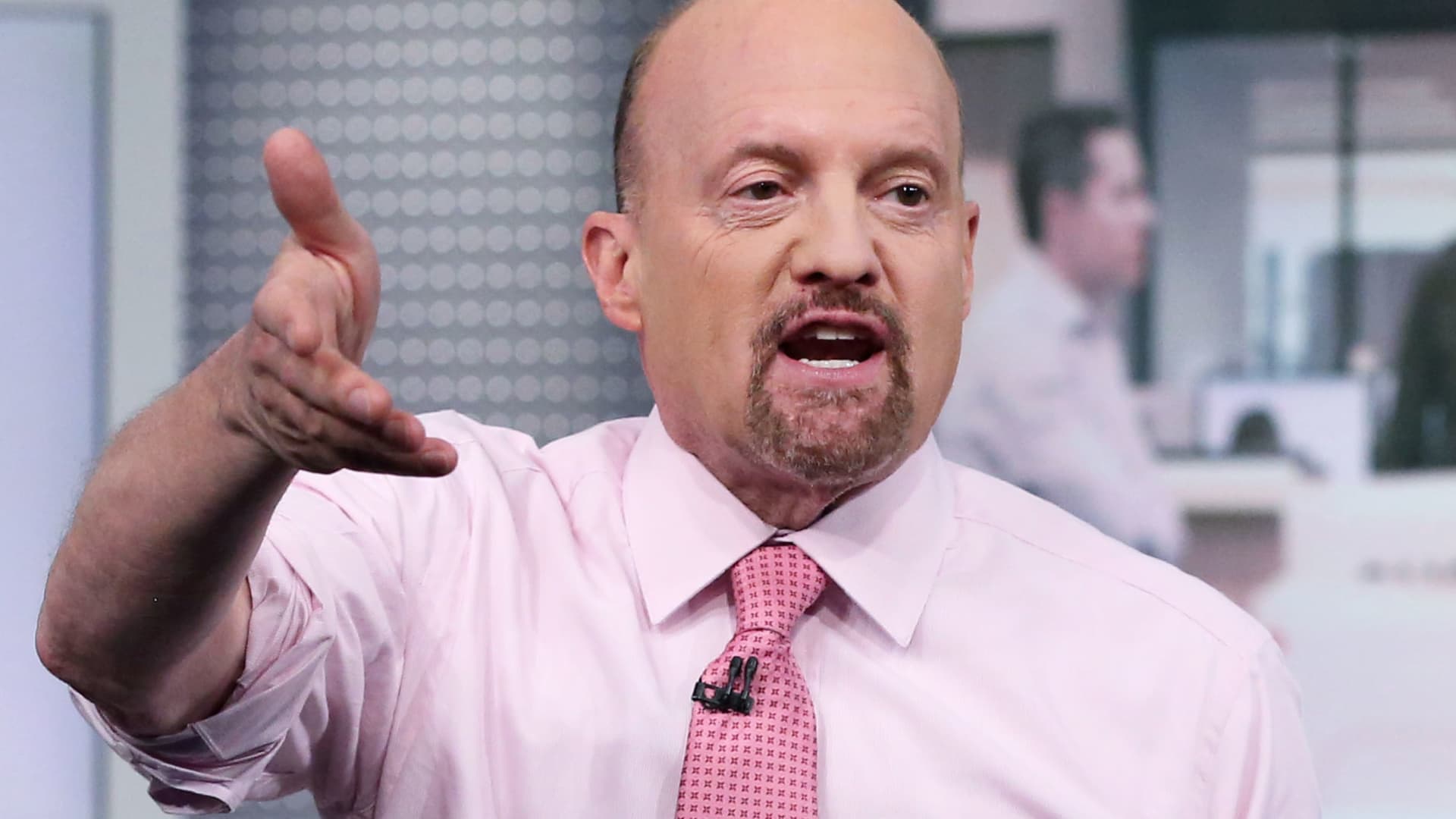
Jim Cramer cautioned that stellar earnings may still lead to sell-offs if investor expectations were unrealistically high, as seen with GE Vernova and Vertiv. Intuitive Surgical surged 14% after unexpected growth in robotic procedure usage, proving that beating expectations, not just meeting them, is key to stock momentum.

A group representing nearly all major automakers on Wednesday urged the administration of President Donald Trump not to impose tariffs on factory robots and machinery.

Investors are bracing for an upcoming reading on inflation from the Bureau of Labor Statistics — a crucial piece of the U.S. economic picture in an otherwise vacuum of government data during the shutdown.

Investors encountered another rough patch for the market on Wednesday. But more good news likely lies ahead, experts say.

Profit-taking hit several top-rated growth stocks again Wednesday. But the Nasdaq composite and S&P 500 held at key levels.

Economists say AI spending has kept the economy out of recession. When it slows, the effects could be widespread.
Jonathan Krinsky, chief market technician at BTIG, joins CNBC's 'Closing Bell' to discuss the meme stock trade, what to make of gold's pullback, and much more.
The Nasdaq falls nearly 1% with earnings season picking up.
The U.S. national debt surpassed $38 trillion for the first time this week, growing at a record pace driven by spending stemming from the aging population and elevated interest costs.

CNBC's “Closing Bell Overtime” team discusses markets after the Dow closed down 300 points amid trade fears with Barbara Doran, founder and CEO of BD8 Capital Partners.

There's a view that President Trump needs to be at the center of talks in Washington for the shutdown to end.

Worry has flared up because the S&P 500 has risen nearly 90% since its surge began in late 2022.

Liz Thomas, SoFi head of investment strategy; Stephanie Link, chief investment strategist and portfolio manager at Hightower; and Adam Parker, founder and CEO of Trivariate Research, join CNBC's 'Closing Bell' to discuss market outlooks.
Operator: Good morning, and welcome to United Community Banks, Inc.'s Third Quarter 2025 Earnings Call. Hosting our call today are Chairman and Chief Executive Officer, Lynn Harton; Chief Financial Officer, Jefferson Harralson; President and Chief Banking Officer, Rich Bradshaw; and Chief Risk Officer, Rob Edwards. United's presentation today includes references to operating earnings, pretax, pre-credit earnings, and other non-GAAP financial information. For these non-GAAP financial measures, United has provided a reconciliation to the corresponding GAAP financial measure in the financial highlights section of the earnings release as well as at the end of the investor presentation. Both are included on the website at ucbi.com. Copies of the first quarter's earnings release and investor were filed this morning on Form 8-Ks with the SEC. A replay of this call will be available in the Investor Relations section of the company's website at ucbi.com. Please be aware that during this call, forward-looking statements may be made by United Community Banks, Inc. Any forward-looking statements should be considered in light of risks and uncertainties described on Pages 5 and 6 of the company's 2024 Form 10-Ks as well as other information provided by the company in its filings with the SEC and included on its website. At this time, I will turn the call over to Lynn Harton. Good morning and thank you for joining our call today. Lynn Harton: The third quarter was a strong one for United Community Banks, Inc. Revenue grew more than $16 million compared to the second quarter, driven by an eight basis point improvement in our margin and 5.4% annualized loan growth. Our provision for credit losses declined by approximately $4 million compared to last quarter, supported by continued strong credit results and the release of $2.6 million from our Hurricane Helene special reserve. Expenses grew by only $2.9 million over last quarter or $4.3 million on an operating basis, largely due to increased incentive accruals. Taken together for the quarter, we recorded earnings per share on an operating basis of $0.75 per share, a 32% year-over-year improvement, a return on assets of 1.33%, and return on tangible common equity of 13.6%. I was pleased to see great balanced performance and teamwork across the company this quarter. All of our states delivered positive loan growth this quarter. Our treasury team and our frontline bankers have worked together with better analytics and improved communication to reduce deposit costs while continuing to grow customer deposits. As our capital continues to grow, we have taken the opportunity to both increase our dividend and redeem our costly preferred stock. Our tangible book value reached $21.59, a 10% year-over-year growth. Credit losses were only 16 basis points for the quarter and only five basis points in the core bank excluding Navitas. Other credit risk metrics such as past dues, non-accruals, and special mention all remained in very good ranges. Clearly, there have been announcements of a few cracks in the broader credit environment over the last several weeks. I believe these announcements are isolated events somewhat tied to private credit. Given the very rapid growth in private credit and the number of new entrants, it would not be surprising to see additional defaults in that sector that should have limited impact on most banks. Our own strategy has been to be very cautious and selective in considering lending to any non-depository financial institution. And accordingly, we have very little exposure there. Jefferson, why don't you cover the quarter in more detail? Jefferson Harralson: Thank you, Lynn, and good morning to everyone. I will start on page five of the deck. We were very pleased with our deposit performance in the third quarter. Excluding the seasonal public outflows, we grew deposits by $137 million or 2.6% annualized, with DDA comprising a good portion of the growth. Looking ahead to the fourth quarter, we expect about $400 million of public funds deposit inflow that will serve to make our balance sheet larger as we plan to hold the funds in cash and short-term investments. We were also able to push down our cost of deposits in the quarter to 1.97% to achieve a 37% total deposit beta so far. We have been saying we thought we could get to a high 30% range total deposit beta through the cycle, but on these first five cuts, I now believe we can get to the 40% range. In September, we averaged a 1.92% cost of deposits, so we are expecting more improvement in the fourth quarter. On page six, we turn to the loan portfolio, where our growth continued at a 5.4% annualized pace. Excluding the impact of senior care runoff, we grew loans at a 6.2% annualized pace. Our growth came primarily in the C&I, Equipment Finance, and HELOC categories. Turning to page seven, where we highlight some of the strengths of our balance sheet. We believe that our balance sheet is in good position from a liquidity and capital standpoint to be ready for any economic volatility. We have no wholesale borrowings and very limited brokered deposits. Our loan-to-deposit ratio remained low, increased for the second quarter in a row, and is now at 80%. Our CET1 ratio was relatively flat at 13.4% and remains a source of strength for the bank. On Page eight, we look at capital in more detail. As I mentioned, our CET1 ratio was 13.4%. You'll notice the impact at the end of the quarter, we redeemed the remaining $88 million of our preferred issue. All things equal, this lowered our Tier one total capital and leverage ratio towards peer levels. Our TCE ratio was up 26 basis points in the third quarter as the balance sheet stayed relatively flat. We have been fairly active in managing our capital. Since the beginning of 2024, we have now paid down $100 million of senior debt, $68 million in Tier two capital, repurchased $14 million of common shares, and now we have redeemed the $88 million of preferred. Moving on to spread income on page nine. We grew spread income 14% annualized in the quarter. Our net interest margin increased eight basis points to 3.58%, mainly driven by lower cost of funds and a mix change towards loans. We remain slightly asset sensitive, and because of this, in the fourth quarter, I would expect our net interest margin to be flat to down two basis points. A key will be how we are able to reprice the $1.8 billion of CDs maturing in the fourth quarter at 3.6%. We also have the medium-term benefit of our back book of loans and securities that will mature at low rates. In the next year, using just maturities, we have about $1.4 billion of assets paying down in the 4.93% range. Rich Bradshaw: Moving to page 10, on an operating basis, non-interest income was $43.2 million, up $8.5 million from last quarter. We had a $1.5 million BOLI gain that we do not expect to repeat and an MSR write-up of $800,000. On the slide, we mentioned that unrealized gains on equity investments swung up $2.1 million. This moved from a $500,000 loss last quarter to a $1.6 million gain as this category will bounce up and down. Besides these items, we had strong across-the-board increases in most of our fee categories. We feel good about our progress in the quarter. Operating expenses on page 11 were up $4.3 million in the quarter. This $4.3 million increase was primarily driven by higher variable compensation. With strong revenue growth in the quarter, our efficiency ratio improved to 53.1%. Moving to credit quality on Page 12. Net charge-offs were 16 basis points in the quarter, improved compared to last quarter and last year. NPAs and past dues moved a little higher off a low base as credit quality remained strong. I will finish on Page 13, with the allowance for credit losses. Our loan loss provision was $7.9 million in the quarter as compared to our $7.7 million in net charge-offs. The $7.9 million provision included a $2.6 million release of our Hurricane Helene reserve, which now stands at just $1.9 million remaining. Net-net, our allowance coverage of credit losses moved down slightly to 1.19%. With that, I'll pass it back to Lynn. Lynn Harton: Thank you, Jefferson. As we move into Q4, the optimism we mentioned last quarter for the remainder of the year seems well-founded. And as we close, I'd like to recognize our leaders throughout the footprint. We recently completed our regular employee survey and the overall results reflected very well on your care for your teams, your communication of our strategies, and the exhibition of our values. You ranked in the 92nd percentile for employee engagement compared to over 2,000 companies that did the same survey. Becoming a legendary bank begins with being a great place to work for great people. I want to thank you for what you're doing to make that a reality. Now I'd like to open the floor to questions. Operator: Yes. Thank you. We will now begin the question and answer session. And today's first question comes from Stephen Scouten with Piper Sandler. Stephen Scouten: Hey, good morning guys. Appreciate the time. I guess maybe if we could start on loan growth trends. Seemed like a really nice quarter here from a loan growth perspective. I'm wondering kind of what you're seeing within your pipelines and then also if you could talk about maybe what kind of inning we're in, in terms of the senior care runoff. And lastly, that HELOC product in growth, if there's anything unique to that product or just something you guys have been marketing a little bit more or customers unlocking existing equity, that sort of thing? Appreciate it. Rich Bradshaw: Hi, good morning Stephen. This is Rich. I'll address the loan growth. We feel we do feel very good about the loan growth. Florida led with South Carolina, North Carolina as the geography is right behind that. As Lynn mentioned earlier, this is our most balanced quarter since I've been here with all the geographies contributing. So that felt really good. I also like the heavy emphasis on C&I. We worked really hard on hiring people, strategy, pricing to really drive C&I. So that feels key. So we're very in terms of the pipelines and how that looks for Q4, we feel very it'd be a very similar type quarter, maybe slightly better. The activity is strong. The pipelines are strong and that's all been confirmed with my credit partners. So the credit teams are validating that they're seeing a lot of activity. In terms of the HELOC, we that's not by accident. We've spent a lot of time. We did a reorg in January with the one of the purposes of that reorg was a bigger emphasis on retail. And we're proud to tell you that 100% of our branch managers are now lending. That wasn't the case before and really good about that. And we've also ran a campaign throughout the year on HELOC. I'm trying to think did I answer all the questions? Stephen Scouten: Senior Care, yes. Senior Care, great point. We have about $230 million left. We had 35 runoffs roughly this quarter expect something similar feel next quarter. And then next year, we do not plan on running off the whole portfolio because some of that are long-term customers that we've been in business with a long time. But the non-part of that we do expect most of that to go away next year. Perfect. Thanks for all that color. And then, Jefferson on the deposit beta guide, anything you said you think that could get into the 40% range now. What's what leads you to believe that could get better? I tend to think about deposit betas waning as we get incremental cuts and rates get lower. So is it just a cliff of the short duration CDs that you have that gives you more confidence there or any color there would be great? Jefferson Harralson: Yes. Lot of it thanks, Stephen. A lot of it is really already been done. The some rate cuts that we've made later in the quarter. We were unsure of what we're going to see with competition. And we've been able to cut rates by a little more than we thought. We've seen CD growth even though we've customer rates it's not really so much, I think this will come to an end if we don't get any more rate cuts. But just believe that the success that we've had the last two quarters, you'll see that kind of flow through in the full quarter in the fourth. Stephen Scouten: Okay, perfect. And then just lastly for me, I think you said, let's see, fixed rate loans four ninety-three, repricing over twelve months and the CD book, I think was three sixty. Can you give me a feel for where you think at least as of today, CD yields and new loan yields would be coming on at relative to those numbers? Jefferson Harralson: Yes. The new loan yields would be in the 7% range. New CDs 3%, that's a little some variable to it. So maybe three twenty, three thirty. Stephen Scouten: Great. Appreciate all the color. Congrats on a great quarter. Lynn Harton: Thank you. Operator: Thank you. And the next question comes from Gary Tanner with D. A. Davidson. Gary Tanner: Thanks. Good morning. I wanted just to ask about capital Jefferson, you flood kind of how active you all have been since early 2024. With some of the stuff behind you including the preferred redemption, how are you thinking about capital deployment via buyback here or are you wanting to push Tier one a little higher just through earnings for a quarter? Before you can consider that? Jefferson Harralson: Thanks, Gary. So just to list out our capital priorities, Number one is organic growth. We are as Rich mentioned feeling better about where our loan growth is going. Number two and priority is the dividend. We just raised that by 4%. M and A, there's some possible opportunities out there and maybe even ones you could put some cash into and use capital that way. Buyback is on the list. We have authorization. We'll be opportunistic. But we have these the other three priorities or above it. We have used buyback in the past. We may do it in the future. But I put in the order of organic growth dividend M and A. And then buyback. Gary Tanner: Got it. Thanks. And then just on the fee side, one of the line items that I think had a notable jump was service charge income this quarter went from what 10.1% to 11.4%, if I recall correctly. Anything unusual there? Any change in the fee structure or anything you could point out to? Jefferson Harralson: Yes, nothing unusual, just some better volume there. So I cannot point to anything specifically there. Gary Tanner: All right. Thank you. Operator: Thank you. And the next question comes from Michael Rose of Raymond James. Michael Rose: Hey, good morning guys. Thanks for taking my questions. Just wanted to ask on expenses. I know you guys have talked about some hiring efforts in the back half of the year. I know some of it was incentive comp related, but just wanted to see how much of the sequential increase was related to those efforts and then what that could look like, particularly in light of some of the M and A discussion that we have going on, how opportunistic you plan to be as we move forward? Thanks. Jefferson Harralson: Yes. I'll start maybe with the expense piece and maybe talk to pass to Rich on the hiring. For the medium to longer-term expense run rate, think of us being in the 3% to 4% range. We did mention the higher variable comp this quarter. So I think that would not necessarily repeat next quarter. So I think flat is a good guide for the fourth quarter and then in general 3% to 4% growth is how you should think about where we are. Pass to Rich on how we think about hiring or Sure. Good morning, Michael. We continue to be opportunistic about hiring throughout the footprint. So we're always after top talent that's going on. I'd say the other just kind of interesting note is in the recruiting compensation incentive program usually is on the conversations and now it's kind of turned to culture. Culture tends to be first and I truthfully think that gives us an advantage. Michael Rose: Perfect. Maybe just a follow-up Gary's question. Just as it relates to M and A, I think you guys have been pretty sour on M and A prospects just given I think some pricing concerns. I want to put words in your mouth, but it does seem like you're a little bit more open than you've been kind of in the past two or three quarters at least. I assume some of that has to do with the regulatory backdrop, but are you seeing more opportunities? Meaning, are more people raising their hands at this point? And is there a better opportunity set than, say, two or three quarters ago? Just want to make sure I understand what you guys are trying to communicate. Thanks. Lynn Harton: Yes. Thank you, Michael. This is Lynn. Yes, from a regulatory perspective, we've always been really confident with the size deals that we do. So I haven't really wouldn't put the change into that category. But I would say that we are seeing more people raise their hands, to today than two to three quarters ago. So gives us a little more optimism. I mean, still early. You still got to see what develops out of that. But I think there is we are seeing more interest on the part of sellers than we have seen. Michael Rose: Okay. Very helpful. I'll step back. Thanks for taking my questions. Operator: Thank you. The next question comes from Russell Gunther of Stephens. Russell Gunther: Hey, good morning guys. Jefferson Harralson: Good morning, Russell. Russell Gunther: Wanted to ask morning Jefferson. From a balance sheet growth perspective, how should we think about average earning assets going forward? Would you guys expect securities, the investment portfolio to continue to decline from here or kind of trend water as a percentage of average earning assets? Jefferson Harralson: That's a great question. I mentioned we have a seasonal piece to our balance sheet which in the fourth quarter will be seasonally strong. Mentioned $400 million likely of public funds coming in on an average basis. That's probably $300 million for the fourth quarter. Would expect to see securities portfolio is going to be more of a derivative of how strong the deposit growth is. But I could see it being flat to slightly down in the near term. But over if you think about 2026, I would expect deposit growth there and then the securities book to flatten out. Russell Gunther: Okay. Excellent. Thank you. For that. And then just last one for me. With regard to your capital deployment. Priority list. And sort of adjacent to the securities portfolio. But how are you guys thinking, if at all, in terms of any action from a restructuring perspective with regard to the investment portfolio? Jefferson Harralson: That's a it's a great question and that is, something that we have talked about at the board level. I do not see anything imminent there but it is a conversation that we've had over the last six months and probably continue to. Russell Gunther: Okay, great. Very good. Thank you guys. That's it for me. Operator: Thank you. The next question comes from Catherine Mealor with KBW. Catherine Mealor: Thanks. Good morning. Catherine? First on credit, maybe first and I know your level of NPAs are still low, but just any kind of color on to the increase in C&I NPLs? And then just any kind of update or color you can give us on the Navitas book. It feels like the loss have normalized from the long haul trucking piece and other exposures really low. But just curious any trends that you're seeing within that book as well? Thanks. Rob Edwards: Yes. Thanks, Catherine. Good morning. This is Rob. Good morning. Catherine Mealor: Hey, Rob. Rob Edwards: Hey. On the NPA side, on the commercial side, we exited three of our top non-performing C&I credits. One was in the service business, one was in the light manufacturing business, one was in the distribution business. So we added one that was in the service business and added one two in the service business I guess and one in the light manufacturing business. So it kind of just feels like the normal cycle of movement of in and out. We are able to exit credits successfully and we'll continue to do that. So we had some come in and some go out during the quarter. Not feeling like there's any trend to be noticed there. And like you said, still from year end, we've come down from 64 basis points to 51 basis points if you look at year end till now. So we feel like it's just kind of the normal ebb and flow on the commercial NPA side. On Navitas, they've been pretty stable. I've been impressed from we acquired them seven years ago and I've been impressed at their forecasting, the complexity of how they forecast losses. And they're really right on track for how their forecast looked at the beginning of the year. And expect it to we've always said we expect loss in a normal environment to be around 1%. Of course, the long haul has taken them over that a little bit. But if you take that out, you can see that it really is just staying pretty close. We're at 92 basis points this quarter and feel like that kind of a normal range for them longer term. Catherine Mealor: Okay. Great. Very helpful. And then maybe just a bigger picture question. It feels like the NIM has seen some nice recovery over the past year and growth is improving. As we look to 2026, is this a year that you think you will still have perhaps profitability improvement and positive operating leverage? Are there any kind of investments within expenses or staff that you think that we should expect to see kind of before we get to that really big ramp in profitability? Thanks. Jefferson Harralson: Thanks, Catherine. I would think yes for 2026 and operating leverage. We're in the budget season now. I cannot imagine coming out of a budget season without strategizing operating leverage in there. And the powerful driver is going to be the margin. If you think about our loan yield at 6.21% and if you think about putting on new loans at seven, and back book coming off. You can see a nice medium-term opportunity in the margin. So I think the combination of those things is yes, we think we will continue to have operating leverage in 2026. Catherine Mealor: Great. Thank you. Operator: Thank you. And the next question comes from Kyle Guerman with the AbbVie Group. Kyle Guerman: Hey guys, good morning. Jefferson Harralson: Good morning. Kyle Guerman: Good morning. I'm shifting shift to the revenue side, I was wondering if I can get a bit more color on the core fee income and what are your expectations for the next quarter? Jefferson Harralson: Yes. I'll give that a shot. And I would say we laid a lot of that out on that fee page. If you look at the $43 million, we laid out the MSR. We do not think the BOLI that we do not think repeat. We also have the unrealized equity gains that again bounces around been a little bit negative, little bit positive, so hard to know. Think if you take those three items out, you're at a pretty good fee income run rate. Kyle Guerman: Awesome. Thank you. Jefferson Harralson: That's helpful. Kyle Guerman: Thank you. Operator: And that concludes our question and answer session. So I would like to turn the floor to Lynn Harton for any closing comments. Lynn Harton: Great. Well, once again, thank you all for joining the call. And as always, if you have any additional questions, please feel free to reach out to Jefferson or myself. And we look forward to seeing you soon and talking to you soon. Thank you so much. Operator: Thank you. The conference has now concluded. Thank you for attending today's presentation, and now disconnect your lines.

Operator: Good morning, and welcome to the Agree Realty Corporation Third Quarter 2025 Conference Call. All participants will be in listen-only mode. After today's presentation, there will be an opportunity to ask questions. To withdraw your question, please press star then 1 again. Please limit yourself to two questions during this call. Note, this call is being recorded. I would now like to turn the conference over to Reuben Goldman Treatman, Senior Director of Corporate Finance. Please go ahead, Reuben. Reuben Goldman Treatman: Thank you. Good morning, everyone, and thank you for joining us for Agree Realty Corporation's third quarter 2025 earnings call. Before turning the call over to Joey Agree and Peter Coughenour to discuss our results for the quarter, let me first run through the cautionary language. Please note that during this call, we will make certain statements that may be considered forward-looking under federal securities law, including statements related to our updated 2025 guidance. Our actual results may differ significantly from the matters discussed in any forward-looking statements for a number of reasons. Please see yesterday's earnings release and our SEC filings, including our latest annual report on Form 10-K, for a discussion of various risks and uncertainties underlying our forward-looking statements. In addition, we discuss non-GAAP financial measures, including core funds from operations, or core FFO, adjusted funds from operations, or AFFO, and net debt to recurring EBITDA. Reconciliations of our historical non-GAAP financial measures to the most directly comparable GAAP measures can be found in our earnings release, website, and SEC filings. I'll now turn the call over to Joey Agree. Joey Agree: Thanks, Reuben, and thank you all for joining us this morning. I'm pleased to report another very strong quarter at Agree Realty Corporation as we further expanded and strengthened what we view to be the nation's leading retail portfolio. The unmatched value proposition of our three-pronged approach continues to drive a compelling opportunity set and expansive pipelines across all platforms. We achieved our largest quarterly investment volume since the depth of COVID five years ago, deploying over $450 million across all three platforms, while maintaining a high level of discipline in our underwriting process. Given growing pipelines across our three external growth platforms, we are increasing our full-year 2025 investment guidance to a new range of $1.5 to $1.65 billion. At the midpoint, this represents an increase of over 65% above last year's investment volume. This exceptional level of activity demonstrates our ability to efficiently scale our investment platforms while partnering with the best retailers in the country. We will continue to be disciplined capital allocators while maintaining our stringent real estate quality underwriting standards. Our best-in-class portfolio is paired with a fortress balance sheet that is over $1.9 billion of liquidity and no material debt maturities until 2028. With 3.5 times, and over $1 billion of forward equity available to us, we enjoy significant runway and have prefunded our growth well into next year. During the quarter, we received an A- issuer rating from Fitch Ratings, making us one of only 13 publicly listed U.S. REITs with an A- credit rating or better. This was a significant milestone for our growing company and is a testament to over fifteen years of disciplined growth and keen portfolio construction, having invested over $10 billion during that period while maintaining a preeminent balance sheet and leading the way on capital markets activities. Given our robust liquidity profile, fortress balance sheet, and strong portfolio performance, we are raising our AFFO per share guidance to a new range of $4.31 to $4.33 for the year. The new midpoint represents approximately 4.4% year-over-year growth. Peter will provide more details on our guidance momentarily. Turning to our three external growth platforms, during the third quarter, we invested over $450 million in 110 high-quality retail net lease properties across our three platforms. This includes the acquisition of 90 assets for over $400 million. The properties acquired during the quarter are leased to leading operators in home improvement, auto parts, grocery, off-price, farm and rural supply, convenience stores, and tire auto service. The acquisitions had a weighted average cap rate of 7.2% and a weighted average lease term of 10.7 years. Investment-grade retailers accounted for 70% of the annualized base rent acquired, the highest mark so far this year. Notable transactions during the quarter included a sale-leaseback with a relationship tenant in the tire and auto service sector, multiple Aldis, a high-performing Kroger in Cincinnati, a Sherwin-Williams portfolio, a Home Depot in New York, as well as a Walmart Supercenter in Illinois. Through the first nine months of the year, we've invested nearly $1.2 billion across 257 retail net lease properties spanning 40 states and 29 retail sectors. Approximately $1.1 billion of our investment activities originated from our acquisition platform, with the remainder emanating from our development and developer funding platforms. During the third quarter, we commenced five development for DSP projects with total anticipated costs of approximately $51 million. We are well on our way to commencing over $100 million of projects in the second half of the year as discussed on last quarter's call. Through the first nine months of the year, we've committed approximately $190 million across 30 projects that are either completed or under construction, representing a significant increase in development and DFP spend compared to prior years. We remain confident that we'll achieve our medium-term goal of $250 million commenced annually. In the third quarter alone, we invested a record of approximately $50 million across 20 development and DXP projects, representing a twofold increase in capital deployment quarter over quarter. These platforms are a growing component of our investment strategy, allowing us to partner with best-in-class retailers and private developers to add high-quality real estate to our portfolio at superior returns that we can achieve via acquisitions. Of note, during the quarter, we commenced construction on two of our first 7-Eleven developments. Located in Michigan and Ohio, we anticipate total costs for the two projects will be approximately $18 million. The Ohio location marks our first commercial fueling site for 7-Eleven, a compelling addition to our large-format convenience store portfolio. These projects underscore the strategic depth of our relationship with yet another leading retailer. We're delivering our full complement of capabilities: round-up development, developer funding projects, as well as acquisitions. I look forward to providing more details as we continue to roll out additional projects in the coming quarters. On the asset management front, we executed new leases, extensions, or options on approximately 860,000 square feet of gross leasable area during the quarter, including the 50,000 square foot TJ Maxx and HomeGoods combo in Eugene, Oregon, a 27,000 square foot Burlington in Midland, Texas, and two Walmarts comprising over 310,000 square feet. Through the first nine months of the year, we executed new leases, extensions, or options on 2.4 million square feet of gross leasable area with a recapture rate of approximately 104%. We are in an excellent position for the remainder of the year, with just nine leases or 20 basis points of annualized base rents maturing. Dispositions this quarter totaled approximately $15 million and included our only At Home in Provo, Utah, as well as three Advance Auto Parts. The At Home disposition is emblematic of our underlying focus on real estate. The disposition cap rate of approximately 7% is nearly 50 basis points inside of where we acquired the asset, resulting in an unlevered IRR of approximately 9%. Our best-in-class portfolio now spans over 2,600 properties across all 50 states, including 237 ground leases representing 10% of total annualized base rents. Occupancy for the quarter remained very strong at 99.7%, and our investment-grade exposure remained sector-leading at 67%. Heading into the fourth quarter, we are extremely excited to wrap up the year as we head into 2026 in a tremendous position as our earning algorithm kicks into gear. I'll now hand the call over to Peter, and then we can open it up for questions. Peter Coughenour: Thank you, Joey. Starting with earnings, core FFO per share for the third quarter of $1.09 was 8.4% higher than the same period last year. AFFO per share for the third quarter increased 7.2% year over year to $1.11, which is $0.02 above consensus. A portion of the beat is attributable to lease termination fees, which contributed roughly $0.01 to AFFO per share in the quarter. As Joey highlighted, we have updated our 2025 earnings outlook to reflect our strong performance year to date. We raised both the lower and upper end of our full-year AFFO per share guidance to a new range of $4.31 to $4.33, which implies year-over-year growth of approximately 4.4% at the midpoint. Our new guidance range includes an assumption for approximately 25 basis points of credit loss for the year. As a reminder, the treasury stock method impact is included in our diluted share count prior to settlement if Agree Realty Corporation stock trades above the net price of our outstanding forward equity offers. The aggregate dilutive impact related to these offerings was fairly de minimis in the third quarter. Our updated guidance range contemplates a minimal treasury stock method dilution in the fourth quarter as well, though that remains subject to how the stock trades for the remainder of the year. For full-year 2025, we still anticipate roughly $0.01 of dilution related to the treasury stock method, largely given the impact recognized in the first half of the year. In the third quarter, we declared monthly cash dividends of $0.256 per share for July, August, and September. This represents a 2.4% year-over-year increase. While raising our dividend twice over the past year, we maintained conservative payout ratios for the third quarter of 70% of core FFO per share and AFFO per share, respectively. Subsequent to quarter end, we again increased our monthly cash dividend to $0.262 per share for October. The monthly dividend reflects an annualized dividend amount of over $3.14 per share or a 3.6% increase over the annualized dividend amount of $3.04 per share from the fourth quarter of last year. Moving to the balance sheet, as Joey mentioned, in August, we achieved an A- issuer rating from Fitch with a stable outlook. This significant accomplishment is a testament to the strength of our portfolio as well as our balance sheet and reflects the thoughtful and disciplined way we have and will continue to grow the company. The A- rating reduced the interest rate on our 2029 term loan by five basis points. In addition, the F1 short-term rating assigned by Fitch translated into a similar pricing improvement for our commercial paper notes. During the quarter, we settled approximately 3.5 million shares of forward equity for net proceeds of over $250 million. As of September 30, we had approximately 14 million shares remaining to be settled under existing forward sale agreements, which are anticipated to raise net proceeds of over $1 billion upon settlement. At quarter end, total liquidity stood at $1.9 billion, including cash on hand, forward equity, as well as over $850 million of availability on our revolving credit facility, which is net of amounts outstanding on our commercial paper program. Pro forma for the settlement of all outstanding forward equity, our net debt to recurring EBITDA was approximately 3.5 times. Excluding the impact of unsettled forward equity, our net debt to recurring EBITDA was 5.1 times. Our total debt to enterprise value was approximately 29%, while our fixed charge coverage ratio, which includes principal amortization and the preferred dividend, remains very healthy at 4.2 times. Subsequent to quarter end, we further strengthened our balance sheet, securing commitments for a $350 million five-and-a-half-year delayed draw term loan that will mature in 2031. We anticipate closing later this quarter and have entered into $350 million of forward-starting swaps to fix SOFR until maturity. Including the impact of the swaps, the interest rate on the term loan is fixed at approximately 4% based on our current A- credit rating. The term loan demonstrates continued strong support from our key banking partners and enables us to fill a gap in our debt maturity schedule while achieving opportunistic pricing in today's rate environment. Upon closing, the term loan will increase our pro forma liquidity to approximately $2.2 billion, and we have now locked in attractively priced equity and debt capital to fund our growth well into 2026. With that, I'd like to turn the call back over to Joey. Joey Agree: Thank you, Peter. At this time, we will open it up for questions. Operator: Thank you. We will now begin the question and answer session. Please limit yourself to two questions during the call. We'll take our first question from Smedes Rose at Citi. Nick Joseph: Thanks. It's Nick Joseph here with Smedes. Appreciate the color around the treasury method for the forward equity. But can you just walk through what's required in terms of the actual timing and settlement, just given the upcoming expirations around the forward equity? Peter Coughenour: Sure, Nick. In terms of our outstanding forward equity, we have about 14 million shares of forward equity outstanding as of the end of the third quarter. Roughly 6 million of those shares have contracts that mature at some point during the fourth quarter. And so we anticipate settling those shares, those 6 million shares, at some point during the fourth quarter as those contracts come to maturity. As for the remainder of the outstanding forward equity, we would anticipate settling that at some point in 2026. Nick Joseph: Thanks. That's very helpful. And then just on acquisitions, I understand the visibility is limited, but it does continue to track ahead of expectations. But is there anything on the horizon that you're seeing right now that could slow that pace that you're currently seeing? Joey Agree: Nick, it's Joey. Nothing on the horizon that we see that pace slowing in 2025. Obviously, the ten-year treasury is down to the 3.95, 3.96 level, but we haven't seen anything that just slows down this year. Nick Joseph: Thank you. Thanks, Nick. Operator: We'll move next to Michael Goldsmith at UBS. Michael Goldsmith: Yes. Good morning. Thanks a lot for taking my questions. First on the cap rates, the acquisition cap rates actually ticked up in the period, and we keep hearing from others about the pricing landscape, and there's a narrative of increased competition. So are you seeing any of that there? And how have you been able to navigate some of those headwinds that others are seeing? Joey Agree: Yeah. As I talk about all, you know, pretty frequently, Michael, I wouldn't get overly enthralled with the narratives that are out there from different institutional acquirers. We haven't seen any material change in cap rates year to date through September 30. Or frankly, today. What we do is differentiated. It's bespoke. We're doing one-off transactions generally, short-term, blend and extends. Different types of transactions. And the output this quarter was 10 basis points higher than last quarter just because of the composition. So, like I said, I wouldn't get carried away in the overall narratives of the largest, most fragmented, at least institutionally owned market in commercial real estate, that being retail net lease. Michael Goldsmith: Thanks for that, Joey. And as a follow-up, the fourth quarter implied AFFO per share is with the third quarter. So any reason why that would be kind of flat sequentially or any one-time items that impacted the third quarter or impact the fourth quarter that to expect that to be kind of consistent? Joey Agree: I'll turn it over to Peter, but I don't really see anything. I think the third quarter was fairly front-loaded in terms of acquisition volume. Nothing overly material there, Peter. Am I missing anything? Peter Coughenour: No. Michael, the only thing I would add is just in my prepared remarks, I did mention the term fees received during the third quarter, which contributed to AFFO per share in the third quarter. We typically don't receive much in the way of term fees. We don't have anything contemplated in the fourth quarter. And so as you look at Q4 being roughly flat at the midpoint to Q3, I think the term fees are a contributing factor there. Michael Goldsmith: Thanks very much. Good luck with the fourth quarter. Joey Agree: Thanks, Mike. Operator: Our next question comes from Jana Galan at Bank of America. Jana Galan: Thank you. Good morning. Following up on your comments on the growing pipeline for the different external growth platforms, can you talk to how much is current tenants versus new to portfolio? And then kind of where you see cap rates trending for Q4 and potentially into 2026? Joey Agree: Good morning, Jana. No new tenants that I can think of that we don't already own existing in the 2,600 assets. Staying within our sandbox amongst all three external growth platforms. In terms of cap rate trends, we'll see how the macro works out. Again, we haven't seen anything different to date. We don't anticipate any material deviation in Q4. Our Q4 pipeline in terms of acquisitions is very strong. I will say that there's a significant component of ground leases in there in Q4. And then as we've said previously, we anticipate breaking ground at over $100 million projects in the second half of this year. Obviously, that was approximately $50 million in Q3. Would anticipate a potential acceleration of that as well into Q4 through development and developer funding platform. Jana Galan: Thank you, Joey. And then, maybe for Peter, you had mentioned in the guidance, there's 25 basis points of credit loss. Can you just kind of update us on where you stand as of the third quarter? Peter Coughenour: Yes. So in the third quarter, we experienced just under that, about 21 basis points of credit loss during the third quarter. To your point, for the year, we're assuming in our guidance range of approximately 25 basis points of credit loss. And with only a couple of months left here in the year, at this point, most of that is known or identified at this point. Again, I do want to reiterate, I know we've talked about it on past calls, but how we think about credit loss here. That is a fully loaded number inclusive not only of credit events but also of any occupancy loss related to releasing assets that may not have been tied to a tenant that is in any form of distress or having credit issues. It also includes not only base rent but any nets associated with any space that we get back and that we're responsible for during a period of downtime. And so fully loaded number, I think, it's different than somehow others in the space think and talk about credit loss. And again, 25 basis points is what we assume for the year. Jana Galan: Great. Thank you very much. Joey Agree: Thanks, Jana. Operator: We'll move next to Jim Kammert at Evercore. Jim Kammert: Good morning. Thank you. Joey, maybe I should have been listening more carefully. Did you indicate or say that on the releasing activity in aggregate, it was 104% recovery for the quarter? Or did I mishear that? Joey Agree: That's correct, Jim. Jim Kammert: And is that and what could you remind me what the year to date was? Is that... Peter Coughenour: You're right. Can't recall. Yeah. So we've released 2.4 million square feet of GLA year to date with the recapture rate of 104%. And through the first six months of the year, we were also at 104%. And so that recapture rate has trended pretty steadily around that 104% throughout the year. Jim Kammert: Okay. My apologies. Great. And then obviously, Peter, you mentioned obviously you have the new term loan that will be funding here in November probably. There's no given you have no unsecured maturities, etcetera. As you say, we just think about it as liquidity and you're putting in cash or just pay down the line. There's no real target use for the funds immediately. Peter Coughenour: Yes. So we'll close on that term loan in November. We have a twelve-month delay draw feature on that term loan, and so we don't necessarily need to draw down the proceeds right away. We have flexibility there. In terms of when we draw those proceeds down, what the intended use is, we do have about $390 million of outstanding commercial paper notes as of the end of the quarter. And so I think the intended use will be to pay down short-term borrowings with any remaining funds used to fund incremental investment activity. Jim Kammert: Great. Thanks for the clarification. Thank you. Peter Coughenour: Thanks, Jim. Operator: Next, we'll move to Linda Tsai at Jefferies. Linda Tsai: Hi. With the ground leases being a bigger portion of the Q4 acquisitions and 10% of the overall portfolio ABR, any thoughts on how much you want to grow this piece of the business? Joey Agree: We'd love to continue to grow it, Linda. We're going to do so opportunistically if we find opportunities that obviously hurdle qualitatively and quantitatively, we're going to strike. Like I said, there are a number of ground leases, a much higher percentage in Q4 currently. That could change here as we wrap up sourcing for Q4 over the next couple of weeks. But they're just opportunistic sellers here generally that we're finding opportunities, institutional as well as individual sellers. Linda Tsai: Thanks. And then, I know you said, you know, the term fees are always minimal for you always, but would you be okay sharing who the retailer was in Q3? Joey Agree: Yeah. That was two Advance Auto Parts stores that we liked the real estate and we are actively working on tenanting those assets. You'll also notice we divested of a few Advance Auto Parts during the quarter, as I mentioned during the prepared remarks. So just continuing to diversify the portfolio and take advantage of opportunities. Operator: Thanks. We'll move next to Omotayo Okusanya at Deutsche Bank. Omotayo Okusanya: Yes. Good morning, everyone. Good to see you guys firing on all cylinders. The credit rating, the upgrade, you just talk a little bit about how you expect that to ultimately impact your cost of debt? Are you suddenly, you know, 25 bps tighter or, like, how do we kind of think about that as a potentially a long-term debt and maybe term loan funding? Peter Coughenour: Sure. I think with the receipt of the A- rating from Fitch during the quarter, we saw an immediate impact on our existing 2029 term loan where we saw five basis points of pricing improvement there. We were also active issuing commercial paper during the quarter and we saw a similar pricing improvement on commercial paper issuance after receiving the A- rating. We think about long-term debt issuance in the public markets going forward, I certainly think the A- rating helps. I think it's validation of the manner in which we've built the company in a very conservative manner, the strength of balance sheet and our portfolio. And frankly, what we hear from fixed income investors about how they view the credit today. And so I think in time that will allow us to continue to compress spreads and achieve better pricing in the public unsecured markets when we come back to those markets. But we've seen immediate pricing improvement on our term loan and commercial paper issuance this year as well. Omotayo Okusanya: That's very helpful. And then on the DFP side, could you just talk a little bit about again, you're ramping up pretty nicely. You guys have put out a really good target for that business, which implies a decent amount of growth and demand. I mean, probably every other property type everyone's kinda talking about development is really, really hard whether it's due to construction costs or what have you. So could you just talk a little bit about what's driving all of a sudden, you know, your ability to kind of ramp up that business? Joey Agree: Yeah. Just to clarify. When development, we talk about the Speedway projects in the prepared remarks, those are true development projects. We're working hand in hand. The team here with 7-Eleven Speedway, everything from site selection to entitlements and permitting, A and E, overseeing construction, and turning over. So that's true organic development projects, Agree Realty working with 7-Eleven hand in glove. The developer funding platform is really being utilized as a bridge for developers to get projects complete. And many times in the developer funding projects, usually we're providing the capital as more of a financial structure. We own the asset upon completion. The developer is able to obtain a TIF to help make his numbers work or her numbers work on their side of the equation. Or we'll retain out lots or ancillary real estate where they see eventual upside. I will note both pipelines have both platforms, excuse me, have deep pipelines. There are some fairly large projects also in both platforms right now that could hit in Q4 or due to entitlement and permitting issues could hit in Q1. That's why we've got kind of a wide stance there in terms of what we're anticipating. But that number could be well over $100 million or could move to for the back half this year, as I mentioned, or could move into Q1 really out of our control, third-party municipal and governmental control there. Omotayo Okusanya: Great. Thank you. Joey Agree: Thanks, Tom. Operator: We'll move next to John Kilichowski at Wells Fargo. John Kilichowski: Good morning. Maybe just starting off, given the distress we've seen in autos this year, I think there was an announcement this morning for a subprime lender. How do you think about your exposure there? And are there any of those tenants entering watch list territory for you? Joey Agree: No. I think the subprime lending market actually plays into our thesis on, frankly, auto parts, the distress you're seeing in those borrowers. Every day is a new record for cars on the road. Auto parts, obviously, is a substantial part of our portfolio being number five in terms of sector concentrations at 6.8% where amongst O'Reilly's and AutoZone's largest landlords and partners. I'll be down in O'Reilly pretty soon with the team here. We continue to work with leading auto parts operators and then, obviously, Gerber Collision as well. But I think that really plays into the hands here. We're not ownership of, we're not owning new car dealerships. That's not our business. And so we're really focused on the age of the cars on the road, the durability of cars on the road, and ultimately the fungibility of the boxes of the real estate that we're acquiring. So we put a white paper out on that. It's on our website, and I think it we stayed aligned with that thesis. John Kilichowski: Got it. That's very helpful. And then maybe jumping to the 7-Eleven developments there. Are those discussions for new builds on a one-off basis? Or is there any sort of visibility in a larger opportunity set there where you have some idea of what the runway is? Joey Agree: The latter. We're working with 7-Eleven in defined geographic territories and have a pipeline of opportunities behind this. John Kilichowski: Got it. Very helpful. Thanks, Joey. Joey Agree: Thanks, John. Operator: Next, we'll move to Rob Stevenson at Janney. Rob Stevenson: Good morning. Joey, given the spreads on developments over comparable acquisitions and the fact these already have tenants in place, what's the limiting factor for you today in terms of growing that beyond the sort of $250 million in the external growth story? Is it the construction partners and finding those? Is it targeted tenants and their expansion or just a reluctance to make this too big of a percentage of the balance sheet? Joey Agree: Again, we're not doing anything on a speculative basis here. We know our returns when we go into the project here. So we have everything in hand when we are when we close, including a guaranteed maximum price bid from a general contractor for that contract. Is executed. The only limiting factor is opportunities. I'd love to grow it, commensurate, obviously, with the returns being appropriate. Would love to grow it more. And I think you've seen this material acceleration in these platforms. We hope to continue to materially accelerate it further. As I talked about, there is a deep pipeline behind this. Where we do have visibility. These are projects that generally take twelve to eighteen months. Sonic acquisitions will return and burn in sixty to seventy days, and so we are working actively through site selection permitting in We've closed projects subsequent to the quarter end. And we will close more projects this quarter, first quarter, and second quarter, or next year. Rob Stevenson: Okay. And then in terms of conversations with major tenants, anybody changing, like or thinking about expanding or shrinking the size of their prototypical boxes for example, a typical 10,000 square foot tenant wanting to downsize towards 7,500 square feet going forward or upsizing to 15,000? Any sort of material changes to any of your major tenants' boxes preferred boxes going forward? Joey Agree: No, it's a great question. Tenants are always tinkering with their prototypes and square footages for those different prototypes. We've seen a move to a larger prototype, obviously. There's always been nothing material in terms of just quantity of tenants changing prototypical structures. What we've seen over the last few years, frankly, is more of the focus on elements here. And the pickup from store, the parking spaces, the drive-throughs, the pickup windows, those are the types of elements we've seen a lot more change than prototypical size. Rob Stevenson: Okay. Guys. Appreciate the time this morning. Joey Agree: Thank you, Rob. Operator: We'll go next to Spencer Glimcher at Green Street. Spencer Glimcher: Thank you. Maybe just another one on the development front. In your conversations with these clients, are you getting a sense of future growth appetite beyond these initial projects that are either commenced during some form of zoning or entitlement? And then if so, how much confidence does this give you in your ability to achieve those annual DFP goals that you outlined, Joey? Joey Agree: What we hear from major tenants in the largest retail in this country is they want to grow, grow, grow, grow, grow their store base. I think I talked about it on the last call. There was too much attention in terms of both physical attention, mental attention, and capital turned to distribution for e-commerce. And what all retailers have now realized is the store is the hub of a successful omnichannel operation and not just a spoke. And so whether it's auto parts or off-price, Walmart, Costco, BJ's, Home Depot, Lowe's, all the way down, obviously, to the fast-food operations, that we're seeing today. C stores are growing voraciously across this country. It's the continued expansion mode even in the face of tariffs and construction costs and the other macro challenges that are out there. Will you repeat the second part of your question, Spencer? Spencer Glimcher: No. Well, I was just asking if you have a sense of their, like, near-term growth appetite, if that gives you confidence in achieving those annual DFP goals, you know, the few hundred million that you want to put to work in that vertical. Joey Agree: Yeah. Look. We were lucky enough to have the president of a major off-price retailer up here speak to our board and talk about their growth ambitions with their differentiated banners recently. Speak to the entire real estate team, Yeah. That gives me confidence, but it also gives me, I think, the most confidence is our capabilities and our team here and the fact that we can effectuate all three growth platforms. And I'll tell you, I think what we've created here, and I talked about this a little bit on the last call, is a different type of net lease company. And I think it's imperative now that the sell side and the buy side start being discerning about the types of net lease companies. I know it's easy to group companies, obviously, in property types and sectors. But we have companies in the net lease space that are high yield spread investors, that are sale-leaseback organizations, are global investors across asset classes, And now we have Agree Realty Corporation, which is a real estate company that happens to be in the retail net lease space. And so when we talk about these other two platforms and acquisitions is in the obviously, that's predominance of the investing capital will put to work this year, and I assume next year and the year after, it's not typical spread investing anymore. You know? And I talked about it. I grew up on a site moving dirt, and the goal was always to create that real estate company in the net lease space. And so we started as a developer, and it's quite ironic. We launched the acquisition platform, and we had never acquired a property in 2010. Development kind of dropped off the radar, but was still a small piece of what we were doing at the time. Today, we're in a position where we can invest and have invested in all three platforms, and they are firing on all cylinders. And I think it's time for everyone to use, hopefully, a different I would hope a different lens when they're viewing net lease companies than just multiple spreads because we have a lot of different types of businesses on operations and, frankly, investment philosophies in this space. And what we're doing today is differentiated. It's been fifteen years in the making, as I've talked about. In prepared remarks. And it's here and it's here now. And so we're excited about development. We're excited about the developer funding platform. We're excited about the acquisition platform. And I'll tell you, retailers are just as excited with us we can help them grow across all of those different efforts. Spencer Glimcher: Okay. Great. Thank you for that color. And then maybe just one on the ground lease front. You've recently had a really favorable releasing outcome with an existing ground lease. Can you just remind us if you have any other near-term lease maturities? And would you expect to have similar favorable outcomes? Joey Agree: We have a few there, I'll call naked leases, don't have any options. Nothing overly material. We have had a vacant Brinker ground lease Brinker backed ground lease sitting out front of a former border's my father developed, which is now a Walmart neighborhood market. Which is shorter term in nature. But nothing overly material in 2026. There will be a significant mark to market opportunity. Spencer Glimcher: Okay. Thank you. Joey Agree: Thanks, Spencer. Operator: We'll go next to Upal Rana at KeyBanc Capital Markets. Upal Rana: Great. Thanks for taking my question. I wanted to get your stance on the current consumer environment given continued ambiguity on the macro tariffs and softness in the jobs market, have you noticed any impact starting to creep into any industry categories you have exposure to? You already mentioned auto parts earlier, but any other categories that you'd you're seeing any impact? Joey Agree: I think we're seeing positive flow through for the majority of the vast majority of the categories we invested. And so we're not doing entertainment. We're not doing experiential. We're not doing anything fun. We are the trade down. We own the trade down. Walmart. TJX, auto parts. Right? So we own we focus on the trade down. And so we're our tenants are the beneficiaries. Generally speaking, of that trade down effect. And it continues to permeate I think most notably right now, the middle class. The target customer is shifting to TJX and Walmart. We see that in their prints. And so that middle-class customer is trading down to our tenant base. We love Target. I think we own two or three, three of them. But we see that tenant that customer trading down looking for savings, and being a more discerning shopper today. Upal Rana: Great. That was helpful. And then are you seeing an impact on the accelerated depreciation policy from the big beautiful bill creeping in as well? On the transaction market or the ten thirty-one market? Joey Agree: Not in any spaces we file. You know, maybe in the car wash space where you get the accelerated depreciation with ten thirty-one or private investors. Maybe on the edges on the C store space. But nothing overly beautiful. Upal Rana: Okay. Great. Thank you. Joey Agree: Thank you. Operator: We'll take our next question from Eric Borden at BMO Capital Markets. Eric Borden: Hey, good morning everyone. Just going back to the forward equity contracts, Peter, can you remind us if forward equity in place has to be settled before the date of expiry or can those agreements be rolled forward? Peter Coughenour: Yeah. I think there's certainly the opportunity to go back to the banks or counterparties to extend those contracts if we thought that was the appropriate thing to do. I think for a few reasons, we think it makes sense to settle our upcoming forwards at maturity. First and foremost, it's not like we're going to be sitting in cash when we settle that forward equity. We have $390 million of short-term borrowings outstanding as of quarter end. And obviously, as we continue to invest, that number will grow. And so I think there is a use of proceeds for the forward equity settlements that we have contemplated here in the fourth quarter. And I think there are other considerations as well when you think about extending those contracts from a rating agency or leverage perspective. Eric Borden: Okay. Thank you. And then can we get your early thoughts on the Series A preferred shares that be redeemed in September? Peter Coughenour: We think that is a very attractive piece of paper today, and I would not anticipate that that gets called anytime in the near future given the coupon on it, which was the lowest recoupon in history for preferred outside of PSA, and we continue to view that as an attractive piece of paper. Eric Borden: Alright. Thank you very much. Peter Coughenour: Thank you. Operator: Next, we'll go to Brad Heffern at RBC Capital Markets. Brad Heffern: Yes. Good morning. Thanks, Erway. Joe, you talked about cap rates not really changing them in a material way. I'm wondering why you think that is I mean, obviously, we've seen cost of debt come down quite a bit. So first, hopefully, moving lower. And we've heard these anecdotes about increased competition. So we're spreads just anomalously narrow before and they're getting back to normal levels now? Or is there something that you would call out? Joey Agree: Just to clarify, Brad, I'm not predicting cap rates for 2026. I'm just talking about my visibility into 2025. By the time I had any visibility into 2026, we'll get a new true social post and something will change. So I'm not predicting it. We just haven't seen any material change in cap rates year to date, and I don't expect it in 2025. Obviously, things outside of our control will drive that overall narrative, but we'll continue to try to look for opportunities to push cap rates. And obviously, when we transact, where we think the appropriate pricing levels are. Brad Heffern: Okay. Got it. Then I know you've had kind of a self-imposed hiatus on new equity issuance since the April offering, and obviously, have plenty of equity as you sit here today. But I'm curious how you view the attractiveness of equity right now and when you might look to issue again? Joey Agree: I appreciate the, yeah, self-imposed hiatus. I hadn't thought I hadn't thought about that way. When we did that deal, we promised investors and we stick to our word here. Consistency is the third slide in their deck. We told investors, we're not coming back. Right? And then that's what we've done. We obviously don't need to raise equity. At 3.5x levered and $1 billion Peter in liquidity. Is that correct? $1.2 including the term on the close. So we obviously don't need to raise any cap. The term loan, as Peter mentioned, the delayed draw feature of that term loan gives us a lot of flexibility. And so when we raised that equity, I guess we did put on a self-imposed hiatus. But I think the most important piece of that was that we stayed true to our word to investors, that we work at a constant be flooding the equity markets with new issuance, whether it would be the ATM or, obviously, block or overnight transaction. We'll continue to look, obviously. We're an ex-growth driven company as a net lease REIT. We are growing. We'll continue to look at all different types of access to sources of capital. But we're in the pole position here. Peter, we can spend how much until we got the five times levered? We could spend approximately $1.5 billion excluding free cash flow until we get to five times. We can execute on the high end of our investment guidance range this year without raising any additional equity and we would end the year at four times pro forma net debt to EBITDA. So we have plenty of runway, and we're in a great position. They add in free cash flow next year of over $125 million minimally. And then you add in disposition proceeds, and we clearly don't need a dollar. And no debt maturities. We maintain full flexibility. I think the most important thing to I appreciate, again, the self-imposed hiatus was we want to be consistent with investors so they understand where we're going and what we're doing. This is net lease. It should be predictable. Brad Heffern: Got it. Thank you. Operator: Our next question comes from Wes Golladay at Baird. Wes Golladay: Hey, good morning, guys. I want to I have a question on the true development platform. Are you willing to develop for all your targeted tenants? Or do you have do you view some as being a little bit more risk or too complex? Joey Agree: Interesting question. Complexity certainly would not be an issue. We generally stick to rectangles. Those aren't overly complex. We're not building anything overly difficult. Yeah. I think we would. I can't think one off thing off my hand of when we wouldn't develop for. Again, all three platforms are targeting the same tenant base. And so, will we do industrial for those retailers or distribution? No. But will we develop their traditional retail formats? Certainly. I'll tell you, we have been approached to develop in Canada. That's a no. We have been approached in other instances to try new concepts. That's generally a no as well. We're not interested in 180,000 square foot sporting goods experiential constructs. And so but I think would tell you for 95% of them, yeah. We will develop. We will use our developer funding platform, and we will acquire third-party or sale-leaseback. Wes Golladay: Okay. Thank you. Joey Agree: Thank you. Operator: Next, we'll go to RJ Milligan at Raymond James. RJ Milligan: Hey. Good morning, guys. Joey, I just wanted to get your higher level views as we look into 2026. Third quarter, invested volume jumped quite a bit. You've got all the growth platforms that are delivering. You've got just a debt and equity lined up with the forwards and the term loan. Guidance for this year is about $1.6 billion of investment volume. And so two questions. Would you want to do more next year in terms of investment volume? And two, is the gating factor really what's just available on the market? Or is there is there, like, a number of incremental investment activity that just doesn't deliver enough, so you'd wanna smooth it out. I'm just trying to gauge, like, what levels of investment volume are you comfortable on a longer-term basis? Joey Agree: A great question, RJ. We have never thought of pacing. Here. We don't do pacing. We take advantage of opportunities. We turn windows into doors, and then we sprint through them. And so whether it was COVID, or whether it was a disruption from a macro perspective or when we launched the acquisition platform, if we find a $5 billion transaction that fits this company's profile from a quality perspective, and it provides for accretive spreads and making up the number 5 billion, obviously. Will strike. And so I don't think of any gating factor except qualitative and quantitative hurdles. We have a cost of capital. We now have 93 team members here. We or 90 team members. Excuse me. We've hired 23 new team members this year. Hence the increase in the in G and A as a percentage of revenue in the updated guidance. Don't anticipate anything like that. We are built to grow. Only thing that will limit that growth is opportunities, and we will not stretch long. RJ Milligan: Okay. That's helpful. That's it for me, guys. Thank you. Joey Agree: Thanks, Kevin. Operator: We'll go next to Rich Hightower at Barclays. Rich Hightower: Hey, good morning guys. Thanks for taking the question here. I guess Joey, just to continue the line of thinking from the last question, you know, you just talked about it, you've talked about it before sort of increasing the size of the investment team. And so I guess, you know, all else constant, does that is it reasonable to think that that implies you can sort of continue along the pace of acquisitions, and other deal volumes, you know, that you that you sort of pasted in the third quarter going forward, or is that not the right way to think about that? Joey Agree: Well, I think the size and scale of the team is to accommodate all different types of transactions. That we're managing, and we don't see that as a constraint. Right? Again, it's opportunity dependent. Q4 will be a strong quarter for us. We know what development in DFP looks like going into 2026 for the first half right now, and that looks strong. But, again, we are able to handle 400 discrete transactions. We had 110 transactions, not including dispositions or leasing in Q3 alone. And the team has incremental capacity. We continue to invest in systems. We're launching ARC 3.0 in 2026. We continue to lean out and eliminate waste and inefficiencies here. And the team continues to get better at all levels. We've built redundancy in succession. So in a great position to take advantage of those opportunities. In terms of how it materializes and the numbers and volume, that's going to be subject to what we find the grit and determination that we put forth, and in context of the overall marketplace. Rich Hightower: Okay. That's helpful. And then one just small one, I did notice I guess, your exposure to Dollar Tree. Fell quarter on quarter. So just maybe talk about the moving parts there. Was that part of the group of assets that was sold? And maybe just talk about, you know, you feel about the dollar or concept in general kinda relative to everything else that you own, if you don't mind. Joey Agree: Yeah. The bulk piece of that is the separation of Family Dollar, from Dollar Tree with that sale. We've also made a couple of dispositions. Dollar stores, I'll note, year over year have dropped 87 basis points as a component of our portfolio. Similarly, pharmacy has dropped 30 basis points from 4% to 3.7%. We will continue to be extremely discerning. We're not going to increase exposures, especially in any material way, to either of those sectors. If we find a unique opportunity, we will strike. But they're certainly not at the top of our list. In terms of new investment appetite. Rich Hightower: Understood. Thank you. Joey Agree: Thank you. Operator: We'll move next to Ronald Kamdem at Morgan Stanley. Ronald Kamdem: Hey. Two quick ones. Just going back on tenant health, 25 basis points I think baked into the guide. I think that's lower from last quarter. Is that part of the sale of the at home maybe talk through that and just general color of know we've talked to a few tenant groups, so how are you feeling about tenant health today? Thanks. Joey Agree: To the at home question, that was an opportunistic sale. We bought that seven years ago, I think. Peter, correct me if I'm wrong. Let's seven years ago, it was a street real estate play. It was directly across from a mall. It was to be redeveloped a high growth area, obviously, Provo, Utah, at a signalized intersection. With out lot capability to be developed in the future. At a very, very low basis, effectively below land basis. The purchaser of that at a seven cap is gonna do multifamily for BYU, which is just north. And so it obviously worked out for us in terms of the acquisition and disposition. Again, I think that's emblematic of our real estate vision here. We were never and will never be focused on at home. Or secondary or tertiary home furniture and accessory retailers. Terms of the 25 basis points, Peter, you want to add anything to color there? Peter Coughenour: Yeah. Around last quarter, our guidance contemplated 25 basis points of credit loss at the high end of our AFFO per share range and 50 basis points credit loss at the low end of the range. So we have tightened that up to 25 basis points. And that compares to the 50 basis points of credit loss that we assumed in our initial guidance range going back to February. And so as the portfolio has continued to perform very well and we haven't realized that higher level of credit loss, we've continued to trim up and bring down our assumption for credit loss for the year. Ronald Kamdem: Great. And then just back on the cap rate question, I know it's been asked a bunch of different ways, but maybe can you comment on any sort of larger deals or larger portfolios? And what you see in terms of cap rates there? Thanks. Joey Agree: I will say we have passed on a couple larger deals that I'm sure you'll see hit the wires that we didn't think were priced appropriately. Most notably sale-leaseback portfolios. We think we can create more value through alternative means including development. But that's really only the color I can give. Ronald Kamdem: Thank you. Joey Agree: Thanks, Ron. Operator: And we'll go next to Linda Tsai at Jefferies. Linda Tsai: Hi. Just a follow-up to an earlier question. Given your investment levels reverting back to historical highs, I just wanted to confirm, are you growing the investment team? Or is the investment team getting more productive with the AI technology like ARC? Joey Agree: Both. We have grown the investment team. Again, that's part of the 23 team members that we've added this year. We have grown the investment team, all three platforms. All the way down to the analyst level and interns that have become analysts. And so we feel like we're fully staffed that team. We continue to make IT improvements from the use of AI for lease abstraction. And lease underwriting checklists. And continue to work on ARC 3.0. But we think that team has been built, and we're and but we'll continue to coach, obviously, coach and develop the younger team members. So we're in a we're in we're in position for 2026, and I anticipate any any material hires there. Linda Tsai: Thank you. Joey Agree: Thanks, Linda. Operator: And that concludes our Q and A session. I will now turn the conference back over to Joey Agree for closing remarks. Joey Agree: Well, thank you, everybody, for joining us. We look forward to seeing you in Dallas or any upcoming conferences and good luck through the rest of earning season. Appreciate it. Operator: And this concludes today's conference call. Thank you for your participation. You may now disconnect.
Operator: Good day, everyone. Welcome to Western Alliance Bancorporation's Third Quarter 2025 Earnings Call. To one question and one follow-up only. You may also view the presentation today via webcast through the company's website at www.westernalliancebancorporation.com. I would now like to turn the call over to Miles Pondelik, Director of Investor Relations and Corporate Development. Please go ahead. Miles Pondelik: Thank you. Welcome to Western Alliance Bancorporation's third quarter 2025 conference call. Our speakers today are Kenneth A. Vecchione, President and Chief Executive Officer, and Dale M. Gibbons, Chief Financial Officer. Before I hand the call over to Ken, please note that today's presentation contains forward-looking statements, which are subject to risks, uncertainties, and assumptions. Except as required by law, the company does not undertake any obligation to update any forward-looking statements. For a more complete discussion of the risks and uncertainties that could cause actual results to differ materially from any forward-looking statements, please refer to the company's SEC filings, including the Form 8-Ks filed yesterday, which are available on the company's website. Now for opening remarks, I'd like to turn the call over to Ken Vecchione. Kenneth A. Vecchione: Thanks, Miles. Good afternoon, everyone. I'll make some brief comments about our third quarter performance before handing the call over to Dale to discuss our financial results and drivers in more detail. I'll then close our prepared remarks by reviewing our updated outlook for the remainder of 2025. As usual, our Chief Banking Officer for Regional Banking, Timothy R. Bruckner, will then join us for Q&A. Also sitting in today is Vishal Adani, who recently joined the team as he and Dale begin their CFO transition. Western Alliance continued our solid business momentum in the third quarter that generated record net revenue and pre-provision net revenue of $938 million and $394 million, respectively. Healthy and broad-based balance sheet growth, with $6.1 billion in deposits along with stable net interest margin supported a 30% linked quarter annualized expansion in net interest income. Firming mortgage banking revenue from lower rates bolstered a $40 million increase in noninterest income. This contributed to a high operating leverage as our efficiency improved almost 3% in the quarter to 57.4%. The adjusted efficiency ratio excluding ECR deposit costs dropped below 50%. In total, Western Alliance generated EPS of $2.28 and improved profitability with return on average assets of 1.13% and return on average tangible common equity of 15.6%. 11.3% as we moved our loan loss reserve to 78 basis points from 71 basis points in the previous quarter. Asset quality performed in line with guidance as total criticized assets declined 17% with reductions in three of the four major subcategories and net charge-offs of 22 basis points. In light of the recent news regarding two credit relationships, let me address those head-on because I and the entire Western Alliance management team take these and any potential credit migrations extremely seriously. You have heard me say previously, early identification and elevation are the hallmarks of our credit migration strategy to protect collateral and minimize potential losses. And that's what's paying dividends now. For the $98.5 million note finance loan to Cantor Group V, which was the subject of our October 16 8-Ks, we believe our circumstances are different than other organizations and that our loan to this specific investment vehicle is secured by loans with a perfected interest in the CRE properties. We have confirmed our lien position through lien searches and title company verification. However, we have determined that in some cases we are junior to other lenders in violation of the credit agreement, hence our allegation of fraud. Although the most recent appraisals indicate sufficient collateral coverage, our reserve methodology for a $98 million non-accrual loan resulted in a reserve of $30 million. This reserve and our portfolio's qualitative overlays raised total loan ACL to funded loans ratio to 85 basis points. We believe the collateral coverage, limited and unlimited springing guarantees, as well as up to $25 million of insurance coverage for mortgage fraud losses will cover losses from this credit if any. Excluding this fraud, non-accrual loans would have remained flat. Once learning of the fraud, we initiated a title review of our $2 billion note finance portfolio. To date, we have reverified titles and liens for all notes greater than $10 million and have found no irregularities and are in the process of confirming titles for more granular notes. No additional derogatory filings or lien discrepancies have been discovered today. While incredibly frustrating, we believe this is a one-off issue in our note finance business and have adjusted our onboarding and ongoing portfolio monitoring practices. Regarding our ABL facility to Leucadia Asset Management subsidiary Pointe Benita Fund One as of October 20, the current balance stands at $168 million with a loan to value of below 20%. This facility is backed by $189 million in accounts receivable from investment-grade retailers led by Walmart, AutoZone, O'Reilly Auto Parts, NAPA, and other investment-grade borrowers. None of these companies have disavowed their obligation. The loan remains current and we continue to receive principal and interest payments as modeled. Jefferies has publicly stated they feel confident in PointBenita's near-term ability to pay off all debt due to the diverse set of assets apart from the First Brands related receivables. Jefferies remains confident and so do we. Overall, this is part of a small ABL portfolio of approximately $500 million and we do not see any other similar risks for this well-secured structured facility. As further support, we have investment-grade obligors that cover our loan balance greater than four times. As a reference point, it's important to remember we have operated in private credit business for over fifteen years. We view our underwriting expertise, ability to evaluate structured credit, and sophisticated approach to minimizing uncovered risks through strong collateral with low advance rates as core competencies of the bank that prevent and mitigate losses. Over the past five and ten years, our net annual charge-offs averaged just ten and eight basis points, respectively. Placing us among the top five U.S. Banks with assets greater than $50 billion. Our deep sector expertise in these areas will continue to separate Western Alliance from our peers and enable us to deliver superior commercial banking services to our clients. And now Dale will take you through the results in more detail. Dale M. Gibbons: Thank you, Ken. I'd first like to start just clarify one comment that Ken made. The facility from Leucadia Asset Management the collateral behind our loan amount is $890 million. That's how you get to this, this 19% advance rate. On the total. Looking closer at the income statement, net interest income of $750 million grew $53 million or 8% quarter over quarter as a result of solid organic loan growth and higher average earning asset balances. Non-interest income rose nearly 27% from Q2 to $188 million led by firming mortgage banking results as AmeriHome grew revenue $17 million quarter over quarter. Overall, lower mortgage spreads and rate volatility are beginning to improve home affordability and demand for adjustable-rate mortgages in particular. Loan production volume increased 13% year over year and the gain on sale margin improved seven basis points to twenty-seven. Non-interest expenses increased $30 million from the prior quarter to $5.44 mostly from the normal seasonally elevated balances and average ECR related deposits in advance of tax and insurance payments made in the fourth quarter. Overall, we delivered solid operating leverage this quarter with net revenue growing nearly 11% which outpaced sub-six percent growth in non-interest expense. Similarly, net interest income inclusive of deposit costs rose 5% or $25 million over the prior quarter driving adjusted efficiency ratio below 50%. Record pre-provision net revenue of $394 million grew 19% over the prior quarter. Overall, total provision expense of $80 million primarily rose from Q2 levels as a result of $30 million reserve and augmented portfolio qualitative overlays to reflect portfolio composition mix change towards C and I providing greater absorption for tail risks. Turning to our net interest drivers, interest-bearing deposit costs were stable. However, overall liability funding costs compressed eight basis points from the prior quarter and benefited from lower rates on borrowings and growth in ECR paying DDA accounts. The held for investment loan yield was relatively stable, ticking up one basis point despite resumption of FOMC rate cuts toward the end of the quarter. The securities yield declined nine basis points from Q2 to 04/1972 its average holdings of lower-yielding securities increased $2.1 billion quarter over quarter. As discussed earlier, net interest income rose $53 million from Q2 to $750 million driven by healthy loan growth as higher average earning assets increased $4.8 billion. Net interest margin was stable from Q2 at three point five three. As the impact of a slightly higher loan yield and lower debt costs offset lower securities yields and stable net interest bearing deposit costs. Non-interest expenses increased $30 million or percent quarter over quarter. Deposit costs of $175 million landed squarely in the middle of our Q3 guidance. Excluding deposit costs, however, non-interest expense was only $2 million higher compared to Q2. Our adjusted efficiency ratio of 48% declined 400 basis points from the prior quarter as we continue to achieve positive operating leverage from revenue growth outpacing non-deposit costs operating expenses. We remain asset sensitive on a net interest income basis but essentially interest rate neutral on an earnings at risk basis in a ramp scenario. This offset is supported by a projected ECR related deposit cost decline and an increase in mortgage banking revenue based upon our rate cut forecast. Our updated forecast is for two twenty-five basis point cuts next week and another one in December. The balance sheet increased $4.2 billion from Q2 to $91 billion in total assets which resulted from sustained healthy held for investment loan and deposit growth $7.00 $7 billion and $6.1 billion respectively. This strong deposit growth allowed us to reduce borrowings by $2.2 billion. On this slide, we also see the allowance for loan loss growth relative to the increase in loans. Over the past year, the allowance rose from 67 to 78 basis points. This explains how our strong year to over year EPS growth of 27% is dwarfed by our industry leading PPNR growth of 38% over the same period. This reflects our robust revenue growth alongside with rising efficiency. Finally, equity increased to $7.7 billion and tangible book value per share climbed 13% year over year. Hold for investment loans grew $7.00 $7 billion quarterly though average loan balances were up $1.3 billion from Q2. Which supported our strong net interest income growth Commercial and Industrial continues to lead loan growth momentum while construction loans fell $460 million as these loans converted to term financing. Regional banking produced $150 million of loan growth with leading contributions from end market commercial banking and homebuilder finance. National business lines provided the remainder of the growth with mortgage warehouse and mortgage servicing rights financing being the primary contributors. Deposits grew $6.1 billion in Q3 with mortgage warehouse clients only contributing $2.8 billion. Solid growth was achieved in non-interest bearing and savings in money market products and mitigated the impact of $635 million in designed higher cost CD runoff. Deposit growth was well diversified across all areas of the bank. Of note, during the quarter, regional banking deposits grew $1.1 billion with over $600 million in end market commercial banking $500 million from innovation banking. Specialty escrow deposits grew $1.8 billion in Q3 with contributions of over $750 million from Juris Banking and approximately $400 million each from our Corporate Trust and business escrow services businesses. This growth positions us to meet our funding for 2025 while incorporating the normal seasonal mortgage warehouse outflows in Q4. As Ken explained, asset quality continues to perform in line with guidance from last quarter. Criticized assets dropped $284 million from $196 million decline in criticized loans. And an $88 million reduction in OREO properties. The decline in criticized loans resulted from special mention loans falling $152 million and classified accruing loans decreasing $139 million. As for our resolution efforts with other real estate owned properties, stabilizing leasing and occupancy rates as well as improved net operating income on these properties reinforce our confidence in the current carrying values. Quarterly net charge-offs were $31 million or 22 basis points of average loans. Provision expense of $80 million was primarily driven by replenishment of charge-offs in the Cantor V reserve. Our allowance for funded loans moved from 46,000,000 higher from the prior quarter to $440 million. The total loan ACL to funded loans ratio rose seven basis points to 85. Relevant to current our current discussions with working with non-depository financial or NDFI clients, it is important to consider that some of the safest asset classes in commercial banking are categorized as NDFI. As mortgage warehouse and capital call and subscription lines of credit, have had virtually no losses across the entire industry. Our overall NDFI loan exposure is disproportionately weighted to mortgage warehouse lines but we have never experienced a loss. Our NDFI loan exposure excluding mortgage credit intermediaries would represent 8% of loan balances, which is aligned with peer averages and below a number of larger banks as seen on Slide 24 in the appendix. On slide 14, will see that Western Alliance's concentration and load loss category skews our ACL lower relative to peers. Reflecting the portfolio's lower embedded loss content. The top chart is our updated adjusted adjusted total loan ACL walk illustrates how credit enhancements such as credit linked notes in structurally low risk segments like fund banking, our low LTV, high FICO residential portfolio and mortgage warehouse elevate our normalized reserve coverage from 85 basis points to 1.4%. The bottom table demonstrates how a applying an industry median loan mix to our portfolio reducing our outside proportion of loans in lower risk categories like mortgage warehouse and residential loans while also increasing our proportion of loans at higher risk loan risk categories like consumer, which shift our allowance above 1%. Our CET1 capital ranks around median for the peer group If you add our less adverse AOCI marks and the loss reserve, our adjusted CET1 ratio capital would be 11.3% The 30 basis point quarterly increase reflects organic growth generating higher stated CET1 supported by improved AOCI marks. The augmented reserve ranks in line with the median for our asset peer group on a one quarter lag basis. We remain confident in our capacity to absorb any losses in concert with steady loan growth review the adjusted capital as the total amount available to absorb losses and support balance sheet expansion. Our CET1 ratio shifted higher to 11.3% from organic earnings accumulation. Our tangible common equity to total assets ratio edged down 10 basis points to 7.1%. Our stable capital levels demonstrate our ability to generate sufficient or capital organically to support balance sheet growth and given stock price volatility, the company is evaluating to issue subordinated debt and using a portion of the proceeds to augment its share repurchase program. We believe will be accretive to EPS. Tangible book value per share increased 2.69 from June 30 to 58.56¢ as a function of organic retained earnings. Of note, since initiating our $300 million share buyback program in September, we completed $25 million in purchases through October 17. Consistent with upward growth in tangible book value per share remains a hallmark of Western Alliance and has exceeded peers by five times over the past decade. Western Alliance has been a consistent leader in creating shareholder value. On Slide 18, we have provided nine metrics we believe are key factors in driving leading financial results strong profitability, sustainable franchise value that ultimately compounds tangible book value and produces long term superior total shareholder returns. For the last ten years, our TSR EPS intangible book value per share accumulation has ranked in the top quartile relative to peers. Based on business metrics, we are the leader in ten year loan deposit and revenue growth while maintaining top tier performance for the net interest margin. Lastly, return on tangible common equity should approach top quartile performance as we generated higher equity returns this quarter and should continue the upward trend in 2026. I'll now hand the call back to Ken. Kenneth A. Vecchione: Thanks, Dale. Our 2025 outlook is as follows: We reiterate our loan growth outlook of $5 billion and raise year-end deposit growth expectations to $8.5 billion. Pipelines remain in good shape, but we remain flexible to changes in the macro environment. Regarding capital, our CET1 is comfortably above 11% and we expect that to hold during the last quarter of the year. Net interest income remains on track for 8% to 10% growth and should lead to a mid-3.5 percent net interest margin for the full year, which has been our expectation. Non-interest income was up sharply in Q3 and positions us to exceed our lofty targets and finish the year up 12% to 16%. Non-interest expense is expected to be up 2.5% to 4% for the year. ECR related deposit costs are projected to land between $140 million and $150 million in Q4, which implies slightly above $600 million for the full year. Operating expenses absent ECR costs now expect to be $1.465 billion to $1.505 billion for the full year. Asset quality should remain should continue to perform as expected with full year net charge-offs in the 20 basis point area. Finally, our fourth quarter effective tax rate is forecasted to be about 20%. At this time, Dale and I and Tim will take your calls. Operator: Thank you. We will now begin the question and answer session. During Q&A, ask questions for your colleagues who request that you please limit yourself to one and Our first question today comes from the line of Christopher Edward McGratty with KBW. Chris, please go ahead. Christopher Edward McGratty: Hello, Greg. Good morning. Kennard Dale, the buybacks post quarter end and the comments about being supportive with the capital arbitrage. Could you just unpack that a little bit? Sure. Sure. So you know, we authorized a $300 million stock buyback We're not changing that number. We executed $25 million against it in advance of this call. And and but to perhaps accelerate some of that usage of that $300 million providing more liquidity at the parent would be helpful and doing a a subordinated debt deal at the bank will take our capital ratios, and you can see that we're about 14% kind of flat. Our capital is really supported Our capital growth has really supported our balance sheet growth, but it would it would enable us to have a little more with that. As you know, though, we also have another goal of 11% CET one, So I can see us come down from where we are at eleven three. That 11 number near there. Yeah. Chris, I'll add just a few other points there. So for the quarter, we purchased 101,000 shares at $83.08. Notably, a 128,000 of those shares were acquired at $77.83. And what that should tell you before the announcement of first brands, and the canter, we were feeling very confident to be buying this stock back in the mid to high eighties, and we even got more confidence to buy it back when the stock dropped. And so, the rest is what Dale said, is we'll we'll put out a subordinated deal and sometime in the future, and we'll look to continue to support the stock, which is what we said when we announced the authorization. Yep. If there was a disruption in the stock, we'd be to support it. Okay. So you chip away to 300 sooner versus you're not raising the 300. Got it. Then a follow-up just on the guidance, we have one quarter left, but the ranges are are fairly wide. Could you just speak to biases within the range for for the various items, would you steer us in any direction for NII fees expenses? Thanks. Well, I mean, maybe go with a couple of things. I mean, so coming out of the out of the second quarter for performance, there were some discussions about our about kind of our fee income levels. And we had a stronger in the other category and noninterest income, you can see it was up significantly. Think that's at least going to continue into the fourth quarter. We're in the process now of distributing one of the largest class action settlements of all time. And that will come in through. On the expense side, based upon kind of where we're headed, we believe that there are incentive accruals may need to be bolstered in the fourth quarter. To get to where we think our where we're going to be on a relative to our bonus targets, which were outlined in the proxy earlier this year. So that'll be a factor there. On the insurance piece, you can see that we had a significant significant decrease in FDIC costs. We've been talking about how we're going to continue to roll back, you know, what we've done in terms of, you know, network deposit like Intrify. We've also been scaling back broker. This is largely the fruits of that but we also had a benefit in the in the third quarter from a rebate from prior, overpaid insurance cost a little bit. That said, I think the fourth quarter we're going to earn through that that add back that we had or the benefit we had. And I think insurance costs are going to be fairly stable. Yeah. I want to take a step back here. You know, based on consensus estimates that you guys all produce, we're gonna grow earnings somewhere between 1719% for 2025. Just wanna make sure people remember, as we entered this year, the earnings trajectory had a very steep back end curve, and we're on track to achieving that curve. So, it's also noteworthy that I think there are very few banks at or above our size growing EPS at this pace. Operator: Thank you. Our next question comes from Andrew Terrell with Stephens. Andrew, please go ahead. Andrew Terrell: Hey, good morning. Had a question just around the seasonal kind of deposit flows. I appreciate $8.5 billion plus of deposit growth guidance for the year. You just talk about expectations of the seasonal component in the fourth quarter or how much that takes out specifically the ECR balances? And then just the strength you're seeing in other verticals that would, I'm assuming, offset some of that? Dale M. Gibbons: Yeah. I mean, really, the ECR pickup, you know, that we saw or that half of the deposits that we gained in the in the third quarter was really related to the mortgage cycle. We've talked about this, and those payments are gonna be made you know, sometime around the November, December. And so that's what's really gonna come off. So it ramped up and then it comes down, but it's here for most of the quarter, you know, in terms of an average balance basis, which, of course, is how we compute earnings credit rates. And then and then, you know, kind of more stabilized after that going into 2026. Andrew Terrell: Got it. And if I could ask on on the mortgage banking piece, I know fourth quarter of last year benefited pretty heavily from, I think, direct securities and loan sales directly to banks. I know that's something you guys invested in. Did you guys experience any of that in the third quarter of this year? Led to some of the margin increase? And is that something we should expect again in the fourth quarter of this year? Kenneth A. Vecchione: So for the third quarter, there was less fall volatility, so vol did not take a bite out of the revenue growth that we are showing here for the quarter. That's number one. Number two, we did take a position that rates were going to come down and we held on to a lot of a lot of our securities bonds, if you will, and did not sell them until later in the quarter. And we caught we caught the rise up in price on that. And that helped us a little bit. I I'm not we are not modeling that in our Q4 expectations again. As I said, I I just think Q4 mortgage revenues, come down a little bit from Q3 just because of the seasonal nature. And also, November and February are the two worst mortgage months of the year. And, you know, starting around Thanksgiving through the end of the year, activity begins to slow somewhat. Yeah. We we had some dispositions as we generally do on mortgage servicing rights, but it wasn't, it wasn't for any any type of a gain here. Operator: Thank you. Next question comes from Jared Shaw with Barclays. Jared, please go ahead. Jared Shaw: Thanks. Hi, everybody. Thanks for the color on credit. I guess looking at more broadly the trends in classified loans, What was driving driving that reduction? Was that credits leaving the bank or was that improving underlying fundamentals? And or was any of that from Cantor and First Brands potentially moving out of classified and into nonperforming? Kenneth A. Vecchione: No. So there's a lot of stuff there. So, let me kinda break it down. Our REO decreased $88 million. That is one property that was sold at a marginal profit to what we brought it in at. And another property that was transitioned out of REO. So that's the 88 million. Special mention declined because several credits got resolved with borrowers putting up incremental margin to make us comfortable, and then we were able to elevate the quality of that loan or the rating of that loan. And same thing I would say in terms of sub accruing substandard loans. Where we just got we just resolved a few credits, and those got upgraded in terms of its rating. In terms of nonaccrual substandard, the Cantor loan is in that category. Okay? So that's the one that went up. Right? So special mention went down by one fifty two. Accruing substandard loans fell by one thirty eight. REO decreased by $88 million, and the increase in non-accrual loans was the 95 was $95 million, which all that was for the Cantor Group five. Had that not happened, we would have been flat there. So that hopefully, unpacks it a little bit for you. Jared Shaw: Yeah. That's great. Thank you. And then I guess just as a follow-up Dale, you mentioned growth in Corporate Trust. Deposits. How is that market share gain? I mean, what's what's going on there? Should we expect to see sort of continued continued momentum and growth on Corporate Trust? Dale M. Gibbons: Yes. It is market share gain. I mean, I'm really proud of kind of how we've executed in this category. We we started two and a half years ago, really. And, really, with the the focus we have on CLOs to start, we're now going to be expanding into municipal. But we have become the the seventh largest CLO trust depository in the world. In just two years. And so I think we're gonna be continuing to move up that those ranks, in that in that in that group. It you know, I can't say it's gonna be exactly what's gonna do for the for the fourth quarter. Because some of these are, you know, these are $50 million deals, let's say, and and and there's some you said some of them are refinanced and things like this until they get they get taken out. But we have, we have strong expectations, for how this is gonna go in 2026. Kenneth A. Vecchione: I'll add one other thing too here, which, we've got a very powerful one two punch here. Which is our corporate finance where some of the private credit lending is done. Works alongside of corporate trust when we go in and see clients. And so we get the corporate trust business as well as a credit mandate. And those two things work really well. And what we are seeing, and this is really we're very excited about this on the corporate trust side, is once we get in there, our service level is so superior to some of the larger banks which have not invested in this area. That we get repeat business. And there are repeat businesses coming a fairly nice pace. So we have a great expectations for next year on the deposit growth. From corporate trust. Operator: Thank you. Our next question comes from Timothy Coffey with Ginne. Timothy, please go ahead. Timothy Coffey: Thanks. Everybody, thanks for helping us Looking at the loan to deposit ratio, that clearly come down the past couple of years. Is that a level now that you think is the right size for it? I've got kind of the mid to low 70% range. Kenneth A. Vecchione: So Actually, we think it's a little too low. Alright? And we'd like to see that be higher. And and so we're working on that. So we have plenty of liquidity to put to work. And what we're looking for are good, safe, sound loans that we can do very thoughtful credit underwriting. On. And if we find those loans, then we have the liquidity in front of us. Right now, that liquidity is probably not making any money, not losing any money for us, maybe on the on the on the margin, maybe it makes a couple of bps. But we like to put it to to good use. And so we can see strong activity which we're seeing decent activity in the in the in our markets, we'll put that liquidity to work. Timothy Coffey: Okay. Another question was on the OREO, that you your operating rental income on right now. How should how should we be thinking about that that line item going forward? Is that kind of a recurring revenue line item for right now? Dale M. Gibbons: Yeah. So it has two places. It has a place in other revenue where that's where we get the revenue the the collection of the rents. And then it has an operating expense, is in the other expense category. The net of those two are just marginally profitable, maybe a million to $2 million over the year. And so we took in these properties because we thought we could execute faster upon leasing up these buildings than the sponsors were. And the sponsors were happy to give it to us and we were able to we think we believe we were able to maintain the value of those properties and actually improve them over time. So our goal is as we are able to increase the occupancy of these buildings and then sell them, those the revenues from that will be adjusted accordingly. But right now, you know, the net benefit to the PPNR is really marginal at 1,000,000 to $2 million for the year. Operator: Thank you. Our next question comes from Ebrahim Poonawala with Bank of America. Please go ahead. Ebrahim Poonawala: Hey. Good good morning. I just wanted to follow-up Ken. So I I think credit's obviously a huge overhang on the stock, and I heard your comments around asset quality. But but just speak to us in terms of one, I think within the NDFI, the business services piece, on a macro level, like, you seen, and this is not just for Western Alliance, but have you seen underwriting standards weaken where we should be expecting more issues coming out of this area? And banks being exposed to non bank financials around this one. Just your comfort level in this space given your still quite active, would be helpful And then beyond this, as we think about asset quality, we had some commercial real estate issues you had in last quarter. Now this as you look forward, I think just your level of comfort when we talk about tested, are they getting better, at as if versus risk of, like, one offs popping up. Thank you. Kenneth A. Vecchione: Okay. You came in a little choppy. And so if I miss something in terms of one of your questions, just just do a follow-up. Or if Dale heard it, clearer than I did, then he'll jump in there. You know, right now, think the overall backdrop to the economy is is pretty good. You've got GDP growing at 3.8 to 3.9% You got the ten year rate coming down to under 4%. Employment for as much as people are talking about and nervous about it, are still in a rather low 4% area. You have greater investments being made into the country from foreign countries. So so that should help continue with economic growth. And you've got a a pro business president. So that's the backdrop to a lot of things that we're seeing. As it relates to us, and some of your question was, I think how do we feel about the non depository financial institution loans? Let me say that a good chunk of those are all mortgage related and MSR related. And as Dale said in some of his prepared comments, we've never the industry has not experienced any losses. And for those people that aren't really knowledgeable, what happens on these mortgage warehouse lines the average loan that we put on there stays for sixteen to eighteen days. And it rolls off very, very quickly. And so these are government generally qualified loans These are government loans, government backed. Credits. They're very high FICO scores. We we like these these these credits, meaning the specialized mortgage credits, the warehouse lending, they're very strong and so are the MSR credits that we have on our books. And we have not seen any weakness in the in that at all. Okay? As it relates to the other part of of our nondepository financial institutions, has gotten some exposure through the Point Bonita controversy that was disclosed about two weeks ago. We like private credit. And I think, for us, it's important that people understand why we like private credit. How it works here in the bank. First, we lend to lenders. Just remember that. We're lending to people that are lending to private equity. Our interests are automatically aligned. And anytime we recommend a covenant, if that means it's good for us, it's gotta be good for the private equity credit lender. And so we're very much aligned. Number two, we are working only with the brand name private credit funds. And we went back and looked at what their average loss rates were, only 25 basis points. All right? Now we still underwrite the losses in the funds because that's the right thing to do. K? But our attachment point which is defined as where will we first take a loss, is at 35%. So the fund has to lose 35% before we take $1 of loss. Right? Contrast that to the 25 basis points that their average loss rates are from these private credit shops. Alright? Most of our structures are rated either double a or triple a. Right? And that's what gets a lower risk weighting on these structures. Now on top of that, we have an active portfolio management process that connects with an active portfolio management process at the private equity private credit shops. And lastly, we have the ability we've got kick out in eligibility rights. On these credits as well. Right? And as we said, we don't think there's a loss here. With the Point Bonita credit. It's paying as we expected. It's unfortunate that our name got put out there. We put it out there, but it's unfortunate that it did. We've never we're we we were not worried because of the diversity of retailers and their investment grade and the fact that we have a loan to value relationship of 20% there when we have $890 million of credit accounts receivable backing up our loan amount, which, as I said, is over four times. So unless I missed anything, Dale, did I miss anything? Did I hear anything? Got it. Okay. Dale said I got it. Hopefully, I got it. Ebrahim Poonawala: Got it. Alright. So that is full response. On the buybacks, I think, Dale, you mentioned you were at 11.3 versus the 11% that you're targeting. Is there an implication there given where the stock is right now? You could accelerate some of the buybacks the first 30 basis points of CET1, you could do in short order if the stock remains where it is today? Dale M. Gibbons: I think that's a I think that's a safe inference. Ibrahim. I mean, we haven't done our debt deal yet. But, but, yeah, do I think we're gonna come down from eleven three closer to our target? Yes. Operator: And key. Our next question comes from Casey Haire with Autonomous. Please go ahead. Casey Haire: Great. Thanks. Good morning, guys. Ken, great answer. Long answer on the, NDFI, but I do have a follow-up. Specifically on on the collateral and how it's validated, You know, it it's all of these I mean, it sounds like you scrubbed the the note finance book the big ticket items there, which is $2 billion, but that leaves about $11 billion of NDFI exposure. It just seems like it's as long as you're not afraid to go to jail, seems easy to double pledge collateral. So what are you doing to validate your collateral and safeguard against future frauds? Dale M. Gibbons: Well, as as Ken indicated and, you know, in his in his remarks, you know, we are you know, confirming through direct sources, you know, with know, with the title insurance or with the title itself, that our lien has been placed in the first position, and then we and then we periodically check those to make sure nothing happened that pushed us down a second. I mean, the issue we had with, you know, with the Cantor deal is we were supposed to be in first position. And in some cases, we see that we are now in second. And, and but the reason why we say that we're okay with collateral is because if I net out the first in front of us, relative to the as is appraisals that we have that we're getting updated, we still have enough money to cover the entire amount of this loan of $98 million. Dollars which excludes the springing guarantees, from two individuals that are ultra high net worth as well as as well as the insurance policy that that we have to for fraud losses ourselves for '25 And, Casey, I wanna just correct you. I I I think I heard a number that Our note finance portfolio is only $2 billion. Okay? Casey Haire: No. I'm Right. And I think you're including that, but I'm talking about the the remaining in the exposure of $11 billion The rest of the NDFI exposure is the overwhelming preponderance. Is, is really these you know, basically lines for residential mortgage. And and those loans are only they only last two weeks, maybe seventeen days. So, you know, so the loan is cable funded to close a house or do a refi. You put the money in, we hold it, then it's pushed off to a GSE you know, two weeks later. So those those clear out all the time. Casey Haire: Gotcha. Okay. Alright. Just switching to the guide on on loans and deposits. It sounds like loan growth is going to have to have a pretty strong quarter. You guys you know, are certainly capable of that, but it's been some time to to that you've put up a $2 billion quarter. So just some color on the pipelines. And then on the deposit side of things, I think you guys had said that you are pricing it differently so that mortgage runoff would be less than the $1 billion that you've experienced last year. But the guide implies about $3 billion of of runoff. So just just looking for some clarification there. Kenneth A. Vecchione: I will split it up. I'll take the loans. I'll let Dale take deposits. You know, so we grew $700 million this quarter. That was a little below what our internal projections were. Had two, maybe three loans that were pushed out For closing from the end of the Q3, and they're coming into Q4. So, that's what gives us sort of the confidence that We'll have a much better Q4 than we did Q3. Dale M. Gibbons: Yeah. If you you'll go to the the deposit guide, like you mentioned, that that your your your analysis is is correct, Casey. So so what's transpired is, you know, gosh, we had this kind of, you know, kind of a rocket third quarter in terms of deposit growth. Mike, My instinctive reaction is, does that give us pricing leverage? Whereby we can we can maybe put put something down and still have, you know, a strong performance. So I think in some respects, in some respects, you know, our our guide, you know, anticipates maybe the run up would be a little bit higher. If we did that. But I hope we'd be able to save on pricing, in that scenario. I would say, that there is one other caveat though, So, you know, if the AmeriHome operation and mortgage banking generally picks up, what goes into those deposits is normally it's just, you know, your principal and interest. You make a payment, you know, for x thousand dollars. You know, we're gonna go in there and we're gonna see those funds. We're gonna have them for three weeks and then we're gonna remit them to a GSE typically. But, you know, if somebody does a purchase, you know, then maybe it's $500,000 that goes in there. And so those deposits could rise if we get into more of a purchase and or refi business moving in as rates continue to decline. Operator: Thank you. Our next question comes from Matthew Clark with Piper Sandler. Matthew, please go ahead. Matthew Clark: Hey, good morning. Thank you. Morning. Just on that lawsuit in the in the Juris Banking division, just quantify the the settlement or that you anticipate to realize here in the fourth quarter? Dale M. Gibbons: Yeah. So, so so the the the lawsuit was a it was I guess I'll it was Facebook. Cambridge Analytica deal. You probably heard about it. It has more plaintiffs or more participants in the class than anything ever. In the over 10 million. And, and that that process is taking place now. And so and and and if we're the distributor of that, gonna take, you know, a few months to do it. But, but get fees associated with distributing 15 million payments and going through the the process of verification of the individual you know, are they are they certified for the class, things like this? Matthew Clark: Got it. And then I don't think I saw it in the slide deck, but if you had spot rate on deposits at the September and the beta, we should assume as we go through you know, a rate cutting cycle here potentially? Dale M. Gibbons: Yeah. So so the the ending rate was $3.17. For interest bearing deposits. Know, the the beta that we've, you know, we've got, you know, it's we're a little bit little bit faster on the ECR, so it's going to be a little slower than that. In terms of what we're doing. But you know, hence, you know, you see on the net interest income guide in total, we're showing that we're know, slightly, you know, asset sensitive with maybe a little bit of compression as rates come down. But we more than make up for that with what we save on ECR costs and what we save in additional income from the Emera home operation. Operator: Thank you. Next question comes from Ben Gerlinger with Citi. Please go ahead. Ben Gerlinger: Hi. Hi. Good morning. I know we talked through Oreo a little bit. With respect to the properties of the office properties last quarter, seems like you've already sold one and you're leasing up others. I know, Ken, that you you acknowledge that, like, fees and and rent rolls going to in that in or fee income, and then expenses are basically de minimis to one another. Towards your net impact to the income statement. But as you roll those out, it seems like on occupancy levels, you probably acknowledge some gains over the next twelve months was just kinda curious if any timeline you might project on getting rid of the other four that you still have on the REO. Kenneth A. Vecchione: Yeah. I I really don't have a timeline for you. We We'd like to get them off our balance sheet as quickly as possible. The best way to do that is to lease these properties up. We see good leasing activity on the properties, as Dale said, in his prepared remarks. In addition, we're getting some tailwinds. With interest rate cuts coming, which should really improve cap rates. So the best I can say is fingers crossed, that I like to see a couple of those leave us sometime during the course of next year. But we're looking to maximize value here. We're looking to improve our tangible book value now that we brought them on And so we don't wanna sell them too cheaply. Because I we're kind of optimistic that we could we could improve the occupancy of these buildings. Dale M. Gibbons: Every one of these, we have a reasonably current appraisal on, and they're two values in that appraisal every time. Like, one is the as stabilized value, which is, hey. If this thing is operating normally and isn't under some kind of, you know, duress or distress. And then the, the as is guys, nope. Here's what it is today. You know, yes. Of the things don't work. You just see us at you know, you gotta take those into consideration as the buyer. So we're in a situation now that the disparity between the as is value and the as stabilized values on these are some of the highest we've ever seen. And so what you're getting at is, gosh, would it, you know, would it be nice as we stabilize these that maybe we can migrate those numbers up? I'd love to do that. We're obviously never gonna forecast anything like that. Ben Gerlinger: Got it. Okay. That makes sense. Are you looking to buy a building? Nothing. Not for what you're selling it for. I don't have that money. But in terms of in terms of danger, it might be a naive question, but was that an NDFI loan? And if so, what what kind of subcategory was it? Dale M. Gibbons: Yeah. It it was an India pie loan. And it was in, you know, you know, know, the mortgage cap or yeah. It's in our net in our you know, yeah, market banking situation and be you know? So so it it was because as a financial institution that it it's gonna be in there. And, as Ken indicated, you know, what we're doing in our know, our our advances here is our numbers would have been very strong had we had the first position as the borrower you know, presented that they did and as their contracts demand. That's where we get into this fraud situation. Otherwise, this would have never even come up. Operator: Thank you. Our next question comes from David Smith with Truist Securities. Please go ahead, David. David Smith: Hi there. You give us some more details on the mortgage assumptions in your overall earnings sensitivity guide for down rates? Just with a 75% ECR beta on top of what you disclosed about your NII sensitivity, Seems like there's very little, if any, mortgage upside in there. I was wondering if you could help us unpack that some. Thank you. Dale M. Gibbons: Well, so we we you know, one of the key factors in terms of how we do on our it's basically the valuation on the MSR relative to what we have as our hedge against it, is is the spreads that have increased over the past few years. We're seeing today those spreads compress. As if that continues, as spreads compress to historical levels, likely to see higher revenue. In that scenario, because the volatility is something that doesn't really work in our favor. And we saw the inverse of this at the beginning of the the basically, the tariff situation back in April. In terms of what the Mortgage Bankers Association is actually projecting a little bit a little bit better, in terms of, you know, purchase activity or total one to four family in the fourth quarter than in the third. We're not really counting on that. We're thinking it's going to maybe slip slightly just because that's been the seasonal trend. But maybe there will be some higher level of activity because of the rate cuts as long as people are comfortable that the shutdown and things like this aren't gonna move, unemployment higher. Kenneth A. Vecchione: Yeah. The numbers from the MBA for next year they they expect mortgage activity to rise, 10% to $2.2 trillion. Where almost $1.5 trillion will be purchased volume, and then about $700 billion will be refinancings. So again, Q4 revenues for mortgage should be just a little weaker than Q3. Although, you know, I've got some I got my fingers crossed here that could maybe get some tailwinds here. But we we are becoming more optimistic about where that revenue stream is gonna be for 2026. David Smith: Okay. And then just to circle back to the earnings at risk scenario, could you help us just roughly size how much of the offset to the NII asset sensitivity is coming from ECR benefiting and down rates versus mortgage benefiting and down rates for you? Dale M. Gibbons: Yeah. I think the preponderance is gonna be kind of in the mortgage side. But, yeah, but they're both contributors. And if there's more variability, in terms of it improving better in the earnings at risk, it's gonna be the mortgage related as well. I think we're gonna have have a higher beta on the beta based upon kind of what could happen there versus the ECRs, which we talked about those betas already. Operator: Thank you. Our next question comes from Bernard von-Gizycki with Deutsche Bank. Please go ahead. Bernard von-Gizycki: Hey, guys. Good morning. So you have a bit over a third of your total deposit base that has ECRs related to them. And when we think about the composition of the deposit base, and the ECR related costs, which represent about 30% of the total expenses, Can you just talk to expectations of how these change? Know, Dale, you're moving over to a new role next year focusing on deposit initiatives. But are you looking to drive down the percentage of the ECR related balances? Have them grow but more focused on reducing, ECR costs related to them or a combination of both? Any color, you can share with these dynamics? Dale M. Gibbons: Yeah. So so the ECR is really driven by two sectors. The largest, of course, is the kind of what we're doing in the mortgage warehouse deposits. We've talked about that. And the other one is our homeowners association. So going forward, I believe that the homeowners association deposits are not going to shrink. They're not going to grow as quickly as the overall footings of deposits for the company. So proportionately that will decline Meanwhile, I our HOA group, you know, we're the largest in the nation, in terms of what we provide services there. That growth is continuing to be strong. And I think that was going to at least keep pace with the overall size of the company as it grows. So in total, think you're gonna see that it becomes kind of less significant. And in terms of the expenses associated with it, you know, as you go to lower rate levels, you know, numbers just come down and there's really not as much of an offset anywhere else. It's just the dollars are going to fall back a bit. You know, to, to lower levels if, say, we get, you know, four rate cuts over the next twelve months. Bernard von-Gizycki: Okay. And then just on equity income, the uptick there in 3Q, was that primarily due to the reversal in losses from 1Q? Just curious if that's come back. And just given the cap markets activity picking up, how should we look at this line item from here? Dale M. Gibbons: I we don't have that reversal yet. Thanks for remembering that. But, that's still that's still pending. I know this was this these were other types of things. Look. That number does bounce around a bit. You can obviously see that. So, you know, this $8 million handle you know, certainly higher than usual. A little bit of a haircut there. Going forward, but we don't have anything that indicates that anything is either getting dramatically better or worse. Operator: Our next question comes from Anthony Elian with JPMorgan. Please go ahead, Anthony. Anthony Elian: Hi, everyone. You increased the range for ECR costs again this quarter, but this time you maintained the NII range of up 8% to 10%. The increase in the ECR deposit cost range tied to just higher balances or because of a lower ability to reprice? Down those deposits? Dale M. Gibbons: It's it's really balance driven. You know, I mean, frankly, we got a little more in the third quarter than we thought we would. So it's it's balance driven, and and there's been you know, we you know, it's it's a I guess it's a good problem to have in that, you know, some of these dollars grown more quickly, but, know, it does show up in expenses and and it contributes to, you know, the situation where you've gotta look at adjusted you know, adjusted, efficiency ratio, adjusted NIM. Anthony Elian: Okay. And then on my follow-up on your earlier comments, reviewing the note finance portfolio, have you given any thought to potentially casting a wider net in your reviewing the loan portfolio credit procedures more broadly? Beyond note finance and NDFIs. Just investor concerns on the company's credit quality? Thank you. Kenneth A. Vecchione: Hi. Yeah. The I I wanna quell any misconceptions that might be implied through even some of the questions. No one is is more concerned about credit governance, asset quality, than than our executive management. We we've got an entire construct built around the control environment for credit The the second line or credit risk review that's intimately involved. And so the at the earliest stages of something that didn't work, as we expected, those teams are involved inside of our company. We're we're we're listening and and reviewing on a much broader scale. So this work's been ongoing. It goes on all the time as part of our quarterly full portfolio review process. But in addition to that, we we we hold ourselves accountable and we hold our our business accountable through our second and third line who are actively, engaged in that. And so we're not asking ourselves, could this happen again? We're receiving validation of those things through through our internal control network. Operator: Thank you. Our next question comes from Jon Arfstrom with RBC Capital Markets. Jon, please go ahead. Jon Arfstrom: Hey, thanks. Hi, everyone. Hey, John. Ken, maybe for you. Hey, do do you have any balance sheet size limitations It looks like you're going through $100 billion very quickly the next couple of quarters. Anything for us to consider and how are you thinking about no. Not really. Think you're right. You know, of course, not gonna have a lot of growth in the balance sheet for Q4 just because as we've talked about the seasonal outflow of the warehouse lending deposits or the mortgage deposits. But two things we're doing. One, we're growing the business based upon opportunities that we have, and we're not holding our ourselves back. Because we're gonna cross over a $100 billion. Number two, we continue to build out the infrastructure to crossover a $100 billion and be LFI ready. Number three, we're waiting and we're hopeful that the tailing rules will come out probably sometime in the middle of next year. That will move it to $2.50. Alright? But, you know, in all the expense numbers, remember, non non ECR operating expenses quarter to quarter only went up $2 million For the first 3 quarters of this year, non ECR operating expenses were in a band of $5 million and that includes all the development and investment we're making to be LFI ready. So to your balance sheet question, we know we'll cross over a 100 when it's the right time. Based on the opportunities that are in front of us. Okay? And we'll be ready and we continue to invest And if the tail end rules come out, then we may slow some of our investment down to match what some of the tailwind rules are. Jon Arfstrom: Okay. Alright. Fair enough. And then, Dale, for you, in your prepared comments, talked about an upward bias in ROTCE. And top quartile and ability to show improvement I'm assuming you're thinking a starting point that includes a more normalized provision So maybe normalized ROTCE right now is high teens rather than the mid teens you printed? And you can do better from there. Is that fair? Dale M. Gibbons: Sure. Yeah. Yeah. Yeah. Know that that that's completely fair, John. You know, maybe just talk timing a little bit here as well. Yeah, normalized provision, you know, that would have obviously augmented the number, in in the third quarter. As we get to the first quarter in particular, it's a little bit strange. You know, we we lose a couple of days. That's meaningful for us. And, also, you step up again, everyone knows, on, you know, certain types of tax and things like this, you know, kind of starting the new year. So I'm looking for I'm looking for something to, you know, that kind of kick in you know, kind of in the back half of 2016 to hopefully get to the levels you're talking about. Kenneth A. Vecchione: Yeah. You know, one of the things that can really supercharge the return on average tangible common equity will be the mortgage business next year and the growth in the mortgage business. You know, if it grows more than moderately, that's gonna really provide excess earnings and that will improve the return on equity, John. Thank you. Operator: Our next question is a follow-up from Ebrahim Poonawala with Bank of America. Please go ahead. Ebrahim Poonawala: Thanks for taking my question. Dale, just follow-up, I think it's important Just wanna make sure sure in your slide 24, the 16% loans NDFI loans, mortgage intermediaries is about $9.1 billion. The warehouse is about $6 billion and change. I'm trying to figure what the balance is between the 6 and 9, and are those nonresidential warehouse loans, so, like, commercial real estate driven. And would you be holding reserves against those loans, as opposed to the resi mortgage where you show on the slide where you don't need reserves because of the zero loss nature. Just clarify that for us. Dale M. Gibbons: You know, I think we maybe need to pick this up you know, at maybe at the next call, Ebrahim, in terms of in terms of what this what this looks like. I mean, so we you know, we've talked about the the the warehouse piece. And and where we are on the, you know, the NDFI elements whereby we're assuming a first out position and another lender is, is in front of us with the, with the higher level of risk against loans that typically have low loss to begin with. So let's pick this up later today. Operator: Thank you. Our next question comes from Timur Braziler with Wells Fargo. Please go ahead. Timur Braziler: Hi, good morning. Just I guess looking at the Cantor relationship specifically, what internal controls maybe failed to detect some of the collateral deficiencies there? And then it looks like in going through the lawsuit that the credit was converted from the line of of credit in July to a term loan, and then the the suit was filed in August. Was the loan re underwritten in July and the new issues kind of identified we later? Maybe just give me a little bit of a timeline as to what happened around, July, August there. Kenneth A. Vecchione: Yeah. So I'll provide some updates. But, you know, appreciate that this is an active litigation. And our discussion here is gonna be somewhat limited. I'll try to help you with your question. First, we had a long term relationship with this borrower. Alright? It dates back to 2017. And as of this past August, the borrower was current. We made the decision to exit the relationship and convert the revolving loan to a term loan with a May 2026 maturity. It was during that time that we discovered the borrower failed to disclose material facts to us. Consequently, we wasted no time in filing a lawsuit alleging fraud. So that's probably as much as I can tell you given that we have an active lawsuit here. We're working hard to get a receiver in there as soon as possible. And with that, we're gonna have greater insight into the books and records of Cantor five. Operator: Thank you. This concludes our Q&A session. And I would now like to turn the call back over to Kenneth A. Vecchione for closing remarks. Kenneth A. Vecchione: Yes. Thank you all for attending the meeting. Appreciate all your questions. We look forward to the next call. Be well. Operator: Thank you everyone for joining us today. This concludes our call, and you may now disconnect your lines.
Operator: Good morning, ladies and gentlemen. Welcome to the Third Quarter 2025 Matador Resources Company Earnings Conference Call. My name is Jonathan, and I will be serving as the operator for today. At this time, all participants are in a listen-only mode. We will facilitate a question and answer session at the end of the company's remarks. As a reminder, this conference is being recorded for replay purposes. And the replay will be available on the company's website for one year as in the company's earnings press release issued yesterday. I will now turn the call over to Mr. Mac Schmitz, Senior Vice President, Investor Relations for Matador. Mister Schmitz, you may proceed. Mac Schmitz: Good morning, everyone, and thank you for joining us for Matador's third quarter 2025 earnings conference call. Some of the presenters today will reference certain non-GAAP financial measures, regularly used by Matador Resources in measuring the company's financial performance. Reconciliations of such non-GAAP financial measures with the comparable financial measures calculated in accordance with GAAP are contained at the end of the company's earnings press release. As a reminder, certain statements included in this morning's presentation may be forward-looking and reflect the company's current expectations or forecast of future events based on the information that is now available. Actual results future events could differ materially from those anticipated in such statements. Additional information concerning factors that could cause actual results to differ materially is contained in the company's earnings release and its most recent annual report on Form 10-Ks and any subsequent Quarterly reports on Form 10-Q. In addition to our earnings press release yesterday, I would like to remind everyone that you can find a slide presentation in connection with the third quarter 2025 earnings release under the Investor Relations tab on our website. And with that, I would now like to turn the call over to Mr. Joe Foran, our Founder, Chairman and CEO. Joe Foran: Thank you, Mac. It's good to talk to everybody again. We think we've had a heck of a quarter. And really pleased with our process. In all of our different areas. And the progress and gonna try to go around the table so you can hear directly from a lot of the people doing the actual work. And but I think they've just done an outstanding job today. We're particularly excited on this quarter because anytime you get to raise the dividend, you generally get a lot of edibles from some from your shareholders, particularly the rank and file shareholders. But also pleased that recognized by the Dallas Moore News as one of the larger companies and in the Dallas Fort Worth area. But the NICE is part of the bill is that when you do the calculations, we're although 36 in size, we're number one in profit per employee. So give a lot of credit to the staff and their contributions. And look forward to this report. And, I know, everybody is interested in knowing about capital spending and and the thought processes behind that. But would tell you if I were faced with the same situation, we would still spend this money just as we did this year. I think the teams really work together on that. And the executive committee of the board and the executive committee of the company all went through this and and and said not only about this quarter, but setting up next year is gonna be one of the most fruitful years we have as we have lots of inventory, lots of cash flow, and good liquidity. And and room on our RBL. So, ask away. I might turn it over to Chris, our chief operating officer, just to describe some of the thought and process that we went through before deciding on this capital structure. Christopher Calvert: Yeah. Thank you, Joe. This is Chris Calvert, executive vice president Chief Operating Officer. Thank you guys for taking the time to be on the call. And really, I'd like to take a few minutes here to highlight the positives of what was written in the release last night surrounding the capital program and really focus on three things that I feel were probably maybe overlooked. First, I'd like to talk about the underlying economics related to the projects that came into this capital plan. Specifically, we mentioned 12 additional wells that were going to be brought into the 2025 program. To highlight these wells specifically, you know, these wells are in excess of 50% rate of return, million BOE wells, half of which of these fourth quarter TILs we're going to be talking about are in Antelope Ridge. Which is what we've talked about of the highest EURs, not only in our company profile, but also in the basement. So really strong projects associated with this capital plan. Secondly, you know, I think it was somewhat overlooked or taken for granted the advantages and the efficiencies that have been made at the well cost level. We initially came out in 2025 and guided to a midpoint of $880 per completed lateral foot. 've since revised that number down to $8.35 to $8.55 with a midpoint of $8.44. And as we turn on, we expect to turn on roughly 1,200,000 net lateral feet this year that $30 to $45 savings equates to about 50,000,000 to $60,000,000 in capital savings. So not only are we turning on extremely economic projects, we're doing it at a lower well cost level. So our initial investments are actually reduced, which in turn help the economics of the wells. Thirdly, talking about the accelerated operations, I'd already spoken to the 12 wells that we accelerate into 2025. Will also have a positive springboard looking into 2026 with 13.6 net wells that will be turned on at the January. And so as we look to that, can provide extreme good excuse me, positive momentum going into 2026 to achieve 2% to 5% organic growth rate of what we feel is somewhat of an inorganic growth rate in 2025 And so I think when you consider those three things, you know, the economic underlying economic returns of the project, the reduced cost at the well level, and then the positive momentum leading into 2026. I think it leads to a very strong report and a positive outlook for 2026. Robert Macalik: Yeah. And this is Rob, CFO. So I just wanted to pile on a little bit to what Chris is talking about. So even though I'm CFO today, I've been chief accounting officer for the past ten years and I've been sitting here at this table with this management team And we're really proud of what we've accomplished and created in a consistent manner over those past ten years. And so one, just to bring in an accounting metric know, we've gone from accumulated deficit as early as just three and a half years ago to, for the first time this quarter, over 3,000,000,000 in retained earnings. So that strong balance sheet, and I'll refer you We have the slide deck out there. I'll refer you to slide 11 You know, I think it highlights the strength of our balance sheet with a point four leverage ratio, Over the past year, we paid 670,000,000 of our revolving debt and have about 2,000,000,000 in liquidity. So that allows us the flexibility to take advantage of like what Chris is just talking about. And so really excited about the well returns and the results that we've had so far this year. And, like Chris said, feel like that sets us up really nicely for 2026. So and at the same time, we're able to, at accomplish the other priorities that we have for free cash flow. We've as Joe mentioned, raised our dividend by 20% this quarter. Land spend, we continue to add on to our land position when we can find the accretive deals that we think make sense for us. And, we don't need to do anything, but we have a really good strong inventory of of greater than 50% returns even at $50 as we mentioned in the release. And then the last kind of piece of that is the opportunistic, share buyback. You know, the management team are buyers, and so, the company is as well. But overall, I think we were able to hit all those priorities this quarter. Like Joe said, had an excellent quarter. And really excited about how this sets us up for 2026. Jonathan, with that, we'll turn it over. Operator: To q and a. All right. Thank you. If your question has been answered and you'd like to remove yourself from the queue, simply press we would ask that you please limit yourself to one question until all have had a chance to ask a question after which we would welcome any additional follow-up questions. And one moment for our first question. Our first question comes from the line of Neal Dingmann from William Blair. Your question please. Neal Dingmann: Good morning, guys. Nice to see another nice quarter and solid outlook. Joe, my question is really for you or Chris and the team. Just on the op efficiency, something you were just getting at with the capital spend. I'm just wondering as you all continue to see the improvement, I'm just wondering, how do you all decide between continuing potentially with the same capital spend and likely increase in production growth or, you know, maybe continuing with the same production and decreasing capital spend? Is it one or the other? Or how do you all make that decision from a higher level? Thank you. Joe Foran: Neil, thanks for the question. It's a good question. And I wish I could give you an easy always answer. But it's always a balance between those two areas And and taking in account a number of other factors. It's just not a one variable question. Or one variable answer that is price oil up or price oil down because we've often made more money in the bad times than you know, and more robust times, by taking on some projects when others out the sideline. A great example of that if I don't is going back in time to when we bought the Rodney Robinson lease and the Bonnie and those leases they paid out at $20 a barrel. During the COVID. Period, and that's one of the best deals we ever did. There's a time of worst oil pricing. And they've really kept kept giving, during that time and come forward the same thing can be applied to times where the drilling rigs were stacking up we've kept the same rigs for ten fifteen years or more. And have found that that's sometimes where you have good rigged hands good pricing on your rigs, good pricing on your completion, Is it time to build that foundation? So we talk about it in committee system, and it's pretty lively. About what we want to do. And who wants to do something slightly different. But we weigh when you start out with just $270,000, as I did, get to where we are today you can be sure you've had lots of discussions and thoughts about how much to spend and where to spend And we've kinda worked out a system among ourselves where we really try to stress test it. And and think about all the factors because there's other factors that weigh in on keeping a rig and keeping it going. What's gonna happen next year what is the quality of the prospects, and I'm pleased to say our geologists have really knocked it out of park on some of their ideas on grilling here and there. As y'all have seen, so we've had steady rise in our, our our engineering reports. And and reserve studies that we do twice a year for the banks. There's been steady growth there. And so the capital spending, is it something that we weigh by itself, but in connection with everything else, and the other capital request from midstream and marketing for example, is another area that they've come up with ideas and have pointed out, let's spend some money here on the midstream. And, of course, with the flow assurance, the added flow assurance that you get out of the basin, has been a lifesaver for us at times when the rest of the basin was more or less shut down. So it's it's a multifactor deal, and it's lively discussions. And I think I gotta give a lot of credit to all the guys on the team that are helping make these decisions. I think they've been very wise and is as Rob pointed out, look what it's done for our retained earnings. Over the last three and a half years, we moved from a deficit to over 3,000,000,000 and retained earnings. So, it's a pleasure to come back in light of those good decisions and say we're raising the dividend again. Which in fact is now the fourth time in seven years. And, you know, getting up there to three and a half percent or more, And, we plan to keep going in that direction as long as Chris and his team and Tom and his team and the midstream guys are all making these I think, very good capital decisions. So, I think you can expect more of the same in the same manner but we look at it more broadly than just looking at capital decisions based solely on oil price. Christopher Calvert: Yeah. And, Neil, this is this is Chris Calvert again. And I think Joe hit it on the head and just provide a little more color. I think, you know, when we look at specific project returns, you obviously, like Joe said, you have two factors really multiple factors, one that has really what we feel dislocated in the back half of this year, and that is the cost components to those returns. And so that cost dislocation can come from efficiencies, which we have proven to be extremely good at to where whether it's simul frac, triaml frac, U turns, the efficiency driven cost dislocation has been the large player in 2025. Now as we look into the back half of this year, we are able to take advantage of some more competitive service costs pricing. And so when you have the confluence of efficiency and service cost reduction, you can really tip the scale on project economics. Now I would also say that as we look forward, the tenant of what we have always operated on is optionality. And so when we look at this, it is October right now when we provide a more clear picture of 2026 in February, we have the ability to flex up, flex down, to to revise this soft for 2026 if market conditions have changed. And so I think that is something that is extremely important to where if we see this cost dislocation somewhat converge back, we have the ability to make that change moving forward. Operator: Thank you. And our next question comes from the line of Derrick Whitfield from Texas Capital. Your question please. Derrick Whitfield: Good morning, Joe and team, and thanks for taking my question. Good morning. Perhaps leaning in on some of the efficiency gains you've highlighted this quarter, where are you seeing the greatest opportunity for continued gains And more broadly, how much of your recent projected gains have been factored into your soft guide 2026? Christopher Calvert: Yeah, Derek. This is Chris Calvert again. From an efficiency standpoint, I still think there is there's always going to be ground to be gained. We have talked a lot about completion operation, trimul frac, 2025, we utilize those two processes on about 80%, 85% of our wells. There's still ground to be made to where we can get that number. Right now, it's about 40% for 2025. Look to boost that in '26. There's going to be logistical operations to where we can look to to utilize money. Partnerships with San Mateo play a key part in this when it comes to treated produced water and using recycled water for fracturing operations is going to be a large part of efficiency gains from a logistics perspective moving forward. On the drilling side, extending laterals, excited that as we move into the fourth quarter, we're going to some of our longest laterals today, 3.4 mile laterals at the AmeriDev asset. So something where we are extremely excited to bring some of that value forward. From an efficiency standpoint, it's really across the board with completion drilling, production, facilities, measurement that we look to push forward. Now how does that play into 2026? Everybody on the call is is very aware that this $50 price world that we live in is relatively recent. You know, it's probably within the last seven to fourteen days. And so when we've looked at how we guide from a cap perspective, you know, if oil continues to be in this $50 region, I think there's potential to where we could improve upon a D and C cost per full range that we guided $835 to $855 for the back half of this year. So I think any sort of service cost reductions from a $50 oil commodity world I think there's potentially grounds to improve upon. But I think from an efficiency standpoint, we started the year at $8.80. We're going to finish $8.35, $8.45, give or take. A large part of that is efficiencies. So I think as we look into 2026, we look to improve upon that number. And, like like we've said in the release, we'll turn in line a similar net lateral footage, but do it on a cheaper capital budget from a DNC or more efficient capital budget from a DNC side. Operator: Thank you. And our next question comes from the line of Leo Mariani from Roth. Your question please. Leo Mariani: Hey guys, want to to to harp on the the same, you know, sort of point here. But clearly, you folks do have flexibility in your plans, which you certainly spoke to that you certainly could adjust some things, you know, come kind of formal guide. In February. Wanted to kind maybe get a better sense and terms of the variables that you guys are looking at. A number of folks out there are expecting kind of an oversupplied oil market in 2026. Just want to get a sense of how much kind of the oil macro kind of plays into your thought and I know you've certainly got some returns here, but if oil goes another leg lower here, is there kind of price level, where you maybe decide not to grow so much? Would that be kind of in the 50 to 55 range? Just trying to get a better sense of how you're kind of thinking about oil macro and how that factors in your decisions here on spending. Christopher Calvert: Yeah. Hey, Leo. That that is a great question. You know, I think as we look it'll go back to Joe's answer. I think it was on on Neil's first question. You know, I think that's a story that we unfold and we tell when we live in that world. You know, as we get closer to February, if commodity continues to slide, I think that's how we have to approach it. And like Joe said, done at the committee level here with all teams participating with with board contribution, and it's really an internal discussion. However, think as we look at that, the optionality that we maintain, whether it's at the rig level, even more flexibly at the completion level that we are able to to reduce activity in that world if cost don't continue to go down in that in that reduced commodity price. And so I think that's how we would kinda look at it, but it is not a single variable. And so I know if Joe or would like to chime in. Joe Foran: Look. Chris, yeah, those are all good points. But remember, that if we don't look just at the oil price, one factor that has influenced us and made us more active is the fact we've reduced days on well that if you drill these wells faster, you save about a $100,000 a day. And that makes it big difference in looking at your rate of return. So it it as each day you save, you improve what makes sense to drill. And what particular rate of return. This second thing that I'd say is that the the drilling companies use Patterson more often than anybody else. And Patterson is making improvements all the time on their equipment, and there's people. That you have that also creating the efficiency. So price some drops in price can be replaced by efficiency gains. But also these wells are gonna produce for thirty years. So to look at it just on the price of oil, what the price of oil is today, is narrow minded Because, again, I point you back to the Rodney Robinson Wells And the other wells we drilled in the COVID period, you had low oil prices then, but they were paid out within a year. The on the strength of its production, the low well cost. So they're just these other factors have to be not weighed once, and then you wait six months to drill the well, they're may close in time when you spud, and you can always postpone it. You can just say we're not gonna do it now. And if you have a long relationship with that service company, they'll they'll work with you. They don't wanna lose the business. So everybody works together on these things to do it. At or more or less optimal times. So the capital decision really isn't the one that drives it so much For a company like us that have the capital resources, do. 2,000,000,000 on our line of credit, know, paid down debt. To a small amount, it it really is a larger question on that is what efficiency gains taken into account what efficiency gains what these other costs are, and cost of product. And I really commend Chris and his team for reducing that where you're your per foot cost is less now than it what know, it's considerably less, in my mind, you can save $60,000,000 has to be taken into account on the decision. Do you go ahead with this capital spending now thinking that anticipating that with the efficiencies and the like here, you're gonna still come out ahead. And and they're gonna use their best equipment and best hands And, they they all know that reducing cost is a is there major objective and ours is working for the long term, and we're not spending just to be spending. But we're spending fully intending to make money. And you can see that by the number of shares as participation by our employees in buying buying stock in the open period. So I feel real comfortable that everybody's taking things into account and pointing out the positive. Of drilling these wells or doing other capital events at the same time and coordinating it So it's a balance between what the choices you have, to drill or to acquire properties or use them to keep building out your midstream, which he's worked at to be a real good deal. So we have a lot of opportunities, a lot of choices. And, there's a lot of thought and effort put into it. Yeah, Joe. This is, Brian Willard, exec vice president of midstream. I think you're exactly right. You mentioned the midstream business and, just a couple items on that. That business is before extremely well. We had a new processing record last quarter. 533,000,000 cubic feet per day of natural gas was processed. And we continue to have that success as we we get into the fourth quarter. It's been a great start to the fourth quarter. And not only is the business performing well, but we've talked a lot about the different options with that business because we don't believe that the value of the midstream is fully reflected in Matador share price. And so we continue to explore the options and and we can be patient there. We don't necessarily have to have that money as Matador, so we can be patient and make sure it's the right opportunity and the right transaction a matter of our shareholders and provide the most value. Maybe the last one I'd make is just Matador also has some wholly owned assets. That they retain and they continue to operate. And those are assets that we acquired in the advanced acquisition and the Emerative acquisition. 250 miles of pipeline altogether. Great assets. And those assets are about 30 to $40,000,000 this year, and EBITDA is what we expect. And we also, next year, expect it to to be between 40 and $50,000,000 in EBITDA for those assets. So those are great assets that we could could drop down eventually down to San Mateo with the right situation. And know, it's a great business at at San Mateo. And and the midstream business because it's a fee based business. It's something that, you know, despite the ups and downs of commodity prices, we continue to get the the fees from our customers, including Matador, but also including third parties. Know, it's been a great year for third party. We've had a new customer on the oil side, and we continue to expand the relationships with our existing customer and repeat customers as we move forward. And so the midstream business continues to perform very well. And that relationship and partnership with Matador, the team there, and and and team here at San Mateo This really is a benefit that that I think is hard to replicate and very unique Matador and its shareholders. Gregg Krug: This is Greg Krug, EVP of Marketing and Midstream Strategy. I just wanted to pile on a little bit as far as the midstream business is concerned. As as Brian mentioned, as far as it is a a fee based business and not commodity. So these lower commodity prices do not have an effect on on the on the fees that we get on San Mateo. Also, I wanted to point out that know, as far as flow assurances, we parked on that every time have an opportunity to do so just because it is so important. To to Matador and to our third party customers. And, we feel like we're a step above, some of the other third party midstream companies just for the simple reason I mean, we're we're tied to those with some of our midstream or or wells at Matador, those other companies. And they're they're just not as reliable as as we are. We feel more comfortable with going to, the San Mateo and and Matador owned systems. So I think that's a huge a huge factor for us as well. And this this is Brian Willie. One other thing to add, if Slide 12 actually shows an outline of our assets. You can see the 50 miles of pipeline, the seven twenty million cubic feet per day of processing and and I think just generally, if you just look at the slides generally, if somebody took a minute to look at the slides, you'd be able to see what a great job Matador is doing altogether. And what a fantastic job that that we're doing. And so you know, I think if if you haven't taken the time to look at the slides, I think great opportunity to be able to look at those and get a great summary of the progress that we are making at Matador. And so now this slide 12 has Matador wholly owned assets. You can see those in blue on the map. But even all the different slides, they just really summarize the great progress that we're making Right. I hope that answers your question. But another thing to look at is that, look on slide number four. And you can see the progress we've made over these twelve years since we went public. In in this matador. And you know, where we sit and why having that midstream to service our area. And the other midstream companies have been very cooperative. We've all tried to cooperate with each other on offloads. So there's good having the midstream gives you puts you in that club where everybody helps each other. If if some is down for maintenance and wanna thank everybody for the way they do that. And get gas out of the market. Greg, you wanna add to that? Yes. I do wanna say I had a shout out to our third some of our third party offloads that we have. One of which is I wanna congratulate MPLX for their acquisition of of Northwind. We'd be we're gonna have a long relationship with the NBLX, and we're looking forward to working with them further on our North the Northwind asset and the the fact that's gonna be a solution for us for our our shower, our sour gas and c o two. And I might add as far as enterprise is concerned as well, you know, with their acquisition opinion, We'll have we've got quite a bit of of gas dedicated to them as well, and we look forward to that. We're also doing quite a bit of business with Target and, so we're, we're looking forward to doing additional business with them. And we've got a great relationship with all those folks. So Hope that answers your question. But if you need more, we, again, invite everybody on the call to come see us. We'll devote more time to you and to see our operation because there's aspects of our operation such as our MaxCom room, which is monitoring all of our drain activity. That has added to the efficiency gains that's led us to lower prices, which is opened up the door to more capital decisions. And and adds to the long term nature of what we're trying to establish in New Mexico. Operator: Thank you. And our next question comes from the line of Noah Hungness from BofA. Your question please. Noah Hungness: Good morning everyone. For my question here, was hoping to kind of ask the on water handling. We've seen a lot of activity in the water handling sector this year. Obviously, San Mateo has a large watering handling business. And as you guys continue to leverage Trimofrac and Simofrac operations, it seems to be playing a increasingly important role there. But I guess, could you maybe talk about just general growth aspects for that company or growth outlook and how you're thinking about that business today? Joe Foran: Yeah. Hey, Noah. I'll I'll start, from the Matterware side of things, and then and then Brian can also talk about it from the San Mateo side. But you know, next year, there is gonna be we're looking at roughly 40,000,000 to $50,000,000 investment in Matador's wholly owned midstream business. And a lot of that has to do with the build out of our water gathering system, both in the Ameridev area and in our Hat Maes kind of Ranger area. And so, of because that investment is really talks to speaks to the integrated nature of of of the upstream business with the midstream business. And to be able to provide an increased percentage of produced water for these intense hydraulic fracturing operations. Chris talked about of the efficiency gains that we've seen in that realm. And and, I think it is a great example of us working together to increase the amount of produced water It lowers use for hydraulic fracturing operations, which reduces our lease operating expenses. And it reduces the capital spend for the on the frac side. And so, there is an investment there. To to increase our watering handling capabilities. Operator: Thank you. And our next question comes from the line of Jon Abbott from Wolfe Research. Your question please. Jon Abbott: Thank you very much for taking our question. Question is going be on natural gas pricing. I mean, we did see some negative Waha negative during you know, the October. And then and then as you sort of look out in the Permian, could be additional takeaway capacity you think that gets filled So I just really sort of like, how do you think about gas pricing in April? And then how do you think of gas pricing longer term Do these pipes get filled? How do you think as you sort of report on a two stream basis? How do you think about the gas price? In your realizations? Joe Foran: Hey, John. I'll I'll start if if Greg and Anton wanna to pile in here, that's great. But yes, so in Q4, we as we highlighted in the release, we did elect to curtail some wells for a few weeks during this long haul maintenance long haul pipeline maintenance period. And in doing so, we avoided paying those those kind of deep negative, Waha pricing. I I do think it speaks to Matador and our ability to be nimble. And and make sure that you know, we have that lever as an as an option to pull, in this in this sort of environment. And and, you know, we saved a lot of money in doing so and really just just deferred that production to, you know, where Waha prices are positive as they are today. And then on your question, about these long haul pipes that have been already decided to be funded for building. You've got you've got Hugh Brinson. That's coming on later this year and Blackcomb and GCX expansion, all of which will add roughly four Bcf towards the latter part of this year. And so we do think that the longer term view of and really, I mean, just twenty '26. That the capacity you know, issues, if you call them, in the basin for Waha will be a leak be relieved by those by those pipelines. Anton Langland: Yeah. The other thing, Glenn, is to mention weather still plays a role in the gas pipeline business. And so you hit October each year or September, you're faced with this risk. You wanna be sure you have the you know, the balance sheet that you can work through those those periods. And the the second thing, is that that solutions are coming that the industry midstream industry, is is very responsive to this and finding ways out. And I'm pleased to that report today. Anton, you have a better handle, but price it gas or the selling price is a buck 50 now. This is Anton Langland, executive vice president of marketing. Is correct. Cash has gotten a little bit stronger out there as well at Waha, and we anticipated of this, and so we went out and put in hedges 2026 where we have a big hedge position to protect downside risk on Waha. As we know, all these pipelines are coming online in '26 We'll have TCX expansion mid twenty six for half a BCF, Blackcomb will come on for 2.5 BCF, and Hugh Brinson will come on at 1.5 BCF. And that's all gonna happen in 2026, which should alleviate of this pressure downward pressure on Waha prices. Going forward when you start looking at the '26 and the '27 should be a great time for Waha production and our gas and give us a lot more opportunity to produce more of our gassy wells that we have in inventory that we haven't drilled yet. Because of these lower gas prices. But in '27, '28, we'll have a lot of opportunity drill a of gas here benches out there. Operator: Thank you. And our next question comes from the line of Zach Prem from JPMorgan. Your question please. Zach Prem: Yes. Thanks for taking my question. I wanted to ask on well productivity Just looking at the publicly available state data, your well productivity on a per lateral foot basis is down a little bit year over year in 2025, though relatively in line with where you were in 'twenty two and 'twenty three as 'twenty four was a really strong year. I know there'll always be some variability in productivity data just given the geographical mix of wells and various lateral lengths But could you talk a little bit about your expectations for well productivity going forward and how you see that trending into 2026? Tom Nelson: Hey, Zach. This is Tom Nelson, our EVP for Reservoir Engineering. Going into 2026. We have a very strong program. We expect the same or better, VO per foot in 2026 as we have seen in 2025. Coupled with all the commentary about these longer laterals, we expect to see lateral length increase approximately 10% going into 2026 So that should be really positive for the for the total EURs. Really positive for the capital efficiencies, lowering well costs. These are very strong projects as we've talked about with rate of returns over 50%. And these are 1.1, 1,200,000 BOE wells. These are very strong wells that are very durable, a wide variety of of lower oil and gas prices. I think that the team should be commended for all the the hard work and cooperation they've, they put together. I think it's quite the opportunity to to bring these these flows forward. As Chris mentioned, you know, things have gone better than expected operationally. The teams coordinating with with midstream to have all the permits, the pipelines, all the drilling and execution, the completions, all the wells turned online, on time and under budget. I think has has really been been something that, really been something that we're we're proud of, and we expect to see that going forward. Think it'll continue on beyond 2026. I think that a lot of these really high quality, Wolfcamp and Bone Spring wells have been pushed further north, And as one example of that has been our Avalon well that we highlighted in the release. That at Gabilon. That's a well that has produced over 280,000 barrels of oil in the first twelve months of life. It's already paid out. It will continue to pay out many more times into the future. So I think our inventory is very strong, and, we're very, very excited for wells we're putting up on the board for this year. Operator: Thank you. And our final question for today comes from the line of Kevin McCurdy from Pickering Energy Partners. Your question, please? Kevin McCurdy: Hey, good morning. Thanks for taking my question. Just continuing to touch on the midstream angle, what is the impact of the increased activity on the San Mateo volumes and EBITDA outlook? Thanks. Brian Willey: Yeah. This is Brian Willig, Executive Vice President of Midstream. You know, it it that partnership we have with with Matador is critical to us. It's about, you 70 to 80% of our revenues come from Matador. And so as Matador grows, oftentimes, that leads to growth at San Mateo as well. Just depending on where the growth is. So I think we'll have more to talk specifically about that, of course, next year when we lay out our plan, but, that's a great partnership that we have with Matador. And it's something as you as you look at the capital expenditures for next year, Glenn mentioned earlier the Matador owned capital expenditures. I think we had mentioned in the release the eight to 12% tablet venture increase Approximately 90 to a 100,000,000 of that is is midstream, whether that's San Mateo and our shares of 51%, whether that's Matador owned. And so you know, we have some really great projects on on tap for next year to continue to grow the company. Continue to expand the business. So we support Matador. Operator: Thank you. Ladies and gentlemen, this ends the Q and A portion of this morning's call. I'd like to hand the call back to management for closing remarks. Joe Foran: Thank you very much, and thanks thank you everybody for spending the time in here with us. And again, I repeat, if you want more information or have more questions, you'll find us successful. Rob will be happy to take your questions and get answers for you. And we try to pride. I came didn't come up through private equity, but came up through friends and relatives. And with friends and relatives, they have a higher standard for communication and being accessible, and we wanna make that. You know, a lot of people, as I said, I think one of the issues just confronted directly, is quote, capital spending. Are we outspending our cash flow? And I think the answer is clearly not. If you don't believe the accounting that we've grown from a deficit to to over 3,000,000,000 having made good decisions, then look at it this way. I've never sold a share of stock in Matador. And we have a whole group of executives that haven't either. And the far as the employees go, we have a employee share purchase plan with over 95% participation. So the one the the people that know the company best we're we're buyers. Basically, not sellers. And, we can see the future coming up. We don't look upon it We look upon the more upon the quality of the rock and quality of the operations as opposed to what the oil price. Per barrel is. Because you can have a, a very high oil price, and the capital decisions. They don't have good operations. Or something else can affect it. That they're spending too much on their bank debt. And are in a bad position. But over forty years, remember, we started with just that 270,000. So over forty years, we've grown to this point. And it's from having a good decision making process. Not that we've never made a bad decision, but not many of them. And made a whole lot more in times of of oil price being shaken for one reason or another. And and I pointed out some of those instances. But if you keep going, and be that much more selective in your decisions, you can build an organization and there are more good people become available, And, it's worked to our advantage. Not that I've welcome $50 oil for a sustained period. But it's not fatal either. If you've maintained your balance sheet all through time and your bank relationships. You just have to be a little more careful. The midstream has helped. Because it's a fee based it gives us further balance. So as we say around here, we like our chances. And I think if you come to visit and meet the staff, you'll say these are people I could trust with my come on, say it's your life savings, but you could trust your investment because we come along a long way. You got a forty year history to look at. And we're pretty optimistic and we see the opportunities growing for us. Rather than being reduced. And and I think this this period going into the fourth quarter frankly, we've never looked so good with more options than we had before. And and and more targets of opportunity. For 2026. So we're we're excited. But I do think that helpful as these questions are on these kind of calls, it's even better to come see us. Have breakfast or lunch with us, or even dinner and meet the people behind these capital decisions. And say that, hey. They're they're reasonable people. They're professional. And they wouldn't be spending the money on this well or that well. If they didn't have a high degree of trust and confidence in it. And I think that's what you get for investing in Matador. We do have a sheet that says why Matador? It's at the back of your of the earnings release. And really encourage everybody to look through, those exhibits And I think they tell the story in five to ten minutes of why Matador. And an original investor in First Matador was in at 85¢. I mean, you know, sold for $18.95. And an original shareholder in this Matador is in for $3.56. So it's come a long way and we like our chances. And, better today than than ever. And I think we thank the board for working with us. We think they're distinguished and it's a good process. We rank up there Van can tell you more where we rank in New Mexico, but it's a top five top 10, type of companies. So start out with, you have on page four, how little we started with. Back in the early nineties to where we are today. So please give it serious consideration. And if you're want more information, we're here. And if you want a personal in person discussion to if that would give you greater comfort. Just give MAC a call. And he'll schedule it. And we'll enjoy meeting you. We would like to wish we could meet every one of our shareholders. So they would have that personal relationship. So thank you very much for your attention today. And come see us. We like our chances. And, we feel very comfortable that next year is gonna be a a good year for us one way or the other. Operator: Thank you. Thank you, ladies and gentlemen, for your participation in today's conference. This does conclude the program. You may now disconnect. Good day.
Operator: Good morning, and welcome to AT&T Inc.'s Third Quarter 2025 Earnings Call. At this time, all participants are in a listen-only mode. Should you need assistance during the call, please press star. Following the presentation, the call will open for your questions. If you would like to ask a question, if you are in the question queue and would like to withdraw your question, as a reminder, this conference is being recorded. I would now like to turn the conference call over to our host, Brett Feldman, Senior Vice President, Finance and Investor Relations. Please go ahead. Brett Feldman: Thank you, and good morning. Welcome to our third quarter call. I'm Brett Feldman, Head of Investor Relations for AT&T Inc. Joining me on the call today are John Stankey, our Chairman and CEO, and Pascal Desroches, our CFO. Before we begin, I need to call your attention to our Safe Harbor statement. It says that some of our comments today may be forward-looking. As such, they are subject to risks and uncertainties described in AT&T Inc.'s SEC filings. Results may differ materially. Additional information as well as our earnings materials are available on our Investor Relations website. With that, I'll turn the call over to John Stankey. John? John Stankey: Thank you, Brett, and good morning, everyone. I appreciate you making the time to join us, and I hope everybody is doing well. I am pleased to report that we had another solid quarter and remain on track to achieve this year's consolidated financial guidance. We continue to attract and retain high-value customers and perform well across different operating environments, thanks to the durable and differentiated connectivity franchise we continue to build. In mobility, we delivered over 400,000 postpaid phone net adds in the quarter, which is slightly ahead of our performance a year ago. In Consumer Wireline, the scale we have achieved as a nationwide provider of home Internet services through our significant investments in fiber and 5G is proving to be a winning play. At the end of the third quarter, we passed more than 31 million total locations with fiber, and we expect to reach more than 60 million customer locations by 2030. We also offer our fixed wireless service, AT&T Internet Air, in parts of 47 states, and we continue to expand availability into new areas as we open and modernize our mobile network. You can see the durable impact of these investments in our third quarter results, which include over 550,000 new subscribers to our most advanced broadband services, AT&T Fiber, and Internet Air. This resulted in our highest total broadband net adds in more than eight years. Let me say that again. We achieved our highest total broadband net adds in eight years. This includes a major milestone by reaching over 10 million premium AT&T Fiber subscribers, more than doubling our fiber customer base in less than five years and nearly tripling our quarterly fiber revenues over that same period, and the train keeps rolling. We offer fast and reliable connectivity for 5G and fiber at attractive price points, and more people are choosing AT&T Inc. for both wireless and home internet services. Today, more than 41% of AT&T Fiber households also choose AT&T Inc. for wireless. The pace of this convergence trend within our customer base continues to grow. These customers remain our most valuable, with the lowest churn profile and highest lifetime values. Our success with convergence also extends to fixed wireless. More than half of our Internet Air subscribers also choose AT&T Inc. for their wireless service. Similar to fiber, these customers exhibit lower churn and drive higher lifetime values than customers with standalone services. We continue to make solid progress, but our work is not done. Our goal is to become the best advanced communications provider in America and to lead our industry in share of retail connectivity service revenue by the end of this decade. This year, we've made a series of strategic moves that both strengthen our ability to lead in convergence and accelerate our future growth trajectory. Our planned acquisitions of spectrum licenses from EchoStar and fiber assets from Lumen significantly enhance and expand our advanced connectivity portfolio. This aligns with our vision to build the most efficient high-performance network with an ability to deliver traffic at the lowest marginal cost. We believe this will establish a durable competitive advantage for AT&T Inc. in the coming years. The EchoStar spectrum we agreed to acquire will improve our 5G wireless performance in a cost-efficient manner while allowing us to grow Internet Air at a faster pace. We are already making great progress delivering on our commitment to deploy this valuable spectrum for the benefit of American consumers and businesses. We started deploying the 3.45 gigahertz spectrum that we agreed to acquire from EchoStar under a short-term spectrum manager lease. Based on our current rate and pace, we expect these mid-band licenses will be deployed in cell sites covering nearly two-thirds of the U.S. population by mid-November. This should position us to further expand the availability of Internet Air in our sales channels in 2026. Our ability to move this quickly reflects the great work of our teams and the FCC's pro-investment and supportive policy environment. We are also making great progress in preparing to close our transaction with Lumen. Most of the senior leadership team has been identified, and we now expect to close this transaction in 2026. As I've said before, where we have fiber, we win. With both fiber and 5G, we plan to win even more as our investments in these assets bring advanced connectivity to more Americans. The supportive policy environment is also making it easier for us to transition away from outdated legacy infrastructure and invest in the AI-ready connectivity that Americans want and need. The bottom line is that we now have the right building blocks in place to realize our scaled fiber and fixed wireless ambitions, complete our wireless modernization, and successfully transition away from legacy infrastructure. As we complete our key investments, acquisitions, and transformation initiatives, we expect to increase our fiber and convergence penetration rates and see a majority of incremental revenue growth originate from converged customer relationships. For several consecutive years, we have demonstrated that this strategy works by efficiently growing our business while investing in our network, strengthening our balance sheet, and returning value to shareholders. The opportunities ahead of us are in our control, and I wouldn't trade our assets and position for anyone else's in our marketplace. Now it's up to us to continue executing on our vision to become the best advanced communications provider in America. With that, I'll turn it over to Pascal for a detailed review of our third quarter results and outlook. Pascal Desroches: Thank you, John, and good morning, everyone. At a consolidated level, total revenues grew 1.6% year over year. Adjusted EBITDA grew 2.4%, and we expanded adjusted EBITDA margins by 30 basis points. Adjusted EPS was $0.54 in the quarter, consistent with the prior year. Adjusted EPS excludes a gain recognized on the sale of the DIRECTV investment, legal settlement costs, and other items. Third-quarter free cash flow was $4.9 billion versus $4.6 billion a year ago. Capital investment was $5.3 billion, which was down $200 million year over year. We also contributed $400 million to our employee pension plan in the third quarter, which is reported within cash from operations and therefore impacts free cash flow. We discussed in our second-quarter results, we expect to contribute $1.5 billion to our pension plan by 2026 using a portion of the cash tax savings from provisions within the One Big Beautiful Bill Act. This includes an additional $400 million of contributions planned in the fourth quarter, with the remaining $700 million of contributions next year. Turning next to our business unit results. Starting with mobility, our third-quarter performance highlights how our differentiated strategy enables us to deliver consistent results across various operating environments. Similar to the first half of the year, switching activity remains elevated. However, our playbook is working, and we continue to execute well. We grew mobility service revenue by 2.3% year over year, which contributed to EBITDA growth of 2.2%. As a reminder, the prior year quarter included approximately $90 million in one-time service revenues related to certain administrative fees. This impacted our reported growth rates during the third quarter in mobility service revenue by about 60 basis points and in mobility EBITDA by about 100 basis points. We reported 405,000 postpaid phone net adds, which is up slightly from the third quarter of last year. Postpaid phone churn was 0.92%, up 14 basis points versus a year ago. This reflects increased marketplace activity and, to a lesser degree, an increase in the portion of our customer base reaching the end of device financing periods, which normalized as we exited the quarter. Based on this operating environment, we continue to plan for postpaid phone churn and upgrades to follow seasonal patterns in the fourth quarter when we typically see more switching and upgrade activity due to new device launches and the holiday season. Postpaid phone ARPU was $56.64, essentially consistent with a year ago when normalizing for the previously mentioned one-time service revenue impact in 2024. ARPU was also impacted by our success in attracting customers in underpenetrated segments that have lower ARPUs, such as our plan that targets adults 55 years old or older. Success in these underpenetrated segments drives higher incremental service revenues and attractive returns. The trend also reflects our success in growing our base of converged customers with higher lifetime values. These subscribers are typically eligible for a service discount but support growth in home Internet revenues, which we report in Consumer Wireline. We expect these dynamics to continue in the fourth quarter, which typically sees seasonally lower ARPU with some offsetting benefits related to a pricing action that becomes effective in December. Similar to the first half, we continue to operate in a marketplace where the cost of acquiring and retaining subscribers has increased. However, our continued success at adding high-value converged customer relationships points to the attractive returns we're driving through our offers. While total mobility operating expenses were up year over year, this was primarily driven by higher equipment costs and other acquisition-related expenses. We otherwise continue to execute well at managing our costs through operational efficiencies, including reductions in cost of service and customer support. I'm really pleased with how well the team is executing and remain confident in our ability to deliver on our full-year outlook for mobility service revenue growth of 3% or better and mobility EBITDA growth of approximately 3%. Our consumer wireline business unit also delivered another strong quarter. Total revenues grew 4.1% year over year, driven by 16.8% growth in fiber revenue. 15% for the quarter. This was driven by top-line growth and cost takeout, including lower expenses associated with our legacy copper network. As a result, Consumer Wireline EBITDA margins expanded by a robust 350 basis points year over year. Customer demand for our leading home Internet offerings is growing. As we reported strong gains in both fiber and Internet Air customers. We added 288,000 AT&T Fiber customers during the third quarter, reflecting seasonal tailwinds and the continued expansion of our fiber footprint. As a reminder, in the fourth quarter of last year, we benefited from some pent-up demand following the third-quarter work stoppage in the Southeast. This year, we expect our fiber net adds to exhibit typical seasonality in the fourth quarter, when we usually see lower levels of new connections as we get deeper into the holiday season. Once again, we saw strong growth in the portion of our fiber customer base that also subscribes to mobility services. At the end of the third quarter, this convergence rate reached 41.5%, up 180 basis points from a year ago. This represents one of our largest convergence gains over the past three years. We also reported 270,000 AT&T Internet Air net adds, doubling our subscriber gains year over year. Based on our operating momentum and strong performance through the first three quarters of the year, we continue to expect to achieve full-year growth in consumer fiber broadband revenue in the mid to high teens and Consumer Wireline EBITDA growth in the low to mid-teens range. Business wireline revenues declined 7.8% year over year, while EBITDA declined about 13%. As we shared last quarter, we've been reinvesting some of our cost savings into driving improved growth in fiber and fixed wireless, and our third-quarter results reflect early traction with these efforts. Fiber and advanced connectivity service revenues grew 6% year over year, representing an acceleration from 3.5% growth in the second quarter. Value-added services, which contribute about one-third of these revenues, can be variable from quarter to quarter. But we expect continued acceleration in our fiber and wireless connectivity revenues in the fourth quarter. While Business Wireline continues to manage through structural declines in legacy services, the team is doing a great job positioning the business to drive sustained growth in advanced connectivity services while operating more efficiently. Based on this solid execution, we continue to expect Business Wireline EBITDA pressures to moderate versus last year, with a full-year decline in the low double-digit range. During the third quarter, we returned $3.5 billion to our shareholders. This includes nearly $1.5 billion in stock repurchases, keeping us on pace to achieve our full-year target of $4 billion in buybacks. We ended the third quarter with net debt to adjusted EBITDA of 2.59 times, down slightly from 2.64 times last quarter, reflecting strong cash generation and growth in adjusted EBITDA. We ended the quarter with more than $20 billion of cash, including proceeds from recent debt issuances. This puts us in a great position to fund our capital returns program and pending acquisitions. We closed the sale of our remaining stake in DIRECTV in July and received approximately $320 million in cash in the quarter. We expect to receive an additional $3.8 billion of cash, with the large majority expected over the course of the fourth quarter and the early part of next year. As a reminder, these post-sale proceeds are reported within investing activities in the statement of cash flows and excluded from our reported free cash flow. Overall, our third-quarter results showed that we're executing well and are reiterating our full-year financial guidance. At a consolidated level, this includes service revenue growth in the low single-digit range and adjusted EBITDA growth of 3% or better. We had an opportunity to settle some out-of-pattern legal settlements that will impact our fourth-quarter free cash flow by approximately $500 million. The expense associated with these settlements was accrued in the third quarter and excluded from adjusted EPS. However, we continue to expect full-year free cash flow in the low to mid $16 billion range, including about $4 billion in the fourth quarter. We also continue to expect full-year capital investment in the $22 billion to $22.5 billion range, which implies fourth-quarter capital investments of roughly $7 billion to $7.5 billion. We also reiterate our full-year outlook for adjusted EPS of $1.97 to $2.07 and expect that we will come in closer to the high end of this range. Embedded within this guidance is an outlook for full-year depreciation and amortization expense that is up slightly versus 2024. In the fourth quarter, we expect to see sequentially lower depreciation and amortization expense as certain legacy assets become fully depreciated. So we expect our fourth-quarter depreciation and amortization expense of about $5 billion is more aligned with the quarterly run rate we expect heading into next year. As John noted, we're making great progress towards closing our pending acquisitions of fiber assets from Lumen and spectrum licenses from EchoStar. So we expect to provide an update to our long-term financial outlook early next year. We expect both of these transactions to boost our organic growth in revenues and profitability, and you should expect that this will be reflected in our updated outlook. In summary, we continue to deliver value for our customers and our shareholders, and we're really pleased with the team's performance through three quarters of the year. Brett, that's our presentation. Now ready for the Q&A. Brett Feldman: Thank you, Pascal. Operator, we are ready to take the first question. Operator: We will now begin the question and answer session. To ask a question, if you are using a speakerphone, the first question today comes from Peter Supino with Wolfe Research. Please go ahead. Peter Supino: Hi, good morning. The broadband results were really striking, and I have two questions on broadband. Take them in whichever order you like. First, your 60 million fiber home target is the most important among numerous industry-wide fiber expansion plans. Our best attempt to estimate the intentions of all the fiber expanders, builders, developers rolled up is about 110 million in a country with 135 million homes. And so a question we hear frequently and I think is important is, at what point do AT&T Inc. investors have to worry about insurgents getting to some of the homes that AT&T Inc. plans to pass before you do? And if they do, could that alter your plans at all? Would you be responsive to that? And then a related question is within two years, your DSL base will be gone or declining much more slowly? I mean, your VDSL base. And what should that mean for your broadband strategy and for your competitive outlook? Thank you. Hi. Good morning, Peter, and thank you for noting the broadband results. They are very, very strong. I'm delighted with them. And as I said in my comments, despite all the other things going on in the industry and the questions that come in around change of tactics by various other players, this team continues to consistently deliver results quarter over quarter in this space because we have a great product. John Stankey: I'll tell you we pride ourselves on being smart about how we build. We think we have the most scaled build engine in the industry. With that scalability comes a degree of agility. It means we have the flexibility to work with our base and move supply around. We try to be very deliberate about ensuring that everybody knows when the train rolls into town that the train's in town and it's probably not a good place for anybody else to come and deploy their capital because this is a company that has a track record of going in and penetrating aggressively and being successful in markets, and there's probably easier places for people to go than come up against us. And so we try to be very, very deliberate in how we allocate our capital in the markets that we're building in to make sure everybody knows where we're going and how aggressively we're going because we believe the right thing to do is to ensure that there's a good solid market structure for ourselves moving forward. And occasionally there are times where while we lay our plans out three years in advance and we believe we have some insight and fidelity of what's going on in the market, something changes in that period, and we have to recalibrate and think differently about how we're going to draw the boundaries about where we're going to build and how we're going to build. But while I know there's a lot of announcements out there that may add to 110 million homes being built, it doesn't mean they're getting built. It doesn't mean the people are effectively getting permits. So they have their supply chain issues worked out. And our job is to remove that friction and be better than everybody else and ensure the 60 million that we're building are in fact the first and that we're doing it more than anybody else. And when we run into those occasional circumstances where they're not, we rethink about where we deploy our capital and what we do. So I feel pretty comfortable that the team understands that and has been doing that by and large. And we also know that when somebody overbuilds a small portion of a metropolitan area, this is a scale business. Having 230,000 homes passed isn't going to cut it. And so when we come in and we're able to use our brand and use our marketing position, we can do very, very well when there's this small amount of overlap and still get the share we need to drive the returns into our business. Your observation on the DSL base is accurate. As you know, we're trying to turn down our legacy infrastructure. The DSL base is part of that. We don't want that equipment on our network anymore. We don't want it sucking down power. We don't want to be maintaining copper. And so, part of what you're seeing is a very deliberate approach. In almost all instances, we can replace DSL with fixed wireless. In places where we're not building fiber or we can actively replace it with fixed wireless if we're in a holding pattern where we know we're not going to be getting our overbuild in place of fiber for another two years or so. And we're actively trying to hold those customers with more attractive conversion offers. And that's part of the motion and the momentum that you're seeing in our converged basis and how we're using these products, and we're really excited about the advanced spectrum that we picked up because we think it's going to give us even more tools to make that happen both within our base where we're going to overbuild in those places where we will be wireless first. And we don't intend to build fiber as part of that deployment of capital that gets us just above 60 million. So we'll actively manage it. As you can see, we're getting better at managing it. That's why our nets are the best they've been in eight years. And I'm really confident that we haven't quite hit our full stride on that yet. But we can do even better on that front as we move forward in the coming quarters. And to my point in my comments, I would not change position with any company in this industry right now given the asset base we have and the place it affords us to run. Brett Feldman: Thanks, Peter. We'll take the next question, operator. Operator: The next question comes from Benjamin Swinburne with Morgan Stanley. Please go ahead. Benjamin Swinburne: Thank you. Two questions. John, the AT&T Internet Air momentum is pretty clear in your results. I'm wondering if you could talk a little bit as the company expands your footprint, you mentioned parts of 47 states, how are you making sure you're sort of segmenting the market the right way between fiber and fixed wireless and being efficient with your marketing, etcetera? And maybe you could comment on how you're approaching SMB as well. And then for Pascal, Pascal, you've mentioned the competitive environment in wireless this year. Has led to some higher equipment costs and subscriber acquisition costs, which we can see in mobility EBITDA margins being a little pressured this year. Your three-year guidance assumes that gets better, that margins expand next couple of years. Wondering if you could talk a little bit about how you deliver that if we think that the competitive environment maybe stays this elevated over the period? Thank you. John Stankey: Good morning, Ben. So first of all, one of the big changes you've seen us make in our messaging is we're no longer leading kind of top-of-funnel awareness and advertising with a specific technology bent. We talk about getting Internet from AT&T Inc. and we're doing that in the business market and the consumer market because we're now approaching this point that we can offer Internet nationwide. So the first thing is to make awareness that people just think about going to AT&T Inc. for Internet and that our messaging supports that, and you probably picked up on that if you watch any football or anything else in mass media. And then to your point, underneath that top-of-funnel messaging is to make sure that we're tuning the messaging for what we offer in a particular geography. And digitally that's really straightforward because we can ring-fence literally what we want to do with a lead offer, and that's one reason why we're spending a little bit less in mass media is because given our targeted approach to how we want to converge customers, we can get a lot more out of digital marketing based on knowing where the customer is and what the right best offer is to put in front of them. We've had pretty good success doing that. I think we even shared with you in December during the Analyst Day, if I recall correctly, an example of the map of the metropolitan area where we sell both products, and you will see that there isn't Internet Air subscribers sitting in the fiber footprint. And there really shouldn't be. There not only shouldn't be any of our Internet Air subscribers in the fiber footprint, but there shouldn't be anybody else's Internet Air subscribers in a fiber footprint. And my intent is to ultimately market and sell and structure the product in a way that we make sure that that is in fact the case. Because there is no lower marginal cost way to deliver broadband than fiber. And once it's in, it's in, and it should basically have a preferred run at the market. And I think we can still even get better than that. And that's one reason why I'm not as attached to ARPUs right now and worried about that. I'm worried about our growth in service revenues and managing our profitability because I think there's segments in the market that we can even do better at given the technology and what we've deployed. So you'll see us be very targeted in that, and it's very specific in our support systems when people come into the stores, etcetera. A lot of this is not left at the discretion of the individual. It's supported to them as to what they should be selling and can sell. And our effectiveness, as I mentioned when I answered Peter's question, and doing that over the coming years is a really important part of the success of this management team and managing the sustainability and durability of our profitability in the company. And we're very focused on making that happen operationally both with our messaging as we work our way through the funnel and operationally how people move forward on it. We're getting our momentum in business around Internet Air. We're still not as good as we can be. But as I've told you many times before, we've always viewed fixed wireless as a good solution in the business market given the usage characteristics of a small business or a medium-sized business and the nature of how those companies operate. And it's getting your distribution lined up. I think we're doing pretty well on our owned and operated distribution channels. But as you know, in the mid and low portion of the market, a large part of your distribution comes through third party, and we're not fully ramped in the third-party distribution yet. When I compare our effectiveness to others in the market, we can get there, and we will get there, and we're scaling it and ramping into it, and that's why you're seeing results improve. But I think our mix of business can be a little bit stronger moving forward. And I think it will hinge on how effectively we ramp in third-party channels to make that happen. So that's part of the when I say I think we can even get better than where we are, which I'm really pleased with the strong results, but I think we can get better. This would be an area, for example, where I think we can get better. Pascal? Pascal Desroches: Hey, Ben. Good morning. With regards to margins, we continue to expect overall company margin expansion consistent with what you saw this quarter. Keep in mind when you look out the next several years, we are working through several transformations, all of which will continue to drive overall efficiency. With each passing day, we have less and less copper in the network and less underlying infrastructure to support it. Similarly, we're in mid-flight in modernizing our wireless network. We expect that to be substantially complete by 2027. As more and more towers get modernized, it's going to drive efficiency in maintenance and power, and it's going to deliver superior service. Also embedded in our strategy is a goal to continue to drive convergence. And over time, the more convergence we drive, the overall churn should come down. And as a result, the efficiency of our acquisition spend should also improve. So all those things together make me feel really good about how we're positioned for the future to continue to drive profitable growth. Benjamin Swinburne: Thank you. Thanks for the question. Thanks, Ben. Operator, we'll take the next question, please. Operator: The next question comes from John Hodulik with UBS. Please go ahead. John Hodulik: Great, thanks. Good morning, guys. If I may. Maybe first on wireless, John, how would you say the company is positioned? If we see higher promotional activity in the fourth quarter given the changes at Verizon and T-Mobile actually? And maybe touch on the sort of cohorts coming off plan, if you could, given what versus what you've seen in the last couple of quarters? And then for Pascal, the comments on ARPU and actually with a follow-up comment from John in your recent response, I mean, it sounds like you guys are down the pressure on ARPU is a little bit stronger than we expected in wireless and in broadband. With most of the growth coming from converged services going forward, and your comments, should we expect continued pressure on ARPU on both wireless and broadband as we look out over the next several quarters? Thanks. John Stankey: Good morning, John. Look, I think the answer to the question is we're well-positioned for a competitive market. Excuse me, it's been competitive. It continues to be competitive. There are shifts in tactics all the time that occur in this market, and we're in a cycle right now that because of the maturity level, tactics have shifted. And as Pascal just very effectively articulated to you, our shift in tactic is to focus on converged customers. And we know that there are some things we have to do differently for that to happen, but we also can project out given how we know they behave and their lifetime values and what occurs that when we're successful doing this, and we drive the percentages of our base up higher on converged customers, we're going to get in a position where we drive down churn, we make that base more profitable, we have happier customers who ultimately move up the continuum and buy more, and we believe that. And that is why we're architecting the business the way we are with the asset base we have and the strategies we're using moving forward. In terms of the fourth quarter, I may be probably sit in a little different chair. I actually don't believe many of my peers walk into their job and say my goal is to lose share and I'm going to deliberately do things to make that happen. I think most CEOs want to win, and I think they try to operate their business to win. And you can debate whether or not the tactics are right or need to be adjusted. We all make good decisions and bad decisions. But just because there's a change at the top, I don't know that that suggests to me that there's going to be a 180-degree posture change. I think our competitors have been pretty aggressive, and they've tried to win, and they're going to continue to try to win moving forward. And we've demonstrated that we can be successful against all those tactics. And if there's a recalibration or a change, just like there may have been a recalibration or change in one of my competitors early this year, or last, we're going to adjust to that, and we're going to continue to run the plays that we've outlined, which is to focus on convergence and focus on those customers that we can bring together and make sure that when we're acquiring new customers, we're getting those that we think can be accretive. Which may be leaning into what Pascal is going to talk to you about on ARPU, I would describe what's going on in ARPU more as a feature, not a bug. When we talk to you about the fact that we're underpenetrated in certain segments, and we know that we can do better in certain places, and we talk to you about our desire to push convergence, which at the front end of investing in convergence means that we give the customer a square deal and a lot of value. That's what happens at the front end of those things. And we believe we get to a more sustainable place moving forward. And over time, what we do is we end up getting more value out of the relationship as a result of that. We deepen that relationship with the customer. We move them up a continuum of products and services. We, as I've said before, we don't just raise prices to raise prices. We raise prices when we think we've given the customer greater value. And we try to time it to that. And so investing in our wireless network to deliver massively superior performance with new spectrum that we're deploying opens up opportunities for us to do things like drive more value price relationship into the customer base to return on those investments. Pascal, do you want to talk about the ARPU characteristics? Pascal Desroches: Sure thing. Good morning, John. Here's the thing to keep in mind. When we look at our base of customers, we have a pretty broad base of customers. Candidly, we tend to over-index on the higher ARPU continuum. In order to grow service revenue, we have to be willing to also target other places where we're underpenetrated. And as John effectively laid out, that is a part of our strategy. But it doesn't mean that going down ARPU is at the sacrifice of overall service revenue. We are trying to maximize service revenue. And in the fourth quarter, as an example, we expect to have a pricing action that becomes effective that will contribute to service revenue growth. So overall, when you're managing a big base of customers like we are, it's important that we try to expand that base as well as over time drive more value by giving the customer more and driving more overall top-line growth. John Hodulik: Great. Thanks, guys. Brett Feldman: Thanks, John. Operator, we will take the next question. Operator: The next question comes from David Barden with New Street. Please go ahead. David Barden: Hey, guys. Thank you so much for taking the questions. I appreciate it. So John, just if I put all the pieces together, the Lumen deal, the Spectrum deal, the desire to get leverage back down to 2.5 times, the desire to maintain a dividend and an equity stock buyback return, recognizing the upper C band auction is coming, is it fair to say that when you say that you wouldn't trade assets with anybody, that you don't need any more assets? That AT&T Inc. is out of the M&A acquisition game, the inorganic game, and now it's time to build on what you have organically at the margin. And then I have a follow-up. Thank you. John Stankey: Hi, Dave. First of all, never going to answer a question absolutely and say never. But I will tell you what I've shared with the management team, which is we have all the assets in front of us. We've run the plays that we need to run to be successful over the next five years, and everything that's going on outside of our business right now is external and distraction. And there's going to be, to the question earlier, maybe new leadership or different tactics taken or approaches used. I feel very, very confident in the path we set for this business. And I feel very confident that the actions we've taken over the course of the last several years have put us in a position to be the leader in this industry, to lead on retail service revenues by the time we get to 2030. To effectively have better and deeper relationships with more customers for communication services than anybody else. And we have that asset base to do that at this point. And our job now is to organically invest in this business and make it a better company, operate better, serve customers better, become more efficient, and put a nail in the coffin of the legacy infrastructure that we have. Those plays all sit in front of us and are all contained within the four walls of AT&T Inc., and they don't require uncertain regulatory approvals or difficult external issues or other partners to get it done about us getting it done. And that is absolutely the focus and the rallying cry within the four walls of AT&T Inc. and how we're talking about it at the leadership level. I think you should take that as a strong indication that the management team right now is focused internally about doing the things we need to do to run those plays and do them effectively and not worrying much about what's going on outside of our industry and where assets are. David Barden: And so John, thank you so much for that. And so to key off that comment, I feel like I have to ask outside the four walls of AT&T Inc., there's been a lot of change in the C suites. That's obviously what people don't know what they don't know. What is your or AT&T Inc. Board's succession plan? How would that look? When might it happen? Would you become Chairman and give up the CEO title to Jeff? And then watch that happen. And could you just kind of elaborate a little bit because everybody is talking about it? John Stankey: Dave, nice question, but we're focused on what we need to do to operate our business every day right now. We don't have those distractions that others have. And I know what I'm entirely focused on, which is making sure that the management team understands their priorities and executes effectively, and that's all we're worried about. We're not worried about your question. David Barden: Okay, great. Thank you very much, guys. Brett Feldman: Thanks, Dave. Operator, we'll take the next question. Operator: The next question comes from Michael Ng with Goldman Sachs. Please go ahead. Michael Ng: Hey, good morning. Thank you for the questions. Following up on the comment related to boosting the long-term organic revenue growth and EBITDA outlook early next year, has your confidence around accretion from the Lumen Fiber assets and the EchoStar spectrum licenses increased as you've spent more time strategizing and looking at those assets? And you could spend a little bit of time also talking about kind of the key buckets in terms of the EchoStar spectrum accretion, whether that's AT&T Internet Air passing acceleration, some of the infrastructure deployment, cash tax savings, the Boost Hybrid MNO, would be very helpful. Thank you. John Stankey: Hi, Mike. I don't think there's any change in our point of view. First of all, we're not that far down the road of when we did the transaction as to where we stand. I think we continue to get data points to support that we had very conservative modeling in our approach to these things. The most notable would be the Lumen asset base. Certainly, we have not seen anything in our planning that is unexpected, that we said where did that come from or that's different than what we expected. I think most importantly, because we did pretty good diligence before we announced the transaction. We're buying a hard asset in this case, and we did our diligence literally at the hard asset level. So I think we know what we're getting. We've managed to get additional confidence. As you know, we're operating out of region with Giga Power. Giga Power has been scaling nicely. We're in that point right now where we can see the data coming in and markets that we've been able to build enough that we're beyond very smallpox of overbuild. And the assumption set that we've used in Lumen is based on our experience in having built outside the footprint. And we see that results are coming in the way we would have expected. And it's doing all the things that we said we need to do on a converged basis, which is driving both products into a household, driving them at the right ARPU, seeing customer satisfaction levels go up, brand gets a better image, churn goes down, all those things are happening, and that data is coming in. So it gives us confidence that we're on the right path. And that's why I said earlier that our job is to look organically internally and go the plays that we know we need to go execute. I would tell you on probably the upside around that is, as you know, largely built this as a consumer-oriented play. As we build brand reputation in a market and presence in a market, there's no reason to think we can't even move beyond that. And so I think there's upside in our conservative modeling on these things. On EchoStar, there's the old-fashioned way that accretion is driven in, which is it's going to defer some capital because of the depth we get in the network in places for capacity. So we defer out splits and augments on capacity, that's an important driver. That's pretty rote. We do that every time we buy spectrum. We know how to do those things. We have a better wholesale play. As you know, this moves into a wholesale network as a service construct for the Boost brand and for whatever DISH EchoStar chooses to do moving forward. That movement is underway now. I know that EchoStar is working through some of the regulatory issues around their consent decree to give them the freedom to do everything they need to do. That's probably a question better suited for them to ask how that progress is going. But I can see it on my side that they're migrating a lot of customers over to our network right now. So what we expected to have happen is happening, which is our wholesale revenues are growing and improving right now as a result of that, and we expect some incremental accretion over what we would have had in the business plan because of our previous wholesale relationship with EchoStar, which will add value into the acquisition. And then, of course, as you noted, the scaling that's going on in Internet Air, this is only going to allow us to be more successful in places where we're not building fiber and find those right business customers and find the right segment of the consumer base that we think has more durability with the converged offer and grow in that area. When Pascal shared with you that we're going to be out talking with you in the early part of next year as we get close to the approval of both of these transactions that we would expect to happen early next year, we'll come out and we'll give you the texture around that as to how we have that market segment and what we expect to do. The good news is, as you can see, operationally we're moving through those continuums now, including deploying the 3.45 spectrum that allows us to get the machine up and running even before we close that transaction, which should by the time we get those things in order start to reflect our volumes in 2026, that we can ultimately give you some better insights to as we move forward. Pascal Desroches: Mike, one other point to note, John said this, but I think it's worth underscoring. When you look at, in addition to adding fixed wireless, the mobility attachment associated with that currently across our footprint, we are at 50%. We're better than 50%. And that's really before any meaningful marketing that put behind it. As the spectrum is deployed and as we become more aggressive with marketing, that's another pool of value that we're really excited about. Michael Ng: Great. Thank you, Pascal. Thanks, John. That's very clear. Brett Feldman: Thanks, Mike. We'll take the next question, please. Operator: The next question comes from Sebastiano Petti with JPMorgan. Please go ahead. Sebastiano Petti: Hi, thanks for taking the question. Maybe Pascal or John, just a clarification question on FWA. You talked about the seasonality within the fiber business typically in the fourth quarter. You get towards the holidays, see a little bit of a step down in 4Q 2024 had a little bit of one-timer because of the work stoppage. In FWA, I mean, have you noticed a similar pattern on an underlying basis? Because obviously, you will see an acceleration. I think John you talked about lighting up some of the 3.45 for two-thirds, I think, of POPs by mid-November. Any help on how we think about the pacing of FWA underlying subscriber results and then as we kind of think about the broader expansion from the EchoStar spectrum coming on. Then I guess also sticking with broadband, I mean any update on Giga Power and how that's perhaps going? I think there was a press report in the third quarter about Giga Power perhaps bringing on a new ISP onto their network. Any way to kind of think about that and the risk that your wholesale partners within the, I think, piggybacking on Peter's question about getting to the 60 million within that obviously a decent portion of that would come from open access wholesale partners. How do you assess the risk of your partners meeting that target? Over time? Thanks, John. John Stankey: Good morning, Sebastiano. So, I'd say there are elements about the holiday season that I can speak to the Stankey household and what we notice in some of our customer base as people become busy and distracted and they have a lot going on. And as a result of that, I think we all prioritize our time and energy. And while we like to make an acquisition of our product and service seamless and without friction, it isn't yet there. And so people sometimes do research and have to ask themselves some questions. Is this the time they want to change a very important in their life, which is their Internet service provider? And I think because of that nature of that season and the bandwidth that people have to get things done, there's just some decisions that are deferred as a result of that. And I wouldn't expect that that would be entirely different for fixed wireless than it might be for a fiber installation, short of the fact that somebody doesn't have to come out to the house. So, do I think we can still move the product during the period? Yes, I do. I think businesses are a little bit different than consumers, and certainly fixed wireless has a little bit more of a dent on the business side right now with some of the penetration. So I wouldn't expect that to be as dramatic, but I do believe there's some seasonality that just works its way into consumers and businesses that are busy at that time of year. And that's why you get a degree of seasonality that occurs. Moves are down, people don't move homes during the fourth quarter. I don't think that's going to change. That's a dynamic of a buying decision. But we don't have multiple years of experience on fixed wireless where I can be perfectly empirical with you and tell you I know exactly where that's gonna come in. On Giga Power, look, I think our relationship with our partner there has been great. I think they're really satisfied. I think we're satisfied. We'd all like to go a little bit faster, but once the footprint is turned up, I think people are looking at the model and saying it's working exactly the way it's working. And I would expect with our partner the way we meet our obligations around rate of penetration and how we bring customers on, we are going to continue to be the anchor provider on that network. And have the dominant share of customers that are supported over that network, and that is as it was intended to do when the construct was designed, will be the foundation of the profitability and the return on that network. And I don't see anything changing in our results to date, anything that's going to be done going forward to be inconsistent with that. And I'm confident that we're going to get the customers that we need to get and that we're penetrating in the way we want to penetrate, and I don't worry about whether or not a second or third provider on the network ultimately creates a problem for AT&T Inc.'s retail activities and brand in the market. As opposed to are we attacking a segment that we just weren't effective at getting at that wholesale can be an extension and increase in penetration with the margin. Thanks, Sebastiano. Brett Feldman: All right. We'll take our next question. Operator: The next question comes from Michael Rollins with Citi. Please go ahead. Michael Rollins: Thanks and good morning. John, there's some about whether or not LEO satellites pose competitive threats to your mobile services, direct to device LEOs get access to spectrum and improve their technology. And also, whether these constellations will impact the future competitive landscape for broadband to the home and business locations. So just curious if you can give us an update on your views with respect to these constellations as competitors to your strategic wireless and broadband services? And if you can also give us an update on how you're planning to offer your own direct to device satellite offering to customers? Thanks. John Stankey: Hi, Mike. Don't know that I'm going to add anything to what you probably heard me say before publicly. Have you the LEO technology is really exciting technology. I think it's going to be fantastic for consumers and businesses. I think it's going to bring a realm of innovation into networking that we're gonna see new things pop up that are gonna make networks more resilient, more trusted, do some things that they couldn't do before. So I'm really excited about them. I think we're a natural integrator of that technology given our extensive customer relationships, our ability to market, use our brand to aggregate, take friction out of acquisition. So I would expect moving forward that we can be a big purveyor of those products and services. As you know, we have a very close relationship with AST. We want to help them move along and scale their product, and we think it's a unique approach to it where they right from the start were designing satellites to be perfectly compatible with consumer end-user devices that were out there that didn't require large investment and CPE and equipment to make it work. And we think there's a space for that, and that's why we've advocated for that. I'm interested to see now that others in the LEO space are understanding that they maybe need to engineer these constellations to do more directed device, and that will be good because I'd like to see a market where there's more than one purveyor of products and services. I think that would be healthy. And we'd certainly support that occurring over time. The way I think about it is mostly complementary. I can give you my reasons for that in a minute, but there's going to be places where the LEO constellation becomes maybe a better alternative to a terrestrial solution. Certainly in the IoT space, there's going to be circumstances where it might be easier to use LEO to solve certain types of IoT-related applications that will be part of the innovation of what they bring forward. Complete replacement of terrestrial wireless networks strikes me as a it's probably not that it couldn't be done, but it would require an awful lot of time and money. I think you can probably ask Charlie Ergen about that. People don't always recognize the fact that we do deploy cell sites, and that's part of our capital deployment. We do an awful lot of deployment of capital inside buildings, hospitals, stadiums, high rises, hotels, those aren't things that are easily served necessarily from just laying up some 40 megahertz of spectrum on a satellite. And so if you really want a cohesive network that is going to deliver on the kind of AI demands moving forward, which is really managing traffic aggressively, giving strong quality of service on the uplink, low latency, I would tell you that just generally speaking, it takes a lot of engineering to do that. It's embedded over years and years of deployment of capital and work. It's not replaced quickly, and it's not necessarily optimal to see from the sky. I would tell you the other thing you need to think about is while spot beam technology will, of course, get better than maybe a 20-mile radius over time, there are physical limitations to what that can do. A typical cell site right now is probably running roughly about a two-mile radius, a little bit more, a little bit less in some cases. And when you have over 300 megahertz of spectrum, in a two-mile radius, it's really hard to see 40 megahertz spectrum over a 20-mile radius replacing that capacity, especially when you multiply the fact that there are three providers on a stick that are doing that and have those kind of scaled networks that have massive backhaul at that cell site, 10 gig or better. It's hard to replace that, and it's also hard to outperform that from a performance perspective. So I do believe they can be really complementary. I believe that ultimately hybrid networks can play. I think it's very hard in an AI world to build a hybrid network going to deliver the kind of performance indoor and outdoor over time that we're building. That's why we think fiber is so important. When you have dense fiber and you can pick up workloads closer to the customer, you're always going to have a better performing network and a more scalable network and a network that operates at a lower marginal cost. And that's our belief and why we're playing the way we're playing. Brett Feldman: Thanks for the question. We have come to the end of our time. That was going to be our last one. Operator, I'll turn it back over to you. Operator: This concludes our question and answer session. I would like to turn the conference back over for any closing remarks. Brett Feldman: We're all set. Thanks for everyone for joining us today. Operator: The conference has now concluded. Thank you for attending today's presentation. You may now disconnect.
Operator: Welcome to the KKR Real Estate Finance Trust Inc. Third Quarter 2025 Financial Results Conference Call. All participants will be in a listen-only mode. After today's presentation, there will be an opportunity to ask questions. Please note that this event is being recorded. I would now like to hand the conference over to Mr. Jack Switala. Jack Switala: Please go ahead. Jack Switala: Great. Thanks, operator, and welcome to the KKR Real Estate Finance Trust earnings call for 2025. As the operator mentioned, this is Jack Switala. This morning, I'm joined on the call by our CEO, Matt Salem, our President and COO, Patrick Mattson, and our CFO, Kendra Decious. I'd like to remind everyone that we will refer to certain non-GAAP financial measures on the call which are reconciled to GAAP figures in our earnings release and in the supplementary presentation. Both of which are available on the Investor Relations portion of our website. This call will also contain certain forward-looking statements which do not guarantee future events or performance. Please refer to our most recently filed 10-Q for cautionary factors related to these statements. Before I turn the call over to Matt, I will go through our results. For 2025, we reported GAAP net income of $8 million or $0.12 per share. Book value as of 09/30/2025, is $13.78 per share. Reported a distributable loss of $2 million due primarily to taking ownership of our Raleigh multifamily property. And prior to net realized losses, DE was $12 million or $0.18 per share. We paid a $0.25 cash dividend with respect to the third quarter. With that, I'd now like to turn the call over to Matt. Matt Salem: Thank you, Jack, and thank you everyone for joining us today. I'll begin with a brief update on the commercial real estate lending market. The number of real estate opportunities remains robust. As we enter the $1.5 trillion wall of maturities over the next eighteen months. The debt markets are liquid with banks returning to the market while increasing their back leverage lending. Despite a tightening of whole loan spread since the beginning of the year, with lower liability costs we are still able to generate strong returns and we believe that real estate credit offers attractive relative value. As lenders, we think about safety first, and the ability to lend on reset values well below replacement cost combined with decreasing new supply creates a unique credit environment with strong downside protection. Overall, sentiment for real estate is turning positive as investors recognize the lagging values and strengthening fundamentals. We've been actively lending into this opportunity. In the fourth quarter, we expect over $400 million in originations and have already closed $110 million across the United States and Europe. In October, we closed our first real estate credit loan in Europe for KREF, secured by a 92.5% occupied portfolio of 12 light industrial assets across Paris and Lyon, France. This transaction highlights the breadth of our platform and our ability to draw on KKR's global resources. Although this is KREF's first European loan, over the last couple of years we have been strategically building our European real estate credit platform. Establishing a dedicated team and originating over $2.5 billion to date. Through our European real estate equity business, we have strong connectivity across markets, giving us unique insight access to opportunities that align with our disciplined approach. Within our broader real estate credit platform, we have been actively investing across the risk reward spectrum. Our platform lends on behalf of bank insurance, and transitional capital targeting institutional sponsors and high-quality real estate. Our CMBS team is one of the larger investors in investment grade and B pieces. Across our global team, we will invest approximately $10 billion in 2025. To support our investing activity, we built a dedicated asset management platform called KSTAR, which now has over 70 professionals across loan asset management, underwriting special servicing, and REO. KSTAR manages a portfolio of over $37 billion in loans and is named special servicer on $45 billion of CMBS. Moving next to our third quarter results. We reported distributable earnings of negative $0.03 per share or distributable earnings excluding losses of $0.18 per share compared to our $0.25 per share dividend. We set our dividend at a level which we believe we can cover distributable earnings prior to realized losses over the long term. We continue to see upside in our REO portfolio where we are making progress. And as we stabilize and sell those assets, we can repatriate that capital and reinvest into higher earning assets. Therefore, there's embedded earnings power of $0.13 per share per quarter that we will be able to unlock over time. Looking at risk rating, we downgraded Cambridge Life Science loan from risk rated three to four. With increased CECL provisions due to the downgrade, book value per share remained mostly unchanged at $13.78, a decrease of 0.4% quarter over quarter. We are proactively managing our current portfolio of $5.9 billion. We received repayments of $480 million this quarter. Year to date, we have received $1.1 billion in repayments and have originated $719 million with $400 million of originations circled in the fourth quarter. Underlying activity level remains strong, we continue to see robust market activity. In 2026, we expect greater than $1.5 billion of repayments and expect to continue to match repayments with originations. With that, I'll turn it over to Patrick. Patrick Mattson: Thanks, Matt. Good morning, everyone. Thanks to strong investor demand and close coordination with the KKR Capital Markets team, we successfully upsized our Term Loan B by $100 million to $650 million, which now has approximately six point five years remaining until its 2032 maturity. The loan repriced 75 basis points tighter, reducing the coupon to SOFR plus two fifty basis points and locked in more efficient funding. During the quarter, we also upsized corporate revolver to $700 million up from $610 million at the beginning of the year. With continued momentum for repayments, and the term loan B upsize, we ended the quarter with near record liquidity levels of $933 million including over $200 million of cash plus our $700 million undrawn corporate revolver. Overall financing availability sits at $7.7 billion including $3.1 billion of undrawn capacity. Importantly, 77% of our financing is non-mark to market and KREF has no final facility maturities until 2027 and a corporate debt due until 02/1930. In the quarter, we continued our share repurchases totaling $4 million representing a weighted average price of $9.41. Year to date, we repurchased $34 million for a weighted average price of $9.7. And since inception, we have repurchased over $140 million of common stock. We remain committed to deploying capital through buybacks, as well as new investments. Overall, our liquidity position gives us meaningful flexibility to manage the portfolio, stay on offense, and take advantage of new opportunities. We're encouraged by the market backdrop and momentum we're seeing. Turning to our watch list. Our current portfolio has a weighted average risk rating of 3.1 on a five-point scale. Our total CECL reserve at quarter end is $160 million representing around 3% of the loan portfolio. Over 85% of loan portfolio is risk rated three or better. And as of the third quarter, our debt to equity ratio is 1.8 times and total leverage ratio is 3.6x consistent with our target range. Now turning to our REO portfolio. We took title to the Raleigh multifamily loan which is already appropriately reserved for and therefore no additional impact on book value. Our business plan is to invest additional capital into the property to enhance the amenity base, improve operations, and reposition the asset for sale. On our Mountain View, California office, market continues to heal with leasing demand picking up. And as mentioned last call, we're actively responding to tenant requests for proposals. Given our asset offers to tenants the ability to have a full campus setting and control their amenities and security perimeter, we believe positioning for a single user is the optimal strategy. On our West Hollywood asset, we launched condo sales. We launched the condo sale process last week and are focused on executing our sales strategy. Finally, on our Portland, Oregon redevelopment, our entitlement process is progressing with final entitlements expected in 2026 giving us the ability to unlock value and return capital through parcel sales. In summary, we see significant opportunity ahead. Origination pipeline continues to build. We remain focused on optimizing our REO portfolio, working through the watch list, and redeploying capital efficiently as we position the business for its next phase of growth. Thank you for joining us today. Now we're happy to take your questions. Operator: Thank you. We will now begin the question and answer session. And your first question today will come from Tom Catherwood with BTIG. Please go ahead. Tom Catherwood: Maybe Matt or Patrick's help us triangulate something here. So there's kind of two ways to view the lower leverage and higher liquidity that you had going into the end of the third quarter. One is like a defensive positioning to kind of bolster the company against headwinds. Or the second one is really a timing issue, where if a couple of originations had closed a week or so earlier, it might look very different from FUD's level of the distance between repayments and originations and might be a very different story. Which is the case here? Is this just timing? Or is it could we see further deleveraging and further liquidity building as we get through the rest of this year? Jack Switala: Hey, Tom. It's Jack. Give us, give us just a minute here. We're just having some technical difficulties. We'll be right back to you. K. So just give us about two minutes here. We're redialing in and folks should join shortly. Thank you. Pardon me, ladies and gentlemen, please standby as we reconnect. Thank you for your patience. Pardon me, is the conference operator. I've reconnected speaker lines. Please proceed. Matt Salem: Okay. Thank you. Tom, can you hear me now? It's Matt. Tom Catherwood: Yes, I can. Matt Salem: Okay, thanks. Sorry about that everyone. We are down in our Dallas office and had a new system here and just had some technical difficulties, but I think we're working now. So we'll jump back in and appreciate everyone joining. Tom, you for the question. It's really the latter, I'd say. It's just a timing issue and it's really related to two things. I'd say the first one, just when you think about repayments, one of our repayments this quarter just happened to be a larger repayment. It actually the largest loan in our portfolio repaid. It was multifamily property just outside of Washington DC that got taken out by the agencies. On a refinance. And so that is a relatively large single repayment. And then secondly, when you think about our originations this quarter, I think we mentioned this in the prepared remarks, a bunch of our originations just happened to be in Europe, and those take a little bit longer to close. Just the closing timelines are somewhat elongated in Europe versus The U. And so that's why you see the bigger pipeline, I think in the fourth quarter and a little bit of a slower originations and closings I'd say in third quarter. So just timing, we haven't really changed our strategy at all. And certainly, expect to continue to invest and originate in line with our repayments. Right now we're at the lower end of our leverage ratio. So we've got the ability to kind of take that up and grow the portfolio back to where we were before. Tom Catherwood: That's perfect. And maybe just following up on that and thinking of the cadence of earnings and you talk about the lag between receiving repayments and putting that capital back to work. And also you mentioned, I think it was greater than $1.5 billion of repayments that you're expecting in 2026. Could that lag take us lower from an earnings front for a longer period of time just while you put that capital back to work? Or are there some other levers you can pull to boost distributable earnings as you're repatriating and redeploying capital? Matt Salem: No, I wouldn't look at it like we're always behind. I think some quarter like this quarter obviously we got a little behind and again, kind of do the timing of those closings, but I think other quarters will be ahead. You can see us getting ahead of it a little bit. So it you can't time the repayments, right? And you can't necessarily time the closing dates of your origination. So there's just a little bit of ebb and flow that happens naturally, in the business. So but I wouldn't necessarily, like, model anything. Like, we're always waiting for a repayment to come in before we originate. So we're forty five days behind. I think there's just a little bit of give and take in the overall investing profile. Tom Catherwood: Understood. And then last one for me. We've had a number of lab space owners this past quarter that have noted kind of an early stage rebound in demand from smaller life science tenants looking for space kind of following a upturn in VC funding over the past twelve months. In terms of the four assets in your life science loan portfolio, that remain three rated, how are they proceeding on their business plans? And are you starting to see that least early stage recovery in tenant demand? Matt Salem: Yes. I think we're starting to see green shoots and from the sponsors, right, and some of the commentary about about leasing. And I'd say we've got honestly a little bit of a mix. Most of our assets that we've lent on are more the tenants are going to be larger pharma companies and not necessarily some of the smaller VC funded ventures. But we are starting to see a little bit pickup in sector. And again, we're long term like we're pretty positive on that on that sector. And certainly understand, it can be cyclical both from a capital perspective and certainly some of the things you see going on at the NIH and things like that. But I'd say over the medium to long term, say we're still pretty positive on the overall sector. Tom Catherwood: Got it. Appreciate all the answers. Thanks everyone. Operator: Thank you. And your next question today will come from Jade Rahmani with KBW. Please go ahead. Jade Rahmani: Thank you very much. Wanted to follow-up on Tom's question. Can you give an update as to the state of dialogue with the sponsors across the life science deals? And then on Cambridge, you could touch on what drove the downgrades? Matt Salem: Yeah. I'd say really the the let's go starting with the with the last question. What drove the downgrade was we've entered negotiations and modification negotiations with that sponsor. And so it was really as it related to those discussions. And then I think on the other three rated loans, Jade, there's no other really discussions happening outside just a normal course. We're getting leasing updates and any any property level financial updates. But really no other detailed conversations happening at this point in time. Jade Rahmani: Thank you. And then broadly speaking, have you done an NPV analysis comparing the cost and benefit of weighting on these deals. As well as any other sub performing deals versus selling down the exposure, taking that capital and reinvesting in the current uptick in deal flow that we're seeing, which that would drive stronger distributable earnings and eventually dividend growth more near term than perhaps the market expects. How do you view the trade offs versus waiting since I think that the life science recovery is quite nascent at this point. So, for at least that sector, it's probably going to be a while before these buildings get to stabilized occupancy. Matt Salem: Yes. It's a great question. And it's something that I'd say we look at every quarter, something that we certainly discuss with the Board in terms of portfolio positioning and specifically Jada as it relates obviously to the REO, which is directly impacting our earnings. And as we liquidate that, obviously, we can redeploy that capital and increase earnings which we talked about on the last few calls. And so it's something we're consistently looking at. When you look at where we've decided to hold things, and I'm talking more about the REO because that's really the biggest impact right now. It's really around quality and we feel like we've got quality real estate and our job as fiduciaries is to maximize, the outcome there. And if we've got a great asset, we think it's going to lease over time. And we'll be able to to optimize the value. But we definitely look at NPVs and we look at what's that IRR and is it better to sell today versus and redeploy capital now versus holding out? So far, I'd say we're pretty I think we've we've been right to kind of be patient. And certainly, when you think about things like our our office, in Silicon Valley, that market has come back significantly and we're seeing real leasing demand in that market. So to be patient, wait, quality asset, let's get a tenant and then we can evaluate liquidity options. I think that strategy has will work out over time. But we have to continuously evaluate this because I know that we can't we have forever, that we need to and we need to repatriate some of this capital. Jade Rahmani: Thanks very much. Operator: Thank you, Jade. And your next question today will come from Rick Shane with JPMorgan. Please go ahead. Rick Shane: Hey, guys. Thanks for taking my question. Looking back last quarter, there was commentary about $1 billion repayments in the second half. It seems like you're on track with that. And I think the implication least the way we interpret it was that that capital would be redeployed and suggested sort of again, not we didn't fully assume this, but targeting towards that $1 billion in reinvestment. Should the way we think about this be there's a one quarter lag, you get the repayment and quarter '1, you're able to redeploy in quarter two, you get repayments in quarter two that are redeployed in quarter three. Should we see this as sort of the $1 billion of repayments in the second half of this year manifesting into Q4 and Q1 originations close to $1 billion? Patrick Mattson: Rick, it's Patrick. Good morning. Yeah, thanks for that question. I think as Matt sort of referencing a little bit earlier, I think the goal is to sort of match up the repayments minimize some of the timing that happens between repayment and origination. That always when we snap the line, at quarter end, that always won't sort of match up. But we think over time, there's going to be some quarters where get a little bit ahead of that. If you think about our liquidity position today, certainly have ample capital to be able to do that. There are going to be some quarters where we're ahead of it. Maybe there are some quarters that were behind it. But on balance, we should think about as we're getting those repayments, they're going to be matched. And our goal effectively is to minimize some of that of that drag because ultimately we want to optimize what we can return to shareholders in terms of earnings. Rick Shane: Got it. Yes. I mean, think the thing that's that confuses me about it is I understand that the difference between a deal closing on September 30 and October 1 from your perspective, it's a day from an accounting perspective it's very different. You've talked about $400 million of originations this quarter. I think what surprises me is given the lag in 3Q originations again, a big deal, but that that Q4 pipeline doesn't look bigger given that sort of timing issue. I think that's what's confusing people a little bit here today. Patrick Mattson: Understood. Thanks. Yeah. I think look as we think about the fourth quarter obviously a lot of that will be front ended in the quarter in terms of the originations. The year is not out. The pipelines are still very active. I think we've been focused on being disciplined around deployment focused on diversity, So when you look at these asset sizes, they'll reflect that. Obviously, Matt mentioned some of the activity that we have in Europe. But as I said, our goal is to continue to deploy capital. I suspect that, if things continue to proceed as they are, going into year end and into first quarter, we're continuing to see build for that origination pipeline. And we know what we have a good idea of what we expect to come forth in the next two quarters. And I think we're preparing to to match that up and to close some of that gap. Rick Shane: Got it. Okay. Thank you. And then the other question is this and Jade's touched on this in but if we look at the current ROE, it's about half of what you need to support the dividend as it exists today. Obviously, moving resolving challenged properties and challenged loans is the key to that. Realistically, how long do you think it takes for you to be able to double that ROE to put yourself in a position where and again, we there are all these different earnings metrics, but at the end of the day, this really is an NII issue. How long do you think it really takes to get there? Matt Salem: Yes, can jump in there Rick. It's a good question and certainly something we think about a lot. In my mind, we kind of bucket the REO into kind of three timelines. One is like near term twelve to eighteen months. Medium term maybe that's twenty four or so months, twenty four to thirty six months and then longer term. And I'd say about about half of that we think we can get back in the near term and that's concentrated on things like our Portland, Oregon asset, which we should be fully entitled to then the market with next next year on an individual parcel basis. The West Hollywood condo, which Patrick mentioned, we're in the market now live selling selling or offering units there. The Raleigh, North Carolina multifamily deal, which is largely stabilized and we're doing a little bit of value add there. But can kind of execute on that in a short amount of time. And then the Philadelphia office, which there's kind of one or two leases outstanding that were that we're working on and then kind of effectively sell that as well. So if you if you group those together, that's really the short term. And again, it's about half of that. Number. So we can that back more quickly. I'd say in that medium term bucket, is the Mountain View asset. As I mentioned to Jade, like we're making good progress. The market is really coming back there, and we're kind of actively engaged there with tenants. So I put that more in medium term, although we could have something happen there shorter than that, but then there'd be a business spend to execute if we were able to sign a lease there in terms of just tenant improvements and CapEx etcetera. And then lastly, I kind of put the Seattle Washington Life Science and just given where Life Science is, we'll see that market come back quickly. But just given where we're seeing there, we did it execute a pretty important lease on that asset. So we're pretty happy about that. But, it could take longer to fully stabilize that asset. Rick Shane: Hey, Matt and Patrick, really always appreciate your willingness to try to dimensionalize the answers these tough questions and I appreciate it a great deal. Thank you guys. Matt Salem: Sure. Thank you. Operator: And your next question today will come from Chris Muller with Citizens. Please go ahead. Chris Muller: Hey, Thanks for taking the questions. It's nice to see you guys branching out into Europe. Can you contrast some of the EU loans versus U. S. Loans? Guess what I'm looking for is our term similar, return similar, any color here would be very helpful. Matt Salem: Sure. Yes. Thank you for the question. Let's start with kind of how they're similar and then we can think about how they're different. I'd say from a quality of real estate perspective, from a sponsorship perspective, it's the same program we're running in The United States. This is institutional quality real estate in sponsorship. And in fact, a lot of the clients we went to in Europe are the exact same clients we're lending to in The U. S. And so it's nice to have that global connect connectivity there. I'd say the opportunity set there is a little bit different than what we're seeing in The U. S. The loan sizes tend to be a little bit bigger. There tend to be more portfolios, where we're and then also I would say multi jurisdictional is an opportunity as well. It's a heavily banked market. So contrast think about Europe is like 80% of that market is is banks, whereas in The U. S. it's around 40%. And the back leverage there structurally I think is a little bit more advanced in our favor than what we're seeing in The U. S. From a whole loan perspective spread wise, now you're talking about different base rates, between The UK and EU. But I'd say overall, spreads on whole loan and and then the ability to back leverage and generate ROE are largely in line with The U. S. From a relative value perspective, I think it's pretty balanced right now, although we've been living there for a few years now, it has not always been like that. I'd say two years ago, we probably saw a lot more opportunities and relative value in Europe versus The U. S. And but now as The U. S. Activity has picked up materially, it's probably a little bit more balanced. So but ultimately, I think the ROEs are really about the same between The U. S. And Europe right now. And that's on a U. S. On a hedge U. S. Dollar basis. Chris Muller: Got it. That's all very helpful. And I guess on the Long Island family loan you guys originated this quarter, is this ground up construction? And then are you guys looking at heavier transition projects now? Or was this more of a one off type loan? Matt Salem: It is ground up. Yes, it's ground up construction to a repeat sponsor who we've went to a couple of times now on construction projects. So it's we know them well and we think they do a great job and build a really high end product. So it's great to be able to sign that one up again with with the repeat sponsor there. I don't think we've really changed the DNA of what we want to do. We've always had a small percentage of construction in the portfolio and we'll continue to do that. Think there's some some relative value in that sector. The bulk of the opportunity of what we're seeing right now is what I still refer to as like almost stabilized versus transitional lending. I still think that there's like stretch the market is really the opportunity around the market is really around stretch seniors where it's like a 70% LTV mostly leased assets. And so that's where we've been participating. We think that's where there's the most relative value. We'll look at projects that have a larger business plan, but just a relative value perspective again, like it seems like, the kind of almost stabilized lending is just offers a better better investment right now? Chris Muller: Got it. That's all very helpful. Thanks for taking the questions. Operator: And your next question today is a follow-up from Jade Rahmani of KBW. Please go ahead. Jade Rahmani: Wanted to ask about the platform overall. I know you mentioned you're in Dallas with K Star and you all have a servicing operation quite substantial. You buy B pieces. So a nice complement to that could be the CMBS conduit business, which is capital light and I think the securitization outlook seems quite healthy given that the regional banks still continue to pull back. Any interest in that? And then another follow-up would just be on the special situation side, if you see any opportunities to combine with another, either public or privately held mortgage REIT, I think scale is a huge differentiator across the real estate landscape. We see huge premiums between market cap ranges in all real estate sectors. And I think it's clear that having gone through this cycle, there's also a big differentiator in the commercial mortgage REIT space. So, you could combine stock for stock or NAV for NAV transaction gain scale, that probably would help with consistency of dividend. So you just respond to those two items? Thanks very much. Matt Salem: Sure, Jade. Thank you again for the question. First on the CMBS side, it's something we've looked at we have a the expertise I think in house to do that, whether it's from the credit or the origination side. Or some of us have backgrounds in that business and capital markets. I think right now, real plans to begin a CMBS originations business. I think the one thing that we is a real consideration for us is it doesn't really overlap with our client base for the most part. Think about we're lending in major markets to institutional sponsors and that tends to be a more diverse set of borrowers and markets. So we'd have to probably change a little bit of the way we're oriented and that's not sure that's in our kind of credit DNA to do that. But we'll continue to to evaluate it as I think as the market evolves. On the M and A question, I would say we continue to, look at opportunities as they arise. I think there'll be consolidation in the industry over time. We'd like to grow not for the sake of of scale for scale sake, but to have a more liquid stock as as you mentioned, I think would be able to attract more shareholders and and create a better cost of capital. And as we've discussed, we want to try to do things that also give us the ability to diversify our portfolio and moving into Europe is one of those things, but also potentially adding duration to the portfolio. So we're going to continue to evaluate, opportunities that are on the table but there's nothing we're looking at currently. Jade Rahmani: Thanks very much. Operator: Thank you, Jade. This concludes our question and answer session. I would like to turn the conference back over to Jack Switala for any closing remarks. Jack Switala: Great. Thanks, operator. Thanks, everyone, for joining today. Please reach out to me or the team here if you have any questions. Take care. Operator: The conference has now concluded. Thank you for attending today's presentation. You may now disconnect.