
加载中...
共找到 24,988 条相关资讯
"Today is not just another day," says Peter Tuchman on the government shutdown. He's surprised markets didn't move lower in premarket hours but points to several bullish catalysts to explain why.


Stocks moved lower after the government shut down and the ADP report showed private-sector payrolls unexpectedly contracted last month.
ADP noted the data set it received from the Bureau of Labor Statistics to complete its report, the “Quarterly Census of Employment and Wages,” contained a “higher-than-normal number of missing or redacted values” for some industry groups. This required ADP's benchmark to be “calculated at a coarser granularity than in previous years,” the company said, though it's not immediately clear what values were redacted.

All the major asset classes posted gains in September, extending a broad-based rally in recent history. Stocks in emerging markets - VWO - led the field last month with a strong 5.7% advance in September.
The greenback isn't seeing a flight-to-safety boost.
Private companies shed a seasonally adjusted 32,000 jobs during the month, the biggest slide since March 2023. The report comes as the funding impasse in Washington, D.C.
"The overall labor market is not getting stronger," says Kevin Hincks from the @CboeGlobalMarkets. He highlights a 32,000 loss in private payrolls from the latest ADP employment report.
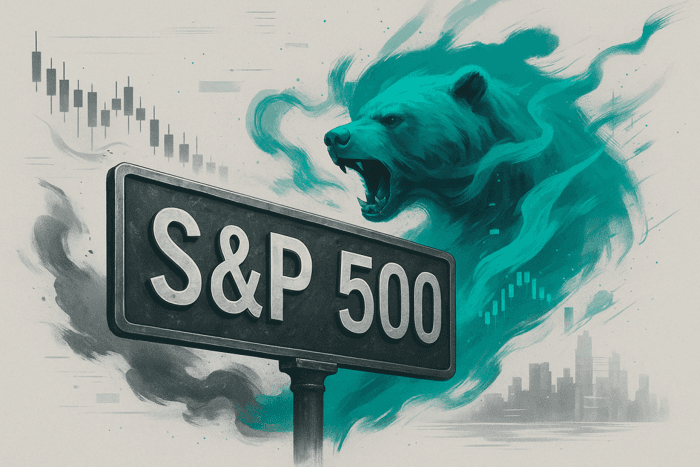
Nasdaq 100 and S&P500 drop after ADP jobs miss and government shutdown spark risk-off tone in US stock market. Traders eye Fed policy moves.
Although government shutdowns typically have a negligible impact on capital markets, the timing of this one is significant. The shutdown adds to concerns over U.S. institutional credibility, fiscal position and "dysfunction," according to Luke Bartholomew, deputy chief economist at Aberdeen.
The dollar fell Wednesday after U.S. lawmakers failed to avert a government shutdown, raising questions from traders about the potential economic impact.
U.S. President Donald Trump's threat to impose 100% tariffs on branded drugs ratcheted up pressure on pharmaceutical companies to agree price cuts and shift manufacturing after talks faltered earlier this year, industry lobbyists and executives said.
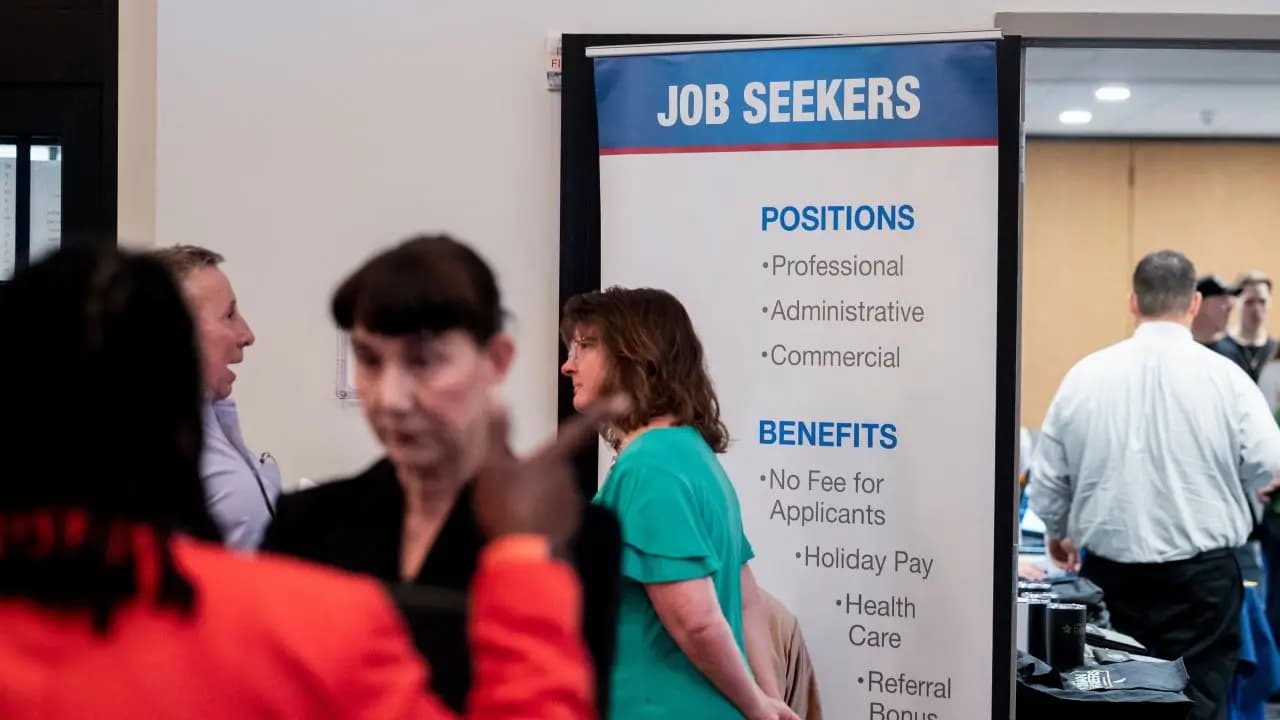
The figure reported on Thursday is below economists' estimates of an increase of 50,000 jobs and also down from the prior month's revised reading of a loss of 3,000 jobs.

As of Oct. 1, 2025, two stocks in the financial sector could be flashing a real warning to investors who value momentum as a key criteria in their trading decisions.
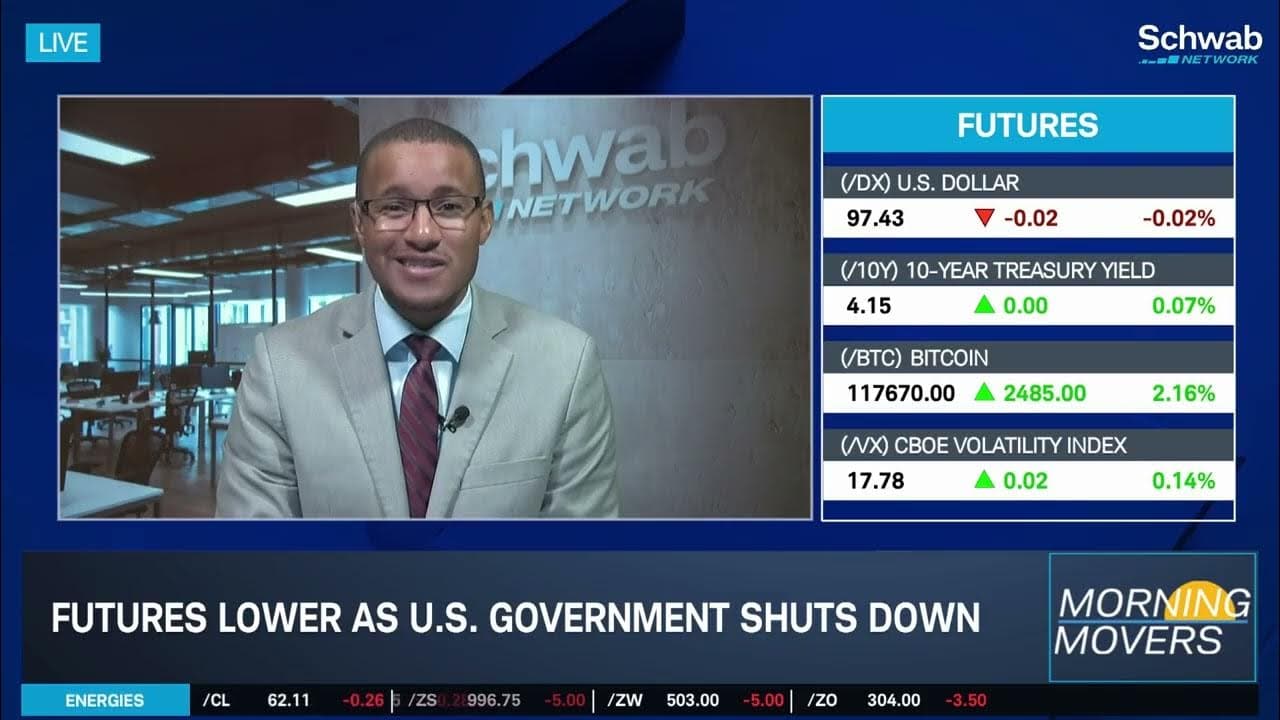
With the U.S. government shutdown in effect, the market's initial reaction has been relatively calm says Kevin Green, but that could change if the stalemate continues. The 10-year yield is currently flat, and the dollar is holding steady, but a prolonged shutdown could lead to a sell-off in equities and a flight to safety in Treasuries.

Despite a government shutdown, major indexes ended their best third quarter since 2010, with limited impact expected unless the closure is prolonged. Labor market stagnation persists, but strong consumer spending and minimal layoffs suggest recession risk remains low and job growth could rebound post-trade uncertainty.

Hours into the US government shutdown, the standoff is already shaping up as a political quagmire for all involved. President Donald Trump has gleefully pinned the blame on “crazed” Democrats, in the hopes they will shoulder the political consequences.
U.S. job openings were essentially unchanged in August amid economic uncertainty arising from President Donald Trump's trade policies and an impending government shutdown.

The ADP private-sector jobs report showed a labor force that continues to deteriorate.

Federal Reserve Bank of Chicago President Austan Goolsbee warned that rising inflation could pose a stagflation risk if tariff-induced price hikes prove persistent.
Sen. Steve Daines (R-Mont.) joins 'Squawk Box' to discuss the fallout from the U.S. government shutdown, sticking points in negotiations between the two parties, and more.