
加载中...
共找到 25,004 条相关资讯
Massive investments in artificial intelligence that underpinned record runs in equities face a major hurdle as the Middle East crisis clouds prospects for growth and energy costs, said Melissa Otto, head of research at S&P Global Visible Alpha.


Equity option skew and oil futures curves provide a useful pulse for the market's expectation of the speed of resolution of the conflict. This insight explains how we are viewing them.
Founder of Rosenberg Research, David Rosenberg, agrees with Fed Chair Powell's current wait-and-see stance, saying that a rate hike now could make the current economic situation worse, especially since there is no evidence of the oil supply shock feeding into inflation expectations as of yet.
Matt Gertken of BCA Research sees no chance of a U.S. full scale ground invasion in Iran, but due to the lack of trust between both sides, Iran's nuclear leverage is even more crucial now.
Bob McNally of Rapidan Energy Group sees 3 scenarios that can put a pause on the surging oil prices: A cease fire, no ceasefire and use of U.S. military force to forcibly open the Strait if Hormuz, or lastly, a recession.

Panelists EJ Antoni and Lee Carter discuss Democrats' implementation of wealth taxes and push to stop sport team relocations on ‘The Bottom Line.' #fox #media #breakingnews #us #usa #new #news #breaking #foxbusiness #thebottomline #politics #political #politicalnews #government #democrats #democraticparty #democrat #economy #tax #wealth #sports #business #policy #regulation #markets #investment #teams #debate #finance

Canada's economy has generated no economic growth in five months and no job growth in eight months. The S&P 500 and Canada's TSX are both off more than 7% and back to their levels last July and December 2025, respectively.
Getting their money back is going to be a slow, messy fight, and some business owners are running out of time. Others are mounting a fight.
Investors had high expectations for 2026. Now they are just hoping to sidestep a recession.
Brent has been stuck above $110 since the weekly open, and WTI remains well above $100. US bonds (and fixed income in general) were among the worst performers across all asset classes this month, under intense pressure from rising inflation expectations.
The S&P 500 opened higher but the rally fizzed as investors braced for a longer war in Iran.

Jim Cramer says the recent sell-off in tech is being driven by fear, not fundamentals. He cautioned investors to stay disciplined, arguing these dislocations are buying opportunities rather than reasons to sell high-quality stocks.
I reiterate a buy recommendation for assets tracking the main American indices, especially the S&P 500. The Iran War is already over a month old, and its impact on the stock market is already greater than expected.

Indexes finish mixed Monday amid continuing war woes and rising oil prices. Small caps underperformed while aluminum stocks surged.
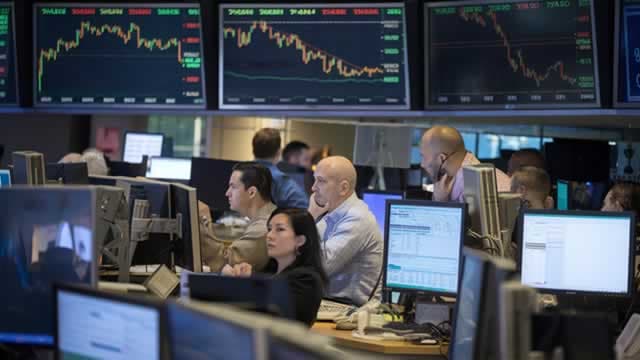
The U.S.-Israel war on Iran persists, in spite of Trump's signals of potential resolution to which the market has grown thicker-skinned. The supply shock that this creates, and could expand with the closure of the Bab al-Mandeb Strait, has yet to take its full force, and markets are beginning to digest that.

Advance or retreat? That's the question on investors' minds as the war in Iran enters its fifth week.

Markets flip to rate-hike odds for the first time this cycle

Fed Chair Jerome Powell signals a wait‑and‑see stance on rates as oil prices rise and Middle East tensions build. Energy-driven supply disruptions lift Alcoa (AA) and Century Aluminum (CENX), while China stocks show resilience.
Charles Kantor, Neuberger Berman, joins 'Closing Bell Overtime' to talk recent comments from Fed Chair Jerome Powell, the impact of oil inflation on the markets and economy, and more.

CNBC's Steve Liesman joins 'Closing Bell Overtime' with the latest comments from New York Fed President John Williams.