
加载中...
共找到 25,097 条相关资讯

The U.S Supreme Court could make a ruling on tariffs imposed on other countries by President Donald Trump as early as Friday, Jan. 9. Here's a look at what's at stake and the stocks and sectors that could see the biggest impact.


The Russell 2000 rose nearly 13% in 2025 and Royce Investment Partners co-chief investment officer Francis Gannon expects that performance to continue into 2026. Gannon says small-cap earnings are 'just at the beginning of taking off" and valuations are "pretty exciting.

Early gains eroded as new economic data and a housing proclamation from Trump shook investor sentiment.

CNBC's "Closing Bell" team discusses the upcoming earnings season, economic outlook and more with Ed Yardeni of Yardeni Research.

The Dow Jones Industrial Average is having its best start to a new year since 2018, bolstered by financial and industrial names like Goldman Sachs Group Inc. GS-1.51% and Caterpillar Inc. CAT-4.26%.The blue-chip gauge was up 1.9% through the first four trading days of the year as of Wednesday's close, based on preliminary data from Dow Jones Market Data. That marks its best four-day start in eight years, despite a pullback that saw the Dow DJIA-0.94% fall 466 points, or 0.9%, to close at 48,996.08 on Wednesday.

US stocks have started 2026 on a bullish note. Fundstrat Global Advisors managing director and global head of technical strategy Mark Newton joins Market Domination host Josh Lipton to outline his outlook for markets this year.

CNBC's senior markets commentator Michael Santoli discusses the day's market action.

On Wednesday, President Donald Trump said he would take steps to ban large institutional investors from buying single-family homes. Real estate-related stocks reacted sharply downward.

The president also complained that contractors aren't maintaining weapons systems properly or quickly.
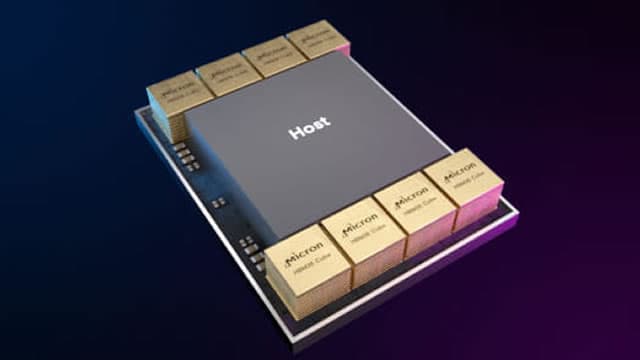
Memory storage chips traded lower on Wednesday's session, but Micron (MU) briefly tapped yet another new all-time high before a pullback. While Rick Ducat notes Micron's massive move higher in the last 12 months, he shows its gains still don't exceed those in Seagate (STX) and Western Digital (WDC).
Operator: Good day, and thank you for standing by. Welcome to Apogee Enterprises Third Quarter Earnings Conference Call. At this time, all participants are in a listen-only mode. After the speakers' presentation, there will be a question and answer session. You will then hear an automated message advising your hand is raised. To withdraw your question, please press star 11 again. As a reminder, this conference is being recorded. For replay purposes. Will now turn the conference over to Jeremy Stephan, Vice President, Investor Relations and Communications to begin. Jeremy, please go ahead. Jeremy Stephan: Thank you. Good morning, and welcome to Apogee Enterprises. Fiscal 2026 Third Quarter Earnings Call. On the call today are Don Nolan, Apogee's Chief Executive Officer and Mark Ogdahl, our interim chief financial officer. During this call, the team will reference certain non-GAAP financial measures. Definitions of these measures a reconciliation to the nearest GAAP measures provided in the earnings release and slide deck. Are available in the Investor Relations section of our website. As a reminder, today's call will contain forward-looking statements. These reflect management's expectations based on currently available information. Actual results may differ materially from those expressed today. More information about factors could affect Apogee's business and financial results be found in our press release and in the company's SEC filings. With that, I'll turn the call over to Don. Thanks, Jeremy, and good morning, everyone. We're glad you could join us for our third quarter earnings call. Don Nolan: Before I begin my prepared remarks, I want to acknowledge an announcement made earlier today. Matt Osberg has informed us of his decision to leave the company to pursue an opportunity elsewhere. Want to thank Matt for his many contributions over the past three years, and wish him continued success in the future. Stepping in as the interim CFO is our chief accounting officer, Mark Ogdahl. Who has been at Apogee for over twenty-five years. I look forward to partnering with him as we begin our search for the company's next CFO. Next, I'd like to start by saying it's a real privilege have the opportunity to lead the company through this period of transition. While I've served on Apogee's board since 2013, the past few months as CEO have given me a deeper perspective strengthening my confidence in Apogee's future. I'd like to share a few observations. First, our customers consistently tell us how much they value the quality and reliability of our products and services. That feedback is energizing and underscores a core principle of mine, Companies that delight their customers, win in the market. Apogee has built that reputation over seventy-six years and continues to raise the bar. Second, across Apogee, we have exceptional talent. Individuals who are passionate, resilient, and relentlessly focused on exceeding the expectations of customers. Their ability to deliver tremendous value especially in this dynamic environment, reinforces the strength of this company and gives me tremendous confidence in our future. And third, the Apogee management system continues to drive value across our manufacturing footprint. The returns on our AMS investments are fueling margin benefits and reinforcing the operational excellence helps define our organization. I'd also like to highlight the UW Solutions acquisition which celebrated its one-year anniversary this quarter. We pleased with the initial results, and the team is on track to deliver our fiscal 2026 expectations of $100 million in net sales approximately 20% in adjusted EBITDA margin. UW Solutions expands our market and geographical reach adding substrate capabilities and coding technology and provides a platform for potential growth in fiscal 2027 and beyond. Now turning to our results for the quarter. I am pleased with the team's ability to deliver in a dynamic environment. This performance reflects not only disciplined execution, but also the strength of our culture the dedication for our people. It reinforces my confidence in the strategies put in place and our ability to adapt and win in dynamic markets. Although macroeconomic factors remain challenging, Apogee is well positioned because of three key strengths. Operational excellence through AMS, driving continued productivity improvement across our manufacturing footprint, our proven cost out execution with Fortify phase one, phase two, and a strong balance sheet and healthy cash generation, giving us flexibility for future M&A. These fundamentals, combined with the talent of our team, enable us to navigate near-term challenges and capitalize on long-term opportunities. In the near term, our priorities remain clear and unchanged. First, become the economic leader in our target markets with differentiated product and service offerings and competitive cost structures. Number two, managing our portfolio through pursuing accretive M&A opportunities aligned with our strategic and financial objectives. And number three, strengthening our core by driving more efficient operations, greater scalability, and enabling sustained profitable growth. I'm confident in our strategy and excited about what's ahead Together, we have the opportunity to create significant value for all stakeholders. With that, I'll turn it over to Mark. Thanks, Don, and good morning, everyone. First, I'll begin with the review of the results of the third quarter. And then follow with commentary on our outlook for the remainder of fiscal 2026 and some early insights into fiscal 2027. Beginning with our consolidated results, net sales increased 2.1% to $348.6 million primarily driven by $18.4 million of inorganic sales from the acquisition of UW Solutions. As well as favorable product mix. This was partially offset by lower volume primarily in metals. Adjusted EBITDA margin decreased slightly to 13.2%, The year-over-year change was primarily driven by lower volume and price and higher aluminum and health insurance costs. These were partially offset by lower incentive compensation expense and benefits from the cost savings related to Fortify phase two. Adjusted diluted EPS was $1.02. In line with our expectations and down year-over-year primarily driven by higher amortization and interest expense as a result of the UW Solutions acquisition. Turning to our segment results. Metals net sales declined primarily due to lower volume partially offset by favorable price and product mix. Adjusted EBITDA margin improved to 13.5%, primarily driven by increased productivity, including cost savings from Fortify phase two, lower incentive compensation expense, and favorable price and product mix. Mark Ogdahl: These were partially offset by lower volume. Our services segment delivered its seventh consecutive quarter of year-over-year net sales growth. Primarily due to increased volume. Adjusted EBITDA margin increased to 9.7% mostly driven by lower incentive compensation expense. Partially offset by unfavorable project mix. Additionally, backlog for services ended the quarter at $775 million down slightly from Q2 but up over 4% compared to Q3 of last year. Glass net sales increased slightly to approximately $71 million primarily driven by increased volume and favorable mix. Partially offset by lower price driven by end market demand softness. Adjusted EBITDA margin moderated from last year primarily due to lower price and higher material costs. Partially offset by higher volume favorable product mix, and lower incentive compensation expense. Performance surfaces net sales increased driven by the inorganic sales contribution from the acquisition of UW Solutions. Inorganic growth primarily from price. Adjusted EBITDA margin decreased primarily driven by the dilutive impact of lower adjusted EBITDA margin from the UW Solutions and unfavorable productivity. Partially offset by favorable product mix and price. Turning to cash flow and the balance sheet. For the third quarter, net cash provided by operating activities was $29.3 million down slightly from $31 million in the third quarter of prior year. On a year-to-date basis, cash from operating activities was $66.6 million compared to $95.1 million a year ago, due to lower operating cash flow in the first quarter. Our balance sheet remains strong Don Nolan: with a consolidated leverage ratio of 1.4 times. Mark Ogdahl: No near-term debt maturities and significant capital available for future deployment. Turning now to our outlook for the remainder of fiscal 2026. We are updating our estimates for both net sales and adjusted diluted EPS. We now expect net sales to be approximately $1.39 billion and adjusted diluted EPS in the range of $3.40 to $3.50. This outlook includes an updated estimate of the EPS impact from tariffs of approximately $0.30 Our updated outlook assumes an adjusted effective tax rate of approximately 27% and capital expenditures between $25 million and $30 million The current macroeconomic backdrop remains challenging, in both our metals and glass segments competitive market dynamics continue to put significant pressure on pricing and volume. Additionally, in our metal segment, average aluminum prices in the third quarter rose approximately 13% compared to the second quarter and are up over 50% compared to the third quarter of last year. These factors are driving volume pressure and margin compression. And we anticipate this dynamic will continue to impact us through the fourth quarter and to some extent, into fiscal 2027. Additionally, as we look ahead to fiscal 2027, we expect cost headwinds from the normalization of incentive compensation expense. And higher health insurance costs. In order to offset a portion of the anticipated impact of these headwinds, we have expanded the scope of Project Fortify Phase two to include further restructuring actions primarily in metals and corporate. Based on the expected benefits of the expanded scope of Fortify phase two, we now expect to incur a total of approximately $28 to $29 million in pretax charges and deliver an estimated annual pretax cost savings of approximately $25 to $26 million. With approximately $10 million of that benefit to be realized in fiscal 2027. In addition, we expect the majority of the tariff impact of fiscal 2026 not to repeat. And to be a benefit to fiscal 2027. Although we are on the in the initial stages of our planning for fiscal 2027, we are taking proactive measures. Such as the expansion of Fortify phase two to manage near-term headwinds as well as position us to be more agile and better equipped to capitalize on growth opportunities as market conditions stabilize. Finally, I wanna recognize and thank our employees for their resilience and dedication. Their commitment is critical to our success. By executing with rigor today, we are laying the groundwork for long-term value creation opportunities for our shareholders. Don Nolan: With that, Mark Ogdahl: will now open the call to questions. Operator, please go ahead. Operator: Thank you. As a reminder, to ask a question at this time, you will need to press 11 on your telephone and wait for your name to be announced. Please stand by while we compile the Q and A roster. First question coming from the line of Brent Thielman with D. A. Davidson. Your line is now open. Brent Thielman: Hey. Thanks. Good morning. Don, I mean, a lot has changed here since the last earnings call. Don Nolan: And maybe if you could just start off and talk about what the board is looking for in terms of new leadership on a go forward basis. And is there any different view on the strategic direction of the company going forward versus what's been vocalized is the strategy before, particularly sort of scaling the Performance Services business? Hi, Brent. Brent Thielman: Thanks for that question. No. No change in strategy. We remain focused on the existing strategies. The strategies that quite frankly, were working, you know, before my tenure. On becoming the economic leader in our target market, continuing to manage the portfolio, and pursuing accretive M&A opportunities in faster growing markets. You UW Solutions being the the best example And then, you know, strengthening our core, driving more efficient operations, greater scalability, and and enabling, you know, sustained profitable growth. So notes, strict There's no change whatsoever. Brent Thielman: Okay. And and sorry, Don. In terms of what you're looking for in terms of new new leadership as you're out with Don Nolan: CEO search here? Yeah. So so look, we started we started our process. And clearly, we're looking for someone who has deep growth and operational excellence experience M&A integration, you know, the things that are are are called out in our strategy. Brent Thielman: Alright. And then I mean, in terms of the updated outlook, it looks to me like the big impact there is just discontinued inflation and aluminum that we continue to see post quarter. Assume it's predominantly impacting the metals Yes, Brian, if I could. But that's the yeah. Yeah. Please. I'll let you follow-up with your the rest of your question. No. Just just in regard to the outlook. And the updated outlook, looks like it's primarily the metals segment, I presume. If that's the case, Don Nolan: looks like Brent Thielman: you're sort of embedding a more severe impact to margins in metals in the fourth quarter relative to what you saw in the third quarter. Is that the right way to think about this? Yeah, Brent. Good observations. You have you know, both I would say both in metals and in glass, Don Nolan: market dynamics continue to be very they continue to to evolve. So, yeah, back on metals, the prime primary issue there is Brent Thielman: the aluminum prices continue to increase. You know, in our prepared comments, we commented that Don Nolan: between Q2 and Q3, Brent Thielman: aluminum prices went up third 13%. Don Nolan: And then even here in December, we're seeing, you know, continued increases in that price So the margin pressures continue to build. Brent Thielman: And then, you know, maybe a little bit in glass as well. Don Nolan: You know, we have about a sixty day window on what we can see for orders. At the '3 or excuse me, at the '2, we thought that we would kinda maintain that level, but we're we're seeing slightly declines there. So we're again, seeing a little bit of an impact both on volume and price going into the fourth quarter. I would tell you, though, that, you know, we you know, we remain focused on managing our margin dollars. Brent Thielman: So as as Don Nolan: to the best of our abilities, we're controlling costs and implementing things that we can control those costs, Fortify phase two expansion as an example. Brent Thielman: And and I guess not notwithstanding some of these short term pressures that you are seeing in the market, are the long term kind of EBITDA margin targets that you laid out before they'll sort of appropriate to think about? Again, know there's going to be some nuances in the near term for some of the things you called out. Don Nolan: That's exactly right, Brent. Brent Thielman: Okay. Okay. Thank you. I'll pass it on. Don Nolan: Thank you. Operator: And our next question in queue coming from the line of Jon Braatz with KCCA. Your line is now open. Jon Braatz: Hello? Don Nolan: Hi, Jon. Oh, I'm sorry. I I I missed my queue. Jon Braatz: Don, I just want to go back to the Don Nolan: sort of the strategic direction of the company. And Jon Braatz: how much emphasis you might place on on M&A activity because Don Nolan: let's face it, in in the past, it just it hasn't turned out to M&A activity hasn't been that Jon Braatz: positive for Apogee. And it seems to me the focus should be almost exclusively on running the business as profitably as possible Don Nolan: returning cash flow to Jon Braatz: to shareholders in terms of dividends and share repurchases. So I I wanna get a better sense from you as as Don Nolan: where you see M&A going forward. Jon Braatz: Well, look. Our our our pipeline for M&A is robust. It's very active right now. And, you know, I I we we have spent a great deal of time and energy building all the processes and systems in the company. To continue to drive M&A. UW Solutions was a great a great acquisition for us. Twelve months in, we have achieved or beat all of our objectives. So you know, it's a business that's growing robustly. You know, our our performance services business, that segment, was able to successfully integrate a the UW Solutions almost doubling the size of the business and deliver organic growth at the same time. So we've demonstrated that we can execute We can we can select a great acquisition that works for in our strategy. We have the discipline to execute on the integration. And we continue to work our our pipeline aggressively. Jon Braatz: Okay. Another question. In in the fourth quarter of last year, when Project Fortify was announced, mentioned $26 million in cost, costs that will be incurred and savings of 13 to 15 million. Don Nolan: And Jon Braatz: this quarter, said cost of 28 million to 29 million a little bit higher. But savings of 25 to 26. Is what's the difference between the fourth quarter savings and and what you said here in the first quarter? Am I I have something wrong there? Nope. Jon, I'll take that Yes. You're the ranges that you provided were accurate. The the increases in in costs are primarily head headcount based, and re and holding our cost structure tight, we we we did incur some footprint related matters in the fourth quarter here. Don Nolan: Which was the Jon Braatz: the primary cost in the court in the fourth quarter. But, you know, again, we're we're focusing on things that will drive cost savings going forward. Don Nolan: So so the cost savings Jon Braatz: 13 to 15 to 25 to 26, that's correct with that number? Yep. That's what we're showing. Don Nolan: Okay. Alright. Alright. Thank you. Operator: Thank you. Our next question coming from the line of Gowshihan Sriharan with Singling Research. Your line is now open. Gowshihan Sriharan: Good morning. Can you hear me? Don Nolan: Yes. Loud and clear. Gowshihan Sriharan: Thank you. Thank you for taking my questions. My first question is on on the metals in glass. I know you guys have mentioned some pricing discipline Don Nolan: with keeping the plants efficiently utilized. How are you thinking about the bid approval process threshold and hurdle mud hurdle margins changing over the six months. I mean, have you walked away from any large pack, projects or packages that might that might leave kind of under absorption risk in early fiscal twenty seven? And are you willing to or when would you start considering the the the flexibility around the pricing discipline? Don Nolan: I'll I'll start off, and Mark Ogdahl: then turn it over to Mark. But look, glass is a highly competitive market. Don Nolan: But the glass team has been working hard maximize EBITDA dollar contribution while protect protecting their premium margins. They faced significant challenges on volume and price, true, But, look, the business is in a much stronger position than during the last downturn. Even with the market challenges that we face today, glass is still operating in the teens EBITDA margin versus mid single digit in the last downturn. So, you know, yes, we're we're gonna continue to to focus on maximizing EBITDA dollar contribution. As we move as as the market, you know, shifts. Mark Ogdahl: Don, I really I don't really have anything to add. I think you covered up what I thought was important with is, you know, we we implemented some really, really nice and solid pricing strategies as we were executing our initiating our current strategy. And we intend to to continue on that process. Of course, you know, volume Don Nolan: matters. Mark Ogdahl: So we need to we need to look at every every project and every opportunity when they come across. The other thing I would mention is you know, as was pointed out, you know, fortify one, fortify two, Don Nolan: we continue to actively manage our cost structure. To mitigate, you know, these short term headwinds. So in addition to making sure that we hold onto our margins and manage manage the the top line appropriately. Also managing our cost structure. Gowshihan Sriharan: Gotcha. And are you seeing any noticeable pricing differences between your, say, your strategic repeat customers as opposed to your more transactional work? Has that Don Nolan: No. I don't think so. Gowshihan Sriharan: Gap kind of widened or narrow since we spoke, in Q2? Don Nolan: You know, I think we're we're look. We're seeing higher volume of projects. Mark Ogdahl: In glass for sure. Don Nolan: And, you know, on average, a little smaller. What we've seen in the past. Mark Ogdahl: Yep. Primarily Oh, it's a very challenging environment. There you go. Thank you. Yes. Gowshihan Sriharan: And on the performance services side, can you kind of unpack on how much of that growth is coming from the high margin SKUs versus kind of mid tier offerings? And with the current mix, would you adjust your long term margin aspirations for that segment? Don Nolan: Well, we've so so we've mentioned this in past quarters. We took some share over the past few quarters in our distribution business. So these are, you know, think of it as retail shelf space. Okay? So we've we've expanded our shelf space. A couple years ago, we lost some. And we gained that back. Mark Ogdahl: And Don Nolan: that is that that is a very attractive business. Gowshihan Sriharan: Gotcha. The the other the other area that I might mention is Don Nolan: look, the UWS solutions, one of the reasons why we thought this was such an attractive acquisition is because it allowed us to enter a part of the flooring market that serves warehouses and manufacturing facilities. Mark Ogdahl: So this is a growth area Don Nolan: and has has demonstrated some nice organic growth for us. Mark Ogdahl: Okay. In our highest in our highest performing segment. Don Nolan: Yeah. Highest margin segment. Yeah. Gowshihan Sriharan: I'll make this my last question. I know you've highlighted the lower incentive compensation as a tailwind to margin across several segments. This quarter. I know I I think you've alluded that that there will be some kind of normalization in in the the intensive compensation. But how how should we think about from a sustainability and talent standpoint? Are you structurally resetting some of that incentive programs? Or or is this or is this, paying below at a at a at a tough year? Are you as you look at the labor market in your key regions, are you comfortable with the overall comp structure remains competitive? Enough to, execute project 45 and your growth plans. Mark Ogdahl: Yeah. We we believe our our structure is fine. We just entered a into a more difficult year and our we're not meeting our targets. So our compensation will be less this year, but we expect that to normalize. Into the future. Gowshihan Sriharan: Thank you. That's all I have. Thank you, guys. Operator: Thank you. Our next question coming from the line of Julio Romero with Sidoti. Your line is now open. Julio Romero: Thanks. Hey. Good morning. Don, could you help us think about how you view the company's growth trajectory and opportunity set And then also, how does the next leg of growth in your view for the company translate to any change in in ROIC hurdles or or or metrics? Don Nolan: Well, Julio Romero: you know, first of all, we'll be the strategy that we're focused on hasn't changed. So we remain focused on becoming the economic leader in the target markets we serve. Managing our portfolio, and strength strengthening the core. Julio Romero: So Don Nolan: no change, Julio, in how we think about where we're where we're gonna grow and how. The addition of UW Solutions certainly opened up new markets, new products, that will enable us to grow faster. And as part of our managing portfolio strategy, we continue to look for new opportunities along those lines. So looking for acquisitions that will enable faster growth and at higher margins. We're gonna we're gonna talk a lot more about that on our next call when we talk about fiscal year 2027. Julio Romero: Okay. Understood. I guess maybe can you dig into a little bit into the priorities that are more near term in nature. Obviously, you you you have project Fortify expansion any other kind of quicker turn wins, or or low hanging fruit that Mark Ogdahl: looking to kind of achieve early on? Don Nolan: Well, Julio Romero: delivering the results you know, delivering our results will be critical. Know, we're we're focused on delivering the year. Right now. Julio Romero: I mean, that's that's front and center. Mark Ogdahl: Hooey, I would just add yes, project four to five phase two is probably the most important, but I would I would suggest that, you know, we're amping up AMS. Again as it as we think about, you know, how we're trying to drive cost structure down, our best tool to do that is through the Apogee management system. So that's that's our that's gonna be our tool to get there. Don Nolan: I mean, to Frank, Julio, so so AMS, I mean, that's one of my observations for the search my first sixty days. Operational excellence of productivity improvements that we've been able to deliver through AMS are are truly extraordinary, especially in the glass business. We're seeing strength across the board, safety, quality, on time delivery, you name it. And by the way, that was the birthplace of AMS. So they're leading the way and it shows what we could do with the rest of the company. So it's it'll be a key focus for us. Last thing is, you know, I I mentioned a couple times, but accretive M&A, it's it's right. It's front and center too. We have a very we have a robust pipeline and we're active. Julio Romero: Got it. And I guess it just you know, just going back to my first question a little bit more, you know, and it ties into the your comment about robust M&A pipeline. Do you see any any kind of you know, viewpoint difference with regards to yourself versus the last management team with regards to kind of kind of you know, IRR hurdles or or rate of return hurdles, when you look at that M&A and kind of moving forward with that. Don Nolan: No. I don't think any difference in in the Julio Romero: in the financial Don Nolan: analysis, but I would say, you know, move faster. And you know, we we move with discipline, of course, but also faster. Julio Romero: Got it. That's that's helpful. I appreciate it. And then last one for me would just be on you know, you gave some some preliminary commentary on your fiscal twenty seven You talked about you don't expect the tariff impact to reoccur in fiscal twenty seven, but any other kind of high level thoughts with regards to how you see, you know, the possibility of revenue or profit growth in '27? Mark Ogdahl: Yeah. I guess I'll reiterate, you know, kind of in the process right now of our doing our AOPs. We highlighted what I viewed are the are the key headwinds and headwinds that have in front of us, tailwinds being project four to five phase two, and the tariffs not repeating. In the headwinds, of course, you know, we've covered now several times with normal normalization of incentive comp and certainly, aluminum prices will continue to be monitored as we go through the fourth quarter and as we scenario plan our AOP. Julio Romero: Helpful. Best of luck, guys. Thanks. Don Nolan: Thank you. Operator: Thank you. And I'm showing no further questions in queue at this time. I will now turn the call back over to Donald for any closing comments. Don Nolan: Well, thank you for joining us today. We look forward to sharing the fourth quarter and full year results in April. Along with our fiscal 2027 outlet. I would look. I hope you have a great week. Operator: Ladies and gentlemen, this concludes today's conference call. I Thank you for your participation, and you may now disconnect.

Operator: Welcome to the Albertsons Companies Third Quarter 2025 Earnings Conference Call, and thank you for standing by. This call is being recorded. I would now like to hand the call over to Cody Perdue, senior vice president of treasury, investor relations, and risk management. Please go ahead. Cody Perdue: Good morning. Thank you for joining us for The Albertsons Company's Third Quarter 2025 Earnings Call. With me today are Susan Morris, our CEO, and Sharon McCollam, our President and CFO. Today, Susan will provide an overview of our 2025, and update you on our progress against our strategic priorities. Then Sharon will provide the details related to our third quarter financial results and our outlook for the remainder of fiscal 2025. Before handing it back to Susan for closing remarks. After management comments, we will conduct a Q and A session. I would like to remind you that management may make forward-looking statements within the meaning of the federal securities laws. These statements are subject to risks and uncertainties that could cause actual results to differ materially from our expectations and projections. These risks and uncertainties include, but are not limited to, the factors identified in our filings with the SEC. Any forward-looking statements we make today are only as of today's date. And we undertake no obligation to update or revise any such statements as a result of new information, future events, or otherwise. Additionally, we will be discussing certain non-GAAP financial measures. A reconciliation of these financial measures to the most directly comparable GAAP financial measures can be found in this morning's earnings release. And with that, will hand the call over to Susan. Susan Morris: Thanks, Cody. Good morning, everyone, and happy New Year. This quarter marked the first since we declared a new day at Albertsons. And we delivered. We drove bold decisions in our Tech and AI transformation, purposeful investments to strengthen our customer value proposition, and accelerated execution in digital and pharmacy. In the face of a government shutdown, SNAP delays, and a challenging consumer backdrop, our team executed with discipline and urgency. Identical sales grew 2.4%, digital sales rose 21%, and adjusted EBITDA was $1.039 billion. These results underscore the resilience of our model anchored by more than 2,240 neighborhood stores. Our proximity, deep fresh expertise, and trusted portfolio of brands give us a clear advantage in serving more than 49 million loyal customers and advancing our customers for life strategy. We're building a structurally advantaged Albertsons. One that wins in any environment. And yet our current valuation does not reflect the progress that we've made or the long-term earnings power we're creating. This disconnect only sharpens our resolve to execute faster, scale our transformation, and deliver the performance that ultimately commands the value this company deserves. Our mission is clear, growing customers for life by leveraging our strengths, sharpening our competitive edge, and delivering consistent value for customers all while driving sustainable long-term value for our shareholders. During the quarter, execution was strong, and we delivered meaningful efficiencies through intentional and methodical cost control. Importantly, year-over-year unit trends improved sequentially versus the second quarter, reflecting the impact of our surgical price investments and reinforcing the effectiveness of our broader strategy. I'm extremely proud of how our team is executing. Also during the quarter, we continue to advance our strategic priorities with intent and conviction to position us for profitable growth as we enter 2026. These priorities include modernizing capabilities through technology, scaling digital engagement and monetizing our media collective, enhancing our customer value proposition, and unlocking structural productivity gain. As we look forward, one of the most exciting drivers of our transformation and a key source of long-term competitive advantage is technology. Our advanced cloud data infrastructure provides the foundation for scaling AI solutions and business processes across the enterprise. Additionally, we're enhancing our agility and speed to market with our global capability center in Bengaluru. We're not just adopting AI. We're working to scale it across the enterprise to fundamentally change how we operate and how customers experience Albertsons. This is not incremental. It's designed to be a step change in speed, intelligence, and personalization. Our teams are energized, and our foundation is strong. Our strategic priorities are clear. With bold decisions and partnering with world-class leaders like Google, OpenAI, and Databricks, we're building a future where every decision is smarter, every process is more efficient, and every interaction is more seamless. So where are we focused first? Our transformational big bets are in four critical areas. First, in digital customer experience. Digital customer experience is a critical pillar of our growth strategy. By leveraging AI, we're creating differentiated experiences that go beyond convenience. They increase basket size, drive repeat trips, and deepen loyalty. Early results are compelling. Our Ask AI search capability is already delivering a 10% increase in basket size for those customers using it, signaling a meaningful revenue upside as adoption scales. In addition, our autonomous shopping assistance is meeting customers where they are and delivering frictionless personalized journeys, keeping our omnichannel customer experience modernized and on-trend. Next, in Merchandising Intelligence. We'll be equipping our merchants with AI-driven insights and automated execution to optimize pricing, promotions, and assortment decisions, transforming category management and driving margin improvement. Our vision is a future where intelligent automation guides these decisions, freeing our people to focus on strategy and innovation. Our ambition is for customers to truly feel seen, to reliably find the essentials they need at prices they trust, while also discovering unique inspiring items that make our stores a destination and eliminate the need for a trip elsewhere. Next in empowering and managing labor. We're deploying generative AI to optimize labor forecasting and scheduling across our retail labor model, reducing costs while improving associate experience through intuitive conversational tools. By leveraging AI, we ensure the right associates are in the right place at the right time, which not only drives productivity but also elevates customer service. This transformation simplifies complex scheduling tasks, frees up associates to focus on the customer, and positions us to deliver consistent execution across thousands of stores. Finally, optimizing our end-to-end supply chain. AI demand forecasting is central to our supply chain transformation, enabling precise product tracking from vendor to customer. By applying advanced analytics and computer vision, we're improving forecasting accuracy, fulfillment, quality, and on-shelf availability, optimizing labor and inventory while ensuring that customers can find the products they need when and where they need them. In sum, our tech and AI are designed to be scalable enterprise-wide programs that can deliver measurable impact and build the foundation for tomorrow. By embedding this across our business, we will unlock structural cost advantages, accelerate speed to market, and create new profit pools. Returning technology into a growth engine, improving margins, deepening customer loyalty, and positioning us to win. With momentum accelerating and a clear roadmap, we're confident that this transformation will help drive sustainable value for customers and long-term returns for shareholders. Turning to our digital e-commerce business. We continue to gain market share with sales up 21% this quarter and penetration now at 9.5%. As we've consistently said about our e-commerce business, the resilience, scalability, and customer proximity of our store-based fulfillment model remains a structural advantage in last-mile fulfillment and positions us well for profitable growth. In fact, during Q3, more than half of our orders were delivered in three hours or less, underscoring the speed and convenience that differentiate our offering. In addition, more than 95% of our delivery households are eligible to receive our flash delivery in as soon as thirty minutes. We're also adding features to our platform, the AI shopping assistant I just mentioned, a groundbreaking tool that redefines the shopping experience. This AI-powered assistant enables customers to interact in natural language, receive personalized recommendations, and build smarter baskets faster. Whether they're planning meals, discovering new products, or shopping for specific occasions. This innovation enhances convenience for our customers while strengthening our competitive advantage by leveraging rich data to optimize marketing, improve loyalty, and unlock new monetization opportunities. Through our media collective. Our Pharmacy and Health business delivered another outstanding quarter. Growth was driven by strong execution in our immunization offering, GLP-one therapies, and core prescriptions. We captured leading share in immunizations and strengthened long-term customer relationships. These efforts reinforce our position as a trusted health partner and deepen engagement across channels. Customers who engage across both grocery and pharmacy continue to demonstrate significantly higher lifetime value, underscoring the strength of our customers for life strategy. Based on the strength of this performance, we remain on track to deliver profitable growth in our pharmacy business in 2025, supported by disciplined execution and efficiency initiatives. Scaling higher-margin services, expanding central fill capabilities, driving innovative procurement, and leveraging operational efficiencies continue to be key priorities as we position this business for sustained growth into 2026 and beyond. In loyalty, we continue to drive digital engagement and value creation with membership growing 12% to over 49 million members in the third quarter. Program enhancements and simplification continue to fuel deeper engagement. Members are transacting more frequently, redeeming rewards more easily, and spending more. 40% of engaged households continue to choose the cash-off option, underscoring the appeal of immediate value for our most engaged and loyal customers. Loyalty also serves as a rich data source for our merchant and for our media collective, enabling targeted marketing and monetization. Most recently, we again extended the value of our loyalty platform beyond grocery with the launch of a new offering with Uber One, offering members exclusive benefits and savings, further strengthening engagement and broadening the appeal of our platform. Our media collective continues to gain traction as a high-margin growth engine. In Q3, On-site Media delivered double-digit growth year over year. We also strengthened performance by adding transaction capability to Off-site Ad units. These improvements drove higher ROI for our partners, faster campaign activation, positioning us to capture incremental spend. While the retail media space remains highly competitive, our advantage lies in the depth of our loyalty data and omnichannel reach, which enable targeted, measurable campaigns that improve both partner outcomes and the customer experience. Looking ahead, we're focused on scaling these capabilities and unlocking new monetization opportunities, creating a structural profit pool that complements our core retail business. Few companies possess the depth of store-level, customer-level, and category-level data that we do. And we're increasingly using that data to deliver a more relevant, localized, and differentiated customer experience. From a customer value perspective, we continue to invest in value through loyalty enhancement, personalized promotions, and selective price investments in key categories. And these actions, combined with vendor funding and own brands innovation, are strengthening engagement and driving unit growth. In our own brands portfolio, we have a clear path to growing penetration from 25% to 30%. In the divisions where we've launched our new lower-priced campaign, we continue to see fundamentally better unit trends and growth in unit share, reflecting the impact of our targeted strategy. We also very carefully managed the pass-through of inflation to deliver value for customers across the entire company, ensuring affordability while protecting margin. Importantly, unit trends for the quarter improved sequentially even with the government shutdown, again underscoring the resilience of our approach. Productivity remains a cornerstone of our transformation and a critical enabler of our investments. Our teams are executing with discipline across multiple fronts. Optimizing our labor model, redesigning ways of working, including a targeted global diversification of talent to drive efficiency at scale. We're also unlocking structural savings through automation, advanced analytics, and process simplification across merchandising, supply chain, and store operation. In pharmacy, where growth continues to accelerate, we're streamlining fulfillment and procurement to improve cost to serve while also enhancing the customer experience. These efforts are not isolated. They're part of our comprehensive plan to deliver $1.5 billion in productivity gains over the next three fiscal years, creating capacity to fund innovation, strengthen our value proposition, and improve profitability. Already in 2025, we're seeing the benefits of our productivity, reduced SG and A spend, as we accelerate our efforts around labor optimization. By attacking waste, modernizing labor planning, and embedding technology into core processes, we're building a leaner, more agile organization that's positioned to win. Finally, before I hand it over to Sharon to cover the financial details of the quarter, our outlook for the remainder of the year, I want to spend a minute on the consumer backdrop. And what we continue to see from our customers. Consistent with what you've heard from others, the environment remains mixed and continues to reflect pressure across income segments. At the low end, shoppers are clearly stretched, putting fewer items in the basket each trip and prioritizing essentials while visiting more frequently as they manage their cash flow. Middle-income households, have been relatively resilient, are showing some signs of softening with increased price sensitivity and trade-down behavior emerging in certain categories. At the high end, spending patterns remain largely stable but even these customers are becoming more conscious of price and value, reflecting a broader shift towards cautious discretionary spending. Looking ahead, our outlook and actions are fully aligned with these dynamics. We're leaning into personalized promotion, loyalty enhancements, and the surgical management of cost inflation to deliver immediate value while continuing selective price investments in key categories to support unit growth. At the same time, we're leveraging technology and AI just as we discussed. Deepen engagement and optimize the shopping experience, ensuring that our strategy not only addresses current consumer behavior but also positions us to capture share and drive profitable growth as behaviors evolve. Sharon, over to you. Sharon McCollam: Thank you, Susan, and good morning, everyone. It's great to be here with you today. Building on Susan's comments, Q3 did mark a new day for our Albertsons teams. Disciplined execution and purposeful investments drove a 2.4% identical sales increase and a 21% increase in digital sales. While temporary headwinds from the government shutdown and delayed SNAP funding negatively impacted ID sales by approximately 10 to 20 basis points, we sequentially strengthened our year-over-year unit trends. Clear evidence that our targeted price investments are working and reinforcing the resilience of our model. In pharmacy and health, sales increased 18% as we delivered another strong quarter and deepened engagement through immunization and value-added services. Loyalty membership grew to 49.8 million, reinforcing the strength of our customers for life strategy. At the same time, as Susan shared, we continued scaling the media collective and advancing our technology transformation, including embedding AI across the enterprise and modernizing capabilities to drive productivity and growth. Each of these initiatives contributed to the results we just delivered for the third quarter. Which I will discuss now. From a top-line perspective, ID sales grew 2.4% which is net of the 10 to 20 basis point government shutdown headwind and we saw encouraging growth in areas where we made price investments. Gross margin came in at 27.4% a decline of 55 basis points year over year excluding fuel and LIFO. Reflecting the expected mix shift impact of digital and pharmacy and our targeted price investments. Importantly, year-over-year gross margin improved sequentially versus Q2. As productivity benefits partially offset targeted investments demonstrating that our actions are delivering results even as we prioritize value for customers. Our selling and administrative expense rate was 24.9% down 33 basis points year over year excluding fuel, another clear proof point of disciplined cost management. This improvement reflects ongoing productivity initiatives and operating leverage, which we are using to fuel our investments to drive growth. Interest expense increased $7 million to $116 million this quarter, primarily due to borrowings related to our $750 million accelerated share repurchase program announced last quarter. Adjusted EBITDA in Q3 was $1.039 billion and adjusted EPS was $0.72 per diluted share, in line with our expectations and reflective of the strategic investments we're making in long-term growth. Turning to capital allocation, our priorities remain clear. Invest in the business to drive growth and value for our customers, maintain and grow our dividend over time, opportunistically repurchase shares, and preserve a strong balance sheet that gives us flexibility to accelerate investment when opportunities arise. In Q3, we invested $462 million in capital expenditures to upgrade our store fleet, and advanced digital technology and supply chain capabilities. In our store fleet, we opened two new stores, completed 23 remodels, and closed 16 underperforming locations. All actions that strengthen our asset base for long-term competitiveness. From a digital and technology perspective, we further invested in AI and digital transformation, to create structural cost advantages, deepen customer loyalty, and unlock new profit pools. Further modernizing the company for sustainable profitable growth in an evolving retail landscape. We also returned $77 million to shareholders through our quarterly dividend of $0.15 per share, and continued our $750 million accelerated share repurchase program, which began last quarter and is expected to be complete in early 2026. The benefits of this ASR will accrue to EPS as we move through fiscal 2026. There is also $1.3 billion remaining under our existing $2.75 billion authorization. That can be executed at the completion of the ASR. Our net debt to adjusted EBITDA ratio ended the quarter at 2.29 times, underscoring the strength of our balance sheet and capacity to fund growth while returning capital to shareholders. Finally, in the third quarter, we also refinanced $1.5 billion of existing indebtedness in two tranches. $700 million of 5.5% notes due 2031 and $800 million of 5.75% notes due 2034. These proceeds were used to refinance our 07/2026 bond maturity and repay $750 million in borrowings under our revolving credit facility. Demonstrating the strength and flexibility of our balance sheet. Before we turn to the outlook, I'd like to give you a quick update on our year-to-date labor negotiations. As a reminder, in fiscal 2025, we had collective bargaining agreements covering 120,000 associates up for renewal. As of today, we've successfully reached agreements covering more than 112,000 of these associates leaving only 8,000 left to bargain this year. Now let's walk through our 2025 outlook. Our focus remains squarely on investing in and driving long-term profitable growth through our strategic priorities. Digital remains a powerful growth engine as we continue to add loyal shoppers to our ecosystem and scale the business profitably. Disciplined cost control and productivity also remain key focuses of our strategy. Fueling reinvestment into these high-impact initiatives while maintaining financial strength. At the same time, we expect our pharmacy business to continue to accelerate. Driven by immunizations and value-added services that enhance customer engagement, through profitability. In pharmacy, however, on 01/01/2026, the Inflation Reduction Act Medicare drug price negotiation program took effect reducing consumer prices and supplier costs on certain branded drugs. While this will result in lower reported pharmacy sales, the impact to profit is near neutral. In the fourth quarter, we estimate and have included in our outlook an approximate 65 to 70 basis point headwind to identical sales which will equate to a 16 to 18 basis point impact for the full year with no impact to adjusted EBITDA. With that as the backdrop, we're updating our fiscal 2025 outlook as follows: For identical sales, we are narrowing our range to reflect the impact of the inflation reduction act to 2.2% to 2.5%. Adjusted EBITDA is now expected to be in the range of $3.825 billion to $3.875 billion including the approximate $65 million in adjusted EBITDA in the fourth quarter related to our fifty-third week. We are narrowing our adjusted EPS to a range of $2.08 to $2.16. The effective income tax rate is expected to be in the range of 23% to 24%, and capital expenditures are unchanged in the range of $1.8 to $1.9 billion. And with that, I will hand it back to Susan for closing remarks. Susan Morris: In closing, our Customers for Life strategy is building a future-fit distinct Albertsons company. When it combines scale with local relevance. Advanced analytics with deep experience of our team and operational excellence bold growth ambition. The path forward is clear. The opportunities are significant, and we're just getting started. Q3 demonstrates the strength of this foundation and the acceleration of our transformation. We're not just navigating a competitive and dynamic environment, we're reshaping it. Our investments in digital loyalty, pharmacy, and retail media are delivering measurable results today while our AI strategy positions us to lead tomorrow. When we get together again for our fourth quarter earnings release, we'll share the next evolution of our Customers for Life strategy. Building on the progress we've made and the strength of our model. As we've said, at the core of this evolution is a deeper integration of data and AI across the enterprise. We're not using AI as a short-term lever. We're embedding it into merchandising, labor, and supply chain to create a durable structural advantage. From personalized shopping and merchandising intelligence to supply chain optimization, these capabilities are already scaling. Driving lower costs, faster execution, and compounding return that will support growth profitability for years to come. We're also focused on delivering a more differentiated customer experience. We'll provide an overview of micro-market merchandising. And how we're leveraging our robust customer data to create more curated experiences across the assortment pricing and promotion, while further strengthening our leadership in Fresh and expanding affordable meal solutions. In parallel, we're actively transforming our portfolio for the future. We'll outline how we plan to densify, differentiate, and scale our network including through strategic partnerships. We're targeting markets where we have strong share and growth. As well as opportunities where we see a clear right to win, through new store development and strategic acquisitions that enhance our footprint drive supply chain efficiencies, and create meaningful synergies. Supporting all of this is our continuous productivity engine. We will reiterate our commitment to disciplined cost management while outlining the next tranche of initiatives designed to deliver benefits in 2026 and beyond. Fueling reinvestment in growth innovation and customer value. As we approach fiscal 2026, we do so with confidence and a clear path to sustainable, profitable growth. To our 280,000 associates, thank you for your passion and commitment. You're the driving force behind this transformation, and together, we're creating an Albertsons that wins for our customers, our communities, and our shareholders today and for the long term. We look forward to continuing this journey and delivering against our priorities. Thank you and we'll now take your questions. Operator: Thank you. If you'd like to ask a question, please press 1 on your telephone keypad. A confirmation tone will indicate your line is in the question queue. You may press 2 if you'd like to remove your question from the queue. For participants using speaker equipment, it may be necessary to pick up your handset before pressing the star keys. To allow for as many questions as we ask that you each keep to one question and one follow-up. Thank you. Our first question comes from the line of Mark Carden with UBS. Please proceed with your question. Mark Carden: Good morning. Thanks so much for taking the questions. So to start, you continue to make surgical investments in value, and they seem to be gaining traction with the grocery unit growth. At the same time, you've got some of your larger competitors continuing to make price investments as well. Just how is the overall pricing environment lined up relative to your initial expectations? And do you see much risk ahead for the need for incremental price investments? Susan Morris: Hi, Mark. Thanks for the question. So first, I'd start out with we are taking a very surgical and targeted data-driven approach to our price investments. And I think we've shared that we've seen green shoots in the categories where we're investing. I also want to make sure that I call out that price investment comes in in three ways for us. Well, many ways, but three of them are our investments in loyalty, our investments in, pulling forward on promotion, base price investments, and then how we're managing through inflation we're working very hard to soften the pass-through of inflation to our customers. So that said, we are pleased with the progress that we see in our price investments to date. I also want to make sure that you understand that our price gaps are very market-driven category-driven, and we're very thoughtful about how we're approaching each of these investments. Our price indices versus competitors often miss our personalized loyalty discounts, and that really materially makes a difference in our effective price. So we do intend to continue to invest very surgically, very thoughtfully. We're pleased with the initial results that we've seen and recognize there are some more surgical opportunities out there. But also, I want to remind you that we look at price as one key piece of the value equation. Along with that, are our fresh capabilities, proximity to our customers, our e-commerce and pharmacy expertise. That add value for the customer. Sharon McCollam: And, Susan, I might also add Oh, go ahead, Mark. Mark Carden: No. Please, Sharon. Go on. Sharon McCollam: I also want to add that another area of key focus for us, which we can talk about later, is our own brand focus. That has been a primary offering that we have put front and center for our customers because to provide value our own brands is one of the tools in our toolbox in order to do that. And it is an area that we are doubling down and amplifying. Mark Carden: That's great. And then just as a follow-up, you guys have talked in the past about your ability to capitalize on some of the drugstore closures that are taking place across the country. How are you progressing with getting your new pharmacy shoppers to cross over? And purchase more grocery items And are you seeing any changes to the timing or lifts just given some of the macro pressures that you highlighted in the call? Thank you. Susan Morris: Sure. So again, we're very pleased with our pharmacy growth overall. Much of it has come from organic growth inside our store. We're seeing core scripts excluding GLPs grow. Obviously, GLPs play a factor as well. What we typically see is the bulk of our customers are already shopping with us in some way shape or form in grocery and as they convert into the pharmacy that's when we start to see the deeper relationship They become more highly engaged. They adopt our digital platforms, they engage our loyalty programs. And, I think we've shared with you in the past it's somewhere around a one to two-year journey depending on the customer to get to a fully robust loyalty platform with us. But that said, again, I want to remind you that the bulk of our customers are already shopping in the store. It's really about deepening that engagement. We're pleased with the acquisitions that we've had. Both some that we've paid for and many of our customers are just choosing to come to us. Which we see as a structural advantage from the services that we provide. Mark Carden: Thanks so much. Good luck. Susan Morris: Thank you. Thank you. Our next question comes from the line of Leah Jordan with Goldman Sachs. Please proceed with your question. Leah Jordan: Thank you. Hi, Susan and Sharon. Thanks for all the detail on the call today. I know it's a little too early to guide for FY 2026 at this point. But there are a number of potential headwinds investors have been concerned about, such as and just ongoing volume pressure within food across the industry. Along with the lower Medicare drug prices, as you noted in the prepared comments. But then you have your own efforts and in driving unit improvements, which we saw this quarter, along with the ongoing productivity efforts. So just seeing if you could comment on a high level the puts and takes we should think about next year and your confidence in being on algo? Thank you. Susan Morris: You bet. Hi, Leah. Thanks. So first and foremost, want to reiterate our confidence in our algo. And the reasons we believe in that is our Customers for Life strategy is working We see that we have outsized upside in pharmacy, in our digital customer growth. Our media which we've shared is very early in its journey. We've talked about our focus on value enhancement, which includes pricing, it includes loyalty, as Sharon just mentioned, own brands. We're pleased with our technology modernization, but again, that's early stages. We believe there are more unlocks to come in the future there. And then our productivity agenda continues to deliver quarter over quarter, and we only expect that to grow. And I think all of these feed one another Pharmacy digital and loyalty grow engagement in baskets. Media creates high margin fuel. Our productivity and tech agenda frees up resources to reinvest in value. So we are very confident in our ability to deliver the algorithm. Sharon, what would you add to that? Sharon McCollam: I would only add that each of these initiatives Leah, build on one another. And as you think about it, for '26 and you think about the year, it's gradually and incrementally going to build. So as you're calendarizing the year, think of it in that way. And I think that this concept of gradual and incremental I don't care who you're talking to about AI and some of the digital transformation that's occurring, that learning is so powerful and the value that it's bringing to the bottom line just continues to grow. So as we look forward to next year, the other thing about the algo that Susan didn't say is remember when we gave that we talked about this last quarter. We ran multiple scenarios. We know that this environment is constantly changing and evolving, and we acknowledge everything that you just said around the different aspects of the macro that could be affecting us. But our plan at this point in time has levers to pull And, again, I will reiterate Susan's confidence in our ability to get into the algo next year. Leah Jordan: Thank you both. That's all really helpful color. Just wanted to go back to the lower ID sales guide for this year. And I understand the impact from the Medicare drug prices that you detailed. But within the lower guide, it's still implying a fairly wide range for the fourth quarter. So just maybe more detail on how you're thinking about the key drivers there, what gets you to the high versus low end, and how much is just tied to the uncertainty in the consumer as you highlighted just a broadening pressure across income cohorts? And then if you could, any color on kind of where quarter to date trends are tracking for ID sales? Susan Morris: I think there's two key areas, Leah, where the guidance range is wide. First and foremost, we've got this 65 to 70 basis point impact that we are anticipating from the Inflation Reduction Act drug pricing issue. So you pointed that out. We've tried to incorporate that. That's 10 to 20 or 16 to 18 basis points on the full year. It's very significant. But within pharmacy, there's also a lot of other opportunities happening There's scenarios, where GLP one's going, what's gonna be the adoption with New Year's resolutions around weight loss, the pill that's coming out for GLP-1s. So there is upside in our minds depending on how each of those play out. We're also keeping a I would say, a cautious view around industry units You pointed it out on the units in the industry. And that can be ranged So within those ranges, we're keeping everything that we currently see in mind. And, again, I would say this, when you take out the impact of the inflation reduction act, on the drug pricing, we are very much where we expect it to be at this point in time. Leah Jordan: Great. Thank you. Operator: Our next question comes from the line of Edward Kelly with Wells Fargo. Edward Kelly: Yeah. Hi. Good morning. So I just wanted to follow-up on, you know, that Thiago, next year maybe to start. And I just wanna make sure. Are you are you saying that if the backdrop stays where it is currently from a, you know, unit volume standpoint and we have you know, slightly less you know, pricing, which obviously is gonna put some pressure on IDs. That you still think that you can get into your file, though, next year. If that's the case, maybe can you just talk about, you know, what the levers are? That you might be pulling in order to do that? And then, you know, big picture here, you maybe talk about know, the temptation to move a bit faster, from an investment standpoint. To generate you know, longer term growth versus, the desire to deliver EBITDA growth you know, in line with the plan. Susan Morris: Hi, Ed. I'll I'll I'll start, and I'll I'll ask Sharon to chime in as well. So as she stated a couple seconds ago, one of the pivotal points of our strategy is our ability to be agile. And recognizing that the market is dynamic, there are different levers that we can pull to meet the algo. We we keep continued to talk about our acceleration in digital platforms, merchandising intelligence, our firm seeing customer experience, our price investments and so forth. We believe they'll deliver outsized growth and a lot of that growth is building as we exit 2025 and continues to grow as we go throughout 2026. We recognize there are some pressures from the pharmacy Inflation Reduction Act that we just spoke of. That I want to make sure everybody understands too, though, that that is a top line pressure. It is not a bottom line pressure. It's actually net neutral to the bottom line. Sharon, what would you I wanna be make sure that I understand your question. Because with the Inflation Reduction Act, the 16 to 18 basis points that we have quantified on the full year comp for 2025 that is only two periods for us this year. So you can see the magnitude of that for 2026. It is possible. We we said that we would have a two plus percent comp store sales increase Because of this reduction act, to that point it is possible the comp will be on a comparable basis. It won't be comparable. There will be a significant headwind, could be as much as 125 basis points to the comp. And if that was the case, you may not deliver the comp number with x x the inflation act. It would be in the two plus. But it may be different depending on how many more drugs get added to that. So we've gotta think through that. When we're talking about the algorithm, we are talking about on a comparable basis to 2025 We expect comp store sales growth to be two plus percent before the adjustment for the Inflation Reduction Act and that adjusted EBITDA will grow slightly faster than that. Edward Kelly: Got it. And then just a follow-up I was hoping maybe you could talk about the progress of the cost savings and how you're tracking so far against the plan, and the cadence in terms of savings as you think about 2026? Susan Morris: Yeah. So I'll start off and just say we're executing very well against our $1.5 billion plan. As we've stated, driven by technology, automation, analytics, We've also undergone process redesign across the company in merchandising supply chain, store operation, You can see the results that we've shared in our SG and A We're very pleased with what's flowing through the bottom line there from a productivity perspective. That said, though, part of our productivity is meant to fuel our growth in terms of the reinvestment in price, how we're we're structurally managing our store labor, and developing stronger customer experiences both in store and online. Sharon, anything you want to offer about our outlook on Yeah. Activity? When we get into 2026, in our Q4 discussion that Susan shared in our call, we'll also be giving you an update on productivity. We do see new opportunities with all of the things that we've talked about, and we'll be giving you an update on our productivity agenda. To Susan's point, we are achieving our productivity, and to some extent exceeding our productivity. You can see that in the numbers that we're delivering. And we expect to continue to be pushing that heavily. As we go into 2026 and these opportunities course, are like, I've everything I keep saying, they're gradually incremental because they're building on each other. Edward Kelly: Great. Thank you. Operator: Our next question comes from the line of John Heinbockel with Guggenheim Securities. Please proceed with your question. John Heinbockel: Hey, Susan. You you guys have you've you've acquired a lot of customers. You've missed 12% growth right, year over year over the the past couple of years. Can you talk to wallet share? Right? When I think and you also talked about that one to two-year journey with pharmacy. When I think about, you know, maybe your upper decile you know, loyalty members, average loyalty, you know, brand new. Can you maybe at least give us some guidance on you know, how those wallet share numbers differ? Right? So, like, is, you know, is the highest decile two x the average, or what does that look like And then, is there much difference, I guess, with a pharmacy customer some of those new ones are still lagging. Right? The the wallet share of mature pharmacy customers. Susan Morris: Thanks, John. So our digitally engaged customers spend approximately two to three times more than those not engaged in digital. And engagement rises further as they broaden to our ecosystem. So as they engage in online ordering, in loyalty, in different features on our apps as our health as an example, our pharmacy. And when we get when pharmacy enters that, that ecosystem, we start to see that number grow, four x, five x, So our most loyal customers definitely have outsized growth in lifetime value. And our focus there is to continue to build upon that strength as customers engage with us, delivering more personalized journeys. We talked about our AI assistant offering meal planning. We can help you curate a party or different occasions. And all of those things help deepen baskets and repeat trips for us. John Heinbockel: Okay. May maybe a follow-up. You talked about the divisions where you've invested in price. I'm curious, have they crossed over into positive food volume territory And then, maybe related to that, think you've talked about core, noncore assets and wanting to you know, wanting to double down on on some of the strongest markets. Do you do you see potential to exit markets and redeploy those assets and resources to the strongest ones or not really? Susan Morris: Okay. So with with regards to the price investment, I I'll speak to it more at the category level. We have seen strong unit improvement in the categories that we've invested. In many cases, they've moved to positive, year over year. In other cases, they've the decline has lessened substantially. And as we think about our price investments, I want to remind you too that we've got some areas where we've executed a new low price campaign, but there are other areas where we're leveraging price in terms of deepening promotion and as I mentioned before, the mitigation of inflation path. Through. So we're very pleased to see the positive customer response there in share as well. With regards to our fleet, yes, we're evaluating our entire portfolio end to end as we always do. And I think we mentioned a couple calls ago that because of the merger, we were unable to conduct some of the normal hygiene that we would do in terms of store closures, and you'll see an outsized list of closures as we exit 2025 based upon that. But as we look forward, yes, we're looking very much at where we're strong and want to grow. Again, organically or through acquisition. And then we'll also evaluate markets where we perhaps aren't performing as like we should and make the determination on if we can grow. If we can invest differently and make a change there. And, John, I would add to that we are also looking to materially sophisticate our real estate operations in 2026. In addition to that, we are looking at all noncore. When I say noncore assets, surplus real estate, things other things like that. Everything is being evaluated at this point in time. I want to make sure, however, that we are not having a similar conversation to other competitors in the grocery landscape. We did not have material type investments like others. And in no way do I are we indicating or signaling any type of massive write-off in front of us. John Heinbockel: Right. Thank you. Operator: Our next question comes from the line of Rupesh Parikh with Oppenheimer and Company. Please proceed with your question. Rupesh Parikh: So just going back to, I guess, the gross margin line, we've seen now improvement for really the two or three quarters. It's the lowest decline that we've seen all year. Sharon, just curious how you're thinking about Q4, some of the puts and takes there and whether you'd expect further improvement versus what we saw in Q3? Sharon McCollam: Yes. I think as you think about Q4, you should think about it more like Q2. And here's the reason. In the third quarter, we saw an exceptionally strong pharmacy business. And it was in the value-added side of the business which brought some incremental profit. It really moved from Q4 into Q3 because of what happened nationally with flu, and, fear of COVID, We saw an acceleration into the third quarter that will then turn itself around in the fourth quarter. And fourth-quarter pharmacy margin is never as strong as Q3. So you'll be in the I think if you model out more like Q2, in the neighborhood. Rupesh Parikh: Great. And then maybe my follow-up question, just going back to the GLP one conversation, given some of the enthusiasm out there on the pill format, does your team at this point think it's it sounds like you does your team at point think it could be more of a tail or maybe even a bigger tailwind as we go into year? Is is that the current thought process? Or just any thoughts on how your team's thinking about it. Susan Morris: Yes. We absolutely think it can be more of a tailwind as as we move forward with the accessibility and and delivery mechanism change, and pills versus shots and so forth. Sharon McCollam: Yeah. And, Rupesh, I think the inflection on the pill version of the GLP-one, it is not so it's not broadly used, obviously. And it will depend likely on the side effects. But at this point, we do not see it having a material impact one way or the other on the EBITDA in pharmacy. This is really about top line, and it's really about our patients. If they could come out with a pill and provide our patients with a pill form versus the injection form that would be great for the patients. But from a material P and L point of view, I don't see it in the short term. As something that you need to worry about from a modeling point of view as it relates to adjusted EBITDA. Rupesh Parikh: Great. Thank you for all the color. Operator: Thank you. Our next question comes from the line of Tom Palmer JPMorgan. Please proceed with your question. Tom Palmer: Good morning, and thanks for the question. I wanted to ask again just the price investment side. It sounds like there was perhaps a more intense promotional environment in November, especially when SNAP benefits were deferred. One of your competitors discussed the likelihood of higher promotions persisting into subsequent quarters. I think you you earlier addressed your tactical actions on this call, but I I wondered if you might talk maybe more broadly about what you're seeing across the industry and whether we should think about maybe more promotions funded by food producers or if you know, more of that funding is coming from kind of the grocer side? Thank you. Susan Morris: Hi, Tom. So with regards to pricing, yes, we also saw a more aggressive promotional environment. This year. And certainly, it was accelerated throughout the holiday season. As we've mentioned before, our customers are absolutely more price sensitive. Our value-focused competition is clearly showing growth. But that said, our market density and strong location combined with our loyalty and AI-driven personalization, help us create a more durable edge to serve our customers faster and at a closer proximity while protecting value. So we absolutely see promotional investments continuing. By the way, our by nature, we are a promotional merchant. That's who we are. That's who we've always been. And with our buying better together work, we're we're spoken before about how we're leveraging our size and scale. As a national company, to procure a lower cost of goods to secure more promotional funding where it makes sense all of those things will help us support where we need to be to meet the customers where they are in terms of of a price impression. And the timing for us when you think about our productivity related to buying together where we're bringing our buying for the divisions and buying together as a national at the national level. The timing of that and the fact that that is an opportunity and front of us it completely is in line with the timing of the nature of your question. So obviously, that is opportunistic at the moment. Tom Palmer: Understood. For the details. Susan Morris: Thank you. Operator: Our next question comes from the line of Simeon Gutman with Morgan Stanley. Please proceed with your question. Zach: Hi, this is Zach on for Simeon. Thanks for taking our questions. You mentioned the sequential improvement in unit trends. Can you speak to the composition of that trend? Is it loyal families spending more? Is it new customers? How much is coming from digital versus in store? Thanks. Susan Morris: So what I would say, just a reminder too for everyone that the industry what we've seen in the industry is units were slightly positive in the first quarter, turned negative in the second quarter and remained flat to negative in the third quarter. And obviously, within that backdrop, our unit trends improved sequentially and we credit that to our surgical price investment and to our loyalty-led value. I would say that we continue to see customers very price sensitive. Thinking about how they prioritize essentials, We're seeing some smaller baskets in those price-sensitive customers and, obviously, some trade down that's happening as well there. We know that customers are more value aware. Their spending remains relatively stable. For us. And again, our personalized promotions, targeted price investments, our own brands innovation all of these are designed to support unit recovery over time. Zach: Thank you. And as a quick follow-up regarding digital sales, what is the economic model look like today? And where are you on the profit curve there? Susan Morris: Sure. So I'll I'll start and ask Sharon to chime in on some of this. But as a reminder, it continues to be a very powerful engine for us. We shared that sales were up 21%. We're very pleased with our penetration growth quarter over quarter. And also, we have a structural advantage in that for last mile, over half of our orders are delivered in less than three hours. And I think we shared 95% of our households are eligible for delivery, which means as fast as thirty minutes. So that reinforces speed and convenience for us. From a profitability perspective, we continue to see margin improvement as we scale adoption and embed an AI into everything that we're doing end to end. Cherry, do you wanna add any color on profit? Sharon McCollam: Only that we had said that we expect that as we continue to grow, we will get to profitability, possibly the end of this year or going into next year. The volume levers, obviously, the fixed cost And when we're talking about profitability, we are not including retail media. And we are fully allocating that P and L with fixed cost. Operator: Thank you. Our next question comes from the line of Kelly Bania with BMO Capital Markets. Please proceed with your question. Kelly Bania: Hi. Thanks for fitting us in. Sharon, I wanted to go back to the efforts to shift the buying to a national buying campaign rather than than more localized Just wondering if you could talk about how that is progressing Did the did the savings, are they starting to come through as you expected? And what does that imply for maybe the gross margin outlook into the fourth quarter and next year? Sharon McCollam: When we laid out our productivity Kelly, we said that we expected the big benefits from that to come in year two and year three of our productivity program, thus the response to the earlier question. That as we are seeing this more competitive environment, this is still in front of us. I'm going to turn it over to Susan in a second because the other thing that we're doing simultaneously is in our four big bets, on AI, merchandising intelligence, is one of those. And that provides a very data-driven way to approach this change material change in the way we're working And I'll let Susan talk about the merchandising organization and how that's transformed, since she took this role. So, Susan, you wanna just add a little bit to that? Susan Morris: Of course. And I'll just tag on to to your AI comment as well. It the merchandising intelligence that we listed under AI does exactly what Sharon described, but it and it's also meant to help us not only create better customer experiences, create curated assortment, but also optimize the profitability of our price and promotion end to end. We're very excited about our proprietary work there. From an internal construct perspective, we've, as as we've shared before, we've we've got a new merchant Michelle Larson took the seat a few months ago. And under her leadership and with the collaboration across all of our divisions, we're actually very, we're bullish about what we're going to be able to capture from a benefits perspective as we leverage our size and scale to to buy better together. We've got alignment across every single one of our divisions, We've got a common calendar. We're building the right processes and tools, as I just mentioned, from an AI perspective to support all of this. So we're very bullish about the future potential benefits that we will deliver in 2026 and beyond. Kelly Bania: That's helpful. Can I just follow-up a little bit on the discussion of of the units? I believe the the plan was to try to approach flattish units by year end. I was wondering if if that's, you know, possible still on the horizon terms of the core grocery categories? And can you also talk about the performance of fresh versus branded? I think you talked a little bit about private label, but just some of the growth in some of those categories versus your expectations? Sharon McCollam: I'll start, and then I'll let Susan take the second half of your question. In the outlook, that we have for the fourth quarter and as we think about where we will start to go into the algorithm in 2026, in light of industry units being negative and the trends in that having no clear sign of material improvement or catalyst for improvement. We will we did not assume that we would be at flat units coming into 2026. And don't expect to be in 2025 Q4. Susan Morris: And what I would add to that is again, we've seen strong unit inflection in our price investment categories and other categories as well. We are bolstered by what we're seeing there and that only helps us gain confidence in our pricing approach and supports what we want to do as we move into 2026 and beyond. Thank you. Operator: Thank you. Our final question this morning comes from the line of Paul Lejuez with Citi. Please proceed with your question. Paul Lejuez: You gave us an update on free income demographics earlier in your comment. I'm curious what you actually saw in each of those three during this quarter? And how does that differ in store versus online? Curious where you're seeing yourselves gain share by income demographic or maybe even losing a little share? Thanks. Susan Morris: Sure. So thanks, Paul. So we are by by nature, by the our go to market strategy, we are appeal more to the middle and upper income customer base. Now that said, we serve everyone in many markets across the country. And as we've said before, our low-income customers are certainly stretched, and that is where we're seeing smaller baskets. They're focusing on essentials. Our middle-income households also though do show some softening of what we're seeing there is maybe a trade down. So instead of buying steak, they're buying beef and so forth. Our higher-income customers, their spend is largely stable. But also we are starting to see that see them be increasingly value conscious. And that's again where we're really leaning into our personalized promotions, our surgical cost inflation management, making sure that we're delivering value across all cohorts. And we're able leverage our loyalty programs to help us do that in a more meaningful way. Paul Lejuez: Hey. This just just one follow-up on on units. If we exit out pharmacy, in terms of this quarter's ID sales, how did that look in terms of pricing versus units? If we look at the ID sales x pharmacy? Sharon McCollam: I think it's gonna we expect Q4 to look pretty similar. We're expecting to see similar trends to Q3. Paul Lejuez: What was that what was that? Sharon McCollam: We didn't give that specifically. Paul Lejuez: Inflation piece, the pricing piece in Q3? Sharon McCollam: CPI was up two. In Q3. We did not pass through 2%. And, we passed through less than our cost inflation. That's what you see in the margin. Paul Lejuez: Thanks, Good luck. Susan Morris: Thank you. Okay. Thank you all for your time today. That concludes our Q and A section. Have a great day. Thank you. Operator: Thank you. This concludes today's conference. You may disconnect your lines at this time. Thank you for your participation.
Operator: Good morning, everyone, and welcome to the Cal-Maine Foods Second Quarter Fiscal 2026 Earnings Conference Call. All participants are in a listen-only mode. After today's prepared remarks, there will be a question and answer session. At that time, I will provide instructions for those wishing to ask a question. Please note that this call is being recorded. I will now turn the call over to Sherman Miller, President and Chief Executive Officer of Cal-Maine Foods. Please go ahead, sir. Good morning. Sherman Miller: Thank you for joining us today. I want to remind everyone that today's remarks may include forward-looking statements. These are based on management's current expectations and are subject to risks and uncertainties described in our SEC filings. Looking at our performance in the second quarter and first half of the year, the story is clear. We've built real momentum. We delivered solid results even against a tough comparison to last year, which was marked by supply-demand imbalances and historically high prices. With lower egg prices, our increasingly diversified business model, combined with effective execution, has proven to be a source of resilience. That positions us uniquely today, a rare combination of both value and growth, with the potential to strengthen even further over time. Our specialty egg business maintained strong prices and volumes despite challenging comparisons and delivered growth in the first half of the fiscal year. At the same time, our recently announced expansions are positioning our prepared foods business to deliver sustained double-digit volume growth. Another key trend we're seeing is the ongoing shift in our sales mix across the portfolio. This shift was visible throughout the second quarter and first half of the fiscal year, and we expect it will steadily enhance the durability and predictability of our earnings. It's a direct reflection of the deliberate execution of our long-term strategy. We believe our results continue to reinforce just how effective that approach will be in pursuit of operational and financial excellence. Let me share a few strategic highlights from the second quarter and first half of the year that show how we're driving continued sale diversification and favorable mix shifts. In 2026, shell egg sales represented 84.4% of total net sales compared to 94.7%. Specialty eggs drove a greater portion of shell egg sales, accounting for 44% of total shell egg sales compared to 31.7%. Specialty eggs and prepared foods combined accounted for 46.4% of net sales compared to 31.2%. In 2026, shell egg sales represented 85% of total net sales compared to 94.5% in 2025. Specialty eggs drove a greater portion of shell egg sales, accounting for 39.6% of total shell egg sales compared to 33%. Specialty eggs and prepared foods combined accounted for 42.8% of net sales compared to 32.4%. None of this happens without our people. I want to sincerely thank our teams across the organization whose disciplined focus and commitment to excellence drive the operational and financial performance that underpins everything we do. Their hard work and dedication continue to set us apart, and these results are a direct reflection of their efforts. Before Max walks you through our results in detail and provides additional color on our financial performance, I'd like to take a few minutes to focus on the long-term strategic direction of the company, how we're positioning ourselves for sustainable growth, and where we see the most compelling opportunities ahead. Cal-Maine enters this moment from a position of strength. Our core shell egg platform is durable, proven, and built through decades of effective execution. That foundation gives us something rare in today's market: structural integrity at the base of our business paired with powerful avenues for growth. What makes this platform particularly compelling is how the category and consumer behavior are evolving. Across the US, eggs remain an affordable protein source. Consumers are seeking complete high-quality proteins, GLP-1 users are gravitating towards satisfying nutrient-dense foods, younger consumers and families are treating eggs as an everyday staple, and across the board, convenience is a major tailwind with rising interest in ready-to-eat and ready-to-heat formats. We see consumers trading up, with specialty and premium segments showing stronger repeat usage and alignment with the attributes people care about: wellness, taste, simplicity, and clean labels. Put simply, eggs are leading on health, convenience, and quality. That combination is reshaping category growth in a way that we believe plays directly to our strengths. This is why we're intentionally evolving Cal-Maine into a more resilient, strategically diversified portfolio, growing specialty eggs and accelerating value-added prepared foods. It's not a pivot; it's a progression. We're taking a well-established business and expanding into multiple growth engines that we believe will deliver higher quality earnings, deeper customer partnerships, and a stronger alignment with long-term consumer trends. A major part of that progression is our prepared foods platform. Building on the acquisition of Echo Lake Foods, we're investing to meaningfully expand our prepared foods capabilities. We've launched a $15 million network optimization and capacity expansion project that is expected to add 17 million pounds of annual scrambled egg production by mid-fiscal 2027. This project consolidates all scrambled egg manufacturing into a single modernized facility, eliminating redundancy across sites, streamlining workflows, and strengthening supply reliability. It also adds a new production line and upgraded automation that will improve yields, reduce labor requirements, and increase throughput. In short, we believe it positions Echo Lake Foods to support both near-term customer demand and long-term organic growth with greater efficiency and precision. This builds on our previously announced $14.8 million high-speed pancake line, which is expected to add another 12 million pounds of capacity through early fiscal 2027. As these projects ramp, Echo Lake Foods has and will experience temporary lower volume and higher costs beginning late in 2026 and are expected to continue through the remainder of the fiscal year. We believe the short-term impact will be outweighed by the long-term benefits: higher output, improved efficiency, and a more agile, modernized platform. We're also scaling our joint venture, Trapini Foods, which is investing $7 million through fiscal 2028 to add 18 million pounds of capacity, expanding production more than sevenfold. When you combine Echo Lake and Trapini, we expect total prepared foods capacity to increase more than 30% over the next eighteen to twenty-four months. We believe this will position us to meet accelerating demand for high-protein, ready-to-eat, convenience-forward formats that are aligned with changing consumer preferences. In addition to accelerating value-added prepared foods, we're growing specialty eggs. In the second quarter, we acquired certain production assets from Clean Egg LLC in Texas, which expands our specialty cage-free and free-range egg capacity, supports local sourcing, captures accelerating market growth, and optimizes our supply chain. These investments are expected to help strengthen our mid-cycle earnings profile and build a more resilient business over time. They also reinforce what makes Cal-Maine unique among agriculture producers. We're a pure-play leader in one essential category, selling roughly one out of every six eggs consumed in the US, with full vertical integration from feed and flock to processing, distribution, and customer delivery. We're using that scale strategically, designing solutions that make egg consumption easier, more valuable, and more accessible across all channels. This is a long-term investment story, not a short-term trade. The egg industry has always been cyclical, supply-driven, and headline-sensitive. The objective has never been to avoid cycles; it's to manage through them effectively. That is where we have consistently differentiated ourselves. We have been in environments like this many times before. Periods of supply disruption and price volatility are not new to this industry. Each time we've navigated them, we've emerged stronger. Importantly, the supply challenges related to high-path AI are not behind us. The current epi curve closely resembles prior years, including 2022. Global outbreaks continue, and recovery remains uneven and unpredictable rather than linear. This is not a short-term dislocation; it's a structured reality that reinforces the importance of scale and operational execution. Looking long-term, one of the most compelling opportunities in eggs is increasing US egg consumption. That growth does not occur without reliable supply. Reliability builds trust with retailers, food service partners, and consumers. Increasing in numbers over time is not a negative; it's a prerequisite for sustainable growth. Customers consistently value consistency over spot pricing, and in an environment where volatility is the norm, reliability becomes a durable competitive advantage. Our strategy is intentionally designed to perform across cycles. We maintain a strong balance sheet to preserve flexibility in all environments, pursue accretive growth with disciplined capital allocation, and continue expanding our portfolio across egg types and adjacent categories. We remain relentlessly focused on cost drivers and efficiency to protect margins through cycles, earning trust by doing the right thing with customers, employees, and partners. This is not a strategy for a single cycle; it's a strategy built for durability. Demand in this category is real, but it is also complex. What is often labeled as demand reflects a wide range of dynamic variables, including the timing and geography of bird gains or losses, shifts in where consumers shop, media-driven panic buying, weather patterns, wholesale market movements, promotional activity, and holiday timing. Navigating that complexity effectively is a core operational capability. Finally, this is a fundamentally different company than the last time we experienced similar market conditions. Today, we have a stronger balance sheet, meaningful growth both organically and through acquisitions, greater diversification into specialty eggs and prepared foods, deeper bench strength across the organization, and reduced exposure to pure commodity pricing through specialty mix, hybrid pricing models, and value-added products. We are more diversified, more resilient, and better positioned to compound value over the long term. With that, let me turn the call over to Max to drill down into our financial results and discuss our capital allocation framework. Max? Max Bowman: Thanks, Sherman, and good morning, everyone. As a reminder, we published our earnings release in October 2026. Unless otherwise indicated, all comparisons are to the comparable period of fiscal 2025. For 2026, net sales were $769.5 million compared to $954.7 million, down 19.4%. Total shell egg sales were $649.6 million compared to $903.9 million, down 28.1%, with 26.5% lower selling prices and 2.2% lower sales volumes. Conventional egg sales were $363.9 million compared to $616.9 million, down 41%, with 38.8% lower selling prices and 3.6% lower sales volumes. Specialty egg sales were $285.7 million compared to $287 million, down 0.4%, with relatively flat sales volume and selling prices. Breeder flocks grew 12.7%. Total chicks hatched rose 65.1%, and the average number of layer hens expanded 2.6%. Prepared food sales were $71.7 million compared to $10.4 million in 2025, up 586.4%, and compared to $83.9 million in 2026, down 14.5%. Echo Lake Foods contributed $56.6 million of the sales in 2026 compared to $70.5 million in sales in 2026. As Sherman mentioned, the announced expansion initiatives had an impact on the second quarter of fiscal 2026. Gross profit was $207.4 million compared to $356 million, down 41.8%, primarily driven by 26.5% lower shell egg selling prices and 2.2% lower shell egg sales volumes, partially offset by lower egg prices for outside purchases and a 3% increase in percent sold, as well as contributions from prepared foods. Operating income was $123.9 million compared to $278.1 million, down 55.5%, with an operating income margin of 16.1%. Net income attributable to Cal-Maine Foods was $102.8 million compared to $219.1 million, down 53.1%. Diluted earnings per share were $2.13 compared to $4.47, down 52.3%. Cost of sales decreased 6.1%. Lower costs associated with egg purchases and egg products more than offset the increase in prepared food costs due to the acquisition of Echo Lake Foods, as well as the increase in our farm production and processing, packaging, and warehousing costs. SG&A expenses increased 6.8% due to the addition of Echo Lake Foods and increased professional and legal fees. This was partially offset by a reduced charge in the change in earn-out liability recorded in the prior year period and lower employee-related costs. Net cash flows from operations were $94.8 million compared to $122.7 million, down 22.8%. We ended the quarter with cash and temporary cash investments of $1.1 billion, down 18.2%. We remain virtually debt-free. We purchased 846,037 shares of our common stock during the quarter for a total of $74.8 million. These transactions were completed under our current share repurchase authorization, which permits the repurchase of up to $500 million, of which $375.2 million remains available. In 2026, we will pay a cash dividend of approximately 72¢ per share to holders of our common stock pursuant to our variable dividend policy. The dividend is payable on February 12, 2026, to holders of record on January 28, 2026. The final amount paid per share will be based on the number of outstanding shares on the record date. Our capital allocation strategy is designed to balance disciplined stewardship with long-term value creation. We maintain a strong cash position and an unlevered balance sheet, giving us the flexibility to execute targeted and accretive acquisitions, reinvest through CapEx, and return capital to shareholders. Recent operating cash flows have funded strong dividends under our long-standing policy of paying one-third of net income and have also supported share repurchases to further enhance returns. At the same time, reinvestment is focused on expanding specialty eggs and prepared foods. Mix shift, scale efficiencies, and vertical integration drive margin enhancement and higher quality earnings. Together, these actions are expected to create total shareholder return in which dividends, buybacks, earnings per share growth, improved mix, and long-term multiple expansion all work together to compound value over time. Turning to 2026, net sales were $1.7 billion, down 2.8% or $48.4 million. Total shell egg sales were $1.4 billion compared to $1.6 billion, down 12.5%, with 12.6% lower selling prices as volumes remain relatively flat. Conventional egg sales were $869.8 million compared to $1.1 billion, down 21%, with 19.4% lower selling prices and 2% lower sales volumes. Specialty egg sales were $569.2 million compared to $543.7 million, up 4.7%, with 3.8% higher sales volumes and 0.8% higher selling prices. Breeder flocks grew 21.6%. Total chicks hatched rose 71%, and the average number of layer hens expanded 6%. Prepared food sales were $155.6 million compared to $19.4 million, up 702.9%. Echo Lake Foods contributed $127.1 million in sales. Gross profit was $518.7 million compared to $603.3 million, down 14%, primarily driven by 12.6% lower shell egg selling prices and partially offset by a decrease in the price and volume of outside egg purchases, as dozens produced increased 3.1%, as well as contributions from prepared foods. Operating income was $373.1 million compared to $465 million, down 19.8%, with an operating income margin of 22.1%. Net income attributable to Cal-Maine Foods was $302.1 million compared to $369 million, down 18.1%. Diluted earnings per share was $6.26 compared to $7.54, down 17%. Cost of sales increased 3.2% as our dozens produced increased 3.1%, and our farm production cost per dozen increased 2.1%. Our prepared foods cost increased due to the acquisition of Echo Lake Foods. These costs were partially offset by lower costs associated with outside egg purchases and egg products. SG&A expenses increased 9.2% due to the addition of Echo Lake Foods and increased professional and legal fees. This was partially offset by a reduced charge in the change in earn-out liability recorded in the prior year period. Net cash flow from operations was $373.4 million compared to $240.2 million, up 55.5%. That concludes my review of the financial results. I will now turn the call back over to Sherman. Sherman Miller: Thanks, Max. Looking ahead, our priorities remain centered on execution. As we expand Specialty Eggs and Prepared Foods, integrating new assets, scaling new capabilities, and continuing to focus on the quality and consistency customers expect. We're pursuing innovation and selective acquisitions that are expected to expand consumer choice, strengthen channel reach, and build a more reliable growth profile. Ultimately, our opportunity is to demonstrate where Cal-Maine's going, not just where it's been. Building a business with strong base returns and multiple growth engines. One that compounds value over time by serving consumers across every preference, at every rung of the egg value ladder. That's the Cal-Maine we're creating. Durable, diversified, and positioned to lead the category's next decade of growth. With that, I'll turn the call back over to the operator to begin the Q&A portion of today's call. Operator: Thank you. We will now begin the question and answer session. We ask that you please limit yourself to one question and one follow-up. Once your questions have been answered, please reenter the queue if you would like to ask additional questions. One moment while we compile our Q&A roster. Our first question is going to come from the line of Heather Jones with Heather Jones Research. Your line is open. Please go ahead. Heather Jones: Good morning and congratulations on a solid quarter. Apologize for my voice. I have a really bad cold, so apologies. I wanted to ask about, given where current spot prices are for eggs, in the past, that would have translated to Cal-Maine generating losses, you know, at the EPS line. I was just talking about the changes that you all have made in the portfolio over the last few years, the push into prepared foods and the higher percentage on cost-plus type models. Just wondering if you could walk us through how you think about the earnings power or the earnings trajectory in depressed ag markets like this? Sherman Miller: Good morning, Heather. This is Sherman, and thank you for that question. As you know, we don't give specific guidance, but I'll touch on each of those. Specialty is something that we've been working on for a long time, and we've had double-digit growth. We believe that will continue. Prepared foods is exciting for us, and it's performing. We committed to already a 30% growth over the next eighteen to twenty-four months, and we're excited about also additional growth there, whether it's organic or M&A in the future. Also, the hybrid pricing, we talked about it last quarter that there's trade-offs. On the higher side, but the real benefit happens in lower markets. So the point that you hit on is valid. The real key there is us supporting our customers' go-to-market strategy and being a trusted supplier for the long term. We believe that each of these will continue to improve our mid-cycle performance. Max, you want to add anything there? Max Bowman: Sherman, I think you covered it, but what you said in your remarks about we're a different company than where we were the last time the market was at these levels, and you highlight those things. Just the growth we've had, even stronger balance sheet, more diversification, the growth in prepared foods, continued emergence of specialty. All those things, I think, make us a stronger, more durable company going forward. Heather Jones: Okay. And just to follow-up on that, and I know there are always tail risks and things that could happen, but given these changes, do you think Cal-Maine is in a position that it can weather down markets like this without generating losses given these changes? Sherman Miller: Once again, Heather, we don't give guidance, but Max just hit on the real strengths that make us completely different than where we were the last time we saw these market conditions. Our balance sheet certainly is positioned better than it's ever been. The growth that we've had, we've been very strategic to focus that growth in specialty eggs and also prepared foods, which carry a lot of weight in these lower market conditions. On top of that, the hybrid pricing we think is going to be very beneficial to us. So in a much better position than we've ever been, Heather. Max Bowman: And those prepared foods, Heather, as we said before, Prepared Foods runs a little bit countercyclical. They're going to benefit from a lower egg market. So that's just another strength, I think, that we didn't have before. Heather Jones: Okay. Thank you. Operator: Thank you. And one moment for our next question. Our next question comes from the line of Pooran Sharma with Stephens. Your line is open. Please go ahead. Pooran Sharma: Good morning, and thanks for the question. Wanted to start off with the prepared foods segment. Understanding you're making some adjustments there. So lighter volumes, maybe a little bit higher cost until the end of the year is what I'm understanding. You saw gross margins for that segment come down roughly 3% to around 19.6%. Is that a right kind of level to think about for the rest of this year? Or what kind of color can you give us in regards to gross margin for prepared foods? Sherman Miller: Good morning, Pooran, and thank you for that question. Prepared foods, we gave guidance right out of the gate with Echo Lake that we're looking at a 19% EBITDA margin, and we still think that holds true. There was some slippage in this quarter for the reasons you mentioned, us preparing for a stronger future. There will probably be a little additional slippage during the next quarter, but the year as a whole, we're still feeling good about the 19% EBITDA margin. So, once again, well worth the time of us pulling back and preparing for the future of this growth. Of 30% over the next eighteen to twenty-four months is really exciting to us. Max, what would you add to that? Max Bowman: I think you covered it. Pooran Sharma: Great. Great. I guess my follow-up would be, and you guys have talked about the M&A pipeline in the past, maybe opening up when ag markets are depressed. But just given your broader expansions into prepared foods, do you think that this would limit your opportunity or your M&A pipeline? Because I would think that for these businesses, a lower ag market would mean higher earnings potential and potentially higher valuation. So just wanted to get your take on the broader M&A pipeline opportunity given the depressed egg markets and given the change in your business? Sherman Miller: Pooran, the attractiveness to that prepared foods business is tied back to stability. Away from what you're talking about, feast or famine. So, we don't necessarily think that will be a huge influence. To us, growth is broader than it's ever been. All remaining egg-centric to our core, but now, growth in conventional, specialty, prepared foods, possible ingredients feeding prepared foods, even prepared foods brands are all possible avenues of growth for the future. We'll continue to use a very disciplined model to evaluate acquisitions and move forward at the right pace. Max? Max Bowman: Again, you covered it well, Sherman. I'll leave it there. Pooran Sharma: Okay. Appreciate the color. Operator: Thank you. And one moment for our next question. Our next question comes from the line of Veronica Augustine with Goldman Sachs. Your line is open. Please go ahead. Leah Jordan: Hi. Good morning. This is actually Leah Jordan with Goldman. So the shift to specialty eggs and prepared foods is really the key part of your story here going forward, and it looked great on the quarter today. But just how are you thinking about capacity growth for specialty eggs over time? Given the Clean Egg acquisition we saw this quarter, how do you think about M&A versus organic growth to continue that capacity expansion? Ultimately, any color on how we should think about the cadence of the mix shift in your sales towards specialty over the longer term? Sherman Miller: Good morning, Leah. As you said, our specialty eggs and prepared foods are exciting, making up 46% of our net sales for the quarter. We've seen double-digit CAGR type growth in acreage. We look forward to continuing to drive to those same type growth metrics. Longer term, we can definitely see specialty eggs making up greater than 50% of our total shell egg net sales. When you pair that with the 30% growth that we're targeting in prepared foods, we think it lends well to much more stable earnings here in the future. Max Bowman: Yeah. And Leah, you brought up the Clean Egg acquisition. That was a small but very timely important acquisition for us. If you look at the description we gave, it's composed of 677,000 brown cage-free and free-range layers and pullets, all specialty. We have market growth planned and occurring now, and getting those eggs at this time and for what we anticipate upcoming was very important and critical to the continued growth of that specialty business. Leah Jordan: Thank you. That's very helpful. Just to follow-up on the prepared foods discussion, given the investments underway, any more detail around the progress of the optimization and expansion efforts so far? As well as any more color on the related higher costs that we should think about in the back half of this year relative to what we saw this quarter? As those investments come online over the next twelve to eighteen months, how should we think about that cadence of the growth trend there? Sherman Miller: You pointed out the important piece that is an eighteen to twenty-four month project, and we've announced the CapEx piece of it, $36 million for that 30% growth. In the interim of pulling back some lines so that we can get all of our automation and all of our different lines in place, there's some volume efficiency penalties we received from that. But the growth long term is certainly going to be good, and all at the same time, still believing we'll hit that 19% EBITDA margin that we talked about. Max Bowman: We're confident that we can continue over the long term to grow that business, as we called out when we acquired Echo Lake at that 9 to 10% CAGR. So again, we talked about in the first quarter about sort of letting it run, let's see what it can do, and then we kind of assessed. Now we're making the changes that we think position us the best for long-term growth and success in prepared foods. Leah Jordan: That's all very helpful. Thank you. Operator: Thank you. And one moment for our next question. Our next question comes from the line of Ben Klieve with Benchmark Stonex. Your line is open. Please go ahead. Ben Klieve: Alright. Thanks for taking my questions, and congratulations on a good result here in a very dynamic period. The first question is on the specialty volume front. I'm wondering if you can hone in on specialty volumes within the second quarter. They were basically flat, given that they're basically flat and, you know, you noted that small acquisition you had in the quarter, plus a general upward trend in specialty volumes. I'm wondering if you can kind of break down the puts and takes that led to specialty volumes being, again, kind of roughly flat in the quarter? Sherman Miller: Good morning, Ben. Especially last year was a tremendous year, so we're making a very tough comparison. If you remember, conventional eggs became extremely tight, which put a lot of demand on specialty eggs. So to be flat is a huge win, we believe, and especially specialty eggs now accounting for 44% of total shell egg sales. I did mention that free-range and pasture-raised both had double-digit growth, both in dollars and dozens. We don't formally break down that category, but as a whole, specialty eggs are solid, and the double-digit CAGR we've been seeing, we think the mechanisms are in place for us to continue to do that. Max Bowman: Yeah. I mean, the comparative quarter is a tough part there, and just to expand a little further on what Sherman said, when conventional eggs are selling for higher than specialty, of course, the consumer is going to move towards specialty because they perceive it as a bargain. That was the case that we had last year that has totally turned around in this quarter we're reporting and today. But yet we held on to flat volumes. We still feel good and have said that we believe that we can have double-digit specialty growth over time. So despite a very difficult market comparison, we still have a lot of confidence in where our specialty business is and where it's going. Sherman Miller: One additional point, Max, is we do participate across every major specialty egg subcategory, which means that we're serving all customers interested in specialty. So, regardless of which type of specialty egg they're in, we take pride in producing that. Ben Klieve: Very good. That's very helpful across the board. One more for me, and then I'll get back in queue. Is this dynamic that you've talked about regarding pricing of commodity eggs, and kind of evolving that from purely market-based to more towards cost-plus contract-based, however you want to characterize it. Can you talk about the receptivity of your retail customer for this dynamic today in the face of kind of normalized egg pricing versus even several months ago when prices were elevated? I mean, I would expect that the retailers are maybe less excited to engage in this conversation today than they were, but I'm wondering if you can elaborate on that dynamic in any way. Sherman Miller: Yeah. Be glad to. It really all centers on the particular customer's go-to-market strategy, whether they're a high-low customer or whether they're an everyday low price, they have different needs, and so that's the way these pricing structures are geared. I think the models perform exactly like they're supposed to be. For the customer, it gives them some high side, which is very important. During these tight periods, there's some benefit on the low side for us, which once again ties back to our mid-cycle earnings performance. Max, what would you add to that? Max Bowman: I think you nailed it. I mean, it's just that long-term relationship. I think your thoughts are generally right, Ben. But, you know, Sherman points out different customers have slightly different priorities. The other thing that we mentioned in some of our prepared remarks is just the reliability of supply. What we're trying to do for the long term is demonstrate that even in times of tough production last year and even this year, Cal-Maine continues to get the egg to the customers that they want and demand, and we're going to work with them to build those long-term relationships to support their pricing priorities. Ben Klieve: Got it. Got it. Very helpful. Very good. Well, thanks for taking my questions. Appreciate the time. I'll get back in queue. Operator: Thank you. One moment for our next question. Our next question comes from the line of Heather Jones with Heather Jones Research. Your line is open. Please go ahead. Heather Jones: Thanks for taking the follow-up. I'm just trying to get a sense of how much of a step down we should anticipate for the prepared foods business for the second half of 2026. Revenues came down significantly from Q1 to Q2, but some of that I would assume is due to egg pricing. But just how should we be thinking about the cadence of that business given its significance for your earnings for the second half? Thank you. Sherman Miller: Well, Heather, I think we indicated that we would expect Q3 to have a continued pullback as we make these changes that we believe are good for the long term. So, quarter over quarter, Q3 compared to Q2, I think you'll see slightly different results there. But we're confident that we're positioning the business for the long term. Sherman called out that growth that we're looking for over the next eighteen to twenty-four months. You won't see as much of that in the third quarter. I think it starts emerging in the fourth quarter and then builds from there over the next twelve months or so. Heather Jones: Okay. Thank you for that. Then on the SG&A side, that came in somewhat higher than I was expecting for the quarter. So just trying to think because last year, you had a contingency payment of like I think it was, like, $7 million. So the year-on-year increase was much more significant in Q2 than Q1 on an adjusted basis. So how should we think about SG&A expense for the rest of the year? Sherman Miller: Well, you're calling out that contingency payment that was associated with Favio, and we called that out. It was less this quarter than it was the same quarter last year, and that was just a factor of egg prices being so high last year and down a bit now. I think that continues through October this fiscal year or excuse me, this calendar year. So we'll be following that and completing that at the end of '26. What was the other part of your question? I lost my train of thought. Heather Jones: Oh, just trying to figure out what kind of numbers should we be using. Sherman Miller: Going forward, so it's like a run rate. Yeah. The other thing on the SG&A, I think we called out increased professional fees. That seems to be the order of the day, these days. So I think those numbers are going to run a little hot. The other thing that drives SG&A is particularly specialty volume sometimes. We still are confident specialty volumes are going to grow. When you do that, you're going to have some promotional expenses and some fees associated with that that will make SG&A be up a bit. I suspect as our retailers get more comfortable with supply, we will see more promotional activity in the back half of the year, which will likely drive some increased costs on the SG&A line there. Heather Jones: Okay. Thank you. Operator: Thank you. And one moment for our next question. Our next comes from the line of Benjamin Mayhew with BMO Capital Markets. Your line is open. Please go ahead. Benjamin Mayhew: Hey, good morning. Congratulations on the quarter. So it looks like you had a bit of a COGS benefit during the quarter as a result of lower-priced outside egg purchases. So my questions are, has your volume of outside egg purchases been on the decline sequentially as your company's supply recovers? Can you remind us how you plan to utilize outside egg purchases moving forward as supplies reach more normalized levels and egg prices are at a dollar? So what I'm really trying to get at is like, should we expect ongoing benefits in future quarters from outside purchases, or is this more of a one-off item? Sherman Miller: Good morning, Ben. Last year was certainly a year, and our customers had some periods of extreme orders. If the stores we serviced had eggs, and the store across the road did not, then our orders were growing exponentially. We cover those orders through our production plus outside sales. We have been reporting our percent of produced of sales for quite a while. We've moved back to that right at that 90% mark. We do see that growing a few percentage points going forward. Just because we plan on adding supply to be able to ensure that our customers have the eggs that they need. So whenever we do that, that does force lower purchases on the outside, and that's some of the effect that you're seeing. But we plan our business well far ahead, and short-term changes are difficult, whether up or down. But we do see the percent produced of sales to get back to that more of that 93, 94, 95% range here in the near term. Max Bowman: Yeah. And, Ben, just historically, we've called out before, those outside egg purchases to a large degree are sort of a gap filler or how we address changes in the market. As Sherman said, if we were to see more disruption in the market, for the same reasons as last year, that would likely drive additional purchases because we will do that to benefit our customers. As we said before, to prove up markets, if you will, and try to develop longer-term customers for the future. So it's a little bit opportunistic there, and it's a little bit based on what market conditions are. But no doubt egg prices being down. We called out the percentages related to the decrease in the egg price as well as the volume. So both of those factors affect it. At this point, with prices where they are, I think it will certainly be down. As Sherman says, as our production comes fully online, that should help mitigate it as well. But keep your eye out for those other dynamics that could drive more purchases as we go forward. Benjamin Mayhew: Thank you for that. Yeah. And that's a good segue to my last question here. Other dynamics. Do you have any thoughts on why we have seen such a rapid decrease in bird flu cases across the industry? Is there any one thing that industry players are doing that is protecting against the spread? Or do you chalk it up more to, you know, maybe luck? Sherman Miller: There's lots of ways of measuring that. If you're looking at just pure layer numbers, you would be correct. But if you look at what we think is a greater indicator, and that's just the presence of the virus, it's an absolute terrible situation. It's all over the US. Bigger than that, it's all over the globe. Back in 2015, when we saw the virus disappear, we also saw it disappear on a global scale, slightly before it did here. All the indicators that it's a huge global presence, since October. First, 26 countries are reporting high-path AI in poultry. The number of outbreaks is 496. So the presence of the virus is extremely strong. 2025 was the worst year ever at 45.6 million layers and pullets. That exceeded the next worst year of 2022 of 43.1 million. So, Ben, it's very difficult to estimate the magnitude, but all the indicators of the problem are still there. The incidence rates in November were as high as 2022. Just not the high bird numbers because smaller flocks were affected. Usually, whenever big losses occur, there's some type of precursor, whether it's a major wild bird dive or where it's a turkey population area or a commercial duck population, something increases that overall virus load in an area before we see these large bird explosions. So unfortunately, Ben, I would say that we're still on pins and needles watching this virus. Max Bowman: I'd just add. I was reading last night a lead market analytics report that came out. Amongst the things he was doing in that report was sort of critiquing his own primarily forecasting ability over the last several years and how it was driven. There are many points, and it's worth a read if you have access to that. But one of the things that he said, and I'll tie into what Sherman said, the incidences are still there. So the potential is still there. Since '22, if you look at sort of the projections for flock numbers and those kinds of things, for the most part, you've seen they've been underestimated. Excuse me. They've been overestimated because of the influence of the or the likelihood that we see further potential AI. We don't know what the future brings. Always the past isn't necessarily the best predictor for the future, but it does inform it. I think it's worth consideration. Benjamin Mayhew: Very helpful. Thank you. I'm going to hop back in the queue. Operator: To ask a question, please press 11 on your telephone. I'm showing no further questions at this time. I would like to hand the oh, I'm sorry. One moment. Alright. I am showing no further questions at this time. I'd like to hand the conference back over to Sherman for further remarks. Sherman Miller: Alright. Well, thank you. Since there's no additional questions, operator, if you would, we're ready to conclude the call. Operator: This concludes our question and answer session. A replay for today's webcast will be available following the call on the Investor Relations page of the Cal-Maine Foods website. In addition, a transcript of today's call will be posted on the Cal-Maine Foods website in the Investor Relations section. Thank you for joining us today. You may now disconnect. Everyone, have a great day.
Operator: Greetings. Welcome to the MSC Industrial Direct Co., Inc. reports fiscal 2026 First Quarter Results. At this time, all participants are in a listen-only mode. A question and answer session will follow the formal presentation. If anyone should require operator assistance during the conference, please press 0 on your telephone keypad. Please note this conference is being recorded. I will now turn the conference over to your host, Ryan Mills, Vice President, Investor Relations and Business Development. You may begin. Ryan Mills: Thank you, and good morning, everyone. Welcome to our fiscal 2026 first quarter earnings call. Martina McIsaac, President and Chief Executive Officer, and Gregory Clark, Interim Chief Financial Officer, are on the call with me today. During today's call, we will refer to various financial data in the earnings presentation and operational statistics documents, both of which can be found on our Investor Relations website. Let me reference our safe harbor statement found on Slide two of the earnings presentation. Our comments on this call, as well as the supplemental information we are providing on the website, contain forward-looking statements within the meaning of the U.S. Securities laws. These forward-looking statements involve risks and uncertainties that could cause actual results to differ materially from those anticipated by these statements. Information about these risks is noted in our earnings press release and other SEC filings. During this call, we may refer to certain adjusted financial results which are non-GAAP measures. Please refer to the GAAP versus non-GAAP reconciliations in our presentation or on our website, which contain the reconciliations of the adjusted financial measures to the most directly comparable GAAP measures. I will now turn the call over to Martina. Martina McIsaac: Thank you, Ryan, and good morning, everyone. As many of you know, this marks my first week as CEO of MSC Industrial Direct Co., Inc. Before we dive into our fiscal first quarter performance, I would like to share some thoughts since we last spoke. First and foremost, it's an honor and privilege to serve as the fifth CEO in MSC's eighty-plus year history. As part of the transition over the last couple of months, I've spent time engaging with our people, our suppliers, and our customers. This time has reaffirmed our direction, and I would like to share more about those near-term priorities on our path to creating incremental value. First, we are reconnecting and growing with our core customer, and we must remain steadfast in our focus to execute on the initiatives that have restored this growth. Most of these initiatives have been in flight for less than a year, and tremendous opportunity remains ahead. In addition to our work on pricing, website, and marketing, our highest priority over the last year has been to optimize the design of our sales organization to better match resources to potential and put us closer to the core customer. At the end of the first quarter, we turned our attention to our service model, now applying the same principles and aligning those teams to our more efficient geographic territory design. This will lead to an improved customer experience and enable us to further optimize our cost structure in early 2Q. We now look forward to driving sales excellence as we leverage our recent organizational changes and our new leadership structure that balances long-term MSC tenure with new thinking from the outside. I am particularly excited now that Jaida Nadi is onboarded in her role as SVP of sales. She will continue to strengthen our sales execution in the field as Kim Shaklet moves fully into her new role as SVP customer experience. By decentralizing and streamlining decision-making in this new structure, we will amplify the impacts of these changes and strengthen our position to achieve our long-term vision. To enhance customer experience and accelerate our ability to capture a greater share of wallet. To truly outperform, we must leverage our supplier community as a strong partner in these efforts as well. Over a year ago, we created a supplier council that we meet with regularly to share ideas and opportunities. These discussions are now evolving to the development of joint strategies to accelerate MSC's growth. For example, turning to slide four, I'm pleased to announce that in late February, we will be hosting an inaugural growth forum where approximately 1,400 MSC associates in customer-facing roles will come together with our supplier community. The event was designed in collaboration with our supplier council for maximum effectiveness and impact. Using data to pair sellers and suppliers in pursuit of a pipeline of customer opportunities, this highly curated three-day industry-leading event will be unlike our previous or other supplier conferences in its level of focus and partnership with our suppliers. We expect this event to be a key growth accelerator for MSC, demonstrating MSC's clear commitment to take sales execution to the next level. To enable our vision, it's clear that we must drive speed and consistency in our daily decision-making through our technology platform. Our CIO, John Reichelt, and his organization have continued making progress on the evaluation of our systems roadmap and will provide recommendations upon completion. We must also strengthen and improve financial visibility through operating systems to enhance our daily decision-making. Having the right leader will be critical in achieving this, which is why we are taking a selective approach to our search for a permanent CFO that remains a top priority. And finally, we're committed to elevating our strong differentiated culture. Our culture is a competitive advantage. Rooted in a highly talented and technical team that consistently puts the customer first. Building on the proud family legacy that has shaped who we are, we are raising expectations, driving more rigorous performance management, and embedding a mindset of continuous improvement. To deliver even stronger results. By remaining steadfast in these key areas of focus, we will capture the tremendous potential I see ahead and position MSC to achieve higher levels of profitable growth. In short, I am more energized than ever, and I want to thank our entire team of associates for their support and endless dedication to providing the best service to our customers. Before we move to the quarter's results, I want to highlight one further element of our strong culture and our commitment to improving each and every day and share with you some highlights from our most recent ESG report released last month. First, we reaffirmed our commitment to the planet and established a new long-term goal of reducing our scope one and two greenhouse gas emissions by 15% by 2030. We supported the recycling of over 8,000 pounds of carbide. We were recognized as being a best company to work for by several organizations across several dimensions. And lastly, we continue our strong partnership with nonprofit organizations, including American Corporate, with whom we work to provide mentorship to military members as they transition into a civilian workforce. Now digging deeper into our 1Q results on slide six, I am pleased with our performance in the fiscal first quarter. Average daily sales came in at the midpoint of our outlook and increased 4% year over year. This was primarily driven by benefits from price of 4.2% that was partially offset by volumes that contracted by 30 basis points. The decline in volumes was largely driven by the federal government shutdown, which negatively impacted sales by approximately 100 basis points in the quarter. This headwind was felt most in the public sector, as seen by a year-over-year decline of 5% in the quarter. Following the resolution of the shutdown, however, we have seen public sector sales resume growth in December. We were pleased to see national accounts return to growth in the quarter, but once again, underpinning our sales performance were daily sales trends in core and other customers that have now outperformed total company sales for two consecutive quarters. Core customers grew approximately 6% in Q1, buoyed by our initiatives around e-commerce marketing and seller optimization. Looking at the details, we experienced another quarter of year-over-year improvement in the number of customer location touches logged by field sales in fiscal 1Q. This is having a direct impact on our sales per rep per day trend, as seen by the high single-digit improvement in this quarter. The positive trend in these two metrics, as well as in total company sales, was achieved with fewer sellers, reflecting the efficiency of our new territory design. We will now take these learnings and apply them to geographies outside the US. Second, benefits from our web upgrades and enhanced marketing efforts continue to be realized in the quarter. Average daily sales on the web increased mid-single digits year over year. This was supported by several KPIs that continued improving year over year during the quarter, including the conversion rates of our top channels and direct traffic to the website. With respect to marketing, our efforts continued producing benefits in the quarter, including high single-digit improvement in the daily sales of our uncovered core customers. Given this building momentum, accelerated investment in marketing will likely continue. And third, we continue expanding our solutions footprint with our installed vending base, which was up roughly 9% year over year, and our implant programs, which were up 13% at quarter end. While implant signings remain strong, our year-over-year growth in the net number of programs at quarter end moderated in comparison to recent trending. This is not due to a slowing in the opportunity funnel, but rather an increased emphasis on sharpening financial acumen in the field. As a result, we saw a number of existing in programs convert back to more cost-effective service options better scaled to customer needs, such as traditional BMI. By working together with those customers, we were able to retain revenues at a lower cost to serve. Moving to profitability for the quarter. Gross margin of 40.7% came in at the midpoint of our outlook. As a reminder, in fiscal 4Q, gross margin was pressured by negative price cost due to greater than anticipated levels of inflation during the last two months of that quarter. This was addressed in fiscal 1Q by taking action on price in late September and early October. Given the timing of these actions, price cost and gross margin performed similar to September. That said, I'm pleased with our performance with price cost and gross margin, both returning to expected levels as we exited the first quarter. Reported operating margin came in at 7.9%, and adjusted operating margin of 8.4% came in at the upper range of our outlook, resulting in an incremental operating margin of 18% on an adjusted basis. Looking ahead, under a mid-single-digit growth scenario, we continue to expect adjusted incremental operating margins to be approximately 20% for the full fiscal year. Underpinning this confidence are several factors. First, we expect continued traction on our growth initiatives. And, hence, growth above the IP index. Second, we anticipate ongoing benefits from price, which should yield gross margin stability. And third, our productivity initiatives, including our ongoing network optimization, should continue yielding benefits, allowing us to support higher levels of revenues in the back half of the year with moderating operating expense growth. Turning to the environment, I would describe demand across the majority of our primary markets as stable. Aerospace remained strong, while some areas of softness remain in automotive and heavy truck. These mixed levels of demand are reflected in the MBI, as seen by the recent readings, which remain in contractionary territory. Looking at Slide seven, however, I am encouraged to see how MSC is performing in this environment. Average daily sales outpaced the industrial production index for the second consecutive quarter as a result of our improved core customer performance. Thus far in the fiscal second quarter, average daily sales for fiscal December, which ended for MSC on January 3, improved approximately 2.5% year over year. On a sequential basis, however, the month-over-month decline of roughly 20% was worse than what we typically experience in the month. Feedback we were receiving from customers around their planned shutdown activity suggested the month would be challenging. However, in addition, Christmas and New Year's occurred on a Thursday this year, which historically is typically the most challenging day for the holidays to fall on. To put some color on this, our sales from Christmas through the end of the fiscal month were down approximately 20% year over year, and weighed heavily on the overall growth rate in fiscal December. Having said that, we were pleased to see the core customer maintained its trend of outperforming total company sales during the month. Looking ahead with only three days into fiscal January, visibility into demand levels entering the new calendar year and the remainder of the quarter is limited. Greg will provide more detail on what this implies for our 2Q outlook. But despite this uncertainty, under a mid-single-digit growth scenario, we continue to expect adjusted incremental operating margins to be approximately 20% for the full fiscal year, supported by the momentum from the execution of our initiatives that continues to build. And with that, I will now turn the call over to Greg to cover our financial results in greater detail and expectations for the fiscal second quarter. Gregory Clark: Thank you, Martina, and good morning, everyone. Please turn to slide eight, you'll find key metrics for the fiscal first quarter on both a reported and adjusted basis. Fiscal first quarter sales were approximately $966 million, came in at the midpoint of our daily sales outlook, and improved 4% year over year. Price contributed 420 basis points to growth and was partially offset by a 30 basis point decline in volumes that can be attributed to the 100 basis point headwind related to the federal government shutdown. Sequentially, I am pleased by our modest improvement in daily sales despite the headwind during the quarter that I just mentioned. This was largely driven by benefits from price and strength in both core and national account customers. By customer type, we were pleased by the continued strength in core customer daily sales with year-over-year improvement of 6% in the quarter. National accounts improved 3%, while public sector daily sales declined 5% as a result of the federal government shutdown. On a sequential basis, average daily sales improved approximately 2% for both national accounts and core customers, while public sector daily sales declined by approximately 14%. In solutions, as Martina mentioned, we are encouraged by the continued expansion of our footprint. From a sales perspective, daily sales and vending for the first quarter were up 9% year over year and represented 19% of total company sales. Daily sales to customers with an implant program grew by 13% and represented approximately 20% of total company net sales. Moving to profitability for the quarter, gross margins of 40.7% performed as expected and was flat compared to the prior year period. This was primarily driven by benefits from mix due to lower public sector sales of 10 basis points that were offset by a price cost headwind. As a reminder, we took actions on the price after the first month in 1Q and exited the quarter in a better price cost position. Operating expenses in the first quarter were approximately $312 million on both a reported and adjusted basis and slightly favorable compared to the midpoint of our expectations. On an adjusted basis, operating expenses were up approximately $8 million year over year, primarily driven by the combination of higher personnel-related costs, and depreciation and amortization being partially offset by productivity. Adjusted operating expenses as a percentage of sales improved 40 basis points compared to the prior year due to the increase in sales. Sequentially, adjusted operating expenses increased approximately $7 million and was primarily due to the same drivers of the year-over-year increase. Reported operating margin for the quarter was 7.9% compared to 7.8% in the prior year. On an adjusted basis, operating margin of 8.4% was slightly above the midpoint of our outlook and compared favorably to 8% in the prior year. We delivered GAAP EPS of 93¢ compared to 83¢ in the prior year. On an adjusted basis, we delivered EPS of 99¢ compared to 86¢ in the prior year, an improvement of 15%. Turning to slide nine. Review our balance sheet and free cash flow performance. We continue to maintain a healthy balance sheet with net debt of approximately $491 million, representing roughly 1.2 times EBITDA. Capital expenditures are roughly $22 million, up approximately $2 million year over year as expected. We generated approximately $7.4 million of free cash flow in the quarter, representing approximately 14% of net income. It's worth noting that inventory investment combined with a step-up in receivables and prepaid expenses were the primary factors of the free cash flow decline year over year. Despite the slow start, we remain on track to achieve our expectation of 90% free cash flow conversion for the fiscal year. Lastly, in 2Q, we proactively amended our AR securitization facility and increased its capacity by $50 million to $350 million. Compared to the use of alternative sources, such as our revolver, this approach is expected to lower our cost of funds by over $1 million annually. Looking at our capital allocation strategy on slide 10, our highest priorities remain organic investment to fuel growth and advancing operational efficiencies across the business. Returning capital to shareholders also remains a priority. And in fiscal 1Q, we returned approximately $62 million to shareholders in the form of dividends and share repurchases. Moving to our expectations for the fiscal quarter on slide 11. We anticipate average daily sales growth of three and a half to five and a percent compared to the prior year. Sequentially, we expect daily sales to decline approximately four to 6% compared to the fiscal first quarter. While the midpoint of our outlook compares favorably to our sequential performance moving from 1Q to 2Q last year, it is below our historical performance in 2Q and driven by the following factors that I will now highlight. First, through the timing of our supplier conference that takes place during the last week of the fiscal quarter, we anticipate some revenues to shift from 2Q to 3Q and create a headwind of approximately 50 basis points. Second, and as seen in the operating stats, December sales this fiscal year were weaker than normal. This was anticipated due to the holidays, which fell on a Thursday this year, combined with feedback from customers on their planned shutdown activity for the month. That said, there are some sequential factors that we expect to work in our favor in February and partially offset these headwinds. Starting with the public sector, assuming headwinds related to the government shutdown in January did not occur in February, it will benefit daily sales by approximately 50 basis points sequentially. As a reminder, February is typically the seasonal low for public sector sales, which was considered in the amount of the expected benefit. And second, we expect sequential benefits from price and momentum from our growth initiatives to continue in 2Q. Lastly, on sales. The midpoint of our range implies a year-over-year growth a little more than 5% in January and February. Under this revenue range, we expect adjusted operating margin for the quarter to be 7.3% to 7.9% or up approximately 50 basis points at the midpoint compared to the prior year driven by the following assumptions. Gross margins of 40.8% plus or minus 20 basis points that includes negative mix from the public sector sequentially of approximately 10 basis points. And operating expenses, the headcount actions in early 2Q that were enabled by our sales authorization work to offset the sequential headwind to the two extra months of the annual merit increase in 2Q versus 1Q. Lastly, and included in the operating expenses, are costs related to our supplier conference that won't be self-funded through supplier registration fees such as travel, which will negatively impact adjusted operating margin by approximately 10 basis points. It is worth noting that this includes incremental in January and February that are higher than the average implied for the quarter. Following a seasonally soft December. We expect the January and February strength to sustain for the balance of the fiscal year as the benefits from productivity and pricing are expected to support higher levels of revenues with moderating operating expense growth. All of this underpins our confidence that under a mid-single-digit growth scenario, we expect adjusted incremental operating margins to be approximately 20% for the full fiscal year. Turning to the next slide for an updated view of our expectations on certain line items for the full year. Depreciation and amortization of $95 to $100 million or an increase of $5 to $10 million year over year. Interest other expense of roughly $35 million. Capital expenditures of $100 to $110 million, a tax rate between 24.5-25.5%, and free cash flow conversion of approximately 90%. To assist in modeling the cadence of sales for the remainder of the fiscal year, the bottom of the slide provides historical quarter-over-quarter average and key considerations for the second quarter and the back half of the fiscal year. And lastly, we have one extra selling day year over year in the fourth quarter as shown at the bottom of the chart. And with that, we will open the line for Q and A. Operator: Certainly. At this time, we will be conducting a question and answer session. If you would like to ask a question, please press 1 on your telephone keypad. A confirmation tone will indicate your line is in the question queue. You may press 2 if you would like to remove your question from the queue. For participants using speaker equipment, it may be to pick up your handset before pressing the star keys. One moment, please, while we poll for questions. Your first question for today is from Ryan Merkel with William Blair. Hey, everyone. Good morning, and thanks for the questions. Ryan Merkel: My first question is just on price, and I guess it's a two-parter. The 4% price, I think that was a little bit more than you expected. Could you just unpack what drove that? And then how should we think about price in fiscal 2Q? Do you think you'll see more price? Ryan Mills: Hey, Ryan. This is Ryan. I'll talk about the 1Q price and then I'll pass it over to Martina to talk about our expectations for February. Now price came in kind of how we're expecting it. If you recall, you know, we took a price action in June. Late June, and we had some carryover from that. And then we took another price action in late September, early October, to address the price cost towards the end of fiscal 4Q. So you net it all together. The price came in as expected. And then, Martina, if you want to give some color on that. Martina McIsaac: Hi, Ryan. Thank you. So we're still seeing inflation, not the intense pace that we saw in July and August, but we're still taking pockets of inflation across the business. The strongest is seen on the metalworking side, and I think that's not a surprise for anybody who's kept track of what's happening with tungsten. So just to ground everybody, tungsten is the major input into carbide cutting tools. And its supply is controlled by China, and we've seen price increases now that exceed 100% on tungsten. So we are taking mid to high single-digit price increases from our metalworking suppliers, and we will pass that on starting in mid-January. To give you a little bit of a flavor on our exposure with tungsten, it impacts about 15% of our sales. So I'll walk you through that. Metalworking is about 50% of our total sales. Within metalworking, cutting tools is a big category, not the only category. Right? We have abrasives and machinery and accessories and fluids. There are other large categories as well, but cutting tools is a major category within metalworking. And then carbide cutting tools is a it's not an overwhelming majority, but it's about half of our cutting tool business. We also have, you know, high-speed steel and cobalt and other things in there too. So our exposure is about 15%. We'll take the first price increase in January. I don't think we're done. So I think there will be more inflation passed to us on that, and we're in conversation with our suppliers, so we may see another action needed later on in 2026. Ryan Mills: Then Ryan, if you take the carryover from the late September, early October pricing actions, and then what Martina alluded to in the mid-January, late January price increases. It wouldn't be a surprise if price 2Q was a little north of 5% year over year and around 11.4%, quarter over quarter just to give you a little bit of an idea. Ryan Merkel: Got it. Okay. Super helpful. Thanks for that. And then my second question is on the topic of IEPA, and we're gonna get a ruling Friday it seems. This may be hard to answer, but can you share any thoughts on the impact if IE tariffs are ruled invalid? Ryan Mills: Yeah. So we'll get the benefit from lower inventories working through the P&L. And then, of course, you know, if the market adjusts price, we would too. So it'd kind of be opposite of how price cost flows through our average inventory accounting method. So I'd say we'd probably take a hit initially, and then we'd get a benefit as we work through the inventory and start to receive that lower-cost inventory. So that's the way I think about it, Ryan. Ryan Merkel: Alright. Thank you. Pass it on. Operator: Your next question is from Ken Newman with KeyBanc. Ken Newman: Good morning. Ryan Mills: Morning. Ken Newman: So maybe for my first question here, Martina, I just wanted to run through that comment around I mean, you guys have certainly kind of hammered this idea of, call it, 20% incremental margins in a mid-single-digit environment. You know, when I run through the historical seasonality against the midpoint of that 2Q guide, it does imply the back half is growing something a little closer to low to mid-single digits. You know, I just want to give you the chance to maybe clarify the intent behind that mid-single-digit comment and you know, the opportunity to help us understand, you know, maybe the opportunity for better operating leverage in the back half versus typical seasonality? Ryan Mills: Yeah. Hey, Ken. This is Ryan. I'll give you a little bit of color and then pass it over to Martina. You know, you're right. If you run with that seasonality, you know, it would imply, you know, low to mid-single digits. But if you look at the annual outlook slide, you know, in the commentary due to price, and continued momentum in our initiatives, we wouldn't be surprised if we outperformed historical seasonal trends quarter over quarter in the back half. And then, you know, when we think about the productivity front, that will continue to grow, and we need incrementals to be a little bit stronger in the back half. And just to give you a little bit of color on the confidence there, you know, if you look at the midpoint of our outlook for February, incremental margin around 18%, you know, we talked about some increase in costs related to the supplier conference. Around travel, and other costs. You know, we view that as an opportunity to partner with our suppliers. We didn't feel it was the right thing to do to make them pay for that. If you back that out, it's about a million bucks. You know, incrementals look closer to twenty, on what was a challenging December in the quarter. So that gives us confidence in incrementals as we move through the rest of the fiscal year. And then, Martina, didn't know if there was anything you wanted to add. Martina McIsaac: Yeah, I mean, I think we're confident in our growth in the momentum in our growth. So we expect to be decoupling from our trend. Everything that we're doing is around sales execution and share capture. I think we have the right structure in place now, and now we turn to accelerated in the field. And what we're seeing is encouraging. So we're not declaring victory, but we do expect that higher pace of growth, particularly in our core customer. And then as I said, we're on track with a productivity program that we started a couple of years ago in terms of our network optimization. And optimizing the way we spend all of our big drivers of costs, right, where we spend freight dollars, how we optimize within our four walls. And so we're seeing the trajectory there, and it makes us pretty confident. Ryan Mills: And Cindy, the other thing I'd add too is, you know, the core customer has been growing for two plus quarters. The MBI still signals contraction. And then if you look in the off stats, you know, this is the second quarter that manufacturing daily sales outpaced price. So, you know, that's giving us encouragement too that, you know, the initiatives in place are working. Ken Newman: Got it. That's really helpful color. Maybe just for my follow-up here, you know, I'm curious if there's a way to quantify how you think about the net margin impact from the public sector sales implied in the second quarter. And I know that's you mentioned it's resuming back to growth after the shutdown headwinds last quarter. It's still against a pretty tough comp. I think that's a lower mix portion of the business, and how do you think about that maybe normalizing out mix-wise in the back half of this year? Ryan Mills: Yeah. So in the public sector, what we said is, you know, due to the headwinds in the first quarter from the shutdown, you know, quarter over quarter. Mix headwind will be about roughly 50 basis points. You know, we don't expect it to see a strong ramp in the public sector. We expect it to go back more to business as usual. And, you know, I would assume that to be the case in the back half of the fiscal year. That's how I would think about it, Ken. Then keep in mind that our outlook assumes, for 2Q assumes that there is not another federal government shutdown. I just wanted to throw that out there as well. Ken Newman: Very helpful. Thanks. Operator: Your next question is from Tommy Moll with Stephens Inc. Tommy Moll: Good morning and thanks for taking my questions. Ryan Mills: Good morning. Tommy Moll: Martina, in your prepared comments, you talked about some cost measures taken in early 2Q, and it was in the same breath as a mention on turning your attention to the service model. So I guess it's a two-part question here on the cost measures. What can you share there in terms of details, perhaps sizing or context? And was that meant to be linked to your comments around service, or were they more aimed at the selling organization? Thank you. Martina McIsaac: Yeah. Thanks for the question. Yeah. So our whole sales optimization program has sort of been pointed at our strategic goals of accelerating organic growth and optimizing our cost to serve. And that's what I've been talking about for the past year, and we focus primarily through those efforts on our core selling role. So we optimize geographies. We balance portfolios. And like I said, we believe that we're starting to see the impact of that. Right? Growth comes from more coverage and a better customer experience. And cost to serve comes from efficient resource deployment. So that work we had completed. But as you can imagine, there's a lot of other customer-facing roles in the business. So if you think about our core, you're talking about anyone from a small metalworking shop with 20 people up to a complex multisite business. And we have a lot of teams that support that business. So both in business acquisition and then in terms of service once we have customers enrolled into programs. And so we had not touched that side of the business. And so what we have done over the past quarter and a half is apply those principles to our service org to basically marry it up with what we've done in sales. And, again, the goal is to match the right amount of resource to the right potential. So we completed that work right at the end of the first quarter, and then at the beginning of February, we did have a headcount benefit as a result of that optimization. So I won't share a lot more detail for competitive reasons, but we think we have the right structure in place now. Ryan Mills: And then, Tommy, just to size it, you know, the way I would think about it is the headcount actions Martina alluded to in early on in fiscal 2Q. Further productivity eating away a large chunk of that $4 million, quarter over quarter headwind from two extra months in there. Tommy Moll: Okay. That's helpful. Thank you both. And then just sticking on the theme of profitability here, you gave helpful guidance on fiscal second quarter in terms of gross margin and OpEx? Any comments you want to offer now on seasonality for either gross margin percentage or OpEx? I mean, I guess the starting assumption might be gross margin percentage flat, maybe even a little bit improved as price cost improves? Post Q2 and on OpEx? I mean, unless you would point anything out, I think the starting assumption there would just be model normal variable expense associated with the sales commission as volume fluctuates, but any additional context would be helpful. Thank you. Ryan Mills: Yes, Tommy, good question. The way I think about it, starting with 2Q, we have I'll start with gross margin. Starting with 2Q, I think the outlook 40.8 plus or minus 20 basis points. You know, with one month under our belt and what we see, looking forward in the next two months, it doesn't feel like a tough hurdle to be at the upper end of that range. As you go through the remainder of the year, you know, that's gonna be dependent on core customer acceleration. And further, inflation working through the P&L if we see more supplier price increases. So as a ballpark, you know, I'd probably stay at that 40.8 plus or minus 20 basis points. With some potential upside in the back half. As we think about OpEx, you know, to your point, I think it's a good idea to take the variable OpEx associated with the sales growth. But then, you know, the other thing to keep in mind too is we expect productivity to improve throughout the year. So what I'm alluding to is, you know, we have a 20% incremental margin target for the year. You know, 18% in 1Q. At the midpoint of 2Q, we're at 18%. So that implies some stronger incremental margins in the back half and what we have line of sight to, we feel pretty comfortable in that. Tommy Moll: Thank you both. I'll turn it back. Operator: Your next question for today is from Nigel Coe with Wolfe Research. Nigel Coe: Thanks. Good morning. And Martina, congratulations on the new role. Martina McIsaac: Thank you. Nigel Coe: I want to go back to December. Just you know, understand, you know, the holiday timing and the impact on the customer shutdowns. But any more color on why so extreme just given you know, it was a one-day shift from last year from Wednesday to Thursday. So just wondering if there's any more kind of color in terms of why customers decided to, you know, shut down over that period? And then have you seen sort of normal operations resuming in January so far? Ryan Mills: Yeah. Nigel, good question. You know, the dynamics with December, first off, it wasn't a surprise. You know, with the holidays falling on Thursday. And keep in mind, our fiscal December runs through January 3, so we also have the impact from New Year's. The reason Thursday being the worst is, you know, customers take off Friday too for a long weekend. Just to give you an idea, the last time the holidays fell on a Thursday was back in 2014. You know, December was down 16% month over month. We're down 20% roughly, month over month. And then, you know, going back to the prepared remarks, you know, the December on, through the rest of the fiscal month, we were down 20%. So, you know, we really got hit hard in the back half of the month. Looking out to January, you know, visibility is still limited. I mean, we have two days under our belt. But, you know, going back to what Martina said on our growth initiatives, you know, the fact that CORE continued to grow in that challenging December and was our top grower, we expect that trend to continue. So regardless of macro conditions, you know, we feel like there's an opportunity to take share. Particularly within that core customer. But, you know, I didn't know if there's anything. Martina McIsaac: Yeah. I think, Nigel, you know, the important thing that we always call out is that January 2 day or the, you know, the last Friday actually falls into our corridor. It will fall into everyone else's January because of our fiscal calendar. And that represented a headwind alone of about 100 basis points on growth. And coming into Christmas, we were actually seeing trends that made us encouraged and positive. So core is still outperforming. We believe we're still taking share. So it was a number, obviously, for December. But as Ryan said, expected because of where the holidays fell. Nigel Coe: No. That's great color, and January 3 definitely hurts you a bit more. Just a quick follow on gross margins. You provided some really good color there. Obviously, you've got some pretty aggressive price increases coming through in January. I'm just wondering, have you included the benefits from those price increases in your 2Q guide? I know it's in your stub portion of that price increase, but would that be in your 2Q guide? Do you anticipate maintaining gross margins on both the price and cost inflation? Ryan Mills: Yeah. Yeah. So I'll give a little color on February, and then maybe I'll pass it over to Greg. To talk about, you know, price cross and gross margin in January. Contemplated in our outlook is, you know, the price increase that we have for mid-January. You know, we're not gonna speculate on future pricing from our suppliers for the remainder of the quarter or the year. But our goal is to maintain price cost neutrality. And like I said earlier, you know, see some upside to the range for February. You know, at the upper half of the range and 40.8 plus or minus 20 basis points for their back half of the year. Sounds like a good ballpark, with some potential upside. And then, Greg, I didn't know if you wanted to touch on, you know, how gross margin trended through January. Gregory Clark: Yep. Thanks, Ryan. Taking a look at just looking at gross margin, I saw quarter over quarter. Sequentially, with positive price cost and public sector driven mix were the biggest drivers of the 30 basis point improvement that we saw during the quarter. These benefits were slightly offset by some that didn't go our way during the quarter. Just looking at price cost in general, at the beginning of the quarter, saw price cost was negative and similar to 4Q levels. However, following our price actions, in late September, early October, did start to see price costs improve and exited the quarter in a much better position. Which led to the 40.8% plus or minus 20 bps guide for Q2. Nigel Coe: Great. Thank you. Operator: Your next question for today is from Patrick Baumann with JPMorgan. Operator: Patrick, your line is live. Patrick, can you hear us? Patrick Baumann: Sorry. I was muted. Thank you for letting me know. Good morning. Martina McIsaac: Good morning. Patrick Baumann: I just want to dive back into Nigel's question on December cadence. So you said that, I think, from Christmas through the end of your fiscal month. It was down 20. And I'm guessing, like, you know, sales trends at that time of year are the greatest anyway on a daily basis. So curious up until Christmas, what was the ADS growth versus that 2.5% you did for the month? Ryan Mills: Yeah. Just if you do the math, Pat, it's about, you know, four to 5% ish. Roughly. Patrick Baumann: Okay. And then when you're thinking about the first quarter and the January, February number being 3% above that at the midpoint of the second quarter number. Can you talk about the thinking behind that I guess, you mentioned price but just curious how that 3% compares to history. And then limited visibility that you have, why you think that's kind of a reasonable place to be? Ryan Mills: Yeah. Good, Pat. Good question, Pat. You know, to your point, January and February at the midpoint up roughly 3%. That's combined January and February ADS up 3% versus 1Q. You know, historically, that's roughly 2%. You know, digging a little bit deeper, you know, for the quarter, we talked about a 50 basis point benefit to ADS from the federal government shutdown, headwinds of 1Q. We already picked up a little bit of that in December. Public sector was up mid to high single digits sequentially, December versus November. So what I'm getting at there is maybe for January, February, that looks more like 35, 40 basis points. And then we talked about a 50 basis point headwind from the timing of our supplier conference. That's in the last week of February. We said 50 basis points, but if you isolate it for that two months, it looks more like 75 basis points. So, you know, we're in the whole 30 basis points roughly on when you add those two together, what's given us confidence is the price action in mid-January. That that will go into effect and also the continued acceleration we see in core customers and in national accounts as well. As we mentioned, you know, December despite a challenging December, core was still up mid-single digits. We feel confident that that could continue. Patrick Baumann: Got it. And then maybe one for Martina. I guess, the supplier event that you're hosting this year, you know, what are you hoping to accomplish from it? You know, you're bringing 1,400 associates to it and a bunch of suppliers. You know, the volume growth that the company is delivering is still, you know, versus industrial production, not exciting. Can you talk about, you know, how you get that to improve and maybe if this event is meant to help, you know, start to drive that? Martina McIsaac: Yeah. Thanks for the question. So since I've been at MSC, one of the things that I really focus on is rebuilding trust with our suppliers and strengthening those relationships. And we've done a lot of things in the background that we haven't talked about with you around making ourselves easier to do business with and increasing our supplier transparency. But one of the things that we did that was really important was to put this supplier council together because we talked straight about how to improve MSC's growth and how supplier collaboration with MSC can help us continue to outperform. So they actually designed what an ideal session would look like. And this is not a trade show. This is a working session, very detailed joint business planning that was designed by suppliers to be different from what they do in the industry today. And we do, exactly as you say, expect to come out of that with an engagement plan in the field that will be followed up and executed on and will be a growth accelerator. So it's a huge undertaking. It's a lot of upfront data-driven prep. It is a lot of people, as you said, but I think it's one way to make a big bang post all of these structural changes to aggressively go after growth. In partnership with suppliers. So we're really excited about it, and we think it's worth the effort of taking all those folks out of the field for a few days. But as Ryan said, it will shift some revenue then into the third quarter. Patrick Baumann: Okay. Thanks for the color. Operator: Your next question is from Chris Dankert with Loop Capital. Chris Dankert: Hi, good morning. Thanks for taking the questions. I guess just to poke at the 2Q guide a little bit more here. So if we're expecting price to be up 5% or a little bit north of that in the second quarter? Obviously, there's moving parts with the supplier conference and whatnot, but volumes here are implied to still be flat to down a bit. Can you kind of put that in context? Is that just being cautious given the macro backdrop? Are we expecting to get positive in the back half of the year? Maybe like how we get that core volume back up? And how does that compare with what is the demand on the ground here? Ryan Mills: Yeah. Chris, so, you know, if you look at it at a year over year, you know, keep in mind the challenging December, you know, January and February, you know, applies roughly, up five and a half percent year over year. We said, you know, we'd be surprised if price was a little north of 50 basis points. I mean, a little north of 5% year over year. So, you know, maybe a little bit of volume improvement. You know, going to the supplier conference, you know, I would say we were probably a little conservative on the potential impact. You know, that's three days in the last week. You know, 1,400 customer-facing individuals at MSC being out. You know, it could be less. It could be more. And given the fact that we don't have a lot of visibility here into the new calendar year, I'd say we're a little bit cautious with our outlook and what we're implying with January and February. Chris Dankert: That's helpful context. Thank you for that. And then maybe just as we think about growth drivers, I've noticed, you know, the implant sales growth is great, but the signings have tapered a little bit here. Are we more focused on the core and kind of letting the implant kind of bubble up more organically? Is that has that been deemphasized? Is it just timing, and I'm overlooking into this? Just any context on implant growth there? Martina McIsaac: Yeah. I'm so glad you asked because no. We still have focus on our largest customers. You know, we have an incredible team engagement team customer engagement concept that we call MRO Go. That builds programs for customers, and that includes placing implants if that's the appropriate part of the solution. And that's aimed at the top end of our customer segment. So our largest, most complex customers, national accounts, and that is still ongoing. I think what you saw in the conversion in the first quarter, you saw the net number sort of continue to grow, but grow a little bit more slowly. And that's because at the same time that we are fully engaged in opening new programs for suppliers, we're also very engaged in challenging our own cost structure, looking at the drivers of profitability. And building that financial acumen in the field. So not every customer needs an implant. We can provide outstanding service through a number of our service teams in a number of different models. And if a customer's needs are simpler, then the better thing to do is to allow that service to be provided in a simpler way. So we actually stepped down off a couple of existing implant programs in cooperation with the customer as part of our cost savings program that we put in place for them, and offered a different solution. So we'll continue to examine those going forward, but absolutely no slowdown in the pipeline. Absolutely no shift in emphasis. The teams that are working with those largest customers are still intact and in place. Ryan Mills: So, Chris, I would also add that, you know, the sequential growth you saw in the number of implant programs that what Martina's getting at is the signings were greater than that increase. Chris Dankert: Got it. That's really helpful color. Thank you both so much. Operator: Your final question for today is from David Manthey with Baird. David Manthey: Thank you. Good morning, everyone. My question too is on the first quarter to second quarter sequentials. If I'm calculating this right, if go to say, a 6% ADS in the second quarter, theoretically, that would still be, sequential of, like, minus four, and you're saying the minus two is the historical average. And if you go to that, you know, five and a half or 6% I guess you'd be sort of, factoring out the holidays and sales meeting and all that stuff. So and then on top of that, you get better government sales. You get this pricing acceleration. I'm just what I'm getting at is unless market demand is deteriorating, why wouldn't you be seeing more normal sequential trends in the second quarter versus what was already a seemingly weak first quarter? And then why wouldn't those be more normal or even higher as we move through the year if the economy gets better? Ryan Mills: Yeah. Dave, we tried messaging this at the fireside chats at recent conferences and following up with investors in the sell side. Look. December wasn't a surprise. You know, Thursday is the worst day for the holidays to fall on. And, you know, if you look at the, if you go back to the slides last quarter, you know, in the annual side when we talk about assumptions for the quarters in the back half, you know, what we said is the past two years the average is down four and a half percent. You know, we're at 5% at the midpoint. Like we said, visibility is a little bit limited. You know, we go into your point about the public sector. Yeah. We'll get a little bit of pickup there, but keep in mind that 2Q is a seasonal low for the public sector. The expectation is it's just going to go back to business as normal. So you're not gonna recoup that 100 basis points in 2Q. So, you know, as we stand here today, you saw in the macro indicators, the PMI, contracted new orders in the MBI contracted in December as well. You know, visibility is limited. We feel good about where we're doing from a growth initiative standpoint. But not gonna get ahead of our skis and feel like we're doing a good job on just giving what we currently view the market to be and our expectations. And then also keep in mind that the supplier conference too, that's something that we alluded to as well. With sales potentially getting pushed back up from February to March. David Manthey: Okay. Yeah. I know there's a lot of moving parts. We'll have to work through that. And but additionally, if you're looking at incrementals, sort of near term and even through the remainder of the year, here too, if essentially you're talking about mid-single-digit price increases being essentially all of the growth in the near term and maybe a little bit less than that going forward. But a big chunk of the growth with price predominantly driving your revenue growth with super high read-through on that in addition to some of these cost reduction efforts? You know, again, I'm not trying to push you on these numbers and get you outside your comfort zone, but why wouldn't contribution margins be higher than 20% if it's, you know, price plus cost reduction efforts? It would seem like you'd see abnormally high incrementals in that type of environment. What's the offset there that I'm missing? Ryan Mills: So if you look at what we're applying for the quarter, 18% at the midpoint. You know, given the soft December, is a five-week month, there's a lot of fixed costs associated with that. You know, you could imagine operating leverage was pretty challenged in December. You know, that would imply January and February look a lot better from an incremental margin standpoint than what's representative of the average for the quarter. And keep in mind, we have about a million dollars in incremental expense related to travel for the supplier conference. And then, you know, you heard us say in the back half, we expect incremental margins to be better than the first half. And if we were to be in a high mid to high single a high single-digit growth environment, to your point, Dave, we'd expect those incremental margins to be a lot stronger. David Manthey: Got it. Okay. Great. Thanks a lot. Ryan Mills: Thank you. Operator: We have reached the end of the question and answer session, and I will now turn the call over to Ryan Mills for closing remarks. Ryan Mills: Thank you, everybody, for attending today's call. Our next earnings call for fiscal 2Q will be on April 1. Have a good day. Bye. Operator: This concludes today's conference, and you may disconnect your lines at this time. Thank you for your participation.
Operator: Good morning, everyone, and thank you for joining us. With me today is Steven Sintros, President and Chief Executive Officer. We will review our first quarter results for fiscal year 2026, but first a brief disclaimer. This conference call may contain forward-looking statements that reflect the company's current views with respect to future events and financial performance. These forward-looking statements are subject to certain risks and uncertainties. Words anticipate, optimistic, believe, estimate, expect, intend, and similar expressions that indicate future events and trends identify forward-looking statements. Actual future results may differ materially from those anticipated depending upon a variety of risk factors. For more information, please refer to the discussion of these risk factors in our most recent Form 10-K and 10-Q filings with the Securities and Exchange Commission. And with that, I will turn the call over to Steve. Steven Sintros: Thank you, Shane, and good morning, everyone. Our first quarter results were largely in line with our expectations and our outlook for the full year remains unchanged. Revenues increased to $621.3 million, up 2.7% from the prior year period. Consistent with our guidance, operating income and adjusted EBITDA declined year-over-year, reflecting the impact of planned investments designed to accelerate growth and improve operating leverage, as well as higher than anticipated healthcare claims and legal costs during the quarter. As we discussed in our last call, we've been making investments in our sales and services organizations to build a stronger, more sustainable platform for accelerated growth. In addition to making targeted additions to our sales team during 2025, we invested in strengthening our service teams, expanding both capacity and stability. These enhancements position us to drive improved performance across all key aspects of our growth model and are beginning to show up in our operating metric improvements like account retention, new account sales, and additional product placements with our existing customers. In addition to driving top-line growth and the resulting benefits to our drop-through margins, we continue to invest in and execute on several initiatives that we believe will meaningfully enhance our profitability over time. As we have previously discussed, these priorities include operational excellence driven by the continued adoption of the UniFirst Way, our enterprise-wide operating framework focused on scalable, repeatable processes to enable consistent execution, operational efficiency, and continuous improvement. Enhanced inventory management, procurement, and sourcing are driven by our ongoing ERP implementation, which is improving inventory sharing, centralizing procurement, and expanding our global sourcing base while enabling enhanced supply chain execution. G&A productivity is driven by our broader digital transformation, which is designed to enhance scalability, cost discipline, and operating leverage. Turning to our segments, our core Uniform and Facility Service Solutions business delivered solid organic growth of 2.4%, with positive performance across both sales and service operations. New customer wins exceeded those in the same period last year, and customer retention continued its positive trajectory, logging a second year in a row of quarter-over-quarter improvement. We also grew facility service product placements within our customer base, underscoring the breadth of our offerings, the durability of our customer relationships, and the long-term cross-selling opportunities embedded in our platform. In our First Aid and Safety Solutions segment, we continued our momentum with robust revenue growth of 15.3%, primarily reflecting the investments we have made in our First Aid van business, including some small bolt-on acquisitions. Although growth during the quarter was somewhat tempered by a softer employment climate affecting both rental and direct sale accounts, we remain confident that our ongoing investments are yielding measurable improvements in the key areas of our growth model. Our balance sheet and overall financial position remain robust. We maintained our disciplined approach to capital allocation focused on investing in growth and returning capital to our shareholders. Underscoring the Board and management team's confidence in our strategy, execution, and long-term growth prospects, we repurchased approximately $32 million of common stock during the quarter, and over $77 million in the past two quarters, and again increased the common stock dividend. As always, I want to sincerely thank our team partners who continue to always deliver for each other and our customers. Every day, our team partners live our mission of serving the people who do the hard work—the people and workforce who keep our communities up and running—by providing the exceptional products, services, and support experiences that enable them to do their jobs successfully and safely. Through our "always deliver" philosophy, we remain committed to creating value for all stakeholders, including our employees, customers, the communities we serve, and shareholders. On that note, I want to briefly address the unsolicited non-binding proposal we received from Cintas recently. As we stated in our December 22nd press release, the UniFirst Board of Directors has engaged independent financial and legal advisers to evaluate the proposal and determine the course of action that it believes is in the best interest of UniFirst, our shareholders, and our other stakeholders. That work remains ongoing, and we will provide an update as soon as it has been completed. I also want to acknowledge the active dialogue our management team and Board have had in recent weeks with many of our shareholders. We look forward to further constructive engagement to advance our common goal of enhancing shareholder value. With that, I'll turn the call over to Shane, who will provide more details on our first quarter results as well as our outlook for the remainder of the year. Operator: Thanks, Steve. Consolidated revenues in our first quarter of 2026 were $621.3 million compared to $604.9 million a year ago. Consolidated operating income was $45.3 million compared to $55.5 million. Net income for the quarter decreased to $34.4 million, or $1.89 per diluted share, from $43.1 million, or $2.31 per diluted share. Consolidated adjusted EBITDA was $82.8 million compared to $94.0 million in the prior year. Our effective tax rate increased to 26.9% compared to 25.6% in the prior year, primarily due to the timing and amount of excess tax benefits and deficiencies related to employee share-based payments. Although we had a higher tax rate in the first quarter, we still believe that our tax rate for the full year will be approximately 26%. Our financial results in the first quarters of fiscal 2026 and 2025 included approximately $2.3 million and $2.5 million, respectively, in costs directly attributable to our ongoing ERP project or "Key Initiative." During fiscal 2026, these costs decreased operating income and adjusted EBITDA by $2.3 million, net income by $1.7 million, and diluted EPS by $0.09. Revenues in our Uniform and Facility Service Solutions segment increased to $565.9 million during the quarter compared to $552.8 million in the first quarter of 2025. The segment's organic growth, which adjusts for the estimated effect of acquisitions as well as fluctuations in the Canadian dollar, was 2.4%, driven by strong new account sales and improved customer retention. Uniform and Facility Service Solutions operating margin was 7.4% for the quarter, or $41.8 million, compared to 8.8% in the previous year, or $48.5 million. The segment's adjusted EBITDA margin was 13.6% compared to 15.4% in the previous year. The costs we incurred related to our Key Initiative were recorded to this segment and decreased both the Uniform and Facility Service Solutions operating and adjusted EBITDA margins by 0.4% and 0.5% in the first quarters of fiscal 2026 and 2025, respectively. Segment operating and adjusted EBITDA margin comparisons reflect the planned investments in accelerating growth and improving operating leverage, as well as the increased healthcare claims expense and legal costs during the quarter Steve discussed. Energy costs in the first quarter of 2026 were 4.1% of revenues. Our First Aid and Safety Solutions revenues increased by 15.3% to $30.2 million from $26.2 million in the prior year, driven by double-digit growth in our van operations. The segment had a nominal operating loss of $400,000 during the quarter, reflecting the investments we made to drive continued growth and improve long-term profitability. Specialty Service Solutions revenues decreased 2.9% to $25.2 million from $25.9 million in the prior year, reflecting the anticipated start of a large refurbishment project wind-down and fewer reactor outages. The segment's operating margin for the quarter was 15.4%, down from the prior year due to the high fixed-cost nature of the business. As we mentioned in the past, the segment's results can vary significantly from period to period due to seasonality, as well as the timing and profitability of nuclear reactor outages and projects. At the end of our first fiscal quarter, we maintained a solid balance sheet and financial position with cash, cash equivalents, and short-term investments totaling $129.5 million and no long-term debt. In the first three months of fiscal 2026, our free cash flows were impacted by lower profit and heavy working capital needs of the business, including merchandise in service primarily related to the installation of a couple of large national account customers, as well as the timing of income tax payments and vendor payments. We continue to invest in our future with capital expenditures of $38.9 million, repurchased $31.7 million worth of common stock, and acquired four first aid businesses for $14.9 million. As Steve mentioned, we are reaffirming our full-year fiscal 2026 guidance with a consolidated revenue range of $2.475 billion to $2.495 billion and fully diluted earnings per share between $6.58 and $6.98. This guidance continues to include an estimated $7 million of costs directly attributable to our Key Initiative that we anticipate will be expensed in fiscal 2026. As a reminder, our guidance does not assume future share buybacks. This concludes our prepared remarks, and we would now be happy to answer your questions. Given Steve's update on the Cintas matter, we do not intend to be answering any additional questions regarding that situation and ask that you please focus your questions on our first quarter results and 2026 outlook. Thank you. Ronan Kennedy: Good morning. This is Ronan Kennedy on for Manav Patnaik. Thank you for taking our questions. Steve, may I ask if you could please remind us of the timeline for achieving the long-term objectives of the mid-single-digit organic growth and high teens adjusted EBITDA margins? And then, specifically, any significant milestones we should be mindful of through fiscal 2026 and 2027? And lastly, what gives you confidence in successful execution? Steven Sintros: Good question, Ronan. As you mentioned, we had talked about those milestones over the last couple of years. We had not given specific fiscal years for the achievement of those particular milestones. But when you look out over the next couple of years, our guidance for '26 is our guidance for '26. We expect to see steady improvement as we go through '27 and '28, getting closer to those mid-single-digit numbers—I would say by the third year or so. When you look at the profitability side, again, this year our guidance is our guidance. We have a lot inflecting in the next 18 to 24 months with the execution of our key initiatives and the completion of some of our tech projects. There's some large-scale profitability benefits that we're going to enable over the next year or so. And, again, we're not kind of giving guidance for '27 or '28 right now, but we believe that as we get through '27, you'll start to hit some of that inflection. Now, one of the things that at least over the course of this year into next year we have to keep an eye on is the impact of tariffs on our cost structure and so on. But we do feel like as you get to a year from now, you're going to start to have better line of sight to the inflection of some of those large-scale initiatives that will be starting to come into our results. We have a lot of confidence in the plan we've put forth. We think there are a lot of real benefits to be yielded. It's really a matter of time and executing these tech transformations and getting to the finish line. Ronan Kennedy: That's helpful. Thank you. And then if I'm not mistaken, I think fiscal 4Q 2025 was the highest quarter in new account installation. That momentum appears to have been sustained. Can you talk about those strategic investments in growth and the new customer acquisitions, but also the investments that you're making in the salesforce, the service organization, and any initial impact from the UniFirst Way initiatives through the COO? Steven Sintros: Starting with the sales organization, we talked a lot in the fourth quarter about the restructuring of the sales organization, adding different roles to ensure that we have the right level of sales representative in front of the right prospects. So, it's more of a tiered sales organization than it's been in the past. There were some strategic headcount increases that were made primarily in the back half of last year. And we're starting to see good progress on sales rep productivity and the yield from those additional resources in that restructuring. From a service perspective, again, kind of reiterating what we talked about in our fourth quarter earnings call: a number of strategic headcount additions to help bolster account management, account retention, adding some breadth and capacity to our service organization. Because when you think about our growth model, new account sales is obviously a key part of that. You look at the other key components of our growth formula—whether it be retention, strategic upsell into our customer base, as well as the management of price across our customer base—our service organization has a large responsibility in executing those three other pillars of growth. So, adding some of those strategic resources is starting to get us ahead in a number of those areas. I talked about in the quarter how we're starting to see some momentum in customer upsell, as well as some continued improvement in existing account retention. So, it's really a number of those things in the service organization coming together to drive the growth model. And that does filter into the service operations execution with the UniFirst Way. When we talk about renewing accounts and the discipline around ensuring that we're managing our account renewal process, just as an example, in a very disciplined, organized way. We've talked over the course of last year how our metrics around accounts renewed continued to sequentially improve. And it's not a surprise that that's yielding improved overall customer retention. So, that's one example I can give of our overall operational execution discipline yielding benefits in our growth model through our service organization investment. I know you asked a lot of pieces to that question. Feel free to follow up if I didn't answer what you've asked. Tim Mulrooney: Steve, Shane, good morning. Just sticking on this higher new account growth conversation. I think you characterized that in your prepared remarks even as strong new account sales. So, I was hoping you could unpack that a bit more for me. Curious if you know, the new accounts that you're winning, which I think you said was higher year-over-year, which was good to hear—does that broadly match your customer mix? Or are you noticing, I don't know, a higher number of new accounts from any particular industry or client type? Steven Sintros: I would talk about it less in terms of industry and probably more in terms of customer size. When I talk about some of the structural changes we've made in our sales organization to more of a tiered model, we had previously talked about sales in the context of national accounts or local accounts. Well, there's a large universe of accounts that fall in between the, say, $80-a-week account and the true national accounts. And we're really making more progress over time in those mid-sized accounts. And that was really part of that investment in this tiered selling organization where we have sales reps focused on that tier of customer as opposed to just the two ends of the spectrum. So, that's been an evolution over the last couple of years, and that's something we're going to continue. Because we think we can yield a lot better success in that midsize customer demographic, and we're starting to see the success there. Tim Mulrooney: Helpful color. Thank you. And you had strong new account growth, but you did mention in your prepared remarks growth was somewhat tempered by a softer employment climate, which, I guess, affected your rental customer accounts. You've highlighted net wearer levels as being a slight headwind the last couple of quarters. But has that gotten progressively more difficult the last couple of months? We all can see the job numbers. And, look, if you've got good, strong new account growth, but your organic growth is low single-digit, that implies that something is offsetting that. Right? So, I assume that's the net wearer levels. Can you set me straight on that and talk about if that's gotten progressively more of a headwind recently? Thank you. Steven Sintros: Probably the way I categorize it is it has gotten incrementally more impactful. And look, we are on a journey to building toward stronger growth. So, when we talk about stronger new account sales and better retention, we still have progress to make in those areas. And the one in particular is that existing account penetration. So, that is sort of the universe that encompasses the employment situation, but also the work that we do to continue to add product placements to our customers. So, yes, there was some incremental weakness in that area. And some of that was offset by some progress that we have made in product placements. I think that continues to be the biggest opportunity over the next couple of years combined with continuing our journey on improved retention to drive toward that mid-single-digit sustainable growth. Josh Chan: Hi. Good morning, Steve, Shane. Thanks for taking my questions. I was wondering about your unchanged revenue guidance because it sounds like you have decent momentum in the business. You know, it sounds like you're installing some national accounts customers in the quarter, a couple of acquisitions. So, I was wondering about the potential that the guidance could have been raised and maybe why it wasn't necessarily raised on the revenue side. Steven Sintros: Good question. I mean, I think we're one quarter into the year, but I think your comment is correct. I think we do feel like we have some good momentum on the top-line side. I think it's just a little early to make meaningful changes to any of the guidance. But, no, I think incrementally, we do feel positive about the top line. I think some of the economic weakness that I just talked about—I made in my comments some remarks on the direct sales side—some of our customers just have sort of incrementally less purchasing, so there's a little bit of a drag there as well. And given how early we are in the year, I think that's what landed us at the guidance that we've reiterated. Josh Chan: Okay. Great. Thank you for that. And then on your comment earlier about, you know, hitting some sort of inflection in '27 in terms of these margin improvement initiatives. Could you just kind of bucket for us what categories of savings you expect to achieve with these projects and how they will kind of operationally flow through into the business? Thank you. Steven Sintros: Sure. I mean, there are a number of things, and I talked about some of them in a little bit more depth last quarter. But when you look at some of the bigger opportunities that are out there, I'll give a couple of examples. One of them is sort of the enablement of what I'll call global inventory sharing, which is across our used garment portfolio. Today, we don't meaningfully share used garments across different facilities. So, that's something we're actively working through with our tech initiatives as well as our operational execution teams to put the technology and processes in place to enable that. That is a meaningful impact. Now, as you save on merchandise, as you all know, less new merchandise going in service ultimately materializes as what would have been new merchandise coming in service amortizing over time. It's not an immediate margin impact. So, that's something that as we go through '27, we hope to be enabling. I don't have a date right now that I would give to you to say when will that be enabled, but then there will be a longer tail to that to get the full benefit of starting to reutilize that used merchandise in a more meaningful way. A couple of other opportunities that are somewhat larger scale: We have some new products that we will be launching in the facility service area. That will allow us to penetrate our customers further but also allow for some meaningful sourcing improvements in some of those products. That's something, again, that we expect to be launching over the course of '27. So, part of the reason that '27 seems like a pivot year is because we believe it will be—that a number of these things will be going live. But the full impact of them won't be hitting until later in that year or even into the year after. So, as we go forward over the upcoming quarters, we'll be able to crystallize some of that timing better for everybody. But there are some meaningful initiatives that we feel can inflect the margins. At the same time, some of the operational improvement things are more ongoing and will start to build over the course of '27 into the upcoming years. That being said, there's still a fair amount of investment and execution around these tech and other initiatives to get them off the ground. And that will keep—we've talked about going through this year—some of the margins muted until we hit that inflection point. But part of that journey is also, as you get to the other side of these things, meaningfully taking advantage of our new infrastructure to sort of moderate the G&A machine that we've been managing with all of these tech projects and other projects, to a point where some of them will be enabled by the technology (more automation, centralization, and efficiency), and some will just be the wind-down of some of the additional resources that are supporting all of these initiatives. So, hopefully, that gives you a sense. You know, it's not just around the corner, but we are getting to a much closer line of sight to these things starting to inflect. Alex Hess: Hi, everybody, and happy New Year. This is Alex Hess on for Andrew Steinerman. Wanted to maybe start with the margins in the quarter. Could you elaborate how much of the in-year sales and service investments fell in 1Q? And should we expect this pace to continue or will it moderate from here? Just trying to sort of think about the margin impact there. Steven Sintros: Yes, good question. And I made the comment that, you know, some of these investments sort of materialized over the back half of last year. So, when you think about that from a year-over-year quarter perspective, some of these margin impacts of these investments are more pronounced in the first quarter than they will be as you move throughout the year. And I don't think it's a stretch to say that the first quarter from some of those specifics is sort of the biggest impact, based on the way those costs trended last year and the way we expect them to trend this year. I think that's what you're getting at. Alex Hess: Correct, sir. Thank you. And then on the ERP implementation, can you let us just sort of know where that stands, what still needs to be done—and, keeping in mind this is a very big project for you guys—do you have a firmer sense of when in '27 ERP implementation will be complete? And then, you know, anything we need to just sort of keep in mind with respect to the ERP implementation. Steven Sintros: When you look at this year, there will be some releases scheduled for this year—the more core financial foundation of the ERP. In '27, there'll be some supply chain-centric and some procurement enhancements that will come online. Don't have the exact end dates for those yet, but in the bulk of the next 18 months, this will be largely playing out. And that sort of fits with the timeline I'm giving as some of these benefits start to materialize. So, this year is primarily still foundational. And then as we get into next year, there are some more of those supply chain pieces that will come online. Operator: What I would add is when we first started talking about the ERP, we said that the timeline took us largely through 2027, with that last release being supply chain-centric—delivering some of the capabilities Steve spoke about, sort of benefiting the latter half of '27 and into '28. That timeline really hasn't changed. Again, Steve had mentioned this year, we're going to be focused on the core finance modules and starting to progress that third and final release. That'll take us through 2027. Steven Sintros: I want to thank everyone for joining us this morning to review our first quarter results for fiscal twenty twenty six. Thank you, and have a great day.
Operator: Good afternoon, ladies and gentlemen, and thank you for standing by. Welcome to the Kura Sushi USA, Inc. Fiscal First Quarter 2026 Earnings Conference Call. At this time, all participants have been placed in a listen-only mode. Lines will open for your questions following the presentation. Please note that this call is being recorded. On the call today, we have Hajime Jimmy Uba, President and Chief Executive Officer; Jeff Uttz, Chief Financial Officer; and Benjamin Porten, Senior Vice President of Investor Relations and System Development. And now I'd like to turn the call over to Mr. Porten. Thank you, operator. Afternoon, everyone, and thank you all for joining. Benjamin Porten: By now, everyone should have access to our fiscal first quarter 2026 earnings release. It can be found at www.kurasushi.com in the Investor Relations section. A copy of the earnings release has also been included in the 8-Ks we submitted to the SEC. Before we begin our formal remarks, I need to remind everyone that part of our today will include forward-looking statements as defined under the Private Securities Litigation Reform Act of 1995. These forward-looking statements are not guarantees of future performance. And therefore, you should not put undue reliance on them. Benjamin Porten: These statements are also subject to numerous risks and uncertainties that could cause actual results to differ materially from what we expect. We refer all of you to our SEC filings for a more detailed discussion of the risks that could impact our future operating results and financial condition. Also during today's call, we will discuss certain non-GAAP financial measures which we believe can be useful in evaluating our performance. The presentation of this additional information should not be considered in isolation nor as a substitute for results prepared in accordance with GAAP. And the reconciliations to comparable GAAP measures are available in our earnings release. With that out of the way, I'd like to turn the call over to Jimmy. Hajime Jimmy Uba: Thanks, Ben. And happy New Year to everyone for joining us on the call today. We are making good progress towards the goals we laid out in our annual guidance and towards achieving predictive comparable sales on a full-year basis. Regarding our goal of 16 new restaurant openings, we have 10 units under construction on top of the four restaurants open to date. Our commitment to aggressive cost management has reduced G&A as a percentage of sales by 80 basis points on an adjusted basis. We are also able to deliver labor as a percentage of sales, renewing our confidence in our ability to improve labor cost by 100 basis points in fiscal 2026. The first quarter has created a strong foundation for us to build on as we enter the easier comparisons of Q2 and Q3. Total sales for the fiscal first quarter were $73.5 million, representing comparable sales growth of negative 2.5%, outperforming the complex expectations we have shared during our last earnings call. We were very pleased to see the sequential improvement at the end of the quarter and before this momentum, to have continued past November. Most of it as a percentage of sales were 29.9% as compared to the prior year quarter's 29%. As a reminder, we took 3.5% price on November 1, did not see the proof of benefit. So Q1, also, as we have previously discussed, we expect full-year COGS to be around 30% after considering the impact of tariffs and achieving the full benefit of our mini price adjustment. Labor as a percentage of sales was 32.5% compared to the prior year period of 32.9% due to a number of initiatives relating to operating cost. Shifting to real estate, we opened four restaurants in the first quarter: Arcadia and Modesto in California, and Freeport and Lawrenceville in New Jersey. We currently have 10 restaurants under construction, including one in Tulsa and one in Charlotte, both of which are new markets for us. And we have mentioned in the last call as far as call, fiscal 2025 was the strongest across in this end of memory. And the restaurants we've opened to date are continuing to test it. We expect to open one more unit in the fiscal second quarter and for the remainder to open in the back half of the year. Turning to marketing, we are currently engaged in our campaign with Curvy, coinciding with the relief of Kabi Airlighters for stage two. As part of our efforts to maximize the impact of each collaboration, we have introduced I IP themed with the press stones and touch panels, which have been well received by our guests. As we mentioned in our last one of call, research is ongoing for the introduction of rewards program status tiers. We also began advertising our reservation system for the first time during the holidays. In preparation for the reservation systems marketing campaign, we have also decoupled the reservation system from our revert program with the hopes of encouraging production while removing the user friction created by a required work to download and allowing guests to place reservations directly through the cooler website or our Google Maps pages. In other system development news, the manufacturing of our robotic dishwashers is proceeding on schedule, and we continue to expect it to begin installation in Q3 and to have the majority of the 50 eligible existing restaurants better fitted by the end of the fiscal year. To conclude, we are pleased with the progress we made towards our towards the goals we shared with our annual guidance. We believe we are on the right path to achieving positive comp sales for the year. I would like to express my thanks to everyone of our team members at our restaurants and support center for their partnership in achieving these goals. This now I'll hand it over to you to discuss our financial results and liquidity. Thanks, Jimmy. Jeff Uttz: For the first quarter, total sales were $73.5 million as compared to $64.5 million in the prior year period. Comparable restaurant sales performance compared to the prior year period was negative 2% negative traffic of 2.5% and flat price and mix. Comparable sales in our West Coast market were negative 2.8% and comparable sales in our Southwest market were negative 2.7%. Effective pricing for the quarter was 3.5%. On November 1, we took a 3.5% menu price increase, and after lapping prior year increases, our effective price for the second quarter will be 4.5%. As a reminder, beginning in 2027, we will no longer provide regional breakdowns for comparable sales. As regional comps are largely determined by the timing of infills and we do not believe that they are indicative of overall company trends. Turning to costs. Food and beverage costs as a percentage of sales were 29.9%, compared to 29% in the prior year quarter due to tariffs on imported ingredients. Labor and related costs as a percentage of sales were 32.5% as compared to 32.9% in the prior year quarter, due to pricing and initiatives related to operations offset by sales deleverage and labor inflation. Occupancy and related expenses as a percentage of sales 7.9% compared to the prior year quarter's 7.4%. Due to sales deleverage. Depreciation and amortization expenses as a percentage of sales were 5.4% as compared to the prior year quarter's 4.8% due to sales deleverage and remodel costs. Other costs as a percentage of sales were 16.1% as compared to the prior year quarter's 14.5%, due to sales deleverage and higher marketing costs. This line is also impacted by tariffs, as some of the expenses in this category come from overseas purchases. General and administrative expenses as a percentage of sales were 13%, which includes 30 basis points in litigation accruals. As compared to 13.5% in the prior year quarter. Operating loss was $3.7 million compared to an operating loss of $1.5 million in the prior year quarter largely due to tariff pressures on our food and beverage costs. And other cost line items. Income tax expense was $36,000 as compared to $39,000 in the prior year quarter. Net loss was $3.1 million or negative $0.25 per share compared to a net loss of $1 million or negative $0.08 per share in the prior year quarter. Adjusted net loss, which excludes the litigation accrual, was $2.8 million or negative $0.23 per share as compared to an adjusted net loss of $1 million or negative $0.08 per share in the prior year quarter. Restaurant level operating profit as a percentage of sales was 15.1% compared to 18.2% in the prior year quarter. Adjusted EBITDA was $2.4 million as compared to $3.6 million in the prior year. And at the end of the fiscal first quarter, we had $78.5 million of cash cash equivalents and investments, and no debt. And lastly, I'd like to reiterate our following guidance for fiscal year 2026. We expect total sales to be between $330 million and $334 million. We expect to open 16 new units maintaining an annual unit growth rate above 20% with average net capital expenditures per unit continuing approximate $2.5 million. We expect G&A expenses as a percentage of sales to be between 12-12.5% and we expect full year restaurant level operating profit margins to be approximately 18%. With that, I will turn things back over to Jimmy. Hajime Jimmy Uba: Thanks, Jeff. This concludes our prepared remarks. We are now happy to answer any questions you have. Operator, please open the line for questions. As a reminder, during the Q&A session, I may answer in Japanese before my response is translated into English. Thank you. Operator: And we will now be conducting a question and answer session. If you would like to ask a question, please press 1 on your telephone keypad. Confirmation tone will indicate that your line is in the question queue. You may press 2 if you'd like to remove yourself from the queue. For participants using speaker equipment, it may be necessary to pick up the handset before pressing the star keys. One moment while we poll for questions. And our first question comes from the line of Sharon Zackfia with William Blair. Please proceed with your question. Sharon Zackfia: Hi. Thanks for taking the question. Happy New Year. I wanted to talk about the decision to decouple the reservation system from loyalty. Can you talk about kind of what led to that decision? Were you not seeing loyalty members kind of react as you had hoped? And then as you started to market it, what is the early read then potentially bolstering those shoulder periods, which is what I think kinda was the hope for scenario with the reservation system. Benjamin Porten: Yeah. Hi, Sharon. This is Ben. Hi. So in terms of reward member uptake on the reservation system, we're actually extremely pleased. More than half of visits by rewards members are being done through the reservation system. And so uptake is frankly better than expected, and so that's been very encouraging. We really just wanted to open it up to a bigger audience. It's a big ask to have somebody install an app just for one function. And so we felt let them, you know, experience how useful it is, and then maybe they'll we'll be able to convert them into rewards members after the fact as, you know, obviously, we want as many people to join the rewards program as possible as they tend to visit more and spend more per visit. And so that's been very encouraging. We started marketing, reservation system more post decoupling in the last week of December. And so they're really there's pretty limited data in terms of you know, what we've seen in that that one week of advertising. But what is really encouraging is that for the people that have tried it, they they basically use it forever. And so I I think it's just a matter of awareness, and there remains upside to be unlocked for the reservation system. Sharon Zackfia: Thanks for that. And then it sounded like trends ended more strongly as you went throughout the the quarter, and it sounds like that continued through December. And I know you reiterated I think, plans for slightly positive comps for the year. Jeff, just given comparisons do get so easy here in the February quarter, do you expect comps to be positive as well? In the February quarter? Hajime Jimmy Uba: Sure. Thank you for your question, Sharon. Please answer your question in Japanese. Then you're gonna transfer it. Benjamin Porten: Sure. So in terms of our expectations regarding Q2 comps, we absolutely expect positive comps. In the November call, we mentioned our mid negative mid single digit expectations for Q1 comps. They came in at negative 2.5%, which you know, obviously indicates that November ended up being a very strong month. One particular item that's been of exceptional incursion for us is that following the November we took pricing on November 1, but November traffic and price mix improved. Over the prior month. And that trend is also continued into Q2. And so standing where we are today, you know, a month and change into the quarter, we we feel very good about Q2 comps. Sharon Zackfia: Okay. Great. Good to hear. Thank you. Hajime Jimmy Uba: Thanks, Erna. Thank you. Operator: And our next question comes from the line of Jeremy Hamblin with Craig Hallum. Please proceed with your question. Jeremy Hamblin: Thanks for taking the questions. And I wanted to hit on a couple of the the, kind of cost line items here. You know? So first question regarding food costs is you know, we don't know what's gonna happen with with tariffs. Clearly, it's been a significant headwind. I think Jeff, you'd called out maybe about 200 basis points for FY '26. But if there were a change as as we started to see some relief on on tariffs impacting food costs, how how long would it take for that to flow into your financials? Would it be, you know, sixty days, ninety days? If that change were to happen? And then also wanted to just ask about other operating expense category, which I think includes utilities, repairs and maintenance, insurance, credit card fees, etcetera. Know, just to get a sense for you know, let's say, the expected impact that you might have on that category with, let's say, a positive two and a half comp versus a down two and a half comp that you had in in Q1? What type of, you know, leverage, deleverage would you see under that hypothetical? Jeff Uttz: Yeah. Hey, Jeremy. I'll answer the question on food costs, then I'll turn it over to Jimmy to give some color on the other cost line item. But as it relates to food costs, we mentioned in the past, generally, we we we buy four to six months' worth of product. So it it it'll take a little bit of time to get through the product that we have on hand in order to see, you know, a benefit and a reduction in tariffs. That being said, where food cost is ending up for the year in our 30% estimate I'm quite pleased with that number. When we first started looking at this, it could have been a 300 know, somewhere between 304100% impact But because of the great negotiations that were done with suppliers as well as negotiating just the prices of things, you know, tariffs aside, I'm very pleased with that 30% number. If if the tariffs are reduced or do go away, that that number could get back into the twenty eighth again where it was. And, that's really the only headwind that we've really seen as far as COGS is uncontrollable, inputs such as tariffs. So we're optimistic. We'll see what happens over the next few months as it relates to to tariffs. But ending up at a 30% number is still something that we a company, are pretty proud of. Given the headwinds of the tariffs. Pose to us. Hajime Jimmy Uba: And, David, I'll this is Jimmy. I'll answer your question about other coastline, but please allow me to speak in Japanese. Benjamin Porten: In terms of the, the other cost line item, the the biggest impact unfortunately, for other costs as well was tariffs. Most of our promotional materials come from China, so our bicker upon toys, our giveaway items, those come from China, and they've been experiencing pretty heavy tariffs And so that's been a a meaningful pressure on the other cost line item. And, Jeremy, as as you mentioned, the sales deleverage that we had, while the comps came in better than expected, they were still negative. And so we saw, you know, sales deleverage on fixed and semi fixed costs. Utilities were up just on an absolute basis. We've seen that broadly across our restaurant base. And then lastly, the pricing that we took we took in November, and so we did not receive that benefit in, September, October. And in in terms of this is the upper end. Please. Okay. That being said, with the pricing that we took in November or in spite of the pricing that we took on November 1, we saw traffic improve in November and December. We also saw price mix improve in November and December. And we expect to, you know, for that to flow through and give us better leverage on our other costs. Which we're actually, we're already starting to see. So that's that's really encouraging for where we'll land at the end of the quarter. Jeremy Hamblin: Got it. Thanks for taking the questions, and good luck. Hajime Jimmy Uba: Thanks, Sherman. Thank you. Operator: And our next question comes from the line of Andrew Charles with TD Cowen. Please proceed with your question. Andrew Charles: Great. Thank you, guys. Jeff, wanna check with the shelf registration that you guys saw last week. You know, what are you monitoring for as you think about when you would potentially tap into it? Jeff Uttz: Yeah. I haven't really given a timeline on that. You know? When we did the capital raise a year ago, Andrew, and November 2024, you know, my thought was, you know, potentially, that could be the last one. Right now, where we're looking at where, you restaurant level margins at 18% versus 20%. For good corporate housekeeping and and to be ready when the time comes, if it does. Wanted to have that shelf registration statement out there. And be ready. But we still have $75 million of cash and investments on our balance sheet. So we're we're pretty liquid pretty strong on that side. But it's just it's it's just something I wanted to have out there in case the time comes. Certainly, you know, wanna keep an eye on where the share price is. And if the share price becomes attractive and there was a reason we wanted to go on to capital. It's just it's just being ready. Andrew Charles: Okay. That that's helpful context. Thanks. And then within the reiterated 18% rational margins, hear you on the 30% COGS target. Here you're on about 32% labor. But I'm just curious, does the margin target embed any additional price in 2026? I'm just trying to better understand the opportunities to improve the other operating costs. Amid the tariffs. Benjamin Porten: Mhmm. Relating to the, the 18% annual guidance that we, provided in the November call, that already contemplated the 15% restaurant level operating profit margin. We had for Q1. And so there's you know, we're we're fully on tracking relative to our own expectations. In terms of the pricing, we we feel that our our our as it stands today, we have no further expectations to take price in fiscal twenty six. We think pricing that we took on November is adequate. The flow through that we're seeing is actually better than expected, and so that's that's really encouraging there. And, yeah, between those two things, we we we remain extremely confident about that 18% full year target. And on another note, following the November pricing, we're actually we're already seeing leverage on our labor cost line earlier than expected. It's it's really encouraging, making it making us that much more confident in terms of hitting that 100 basis point labor leverage number and, opening up the possibility for know, maybe even better than a 100 basis points. Andrew Charles: Very good. Thank you, guys. Benjamin Porten: Thank you, Andrew. Thank you, Andrew. Operator: Our next question comes from the line of Jeffrey Bernstein with Barclays. Please proceed with your question. Jeffrey Bernstein: Great. Thank you very much. First question is just on the comp trends. You talked about the improvement to close the quarter. And seemingly sustaining into the second quarter and very confident in that positive. For the second quarter. I'm just trying to unpack how much you think is due to your own company specific efforts versus the macro. I know there's lots of investor optimism around near term benefits from lapping inclement weather and lapping the tariff headwinds. Maybe benefits from tax refunds and stimulus. So just trying to get your sense for how much you attribute to your own internal initiatives versus maybe your confidence of the broader industry that'll accelerate from here with those factors or you don't believe that to be the case, perhaps why not? And then I had one follow-up. Benjamin Porten: Sure. To Q1, we outperformed the industry on a number of metrics. Which were very encouraged by. That that was really par for the course for us historically. It hasn't been the case necessarily for the last year. And so to return to that position, has been very encouraging. We think the promotions that we had in November played a big part and really to Timmy's earlier comment about the biggest element of in terms of November, that was that was the pricing flow through and the traffic growth that we saw post price. And so to your commentary about macro, I mean, it it's still just a couple months, but that we interpret as an improvement in the consumer. So that that's very encouraging there. In terms of other company specific you know, comps, that comp benefit starts in December. And so November would not have benefited from that. And so and, when we were speaking about the industry comparisons, I I I meant to say November onwards. Not Q1. Jeffrey Bernstein: Gotcha. And just to clarify, I know you often talk about a two year stack. And if you held that first quarter trend, it would imply maybe a positive four or 5% in the second quarter. As your compares ease by, I think, 700 basis points. So I'm just trying to clarify think you said you assume modest positive comp for the full year. Just trying to clarify that. And did your trend in November and December improve on a one year or a two year stack basis? Just trying to get the sense for underlying momentum versus just comparisons. Benjamin Porten: Yeah. So to you, I didn't know. Go ahead then. Oh, please. Please. Without providing, you know, commentary on comp performance to date, we remain very, very confident about our ability to hit flat to slightly positive comps The momentum as we exited the quarter is very encouraging. And to Jimmy's repeated comments, that that momentum is continued. And so we we feel very good about achieving that flat to positive comp for the full year. Jeffrey Bernstein: Understood. Then just to clarify, I I think you said we know you opened four units in the first quarter and you have 10 more under construction. I'm guessing it's not surprising to you or maybe you turn these units around faster, but you're talking about 16 for the full year. Which seeming seems that you already have 14 with good visibility. Just how much lead time is needed in terms of construction that you're confident in that 16 plus relative to the 14 you have visibility on today? Benjamin Porten: Contracts on timeline open to the. I looking at the fiscal twenty six pipeline, we think that the 16 unit target as the upper bound We we continue to think that's the appropriate target. We don't expect that to change. There might be a little bit of benefit in terms of faster lead times, but that's not really something that we expect. It should pretty much be business as usual. So we opened four in Q1. We expect to open one in Q2. And the remainder are in the back half. Jeffrey Bernstein: Thank you very much. Benjamin Porten: Yeah. And so so for those 10 units, a lot of them just broke ground. And so yeah. You could keep that in mind for modeling purposes. That'd great. Jeffrey Bernstein: Presumably, you have two more to get you to that 16 that maybe haven't broke ground yet, but you have a good line of sight too. Benjamin Porten: Yes. Yes. Thank you. Thank you. Thank you. Operator: And our next question comes from the line of Jon Tower with Citi. Please proceed with your question. Jon Tower: Great. Thanks for taking the question. Maybe just circling back to a comment that, Jimmy, you had just made or maybe Ben, it was you, in response to the question. You had mentioned that the promos that you'd done in November had played a decent part in terms of getting some traffic back into stores and lifting sales. Can you dig into that a little bit Like, what exactly did you do during that window? Is it something that you feel like you can repeat in the future? And and know, have how can you is it something that was just one off and you don't expect to bring to future windows? Benjamin Porten: Sure. Hi. John. So as as it relates to November, we had our second one piece giveaway. And that outperformed our expectations a little bit. We had a a a gift card promotion. We typically have whatever year is we get closer to the holidays. But, really, the the biggest factor for the November outperformance was our LTO or curve reserve. This month or for for for November, the sort of theme item was sakura bacon. And we we weren't sure how big of a hit bacon sushi would be, but in retrospect, in hindsight, of course, bacon sushi is gonna be a slam dunk. And so that that really was was a big hit for us. In terms of whether or not it's replicable, we're not we we don't have plans to you know, have another software vacant, but there's nothing to preclude that in the future. Certainly, we're putting as much energy we can into our LTOs. We know that that's a really you know it's another lever for us. But, looking to December, while we don't have you know, another LTO a food LTO along those lines, We have our most exciting IP of the year, Kirby. And so we're it's you know, not to give it a dead horse, but we're we're really happy with how December's shaking out. Jon Tower: Okay. Yeah. And then that kinda leads to a question just regarding you'd mentioned earlier the idea of advertising the reservation system and preservation program more broadly to a to the non rewards members. And I'm just curious, to hear where you guys think the brand well, where the brand is today with respect to broad advertising, which I don't think it does much of. But where you wanna be over time, either as a percentage sales, you know, what mediums you wanna go in and and, frankly, where the message should be to guests. Is it more about hey. This is what Kora Sushi is, or is it more about a call to action in terms of LTOs like, you know, whether it's the the core reserve or it's the Curvy IP tie in You know, if you could expand on that, that'd be great. Benjamin Porten: Yeah. So I I I wouldn't expect us to do anything like television advertising. I we're very happy with the marketing efforts to date. We think that they've done a phenomenal job just in terms of spending our our ad dollars effectively. Primarily on social media influencers, etcetera, but those have been exceptional in terms of return on ad spend. I I I'd say that there's probably gonna be more of an emphasis on call to actions to your point Our rewards members very much are moved by call to action. And so that's gonna be an ongoing point of focus, especially because they they're continuing to trend upward in terms of spend. Which is, great. Jon Tower: Okay. So it just rewards members in general now that we're pretty far. I think we're a year in or so. Maybe I'm off a little bit. But can you speak to how they have moved in terms of either frequency and or spending levels versus where we started off? Know, a year or so ago? Benjamin Porten: Yeah. So so we're now up to a million members. If we're counting newsletter up, members, it's it's actually 1,700,000 members. And so that's that's really been very aggressive growth thanks to the efforts of the marketing team. In terms of spend, they a two person ticket per person, they spend about $6 more. On so that that's a pretty meaningful difference. And they visit more than twice or even triple nonmember. Jon Tower: Okay. Awesome. I will pass it along. I appreciate you taking the questions. Benjamin Porten: Thank you, John. Thank you, John. Operator: Thank you. And our next question comes from the line of Mark Smith with Lake Street Capital. Please proceed with your question. Mark Smith: Hi, guys. I'm curious if there's any other demographic or geographic trends that you saw in the quarter or even post quarter that are worth calling out For instance, curious if you saw any impact when government shutdown ended. Did that drive any incremental traffic or spend or anything else to call out here in the quarter? Benjamin Porten: So the the major change that we have seen is just the over you know, the broad based improvement from November onward, really are not seeing any sort of differences on a regional or geographic basis. As we've mentioned in the past, the differential between any given region, in terms of comp performance is really driven more by the timing of intels than anything else. And so it it's really just been a a broad based improvement both in in traffic and ticket, and so that's that's been really I I guess I keep coming back to the word encouraging, but it it it really has been encouraging. Mark Smith: Excellent. And and then as we look at restaurant level margins, I'm curious if you could talk comp units versus noncomp restaurants. Kind of where the margins are shaking out for each, and then if we've seen any real change over time in in the in in one or the other. Benjamin Porten: So we we haven't really commented too much on the difference between comp and non comp unit performance. What we have said is that, historically, new units have pretty strong honeymoon. They'll have elevated revenues, but they're not as efficient as at you know, managing costs as a more seasoned restaurant. And so the oral OPMs actually end up taking about the same. Mark Smith: Perfect. That's helpful. Thank you. Benjamin Porten: Thank you, Mark. Thank you, Mark. Thank you. Operator: And our next question comes from the line of James Sanderson with the Northcoast Research. Please proceed with your question. James Sanderson: Hey. Thanks for the question. I wanted to go back to the labor line item. Wondering if you could walk through any milestones or key drivers operationally that you'll need order to achieve that a 100 basis point improvement and when we can, expect that build in the next three quarters. Benjamin Porten: Mhmm. Hi, James. In terms of waiver, as it relates to Q1, the biggest driving factor was the pricing that we've taken. We feel that we're making great progress in terms of the the leverage that we expect to make the full year and have no concerns about hitting that 100 basis point target. And in fact, know, feel that there is a real possibility that we'll be able to get there even, or to to get even beyond a 100 basis points of leverage In terms of the the factors that need to go right, so to speak, for us to hit that, those are already in play. Or in place. They're largely gonna be driven by the initiatives that we put in the last fiscal year. So the reservation system, the the new touch panels, the new Mr. Freshdomes, those cumulatively will get us at least those 100 basis points. And the any any sort of labor initiative just the the benefit trends along with seasonality And so we were frankly a little bit surprised to see benefit as early as we did, and we just expect that to become more pronounced as sales grow, and we're better able leverage fixed costs. James Sanderson: Okay. So not necessarily, need to see the robotic dishwashers and other technology in into the store. In order to achieve that that gain. Benjamin Porten: So that that gain discuss Q4 Yeah. So so the the robotic dishwashers are contemplated in that 18%. But the impact is gonna be pretty minimal. For for for the full 18% RLOPM. And so we'll see even more benefit as we enter fiscal twenty seven and we've got you know, more of the the system updated to have the robotic dishwashers And so if we're able to implement these sooner than expected, then that's that's a potential point of opportunity as well. James Sanderson: Alright. Alright. Very good. Could you also review the collaborations you offered in the first quarter and if they performed to your expectations. Benjamin Porten: In terms of q one's collaborations, we had Gemon Slayer in September. That was the second month of Demon Slayer. Then we had, one piece in in October and November. Both met our expectations. James Sanderson: Both met okay. Very good. Last question for me. I just wondered if you had thought about your long term growth target rate of about 100 units in The United States, if you had revised that. Benjamin Porten: If we do have plans for a formal update, we'll be to let everybody know. But in the meantime, we will let the analysts provide their own estimates. On that bigger number. James Sanderson: Alright. Thank you very much. Benjamin Porten: Thank you. You, Dennis. Operator: Our next question comes from the line of George Kelly with ROTH Capital Partners. Please proceed with your question. George Kelly: Everyone. Thanks for taking my questions. So first one, just to revisit the tariff conversation. Just wanna make sure I'm capturing everything properly. So your 30% COGS target for the year bakes in, is it a 200 basis point impact from tariffs? And then can you quantify the tariff impact on your other expense line? Benjamin Porten: Hi. Hey, George. As it relates to the other costs, the impact, was largely on the the promotional items, the bigger upon prices and the giveaways. Cumulatively, as a percentage of sales, there's about a 40 to 50 basis point impact from tariffs. This is prepricing, and so know, post November results, that should ease a little bit. But it is a pretty meaningful step up in our our promotional costs. Jeff Uttz: And then, Jared, did I have George on that. Go ahead, Jeff. Yeah. On on cost of goods sold, 30% is where we think it's gonna end up for the year. It it is about a 200 basis point impact, but we've had some other pretty good negotiations that have offset that a little bit. So when you look at the map, from last year, she gets to 30%. I think it's, like, it'll end up being, like, a 150 basis points. You know, delta between the two years. But the tariff impact alone, is pretty significant at 200, basis points, but we've had some other good negotiations that have offset that a little bit. Is why we ended up 30% for the year. George Kelly: Okay. Okay. Helpful. And then second question I had is just related to promotions. You sound very pleased with how Kirby is performing. So I guess the the question is, is is the performance there you know, I understand, Kirby, that's a big, you know, draw a big big partner. But how have you executed it differently? Is is it partly sort of an internal execution issue? Maybe you're monetizing it better or advertising it better. So wonder if that's sort of part part of the reason. And then a second question is, you talk at all about your future planned promotions for the remainder of the year? Benjamin Porten: Yeah. Kurt, as it relates to Kirby, there were a number of things that we tried for the first time. With this collaboration. We have these customized mister FreshDomes. And so instead of know, just a clear dome, you have Kirby protecting your sushi. And we also updated the touch panels to be Kirby themed. These are both very well received by guests. We really wanna try to just keep trying new things and continue to grow the the experience. And so the guests feel that much more that, you know, it's something that can't be missed. And we are very, very pleased with the results. George Kelly: Okay. That's great. And can you comment at all about future planned promotions for the the year? Benjamin Porten: Oh, yeah. Sorry. Sure. So Kirby runs through the January. And then we have, Sanrio for February. And then March and April, we have Jujutsu Kaisen to coincide with their with their new anime season. George Kelly: Okay. Thank you. Benjamin Porten: Thanks, George. Thank you, Tubs. Operator: And our final question comes from the line of Todd Brooks with Benchmarkstone X. Please proceed with your question. Todd Brooks: Great. Thanks, and thanks for squeezing me in. Appreciate it. Couple of questions, few leftovers here. If we're thinking about the, same store sales guidance you provided the full year and the price increase that we took at the November, What's the right way to think about, PMICs for the balance of the year as we're kind of building into a component of same store sales? Benjamin Porten: Mhmm. In in terms of the components of COB, we we be pretty low to to share the price and mix expectations just given well, you know, early results post the November pricing have been very, very encouraging. That's really just two months. And so it's hard for us to extrapolate onwards or outwards. That being said, we do feel very confident that we'll be able to achieve that flat to to slightly positive just based off of our trajectory to date as well as the easier comparisons we're enjoying now. Todd Brooks: Okay. Fair enough. Second, in the other cost, I just wanted to clarify When you talked about elevated marketing cost, was that referring to kind of the promotional cost around, tariff related or upon pressures and Exactly. Yes. Okay. So as far as marketing spend on the brand itself, there's really no change year over year. This was that tariff related pressure that you were pointing to. It's on the per car pond? Yeah. As it relates to other costs, if we're comparing year over year the comps for the prior year quarter were 1.8% against the negative 2.5% that we posted for the current quarter. And so that alone gets you pretty meaningful deleverage. So that together with the tariff impact is is how we got to the current quarter's other costs. That being said, in terms of the the comp being a drag and deleveraging, we expect that dynamic to flip With Q2. As we comp positively. We expect the other costs to stabilize. Todd Brooks: Okay. Great. And the final one for me, and this this goes back when you guys talked about the environment coming out of the pandemic and just the kind of competitive decimation, the closures that you you've seen. I'm just thinking about if if you guys are absorbing 200 basis points of tariff pressure, if we start to think about independent competitors, and absorbing that kind of 300 to 400 basis points of pressure that Jeff was talking about related to tariffs are we seeing another wave of kind of mom and pop type of closures as you're continuing to roll out across the country here where you've just got a more open run runway as you continue to grow your footprint? Thanks. Benjamin Porten: Yeah. It's it's it reads it to say. I'll go ahead and ping. It it it I mean, we we we can't quantify it, and it's never good to see people go out of business. But this is a pretty consistent pattern Whether or not, you know, are gonna be closures on the scale of pen the pandemic, I mean, I I I don't think that'll be the case. But regardless of whether a restaurant closes outright, I still think that we'll be able capture traffic just because the pricing that our direct competitors are taking to offset their costs are only serving to highlight incredible value that we offer. Then looking to November, we we took 3.5% pricing Granted, 2.5% was rolling off, and so we were offsetting a a big part of the pricing was to offset that. But 3.5% is an unusually large step up for us. We typically price increments of one to 2% historically. And the fact that, you know, traffic and mix have only grown since extremely encouraging. Know, it's only been a couple months, and so we don't wanna read too much into it. But one possible interpretation is that the 3.5% that we've taken pales in comparison to the pricing that our competitors are taking, and that is why our traffic grows in spite of the pricing. Todd Brooks: Okay. Great. Thank you all. Benjamin Porten: Thank you, Todd. Thank you, Todd. Operator: Thank you. Ladies and gentlemen, that does conclude today's question and answer session. As well as today's teleconference. We thank you for your participation. You may disconnect your lines at this time, and have a wonderful day.
Operator: Good afternoon, ladies and gentlemen, and welcome to the Resources Connection, Inc. Conference Call. Currently, all participants are in a listen-only mode. Later, we will conduct a question and answer session, and instructions will follow at that time. As a reminder, this conference call is being recorded. At this time, I would like to remind everyone that management will be commenting on results for the second quarter ended November 29, 2025. They will also refer to certain non-GAAP financial measures. An explanation and reconciliation of these measures to the most comparable GAAP financial measures are included in the press release issued today. Today's press release can be viewed in the Investor Relations section of RGP's website and filed today with the SEC. Also, during this call, management may make forward-looking statements regarding plans, initiatives, and strategies in the anticipated financial performance of the company. Such statements are predictions, and actual events or results may differ materially. Please see the risk factors section in RGP's report on Form 10-K for the year ended May 31, 2025, for a discussion of risk, uncertainties, and other factors that may cause the company's business, results of operations, and financial condition to differ materially from what is expressed or implied by forward-looking statements made during this call. I will now turn the call over to RGP's CEO, Roger Carlisle. Roger Carlisle: Thank you, and welcome everyone to Resources Connection Q2 earnings call. Before we get into the quarterly earnings discussion, I want to thank our leadership and employees for welcoming me as the company's newly appointed CEO and for supporting a smooth transition. I also want to recognize our teams for maintaining a strong focus on our clients and our business during this time. I mentioned both our clients and our business as focal points because we have employees who serve our clients' needs as well as employees who support the needs of our client service professionals and our business. Both employee groups are critical to our success. For those of you on today's call with whom I have not yet had an opportunity to speak, I look forward to doing so in the near future. I recognize that you have invested time understanding the company, its services, and markets, and we appreciate your interest and effort. Regarding our business, let me start by saying my enthusiasm for the company's future has grown since stepping into this role in November. The deeper I get into our business, the more impressed I am with the talent and capability here. But even more so with the commitment and enthusiasm I find when talking with our people. The quality of our people is reflected in the caliber of long-standing and newly activated clients who trust us to assist them with issues they view as important to their success. I also want to say that while the market of our services has been more challenging and uncertain of late for a variety of reasons, I believe there is a sufficiently large market of client needs for which RGP is positioned to serve that will allow us to grow our business and financial results. However, doing so requires that we focus on what gives us a competitive right to win. That is providing relevant skills and solutions to our clients to satisfy their needs, at a price that brings them better overall value than other providers in the marketplace. Our balance sheet and liquidity are strong, which is a testament to the resilience of our people and client relationships, as well as the flexibility of our business model. However, our quarterly earnings results also reflect the continued lack of positive momentum for our consolidated revenue and adjusted EBITDA. These results underscore the need to take decisive actions to better align our cost structure with our current revenue levels, refocus our on-demand offerings to address the evolving needs of our clients, and scale our consulting business to deliver high-value solutions to both existing and new clients. These three points will form the basis of our strategy going forward. We have already made progress this quarter reducing our cost structure to better align it with our current revenue levels, and we will continue this work in the third quarter. Improving our financial results in the on-demand segment requires that we better understand our clients' current needs and adjust our ability to provide consultants to fit those needs. Scaling our consulting business requires identifying and hiring experienced consulting professionals to grow our ability to deliver value-added solutions to our clients. In the evolving consulting marketplace, we are finding that these types of professionals understand and are excited about the competitive nature of RGP's service offering model and the value proposition it offers to clients. We believe this will make us a strong employer choice for such professionals going forward. We also believe that RGP's ability to provide in-demand finance, risk, operation performance, and technology solutions in three different delivery models—that is, on-demand, consulting, and outsourced services—at a price point that is competitive to other traditional professional service firms, gives us an opportunity to be uniquely successful in winning and serving clients' needs in the changing landscape for such services. Lastly, no professional services firm can succeed in the present and future market without understanding how artificial intelligence, automation, and other technologies are impacting their clients' businesses and how it impacts the professional services they seek and procure. This is no different for RGP. We are actively working to understand how our clients' needs are impacted by their own AI and automation strategies. Likewise, at RGP, we are continuing to implement additional AI and automation tools across our business processes to enhance the cost-effectiveness of our client service delivery and internal business support functions. The work we have discussed so far today and the achievement of the expected results will certainly require time and disciplined execution. But the path forward is clear, and we are confident these actions will strengthen our business and create long-term value for our clients and shareholders. With that, let me turn the call over to Bhadresh Patel. Bhadresh Patel: Thank you, Roger, and good afternoon, everyone. Before I begin, I want to welcome Roger as our new Chief Executive Officer. With Roger's leadership and fresh perspective, we are well-positioned to strengthen execution, accelerate our strategic priorities, and drive operational discipline across the organization, capitalizing on our inherent strengths. In the second quarter, we exceeded expectations in adjusted EBITDA, despite revenue coming in below consensus, reflecting disciplined cost management and execution. In North America, expanded go-to-market initiatives across our on-demand and consulting segment, along with stronger cross-practice collaboration, drove improved pipeline activity. Our Europe and Asia Pac segment delivered both year-over-year and sequential growth. While outsourced services revenue remained essentially flat versus the prior year, we achieved meaningful improvement in gross margin. Overall, we remain focused on value-based pricing, targeted investments, leadership, and service capabilities to drive momentum, and cost discipline. Jennifer Ryu will provide additional details on our performance and efficiency initiatives shortly. With that, let me turn to our performance by segment. While consulting segment revenue declined year-over-year, we delivered essentially flat sequential revenue with growth in select areas of CFO advisory and digital transformation. Bill rates continue to improve both sequentially and year-over-year with higher increases on new projects, reflecting the strong demand for our specialized services. We are also moving up the value chain with existing clients, for example, highlighted in Q2 by a large technology company selecting RGP as a global preferred consulting provider, expanding our role from on-demand talent into advisory services on mission-critical work. As part of our strategy to grow the consulting segment, we will complete the integration of ReferencePoint by the end of the fiscal year. Combining ReferencePoint's capability with our consulting platform and leadership will enhance collaboration, streamline go-to-market execution, and strengthen our focus on CFO advisory and digital transformation. This positions us to deepen relationships with existing on-demand clients while also expanding our reach to new clients. Finally, on consulting, I want to thank John Bowman as he begins a well-earned retirement. His vision and commitment to both clients and employee values leave a lasting impact on RGP. I am pleased to announce Scott Rotman, who joined RGP in August, will succeed John as president of consulting services, leading our CFO advisory and digital transformation offerings. Under Scott's leadership, we will strengthen our integrated consulting segment and deliver client value across strategy, transformation, and on-demand talent. Turning to on-demand, revenue declined year-over-year but continues to show signs of sequential stabilization, supported by higher average bill rates compared to both the same period last year and the prior quarter. We remain focused on execution and disciplined pipeline management with emphasis on skills for ERP, finance transformation, data, and supply chain. Across North America, several markets delivered sequential revenue growth, and in markets that are lagging, we are in the process of bringing in new leadership. Turning to international, our Europe and Asia Pac segment delivered both year-over-year and sequential revenue growth in the second quarter, supported by higher weekly revenue run rates and improved bill rates versus the prior year, while maintaining stable gross margins. Performance was led by Europe, Japan, India, and The Philippines, underscoring the strength of our client relationships and the effectiveness of our regional strategy. We are committed to deepening multinational client relationships along with expanding our local client base, differentiating through a combination of local delivery and scalable global delivery centers, and maintaining disciplined cost management. Lastly, in outsourced services, revenue remained steady year-over-year, and gross margins improved versus the prior year. We continue to add new clients to our platform while also exhibiting strong retention, and bottom-line performance benefited from both operating leverage and efficiency measures. To conclude, we remain focused on disciplined execution and delivering meaningful value to clients across all segments, while continuing to see our strategy take shape and position RGP for sustained growth, profitability, and value creation over time. With that, I will now turn the call over to Jennifer Ryu. Jennifer Ryu: Thank you, Bhadresh. Good afternoon, and Happy New Year, everyone. Consolidated revenue for the second quarter was around the midpoint of our outlook range, $117.7 million. While gross margin of 37.1% was below the outlook, run rate SG&A expense of $39.7 million was significantly more favorable, enabling us to deliver adjusted EBITDA of $4 million in the second quarter, or a 3.4% adjusted EBITDA margin. We incurred $11.9 million of one-time expenses in the quarter in connection with the CEO transition and a reduction in force, contributing to a GAAP net loss of $12.7 million. I will now provide some additional color on our revenue, gross margin, and run rate SG&A expense. Consolidated revenue declined 18.4% on a same-day constant currency basis from the prior year quarter. While on-demand and consulting segment revenues remain soft, we are encouraged by the steady year-over-year growth in the Europe and Asia Pac and outsourced services segment. We continue to focus on improving sales execution as well as aligning both our consulting solutions and on-demand talent pool to client demand to drive more pipeline growth and faster revenue conversion. Gross margin for the quarter was 37.1% compared to 38.5% in the prior year quarter. We drove a 97 basis point improvement in pay bill ratio; however, leverage on indirect cost of service was unfavorable, notably related to healthcare costs and paid time off, including higher holiday pay due to Thanksgiving coming in the second quarter of this year. Enterprise-wide average bill rate was $121 constant currency, versus $123 a year ago, driven mostly by revenue mix shift toward the Asia Pacific region. On an individual segment basis, we saw a 6.4% improvement in consulting and a 2.4% improvement in both on-demand and Europe and Asia Pac segments. As we continue to execute our pricing strategy and scale the consulting business to deliver higher value, larger scale engagement, we expect to gain more upside in bill rates. Now on to our SG&A and cost structure. While we have been on a continuous journey to reduce costs over the last few years, we are conducting an even deeper assessment across the entire organization to streamline organizational structure, simplify processes, and adopt automation and AI to ensure our cost structure is adequately sized to the current revenue level. The assessment is near completion, and we expect to implement the cost actions over a twelve-month period. In October, we executed a reduction in force, the first in a series of actions to come in 2026. The reduction impacted 5% of our management and administrative headcount and is expected to yield annual savings of $6 million to $8 million. Back to our improved SG&A performance for the second quarter, enterprise run rate SG&A expense for the quarter was $39.7 million, a 15% improvement from $46.5 million a year ago. Management compensation expense improved significantly by $3 million as a result of the reduction in force we executed this quarter and at the end of fiscal 2025. The remainder of the year-over-year improvement in SG&A is attributable to lower variable compensation and reduced SG&A spend, including travel, occupancy, and professional services. Next, I will provide some additional color on segment performance. All year-over-year percentage comparisons for revenue are adjusted for business days and currency impact, and as a reminder, segment adjusted EBITDA excludes certain shared corporate costs. Revenue for our On-Demand segment was $43 million, a decline of 18.4% versus the prior year quarter. Segment adjusted EBITDA was $4.1 million, or a margin of 9.5%, relative to $5.6 million, or a 10.5% margin in 2025. Revenue for our Consulting segment was $42.6 million, a decline of 28.8% from the prior year quarter. Segment adjusted EBITDA was $4.5 million, or a 10.4% margin, compared to $9.7 million, or a 16% margin in Q2 fiscal 2025. Turning to our Europe and Asia Pac segment, revenue was $20.1 million, or 0.6% growth from the prior year quarter. Segment adjusted EBITDA was $1.5 million in both years, representing a 7.4% margin in Q2 fiscal 2026 and a 7.5% margin in Q2 fiscal 2025. Finally, our outsourced services segment revenue was $9.4 million, up 0.8% compared to the prior year quarter. Segment adjusted EBITDA was $1.7 million, or an 18.4% margin, up from $1.5 million, or a 16.4% margin. Turning to liquidity, our balance sheet remains strong with $89.8 million of cash and cash equivalents and zero outstanding debt. Quarterly dividend distributions totaled $2.3 million. With cash on hand, combined with available borrowing capacity under our credit facility, we will continue to take a balanced approach to capital allocation between investing in the business to drive growth and returning cash to shareholders through dividends and opportunistic share buybacks under our repurchase program, which had $79 million remaining at the end of the quarter. I will now close with our third quarter outlook. Early third quarter non-holiday weekly revenue run rate has been largely consistent with the second quarter. As expected, due to the midweek timing of Christmas and New Year's Day, revenues from those holiday weeks were much softer. Taking into account the seasonality and based on our current revenue backlog and expectations on late-stage pipeline deals, our outlook calls for revenues of $105 to $110 million in the third quarter. On the gross margin front, with the same seasonality impacting utilization and holiday pay for agile consultants, as well as employer payroll tax reset at the start of a new calendar year, we expect a gross margin of 35% to 36% in the third quarter. Now on to SG&A. Reflecting realized benefits from our cost reduction effort, offset by higher employer payroll taxes, run rate SG&A expense in the third quarter is expected to be in the range of $40 to $42 million. Non-run rate and non-cash expenses will be in the range of $6 to $7 million, consisting of non-cash stock compensation and restructuring costs. In closing, reiterating what Roger stated earlier, our strategy and our path forward are clear. We will continue to focus on improving our sales execution, optimizing our talent and consulting solutions to serve the needs of our clients, driving an efficient cost structure to strengthen our business, and deliver more value for our clients and shareholders. This concludes our prepared remarks, and we will now open the call for Q&A. Operator: Thank you. To ask a question, please press 1-1 on your telephone and wait for your name to be announced. To withdraw your question, please press 1-1 again. One moment for questions. Our first question comes from Mark Marcon with Robert W. Baird. You may proceed. Mark Marcon: Hey. Good afternoon, everybody, and nice to talk to you, Roger, and welcome to the company. I am wondering, can you talk a little bit about or elaborate a little bit on the specific areas where you are seeing, you know, AI leading to some disintermediation with regards to finance and accounting roles? And I am specifically interested in terms of, you know, how widespread is it at this point? How do you expect it to continue with specific roles and how you are adjusting to that? Roger Carlisle: Sure. Good to meet you. And I will let Bhadresh add. He has been here longer dealing with it than me. But I think we are seeing, for example, in operational accounting roles, things that, you know, or you can imagine through AI or automation are easiest to replicate and replace. And so that would be some of the roles that we see as most impacted by our clients' efforts in that regard in the AI and automation world. In terms of how widespread that is, I mean, I think it is my sense. Again, I will ask Bhadresh to add as well. My sense would be that it is like most of the things we hear about AI, there is a lot of activity going on. Those things that are internal, like those processes, are where AI and automation are having the earliest impacts, but there is still a lot of spending. There is still a lot of activity that is not being realized or benefit not been realized by clients. So I think, you know, it remains to be seen how pervasive and how rapidly that occurs, but we are seeing that. And, Bhadresh, add if you think there is something. Bhadresh Patel: Thank you, Roger, and I think you are spot on. What we are seeing with clients and everyone is what I would say is the experimenting with AI. They are seeing what leverage they can get in their organization, especially in finance. As Roger said, the operational accounting roles, what I would call more repeatable roles, are getting replaced. However, what we are finding is that it is getting clients access to data quickly and analytics of the data quickly and informing their ability to get their business more efficient. But that is requiring more work, right, to go execute. So we are not seeing that big windfall that everyone was expecting that AI is going to replace so many jobs. It is accelerating the ability for our finance organization and client finance organizations to provide insights to their segments in terms of performance, predictability, you know, future trends and things like that so people can take action on it. Our clients are also seeing that. I think, you know, a lot of them have continued to invest. Some feel like they are overinvesting and not realizing the benefits. So we feel like, you know, obviously, time will tell where this will land, but, you know, in the early stages into, you know, the early days of digital transformation where everyone is overspending until they normalize it. The second part of this is, you know, as clients are understanding how to leverage AI for their organization, it is just not that AI is replacing jobs. It is also changing processes and how companies operate. So it is becoming a transformation initiative that should drive, you know, our ability to provide more services requiring higher talented people that can understand what the impact of AI is, what AI can do, and then, you know, how that business operates and changes the way they work not only within the function but the interactions with other functions. Roger Carlisle: Bhadresh, I just want to add one thing. I think the second part of your question was what are we doing about it, right? In comments that, you know, our talent teams and our on-demand teams are working with clients to understand, you know, what skills they need in that environment. As Bhadresh said, there are certain, you know, skills and projects that are cost because of that work, and there are certain skills that are needed because of the technology being a major driver of that. So as we mentioned in our script, you know, ERP skills, other kinds of technology skills. So we are looking to shift our skill base towards the things that clients most need in this environment. Bhadresh Patel: Yeah. And, Roger, to add to that, I think, you know, what is becoming inherently clear is that, you know, the higher-level skills that we are staffing in the on-demand business, what clients are seeking is that they are also becoming AI experts or AI knowledgeable for that particular function or particular role. That is becoming critical. I think on the consulting side, what we are seeing is that clients are taking on these AI initiatives. Data authenticity and accuracy is becoming a bigger issue, which is leading to bigger data projects with data cleanup and data, you know, data tagging and things like that. So that is where a lot of focus is coming up in order for them to realize the full benefits of AI as they look at both, you know, end-to-end implementation of it. Mark Marcon: Just to elaborate a little bit, can you just like, you have a fairly broad swath of the Fortune 500 that you serve. How widespread is what you are currently seeing? And then can you be a little bit more precise with regards to the types of roles? Are we talking about, you know, just accounts receivables and payables, data entry, or is, you know, historically, you have also supplied people that were, you know, providing some analytical capabilities as well. And so I am trying to understand, you know, to what extent are these lower-level roles rather than also impacting higher-level roles? Bhadresh Patel: Yeah. I mean, the lower-level roles are definitely getting impacted, right? Because AI is able to do those analyses and things like that as you go, you leverage learning models to do that. In the higher-level roles, we do not see it as an impact. What we are seeing is a skill reconciliation is what I hope to say or skill evolution. You know? And as we are providing, for example, a controller or anything like that or in the senior financial analyst in these types of roles, they are looking for those that actually understand AI, know how to use AI, and know how to implement AI, to leverage it more. And that is, I think, the distinction we are seeing. In testing of reconciliation, receivables, all those types of things are, you know, evolution of RPA into, you know, AI. But FP&A is becoming a big area where clients are starting to use, you know, AI to really start to look at how do they accelerate what was historically done in Excel spreadsheets to drive those types of analytics data. So that is where we are really seeing the difference. Mark Marcon: Great. And then, Roger, you mentioned, you know, scaling up in consulting, and you mentioned incremental hiring there. Can you talk a little bit about the practice and the areas that you want to focus on within consulting? Roger Carlisle: Yeah. I think it is the issues that still remain in high demand in corporates, corporate America, for example. So financial transformation, financial technologies, you know, technology generally, data analytics, risk, all those kinds of things. Tax that, you know, that get towards the ability to, in some cases, both for the class to do more with less, for the class to have a better view of their own organizations, all of those things, and drive value. You know? So all of those things, I think, are still in high demand. Clients may be a little more cautious in taking their time to assess what they are doing, but those are still in high demand services. And so we are looking to add our capabilities in those regard. Those areas. Mark Marcon: Right. And then, Jen, just a clarification. With regards to the SG&A, you mentioned $40 million to $42 million, and then you mentioned $6 million to $7 million in terms of stock comp and restructuring. Is the $40 million to $42 million inclusive or exclusive of that $6 to $7 million in stock comp and restructuring? Jennifer Ryu: Yeah. The $40 to $42 million is exclusive. So $6 to $7 million of non-cash and non-run rate restructuring cost on top of the $40 to $42. And the reason why it is comparable essentially to our third quarter SG&A is because while we are realizing the, you know, the benefits and the latest reduction in force we did in October, you know, from a seasonality standpoint, we have the payroll tax reset. And, also, you know, when we did the RIF in October, essentially, Q2 already kind of has almost a full quarter of benefit already in there. So but to answer your question, the $6 to $7 million of non-run rate is in addition to, not a part of, $40 to $42. Mark Marcon: And then how much of an impact was the higher healthcare cost? And are you doing anything in terms of plan design changes with regards to what you offer to your employees to ameliorate that? Jennifer Ryu: Yeah. The healthcare, this quarter is about a million plus impact compared to Q2, so it is significant. It impacted both our and A and probably lesser to, you know, impact on SG&A, but a lot of impact on gross margin. Yes. We do, you know, we do take an annual assessment of our plan design. We also kind of look at, you know, the cost ratio sharing between employer and employees. I would say that this quarter, this is an anomaly. You know, we got a lot of unfavorable claims experience in October specifically. So I do not expect that this or at least I would think that this is an anomaly. So I think that this should normalize. You know? Again, we do not have control over our claims experience. But we do take a pretty deep look each on an annual basis on our plan design. Mark Marcon: Okay. Great. And then, Roger, I did not want to focus on the micro questions initially, but I would love to come back to just kind of the broader strategic framework. It sounded like you are basically going to be looking at things over the next twelve months. I am wondering if you can just talk a little bit about, you know, what you are going to really focus on, you know, and what your vision is, and it is probably going to end up changing as you learn more about the company. But what your vision is for, you know, what investors should expect, you know, twelve to twenty-four months from now? Roger Carlisle: Well, I think I am not sure the strategy itself changes at a high level. I mean, we are going to be focused on our on-demand services and our consulting services, and those, you know, that is the two biggest things we do. And it is where we can drive a lot of value for our clients. So I think it is why we said, you know, the three focal points for our strategy in the near term, you know, twelve months or longer if it takes, is right. Get the cost structure aligned with our revenue, so that we are profitable on that basis. You know, for lack of a better word, fix our on-demand. What I mean by that is we have talked about, which is be sure we are getting in front of our clients with our sales team and really understanding what the client needs. And then working with our talent team to be sure that we are, you know, sourcing and have that kind of talent to offer them. So we can bring that kind of value to clients. And do that in a focused, consistent manner. And then thirdly, grow the consulting segment that we can deliver those services. We can do that now. But we are not particularly scaled in those capabilities that we talked about earlier. So we want to add those, and I think we can grow. I think we have a real right to win in this space because of our ability to deliver in those three different modes that we spoke about earlier. And to do so at a price point that creates, I think, a better overall value than some of the other competitors in the marketplace. But all of that requires that we are focused in what we do and that we have the right talent in place to do it. And so there is some work in that. And that is really, for me, that is the main thing. Those eyes we just spoke about are the main thing we are focused on over the next twelve months. I cannot tell you when I think exactly we will see the results of that. I would like to think we will start seeing, you know, it be three quarters of nothing and then all in one quarter. So I would like to think you will start to see some incremental improvement as quarters go on, but I do not think that is going to be in the next quarter. I think there is a lot of work that we have to do. Mark Marcon: I appreciate it. Thank you. Roger Carlisle: Thank you. Operator: Thank you. And as a reminder, to ask a question, please press 1-1. Our next question comes from Kartik Mehta with Northcoast Research. You may proceed. Kartik Mehta: Hey. Good evening, Roger and Jen. Roger, I know you started talking about AI, and I am wondering, is that causing any of your clients to maybe take a step back as they try to figure out how they want to implement AI, roles they might want? Is that causing any delays from a decision standpoint? Roger Carlisle: Yeah. I do not know if that itself is causing any decision delay. I think there are things that happen in the market where there is some level of uncertainty that would contribute to decision delays by clients. I think in the case of AI and automation, you know, clients, first of all, I think by and large, like, you read in a number of places, resources, I think there is more interest and effort to implement if there is more impact and value yet for many clients. So I think it is fits and starts. Right? Like, if you start the investment, you might have told, you know, whoever was authorizing that investment that we are not going to need quite so much, you know, human capital to do these processes, so you do not hire as much. Then later you find out you do need it, so there can be some sort of starts and stops, but I think it is really more about what roles will AI sort of successfully make less necessary. And then as Bhadresh said earlier, what roles will AI enhance the capability of and actually make those roles more efficient or successful in what they do. So there is some learning, I think, going with clients, but I do not know that that is particularly contributing to decision delay. I know Bhadresh, you have a view on that. Bhadresh Patel: Yeah. The only thing I would add, Roger, is that, you know, what clients are getting bombarded with is spot technologies for a particular process or a spot process that AI can automate. And it is conflicting potentially with their enterprise applications. And those vendors are also SaaS-based products, which are saying they have AI in their products. And so no one is really matured full AI into all of their products. Right? So the clients are wrestling with, does my ERP system have AI now, and can I leverage it, or do I need a spot technology to fill a gap and then integrate that with my ERP technology to do that? So we are seeing that type of confusion right now. Right? We are finding some clients that are very forward-thinking, willing to experiment, and go aggressive, and, you know, understand that they may have to undo some things, and we always have laggard clients that are asking a lot of questions and kind of dip their toes in but are hesitant to do it. So we are seeing all sorts of spectrums around this. I do not think we are seeing delayed decisions, right, in purchasing, but what clients are inquiring more about is what can we do with AI with what we have and what can we do with AI, what we do not have. And that is the bigger debate with clients, and it is a slowdown in decision-making. Kartik Mehta: And, Jen, just on the gross margins, I know you talked about the healthcare costs obviously impacting both gross margin, SG&A, and then there is the extra holiday. You know, if you try to take those out and normalize gross margin, where do you think gross margins would have been for this quarter? For the quarter you reported, I apologize. Jennifer Ryu: Yeah. This quarter in Q2, the impact of healthcare is almost 100 basis points. So without the additional sort of the abnormal healthcare cost, we probably would have reached 38%. And then Q3, typically, that is our seasonality, right? Because we have a lot of holidays in there. So there is definitely, you know, seasonality, healthcare, a lot of noise. But if you look at our pay bill ratio, it has steadily improved over the, you know, the last probably last full, you know, three, four, probably plus quarters. You know? And all and, of course, Kartik, I mean, the impact of all of these indirect costs on gross margin also has to do with our revenue level too and that leverage. So, you know, I think the main thing that we, you know, we really focus on is things that we can control, which is the average bill rate and continue to, you know, to improve that. And also then on the consulting side, to improve our utilization, which, you know, which I think we have made pretty good progress in the last couple of quarters. Kartik Mehta: Perfect. Thank you very much. I appreciate it. Operator: Thank you. I would now like to turn the call back over to Roger Carlisle for any closing remarks. Roger Carlisle: Thank you, operator, and thanks, everyone, for joining our call today. As I said earlier, we appreciate your interest in RGP, and as I mentioned, I look forward to speaking with many of you in the coming months. Do not hesitate to reach out with any additional questions, and I hope everyone has a happy New Year. Thank you again. Operator: Thank you. This concludes the conference. Thank you for your participation. You may now disconnect.
Operator: Welcome to the Albertsons Companies' Third Quarter 2025 Earnings Conference Call, and thank you for standing by. [Operator Instructions] This call is being recorded. I would now like to hand the call over to Cody Perdue, Senior Vice President of Treasury, Investor Relations and Risk Management. Please go ahead. Cody Perdue: Good morning, and thank you for joining us for the Albertsons Companies' Third Quarter 2025 Earnings Conference Call. With me today are Susan Morris, our CEO; and Sharon McCollam, our President and CFO. Today, Susan will provide an overview of our third quarter of 2025 and update you on our progress against our strategic priorities. Then Sharon will provide the details related to our third quarter financial results and our outlook for the remainder of fiscal 2025, before handing it back to Susan for closing remarks. After management comments, we will conduct a Q&A session. I would like to remind you that management may make forward-looking statements within the meaning of the federal securities laws. These statements are subject to risks and uncertainties that could cause actual results to differ materially from our expectations and projections. These risks and uncertainties include, but are not limited to, the factors identified in our filings with the SEC. Any forward-looking statements we make today are only as of today's date, and we undertake no obligation to update or revise any such statements as a result of new information, future events or otherwise. Additionally, we will be discussing certain non-GAAP financial measures. A reconciliation of these financial measures to the most directly comparable GAAP financial measures can be found in this morning's earnings release. And with that, I will hand the call over to Susan. Susan Morris: Thanks, Cody. Good morning, everyone, and happy New Year. This quarter marked the first since we declared a new day at Albertsons, and we delivered. We drove bold decisions in our tech and AI transformation, purposeful investments to strengthen our customer value proposition and accelerated execution in digital and pharmacy. In the face of a government shutdown, SNAP delays and a challenging consumer backdrop, our team executed with discipline and urgency. Identical sales grew 2.4%, digital sales rose 21% and adjusted EBITDA was $1.039 billion. These results underscore the resilience of our model anchored by more than 2,240 neighborhood stores. Our proximity, deep fresh expertise and trusted portfolio of brands gives us a clear advantage in serving more than 49 million loyal customers and advancing our Customers for Life strategy. We're building a structurally advantaged Albertsons, one that wins in any environment, and yet our current valuation does not reflect the progress that we've made or the long-term earnings power we're creating. This disconnect only sharpens our resolve to execute faster, scale our transformation and deliver the performance that ultimately commands the value this company deserves. Our mission is clear: growing customers for life by leveraging our strengths, sharpening our competitive edge and delivering consistent value for customers, all while driving sustainable long-term value for our shareholders. During the quarter, execution was strong, and we delivered meaningful efficiencies through intentional and methodical cost control. Importantly, year-over-year unit trends improved sequentially versus the second quarter, reflecting the impact of our surgical price investments and reinforcing the effectiveness of our broader strategy. I'm extremely proud of how our team is executing. Also during the quarter, we continued to advance our strategic priorities with intent and conviction to position us for profitable growth as we enter 2026. These priorities include modernizing capabilities through technology, scaling digital engagement and monetizing our media collective, enhancing our customer value proposition and unlocking structural productivity gains. As we look forward, one of the most exciting drivers of our transformation and a key source of long-term competitive advantage is technology. Our advanced cloud data infrastructure provides the foundation for scaling AI solutions and business processes across the enterprise. Additionally, we're enhancing our agility and speed to market with our global capability center in Bengaluru. We're not just adopting AI, we're working to scale it across the enterprise to fundamentally change how we operate and how customers experience Albertsons. This is not incremental. It's designed to be step change in speed, intelligence and personalization. Our teams are energized and our foundation is strong, and our strategic priorities are clear. With bold decisions and partnering with world-class leaders like Google, OpenAI and Databricks, we're building a future where every decision is smarter, every process is more efficient and every interaction is more seamless. So where are we focused first? Our transformational big bets are in 4 critical areas. First in digital customer experience. Digital customer experience is a critical pillar of our growth strategy. By leveraging AI, we're creating differentiated experiences that go beyond convenience. They increase basket size, drive repeat trips and deepen loyalty. Early results are compelling. Our Ask AI search capability is already delivering a 10% increase in basket size for those customers using it, signaling a meaningful revenue upside as adoption scales. In addition, our autonomous shopping assistants are meeting customers where they are and delivering frictionless personalized journeys, keeping our omnichannel customer experience modernized and on trend. Next, in merchandising intelligence. We'll be equipping our merchants with AI-driven insights and automated execution to optimize pricing, promotions and assortment decisions, transforming category management and driving margin improvement. Our vision is the future where intelligent automation guides these decisions, freeing our people to focus on strategy and innovation. Our ambition is for customers to truly feel seen, to reliably find the essentials they need at prices they trust while also discovering unique inspiring items that make our stores a destination and eliminate the need for a trip elsewhere. Next, in empowering and managing labor. We're deploying generative AI to optimize labor forecasting and scheduling across our retail labor model, reducing costs while improving associate experience through intuitive conversational tools. By leveraging AI, we ensure the right associates are in the right place at the right time, which not only drives productivity, but also elevates customer service. This transformation simplifies complex scheduling tasks, frees up associates to focus on the customer and positions us to deliver consistent execution across thousands of stores. Finally, optimizing our end-to-end supply chain. AI demand forecasting is central to our supply chain transformation, enabling precise product tracking from vendor to customer. By applying advanced analytics and computer vision, we're improving forecasting accuracy, fulfillment, quality and on-shelf availability, optimizing labor and inventory while ensuring that customers can find the products they need when and where they need them. In sum, our tech and AI initiatives are designed to be scalable enterprise-wide programs that can deliver measurable impact and build the foundation for tomorrow. By embedding this across our business, we will unlock structural cost advantages, accelerate speed to market and create new profit pools. We're turning technology into a growth engine, improving margins, deepening customer loyalty and positioning us to win. With momentum accelerating and a clear road map, we're confident that this transformation will help drive sustainable value for customers and long-term returns for shareholders. Turning to our digital and e-commerce business. We continue to gain market share with sales up 21% this quarter and penetration now at 9.5%. As we've consistently said about our e-commerce business, the resilience, scalability and customer proximity of our store-based fulfillment model remains a structural advantage in last-mile fulfillment and positions us well for profitable growth. In fact, during Q3, more than half of our orders were delivered in 3 hours or less, underscoring the speed and convenience that differentiate our offering. In addition, more than 95% of our delivery households are eligible to receive our Flash delivery in as soon as 30 minutes. We're also adding features to our platform like the AI shopping assistant I just mentioned, a groundbreaking tool that redefines the shopping experience. This AI-powered assistant enables customers to interact in natural language, receive personalized recommendations and build smarter baskets faster, whether they're planning meals, discovering new products or shopping for specific occasions. This innovation enhances convenience for our customers while strengthening our competitive advantage by leveraging rich data to optimize marketing, improve loyalty and unlock new monetization opportunities through our media collective. Our pharmacy and health business delivered another outstanding quarter. Growth was driven by strong execution in our immunization offering, GLP-1 therapies and core prescriptions. We captured leading share in immunizations and strengthened long-term customer relationships. These efforts reinforce our position as a trusted health partner and deepen engagement across channels. Customers who engage across both grocery and pharmacy continue to demonstrate significantly higher lifetime value, underscoring the strength of our Customers for Life strategy. Based on the strength of this performance, we remain on track to deliver profitable growth in our pharmacy business in 2025, supported by disciplined execution and efficiency initiatives. Scaling higher-margin services, expanding central fill capabilities, driving innovative procurement and leveraging operational efficiencies continue to be key priorities as we position this business for sustained growth into 2026 and beyond. In loyalty, we continue to drive digital engagement and value creation with membership growing 12% to over 49 million members in the third quarter. Program enhancements and simplification continue to fuel deeper engagement. Members are transacting more frequently, redeeming rewards more easily and spending more. 40% of engaged households continue to choose the cash off option, underscoring the appeal of immediate value for our most engaged and loyal customers. Loyalty also serves as a rich data source for our merchants and for our media collective, enabling targeted marketing and monetization. Most recently, we again extended the value of our loyalty platform beyond grocery with the launch of a new offering with Uber One, offering members exclusive benefits and savings, further strengthening engagement and broadening the appeal of our platform. Our media collective continues to gain traction as a high-margin growth engine. In Q3, on-site media delivered double-digit growth year-over-year. We also strengthened performance by adding transaction capability to off-site ad units. These improvements drove higher ROI for our partners, faster campaign activation, positioning us to capture incremental spend. While the retail media space remains highly competitive, our advantage lies in the depth of our loyalty data and omnichannel reach, which enable targeted, measurable campaigns that improve both partner outcomes and the customer experience. Looking ahead, we're focused on scaling these capabilities and unlocking new monetization opportunities, creating a structural profit pool that complements our core retail business. Few companies possess the depth of store level, customer level and category level data that we do, and we're increasingly using that data to deliver a more relevant, localized and differentiated customer experience. From a customer value perspective, we continue to invest in value through loyalty enhancements, personalized promotions and selective price investments in key categories. And these actions, combined with vendor funding and own brands innovation are strengthening engagement and driving unit growth. In our own brands portfolio, we have a clear path to growing penetration from 25% to 30%. In the divisions where we've launched our new lower-price campaign, we continue to see fundamentally better unit trends and growth in unit share, reflecting the impact of our targeted strategies. We also very carefully manage the pass-through of inflation to deliver value for customers across the entire company, ensuring affordability while protecting margin. Importantly, unit trends for the quarter improved sequentially even with the government shutdown, again, underscoring the resilience of our approach. Productivity remains a cornerstone of our transformation and a critical enabler of our investments. Our teams are executing with discipline across multiple fronts, optimizing our labor model, redesigning ways of working, including a targeted global diversification of talent to drive efficiency at scale. We're also unlocking structural savings through automation, advanced analytics and process simplification across merchandising, supply chain and store operations. In pharmacy, where growth continues to accelerate, we're streamlining fulfillment and procurement to improve cost to serve while also enhancing the customer experience. These efforts are not isolated, they're part of our comprehensive plan to deliver $1.5 billion in productivity gains over the next 3 fiscal years, creating capacity to fund innovation, strengthen our value proposition and improve profitability. Already in 2025, we're seeing the benefits of our productivity reduce SG&A spend as we accelerate our efforts around labor optimization. By attacking waste, modernizing labor planning and embedding technology into core processes, we're building a leaner, more agile organization that's positioned to win. Finally, before I hand it over to Sharon to cover the financial details of the quarter and our outlook for the remainder of the year, I want to spend a minute on the consumer backdrop and what we continue to see from our customers. Consistent with what you've heard from others, the environment remains mixed and continues to reflect pressure across income segments. At the low end, shoppers are clearly stretched, putting fewer items in the basket each trip and prioritizing essentials while visiting more frequently as they manage their cash flow. Middle-income households, which have been relatively resilient, are showing some signs of softening with increased price sensitivity and trade down behavior emerging in certain categories. At the high end, spending patterns remain largely stable, but even these customers are becoming more conscious of price and value, reflecting a broader shift towards cautious discretionary spending. Looking ahead, our outlook and actions are fully aligned with these dynamics. We're leaning into personalized promotions, loyalty enhancements and the surgical management of cost inflation to deliver immediate value while continuing selective price investments in key categories to support unit growth. At the same time, we're leveraging technology and AI, just as we discussed, to deepen engagement and optimize the shopping experience, ensuring that our strategy not only addresses current consumer behavior, but also positions us to capture share and drive profitable growth as behaviors evolve. Sharon, over to you. Sharon McCollam: Thank you, Susan, and good morning, everyone. It's great to be here with you today. Building on Susan's comments, Q3 did mark a new day for our Albertsons teams. Disciplined execution and purposeful investments drove a 2.4% identical sales increase and a 21% increase in digital sales. While temporary headwinds from the government shutdown and delayed SNAP funding negatively impacted ID sales by approximately 10 to 20 basis points, we sequentially strengthened our year-over-year unit trends, clear evidence that our targeted price investments are working and reinforcing the resilience of our model. In pharmacy and health, sales increased 18% as we delivered another strong quarter and deepened engagement through immunization and value-added services. Loyalty membership grew to 49.8 million, reinforcing the strength of our Customers for Life strategy. At the same time, as Susan shared, we continued scaling the media collective and advancing our technology transformation, including embedding AI across the enterprise and modernizing capabilities to drive productivity and growth. Each of these initiatives contributed to the results we just delivered for the third quarter, which I will discuss now. From a top line perspective, ID sales grew 2.4%, which is net of the 10 to 20 basis point government shutdown headwind, and we saw encouraging growth in areas where we made price investments. Gross margin came in at 27.4%, a decline of 55 basis points year-over-year, excluding fuel and LIFO, reflecting the expected mix shift impact of digital and pharmacy and our targeted price investments. Importantly, year-over-year gross margin improved sequentially versus Q2 as productivity benefits partially offset targeted investments, demonstrating that our actions are delivering results even as we prioritize value for customers. Our selling and administrative expense rate was 24.9%, down 33 basis points year-over-year, excluding fuel, another clear proof point of disciplined cost management. This improvement reflects ongoing productivity initiatives and operating leverage, which we are using to fuel our investments to drive growth. Interest expense increased $7 million to $116 million this quarter, primarily due to borrowings related to our $750 million accelerated share repurchase program announced last quarter. Adjusted EBITDA in Q3 was $1.039 billion and adjusted EPS was $0.72 per diluted share, in line with our expectations and reflective of the strategic investments we're making in long-term growth. Turning to capital allocation. Our priorities remain clear: invest in the business to drive growth and value for our customers, maintain and grow our dividend over time, opportunistically repurchase shares and preserve a strong balance sheet that gives us flexibility to accelerate investment when opportunities arise. In Q3, we invested $462 million in capital expenditures to upgrade our store fleet and advance digital technology and supply chain capabilities. In our store fleet, we opened 2 new stores, completed 23 remodels and closed 16 underperforming locations, all actions that strengthen our asset base for long-term competitiveness. From a digital and technology perspective, we further invested in AI and digital transformation to create structural cost advantages, deepen customer loyalty and unlock new profit pools, further modernizing the company for sustainable, profitable growth in an evolving retail landscape. We also returned $77 million to shareholders through our quarterly dividend of $0.15 per share and continued our $750 million accelerated share repurchase program, which began last quarter and is expected to be complete in early 2026. The benefit of this ASR will accrue to EPS as we move through fiscal 2026. There is also $1.3 billion remaining under our existing $2.75 billion authorization that can be executed at the completion of the ASR. Our net debt to adjusted EBITDA ratio ended the quarter at 2.29x, underscoring the strength of our balance sheet and capacity to fund growth while returning capital to shareholders. Finally, in the third quarter, we also refinanced $1.5 billion of existing indebtedness in 2 tranches: $700 million of 5.5% notes due 2031 and $800 million of 5.75% notes due 2034. These proceeds were used to refinance our $750 million 2026 bond maturity and repay $750 million in borrowings under our revolving credit facility, demonstrating the strength and flexibility of our balance sheet. Before we turn to the outlook, I'd like to give you a quick update on our year-to-date labor negotiations. As a reminder, in fiscal '25, we had collective bargaining agreements covering 120,000 associates up for renewal. As of today, we've successfully reached agreements covering more than 112,000 of these associates, leaving only 8,000 left to bargain this year. Now let's walk through our 2025 outlook. Our focus remains squarely on investing in and driving long-term profitable growth through our strategic priorities. Digital remains a powerful growth engine as we continue to add loyal shoppers to our ecosystem and scale the business profitably. Disciplined cost control and productivity also remains a key focus of our strategy, fueling reinvestment into these high-impact initiatives while maintaining financial strength. At the same time, we expect our pharmacy business to continue to accelerate, driven by immunizations and value-added services that enhance customer engagement through profitability. In pharmacy, however, on January 1, 2026, the Inflation Reduction Act's Medicare Drug price Negotiation Program took effect, reducing consumer prices and supplier costs on certain branded drugs. While this will result in lower reported pharmacy sales, the impact to profit is near neutral. In the fourth quarter, we estimate and have included in our outlook an approximate 65 to 70 basis point headwind to identical sales, which will equate to a 16 to 18 basis point impact for the full year with no impact to adjusted EBITDA. With that as the backdrop, we're updating our fiscal '25 outlook as follows: for identical sales, we are narrowing our range to reflect the impact of the Inflation Reduction Act to 2.2% to 2.5%. Adjusted EBITDA is now expected to be in the range of $3.825 billion to $3.875 billion, including the approximate $65 million in adjusted EBITDA in the fourth quarter related to our 53rd week. We are narrowing our adjusted EPS to a range of $2.08 to $2.16. The effective income tax rate is expected to be in the range of 23% to 24% and capital expenditures are unchanged in the range of $1.8 billion to $1.9 billion. And with that, I will hand it back to Susan for closing remarks. Susan Morris: In closing, our Customers for Life strategy is building a future-fit distinct Albertsons company, one that combines scale with local relevance, advanced analytics with deep experience of our teams and operational excellence with bold growth ambitions. The path forward is clear, the opportunities are significant and we're just getting started. Q3 demonstrates the strength of this foundation and the acceleration of our transformation. We're not just navigating a competitive and dynamic environment, we're reshaping it. Our investments in digital, loyalty, pharmacy and retail media are delivering measurable results today, while our AI strategy positions us to lead tomorrow. When we get together again for our fourth quarter earnings release, we'll share the next evolution of our Customers for Life strategy, building on the progress we've made and the strength of our model. As we've said, at the core of this evolution is a deeper integration of data and AI across the enterprise. We're not using AI as a short-term lever. We're embedding it into merchandising, labor and supply chain to create a durable structural advantage. From personalized shopping and merchandising intelligence to supply chain optimization, these capabilities are already scaling, driving lower costs, faster execution and compounding returns that will support growth and profitability for years to come. We're also focused on delivering a more differentiated customer experience. We'll provide an overview of micro market merchandising and how we're leveraging our robust customer data to create more curated experiences across assortment, pricing and promotion, while further strengthening our leadership in fresh and expanding affordable meal solutions. In parallel, we're actively transforming our portfolio for the future. We'll outline how we plan to densify, differentiate and scale our network, including through strategic partnerships. We're targeting markets where we have strong share and growth as well as opportunities where we see a clear right to win through new store development and strategic acquisitions that enhance our footprint, drive supply chain efficiencies and create meaningful synergies. Supporting all of this is our continuous productivity engine. We'll reiterate our commitment to disciplined cost management while outlining the next tranche of initiatives designed to deliver benefits in 2026 and beyond, fueling reinvestment in growth, innovation and customer value. As we approach fiscal 2026, we do so with confidence and a clear path to sustainable, profitable growth. To our 280,000 associates, thank you for your passion and commitment. You're the driving force behind this transformation. And together, we're creating an Albertsons that wins for our customers, our communities and our shareholders today and for the long term. We look forward to continuing this journey and delivering against our priorities. Thank you, and we'll now take your questions. Operator: [Operator Instructions] Our first question comes from the line of Mark Carden with UBS. Mark Carden: So to start, you continue to make surgical investments in value, and they seem to be gaining traction with the grocery unit growth. At the same time, you've got some of your larger competitors continue to make price investments as well. Just how is the overall pricing environment lined up relative to your initial expectations? And do you see much risk ahead for the need for incremental price investments? Susan Morris: Mark, thanks for the question. So first, I'd start out with, we are taking a very surgical and targeted data-driven approach to our price investments. And I think we've shared that we've seen green shoots in the categories where we're investing. I also want to make sure that I call out that price investment comes in 3 ways for us, well, many ways, but 3 of them are our investments in loyalty, our investments in pulling forward on promotion, base price investments and then how we're managing through inflation. We're working very hard to soften the pass-through of inflation to our customers. So that said, we are pleased with the progress that we see in our price investments to date. I also want to make sure that you understand that our price gaps are very market-driven, category-driven, and we're very thoughtful about how we're approaching each of these investments. Our price indices versus competitors often miss our personalized loyalty discounts, and that really materially makes a difference in our effective price. So we do intend to continue to invest very surgically, very thoughtfully. We're pleased with the initial results that we've seen and recognize there are some more surgical opportunities out there. But also, I want to remind you that we look at price as one key piece of the value equation, along with that, our fresh capabilities, our proximity to our customers, our e-commerce and pharmacy expertise that add value for the customer. Sharon McCollam: And Susan, I might also add -- oh, go ahead, Mark. Mark Carden: No, please, Sharon, go on. Sharon McCollam: I also want to add that another area of key focus for us, which we can talk about later, is our own brand focus. That has been a primary offering that we have put front and center for our customers because to provide value, our own brands is one of the tools in our toolbox in order to do that. And it is an area that we are doubling down and amplifying. Mark Carden: That's great. And then just as a follow-up, you guys have talked in the past about your ability to capitalize on some of the drug store closures that are taking place across the country. How are you progressing with getting your new pharmacy shoppers to cross over and purchase more grocery items? And are you seeing any changes to the timing or lifts just given some of the macro pressures that you highlighted in the call? Susan Morris: Sure. So again, we're very pleased with our pharmacy growth overall. We've -- much of it has come from organic growth inside our store. We're seeing core scripts, excluding GLPs grow. Obviously, GLPs play a factor as well. What we typically see is the bulk of our customers are already shopping with us in some way, shape or form in grocery. And as they convert into the pharmacy, that's when we start to see the deeper relationship. They become more highly engaged. They adopt our digital platforms. They engage in our loyalty programs. And I think we've shared with you in the past, it's somewhere around a 1- to 2-year journey depending on the customer to get to a fully robust loyalty platform with us. But that said, again, I want to remind you that the bulk of our customers are already shopping in the store. It's really about deepening that engagement. We're pleased with the acquisitions that we've had, both some that we've paid for and many of our customers are just choosing to come to us, which we see as a structural advantage from the services that we provide. Operator: Our next question comes from the line of Leah Jordan with Goldman Sachs. Leah Jordan: I know it's a little too early to guide for FY '26 at this point, but there are a number of potential headwinds investors have been concerned about, such as disinflation and just ongoing volume pressure within food across the industry, along with the lower Medicare drug prices, as you noted in the prepared comments. But then you have your own efforts in driving unit improvements, which we saw this quarter, along with the ongoing productivity efforts. So just see if you could comment on a high level, the puts and takes we should think about next year and your confidence in being on algo. Susan Morris: You bet. Leah, thanks. So first and foremost, I want to reiterate our confidence in our algo. And the reasons we believe in that is our Customers for Life strategy is working. We see that we have outsized upside in pharmacy, in our digital and customer growth. Our media collective, which we've shared is very early in its journey. We've talked about our focus on value enhancement, which includes pricing. It includes loyalty, as Sharon just mentioned, own brands. We're pleased with our technology modernization. But again, that's early stages, and we believe there are more unlocks to come in the future there. And then our productivity agenda continues to deliver quarter-over-quarter, and we only expect that to grow. And I think all of these feed one another. Pharmacy, digital and loyalty grow engagement in baskets. Media creates high-margin fuel. Our productivity and tech agenda frees up resources to reinvest in value. So we are very confident in our ability to deliver the algorithm. Sharon, what would you add to that? Sharon McCollam: I would only add that each of these initiatives, Leah, build on one another. And as you think about it for '26 and you think about the year, it's gradually and incrementally going to build. So as you're calendarizing the year, think of it in that way. And I think that this concept of gradual and incremental, I don't care who you're talking to about AI and some of the digital transformation that's occurring, that learning is so powerful and the value that it is bringing to the bottom line just continues to grow. So as we look forward to next year, the other thing about the algo that Susan didn't say is remember when we gave that, we talked about this last quarter. We ran multiple scenarios. We know that this environment is constantly changing and evolving, and we acknowledge everything that you just said around the different aspects of the macro that could be affecting us. But our plan at this point in time has levers to pull. And again, I will reiterate Susan's confidence in our ability to get into the algo next year. Leah Jordan: That's all really helpful color. Just wanted to go back to the lower ID sales guide for this year. And I understand the impact from the Medicare drug prices that you detailed. But within the lower guide, it's still implying a fairly wide range for the fourth quarter. So just maybe more detail on how you're thinking about the key drivers there? What gets you to the high versus low end? And how much is just tied to the uncertainty in the consumer, as you highlighted, just a broadening pressure across income cohorts? And then if you could, any color on kind of where quarter-to-date trends are tracking for ID sales? Sharon McCollam: I think there's key areas, Leah, where the guidance range is wide. First and foremost, we've got this 65 to 70 basis point impact that we are anticipating from the Inflation Reduction Act's drug pricing issue. So you pointed that out. We've tried to incorporate that. That's 10 to 20 -- 16 to 18 basis points on the full year. It's very significant. But within pharmacy, there's also a lot of other opportunities happening. There are scenarios where GLP-1s going, what's going to be the adoption with New Year's resolutions around weight loss, the pill that's coming out for GLP-1s. So there is upside in our mind depending on how each of those play out. We're also keeping a -- I would say, a cautious view around industry units. You pointed it out on the units in the industry, and that can be ranged. So within those ranges, we're keeping everything that we currently see in mind. And again, I would say this, when you take out the impact of the Inflation Reduction Act on the drug pricing, we are very much where we expect it to be at this point in time. Operator: Our next question comes from the line of Edward Kelly with Wells Fargo. Edward Kelly: So I just wanted to follow up on that -- the algo next year maybe to start. And I just want to make sure, are you saying that if the backdrop stays where it is currently from a unit volume standpoint and we have slightly less pricing, which obviously is going to put some pressure on IDs that you still think that you can get to your algo next year? If that's the case, maybe can you just talk about what the levers are that you might be pulling in order to do that? And then big picture here, can you maybe talk about the temptation to move a bit faster from an investment standpoint to generate longer-term growth versus the desire to deliver EBITDA growth in line with the plan? Susan Morris: Ed, I'll start, and I'll ask Sharon to chime in as well. So as she stated just a couple of seconds ago, one of the pivotal points of our strategy is our ability to be agile. And recognizing that the market is dynamic, there are different levers that we can pull to meet the algo. We've continued to talk about our acceleration in digital platforms, merchandising intelligence, our pharmacy and customer experience, our price investments and so forth. We believe they'll deliver outsized growth. And a lot of that growth is building as we exit 2025 and continues to grow as we go throughout 2026. We recognize there are some pressures from the pharmacy Inflation Reduction Act that we just spoke of. I want to make sure everybody understands, too, though that, that is a top line pressure, it is not a bottom line pressure. It's actually net neutral to the bottom line. Sharon, what would you say? Sharon McCollam: Ed, I want to be -- make sure that I understand your question because with the Inflation Reduction Act, the 16 to 18 basis points that we have quantified on the full year comp for 2025, that is only 2 periods for us this year. So you can see the magnitude of that for 2026. It is possible. We said that we would have a 2-plus percent comp store sales increase because of this Reduction Act, to that point, it is possible the comp will be -- on a comparable basis, it won't be comparable. There will be a significant headwind, could be as much as 125 basis points to the comp. And if that was the case, you may not deliver the comp number with ex the Inflation Act, it would be in the 2%-plus. But it may be different depending on how many more drugs get added to that. So we've got to think through that. When we're talking about the algorithm, we are talking about on a comparable basis to 2025, we expect comp store sales growth to be 2-plus percent before the adjustment for the Inflation Reduction Act and that adjusted EBITDA will grow slightly faster than that. Edward Kelly: Got it. And then just a follow-up. I was hoping maybe you could talk about the progress of the cost savings and how you're tracking so far against the plan and the cadence in terms of savings as you think about 2026? Susan Morris: Yes. So I would -- I'll start off and just say we're executing very well against our $1.5 billion plan, as we've stated, driven by technology, automation, analytics. We've also undergone process redesign across the company in merchandising, supply chain, store operations. You can see the results that we've shared in our SG&A. We're very pleased with what's flowing through to the bottom line there from a productivity perspective. That said, though, part of our productivity is meant to fuel our growth in terms of the reinvestment in price, how we're structurally managing our store labor and developing stronger customer experiences, both in-store and online. Sharon, anything you want to offer about our outlook on productivity? Sharon McCollam: Yes. When we get into 2026, in our Q4 discussion, as Susan shared in our call, we'll also be giving you an update on productivity. We do see new opportunities with all of the things that we've talked about, and we'll be giving you an update on our productivity agenda. To Susan's point, we are achieving our productivity and to some extent, exceeding our productivity. You can see that in the numbers that we're delivering. And we expect to continue to be pushing that heavily as we go into 2026. And these opportunities, of course, are like everything I keep saying, they're gradual incremental because they're building on each other. Operator: Our next question comes from the line of John Heinbockel with Guggenheim Securities. John Heinbockel: Susan, you guys have -- you've acquired a lot of customers, this 12% growth, right, year-over-year over the past couple of years. Can you talk to wallet share, right? When I think -- and you also talked about that 1- to 2-year journey with pharmacy. When I think about maybe your upper decile loyalty members, average loyalty brand new, can you maybe at least give us some guidance on how those wallet share numbers differ, right? So like is the highest decile 2x the average? Or what does that look like? And then is there much difference, I guess, with the pharmacy customer, some of those new ones are still lagging, right, the wallet share of mature pharmacy customers. Susan Morris: Thanks, John. So our digitally engaged customers spend approximately 2 to 3x more than those not engaged in digital. And engagement rises further as they broaden through our ecosystem. So as they engage in online ordering, in loyalty, and different features on our app, our health as an example, our pharmacy. And when we get -- when pharmacy enters that ecosystem, we start to see that number grow, 4x, 5x. So our most loyal customers definitely have outsized growth in lifetime value. And our focus there is to continue to build upon that strength as customers engage with us, delivering more personalized journeys. We talked about our AI assistant, offering meal planning. We can help you curate a party or different occasions. And all of those things help deepen baskets and repeat trips for us. John Heinbockel: Okay. And maybe a follow-up. You talked about the divisions where you've invested in price. I'm curious, have they crossed over into positive food volume territory? And then maybe related to that, I think you've talked about core, noncore assets and wanting to double down on some of the strongest markets. Do you see potential to exit markets and redeploy those assets and resources to the strongest ones or not really? Susan Morris: Okay. So with regards to the price investment, I'll speak to it more at the category level. We have seen strong unit improvement in the categories that we've invested. In many cases, they've moved to positive year-over-year. In other cases, the decline has lessened substantially. And as we think about our price investments, I want to remind you, too, that we've got some areas where we've executed a new low price campaign, but there are other areas where we're leveraging price in terms of deepening promotion, and as I mentioned before, the mitigation of inflation pass-through. So we're very pleased to see the positive customer response there in share as well. With regards to our fleet, yes, we're evaluating our entire portfolio end-to-end as we always do. And I think we mentioned a couple of calls ago that because of the merger, we were unable to conduct some of the normal hygiene that we would do in terms of store closures, and you'll see an upsized list of closures as we exit 2025 based upon that. But as we look forward, yes, we're looking very much at where we're strong and want to grow, again, organically or through acquisition. And then we'll also evaluate markets where we perhaps aren't performing like we should and make a determination on if we can grow, if we can invest differently and make a change there. Sharon McCollam: And John, I would add to that, that we are also looking to materially sophisticate our real estate operations in 2026. In addition to that, we are looking at all noncore -- when I say noncore assets, surplus real estate, things -- other things like that, everything is being evaluated at this point in time. I want to make sure, however, that we are not having a similar conversation to other competitors in the grocery landscape. We did not have material type investments like others. And in no way do I -- are we indicating or signaling any type of massive write-off in front of us. Operator: Our next question comes from the line of Rupesh Parikh with Oppenheimer & Co. Rupesh Parikh: So just going back to, I guess, the gross margin line. We've seen now improvement for really the last 2 or 3 quarters. It's the lowest decline that we've seen all year. Sharon, just curious how you're thinking about Q4, some of the puts and takes there and whether you'd expect further improvement versus what we saw in Q3? Sharon McCollam: Yes. I think as you think about Q4, you should think about it more like Q2, and here's the reason. In the third quarter, we saw an exceptionally strong pharmacy business and it was in the value-added side of the business, which brought some incremental profit. It really moved from Q4 into Q3 because of what happened nationally with flu and fear of COVID. We saw an acceleration into the third quarter that will then turn itself around in the fourth quarter. And fourth quarter pharmacy margin is never as strong as Q3. So I think if you model out more like Q2, you'll be in the neighborhood. Rupesh Parikh: Great. And then maybe my follow-up question, just going back to the GLP-1 conversation. Given some of the enthusiasm out there on the pill format, does your team at this point think it's -- it sounds like -- does your team at this point think it could be more of a tail or maybe even a bigger tailwind as we go into next year? Is that the current thought process? Or just any thoughts on how your team is thinking about it? Susan Morris: Yes, we absolutely think it can be more of a tailwind as we move forward with the accessibility and delivery mechanism change in pills versus shots and so forth. Sharon McCollam: Yes. And Rupesh, I think the inflection on the pill version of the GLP-1, it is not -- so it's not broadly used, obviously. And it will depend likely on the side effects. But at this point, we do not see it having a material impact one way or the other on the EBITDA in pharmacy. This is really about top line, and it's really about our patients. If they could come out with a pill and provide our patients with a pill form versus the injection form, that would be great for the patients. But from a material P&L point of view, I don't see it in the short term as something that you need to worry about from a modeling point of view as it relates to adjusted EBITDA. Operator: Our next question comes from the line of Tom Palmer with JPMorgan. Thomas Palmer: I wanted to ask again on just the price investment side. It sounds like there was perhaps a more intense promotional environment in November, especially when SNAP benefits were deferred. One of your competitors discussed the likelihood of higher promotions persisting into subsequent quarters. I think you earlier addressed your tactical actions on this call, but I wondered if you might talk maybe more broadly about what you're seeing across the industry and whether we should think about maybe more promotions funded by food producers or if more of that funding is coming from kind of the grocer side? Susan Morris: Tom, so with regards to pricing, yes, we also saw a more aggressive promotional environment this year. And certainly, it was accelerated throughout the holiday season. As we've mentioned before, our customers are absolutely more price sensitive. Our value-focused competition is clearly showing growth. But that said, our market density and strong locations, combined with our loyalty and AI-driven personalization help us create a more durable edge to serve our customers faster and at a closer proximity while protecting value. So we absolutely see promotional investments continuing. By the way, our -- by nature, we are a promotional merchant. That's who we are. That's who we've always been. And with our buying better together work, where we've spoken before about how we're leveraging our size and scale as a national company to procure a lower cost of goods to secure more promotional funding where it makes sense. All of those things will help us support where we need to be to meet the customers where they are in terms of price impression. Sharon McCollam: And the timing for us, when you think about our productivity related to buying together, where we're bringing our buying the divisions and buying together at the national level, the timing of that and the fact that, that is an opportunity in front of us, it completely is in line with the timing of the nature of your question. So obviously, that is opportunistic at the moment. Operator: Our next question comes from the line of Simeon Gutman with Morgan Stanley. Uriel Zachary Abraham: This is Zach on for Simeon. You mentioned a sequential improvement in unit trends. Can you speak to the composition of that trend? Is it loyal families spending more? Is it new customers? And how much is coming from digital versus in-store? Susan Morris: So what I would say, just a reminder too, for everyone that the industry -- what we've seen in the industry is units were slightly positive in the first quarter, turned negative in the second quarter and remained flat to negative in the third quarter. And obviously, within that backdrop, our unit trends improved sequentially, and we credit that to our surgical price investment and to our loyalty-led value. I would say that we continue to see customers very price sensitive, thinking about how they prioritize essentials. We're seeing some smaller baskets in those price-sensitive customers and obviously, some trade down that's happening as well there. We know that customers are more value aware. Their spending remains relatively stable for us. And again, our personalized promotions, our targeted price investments, our own brand innovation, all of these are designed to support unit recovery over time. Uriel Zachary Abraham: And as a quick follow-up regarding digital sales, what does the economic model look like today? And where are you on the profit curve there? Susan Morris: Sure. So I'll start and I'll ask Sharon to chime in on some of this. But as a reminder, it continues to be a very powerful engine for us. We shared that sales were up 21%. We're very pleased with our penetration growth quarter-over-quarter. And also, we have a structural advantage in that for last mile, over half of our orders are delivered in less than 3 hours. And I think we shared 95% of our households are eligible for flash delivery, which means as fast as 30 minutes. So that reinforces speed and convenience for us. From a profitability perspective, we continue to see margin improvement as we scale adoption and embed AI into everything that we're doing end-to-end. And Sharon, do you want to add any color on profit? Sharon McCollam: Only that we had said that we expect that as we continue to grow, we will get to profitability possibly at the end of this year or going into next year. The volume levers, obviously, the fixed cost. And when we're talking about profitability, we are not including retail media, and we are fully allocating that P&L with fixed cost. Operator: Our next question comes from the line of Kelly Bania with BMO Capital Markets. Kelly Bania: Sharon, I wanted to go back to the efforts to shift the buying to a national buying campaign rather than more localized. Just wondering if you can talk about how that is progressing? Did the savings, are they starting to come through as you expected? And what does that imply for maybe the gross margin outlook into the fourth quarter and next year? Sharon McCollam: When we laid out our productivity, Kelly, we said that we expected the big benefits from that to come in year 2 and year 3 of our productivity program. That's the response to the earlier question that as we are seeing this more competitive environment, this is still in front of us. I'm going to turn it over to Susan in a second because the other thing that we're doing simultaneously is in our 4 big bets on AI, merchandising intelligence is one of those. And that provides a very data-driven way to approach this change -- material change in the way we're working. And I'll let Susan talk about the merchandising organization and how that's transformed since she took this role. So Susan, do you want to add a little bit to that? Susan Morris: Of course. And I'll just tag on to your AI comment as well. The merchandising intelligence that we listed under AI does exactly what Sharon described, but -- and it's also meant to help us not only create better customer experiences, create curated assortment, but also optimize the profitability of our price and promotion end-to-end. So we're very excited about our proprietary work there. From an internal construct perspective, we've -- as we've shared before, we've got a new merchant, Michelle Larson, took the seat a few months ago. And under her leadership and with the collaboration across all of our divisions, we're actually very -- we're bullish about what we're going to be able to capture from a benefits perspective as we leverage our size and scale to buy better together. We've got alignment across every single one of our divisions. We've got a common calendar. We're building the right processes and tools, as I just mentioned, from an AI perspective to support all of this. So we're very bullish about the future potential benefits that we will deliver in 2026 and beyond. Kelly Bania: That's helpful. Can I just follow up a little bit on the discussion of the units. I believe the plan was to try to approach flattish units by year-end. I was wondering if you can talk about if that's possible still on the horizon in terms of the core grocery categories? And can you also talk about the performance of fresh versus branded? I think you talked a little bit about private label, but just some of the growth in some of those categories versus your expectations? Sharon McCollam: I'll start, and then I'll let Susan take the second half of your question. In the outlook that we have for the fourth quarter and as we think about where we will start to go into the algorithm in 2026, in light of industry units being negative and the trends in that having no clear sign of material improvement or catalyst for improvement, we will -- we did not assume that we would be at flat units coming into 2026 and don't expect to be in 2025 Q4. Susan Morris: And what I would add to that is, again, we've seen strong unit inflection in our price investment categories and other categories as well. We are bolstered by what we're seeing there, and that only helps us gain confidence in our pricing approach. and supports what we want to do as we move into 2026 and beyond. Operator: Our final question this morning comes from the line of Paul Lejuez with Citi. Paul Lejuez: You gave us an update on 3 income demographics earlier in your comments. I'm curious what you actually saw in each of those 3 during this quarter? And how does that differ in-store versus online? Curious where you're seeing yourselves gain share by income demographic or maybe even losing a little share. Susan Morris: Sure. So thanks, Paul. So we are by nature, by the -- our go-to-market strategy, we are -- appeal more to the middle and upper income customer base. Now that said, we serve everyone in many markets across the country. And as we've said before, our low-income customers are certainly stretched, and that is where we're seeing a smaller baskets. They're focusing on essentials. Our middle-income households also, though, do show some softening. And what we're seeing there is maybe a trade down. So instead of buying steak, they're buying ground beef and so forth. Our higher-income customers, their spend is largely stable, but also we are starting to see them be increasingly value conscious. And that's, again, where we're really leaning into our personalized promotions, our surgical cost inflation management making sure that we're delivering value across all cohorts, and we're able to leverage our loyalty programs to help us do that in a more meaningful way. Paul Lejuez: Just one follow-up on units. If we ex out pharmacy in terms of this quarter's ID sales, how does that look in terms of pricing versus units if we look at the ID sales ex pharmacy? Sharon McCollam: I think it's going to -- we expect Q4 to look pretty similar. We're expecting to see similar trends to Q3. Paul Lejuez: And what was that inflation piece, the pricing piece in Q3? Sharon McCollam: We didn't give that specifically. CPI was up 2% in Q3. We did not pass through 2%, and we passed through less than our cost inflation. That's what you see in the margins. Susan Morris: Thank you. Okay. Thank you all for your time today. That concludes our Q&A section. Have a great day. Thank you. Operator: Thank you. This concludes today's conference. You may disconnect your lines at this time. Thank you for your participation.
Operator: Good afternoon, and welcome to Applied Digital's Fiscal Second Quarter 2026 Conference Call. My name is Konstantin, and I will be your operator for today. Before this call, Applied Digital issued its financial results for the fiscal second quarter ended November 30, 2025, in a press release, a copy of which has been furnished in a report on a Form 8-K filed with the Securities and Exchange Commission, or SEC, and will be available in the Investor Relations section of the company's website. Joining us on today's call are Applied Digital's Chairman and CEO, Wes Cummins, and CFO, Saidal Mohmand. Following the remarks, we will open the call for questions. Before we begin, Matt Glover from Gateway Group will make a brief introductory statement. Mr. Glover, you may begin. Matt Glover: Thank you, operator. Hello, everyone, and welcome to Applied Digital's Fiscal Second Quarter 2026 Conference Call. Before management begins formal remarks, we'd like to remind everyone that some statements we're making today may be considered forward-looking statements under securities laws and involve a number of risks and uncertainties. As a result, we caution you that there are a number of factors, many of which are beyond our control, which could cause actual results and events to differ materially from those described in the forward-looking statements. More detailed risks, uncertainties and assumptions relating to our forward-looking statements, please see the disclosures in our earnings release and public filings made with the SEC. We disclaim any obligation or undertaking to update forward-looking statements to reflect circumstances or events that occur after the date the forward-looking statements are made, except as required by law. We also discuss non-GAAP financial metrics and encourage you to read our disclosures and the reconciliation tables to the applicable GAAP measures in our earnings release carefully as you consider these metrics. We refer you to our filings with the SEC for detailed disclosures and descriptions of our business as well as uncertainties and other variable circumstances, including, but not limited to, risks and uncertainties identified under the caption, Risk Factors in our annual report on Form 10-K and our quarterly reports on Form 10-Q. You may access Applied Digital's SEC filings for free by visiting the SEC website at www.sec.gov. I'd like to remind everyone that this call is being recorded and will be made available for replay via a link available in the Investor Relations section of Applied Digital's website. Now I'd like to turn the call over to Applied Digital's Chairman and CEO, Wes Cummins. Wes? Wesley Cummins: Thanks, Matt, and good afternoon, everyone. Thank you for joining our Fiscal Second Quarter 2026 Conference Call. I'd like to begin by thanking our employees for their dedication to delivering high-performance, sustainably engineered infrastructure for AI, cloud and blockchain workloads. Their execution and commitment continue to be foundational to our success. This quarter marked several important milestones across our HPC data center and hosting business. Polaris Forge 1 reached ready-for-service, energizing 100 megawatts on schedule and completing the first of 3 contracted buildings. The remainder of this AI factory campus is expected to be completed by the end of 2027, and will host 400 megawatts for CoreWeave, representing approximately $11 billion in prospective lease revenue over approximately 15 years. We also announced a roughly $5 billion 15-year lease with a U.S.-based investment-grade hyperscaler for 200 megawatts at Polaris Forge 2. This is a $3 billion project near Harwood, North Dakota that is advancing on schedule with initial capacity expected in 2026 and full build-out in 2027. Together, these agreements represent 600 megawatts of lease capacity and approximately $16 billion in prospective lease revenue across our North Dakota campuses. Having secured two hyperscale leases in the region, inbound demand has increased meaningfully. As a result, we are in advanced discussions with another investment-grade hyperscaler across multiple regions, including additional locations in the Dakotas and select Southern U.S. markets. While there can be no assurance of future contracts, we believe we are well positioned to begin construction of additional campuses in the near term. Hyperscalers are competing aggressively to secure sites that can support massive AI demand, responding to data highlighting significant shortfalls in global power capacity. Many are being asked to commit capital to 30-year power plant developments, meaning energy may take years to come online, it could cost more than anticipated. Beyond the immediate rush, AI infrastructure is ultimately a cost of capital business where every input matters. In this context, we chose the Dakotas because we believe they provide a durable competitive advantage with low cost of abundant energy, [ new ] climate, ample land for expansion of existing sites and potential for future large-scale super sites that could align with regional energy developments, making Applied Digital sites not only immediately valuable, but we believe also more efficient and cost-effective over the long term compared with other regions in the U.S. and globally. Building on this advantage, we have significantly evolved our construction and design capabilities. Our current data center designs are modular and highly efficient, allowing us to run numerous concrete plants simultaneously and leverage prefabricated components delivered by 18-wheelers. The approach reduces construction timelines and lowers overall cost. We've expanded the footprint and flexibility of our buildings designed to allow for different GPU and ASIC chip architectures and networking infrastructure to support multipurpose AI use cases and traditional cloud workloads. While AI is driving significant demand, cloud computing continues to grow and increasingly competes for data center capacity. Our facilities are purpose-built to support training, inference and traditional cloud workloads intended to give hyperscalers maximum flexibility over the life of the asset. Looking ahead, we expect to maintain a meaningful competitive advantage in the Dakotas and intend to announce additional locations in other advantaged regions. With that, I'll turn the call over to our CFO, Saidal Mohmand, for a detailed review of our financials. Saidal? Mohammad Saidal Mohmand: Thanks, Wes, and good afternoon, everyone. This quarter represents a major inflection point for Applied Digital. After two years of construction and over $1 billion invested in our first 100-megawatt data center, we have now begun to generate lease revenues. We expect lease revenues to ramp over the next quarter, and it's important to note that we currently have two different campuses under construction simultaneously representing 600 megawatts. These buildings are expected to come online over the course of calendar 2026 and 2027, where we anticipate meaningful revenue growth over the coming 18 to 24 months. This does not include any additional campuses currently under advanced discussions with customers, which would be layered into these numbers according to their respective design and build time lines. From a high-level finance perspective, we have agreements in place with top-tier financial institutions that allow us to execute this repeatable and capital-efficient framework. The first step of this process is to draw on our development loan facility with Macquarie Equipment Capital, which allows us to fund pre-leased construction for new sites. Subsequent to the second, first quarter end, we made our first draw under this $100 million facility. The second step, following a mutually agreed upon executed lease with an investment-grade hyperscaler is to access the Macquarie Asset Management's $5 billion preferred equity facility. To date, we have drawn $900 million from this facility to support our Polaris Forge 1 and 2 campuses. We expect a similar financial structure will be used going forward for future development projects. This multilayered financing framework allows Applied Digital to leverage third-party capital for a majority of the upfront investment, while retaining majority ownership of each site, providing financial flexibility and reducing reliance on public capital markets. On the debt front this quarter, we completed a $2.35 billion private offering of our 9.25% senior secured notes due 2030 to finance the first 2 -- 2 of the 3 buildings at our Polaris Forge 1 site, supporting the core releases, allowing us to refinance existing debt. Note, project-level debt typically carries higher interest rates initially as it finances the riskier portion of development. But once the buildings are operational, our goal is to refinance at lower rates. Additionally, our team is actively exploring and working on options to reduce the cost of debt for the third building, ensuring we continue to optimize our capital structure. Now let's turn to the quarter. Revenues for the fiscal second quarter of fiscal '26 were $126.6 million, up 250% from $36.2 million in the prior year. The increase is primarily due to a $73 million of revenue generated from tenant fit-out services associated with our HPC Hosting Business, along with $12 million of recognized revenue in connection with the commencement of the first CoreWeave lease at Polaris Forge 1, reflecting partial quarter lease revenue. On a cash basis for the leases, revenues were approximately $8 million. The difference between cash received and the revenue recognized reflects ASC 842 lease accounting, which requires lease revenue to be recognized on a straight-line basis over 15 years. We will aim to provide clarity on this difference on an annual basis going forward. Applied Digital's Data Center Hosting segment, which operates 286 megawatts of customer ASICs across two North Dakota facilities had an exceptionally strong quarter, contributing $41.6 million of revenue, up 15% compared to the prior year. This growth was primarily driven by increased capacity online across the company's hosting facilities. We are very pleased with this business, which generated roughly $16 million in segment operating profit in just one quarter on a $131 million asset base. Cost of revenues in total were $100.6 million compared to $22.7 million in the prior quarter. Approximately $69.5 million of the increase in the cost of revenue was associated with the tenant fit-out services for our HPC Hosting Business, while the remaining increase was associated with our Data Center Hosting business and other expenses directly attributable to generating revenue. SG&A was $57 million compared to $26 million. This increase was due to an increase of $23.8 million in stock-based comp due to accelerated vesting of certain employee stock awards, $4.7 million in professional service expenses primarily related to an increase in legal services and $1.2 million in personnel expense for employee costs and other costs attributable to supporting the growth of the business. Interest expenses is $11.5 million compared to $2.9 million, while net loss was $31.2 million or $0.11 per share. On an adjusted basis, adjusted net income was a positive $100,000 or $0.00 per share. Adjusted EBITDA for the quarter totaled $20.2 million. From a balance sheet perspective, Applied Digital is exceptionally well positioned. We ended with the second fiscal quarter with $2.3 billion in cash, cash equivalents and restricted cash versus $2.6 billion in debt, most of which does not mature until 2030, and approximately $2.1 billion in total equity. Note, these figures do not include the $382.5 million in proceeds from financings completed subsequent to the quarter end. Our goal is to maintain one of the strongest balance sheets in the industry throughout the majority of the construction phases, intentionally holding a robust liquidity position to preserve a strong credit profile while enabling additional investments in equipment and new sites, then reassessing as buildings come online as our cash flow increases. With that, I'll turn over the call to Wes for closing remarks. Thank you. Wesley Cummins: Thank you, Saidal. Applied Digital is executing in a market defined by extraordinary hyperscaler investment now exceeding $400 billion annually. With our first two hyperscalers under contract for 600 megawatts in additional sites in advanced discussions, we are well positioned to scale rapidly. We now expect to surpass our long-term goal of $1 billion in NOI within 5 years. The Dakota campuses are expected to provide a durable strategic advantage through low-cost energy, natural cooling and a supportive regulatory environment. We remain committed to responsible development, strong community partnerships and environmental stewardship. We continue to invest ahead of the curve. This quarter, we led and invested $15 million in a $25 million funding round for Corintis, supporting advanced liquid cooling solutions for high-density AI workloads. We are also working with utilities and strategic partners, including Babcock & Wilcox Enterprises to explore ways to add power to the grid without increasing costs to our customers. These initiatives reinforce our leadership in next-generation data center design, responsible grid management and a long-term shareholder value creation. We plan to continue advancing our thought leadership at the forefront of data center technology and deepening our influence across the broader ecosystem. I'm also proud to announce the launch of Applied Digital Cares, a community initiative funding brands that support education, health, innovation and local development in the regions where we operate. Through this initiative, we aim to improve the standard of living in these focused communities because of our success -- because our success depends on theirs. Finally, as noted earlier, I want to expand on the Board's decision to spin out Applied Digital Cloud. We've entered a non-binding Letter of Intent to combine Applied Digital Cloud with EKSO Bionics to form ChronoScale, a dedicated GPU accelerated-compute platform for demanding AI workloads. This transition separates our cloud platform from our data center business intended to allow each to scale independently with greater strategic and capital flexibility. ChronoScale is set up to leverage [ the proven ] Applied Digital Cloud platform among the first to deploy NVIDIA H100 GPUs at scale. On an anticipated closing in the first half of 2026, Applied Digital is expected to own over 80% of ChronoScale. Today, the cloud business generates roughly -- generates over $60 million in trailing 12-month revenue with $313 million in assets. We believe spinning off our cloud business best positions us to serve the accelerated AI -- accelerating AI market while enhancing long-term shareholder value. With that, operator, we'll open the call for questions. Operator: [Operator Instructions] Your first question comes from the line of Nick Giles from B. Riley Securities. Nick Giles: My first question was just -- I was hoping to get a sense for your growth appetite in the cloud business. Good to see the announcement there for ChronoScale. Should we expect the Applied platform to be a host for any future GPU purchases? Or how could Applied ultimately help attract incremental customers in -- for ChronoScale? Wesley Cummins: Thanks, Nick. We've had a lot of discussions around that. So I think one of the key advantages that ChronoScale will have is the relationship with Applied Digital and access to large-scale data center facilities, deploying the accelerated compute, whether it be GPUs or TPUs or LPUs is part of the equation, but having access to large-scale data center facilities to actually make those deployments is a bigger part of the equation right now. And I think that's going to give that platform an advantage having the relationship with Applied Digital. We've had some of those discussions. We don't really want to get into how that will work in the future, but I do think that's a big advantage for the cloud business as it spins out. Nick Giles: Got it. I appreciate that, Wes. My second one was just you signed an agreement for a limited notice to proceed with Babcock & Wilcox, and I was just wondering if you could touch on the opportunity there. What kind of optionality does this really give you going forward? And what should we be looking for in the upcoming contract release? Wesley Cummins: The -- so for us, with the BW solution is a very unique solution and an exciting solution in the market because it uses older technology or an older process, which has been proven out for 100-plus years. It's using steam turbines, think of coal plant boilers, but we're using natural gas. That company has actually made a lot of coal and natural gas conversions over the past decade plus, and what it allows us to do is go to market earlier. If you get in line for natural gas -- traditional natural gas turbine right now, if we put an order in today, we're probably not getting delivery until 2031, 2032. For that equipment, we need power earlier than that. We are working with our utility partners, specifically now in the Dakotas, but expect to in other states as well, the initial reaction from those utilities has been overwhelmingly positive and really interested in the solution that the utilities -- any utility in the country knows who BW is. The company has been around for a long time, very good reputation. And for us to be able to bring a product forward 3, 4-plus years to be able to generate power in the near term is the big advantage for those utilities and for us. And I think you should expect to see more information about that in the first quarter as we proceed with a site and an actual schedule for build on that equipment. But it provides a really good option for Applied Digital to expand its current campuses and future campuses faster than we would be able to otherwise. Operator: Next question comes from the line of Darren Aftahi from ROTH Capital. Darren Aftahi: Congrats on the progress. Two, if I may. Wes, can you just talk generally about the landscape for leases and how pricing may have changed over the last 6 months? Like is it improving, staying the same, going down? And then second question, can you just talk a little bit about the pre-lease financing? I appreciate what it's actually doing. But like what does that say about your confidence when you're progressing on sites where you don't have signed leases? Just any kind of commentary and context would be great. Wesley Cummins: Sure. So I'll start with pricing and Darren, I'll keep it specifically to us. I don't want to speak for the market at large. But I would say, generally, pricing has been stable to slightly better over the past 6 months. The demand profile for the past 6 months has been extraordinarily robust. There's -- I always want to expand a little bit on this with contracting. There's the headline price that you'll see in contracts and a calculated yield, which is using an estimated cost to build. That's one aspect of it. What I would say, though, that's as important or even more important is we're getting more favorable terms in other aspects of the contract that we focus on very acutely for things like cancellation of transferability, a lot of the things that make these contracts for us, much more rock solid over that 15-year time frame. And we're getting a lot more favorable treatment in those aspects as an example, our current contracts are really noncancelable for 15 years. The customer can cancel for convenience. However, they owe us the 15 years of payments if they do, so that's typically referred to as a make-whole or a cancellation in the contract. So we've been able to get that 100% make whole transferability that doesn't allow them to transfer to a credit rating. It's either equal or higher. There's a lot of things that go into the contracting. So I would just say, in general, the contracting environment has gotten more favorable over the past 6 months. And then on the Macquarie equipment facility and us announcing that, I think you should think back to what we did for our facility in Harwood, North Dakota. We did something very similar. And at the time, I spoke about that as well as -- we will go forward with groundwork, breaking ground, getting the project moving when we have a high degree of confidence that we're going to find a lease at a new campus or new campuses and that facility. We use that same style of facility. Now we've made that facility effectively at Evergreen so that we can continue to draw and pay it back. But we use that in Harwood. We paid that back with the draw on Macquarie Asset Management. We've now drawn down again. We purchased some land and some other equipment. We'll start construction on at least one new campus by the end of January. And that's because we have a high degree of confidence that we're going to sign a lease with a new customer that is different. And we've set investment-grade hyperscaler, it's different than the original one we signed in Harwood. And that's the goal for us. Darren, we have a lot of momentum. So we've talked a lot about this before where we're qualified with most of the investment-grade hyperscalers are really focused on fixed companies total here. And so we want to add new locations, and we want to add new customers. So we diversify both in location and by customer and we expect to have a lot of success on that in 2026, and with what we're doing and what you're seeing the actions are now, you should expect that we think it's going to be in very early '26. Operator: Your next question comes from the line of Rob Brown from Lake Street Capital Markets. Robert Brown: Congratulations as well on all the progress. Just back to the ChronoScale spinout, I think you said midyear for kind of closing. What's the -- give us a sense of what steps have to happen between now and then in terms of getting finalized agreement and a closing step? What sort of has to happen here? Wesley Cummins: Sure. So it technically will be a merger, Rob. And so we'll get to a definitive -- hopefully later this month or early in February. And then there would just be a process for a shareholder vote to complete the merger. I think in the first half of '26 is the expectation. I think if I were handicapping it, on the very, very early side in March, but I would expect kind of the April-May time frame as we go forward with that. Robert Brown: Okay. Great. And then as you kind of think about that business and the growth possibly there, I think you said $60 million trailing or $75 million, I think, [ you said ] sort of perspective. What's sort of the growth opportunity? Is there additional capacity that can get leased out as a stand-alone business? Or do you expect -- I assume you expect some growth in capacity as well, but just a sense of the growth opportunity there? Wesley Cummins: Yes. So just for context on this, Rob, when we announced back in April, we were -- we put that into discontinued ops. We are seeking strategic alternatives. We evaluated a lot of alternatives. But while we were evaluating those alternatives, I think that market changed pretty significantly. And what we're seeing is a big opportunity in the compute side of the market, obviously, the data center side as well, but the compute side of the market, you're seeing a lot of deals happen over the past 3 or 4 months in that part of the market. We're involved in -- with a lot of those counterparties and discussions that have been, and we think there's a really large opportunity for our cloud business as we spin it out into ChronoScale to get some of those types of contracts. And we're working with us. We think there's a really unique relationship there where we can get data center capacity to be able to deploy significant scale for those style of contracts with those customers. And so we think this is the absolute best path for value creation for our shareholders to let this company spin out and capture that opportunity and raise its own capital and get on its own growth trajectory, which we just haven't focused on for the past 8 months. So we think there's a huge opportunity there, and you can see the stuff that's going on in the market, and we're really well positioned to capture some of those opportunities. Operator: Next question comes from the line of Mike Grondahl from Northland Securities. Mike Grondahl: You've mentioned a couple of times advanced discussions. Can you talk a little bit about how many sites you're having advanced discussions about like how many megawatts just so we can get a feel kind of a sense of the breadth that you're talking about? Wesley Cummins: Sure. I think we've talked about 2 or 3 sites. So I'll tell you, it's -- we're in advanced discussion on 3 sites in 900 megawatts. Mike Grondahl: Great. 3 sites in 900 megawatts. And then, Wes, how are you thinking about the pipeline today? How would you characterize that pipeline? Wesley Cummins: The pipeline remains robust. I will say, Mike, when I think about the business, and it's been like this for the past few months, I'm thinking less about the demand side of the equation, and I talked about this a lot on the last call, which is our ability to scale, our ability to scale across multiple sites then do construction across multiple sites and how many sites can we do construction across and the team spent a lot of time in 2025, and we'll continue in '26, working on our ability to scale and execute these projects at the size that we're doing across multiple sites. So it's less on the demand side because that's not been really the issue for us or really, I think the issue for the industry. We'll focus more on how much can we do and how much can we build from a supply chain perspective, from a personnel perspective, on an annualized basis. And so I don't think demand is going to be the limiter for us, but I want to make sure -- we always want to make sure that we're delivering on time and on budget for our customers. And I don't want to go too far out. We haven't hit that limit yet but it's the piece that I think about a lot, and we internally think about a lot is what is the limit for us on an annual basis. It's a large number but that's really more of the limiting factor for us and not what the demand picture looks like. Operator: Next question comes from the line of George Sutton from Craig-Hallum. George Sutton: Wes, you mentioned having been qualified by a few of the investment-grade hyperscalers, can you just talk about what that means when we talk about being in advanced discussions, I mean, how much more simplicity of getting something across the finish line is there once you've gone through that process versus hypothetically someone new in the market? Wesley Cummins: So what I would say generally and I'm going to only be able to reference our experience. So getting onboarded, getting to the point where you signed a master agreement that governs typically work orders or service orders you'll sign underneath of that can be anywhere from -- on the low end, 3 months to -- on the high end 9 months to a year, and so we've been through the process there for most of these hyperscalers. So there's the 6 that we target, which are the 5 investment-grade hyperscalers and then CoreWeave. So we're through -- out of those 6, we're through that process with 5 of those. And so I think we're in a really good position. And so if we've already been through that process, doing a new building even if -- a new building on the same campus or expansion in the current building or doing even a new campus if you're through that with one of those hyperscalers is a much shortened time frame, abbreviated time frame to get to that actual contract versus starting from scratch. George Sutton: Got you. So I want to put a couple of things together, and if you can help me. You were on CNBC the other day, mentioned, by the way, movie star quality experience, frankly. But you mentioned you had done $16 billion of deals in '25, and that you would anticipate doing that or potentially better in '26. And I want to dovetail that with what you just said on we're late stage with 3 sites in 900 megawatts. Am I kind of putting these things all together correctly? Wesley Cummins: Yes, I think that's correct. What I would just add to that on the -- George, on the 900 megawatts, I don't want to set the expectation that all of that is done at the same time. That could be one at a time. It could be none. We've been through enough of this. George, you've been through this with us as we've gone through the last few years. Nothing is done until it's done. That's just what we're working through right now. But that's -- those two going together, I think, you're reading that correctly. Operator: Next question comes from the line of John Todaro from Needham & Company. John Todaro: Wes, you spent a good amount of time talking about how, I guess, supply and execution is a little bit more of the difficulty part than demand. I think you ultimately ended ahead of schedule in that first build for CoreWeave. Can you just walk us through maybe what you learned from that execution and give us confidence in how you'd be able to continue to execute on those builds on the development side? And then I have a follow-up. Wesley Cummins: Yes. So we learned a lot going through that process on that first building, and we've made a lot of refinements -- typically, John, I think you've probably heard me talk about this before. So for us, one of the things I think differentiates us in the market is we started on this path back in 2022. We've stubbed our toe in a lot of different ways through the years. Luckily, we did most of that at a very small scale, but we had a lot of lessons on that first building, and you can see that reflected in design change, and then construction change and how we operate all the way through our supply chain and standardizing a lower amount of SKUs, lower amount of suppliers, all of these things that streamline the process that we do to build these facilities. And so we feel like we have a really good handle on our construction time lines. There's always things that can cause a problem that are out of our control on construction. One of the things I always worry about is weather, but we've built -- I think this is our fourth year in a row building in North Dakota in the wintertime. So we're pretty accustomed to that as well. But we have -- we went back securing supply chain well over a year ago, 18 months plus ago, and we thought we were really forward thinking on locking in 600, 700 megawatts of MEP per year that we have for us. Now we're working to expand that. That fits what we're doing right now, but I think that needs to go larger for us. So -- but we feel good about our processes we have in place and kind of the maturation of the construction and development group versus what we did on building 1. I'm proud of -- I'm really proud for the entire team that we delivered that on time and on budget for our customer. But we have to continue to do that. We feel really good about where we are for the CoreWeave building that we're expecting to deliver in the middle part of this year and the building in Harwood we're expecting to deliver shortly after that. And then the next two buildings after that, both in Ellendale and then in Harwood. So we're feeling really good about where we are on schedule. But it's about the fact that we have streamlined this and we're on, what I call our fourth generation design has really helped us in simplifying the process and streamlining the process and being one of the companies that does deliver on time. John Todaro: That's great. And then just a quick follow-up. I think you've mentioned in the past getting calls from entities with sort of stranded power. And it sounded like there might be a little bit more pockets of available power out there than some of us in the industry had initially thought. Could you just maybe frame that up? Is there still additional kind of pockets to acquire more fairly near-term power? And maybe talk to your color on that? Wesley Cummins: Yes. We keep finding more opportunities, more and more opportunities. Everything we're in process with right now is organic. So we have a large amount in-flight that is organic. But we continue to see opportunities, third-party opportunities. We continue to evaluate those opportunities. And some of those, really, for us, it could be in a different geographic market for us, that is a really attractive market. But we continue to look at that. But everything we're doing right now is organic, but we see those, I would say, daily -- weekly at least, but typically multiple times in a week. Operator: Your last question comes from the line of Michael Donovan from Compass Point. Michael Donovan: Congrats on the quarter. Following up on Mike's pipeline question, can you touch upon expansion opportunities at PF-1 and PF-2? Do you still have confidence in those reaching 1.4 gigawatts and 1 gigawatt, respectively? And I have a follow-up. Wesley Cummins: Yes. So every one of our campuses, I think this is an important point. Every one of our campuses has the potential to go to at least a gigawatt. And some significantly beyond a gigawatt. But when we think about our goals inside the company, we have two campuses now that can each go to 2 gigawatt or more. So we have that pipeline in the future for ourselves, we're working on three additional campuses. We're working on a lot more than that. But think of -- things we're in advanced stage on three more campuses. Each one of them can scale to 2 gigawatt capacity. So for us, if we put those in place, those contracts in place, we have different customers on those campuses. We have a view and a pretty clear path to whether it's by 2030 or 2031 or 2032 to growing our capacity to 5 gigawatts, if we don't add another campus after that. We would expect that we would, but it puts a really good growth path out for the company just having these campuses in place, just getting the 2 gigawatts, if we were talking about this a year ago, would be monumental for us. But if we can expand to 5 campuses and have a clear path to 5 gigawatts plus of capacity over the next 5 years. That's a really great position for [ us ]. But all of those campuses have that expansion potential. Michael Donovan: Great. I appreciate that. And with the discussions around NVIDIA this week with liquid-cooling [ via ] Rubins, can you discuss a bit on what makes Corintis a competitive solution? Wesley Cummins: So Corintis is really interesting. You could go and look at their technology. They had a very nice announcement with Microsoft, I think, a couple of months ago. What we like about it is Corintis has a cold plate technology that I liken to semiconductor and then module. A lot of semiconductors are built into modules. So they have the technology that I would classify in this case, a semiconductor, which is a specially designed patterned cold plate that is dependent on each chip individually. So whether it's B200, B300, Rubin, whatever it might be, they map that chip. They make the heat points of that chip. They design the cold plate with a lot of micro channels through it. And then it goes into a full cold plate and it sits on top right now. But this technology is designed to go inside the semiconductor packaging in the future and then actually inside the manufacturing process in the [ epi ] for semiconductors. And the goal for this technology and a lot of this has proven out for them is that you can use -- if a chip goes, let's say, it's using 1 kilowatt down, but the next-generation chip uses 3 kilowatts or 5 kilowatts, this technology can use the same amount of liquid to chill chips as they go up. Now there's a point where that breaks and there's a change where we need more liquid. But from a data center operator perspective, when having that efficiency inside is always great for our customers, but to be able to deliver the same amount of liquid on the data center side for a chip that's 3x the power density of what we're currently running really helps us future-proof our infrastructure. And so we're really excited about that technology. Operator: There are no further questions at this time. I'd like to turn the call back to Wes Cummins for closing comments. Sir, please go ahead. Wesley Cummins: Thanks, everyone, for joining us for our Q2 earnings call. I appreciate all of the support and look forward to speaking to you in April. Thanks. Operator: Ladies and gentlemen, this concludes today's conference call. Thank you very much for your participation. You may now disconnect.
Operator: Hello, and thank you for standing by. Welcome to Franklin Covey First Quarter Fiscal Year 2026 Earnings Conference Call. [Operator Instructions] I'd now like to turn the conference over to Boyd Roberts, Head of Investor Relations. You may begin. Boyd Roberts: Thank you, Towanda. Hello, everyone, and thank you for joining us today. We appreciate having the opportunity to connect with you. Before we begin, please remember that today's remarks contain forward-looking statements as defined by the Private Securities Litigation Reform Act of 1995, including, without limitation, statements that may predict, forecast, indicate or imply future results, performance or achievements and may contain words such as believe, anticipate, expect, estimate, project, or words or similar phrases of similar meetings. These statements reflect management's current judgment and analysis and are subject to a variety of risks and uncertainties that could cause actual results to differ materially from current expectations, including, but not limited to, risks related to macroeconomic conditions, tariffs and other risk factors described in our most recent Form 10-K and other filings made with the SEC. We undertake no obligation to update or revise any forward-looking statements, except as required by law. Now with that out of the way, I'd like to turn it over to Mr. Paul Walker, our CEO and President. Paul Walker: Thank you, Boyd. Good afternoon, everyone, and thank you for joining us. It's great to be with you to have an opportunity to share our results for the first quarter and an update on the business and our outlook for the year. As we noted in our November earnings call, after a year of transition last year in fiscal '25, we expect this year, fiscal '26 to be a year of execution and a return to growth. After a transition year last year in which both invoice and reported sales declined, we expect strong growth in invoiced amounts in fiscal '26 led by Enterprise North America but also for the company overall. Importantly, because much of our growth in invoiced amounts goes on the books and is recognized over time, a portion of this growth in invoiced amounts will be recognized in the back half of the year, resulting in modest growth in reported revenue for the year but positioning the company for accelerated growth in both invoiced amounts and reported revenue, along with adjusted EBITDA and cash flow in fiscal '27. As we'll address in more detail in a moment, consistent with these expectations, we're pleased with the strong growth in invoiced amounts we achieved in enterprise in the enterprise -- North America Enterprise portion of the business in Q1, where invoiced amounts grew 7%. And importantly, excluding our government business, where this year's first quarter is the last quarter where results are still being compared to pre-DOGE sales levels, invoiced amounts in the rest of Enterprise North America grew an even more significant 13%. This growth was driven by significant increases in new logo subscription sales, and also the sales of subscription services to our new logo and our existing All Access Pass clients. We anticipate that the strong growth in North America invoiced amounts will continue in the second quarter. We have a strong pipeline and have had a significant year-over-year increase in advanced bookings of services that will deliver in the second quarter and throughout the remainder of the year. This expected strong growth in invoice sales is important, both strategically and financially. Strategically, it reflects the traction we're achieving in our go-to-market transformation. And financially, while much of this revenue will go on the books and be recognized over time, the actual economics of these increases in invoiced amounts are being realized well ahead of when we actually report them because we received the proceeds from these invoiced amounts. In addition to this strength in Enterprise North America, we expect operations in Education and international enterprise to be on track with expectations for the year and that invoiced amounts for the company overall will grow meaningfully for the full fiscal year. Just a comment or two about Education. As you know, the Education Division has achieved significant growth and strong results over a number of years, and we're pleased that the Education Division achieved growth last year in fiscal '25, even in the context of the uncertainties faced by almost every school district last spring about the potential impact on school funding from the proposed elimination of the Department of Ed. Absent this uncertainty this year, we expect Education to achieve strong growth in both invoiced and reported sales in fiscal '26. While we have a lot of subscription revenue and education is recognized throughout the year, because schools and districts run on an education year, which begins in September, our first fiscal quarter, which is our first fiscal quarter, a lot of materials and services are purchased and recognized in our fourth fiscal quarter when schools train their teachers and staff in preparation for their school year. As a result, we have a disproportionate amount of our revenue in the Education business, which is recognized in our third and especially our fourth quarter. This has been the normal seasonality for this division over time. Over the past years, in addition to continuing to win a large number of individual schools, we focused on winning districts and now even entire state contracts. This has been important for the business, both strategically and financially. However, because the timing of winning these larger state contracts can occur at different times throughout the year, occasionally, a contract entered into in one quarter is then booked and recognized in other quarters or even into the next fiscal year. This occurred in last year's first quarter, which we comped against in this year's first quarter. In last year's first quarter, we won entered into and invoice for a large number of schools that began implementation as part of a significant multiyear contract with the state. This quarter, we had fewer school start implementation in comparison to last year, which caused an approximate $3.5 million gap in invoiced amounts. However, we've already received and have the cash in hand for the second year of this contract, and we expect the timing of the launch of the schools for this particular state to occur in Q3 and Q4 this year where they had occurred in Q1 last year. Overall, we expect education to have a strong year in fiscal '26 with the pattern of invoiced amounts and recognized revenue being similar to prior years with the exception of the large contract that drove the onetime spike in growth in last year's invoiced amounts that I just outlined. Regarding international, we expect international invoiced amounts and reported revenue as a whole to grow modestly this year. And for the first quarter, revenue was down slightly, mainly due to China, which though now stable, is still comping against the period before the high tariffs -- or before tariffs were announced in early April last year. Overall, we expect to achieve our full year revenue and adjusted EBITDA guidance. With our full year guidance intact, we anticipate that the meaningful growth in invoiced amounts we expect to generate this year will translate into even more substantial growth in reported revenue, adjusted EBITDA and free cash flow in fiscal '27. Jessi will provide some more detail on Education and International in her segment remarks in just a minute. Before I turn the time to her, I'd like to focus my comments today primarily on Enterprise North America, which makes up more than 50% of our total company sales. It's the engine that we reorganized and invested heavily in last year in order to prepare it for accelerated growth. And it will be the key driver of invoiced growth in fiscal '26 as well as invoiced and reported growth in fiscal '27 and beyond. So a few comments about Enterprise North America. As I mentioned earlier, we're pleased with the strong 7% growth in invoiced amounts that we achieved in the first quarter and the momentum we continue to see. And when looking at the overall strength of the North American engine, we're really pleased, also, as I mentioned, that we achieved 13% growth in North America overall, when excluding the government business which was impacted by DOGE last year. We also expect to achieve significant growth in invoiced amounts in the second quarter and for the full year. Key results embedded in the first quarter's overall 7% increase in these invoiced amounts include that, first, our new logo subscription invoiced amounts grew a significant 25% year-over-year. Our deferred subscription balance grew 8% year-over-year to $49.1 million, and our services booking pace was up 29% in the quarter, an important leading indicator of future services revenue that will be recognized and an indication of the importance our clients place on the outcomes we're helping them achieve. Our logo or client retention rate remained consistent with previous quarters and our percent of revenue contracted for multiyear periods increased to 61%. The momentum in return to growth in Enterprise North America, first in invoiced amounts, which will be reflected in growth in reported revenue later into the year and into next year is being driven by two important factors. First is the strategic importance of what we're doing and the need our clients have for a partner to help them achieve breakthrough business results. And second, the traction and execution we began to see from our go-to-market investments in last year's fourth quarter, and the fact that it's really beginning to kick in. I'd like to just for a couple of minutes briefly touch on each of these two growth drivers. First, related to the strategic importance of what we're doing and the need our clients have for a partner to help them achieve breakthrough results. Strategically, we're playing for something very clear and important. That is to be the partner of choice for leaders seeking to achieve breakthrough results. Achieving and sustaining breakthrough results requires not only good strategy, it also depends on getting large groups of people throughout an organization working together to achieve better and more consistent behaviors and actions to deliver it. Our role is to help organizations achieve their most important goals by strengthening the people part of execution, raising the level and consistency of how people lead, collaborate and execute and to help organizations scale what already works well in pockets across the entire organization. AI is, of course, transforming how work gets done. And at the same time, it's making human capabilities such as judgment, trust and collaboration more critical than ever. We're incorporating AI into our solutions and with some exciting results for clients. In addition to building AI into our products, for example, the AI sales coach I referenced last quarter, as well as our AI Coach for our 4 Disciplines of Execution solution, which we'll launch this year that is going to leverage our experience and our vast amounts of data to help leaders accelerate the execution of their most important goals and objectives. We're also helping our clients on the human side of AI adoption. In the first quarter, we launched 2 new solutions, one called Leading AI Adoption and the other called Working with AI. These solutions are designed to help leaders and individuals develop the mindsets and skill sets to effectively incorporate AI into their daily work to make them and their teams more efficient. However, even with these enhanced AI capabilities, the ability of leaders to clearly determine, communicate and gain broad scale commitment to their critical priorities and then to get their entire organization to become committed to and to stay aligned and focused and accountable while working together with high trust and execution remains the ultimate differentiator in achieving breakthrough organizational performance. We're focused on further strengthening our already significant capabilities in being the partner of choice for organizations that are seeking to achieve breakthroughs in performance. This requires being a leader in combining world-class content, technology and services to deliver breakthrough impact for clients. And we have and continue to invest to expand our position of leadership here. Emphasizing the importance of the critical people side of the execution equation even in a world of increasing AI, in the first quarter, we closed a growing number of large and transformational deals that were tied to a client seeking to achieve a major breakthrough in performance. And I'd like to highlight and share just two of many with you. The first was a large new client win where we unseated the incumbent provider to be the sole leadership performance partner to a leading global agriculture company. We'll be working with this client to help them achieve their critical objective of ensuring that their 3,500 global leaders are equipped both with and able to exhibit world-class leadership capabilities as they seek to accelerate progress on their multiyear strategy and create an even higher performing culture. This win resulted in a 3-year $6 million contract with a very strong mix of services and subscription revenue. A second one I'll just briefly highlight is with a large industrial packaging company. We're partnering with the executive team of this organization to build and strengthen the capability of leaders throughout this organization to transform the culture of this company in connection with a new multiyear strategy to ignite accelerated growth. This is also a multiyear, multimillion dollar win that will draw on the solutions in the All Access Pass as well as our coaching and delivery capabilities. The second key growth driver that I'll touch on is the traction and execution we began to see throughout the back half of last year from our go-to-market investments and the fact that it's really beginning to kick in. In addition to ensuring that our solutions deliver seismically important impact on helping our clients achieve performance breakthroughs, our second priority has been to transform how we take these solutions to market so that we can win more strategic clients and further expand our impact with existing clients. Over the past 4 quarters, we completed the organizational implementation of this transformation, reorganizing sales and client success teams around 2 clear goals: first, landing new strategic clients; and second, further expanding relationships with those we already serve. I reported in November that the structure is fully in place, now with a full 4 quarters under our belt and with the organizational transformation fully behind us, the evidence that this new structure is enabling greater growth is clear. As I mentioned earlier, our new logo hunting team increased invoiced new logo amounts by 25% in the first quarter. Within these new logo wins, we're also seeing a higher attachment rate of services, which is an illustration of both the importance of the challenges we're helping clients address and their desire to engage our experts to help them achieve their most critical objectives. It's also an illustration of our strategic shift in our sales force to a dedicated hunting team with the surround sound resources that are allowing us to call even higher in organizations, focused on more strategic buyers and to solution larger deals with a strong mix of subscription and subscription services. We saw this reflected in our 29% services booking rate increase in the first quarter over what we booked in the first quarter of last year. Our services attach rate in the Enterprise division on an apples-to-apples basis was a strong 55% in the first quarter when considering that 1.6 million of the services we delivered were to a very large and strategic client who purchased intellectual property instead of All Access Pass. That places their services spend in our traditional services reporting category instead of our subscription services category. As a result of our strong growth in invoice sales in North America, our balance of deferred revenue in North America increased 8% year-over-year to $49.1 million. Stepping back, I would just say that we're pleased with the momentum we're seeing in Enterprise North America. Driven by this momentum and the expectation of a strong year for education, we expect invoiced amounts for the company to grow meaningfully this year, establishing the foundation for significant growth in reported EBITDA adjusted -- reported revenue -- sorry, adjusted EBITDA and cash flow in fiscal '27 and beyond. I'd now like to turn the time over to Jessi to share some more detail on our first quarter results. Jessica Betjemann: Thanks, Paul, and good afternoon, everyone. Franklin Covey continue to see healthy demand for our solutions and services in the first quarter. And as Paul discussed, the strategic investments we've undertaken to transform our Enterprise North America go-to-market strategy are gaining traction. We expect fiscal 2026 to be a year of execution where our adjusted EBITDA and free cash flow will return to growth this year and where our meaningful growth in invoiced amounts will set us up for accelerated growth in fiscal 2027. In my remarks today, I'll start by providing some details on our first quarter financial performance. Then I'll turn to our balance sheet and capital allocation priorities, and finally, I will provide additional context around our reaffirmed fiscal year 2026 financial guidance. Total first quarter reported revenue was $64 million. Revenue, which was essentially in line with our expectations for the quarter, was down 7% from the prior year, driven by an 8% decline in the Enterprise division and a 2% decrease in the Education Division, reflecting the decline in invoiced amounts we generated last year due in large part to the impact of government actions and macro environmental factors, which provided a smaller amount of deferred revenue to be recognized in this year's first quarter. A summary of our consolidated financial results is on Slide 3 in the earnings presentation. Consolidated subscription revenue recognized for the first quarter was even with last year at $37 million. And as a result of the realization of lower invoiced amounts in fiscal 2025, however, we were pleased that overall subscription and committed services and invoiced amounts for the quarter began to grow again, growing 5% to $26 million, led by the strong growth achieved in Enterprise North America. Importantly, the foundation for increased future growth remains solid and as evidenced by the 5% year-over-year increase in our consolidated deferred revenue balance to $100.2 million, which will be recognized as reported revenue in the coming quarters. Unbilled deferred revenue contracted for the first quarter was also strong increasing 9% to $8.5 million, with a total balance slightly declining 1% to $72.1 million, reflecting the lower balance through fiscal 2025. Gross margin for the first quarter was 75.5% compared to 76.3% in the prior year due primarily to increased product amortization costs and slightly lower margins in our Education Division, reflecting, as Paul noted, last year's first quarter results in Education, which benefited from high material sales for the large state contract we won in that quarter. Operating, selling and general and administrative expenses for the first quarter of fiscal 2026 were $44.7 million, which was slightly lower than $45 million in the prior year reflecting the increased amounts we have made in our go-to-market transformation, offset by our cost reduction efforts. During the first quarter, we continued to restructure and refine our business model to reduce costs and streamline certain areas of our operations. We incurred $3.4 million in expense for this restructuring activity, which consisted primarily of severance and related costs. Adjusted EBITDA was $3.7 million compared to $7.7 million in the previous year, reflecting the lower reported revenue, gross margin and higher SG&A expenses I previously mentioned. Cash flows from operating activities in the first quarter were $0.1 million compared to $14.1 million in the previous year. The decrease was driven primarily by $10.1 million in timing-related changes in working capital, including less cash collected from a lower beginning receivables balance and a $4.5 million decrease in net income, stemming from lower revenues, a $1.5 million increase in restructuring and a $0.7 million increase in headquarters moving costs. We also had a $0.7 million increase in CapEx for building construction costs, and $0.7 million increase in capitalized development costs. All of these factors resulted in free cash flow for the quarter of negative $3.7 million compared to $11.4 million generated in the first quarter last year. We expect, however, free cash flow to improve in the future quarters and become increasingly positive in the back half of the year as our adjusted EBITDA grows and we decrease net working capital. I'll turn now to a discussion of our business divisions. For the first quarter, our Enterprise Division generated 74% of the company's overall revenue with Education Division generating 25% of the company's revenue. First quarter Enterprise Division invoiced amounts grew 4% to $45.5 million. First quarter Enterprise Division reported revenue was $47.5 million compared to $51.6 million in the prior year. The North America segment invoiced amounts grew 7% to $34.9 million, and excluding government contracts, it grew 13%. We are encouraged by the progress this quarter in invoiced amounts, which reflects the positive momentum coming from our investment to transform our Enterprise North America go-to-market organization and will translate to increased reported revenue in future quarters. I do want to highlight an important element tied to the growth in our invoiced amounts that is aligned to our strategic focus on solution selling, whereby we are bundling the content and predefined services to be able to deliver measurable outcomes for our clients. Approximately $5.6 million was for contractually committed predefined services primarily associated with the global agriculture company deal that Paul referenced in his remarks. This reflects that clients are increasingly willing to contractually commit upfront for services which will be delivered over time. And while we continue to recognize the revenue upon delivery, because these services have been contractually committed upfront, any unused days are guaranteed and will be recognized at the end of the contract term. Historically, our contract terms didn't include a contractually committed clause for service days and therefore, were an option and they were not fully known or locked in until scheduled and delivered. On the appendix slide in our -- Slide 10 in our earnings presentation, our roll-forward analysis of deferred revenue will include both subscription and committed services amounts and the timing for revenue recognition for committed services will depend on the delivery schedule of our clients. Therefore, some of this $5.6 million could be pushed out to fiscal 2027 as reported revenue. As shown on Slide 4 in the earnings presentation, the North America segment reported revenue of $36.3 million accounted for 76% of our Enterprise Division sales in the first quarter, and was 10% or $3.9 million lower than prior year due to $2.5 million of lower services revenue and $1.3 million of lower subscription revenue recognized as a result of lower amounts invoiced amounts and deferred revenue last fiscal year driven by the various macroeconomic factors impacting the business, which included cancelable government contracts that we have previously discussed. Adjusted EBITDA for the North America segment decreased to $5.3 million for the first quarter of fiscal 2026 compared to $8.7 million last year, primarily due to lower revenue and resulting lower gross margin. Our balance of billed deferred subscription revenue in North America was $49.1 million at the end of the first quarter, which is an increase of 8% from the prior year, and unbilled deferred revenue was $66.6 million, which is consistent with the prior year. Importantly, the number of the North America's All Access Passes contracted for multiyear periods increased to 58% in the first quarter and the contracted amounts represented by multiyear contracts remained strong at 61%. Now as shown on Slide 5, for the Enterprise International segment, Q1 fiscal year 2026 revenue, which accounts for 24% of our total Enterprise Division revenue was $11.2 million, and this was down slightly from $11.4 million in the prior year, primarily as a result of our business in China decreasing due to challenging business conditions as a result of geopolitical and trade tensions. Excluding China, our revenue from the International segment increased 4%, and our licensee revenue increased 8% compared with the first quarter of fiscal 2025. Q1 fiscal year '26 adjusted EBITDA for the International Direct Operations segment was $2.4 million compared to $1.4 million in Q1 2025, driven by cost reduction initiatives enacted to offset the impact of decreased revenue and lower bad debt expense compared with the prior year. Now turning to our Education Division, as shown on Slide 6, revenue in the first quarter was $16.1 million, which was 2% lower than the prior year, primarily due to decreased material sales due in part to the large statewide deal that's been referenced and a symposium event that was held in the first quarter of last year. As Paul discussed, the Education Division invoiced amounts in last year's first quarter included a very large statewide deal that began in the first quarter of fiscal 2025, but will expand this year in the third and fourth quarters, largely due to this contract and also some other smaller multiyear prepaid deals that did not repeat this quarter, invoiced amounts in the first quarter of fiscal '26 of $6.6 million declined $5.6 million from the prior year. Materials revenue declined $0.7 million over the prior year, which included $0.4 million of classroom and training materials from the large statewide initiative in fiscal 2025. These declines were partially offset by increased coaching and consulting revenue and increased membership subscription revenues resulting from schools which started the Leader in Me during fiscal 2025. Education subscription revenue increased 12% in the first quarter to $11.8 million compared to $10.5 million in the prior year. The delivery of training and coaching days remained very strong during the first quarter of fiscal '26 as the Education Division delivered over 100 more training and coaching days than in the prior year. Adjusted EBITDA for the Education Division in the first quarter was a loss of $0.9 million compared to a gain of $0.3 million in the prior year due to lower revenue and higher SG&A driven by increased associated expenses and increases to the allowance for doubtful accounts. Education's balance of billed deferred subscription revenue increased 2% to $45.1 million, establishing a strong foundation for continued growth in fiscal '26. We expect Education to have a strong year in fiscal '26 with the pattern of large invoiced amounts and recognized revenue to come in the back half of the year. I would like to spend a few minutes now discussing our balance sheet and capital allocation priorities. We continue to pursue a balanced capital allocation strategy based on 3 primary areas that are aligned with our strategic goals. First, maintaining adequate liquidity and flexibility. Our liquidity remains strong at $80 million at the end of the first quarter, with a $17.5 million cash on hand and no drawdowns on the company's $62.5 million credit facility. Second, investing for growth. We will continue to invest in strategic opportunities to drive improved market positioning, accelerated profitable growth and financial value such as our continued investments in product innovation, business transformation initiatives and opportunistic acquisitions. And finally, returning capital to shareholders as appropriate. In the first quarter, we purchased approximately 582,000 shares in the open market at a cost of $10.4 million. On August 14, we initiated a 10b5-1 plan to purchase $10 million of our common stock. This 10b5-1 plan was completed in the first quarter of fiscal 2026 as we purchased $6.7 million of our common stock against this plan. On November 17, 2025, we initiated a new 10b5-1 plan to purchase up to $20 million of our common stock, of which we spent $3.7 million in the quarter. And we anticipate that this repurchase plan will be completed by the end of January. The company also acquired 42,000 shares which were withheld for statutory taxes on stock-based compensation awards issued during the quarter. These shares had a value of $0.7 million. We remain committed to being disciplined stewards of capital while staying focused on driving long-term value creation. Now turning to our guidance for fiscal 2026. We are affirming the revenue and adjusted EBITDA guidance provided at year-end, as shown on Slide 7. Our projections reflect the positive momentum we are seeing and expecting in both the Enterprise and Education divisions, balanced with a disciplined view of the risks and opportunities ahead as we continue to execute in an uncertain macro environment. We continue to expect to achieve solid growth in invoiced amounts this year as demonstrated by the progress specifically in Enterprise North America this quarter. Our revenue guidance of $265 million to $275 million reflects the lower deferred revenue generated in fiscal '25 and the conversion lag of invoiced to reported revenue in the year as a portion of this invoice growth will go onto the balance sheet as deferred revenue. We continue to expect fiscal 2026 adjusted EBITDA in the range of $28 million to $33 million, capturing the benefit of our cost reduction efforts, including additional restructuring actions taken this quarter, while maintaining flexibility to manage through continued macro uncertainty. We continue to anticipate approximately 45% to 50% of our fiscal year revenue will be recognized in the first half of this year, reflecting normal seasonality, especially in the Education Division and the timing of client delivery. For adjusted EBITDA, we now expect approximately 25% to 30% to be generated in the first half due to the timing of large education contracts that have pushed out a bit more compared to our previous expectations, along with expected margin expansion as cost savings and operating leverage build through the back half of the year. With our transformation investments behind us and the expected increase in operating leverage, we believe the company will deliver strong EBITDA and free cash flow growth with improved margins and free cash flow conversion in fiscal 2027 and thereafter. We have strong conviction in our strategy and long-term plans, and we're confident in the company's ability to deliver sustainable growth. Our optimism is grounded in strong client retention, expanding demand for leadership development and breakthrough organizational performance services across both enterprise and education divisions and the continued strength and resiliency of our business model. As mentioned at the start of my remarks, we view fiscal 2026 as a year of execution and the return to growth and fiscal 2027 as a year of acceleration and compounding growth in revenue, adjusted EBITDA and cash flow. We remain fully committed to and confident about creating long-term value for our shareholders and clients. Before I pass it back to Paul now, I would like to thank the entire Franklin Covey team for the ingenuity, hard work and dedication to our business, and providing unparalleled service to our clients. Paul I now, turn it back to you. Paul Walker: Thanks, Jessi. We'll now ask Towanda, she'll open up the line for your questions. Happy to take those. Operator: [Operator Instructions] Our first question comes from the line of Alex Paris with Barrington Research. Alexander Paris: So I have a few follow-up questions, although your prepared comments are quite thorough as usual. Not in any order, just starting with guidance and this one is for Jessi. You reaffirmed guidance for the full year. The only real change though was the -- a little bit more of the adjusted EBITDA will come in the back half than you had previously thought. I was having trouble keeping up, but you said this was due to the timing of large education contracts? Or was that enterprise contracts? Jessica Betjemann: Education. So as we had mentioned, when we were looking at that for this year, the addition of some schools for that large state by contract that we have won last year. The anticipation of that is that, that is going to be in Q3 and Q4. So that just pushed a little bit more in terms of the adjusted EBITDA. So previously, we thought 30% to 35% of our adjusted EBITDA will be in the first half and now we're saying 25% to 30%, so just a little bit lower, but overall, we are affirming the overall EBITDA guidance for the year. Alexander Paris: Okay. So just so I understand it, this was a large education statewide contract won in the fourth quarter of the previous year that began to be implemented in the first quarter of fiscal 2025, with school openings and so on. It's a multiyear contract. So the additional schools this year won't come in Q1 like it did last year, it's going to come in Q3 and Q4. And you didn't know that several months ago... Jessica Betjemann: There was an anticipation. We knew that it was going to be more back-end loaded and is kind of normal for the education business. But there was a thought that there would be some schools added in the first quarter. So that just got solidified. Alexander Paris: Okay. Got you. I appreciate that. And that you expect strong adjusted EBITDA growth and free cash flow growth in 2026 versus 2025 with more growth in both of those metrics as well as revenue in 2027. Jessica Betjemann: I mean revenue, adjusted EBITDA and free cash flow growth in 2027, I mean, obviously -- when you look at our EBITDA range for this year, there's growth on the -- in the midpoint and the top end as well. Alexander Paris: Got you. Okay. And then regarding North American enterprise sales force, an update, again, pretty thorough in the prepared comments, more new logos, All Access Pass expansion within resisting -- within existing clients, retention at comparable levels to last year. Do I have that right? Paul Walker: You do have that right. Yes. Alexander Paris: Okay. And then invoice growth is what we're really focused on and invoiced growth in Q1 was up 7% in North America enterprise, up 13%, excluding the DOGE contract. What was it in Q4 or Q3? I just want to see if we're accelerating as we expect to. Paul Walker: Yes. Yes. Great question. Let's just get that for you real quick here. Alexander Paris: Yes. It's probably in the slide deck, but I haven't gone through it yet. Paul Walker: Oh no, we can find it. Alexander Paris: The North American enterprise invoiced amounts up 7% in Q1. What was it in Q4? Jessica Betjemann: It was down in Q1... Paul Walker: Q4. Jessica Betjemann: Oh, in Q4... Paul Walker: Q4, Q3. Alex, we're just getting this for you. Alexander Paris: Sure no problem, appreciate it. And then while you're looking for stuff. In the Enterprise Division, you've historically given direct offices and international licensees. Is that in the slight deck also, it wasn't in the press release. Jessica Betjemann: Which one? Paul Walker: You want to talk about the international licensee. Jessica Betjemann: Yes, the revenue growth in the quarter. Yes, the revenue growth in the quarter was 8%. So if you noticed in our -- well when we published the 10-Q, so we have consolidated our segment to an Enterprise International segment combined. But specifically, we did want to call out the growth in the revenue, and it was 8% for the licensee. Alexander Paris: Okay. So you're not going to be giving that separately going forward? Or will it be in the... Jessica Betjemann: We're not. So we're consolidated -- we really manage the business together between our direct offices and our licensees. So it's collapsed in our 10-Q, but we did want to call out on the revenue side the difference between total international and then how much is in the licensee fee. Paul Walker: And then Alex, as Jessi mentioned -- go ahead... Alexander Paris: I was just going to say -- so just to be clear, the segment reporting will be Enterprise, and then within enterprise, there will be North America and International. No distinction on what's international licensee or international direct office and then Education segments. So 2 segments, but within Enterprise, we're getting in North America and international. Paul Walker: That's right. Jessica Betjemann: Okay. And then for -- just going back to your previous question, sorry, it took me a while to dig it out here. So the Enterprise North America invoiced amounts in Q4 was [ $37.2 million ]. It was actually a decline from the prior year period. Alexander Paris: Do you know how much down or is it in the... Jessica Betjemann: It was down 26%. Alexander Paris: Okay. Yes. I kind of remember that. So a big inflection point here in Q1. Jessica Betjemann: And then Q3 was also down 11%. So when you go -- I mean, this is a great quarter for us for Enterprise North America invoiced amounts. I think Q1 was -- last year, Q1 was down 8%. And it grew 2% in Q2 and then it declined 11% and 26%. So this is a great quarter for us. Paul Walker: And the best growth quarter we had in a while. Jessica Betjemann: Yes. I mean actually, when you go back -- I mean it wasn't -- we didn't have kind of growth like this. We had growth like this in Q4 2024. But even the previous quarters, like first quarter of 2024, it was a decline of 2%. Alexander Paris: Got you. So pretty easy comps in the back half of the year for invoiced amount, so it's reasonable to expect those invoiced amounts are going to continue to increase on a year-over-year basis. Jessica Betjemann: Yes. That's our expectation is for North America invoiced amounts to continue to grow. Operator: Our next question comes from the line of Nehal Chokshi with Northland Capital Markets. . Nehal Chokshi: That's great to hear on the significant upward trajectory on North America Enterprise invoice. To be clear, is this largely now being driven by a higher attach rate of services on the invoiced amounts? Or are you also seeing also a positive inflection with the subscription portion. Paul Walker: It's a combination of both. The -- as I mentioned in my remarks, our attach rate for Enterprise in the first quarter was roughly the same as it was in Q1 last year, mid-50s percent. And so it's not a crazy increase in services attach rate there. We did -- we are pleased and encouraged and this is something that Holly and the team have been working on strategically is, as we're selling to higher -- even higher level buyers inside organizations attaching to even bigger opportunities and challenges that they're facing, there's a powerful combination of our great content along with our expertise and the ability to come in and to facilitate that content to get cohorts of people together to work on behavior change, to work on performance to work on culture. And so the coaching and delivery that goes along with that, we think, is a is a very compelling thing for our clients is needed by our clients. We did book a lot of additional services in the first quarter. I mentioned that services booking rate was up 29%, but the attach rate was pretty consistent year-over-year. . Jessica Betjemann: Yes. And as I mentioned as well, we had $5.6 million of contractually committed services that was invoiced in the quarter as well. And just to highlight that point again, I mean this is a good thing for us for a while. It's upfront and some of those services -- because it was tied to that large agriculture deal where -- and it's multiyear, so some of those services the recognition of that revenue from a reported standpoint may not -- may or may not happen until 2027. The good thing about that is that it really does derisk the services for us there because they're all guaranteed. Nehal Chokshi: Yes. Understood. And then I believe you -- Paul, you talked about 25% growth in new logo invoice amount. Is that correct? Did I hear that correct? Paul Walker: That's right. Yes. Nehal Chokshi: Okay. And is that 25% in new logo and voice amount even across, again, subscription and then service attached subscription? Or is it more weighted towards service attach subscription? Paul Walker: That's a good question. In that case, that metric is subscription only. There's no services in that. So the team -- this was -- it was a great new logo quarter again. So the 7%, we haven't seen that kind of overall invoice growth in a while and 25% growth in the subscription portion. And then those had services attached to them, which will deliver that revenue throughout the year this year. But that's just a subscription-only metric. Nehal Chokshi: Got it. Well, that's amazing. Is it Safe to say that you don't expect that momentum to that level of new logo subscription invoice amount to sustain into the future quarters? I mean that would be pretty amazing if it did... Jessica Betjemann: I would say we expect to have the growth, but not at that percentage. Paul Walker: I'd say we're certainly going to try. It may not always come in at 25%, but we're expecting growth. . Nehal Chokshi: Got it. And so what was the driver of this unusual growth? Was it basically these two large deals that you called out? Paul Walker: It was more than that, Holly Procter is here, who leads Enterprise. Do you want to share or give a little color there? . Holly Procter: Yes, for sure. A couple of comments. I mean, we're pleased, of course, because of the results, but also because the effort we put into this go-to-market transformation is finally bearing fruit. In our last earnings, we talked about examples of wins, and that came at the deal level. So we would see a deal that we likely wouldn't have won in our former model that we now won. And now we're seeing not just in the deal level, but in the compounding result of lots of deals compounded to deliver what we delivered instead of Q1. The primary wins are showing up in several fashions. We're seeing, one, larger deals. So when you look at the average sales price, the size of the deal that we're winning is larger. I'm talking about not just the number of seats sold, but the total dollars that we're able to extract from that win. We're seeing more strategic deals, meaning it's sold into a higher level, and we're attached to a really powerful use case, meaning an initiative that an executive can't quite figure out how to proceed with or without us. And then the services that Paul referenced, the reason why the services are so critical, they're strategic in a couple of ways. Yes, of course, we're grateful for the revenue, but also the services are the same that ensures we can drive the impact that we're looking for. If you think about an example, let's say, an executive team is integrating a merger or an acquisition into their company, they're now looking to check a box. They're looking to successfully integrate and they're doing that in partnership with us and the expertise that we bring to that. So the services are critical for us being able to make the impact that we want to make. We know that services contribute to a couple of things for us outside of this revenue. It improves our ability to renew that customer and likely results in us having [ increased at ] multiyear deals with that customer, too. So generally up across the board. Nehal Chokshi: Okay. Great. Sorry, I do want to go back to the data points that you've -- that Alex was asking for. I got the Q4 number for North America enterprise invoice the Q3 number, I did not quite hear correctly the 1Q and 2Q numbers 1Q, 1Q '25 and Q2 '25 numbers. Could you repeat that? . Jessica Betjemann: Yes, Q1 '25 declined 8%, and Q2 grew 2%, Q3 down 11% and Q4 down 26%. This was the -- in the last 2 years, this was the second highest growth of invoiced amounts in North America, the highest one was in Q4 '24. Nehal Chokshi: Got it. Okay. Last question for me. So you mentioned your liquidity is quite strong with your -- I think it's a revolver that you have access to. Under what conditions would you be willing to draw on that revolver given the -- what I believe is a very attractive share price. Jessica Betjemann: Well, we have the $20 million plan in place. I mean if you think about it, we've spent -- we plan to be spending by the end of this month $30 million just since July. So we've been taking advantage of the opportunity that we have right now in the marketplace. And when you look at -- over the last 12 quarters, we've spent over 130% of our free cash flow to buy back shares. So I think we're taking advantage of the opportunity. Operator: Our next question comes from the line of Dave Storms with Stonegate. David Storms: I wanted to start maybe by going back to Holly's commentary around the strong growth in new logo sales and maybe just ask a little more about what you're seeing and once those -- the landers hand off to the expanders and maybe what we maybe expect the life cycle of those new logos in terms of attach rate expansion, anything like that? . Holly Procter: Mostly in your question. Is it about the life cycle of what happens with the customer after the initial sale and it passes to the expansion. Is that right, Dave? David Storms: Esseentially, yes. Holly Procter: Okay. Great. Yes. So that was in -- that was a huge part of our experiment that we could successfully land a new logo and then transition that relationship over to a client partner to manage over time. So there's two bets that you're placing. The first is that you can land a sizable new logo, right, and secure the net new customer. And the second bet is that you can increase and improve your retention and grow your expansion revenue by having just one person that owns that whole part of the life cycle. So we've seen really good success of transitioning the new logo to a client partner and having to manage it over time. It's created incredible focus for both sides of the house. So you have one team that's focused only on the hunt and the new customer, and then there's one team that's focused solely on customer success and expansion. And so we've seen great success. We have not seen any difference in our retention numbers based on deals that we had our customers we had in the prior relationships to those that we've inherited in our new structure. So we don't see any threat to churn or retention based on that transition. David Storms: That's great. I really appreciate that. Perfect. Okay. Paul, turning into maybe some of your more prepared remarks, you did spend a little bit of time talking about some of the AI initiatives that you're working on. Just curious as to how you're thinking about the balancing act between bringing on AI talent and building some of that in-house compared to stuff that might be easier, more cost-effective to purchase and customized? Paul Walker: Yes. Great question. I think we'll do a bit of both. We launched an AI lab a while back and the whole focus of that AI lab is on creatively looking at how can we embed AI across our portfolio of solutions inside the Impact Platform. I mentioned earlier on the call, one of the things we're excited about that's coming next is we're releasing a new addition of the 4 Disciplines of Execution that solution a little bit later this year, and that's going to have a pretty strong AI coaching component in it. That's something we think we can do ourselves internally. There are might be and are under consideration some other great tools that are out there that if we can license those or partner with somebody who's already built it, we're certainly not opposed to doing that. At the end of the day, we're maybe a little more agnostic on how we get there. We just know that this is an important new component of our solutions that can really help when it comes to changing behavior and generating the collective action that organizations need to drive their most important strategies and objectives. So probably do a bit of both. David Storms: That's perfect. That's great color. And then I did have maybe one more for Jessi. Jessi, I know you mentioned in your prepared remarks that you're expecting some of the margin expansion to come from maybe some cost takeout over the back half of this year into 2027. Is there any more you can give us there maybe expand on the magnitude of that? Any dollar amounts, any specific verticals that you're targeting that we should know about? Jessica Betjemann: So that commentary is really around the -- because we did take an additional Q1 restructuring. And with taking some of the costs out this quarter, you'll see then the compounding effect of that as we move greater throughout the rest of the year because it was a mid-quarter when that started to happen. And then, of course, obviously, from the restructuring that we had taken last year. So now you'll see the full annualized impact of that as we start moving later on throughout the year. David Storms: Understood. So we shouldn't expect any more restructuring of that magnitude this year? Jessica Betjemann: I mean we're always going to be looking at our cost structure. So I would -- I'm not going to say necessarily no to that, but I would say that right now it's stabilized at this point in time. David Storms: Very fair. I appreciate that. Maybe Paul, one more for you. We just got through kind of budgeting season or early in the year, maybe a high-level customer sentiment question here. As you're having conversations with current and potential customers, are there any verticals that you're specifically targeting? Any high-level thoughts there around where you see opportunity in market? Paul Walker: Maybe I'll let Holly answer that one. Holly Procter: Yes. There are several. The benefit -- one of the many benefits of this business is our large total addressable market. We have massive range across the verticals that we serve, but we see about 17% of our revenue today sitting within health care. And so we see a lot of consistent use cases and how hospitals in particular, leverage us, one of the large ones for example, on nurse retention. And so we're actively in a motion right now on building out how we support with incremental resources, both our new logo acquisition for additional hospitals and how we support the 17% of our revenue that we have today instead of health care. Operator: Our next question comes from the line of Jeff Martin with ROTH Capital Partners. Jeff Martin: Paul, could you characterize any changes in the macro environment with respect to enterprises making decisions over the course of the last 3 months or so since we last talked to you publicly? Paul Walker: Yes. Again, I think Holly since focus a lot on Enterprise North America, do you want to talk about that? . Holly Procter: Yes. Jeff, we certainly look at this a lot, hoping to see signals of improvement. We would still categorize the state of the macro environment is mostly natural. We see examples of both some positive uptick and still some downward pressure. Examples of positive uptick include things like discretionary spend. So people that have dollars that they want to devote to Franklin Covey but are not yet sure how to spend it. A year ago that was unheard of. And so we're grateful to see that but still see plenty of examples of budgetary pressures from our customers. And so I'd categorize it as mostly still neutral. Jeff Martin: Okay. Great. And then Paul, could you characterize if clients are coming to you asking for help in terms of AI-related issues that they're concerned about, changes in behavior, et cetera? Or is this more, "oh, we could utilize something like that", to add on to a totally separate journey that they're working on. Paul Walker: If I understand your question correctly, I think a little bit of both. So we've got some examples, in fact, a handful of examples right now where clients are coming to us and saying, we've been battling the integration of AI into our business. And the bigger challenge turns out is not the technical side of that. It's the human side of that. It's getting leaders throughout the organization to embrace and adopt and to be able to get over the fear their teams have. And it comes back to some of the same challenges of getting people clear, leading with clarity, creating the levels of trust that need to exist for people to adopt a new way of working. And it's interesting. We've been in the business where it's getting humans to work better with humans, but some of the same principles are actually coming to bear and are necessary for humans working with AI and becoming comfortable with that. So we are seeing more and more clients coming and saying, hey, could you help with that? Because our clients see us as a credible partner to transform. And whether that transformation is 2 companies coming together, whether it's some new strategy or in this case, whether it's transformation by bringing in a powerful new capability like AI, there are just our human barriers to get over. So we see clients coming. And in that case, that would be net new. And then we have somewhere where we're engaged in a leadership journey already, and we can bolt on to that some of our new AI -- our 2 new AI solutions to augment that. We like both those because in both cases, we're becoming strategically more important, more relevant and it gives us a platform from which to extend those relationships for more years and to more people. Jeff Martin: Great. And then last one for me is for Jessi. Was the restructuring that occurred in the first fiscal quarter contemplated in the original fiscal '26 guidance? Or was that subsequent to the establishment of that guidance? . Jessica Betjemann: No, that was factored in. We did mention that in the Q4 call, and it was a sub event that was listed in our 10-K. So this was factored in. Operator: Ladies and gentlemen, I'm showing no further questions in the queue. I would now like to turn the call back over to Paul for closing remarks. Paul Walker: Okay. Thank you so much. Again, everybody, thank you for joining today, and we appreciate the questions and how thoughtfully you think about the business, and I hope you all have a wonderful rest of your day and a great rest of the week. . Operator: Thank you ladies and gentlemen, that concludes today's conference call. Thank you for your participation. You may now disconnect.