
加载中...
共找到 25,605 条相关资讯

Jim Cramer said early January market gains are being driven by emotion, momentum buying and turnaround optimism. He warned that momentum rallies, especially in AI-linked stocks, can reverse quickly once supply catches up.


Bloomberg Television brings you the latest news and analysis leading up to the final minutes and seconds before and after the closing bell on Wall Street. Today's guests are Kayne Anderson Rudnick's Julie Biel, Council on Foreign Relations' Richard Haass, Baird's David George, Hines' David Steinbach, Wells Fargo Investment Institute's Veronica Willis, 15-Time NBA all-Star Shaquille O'Neal, Hershey's Kirk Tanner, Bernstein Research's Stacy Rasgon, Duke University's Patrick Duddy, Former New York City Fed President Bill Dudley.

'Mad Money' host Jim Cramer talks what sectors led the Dow to its first ever close above 49,000.

Chat platform Discord confidentially filed for an initial public offering in the United States, Bloomberg News reported on Tuesday, citing people familiar with the matter.

While US stocks (^DJI, ^IXIC, ^GSPC) are broadly rising in Tuesday's session — powered by the Dow's rise above 49,000 points — these gains are showing up for select AI and tech names such as Nvidia (NVDA) and Advanced Micro Devices (AMD). Nvidia CEO Jensen Huang and AMD CEO Lisa Su showcased their respective companies' newest AI projects and partnerships in presentations at CES 2026 this week.

Evercore ISI's Amit Daryanani joins 'Fast Money' to share his bull case for data storage stocks as the sector skyrockets.

Germany's export-driven economy faces severe headwinds from US tariffs, euro appreciation, and lost access to cheap Russian energy. German trade surpluses are shrinking, with 2025 exports to the US projected down 7% and overall trade surplus far below 2024 levels.

Comprehensive cross-platform coverage of the U.S. market close on Bloomberg Television, Bloomberg Radio, and YouTube with Romaine Bostick, Katie Greifeld, Carol Massar and Tim Stenovec. -------- More on Bloomberg Television and Markets Like this video?

The 'Fast Money' traders talk the possibility of a data storage super cycle.
Jeremy Szafron joins Kitco News as an anchor and producer from Kitco's Vancouver bureau. Jeremy is a seasoned journalist with a diverse background covering entertainment, current affairs and finance.

Beyond stocks tied to AI memory chips and oil, Marley Kayden and Sam Vadas talk about under the radar movers in international stocks, gold, and silver. ======== Schwab Network ======== Empowering every investor and trader, every market day.

Gargi Pal Chaudhuri, Blackrock chief investment strategist Americas, joins 'Closing Bell Overtime' to talk the day's market action.

As 2025 closed, noise in the jobs and inflation data – mostly due to missed data collection during the government shutdown — clouded economic signals. The last nonfarm payrolls data for the year, due Friday, may clear the fog a little, but not by much.

Bloomberg News Supreme Court reporter Greg Stohr says that the high court could hand down a decision on Trump's tariff authority on Friday, but clarified that its not a guarantee. The tariff case is just one of many of decisions the Supreme Court has yet to hand down.

Broad-based gains across healthcare and smaller technology stocks sent the Dow industrials and S&P 500 to new records.
CNBC's senior markets commentator Michael Santoli discusses the day's market action.
A potential US annexation of Greenland could trigger NATO's collapse, creating an unprecedented black swan event. A collapse of NATO would have a significant effect on the US Treasury Bonds and the US Dollar, increasing the demand for Gold as an ultimate safe haven.
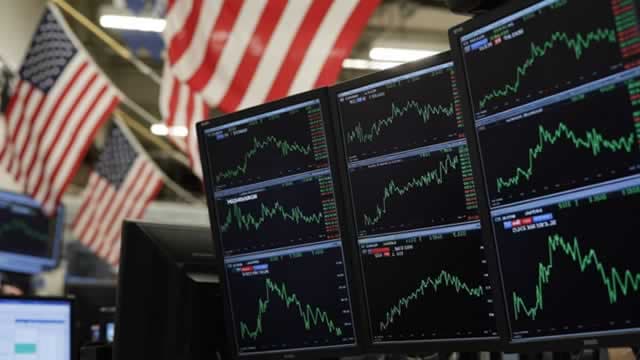
The stock market, buoyed by the U.S. government's removal of Venezuelan President Nicholas Maduro, is off to a good start in 2026, with the S&P 500 up 1.3% in the first week of trading.

CNBC's “Closing Bell” team discusses markets with Chris Verrone of Strategas, Alicia Levine of BNY Wealth and Bryn Talkington of Requisite Capital.
Operator: Good day, everyone. Welcome to the Sol Strategies' Fiscal Year-End 2025 Earnings Conference Call. [Operator Instructions]. On the call with us today is Mr. Michael Hubbard, Chief Executive Officer; Mr. Doug Harris, Chief Financial Officer; Mr. Max Kaplan, Chief Technology Officer; and Mr. John Ragozzino from ICR. At this time, I will turn the conference over to Mr. John Ragozzino with ICR. Please go ahead, sir. John Ragozzino: Good afternoon, and thank you for joining Sol Strategies' Fiscal Fourth Quarter and Full Year 2025 Earnings Conference Call. Before we begin, I want to remind everyone that certain statements on this call contain forward-looking statements subject to risks and uncertainties. Actual results may differ materially from these statements. We refer you to our latest press release, MD&A and SEDAR+ filings for a detailed risk factors and assumptions. All dollar amounts are in Canadian dollars unless otherwise noted. The company assumes no significant events occur outside our normal course of business and that current trends in the digital assets markets continue. However, listeners should note that crypto markets are volatile and our business metrics can fluctuate significantly. With that, let me turn it over to Michael Hubbard, Sol Strategies' Interim CEO. Michael Hubbard: Thanks, John. Good afternoon, everyone. Let me start with what matters. The last calendar quarter of 2025 and was the quarter institutional Solana infrastructure went from theory to reality, and Sol Strategies is winning. I'm not talking about incremental progress. I'm talking about a fundamental market shift that happens maybe once or twice in a technology cycle. The regulated capital that's been sitting on the sidelines for years is now moving on chain. Trading, settlement, property rights, cash movement and so much more, the entire existing financial system is moving on chain. Sol Strategies is at the epicenter of the growing Solana economy. Already today, you can trade real securities on chain via Superstate's platform, a large complement of wrapped and synthetic securities via backed and securitized and an ever-growing cohort of stablecoins' promise to make global payments seamless and instant. There has been a fundamental shift in government policy in the United States that is driving a significant shift by major financial institutions globally as blockchain technology is recognized and accepted more broadly. We are in the engine room of this system. Through the finding of the Laine validator and before joining Sol Strategies, I spent years in the trenches building Solana infrastructure. I've lived through the network outages, economic exploits and multiple bear markets. I know this ecosystem at the code level, not the PowerPoint level. And I can tell you with absolute certainty, this technology and the blockchain are operating at performance levels not previously seen with unprecedented adoption and capabilities. We are at the beginning of a multiyear institutional build-out and Sol Strategies is perfectly positioned to capture a significant share of it. Here's the thesis. One, Solana validators secure the core network while staking is increasingly attractive to institutions seeking competitive yields while maintaining SOL exposure. Through our fleet of enterprise-grade validators, we not only secure the network but are literally processing millions of Solana transactions every day, providing a critical foundation from which we believe we can build and unlock more value going forward. Two, we're one of the very few companies globally with a compliance stack being SOC 2 Type 2, SOC 1 Type 2, ISO 27001, being publicly traded and highly regulated, as well as the technical infrastructure and the institutional relationships and standing to be the gateway for traditional finance to the new global financial system on Solana. Three, Solana is already proving that distributed systems can rival existing centralized systems such as the NASDAQ or centralized cryptocurrency exchanges by offering the best price execution, growing adoption of real-world assets such as tokenized equities or money market funds as well as a vibrant and open builder ecosystem that encourages financial innovation and borderless global finance. Let me show you what that looks like in practice. Institutional adoption isn't coming. It's here. In the past 6 months, we've become the Solana staking provider for the ARK Invest's Digital Asset Revolutions Fund, VanEck Solana ETF, Neptune Digital Assets, Solana Mobile and Netcoins, just to name a few. These aren't pilot programs. These are partnerships deploying real capital with real fiduciary obligations, and they've all picked us for the same reason. We're the operator who meets their performance and compliance requirements, delivering institutional-grade performance and with the technical depth to handle complex custody integrations. But here's what gets me excited. The adoption isn't just coming on the asset management products, but the announcements of major companies like Western Union, JPMorgan and Galaxy building products for financial markets on Solana. Why this matters Again, we are an important part of the fabric of the Solana economy. And each time, more products and transactions occur on Solana, we benefit. Here's the math on the capital-efficient model. While everyone has been talking about DATs, which are just various financial engineering plays on holding SOL, it's our operating model plus the holding of a Solana treasury that sets us apart from the competition. Let me explain why our operational business model creates more value per dollar than any pure DAT. Traditional digital asset treasury companies, and there are now almost 300 of them, have 1 playbook, raise capital, buy tokens, hold hope for price appreciation. When the token goes up 50%, they are heroes. When it goes down 50%, they're underwater. There's no operational leverage with recurring revenue within the crypto or Solana ecosystem and no compounding beyond the price. We built something different. Our operational model combines 2 value drivers that compound on each other. Stream 1, owned validator revenue, staking yield on our own SOL treasury through our validators currently generating over 6% APY with no fee drag to third-party staking providers or custodians, plus all the transaction fees that validators earn that aren't usually paid to stakers since we operate our own validators. Stream 2, delegated third-party stake revenue, commission fees from over 27,000 third-party institutions and users who delegate to our validators as well as the transaction revenue generated, thanks to that stake. Here's how the unit economics work. Every $1 million we deploy into SOL generates staking yield at current rates. That's recurring. That's predictable, and that's entirely independent of token price. Every institution or individual that delegates to our validators generates commission revenues as a percent of their staked amount. We now have over USD 450 million in third-party assets under delegation. That's annual recurring revenue from assets we don't own and didn't have to capitalize or raise debt or equity to obtain. This is the flywheel. We raise capital at favorable terms. We deploy it into stakeable SOL. We generate yield from our treasury. We win institutional mandates. We earn commissions on delegated assets. We reinvest the cash flow into more SOL and validator infrastructure. Our improved performance attracts more delegation and our flywheel accelerates. And unlike pure treasury models, we generate meaningful cash flow even in sideways markets. Our validator business did $5.4 million in revenue in fiscal 2025. That's not price appreciation, that's operational income from running infrastructure. That revenue stream is only a year old, and we are just getting started. Looking forward to the next 12 months, this is our plan to extend the lead. Let me be very clear about our strategy for 2026. We're not hoping the market grows into us. We're going to aggressively capture market share while the window is open. Priority 1, validator scale and performance. We operate 6 institutional-grade validators today, 4 of which are proprietary and 2 white label validators operated on behalf of customers. We continue to grow the total assets under delegation to these validators. We capture retail staking flows through our competitive yields and industry-leading uptime. For example, our Laine validator has now had 22 months of uninterrupted uptime. Not even a single minute since February 2024, where it didn't operate to secure the Solana network. We capture institutional stacking flows through our compliance platform, standing as a well-known and trusted public company with competitive yields, institutional-grade compliance certifications and unparalleled uptime reliability. We're also investing heavily in validator performance optimization, MEV capture and automated failover systems as well as latency reduction. We have published several open-source software tools to support the Solana ecosystem and other validators to achieve similarly high levels of redundancy as we have through our internal automated failover detection and mitigation systems as a more resilient and performing network overall is critical to continued institutional confidence and adoption. We are also actively working on new staking products that will provide better utility and optionality to staking users across the Solana universe, enhancing our positioning as a premier staking provider and generating additional revenue. Why does all this matter? Validators produce blocks on the Solana blockchain. A block is a batch of transactions. There's a finite number of blocks per day. And the more stake you have, the more blocks you get to produce. Blocks have a finite capacity for transactions. Blockspace is a limited commodity in a blockchain. Solana has the most abundant blockspace of all blockchains, which is why it is a given that it will become the base layer for new globally distributed financial system. But our clear focus is on capturing as much of that commodity as possible as the future value of blockspace is only going to go up. Now moving on to priority 2. Institutional partnership pipeline. We're actively engaged with ETF issuers, asset managers and institutional allocators across the world. Our goal is to secure new institutional mandates in fiscal 2026, each representing a significant potential increase in delegation. Our pipeline continues to grow, and we're also expanding custody integrations. We validated partnerships with BitGo, Crypto.com and Tetra Trust. In 2026, we're targeting integrations with additional global custodians to enable seamless staking for their client base. Priority 3, strategic ecosystem investments. Beyond running validators, we're planning on making strategic investments in high-growth Solana ecosystem companies and protocols. These investments serve dual purposes, financial returns, and strategic positioning that drives delegation back to our validators. We look for opportunities where our validator and ecosystem expertise gives us investment edge and where portfolio companies can become long-term delegators, customers or beneficiaries. We're also leveraging strategic partnerships like Solana Mobile to integrate our validators into high-growth distribution channels. These aren't separate from delegated stake. They are smart ways to drive lower acquisition cost delegation at scale. Priority 4, treasury growth with capital discipline. We ended Q4 with over 435,000 SOL on our balance sheet, up over 430% from 2024. Our target is to efficiently grow the treasury through fiscal 2026 with a combination of strategic capital raises, cash flow reinvestment and opportunistic block token acquisitions. We will only raise capital when terms are accretive to shareholders. That means favorable pricing, strategic investor alignment and deployment into high-conviction opportunities like discounted block SOL or strategic M&A or tactical debt reduction. Every dollar we raise goes to work immediately generating yield. So what does winning look like? Let's look at the 3-year vision. Let me paint the picture of what success looks like for Sol Strategies. Its fiscal year 2028, an institutional asset manager decides to allocate to Solana staking. They don't run an RFP, they don't evaluate 20 providers. They call Sol Strategies first. In that scenario, we are generating millions in annual recurring revenue from validator operations. We have built proprietary technology that makes institutional staking operationally simple. We have established Sol Strategies as the definitive brand for institutional Solana infrastructure. But that's just the validation business. The bigger vision, we are the infrastructure partner of choice for any serious institution pursuing the inevitable adoption of Solana to tap into the new global financial system. We power tokenized securities on Solana and capital markets infrastructure that's being built on chain for processing tens of millions of transactions a day and maximizing our revenue. When traditional finance wants exposure to Solana's DeFi ecosystem, they come to us first because we have the compliance, the expertise and the track record. That's not a hope. That's not a stretch goal. That's the logical outcome as we execute on everything I've outlined today. The window is open, but it won't stay open forever, and we will take advantage of it. Before I turn it over to Max, Andrew and Doug, I want to say something about the team we've built. This isn't a group of crypto tourists who showed up in 2024 because tokens were pumping. Max Kaplan, our CTO, was at Kraken in 2017 as one of the first engineers, scaling infrastructure to handle institutional volume. He founded Orangefin Ventures, which consistently ranks top 3 network-wide for validator performance. He knows Solana infrastructure at a depth that maybe 50 people in the world understand. Andrew McDonald, our COO, scaled Bitaccess from a start-up to a company doing international expansion across regulated markets. He's navigated Canadian securities regulation, built institutional partnerships and knows how to execute complex operations under compliance constraints. He is responsible for much of the immense work to bring us to the NASDAQ and for closing most of our large M&A and financing deals. Doug Harris, our CFO, has done over $2 billion in M&A transactions. He's a CPA, CBV, has an MBA from Rotman. He's taken companies public, navigated complex financing and has a wealth of capital market experience. The strategic initiatives I've outlined today, the M&A pipeline, the institutional partnerships, the white label expansion, the treasury growth, all of that is actively happening right now with full Board alignment and organizational execution. We're not in a holding pattern, we're executing at full speed. This team has the technical depth, the operational experience and the institutional credibility to win, and we're hungry. Now let me turn it over to Doug to talk about our financials. Douglas Harris: Thanks, Michael. 2025 was a transformational year for the company. When we decided to transition the company from a Bitcoin holding company to a Solana company in late fiscal 2024, we had 2 main goals, to build a Solana treasury in a capital-efficient manner and create a Solana operating business. In year 1 of the plan, we've accomplished both goals. At September 30, 2025, we had over $126 million in our Solana treasury, up from $21 million the prior year. This conversion to a Solana treasury allowed us to build revenue and yield from our treasury cryptocurrency. We raised equity capital to grow our treasury in a capital-efficient manner, utilizing short- and longer-term debt facilities as early as January 2025 and equity raises as recently as last October through our LIFE transaction, which closed 1 day after year-end. When we complete a financing, our goal is to acquire Solana in a timely manner. We have a long-term directional view that Solana will increase. However, as we've seen, there is extreme volatility with any crypto asset. Where we set ourselves apart from other companies is that when we purchase Solana, we then delegate it as soon as possible to the company's validators. This increases the yield we earn beyond merely staking Solana and thus sets our flywheel in motion of increasing our treasury Solana without any additional debt or equity financings. During the year ended September 30, 2025, the company earned over 23,000 Solana-validated rewards from both wholly owned and third-party SOL delegated to our validators. This represents an average yield of 1.05% on the average total SOL delegated to our validators during the year, approximately 2.2 million SOL. We also earned approximately 19,000 SOL from staking rewards generated from staking our treasury SOL, representing a staking yield of 7.6%. Bear in mind that we acquired the validators at various times during the fiscal year and only the last fiscal quarter of the year included ownership of all the validators. Based on our 7.6% staking yield, the SOL earned from our validator operations during fiscal 2025 was the equivalent of the company holding an additional approximately 310,000 SOL in its treasury throughout the year. The revenue from validation staking rewards exceeded $10 million for the fiscal year compared to less than $300,000 from the prior year. In addition, the company earned approximately $4 million on sales of crypto during the year compared to approximately $7.5 million for the prior fiscal year, which represented the sales of the Bitcoin portfolio. Overall, first year of our revenue model proves that the decision to convert to a Solana ecosystem-focused strategy was the right call, and it is just the beginning of the overall transformation of the company. Comprehensive loss for fiscal 2025 was approximately $20.2 million compared to $9.3 million in income for fiscal 2024. The 2025 fiscal numbers include significant onetime and noncash items, including $27.5 million of impairment charges on intangible assets, $10.2 million of amortization on intangible assets and $7.9 million of stock-based compensation. This totals approximately $45.6 million of noncash charges, which, if removed, would convert comprehensive loss to a gain of $23.4 million. Additionally, the fiscal 2025 numbers include onetime charges of $3.9 million in professional fees, mainly due to increased legal and accounting costs related to the NASDAQ listing. The write-down of intangible assets is related to the company's validators. A third-party valuation was completed in compliance with IFRS standards and reflected a reduction in value primarily due to a significant amount of delegated assets being unstaked late in the fourth fiscal quarter. While this impacted the valuation of our validator intangibles subsequent to year-end, it has been partially offset by growth in SOL delegated to the Solana Mobile validator and the addition of the VanEck Solana ETF. In closing, I'm very proud of what the team has accomplished in fiscal 2025. The company has established itself as an important participant in the Solana economy and is well positioned for continued growth and success in 2026 and beyond. With that, I turn it over to Max Kaplan, our CTO. Max Kaplan: Thank you, Doug. 2025 marked the first full year I was with the company, and we were able to accomplish so much. On top of our treasury strategy, we grew our delegated stake to 3.3 million SOL by the end of 2025, making us one of the largest staking providers on all of Solana. While my colleagues before me spoke about tremendous milestones we hit this year and this quarter, I want to talk a bit further about all the work we did to get where we are today and what makes us respected within the Solana ecosystem. Our staking platform is backed by world-class automation and yield optimization. It's one of the main reasons why so many of our institutional customers decide to stake with us. Institutions need best-in-class yield availability and security. We offer this further backed by our institutional certifications. However, this is really just the start. This past quarter, we also revamped our entire reporting pipeline to serve institutional clients like VanEck. Many of you listening on the call today have a long background in financial services with some familiarity with crypto. As many of you know, crypto is a highly technical field. terminology like MEV, inflation rewards, block rewards and epoch is not something a manager of a traditional fund knows about. Additionally, one of blockchain's biggest appeals is how fast funds settle. Coupling crypto's highly technical nature with how fast funds settle, you might be able to imagine how difficult it might be to build out reporting for something like VanEck Solana ETF. This is one of the main developments we made this cycle within the engineering department. We added capabilities to our reporting stack to manage all of VanEck's reporting for them. On top of our high yield and enterprise-grade security, this is another reason why we are able to land such a big deal for the company. Our reporting platform now has the capabilities to map all of the Solana Blockchain rewards into a format that entities like State Street expect. These capabilities will allow us to target more regulated entities in the future, and we plan on building further on to our reporting platform in the months to come. This work is far from the most fun thing to build, but it solves real problems for major institutions, which we will always continue to do to make our product as best as possible for all of our customers. Additionally, we open-sourced several new tools this quarter to the wider validator audience across Solana. As a company that holds a large amount of SOL, we benefit from the Blockchain being as fast and reliable as possible. We open-sourced several new tools to allow validators to perform failovers faster. Solana is continuing to improve at a rapid pace. Many exciting improvements like Alpenglow are coming to Solana, which has one of the largest validator operators we are at the forefront of. This next quarter, we will continue to improve our staking platform and roll out new products that we expect to benefit our business. With that, I'll hand it over to Andrew McDonald, our COO. Andrew McDonald: Thank you, Max. My tenure at Sol Strategies began with the goal of leveraging my extensive background in the crypto ecosystem for the benefit of the company. Being promoted to Chief Operating Officer since joining has allowed me to directly drive forward key initiatives, including the successful NASDAQ cross-listing and the final receipt of our shelf prospectus. Following the successful closure of our LIFE offering, we finalized regulatory filings and readied ourselves. The ATM program is vital to providing necessary financial flexibility and capital access to support both our current projects and our future growth opportunities. Recently, I, along with several executive team members attended Breakpoint in Abu Dhabi, the year's most significant Solana conference. What truly inspires me about the future of Sol Strategies is the palpable evolution of the entire Solana economy and the tangible transition of traditional finance markets moving on chain. It is clear that the future of international finance will operate on chain, and we firmly believe Solana is poised to be the primary beneficiary of this. Sol Strategies is uniquely positioned to capitalize on this generational leap. Moving forward, I am committed to leading the company's growth. This will involve expanding our product offerings through both organic strategy and M&A, increasing our pipeline of new business and ensuring our existing operations are as lean and as efficient as possible. 2026 is shaping up to be an exceptionally exciting year, and we are well prepared to succeed. Michael Hubbard: Thanks, Max, Andrew and Doug. Before I wrap up, here's what I need you to understand. Sol Strategies is not a bet on Solana's price. It's a bet on institutional infrastructure adoption. It's a bet on a global unified financial system operating at the speed of light on the most capable and promising Blockchain for that purpose. And that reality is far more durable than any single tokens price movement. We filed our ATM with this in mind. It is a tool that is available to us and which we will draw upon when it is accretive to shareholders, not one we will be blindly firing away on. We are well positioned to take advantage of when the growth continues to accelerate. We will continue to position ourselves as a leader in the Solana economy, and everything we do is looking forward to that growth. We're going to be aggressive on strategic M&A. We're going to be disciplined on capital allocation. And we're going to move faster than anyone trying to catch us. We're going to be relentless on execution. Lastly, stay tuned for our next announcement of a brand-new product that we're announcing very soon that will further enhance our revenue platform. To our shareholders, thank you for backing us during this build-out phase. The institutional adoption we've been talking about for 18 months this year, now we execute. To our partners, thank you for trusting us with your capital and your reputation. We don't take that lightly. To our team, let's finish what we started. We didn't build this company to be second place. Operator, let's open it up for questions. Operator: [Operator Instructions] We'll go first this afternoon to Brett Knoblauch of Cantor Fitzgerald. Brett Knoblauch: I think you talked about how Solana is kind of seeing like the institutional momentum is here today, and you talked about your pipeline being maybe much bigger than what it's been in the past. Could you maybe just elaborate on that, kind of the north of $5 million of validator revenue this year? Where are you expecting that to go? How much opportunity do you see in the pipeline? How are those deals compared to the deals that you have signed with institutional clients today? And is this something where maybe the pipeline or activity or demand has increased recently? Has it been steadily growing? How should we think about that? Michael Hubbard: Yes. Thanks, Brett. That's a great question. Definitely, we've been seeing a very steady increase in institutional demand over the last 6 to 9 months, I would say, particularly. I think just today, we saw the Morgan Stanley Solana ETF announcement, which is great news. More and more big institutions coming into the space. As far as the pipeline goes, the way we're seeing it is that -- so we have a couple of different sort of products in the staking space. ETFs are one of our targets as we've seen with the VanEck ETF. And we're seeing some growth in the demand there and we're going to continue to target those. But we're also seeing that institutions and -- institutions is kind of a broad term, right? So institutions being kind of the traditional banks. But also more and more of kind of the financial midsized companies in the space are getting more interested in what Solana has to offer beyond just staking and just kind of the kind of vanilla options, right? So we're seeing opportunity there in how we can become an intermediary and offer services to all of these players and become their gateway to the entire Solana ecosystem and DeFi space. So what I'm trying to say here is that the pipeline has been growing consistently, and we're getting inquiries and we're talking to people and having conversations that are evolving beyond kind of just the simple plain staking type relationships. And as we have more to announce there and specific offers -- sorry, specific partnerships, we'll obviously be making those announcements. Operator: [Operator Instructions] We go next now to John Roy of Water Tower Research. John Marc Roy: So I know you mentioned a number of strategic initiatives. I wonder if you could maybe give us a little more maybe color on milestones we might see going forward? Obviously, the institutional growth is going to create announcements, but you can't obviously preannounce those. Just wondering if there's any specific milestones do you see coming that we could track? Michael Hubbard: Absolutely. Thanks, John. So right now, our primary products that we're offering is staking services, right? So we've got clients like VanEck or just anyone on the blockchain who can come and stake with any of our validators, completely permission us. Right now, we have over 27,000 people and/or companies that are staking with us across our validators that we're operating. We also offer white label validator services. So we operate validators for groups such as Solana Mobile. So if you buy a Solana mobile phone, the default validator on that phone and there's over 150,000 devices ordered, will be a validator operated by us. Now we're looking at expanding into new products in the staking space. And we will have an announcement relating to that later this month. So that will be coming up very soon. I can't say too much more right now, but keep your eyes out for that. And then we are looking at other opportunities in the broader infrastructure space as well, not directly related to staking but other infrastructure services that may be interesting to institutions and entities that want to become more active and operate in the Solana blockchain and ways that we can help them access that ecosystem. John Marc Roy: Excellent. That's very helpful. One follow-up. I know you may not have had a chance to react to this. I don't know how much you've seen from the MSCI announcement that DATs would not be excluded. I didn't know if you had any color. I know you had a response when they initially came out with their thoughts. It seems that they may have changed their thinking. Michael Hubbard: Yes, I haven't actually seen that yet. Look, generally speaking, I don't have too much of a reaction. We're not a DAT. We don't consider ourselves one. So we never really thought that this was going to be that relevant to us in particular. I think it's an interesting situation for other DATs, and it sounds like it may be a bit of a lifeline. But broadly speaking, I think the market as a whole has been very interesting in the last 6 to 9 months. We have seen a lot of DATs launch and we're going to see a lot of competition, I think, between ETF and DATs going forward. And we're very happy to be where we are, which is focus on the infrastructure and focus on building a revenue-generating business as opposed to being a pure treasury play. John Marc Roy: Yes, that makes a lot more sense from a business model. Thanks so much. Operator: [Operator Instructions] And gentlemen, it appears we have no further questions coming in this afternoon. Mr. Hubbard, I'd like to turn things back to you for any closing comments. Michael Hubbard: Awesome. Thank you so much. Thank you, everyone, for dialing in. We really appreciate your time and attention. It's been a great year behind us, a great deal of transformation and we're very excited for the year ahead. We think the Solana economy is going to be growing really, really massively. And thanks again for dialing in and keep an eye out for future announcements. Operator: Thank you very much, Mr. Hubbard. Again, ladies and gentlemen, that will conclude the Sol Strategies' Fiscal Year-End 2025 Earnings Conference Call. Again, thanks so much for joining us, everyone, and we wish you all a great day. Goodbye.
