
加载中...
共找到 25,625 条相关资讯

Craig Johnson, Piper Sandler chief market technician, and Matt Orton, Raymon James chief market strategist, joins 'Power Lunch' to discuss the recent market rotation, how sustainable the market rotation is and much more.


The Federal Reserve cast the move as management of money-market conditions. Others see coordination with the Treasury to help fund the deficit and suppress long-term yields.

Fed officials are split over inflation risks and the labor-market outlook after December's rate cut, signaling an uncertain path for policy in 2026.

"Bloomberg Real Yield" highlights the market-moving news you need to know. Today's guests: JPMorgan Private Bank Global Head of Macro and Fixed Income Strategy Alexander Wolf, Richard Bernstein Advisors Deputy CIO Mike Contopoulos, Wells Fargo Global Head of High Grade Debt Syndicate Maureen O'Connor and BlackRock Head of Macro Credit Research Amanda Lynam.

The beginning of the week saw fairly muted trading , as investors awaited Wednesday's highly anticipated interest rate decision.

Tim Seymour, Seymour Asset Management, joins 'The Exchange' to discuss if AI stocks will take a backseat in 2026.

The S&P 500 is now in danger of a weekly loss.

Stock market buybacks are a great way for publicly traded companies to reward shareholders and signal confidence for 2026.

The U.S. Central Bank wrapped up a two-day meeting on December 10, 2025, marking the last Fed meeting of the year.

Is the U.S. jobs market even worse than it looks? Most top officials at the Federal Reserve sure seem to think so.

The Investment Committee debate the headline that Oracle is delaying data centers to 2028 from 2027 and what it means to the AI trade and the market. CNBC's Seema Mody joins us with the latest out of Oracle.

This week was ugly, with big losses for Oracle and Broadcom following earnings reports. Are investors are suffering from FOB—a “Fear of Bubble”?

At a time when listing deals are scarce, Nasdaq has enjoyed one of the world's most packed initial-offering calendars.
The economics of AI should continue to work in 2026, though there are risks. We may see a thematic shift to software, away from semis and grid infrastructure.
The latest FOMC meeting signals the Fed believes rates are now in a neutral range, with limited appetite for further cuts. Liquidity support was minimal, with only $40 billion in bond purchases, insufficient to substantially ease tight funding conditions.
Momentum can be a capricious concept. Stocks with strong upward momentum usually continue climbing higher, but the higher the stock flies, the more the gears will grind if sand gets in the mix.

Nasdaq fell to a six-day low as Oracle-led tech weakness hurts AI-tech sentiment. Fed's $40B liquidity boost fails to offset AI-related earnings concerns this week.

Chicago Federal Reserve President Austan Goolsbee on Friday explained why he voted against this week's interest rate cut, saying policymakers should have waited until they had more information before easing further. “I'm pretty optimistic that for 2026 rates will will be able to be a fair bit lower than they are today,” the central banker said during a CNBC interview.

The final session of the week saw red dominate Wall Street screens, as stocks slid broadly following a renewed tech-led sell-off.
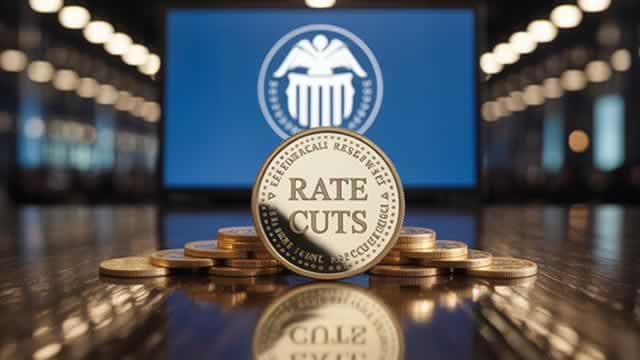
The Federal Reserve delivered another 25bp rate cut, lowering the policy range to 3.50–3.75%. While the move itself was broadly expected, the underlying message was more nuanced.