
加载中...
共找到 25,008 条相关资讯

US equities advanced on Friday after New York Federal Reserve President John Williams suggested the central bank may have room to cut interest rates again in December. The comments helped the stocks set onto a path to break a two-day slide driven by weakness in artificial intelligence stocks and renewed rate-policy uncertainty.


“I view monetary policy as being modestly restrictive, although somewhat less so than before our recent actions,” Williams said. “Therefore, I still see room for a further adjustment in the near term to the target range for the federal funds rate to move the stance of policy closer to the range of neutral, thereby maintaining the balance between the achievement of our two goals.

Bitcoin almost dipped below its critical $80,000 support level.

Federal Reserve Bank of Boston President Susan Collins said on Friday that monetary policy is in the right place amid a resilient economy, in comments that suggest she remains skeptical of the need to cut interest rates again at next month's monetary policy meeting.

Federal Reserve Governor Stephen Miran says the latest economic data should push policymakers "in the dovish direction." Miran says given the outlook for inflation, Fed policy does not need to be so restrictive.
As of Nov. 21, 2025, two stocks in the real estate sector could be flashing a real warning to investors who value momentum as a key criteria in their trading decisions.

Risk-on assets are heading toward a “liquidity event” unless the Fed refills the punch bowl.
Economic data since the last FOMC meeting should “push one in the dovish direction,” Federal Reserve Governor Stephen Miran says on "Bloomberg Surveillance." Miran says he would vote for a 25 basis point rate cut if it were the marginal vote.

CNBC's Steve Liesman and Boston Fed President Susan Collins join 'Squawk Box' to discuss the state of the economy, takeaways from the September jobs report, impact on the Fed's interest rate decision, rate path outlook, and more.

The S&P 500 experienced a sharp intraday reversal, driven by leveraged unwinding in crypto and tech, not the disappointment in Nvidia's results. Despite negative sentiment and recent volatility, economic fundamentals remain strong, with robust consumer spending and steady real wage growth.

The yield on the benchmark 10-year Treasury was lower on Friday.
US stock futures rebound as Fed's Williams boosts December rate cut hopes, lifting Nasdaq, S&P500 and tech stocks after a volatile week for US stocks.

Federal Reserve Vice Chair Philip Jefferson on Friday said he feels the current surge in stocks related to artificial intelligence is unlikely to be a replay of the late 1990s dot-com stock boom that ended in a bust, in large part because AI-related firms are well established and have actual earnings.

8:36am: Stocks bounce back US stocks moved higher before Friday's opening bell, bolstered by fresh signals that the Federal Reserve may still cut rates in December. Nasdaq futures rose about 0.4%, S&P 500 futures gained 0.5%, and Dow Jones added 0.5%, pointing to a positive start after a challenging week for Wall Street.

Not that AI is overvalued, but that the entire system supporting AI valuations is built on borrowed money, borrowed time, and borrowers who are running out of both
Nvidia and the broader market fell dramatically in midday trading yesterday. Gap shares rose overnight after the retailer beat earnings expectations.
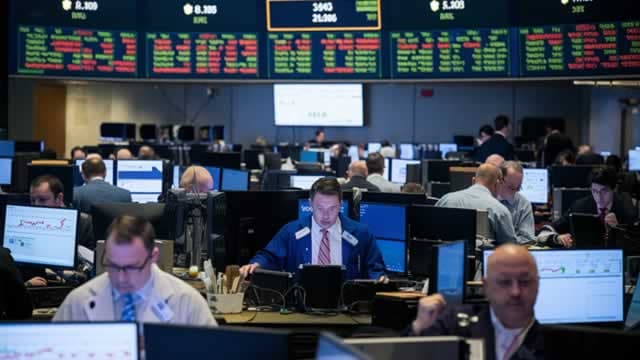
Capital spending on AI has been a key driver of U.S. stock market returns and continues to exceed expectations, comprising a large portion of S&P 500 SPX capital expenditures.

Global finance ministers, central bankers and IMF officials speak to CNBC's Karen Tso about how global trade tensions affect economic growth and development. Speakers include Pierre Olivier Gourinchas, Jim Chalmers, Francois Villeroy de Galhau, Joachim Nagel, Martin Kocher, Carlos Cuerpo.
Don't let social media's latest investing hot take lead you astray on timing your retirement benefits.

New York Fed President Williams sees room for 'further adjustment' to rates