
加载中...
共找到 25,314 条相关资讯
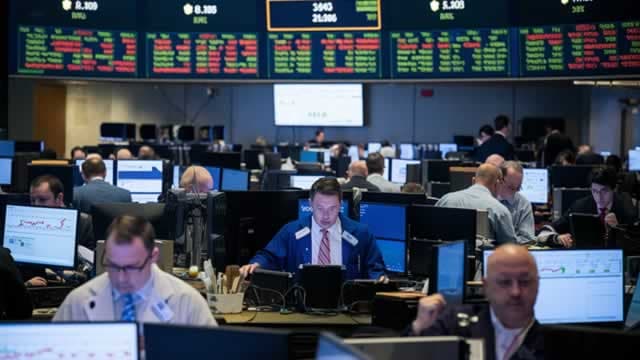
What does the September jobs report, delayed by six weeks because of the government shutdown, say about the economy? Lydia DePillis, our economics reporter, describes how the report, which was better than expected, comes at a moment of deep uncertainty.


The stock market rallies, with the Dow Jones index shining Friday. But stocks suffer weekly losses.

Market Domination Overtime host Josh Lipton looks back on the day's market moves after the closing bell on November 21, 2025. Carnegie Investment Counsel Director of Research Greg Halter joins the program to talk about the volatility hitting US stocks this week and the latest themes in the AI trade.

The S&P 500 remains historically expensive, even after a 5% correction, and is not a bargain at current levels. Maintain exposure to the S&P 500, but avoid aggressively increasing positions until clearer signals emerge from employment data and the Fed.

Meghan Shue, Wilmington Trust, joins 'Closing Bell' to discuss the risk-reward outlook for equity markets, where they go from here and much more.

Bloomberg's Caroline Hyde discusses the wild ride markets have been on as AI and crypto anxiety hit investors. Plus, OpenAI is teaming up with Foxconn to design AI data center hardware in the US.

Business activity in the United States increased for the second consecutive month and reached a four-month high in November, S&P Global said Friday (Nov. 21). The company's Flash U.S. Composite PMI Output Index rose from 54.6 in October to 54.8 in November, according to a Friday press release.
The U.S. Consumer Financial Protection Bureau announced on Friday that it intends to continue supervising financial institutions on a limited basis in 2026, signaling a shift from acting Director Russell Vought's previous pledge to completely dismantle the agency.
Alan Dickson: Good morning, ladies and gentlemen, and welcome to Reunert's results presentation for the year that ended 30 September 2025. I'm Alan Dickson, the Group Chief Executive; and together with Mark Kathan, our Group Chief Financial Officer, will be presenting our results today. This is a prerecorded webcast with a live Q&A session immediately after the webcast. 2025 was a challenging year for the group as tough macroeconomic conditions and global volatility were evident throughout the year. This was specifically true in the South African environment, where as we guided in our half year prospect statement, the macroeconomic conditions remain challenging. Pleasingly, Reunert's strategy of increasing our non-South African revenues provided good results and largely offset the challenging South African environment that we faced. In South Africa, despite there being solid progress made towards improving several of the country's key structural impediments to accelerate economic growth, the real impact on the ground is yet to be felt. The key drivers of Reunert's growth, which are reflected in the macroeconomic indicators of GDP and business confidence for our ICT segment, and gross domestic fixed investment, or GDFI, for the Electrical Engineering segment, all tracked negatively through this year. South Africa's infrastructure investment specifically decreased year-on-year and fell well below both government commitments and expectations. We do, however, believe that this decrease will be temporary, but in this financial year, it fell to the extent that it negatively impacted both the Electrical Engineering segment and the overall group's financial results. Conversely, our non-South African markets have much better macroeconomic dynamics and their general growth rates remain positive. Within this operating environment, the group's businesses performed well, specifically in the second half of the year, where we delivered on the commitments that we made to shareholders at the half year results period and produced good growth in profit and built positive momentum for 2026. Although the full year headline earnings per share were down by 5%, the second half delivered a strong performance with HEPS increasing by a pleasing 6% over what was already a good second half performance in the prior year. Importantly, despite the challenging conditions, the cash flow generation of the group was strong. The group converted profit for the year to free cash flow at 128%, which was 8% better than last year and generated cash of nearly ZAR 1.2 billion, which resulted in our net cash position increasing by ZAR 207 million to ZAR 743 million by the end of the year. In addition to the financial performance, good strategic progress was made across the group, as we improved access to our key international markets and took decisive action to optimize the group's portfolio. Internationally, in total, the group secured just under ZAR 5 billion or 35% of its revenue from non-South African sales this year. The defense cluster made significant progress in entrenching their long-term market participation in the key growth markets of Europe and the Middle East. While in the Electrical Engineering segment, over 40% of the segment's revenue now comes from outside of South Africa. The group's portfolio was strengthened through the efficient sale of Blue Nova Energy, and the mergers of Etion Create and Nanoteq in the secure communications cluster in our defense business and Skywire and ECN in the business communications cluster in ICT, which were all successfully completed with the latter coming into effect from the 1st of October 2025. These mergers bolster the financial capacity of these businesses. They create quantifiable synergistic benefits and they position the merged businesses for increased resilience and accelerated growth. Shareholder value was created in the year as a strong second half performance and the good cash flow generation enabled the final dividend to be increased by 6% to ZAR 2.93 per share, resulting in a total dividend for the year increasing by 5% to ZAR 3.83 per share. Although the group's return on capital employed decreased to just over 17% on the back of the slightly lower earnings this year, it pleasingly remains well in line with the steady increasing trend that we've been delivering over the past 4 years. And finally, the 3-year CAGR in total shareholder return remained at a healthy 14% per annum despite the challenging environment. So in summary, the good strategic progress, the group's positive performance in the second half, the strong cash flows have generated meaningful momentum, and we believe this establishes the base for the group's growth trajectory into the new financial year. I'll now hand over to Mark, who will take us through the details of the financial year's performance. K. Kathan: Thanks, Alan. Good morning to everyone, and thank you for joining us on the webcast today. I truly appreciate the opportunity to present our financial performance for the year ended 30 September 2025. Before I dive into the numbers, let me highlight some of the key drivers of the macroeconomic environment that impacted the group and its operations through the past financial year. On a positive note, we have experienced an improvement in the ports and consistent electricity supply. These factors contributed to a 1% growth in GDP, albeit sluggish. The consumer price index is into a lower range between 2.7% and 3.8%. The repo rate dropped by 1% over the past 12 months. Both the rand and the Zambian Kwacha strengthened against the U.S. dollar in the last quarter of the year. On the commodity front, copper and aluminum prices remained high throughout the period. Against this backdrop of low growth, low inflation, lower interest rates and a currency strengthening, I would like to take you through the group set of results that hold testimony to our resilience. The results presented in these slides are summarized extracts from the 2025 group audited annual financial statements, which are available in full from Reunert's website under the Investor Center tab. The group's auditors, KPMG, have issued an unmodified audit opinion on these financial statements. Consolidated statement of profit and loss. This slide represents total operations. The slides thereafter will only focus on continuing operations. And the comparatives for 2024 have been represented to accommodate the discontinued operation. The performance from total operations shows a decline in the headline earnings per share of 5%, which is similar to continuing operations. The difference between continuing and total operations relates to the disposal of the discontinued operation, Blue Nova Energy, which we highlighted in the first half of the year. Management and the corporate finance team efficiently concluded the disposal on the 15th of September of 2025. The total loss incurred, including the trading loss, impairments and the loss of disposal, was ZAR 142 million. The impact of the discontinued operation was ZAR 0.64 per share on basic earnings and ZAR 0.19 per share on headline earnings. We have excluded the impact of this disposal from the continuing operations performance. Revenue from continuing operations has declined for the reporting year by 2%. The decline in revenue can largely be attributed to weak transmission infrastructure spend by state-owned entities that impacted the Electrical Engineering segment's revenue of ZAR 7.5 billion, which is 3% lower than the 2024 year. On the positive side, circuit breaker revenue benefited from exports into the U.S.A. The ICT segment's revenue of ZAR 3.9 billion was resilient given the low growth environment, and this was flat year-on-year, with operating profit down by 9% to ZAR 644 million. The 7% lower Applied Electronics revenue of ZAR 2.8 billion was primarily due to a stronger rand and lower activity in the South African market. This translated into a 21% increase in operating profit to ZAR 500 million, up from ZAR 414 million in 2024. Approximately 35% of the group's revenue now originates from outside South Africa and is spread across 5 continents. The contribution of international revenues to the group's revenue has grown since 2021. The 8% decline in profit is attributable to the drop in financial performance in the Electrical Engineering and ICT segments. This was partially offset by a strong performance in Applied Electronics' defense cluster. As highlighted in the interim results, the nonrecurring COVID-19 business interruption insurance claim receipt positively impacted the prior year's results. Operating expenses were well managed. As a result, the operating margin that was delivered was 11%. Basic and headline earnings per share for the year declined by 5%. However, when we reflect on the first half's HEPS performance, which declined by 20%, then the second half's financial performance demonstrated a clear momentum by delivering a 6% growth on 2024's second half. When you adjust HEPS by the nonrecurring COVID-19 insurance claim receipt in the year-on-year headline earnings per share performance would be more or less flat. The group continues to maintain a strong balance sheet and remains in a net cash position, which has improved from ZAR 536 million last year to ZAR 743 million. The decline in long-term borrowings arose from the net settlement of external loans of almost ZAR 300 million. The headroom of unutilized debt facilities amounts to ZAR 1.8 billion. The put option liability relates to the issuance of a put in favor of a noncontrolling interest resulting from the merger of +OneX and the IQbusiness. Furthermore, the balance sheet is strengthened when reflecting on the net asset value per share, which has improved by 1% to almost ZAR 45. The group generated more than ZAR 1.7 billion in cash from operations. Working capital remains well controlled. However, the ZAR 103 million outflow relates to the high level of revenue in the last 2 months of the financial year. Included in the reduced tax paid of ZAR 284 million is a size refund of ZAR 62 million relating to the Quince fraud transactions identified in 2020. The excellent free cash flow of almost ZAR 1.2 billion allows the company to pay a healthy final dividend of ZAR 293 per share. The total dividend for the year represents a cover of 1.6x and a total yield of about 6.6% based on a ZAR 48 share price. The group has been extremely disciplined in respect of capital spend and allocation. During the year, the group spent ZAR 225 million on capital expenditure. Of this, ZAR 130 million was for expansion projects, while ZAR 95 million related to sustenance capital. The capital spend for the year was lower than the depreciation charge. The expansionary spend was directed towards growth projects for international markets, expansion of the last mile broadband network and technological advancements. With our strong balance sheet, our significant unutilized banking facilities, our continued positive cash generation, the group remains well positioned to continue executing its strategy and generating positive cash returns for our shareholders. In conclusion, I would like to thank my finance team throughout the Reunert Group for concluding these results quite efficiently throughout this period. With that, I will hand back to Alan to take us through the segmental review, the group strategy and the group's prospects for 2026. Alan Dickson: Thanks, Mark. I'll now take you through the segmental review, which will give you an understanding of what's taken place in this year so far as well as looking forward. The Electrical Engineering segment had a challenging year as a result of 3 discrete factors: Firstly, there was negative growth in South Africa's GDFI. Despite government's commitment to drive local infrastructure investment and credible progress being made on investment into the transmission grid, rail liberalization and port infrastructure, the extent of the actual investment on the ground fell this year and negatively impacted both the South African circuit breaker and power cables volumes. Secondly, there were ForEx losses and a product mix change in Zambia. In June of this year, Zambia's currency reversed the long-term weakening trend against the U.S. dollar and rapidly strengthened, which resulted in margin degradation and foreign exchange losses at the business. In addition, the drought in Zambia last year resulted in reduced energy generation for the Zambian power utilities ZESCO. This negatively impacted ZESCO's cash flow and reduced the volumes our Zambian power cable business sold to them. Pleasingly, these volumes were replaced by exported copper rod and cable, but this change in product mix negatively impacted margins. And then finally, the third impact was the U.S.A. import tariffs on South Africa. The implementation of a 10% import tariff on South African product imported into the U.S.A. in April, which was further escalated to 30% in August resulted in an unplanned increase in cost for the circuit breaker business. The business engaged with its customer base and successfully retained the market. However, some costs could not be fully recovered by the circuit breaker business and some margin degradation occurred during this period. These 3 key challenges were somewhat offset by a solid non-South African performance. Power cable volumes remained stable, and the circuit breaker business had a strong export performance. Although there was some margin degradation, as I discussed before, into the U.S.A. market, significant steps were taken by the business and were implemented to offset the additional tariff costs and to retain the market. And these 2 actions resulted in volumes increasing year-on-year by 25%. Going forward, the U.S.A. remains a significant market for our circuit breaker business. The actions taken have ensured that the business' market share has been retained and product volumes into the U.S.A. are expected to increase. The extent of the tariff costs that we faced in 2025 are unlikely to be experienced in future financial years. Looking forward for this segment, the segment's non-South African business remains positioned for continued growth. The circuit breaker volumes are expected to retain the positive growth trajectory they've had over the last number of years and new product releases into the U.S. market will support this continued growth. The non-South African power cable volumes should increase as ZESCO now has improved cash flow and the investment into mining infrastructure in Central and Southern Africa remains healthy. In South Africa, however, the market conditions are likely to remain somewhat constrained until overall, our infrastructure spending improves. Whilst orders for the transmission development plan, or TDP, have already been received, the volumes remain quite a bit lower than desired. Pleasingly, the Eskom framework agreements for the TDP have been awarded, which will secure volumes for the power cable business as these projects accelerate. In the ICT segment, the South African market for the group's businesses remained challenging as low GDP and weak business confidence, extended sales cycles and reduced market activity. Pleasingly, the segment's performance was achieved as collectively 3 of the 4 clusters delivered a year-on-year growth in operating profit, which demonstrated good resilience and strategic execution. The business communications cluster performed well with a pleasing growth in operating profit. Fixed line minutes remained stable throughout the year and the clusters last-mile broadband connectivity solutions grew healthily. The rental-based finance cluster performed well. The clusters revenue was negatively impacted by a lower average rental book than the prior year and reduced revenues due to the lower interest rates in the country. These were, however, more than overcome by additional efficiencies delivered through the implementation of improved control systems and processes. The collections remained of a high-quality and resulted in actual bad debts being well within the normal limits at less than 0.5% of the book value. The closing rental book remained nominally flat at just over ZAR 2.35 billion. In the total workspace provider cluster, Nashua delivered a stable revenue and operating profit result despite some of the complementary revenues coming under pressure as renewable energy sales fell due to reduced load shedding in the country. The business continued its strategy of enhancing the entrepreneurial strength of the franchise channel and 2 further franchises were sold this year, resulting in Nashua now only owning equity in a large metro franchises. The decrease in segment operating profit all occurred in the Solutions and Systems Integration Cluster, specifically due to reduced spending in the enterprise market vertical. Importantly, the business restructured its cost base to align to the expected future market demand, the restructure process and all of the associated costs were concluded in the 2025 financial year. Looking forward, although the local conditions remain tight, the broad market trends remain positive and position the ICT segment for growth and an improved performance in 2026. The Business Communications cluster's merger of ECN and Skywire is already delivering synergies and the market growth on their broadband connectivity continues at double-digit levels, specifically in Skywire's underserved target markets. Nashua is likely to deliver steady growth as complementary revenues increase and stable print volumes are expected to continue. These Nashua revenues also support both the Quince's rental book and its earnings, although we do expect Quince's revenue to remain relatively stable in this low-interest environment. The new leaner solutions and systems integration cluster provides agility specifically for the consulting leg of IQbusiness and the ongoing demand for digital transformation, cloud and AI supports an improved performance for 2026 for the segment. In the Applied Electronics segment, the reduction in segment revenue was caused by the impact of a stronger rand on the cluster's large foreign-denominated export sales and reduced demand in the local maintenance and support services market. The quality of the revenues, however, improved significantly as segment operating profit increased strongly. This was driven by efficient production, improved margins and some foreign exchange gains that were made on some of the long-term export contracts. Within the defense cluster, they had an excellent year, increasing operating profit on the prior year by more than 20%. There were record financial performances that were delivered by the radar and the fuze businesses, as they executed their strong order books and delivered improved operating profit and margins. The investment into the fuse factory in prior years produced a positive outcome as increased product volume we delivered to our major customers. In the half year results, we reported that a key fuze order had been delayed. Importantly, this order was successfully delivered in the second half and contributed to the record performance. At the radar business, they secured record defense and mining sales, and the business continues to expand both its product offering and its geographic footprint. There were also good performances from the Dynamic Control business, Etion Create and the communications business, which all contributed to the strong result for the cluster. There were some foreign exchange gains that were made in the year due to the well-hedged, long-term foreign exchange positions that we've taken. The clusters revenue for the first half of 2026 is already hedged, which limits any potential foreign exchange risk. But post this period, the cluster's revenue and income will be more exposed to the strength of the rand against the euro and the U.S. dollar. Importantly, the arrangements with the South African regulatory authorities that control the export of our defense products, the ports efficiency and the availability of electronic subcomponents are operating well and are expected to continue for the foreseeable future. Strategically, the defense cluster also progressed well in 2025. We developed new fuses and these were launched successfully into the Middle East, while the completion of the radar strategic IP co-development program, that we've been sharing with you over the last number of results, will be achieved by the end of this calendar year. This achievement positions the Radar business to participate in the future large volume production orders. And in addition to that, more fuse orders are imminent. Equally importantly, the cluster also entered a number of new markets for existing products at the radar company in Southeast Asia, North America and Europe, while the communications business made its first sales into South America. Looking forward, all 3 of the defense clusters key markets of Europe, Southeast Asia and the Middle East retain their strong growth trajectories. The graph at the bottom of the slide illustrates the clusters order book as it currently stands, which is well balanced across both local and export markets. This provides a cluster with a diversified product and geography exposure and largely eliminates any product, geography or customer concentration risk. Importantly, the strong execution performance of the cluster over the past 4 years has enabled it to now bid for larger and higher-margin defense export contracts as our customers seek to secure the long-term supply of critical products and services. The pipeline for the cluster remains robust and is complemented by good mining demand and increased spending on the South African rail infrastructure. And finally, after many slow years, there is improved activity in the South African defense space, which will further boost the cluster. We retain our view that the defense clusters growth trajectory is medium- to long-term in nature. Within renewable energy, the growth continued at the group's Solar Energy business as the key metric of EBITDA exceeded the prior years, although as expected and as we've guided, the growth rate has diminished of the double-digit levels that we have delivered in prior years. The business delivered good project margins and increased the quantity of owned assets under management during the year. By year-end, owned in construction and near financial close build-own-operate or BOO plants increased by 22% to 95 megawatts. Normalized EBITDA from these plants grew positively and exceeded the prior year by an impressive 71%. The group's wheeling business, Apollo had a solid year. Shortly after NERSA awarded Apollo its trading license in October 2024, Eskom indicated that it would take the award of the trading license and the other three companies that were awarded licenses at the same time on legal review. Apollo has continued normal business operations throughout the year and Eskom's actions have not impeded the business development achievements that they have made. Importantly, Apollo is concluding its first customer power purchase agreement and this agreement secures the business' revenue-generating capability, which will commence when the independent power producer finalizes its construction. Looking forward, the renewable energy cluster will continue to grow into 2026. The Solar Energy business has a good pipeline of BOOs and its track record on project execution and cost management, protect the returns on these projects. The commercial and industrial market or C&I market, which is the Solar Energy business' target market, remains robust as high energy inflation, unreliable municipal grids and battery storage, all present longer-term support for this market. Pleasingly, Apollo is likely to commence trading in 2026 with only the successful conclusion of the IPP project and Eskom's legal challenges being the inhibitor. In 2025, the strategic initiatives of the group had 2 key focus areas: firstly, strengthening of our international market positioning, to continue the recent good growth in non-South African revenues and secondly, to optimize the group's portfolio to strengthen the financial returns and growth prospects of our assets, specifically for our South African focus businesses with a current low interest, low growth environment may continue for some time. Internationally, despite the stronger rand and the reduced revenue into Africa, the group's non-South African revenues grew again this year. The group secured nearly ZAR 5 billion in non-South African revenues, delivering a 17% CAGR over the past 4 years. This focus on increasing these revenues and entering international markets remains a key strategic focus across the group. Both the electrical engineering and defense markets remain robust, and we believe defense specifically retains its high expectations for continued strong growth. Importantly, the circuit breaker access to the U.S.A. market and an improving Zambian economy after the devastating drought of last year create increased opportunities for the Electrical Engineering segment. The second key strategic focus area was to enhance the resilience and agility in some of our key operations. This was achieved through 2 mergers of existing assets and the disposal of one. The group concluded the sale of Blue Nova Energy this year. The rapid change in the South African battery market precipitated this sale, which has been concluded efficiently with no job losses and with a result that was significantly better than we projected in our half year announcements. In the secure communications cluster in our defense area, Etion creates a nanotech merged and in the ICT segment, ECN and Skywire emerged in the business communications cluster. These 2 mergers have delivered rapid synergies, have created larger business units, which have increased financial resilience and have simplified the Reunert portfolio. But perhaps most importantly, these mergers position these businesses for stronger growth. Nanoteq's encryption technology will provide new revenue streams to Etion Create export markets and will accelerate profitability of that entity, while in the business communications, Skywire's successful direct B2B go-to-market strategy will leverage ECN's channel partners and accelerate the growth rate of their last-mile broadband connectivity solutions. So ladies and gentlemen, in conclusion, and if we offer a view to next year, the momentum created through the group's positive second half performance and strategy execution positions Reunert well for growth in the 2026 financial year. It is anticipated that the South African economy will steadily improve as the impact of the energy and rail liberalization and port infrastructure investments continues, private participation in infrastructure projects increases and the benefits of the structural improvements flow into the economy. Whilst we believe this will be a steady increase, Reunert's track record reflects that steady economic improvement results in positive operating leverage and improved financial performance. Pressure is, however, expected to continue on the South African Electrical Engineering product volumes until the infrastructure investment increases, which is not anticipated to materially improve in the first half of the financial year, although they are at least expected to perform in line with 2025's results. When it will continue executing on its strategy and will deliver growth into next financial year through, firstly, solid growth in our offshore markets in the defense and circuit breaker business. Secondly, a refocused and restructured ICT segment is set to deliver sustainable growth. And finally, our renewable energy investments are expected to grow in both asset ownership and an enhanced trading footprint. Ladies and gentlemen, thank you for your interest and attention this morning. We'll now move into the live Q&A session. Thank you. Good morning, ladies and gentlemen, and thank you for your interest in Reunert and for joining us today for this 2025 results presentation. Prior to us just kicking off of the Q&A, I'd like to just spend a minute on my transition, which was also covered in a sense that was issued yesterday. We weren't able to include it in the webcast because the webcast was prerecorded. And for confidentiality purposes, it was left out of the webcast itself. But ladies and gents, just on behalf of the Board, I just wanted to share the following key messages, and there's 4 of them, that I think should be seen in conjunction with the SENS that we issued to the market yesterday. Firstly, this is a well-planned and structured process, and it carries the full support of both the Board and myself and is a culmination of an extensive and thorough process to identify and appoint the best person for the role. Secondly, the Board has confirmed that the group's strategy, operational and financial trajectory remains consistent with that, that we've been following for the past 5 years. Thirdly, I'm deeply invested personally in the success of Reunert and the success of this transition and my arrangements with the company and with the Board mean that I will remain involved with Reunert for the next 12 months to assist in ensuring its success. And I believe in Anthonie de Beer, we've got a candidate who's got the requisite skills, track record and leadership credentials to deliver sustainable growth for Reunert and long-term value for shareholders. And I think particularly important, his value system and culture are well aligned with Reunert, and we have full confidence in him. Ladies and gentlemen, on behalf of the Chair of the Board, any shareholder who would like to meet to discuss anything in the respect of this transition, if you could please let Karen Smith know, and we'll make the necessary arrangements to engage you directly with either the Chairman himself or the Chairman and myself should you so request. So ladies and gents, the Q&A will be managed by Mark Kathan, our Chief Financial Officer; and myself. I'll sort of try and chair the questions and move them in a direction whoever is most suitable between the 2 of us to answer those questions. Alan Dickson: The first question comes from Charles Boles at Titanium Capital. His question relates to the circuit breaker business. And the question is, over the long -- medium to long term, will Reunert remain competitive in exporting these products? Do these products not become commodity items over time where Reunert struggles to compete in the export market? So Charles, where we play, particularly in the U.S. market is we actually sell into the OEM market. We don't sell into the mass market as we typically do in South Africa. We design our circuit breakers together with the OEMs for the specific application that they are looking at. So there is a long run-up while we design, develop and approve those products. Those products go into their systems. And typically, they remain in those systems for the life of those systems. So when we talk about being involved in telecommunications or 5G rollout, once we approved, we tend to remain in that system for the life of that rollout. So they are long term in nature, and they are designed into those products where we work very closely with those OEMs in that regard. And those 2 elements give us quite a significant capability or competitive advantage to remain in those areas for a long time. More generally, if you look at our circuit breaker business today, we export 66% of all the product that we manufacture. So 2/3 of our products are exported globally. The fastest growing of those markets is the U.S.A., but we export globally. And that's not a new number. We've been exporting in that nature for at least 10 years, if not more than that. And I think that gives also an indication of the sustainability of our ability to export our circuit breakers and the likelihood that we will continue to do that, both from a strategic point of view, but also from the tactical way in which we get ourselves into those markets and remain in those markets. The second question is from Rowan, actually, the second and third from Rowan Goeller from Chronux Research. The first question relates to whether we expect an acceleration in transmission projects in the coming years given the 14,000 kilometers that need to be put in place or built by 2033. The short answer to that, Rowan, is yes. But if I give a little bit of color to it, we referred in our presentation that we have received and delivered some cables into those transmission projects that were executed by Eskom this year. But these are small projects. And we would argue that these volumes in the 2025 financial year are less than 10% of what Eskom will consume when these projects get up to full scale. So we anticipate a growth from where we are now, let's call it, less than 10% of what we expect, somewhere up to about 100% for those Eskom projects over the next 2 or 3 years as they ramp up those projects and the construction phases of those continue to accelerate. The other part of that question is that Eskom will do a portion of these transmission lines and private that PPP projects will do another portion. And to date, there are no PPP projects in place. The bids for those have been delayed. They were meant to be submitted now in November. They've been delayed until the middle of next year, and then those will start to ramp up from there. So there's none of those volumes in these volumes that we see at the moment. So we see a significant ramp-up in cables to go into those transmission projects, first of all, into the Eskom-led projects and then following those into the PPP projects, which will come a little bit later on. Rowan's next question relates to the growth rates that we expect in the defense cluster over the next 3 years, given the increased global spend on the defense segment. So in terms of that, we do anticipate still steady growth in terms of that defense market. We shared with you in the presentation the distribution that we have globally of our order book at the moment, which roughly, roughly is about 25% for each of our major markets, which really gives us a broad market access. All of those markets are looking for our products and services, and we're able to sell into those consistently across the globe at the moment. So without putting too fine a number on it, 2 comments I want to make. First of all, we believe it's a medium- to long-term trend in growth in our defense business. We've got that type of sustainability in it. And we anticipate that we will be doing double-digit growth for the next 3 years at least. The next question comes from Timothy Olls from Laurium Capital. There's 3 questions he's put in. One is that segmental EBIT from other dropped from ZAR 196 million last year to ZAR 109 million this year, and he's asked for some clarity on that. We don't often give too much clarity on it, but I'm going to ask Mark if he's got something, I asked him when the question first came on. Perhaps he's got something to offer without giving too much away on it. But Mark, do you want to field that one first for us, please? K. Kathan: Yes. So Timothy, last year, the share price -- the closing share price was higher than this year's share price, which is at ZAR 53. So when we provided for the ESOP, that's the employee share plan on the BE scheme as well as on the conditional share plan, we provided at a higher share price. So this year, we had a lower share price and hence, we charged less to the income statement. Alan Dickson: Thanks, Mark. Perfect. The second question that Timothy has is what is the total EBIT loss for the renewable energy this year? And when do we expect it to break even? I'll need to do some homework. Again, we don't normally give the level of detail at a particular business unit as that. So Timothy, we'll revert back to you on that one, but not be able to share with you the exact levels of the numbers we've got. I don't have those at hand as we speak right now. And then the third question relates to the record fuze and radar performance. And the question is where will all the growth come from here? And are the higher EBIT margins of approximately 24% in defense sustainable? So there are a number of our markets where further growth comes from. So in the fuze market, there is definitely further growth, and that really comes from increased volume into more geographies. We did share with you that we have got new fuzes into the Middle East, and those haven't reached full capacity yet. And equally, we are underexposed to some markets in Europe that we are actively trying to penetrate. So those are the 2 areas in the fuze business that we still anticipate further growth. And in the radar business, a portion of the radar businesses and the radar's revenue and income in this year relates to, what we call, strategic IP co-development. And that's the development of IP and a product. And when that is approved, which will be done by the end of this year, that over time converts into a production run. And we will then benefit from that production run going forward, which actually brings run rate growth into that business. So that's the source of the growth both for fuze and radar. And then if we look more broadly across the rest of the cluster, we can anticipate greater and improved profitability still from our communications business and Etion Create on the back of improved export potential for them. So we have quite broad opportunities for growth across our defense businesses. And then with relating to the defense margins, we think our margins remain healthy. The supply and demand at the moment is such that we can price correctly. There is one element in that, that one should take cognizance of. And around about 90% of our sales this year were export in nature, and those are in hard currency, either euro or dollar based. So to the extent we have a strong rand, somewhere around about the 17 that we have now or even if it gets a little bit stronger than that, that would put a little bit of pressure on to those margins, not material pressure on to it. But just from a, call it, an analyst point of view or shareholder point of view, one should remain or be aware and take cognizance of the fact that our exports and defense are all hard currency based and the rand does play a little bit of a role on that. We tend to hedge those revenues to protect them. But obviously, when it gets very much stronger, there would be some negative impact on the margin in terms of that. We then have another question or the next question is from Myuran Rajaratnam from MIBFA. There's 2 questions. One is, is our circuit breaker business exposed to the data center market in the U.S.A.? Yes, it is. We have a couple of access points into those data centers, and it's part of the good growth that we're seeing into that market at the moment, and we expect that to continue for some time. And then also asked a question around for a group with diverse segments. If I was forced to choose, although both are important, is it more important for the group Chief Executive to be good as a technical engineering person or a good capital allocator? It's a question that we thought deeply about through the process. Reunert today has a very strong executive team. We -- and the executive team is structured with Mark as the Chief Financial Officer; Mohini Moodley, HR Director and Sustainability Director. And then we have 3 segment heads. Each one is responsible for their line of responsibility, one for Electrical Engineering, one for ICT and one for Applied Electronics. And those gentlemen carry the biggest responsibility of, let me call it, the technical expertise and the delivery of the numbers. And our view was that within such a strong executive committee that we have at Reunert at the moment that it was important to have somebody who was a good allocator who understood how to run a portfolio and was capable to provide some inorganic strength to the group going forward as well. The next question is from Siphelele Mdudu from Matrix Fund Managers. He's asked, how should we be thinking about our circuit breakeven margins into the U.S.A. Will volumes more than cover the rand that are lost? So we think there is some thinning in the margins. Roughly, we believe we are able to recover somewhere between 65% and 70% of the tariff costs that we've got. So that's the nature more or less of the margin degradation into those circuit breakers, but we think that's sustainable. We don't think it gets any worse. And we are working with our customers to try and make those recoverables better, but we don't think they're going to get any worse at the moment. So we think the margins that we see in this year are probably the lowest that we'll see into the circuit breaker business going forward. And at a percentage level, we don't necessarily think it gets much better in terms of how much of those tariffs we can recover. But certainly, in a rand volume point of view or the rand growth that will come through the volumes, we do think that will more than cover the cost that we had in this year. [indiscernible] from RMB. The question is continued cash generation in the business. May we understand if there are any key plans for this cash going forward? I'm going to ask Mark if he can turn to that one, please. K. Kathan: Yes. [indiscernible], we have a very defined cash allocation policy as to how we invest our cash. And we would look at -- number one, we would first look at business requirements, and that would take working capital into account and then around our fixed assets, around sustenance and expansion. And then at the same time, we would then look at how we would distribute cash to -- on investments, if there are potential acquisitions or at the end of the day, we look at dividends and share buyback. So there's a defined process that we go through. And -- but the intention is obviously always to look at -- to come back to shareholders and tell them what we're going to do with our cash. Alan Dickson: Thanks, Mark. And then I'll ask you to do the next one as well from Myuran from MIBFA. And he has asked, can you please give some color into the nature of the amortization of intangible assets that we have reported as well as our annual investment into intangible assets in rands. K. Kathan: Yes. So Myuran, there are 2 distinct differences in the intangible assets, how we account for them. The first would be on acquisition where we would allocate part of the purchase price into intangible assets. And that will be typically customer lists, et cetera, that we write off those intangibles typically between 3 and 5 years. That would be part -- that will be on acquisition. And then in our defense cluster, we would also create some level of intangible assets, whereby we will start creating technology. And that would be part of our annual CapEx budget, and that will also be written off over the contractual period that we have with customers there. Alan Dickson: Perfect. Thank you, Mark. Ladies and gents, that's all of the questions that we have at the moment. I'm maybe just going to wait 10 seconds or so just to see if there's any last-minute questions that pop in. Okay. We've got one from Kgosi Rahube who just beat the bell from Melville Douglas. Can you please provide more insight into the expected improvements in South African defense given that the key issue has been the defense forces constrained budget? Yes, I can, Kgosi. There's been a little bit more budget that has been allocated. And certainly, one of the programs that have been announced that have been awarded is the armored vehicle program, which is a large vehicle program to replace the legacy Ratel vehicles. And into that vehicle goes some of our products, particularly our communication products. There's one example whereby we are seeing the kickoff of some larger scale projects, and that first one, as I've described, has been allocated. So there is some more budget that has been allocated into the South African defense force. There is no shortage of need for projects and expenditure there. So as the funding becomes available and as I think South Africa's fiscal position becomes a little bit better, which we do anticipate over time, we do believe that there will be more funding flowing to the SANDF for some of these projects. And our exposure at Reunert across those requirements is actually very good. So invariably, when any large capital project gets announced, we will get the benefit from that. Now it will take a little bit of time before that comes into play in the communications, so probably not in 2026, but 2027 onwards. But those type of projects coming through a real boost to our export volumes that we've got at the moment, which are also long term. So yes, we do think sort of this increased allocation to the SANDF, we do believe is part of our view that South Africa gets steadily better. [indiscernible] thank you for your kind words as well. I appreciate it. Thank you very much for that note. And ladies and gentlemen, that brings us to the end of the presentation today and the Q&A session. Thank you very much for your attention. We appreciate you taking time out to listen to Reunert and Mark and myself today. We appreciate your interest and your -- and value your contribution. Thank you very much, ladies and gentlemen.

Gary Arnold: Good morning to you all. Welcome to all our investors, colleagues and then our Chairman, Theunis, and we have Willem and Bridgitte from our Board here today. And then as I walked in, Anthony Clark said to me, he thinks he must be in the wrong place because he saw the old bugger here. So welcome, Chris. Hello to you. Chris has joined us today. Anthony called you the old bugger, not me. But let's dive into the presentation. We'll try and stick to the time. As you know, we are always quite diligent on that, and we'll get into the business overview. Fortunately, all green arrows, and Chris used to have a comment for this, which I'll steer away from. But absolutely a good scoreboard, revenue up 10%. One always likes to see that growth in revenue. That ultimately is what drives the bottom line growth, especially in an inflationary cost environment, and we'll dig a little deeper into where we generated that additional revenue from a little later. Profits up 11% to just under ZAR 1.3 billion and then headline earnings up 14% to ZAR 21.93. We closed the year with a very healthy cash balance, just over ZAR 1 billion. And on that, we're able to declare a final dividend of ZAR 8.80 a share, taking the total dividend for the year to ZAR 11. So good cash generated from operations at ZAR 1.7 billion, up 20%, and we will spend a lot more time on those numbers later in the presentation. It's very pertinent to point out that this was a tale of two halves as we've phrased it. And I thought we should give just a bit of perspective on what changed or happened between the first and the second half. And at our interim results in May, you will recognize some of these outlook prospects that we put up on the slides at that time. And it did point to some of the key drivers in the business coming through, which at the time were supporting a better outlook for that half. And we said then that we expected good prospects for the current local maize crop. I think we were the only ones, if you look at that, the first crop estimate committee number was 13.9 million tonnes, and we ended up on 16.3 million. So Anthony, I think perhaps we were the only ones in the trade that saw this crop coming. And -- but anyway, be that as it may, we had some good procurement there, and that helped with softer feed prices that we spoke about at the time. We certainly had lower finished stock levels in poultry. And as you know, we increased volumes from the 9th of March, adding an additional 400,000 birds a week to our production. And then we spoke a lot during 2024 after the tumultuous years of '23 with load shedding and bird flu, where we set sail on this transition journey or this journey to turn around the results and Project 3R was launched, Re-set, Re-start and Re-focus. And this past year was a lot about Re-focus. It's just to focus on the basics in the business and those key drivers, particularly in the cost of producing chicken, which is critically important to achieving the results that we see today. So this is the -- you'll see the waterfall later as we've called it before for the year-on-year comparison, but that almost clouds out some of the tailwinds that we had in the second half. So I wanted to just point to the movement year-on-year, and we reported a ZAR 271 million profit for the first half. That was down significantly on the first half in 2024, about 60%, I think at the time it was down. But then you can see the impact of the selling price recoveries coming through. We had significant selling price deflation through 2024 and into the first quarter of 2025. We had to go out there and look for some support in selling prices. Broiler margins were reported at that time of minus 1.1% negative margins, certainly not sustainable in any business, never mind a poultry business. We increased sales volumes. One would expect in the slide that this bar would have had more of an effect, but we should remember that in the first half, we sold a lot of product out of stock. So if you look at the 2 halves together, more or less equal sales volumes, but the year saw an increase -- quite a good increase in sales volumes over 2024, supported by feed price. So feed prices in that half coming down nearly 8% in fact. But if you look at the year, feed prices went up marginally. So again, very distinct results in the second half to the full year picture. Full year picture, feed prices went up ZAR 19 a tonne. Here, they came down in that half quite significantly by 8%. That resulted in the full year profit for the year at ZAR 1,247. So the salient points, now looking at the year-end perspective, poultry feed costs increased marginally. I've just spoken about that. And there was a lot of volatility through 2025 in the local SAFEX market. We managed to procure well, and we'll look at a chart of where the prices were later on, but we managed to procure well through the cycle that when we priced our feed in the second half, the market had traded at very high levels through 2025. Anthony will tell you that maize touched ZAR 5,700 a tonne at a point. So when you have good positions and we are pricing the feed into the market at replacement cost because every day you use the feed, you've got to -- or the maize, you've got to buy more to replenish it. You have to manage that very well into the market so that you're not replacing your maize with much higher -- or you're replacing with higher price positions, but we try and just hold on to any procurement benefits that we might have. On-farm broiler performance has improved. So notwithstanding the slightly higher feed price, feed conversion efficiencies decreased. And that, as you will remember, is the amount of feed used for every kilo live weight gain. So we used less feed again this year for every kilo of live weight gain. And that basically nullified the impact -- sorry, of the higher feed price through the year. So on-farm broiler performance is looking good. We will look at those metrics later. As I've said, we increased our broiler placements, and we sold what we produced. So we didn't produce it and put it in a freezer. Even through winter in the second half, we were able to sell what we produced with very manageable stock levels at year-end. Poultry selling prices improved marginally. Year-on-year, the selling price movement was 2.4%. Again, stands in quite stark contrast to what happened in the second half where we managed to recover selling prices to move those broiler margins back into positive territory. And we also benefited, and I think you'll see that in the slide later from an improved product mix. Now that helped support the basket and better poultry selling prices through the year. Our Feed Division, as you'll see, reported very strong earnings. They, in this integration and something we will have to demonstrate to the Competition Commission when we talk about the poultry market inquiry is that an integration works for you. It works in that you are able to support that poultry value chain through the year. Now our Feed Division obviously benefited from higher broiler placement numbers. They had higher internal feed production. So feed internally went up nearly 8%. But they also managed to sell more feed in the external market, which you always want to try and do. You want to grow your external market and fill up that spare capacity that you have in your feed mills. Notwithstanding the impact of ongoing diesel and water supply costs, we still have an average ZAR 10 million a month bill for diesel and trucking water up and down. ZAR 120 million for this year on the dot. It's a significant cost, and that's all about municipal interruptions, supply disruptions. So when you hear about national load shedding, that's gone, that's great. You see that. You don't see your lights going off any longer, but the infrastructure and the municipalities needs a lot of work. We did benefit though from the higher volumes, and we can demonstrate that a bit later where the economies of scale have supported lower costs in the business, lower operational cost per unit. Stringent focus on working capital. I mean, we've kept our focus on that line throughout the year as we were in this rebuild phase of the balance sheet. Last year, we clawed all the debt back. This year, we set ourselves the task of building cash, healthy cash balance on the balance sheet that will stand us in good stead for any future headwinds that may come our way. And in the poultry industry, they do. Those of you that are very familiar with the volatility in earnings, you will see that -- we will see that somewhere, but at least we are well positioned to deal with it. And then you all know about the cybersecurity incident in March. The only thing I want to say here is that there was no impact on the integrity of the financial information. There was a very thorough investigation -- forensic investigation that went into this by 2 companies and then the auditors, Deloitte went through this thoroughly, and there was absolutely no impact, fortunately, on the integrity of the financial information or data in the business. So we can stand here and say that the results we present to you today are 100% untouched by some guy hiding in the shadows in Eastern Europe. Okay. For the year, this is the movement, and that's why I showed you the half-on-half earlier on because you don't see the impact of some of those key drivers in the second half if you look at just the year-on-year perspective. What you will see through this year, though, is the quality of earnings in 2025 improved. We had a ZAR 250 million insurance recovery in 2024, and that was on the back of a number of natural disasters in 2023, bird flu, floods in Meadow Feeds Paarl in the Western Cape at our feed mill and a hatchery in the Western Cape that burned down. So recoveries in insurance there, which did boost the results in 2024. So you can see through the year, we got that assistance from selling price over the year with that recovery primarily coming in the second half. Volumes increased year-on-year as we placed more broilers, sold out of stock and increased our sales. We got the assistance from feed in the selling price and the benefit from feed conversion efficiency with our on-farm performances and the cyber incident we've spoken about. So all in all, an 11% increase in PBIT year-on-year. This is a slide that really tells a good picture together with the next one. You can see that in our first half of 2025, those margins under severe pressure. When we stood here in May, we reported margins of minus 1.1%, certainly not sustainable, increasing to 3.9% for the second half. And I think if you reflect -- if we go back to 2022, that was a 3.5% margin and a 5% margin and returning profitability at that time of ZAR 1.5 billion. So certainly, if you have the margins and you have the selling price and you have your cost base intact, there are drivers in this business that can support future earnings. We just -- as you can see, and I've spoken of the volatility, I mean, you try -- we often get asked what's an average margin? What should we be penciling in? Well, if you -- my guess would sometimes be as good as yours, I think there's a lot of volatility in this, and we're obviously going to try and keep it as best as we can above this line, the black line, but it depends on numerous factors, some of which are under our control, some of which are outside of our control like this horrible year here. Broiler selling prices against food price inflation. So the poultry selling prices are in this basket, the food basket. You can see the price deflation that we recorded or reported on through from December 2023 all the way through until around April this year, where we were able to get a selling price adjustment into the market. And I just would like to point out that our selling prices now are on average the same -- at the same level as they were in December 2023. So with inflation and costs and everything in between, our selling prices now are not higher than they've been historically. So it's certainly not record highs for the selling price of chicken. And this, as you know, gets harder and harder to get into the market, always a tough discussion with the retailers. And then, of course, we're always very wary and mindful of the pressure on consumers. This graph, we've always said, tells the whole story. If you had one graph you wanted to put up to tell you all what happened to Astral through the year, this is it. Definitely a tale of two halves. So you can see that I've put a red block around that one, a disappointing result in the first half, but certainly a positive result in the second half, which returned the business to a good level of earnings and financial performance. Just to remind everyone, this is the month-on-month, year-on-year movement in the broiler selling price and then the feed price. So you can see the price deflation coming through quite strongly here in the first half. At the same time, off the back of a smaller maize crop in 2024, we had this -- we had higher feed prices. We had spike -- the spike on SAFEX yellow maize at this time, and we'll look at that graph a little later. But we were able to procure well enough that our feed prices were softer through the second half, but we certainly looked to get some improvement in selling prices to cover input costs. Otherwise, those negative margins would just reflect again on the scoreboard, which is not the business we're in. So on the raw materials, I'm not going to go through this whole balance sheet, except to say that, that's the small crop in 2024, relatively small crop, which led to higher prices for maize on SAFEX and higher feed prices that we had through the first half of 2025. We then had the market -- quite a lot of volatility in the market. The first crop estimate committee report came out with a 13.9 million tonne crop. The last report being the ninth report at 16.3 million tonnes. So through all of that uncertainty about delayed planting, the late rains, the grade issues, everything that followed, there was a lot of volatility in maize prices. And we eventually reported or harvested a crop of 16.3 million tonnes. Now the progress -- planting progress for the current crop is well above the 5-year average. Today, we're sitting at about 44% planted. So good progress has been made on the planting of the current crop, and we've had some good rains. So I expect and what we can see, we've moved into a La Niña weather pattern, which means -- usually means good rains for Southern Africa. And if these rains continue and it rains at the right time through the growing season, there's no reason why the prospects for the maize crop that will be harvested in 2026 will not be any worse than this year. That will support favorable maize prices into poultry feed. In fact, we believe that if we produce this crop, you'll see the carryout increase, we should move closer to export parity pricing. And there's probably about ZAR 200 a tonne downside in that on July 26 contracts, which are trading at the moment about ZAR 3,500 a tonne. So good levels for poultry feed. You can see the volatility through 2025 in the maize price. I mean you had to choose your moments here where you wanted to buy. But certainly, Astral positioned ourselves well through this volatility. We did not participate in this which is why you see those softer feed prices coming through in the second half. And then more recently, through the latter half of this financial year or calendar year, SAFEX has dropped quite dramatically on the back of the news of the big crop of 2025 and the prospects for '26. So all you can do in this market is just keep buying, hold a good position. As you know, we always have to have 3 months of maize in the pipeline. Here, you keep buying and every day you buy, you can reduce your average price. In a falling market, don't always look as good as you could be. But if you don't buy, you're going to be waiting for some bottom that someone must tell you where it's going to be and then you're really a speculator. You can see a little bit of an increase in SAFEX pricing just lately, and that was of some volatility in the Chicago Board of Trade with funds taking up longer positions on corn. Soy meal, this is a story to tell. I mean we really -- protein input prices are very good. We're well positioned here. If you look where the market came off about 2 years ago at record highs, ZAR 13,500 a tonne. You could flat price meal during the year now at ZAR 6,500 a tonne, good levels to feed chicken. And then, of course, the rand-dollar exchange rate, very stable, which takes those shocks out of any movement that you will see something coming through with shocks on Chicago Board of Trade. But with very good global coarse grain balance sheet, the world is not short of maize and soybeans right now. The U.S. has had a good crop, harvested a good crop now. South America has had a good crop come off. South Africa has had a good crop come off, and you can see that Chicago is trading those fundamentals. So good global outlook, good local outlook for maize and soybeans, and then you have some stability in the rand-dollar exchange rate, which brings that price relief or favorable pricing levels to SAFEX. Very quickly on the Feed Division, revenue up here 9%. That was driven by an increase in sales volumes of 6.5% and selling prices up 0.6%. So that selling price movement reflecting that increase in raw material costs across both years, not reflecting the softer feed prices in the second half. Operating profit up 31%. So you can see the momentum that comes through. You place more broilers on the end, they eat more feed, you get this big pull into the feed mills in Astral, and you have these volumes coming through. Then you add external volume growth to that, and this is -- you cover your fixed costs even better. You have better efficiencies in your feed mills coming through, longer runs of all the broiler feed we make, and then this is the result. So to the Feed Division and the Meadow Feeds, a really good result for the year. And I think this -- we only saw something like this in 2023 when we had all of those feed volumes going to the Feed Division on the back of load shedding and the big bird era, but the Poultry Division was suffering because of the cost. So this is really a true reflection of what the integration of the business can do. Margins up to 6.6%. And expenses on a rand per tonne basis very well controlled. You can imagine what these volumes do. We've seen the graphs for these 2, so I'm not going to cover that again. But the internal volumes up 8%, external volumes up 5.6%. And that growth was largely in the external poultry and pig feed sectors. So saw some nice growth there with some of that coming through in the Western Cape. Expenses well controlled. And again, we saw a net margin per tonne increase in the division. So a good return from them for the group. Sales mix here remained largely unchanged, still about 60%, more or less internal feed and the balance going into the external market with a very important component in the other being dairy, making up about 25% of the sales. The Poultry Division, we'll cover this in some detail. Revenue up 10%, driven by volumes and a little bit of selling price recovery at 2.4%. But if you look at the volume growth, nearly 8% in this division year-on-year, which has really supported a good performance and turnaround in this division. Breeder revenue up 4.6%. We'll unpack that a little later. Now when you look at this graph, you'd say, well, you've had -- it's been a good year, but operating profit in poultry was down. That's where we come back again to that quality of earnings number. If you take out the hatchery fire and the bird flu insurance claim, which amounts to ZAR 231 million in this division, the underlying improvement in their results is just under 53% year-on-year without that one-off item in the insurance recovery. So a good result in the Poultry Division and certainly one that we're pleased with through the year with all of that recovery coming through in the second half. You'll remember, in the first half, we had a negative PBIT here. We've already spoken about the margins. So the average broiler net margin over the year, 1.5%. It still remains thin and vulnerable to any headwinds, 1.5% margin, if you look at that graph that we showed you earlier on, is thin in the business. And if you just have any shocks, that comes under pressure again. So a lot of focus then on rebuilding cash reserves, which you'll see later. Dries will go through the balance sheet in detail, which sets us up in a stronger financial position than we were 2 years ago or that we were even in a year ago. Of course, with higher volumes, your variable expenses increased, but those volumes assisted your overhead production costs, your fixed costs and our per unit -- per kilogram production cost for every chicken produced came down slightly for the year. So that's the benefit of scale, the benefit of volumes in the business. And then our finished goods stock levels, we've used the word substantially lower than at the end of 2024 because they are -- in fact, they were substantially lower than they were then, with the higher production we have now filtering into the system. It's not sitting in a freezer, and we are selling current production. And by the end of this month, we will surpass 6 million birds a week. This is the sales mix. So we spoke earlier on about a bit of support from the product mix. I'd like to just point out the IQF singles on higher volumes increasing in the year. We still sold 6% into the QSR sector, but on higher volumes. We sold 13% of the mix in fresh, but on higher volumes. So we had growth in IQF. We had growth in fresh. We had growth in QSR. We had growth in value-added. And within the IQF component, we had growth in IQF single portions, which attracts a better NSV. So all in all, support from the product mix with that improvement in selling price. On the Farming Division, Farming Division again had a good year. If you look at Ross Poultry Breeders, our sales of parent stock decreased slightly year-on-year. That is because in 2024, we saw a recovery of parent breeding flocks around the country. So after bird flu in 2023, a number of our customers were restocking. There was quite a big pull on volumes from Ross Poultry Breeders in that year. And certainly, once those flocks have been settled again and stabilized, the volumes in the market this year saw a more normalized level of parent stock sales into the market for -- from Ross Poultry Breeders. Certainly, better demand for day-old chicks this year, and we were able to increase the sale of day-old chicks into the broiler market. Feed input costs increased marginally. We've spoken about how the feed conversion rate offset that increase. Broiler production efficiencies improved, once again demonstrating the good genetic potential in the Ross 308 bird. If you couple that to good feeding practices, feeding programs and good on-farm management, you can generate again what we see as an all-time high reflecting in these broiler performances. And bird flu, we'll speak a little bit about in the outlook. I won't cover it here. These are the broiler performances, all indexed of 2015. So weight and age, average daily gains were slightly up by 1 gram per bird per day over the life cycle of the broiler, but weight for age more or less the same as it was last year. You can see the live weight there, pretty flat and the age pretty flat. Where the benefit came through, though, and unfortunately, given the scale of the graph, it doesn't quite show as much as we'd like to, but feed conversion rates did improve in the year, and that's where we got the benefit in live cost from feeding these birds efficiently and producing every -- or more kilos of meat for every kilo of feed produced. PEF improving at an all-time high. Just very quickly, some industry matters, a couple of topical points. Imports fell off quite a lot during the year, and that just had to do with bird flu around the world and the Brazil closing its borders to exports or rather South African closing its borders to imports from Brazil with the bird flu risk that presented itself there during the year. As soon as they open though, the borders, we've seen an increase again in imports. And we do understand there's quite a bit of chicken on the water. I mean, one needs to -- tend to look into the numbers. I mean about 80% of that though is MDM and bone-in portions. And if you break that down further, about 65% of that will be MDM and 15% bone-in portions and the rest will be tertiary. So Year-on-year, actually a decrease in the import volumes, but really just as a result of Brazil's bird flu. The industry is still producing around 21.1 million birds a week. And if you add imports to that, they make up about 19% of local consumption. Bird flu, we'll talk about in the outlook. It's still a risk. There's still outbreaks in the industry, unfortunately. And as early as last week, a further outbreak was reported. One point that is concerning for SAPA is the AGOA poultry import quota. That's about 72,000 tonnes per annum that's free of the antidumping duty from the U.S. with the 30% tariff imposed by the U.S. and then the expiry of AGOA or notwithstanding the expiry of AGOA, this quota should have already been removed, but it hasn't been. So we are taking this on a legal review with the Department of Trade, Industry and Competition. We believe they're still holding on to it to try and get a deal over the table with the U.S. We seem very far away from that if you read what's going on in the newspapers lately. And we trust they're not using chicken as, no pun intended, a trump card. But all we've asked for is a seat at the table. We want to be part of that conversation if they give up anything on behalf of chicken in this country. And then you all know about the poultry market inquiry and the final terms of reference that were published around that. I'm going to hand over to Dries Ferreira now. He'll take you through the financials in a lot more detail. Thank you. Thank you, Dries. Johan Andries Ferreira: Something that I just need to quickly highlight here is the efficiency with which we record or convert that revenue line into an operating profit environment. It's really a very healthy operating environment with the trim in the business coming through in the quality of earnings. Operating profit margin, although it stayed flat at 5.5%, really had a much better quality of operating profit. As a result of the quality of the balance sheet improving, you will notice that the finance charges line has improved tremendously year-on-year from the ZAR 138 million cost to ZAR 55 million cost, which includes the right-of-use liabilities, the right-of-use assets with the liabilities attached to it. Overall, net finance cost has come down significantly year-on-year. We, therefore, recorded a profit before tax of ZAR 1.2 billion, up 18% year-on-year and a profit from continuing operations, up 16.4% at ZAR 876 million. Our headline earnings per share on a rand value, ZAR 844 million, and the main difference between the profit of ZAR 876 million and the headline earnings of ZAR 844 million being the disposal of some properties and PPE that generated a profit, which we add back for headline earnings. That leaves us with earnings per share of ZAR 22.76, up 16% and headline earnings per share of ZAR 21.93, 14%. The group annual revenue all the way from where Astral listed in 2001 really tells us the story of an ever-increasing revenue line. And we've got them split into the different divisions, the gold bars showing the Feed Division revenue growth over the history of Astral. The blue bar is the Poultry Division and then the red line showing the group consolidated revenue. And again, just outlining there that hardly ever does the revenue in the group backtrack. We've got an increasing profile in the revenue, which means we're always growing volumes and trying to recover price from the market as we've got the input costs coming into the business. It's a very important aspect to the business to recover the input costs, obviously, to protect our net margin. But over time, there's a significant evidence of that ability to recover input costs. If you look at the different divisions, we've got ZAR 10.8 billion revenue in the Feed Division for this year and ZAR 18.8 billion revenue for the Poultry Division. The group, therefore, coming in with a consolidated ZAR 22.6 billion. Here we go. Annual operating profit recorded per segment or per division, all the way again back to 2001 demonstrates the volatility of the group's profitability. But if you look closer, you'll see that the Feed Division really is the -- as we always referred to it, the banker in our operating performance. And those are demonstrated with the gold bars. You can see this year's operating profit from the Feed Division at ZAR 714 million. Going back in the history, you'll see that, that's a very good performance. Poultry Division demonstrated on the blue bars, you can see the volatility really coming to a fall in the Poultry Division. And that really comes as a result of the fact that we've got feed cost pushes up, and it always takes time to recover that from the market. And therefore, the Poultry Division becomes the ham in the sandwich, so to speak. Operating profit for the group demonstrated on the red line, and we've demonstrated here as an operating profit margin, coming in at 5.5%, again, just referring back to the quality of the 5.5% versus the prior year's 5.5%. And if you look back at the history of the group, again, as Gary also outlined earlier, the volatility trying to peg a number of average margin is not that easy. But as he says, your guess, it could be as good as mine. But definitely a healthy margin at 5.5%, and we have done better in the past, but also worse. I think the reality is that if you look at the quality improving year-on-year, it really bodes well for the foreseeable future. If we unpack it into half year performances, it really starts to outline the quality of the second half earnings for the group. And I'd like to point out that ZAR 976 million operating profit for the 6 months, the second 6 months of this financial year is the second best half year reported profit in 50 cycles since the listing of Astral in 2001. So it really was a significantly strong performance for the 6 months and evenly weighted or well balanced, I should say, between Feed Division performance and Poultry Division performance. If you look at the green line and the red line, we really want to point out there that the green line reflecting the feed price change year-on-year and the red line, the poultry selling price, the broiler selling prices into the market. As you can see, in the 6 months, we've had a reduction on the feed cost input and a recovery in the selling prices. And you can see how sensitive the Poultry Division is coming off a loss of ZAR 26 million in the first half to a profit of ZAR 559 million in the second half. I think one of the highlights of this year's results is the quality of our balance sheet. As Gary also outlined earlier, we were on a rebuild phase, a Re-set, Re-focus, Re-start for the last 2 years being birth out of 2023, the dire environment that we operated in with the load shedding and the bird flu, which wiped out ZAR 2.2 billion off our balance sheet. We concluded the rebuild this year. And if I can just quickly run through that, the equity line at the bottom of this table shows a 13% improvement in our NAV in the group from ZAR 4.752 billion to ZAR 5.375 billion. The main drivers behind that, if I can jump to the top of this table, I'll run it through line by line. Our noncurrent assets, our PPE improved by 3%, showing that we are starting to spend on capital investment in the group, which drives efficiencies and ultimately improves the returns in the group. Our noncurrent assets, our right-of-use assets, at least, has increased from ZAR 178 million to ZAR 286 million, and that is coupled with slightly down on this table, the lease liabilities, which increased from ZAR 184 million to ZAR 294 million. And that mainly relates to long-term leases, mainly relating also to the transport contracts that we run in the group. And there, we've renewed a contract a year ago. You'll recall that a year ago, we had a capital commitment of ZAR 125 million that we brought in from for County Fair, and that one has obviously been started in November last year. And that is the increase in the right-of-use assets. Net working capital decreased by 11%. And that really demonstrates the quality of the working capital management in the group, coupled with the strong pull in the Poultry Division, feed -- for the Poultry Division finished inventory positions, which I'll unpack in a slide later. You'll notice the current assets is the big driver for that improvement coming down from ZAR 4.872 billion to ZAR 4.61 billion with current liabilities flat year-on-year. Noncurrent liabilities, mainly our deferred tax balance and borrowings that's in there, up 27%, and that really demonstrates the deferred tax position that we have in the group where we have a lot of benefit from the tax regulations because we are classified as a farming environment. Therefore, the net assets down 8%. Those are the productive assets that we engage in the business of which we generate our operating profit. And you can see that it's really a good story if you take the balance, the reduction of net assets and the improvement in quality of earnings. It really positions the quality of the financial statements all the way around. And therefore, the big story for the balance sheet is the fact that we restored our net cash balance. We managed to generate a net position of ZAR 1 billion in the year after everything considered, and we moved from ZAR 13 million cash a year ago to ZAR 1.013 billion at the end of September 2025. Capital expenditure, depreciation and amortization for the group ZAR 331 million, a slight increase year-on-year. Two buckets driving that one, PPE, property, plant and equipment at ZAR 241 million and the right-of-use assets, which we touched on earlier at ZAR 90 million. The total CapEx, however, is up strongly year-on-year, and that number is expected to be even stronger for the period lying ahead as we start to reactivate our investment programs after the Re-set, Re-focus and Re-start cycle that we've been through. But also linking that ZAR 336 million total CapEx number to the total depreciation, you'll see that we are very much in line with our depreciation for the year. If you look at the breakdown of that into replacement and expansion, you can see that the replacement CapEx or the maintenance CapEx in the group has received a lot of attention, and that will improve over the period going -- lying ahead in the foreseeable future, and we expect a strong total capital expenditure number there that will drive efficiencies and productivity. Outstanding commitments at reporting date, ZAR 159 million. The main items in there, there's quite a lot of items in there that makes it up. We've got a lot of capital projects undergo at the moment. But the two ones that stand out is really the refrigeration upgrade at Goldi, which increases our capacity. As Gary said, we will, by the end of this month, be just north of 6 million broilers per week being slaughtered, and that is the one activating that profile. And then also we're increasing our hatchery capacity. On the working capital, really a good story to witness here is the current assets coming down by ZAR 262 million in total. The main drivers of that being the poultry inventory. You can see they're coming down from ZAR 1.169 billion to ZAR 682 million, an improvement of ZAR 487 million in cash coming into the balance sheet. The Feed Division inventory position has improved by ZAR 42 million. And the trade debtors, although an increase of ZAR 294 million, it's a healthy increase. We really run an exceptionally clean debtors book in the group, running at a very good profile. All the debtors there is collected. We're really sitting with just about no debtors outstanding beyond due dates. So really an exceptional performance by the credit control team. Current liabilities, as I said earlier, flat year-on-year and net working capital, therefore, improving by ZAR 262 million. On the cash flow, really clearly demonstrated with this waterfall graph. Coming into this financial year with ZAR 13 million cash on the balance sheet net generating ZAR 1.5 billion cash operating profit. Working capital changes of ZAR 276 million. You'll notice the difference from the previous slide. It's really the IFRS application in terms of what working capital changes needs to be rolled back into that cash operating profit profile. And then we've got proceeds from the sale of assets, which I touched on the income statement being the difference in the headline earnings per share versus EPS, earnings per share. So there's a cash proceeds of ZAR 69 million that generated a profit profile that needs to be added back. And then we've got tax paid, ZAR 127 million. Again, the difference between that and the tax charge really driving that deferred tax liability on the balance sheet. And then we've got capital expenditure paid in cash, ZAR 328 million. And then the resumption of dividends at the end of last year with our final dividend being declared of ZAR 5.20 and interim dividend in the first half of the year of ZAR 2.20, translating into a cash payment of ZAR 285 million to shareholders. Closing off with ZAR 1.013 billion on the balance sheet in cash. Headline earnings per share history. Again, you can see the full history here, some volatility in the number. We all know where that comes from. But I think the story to be identified here is the fact we're paying a ZAR 11 dividend this year, which is a 2x cover of our ZAR 21.93 headline earnings per share number that we generated for the year. In summary, we've managed to convert our revenue into profitability on a very clean basis and that generated a significant cash inflow of ZAR 1 billion net for the year, which we could use to redeploy into reinvestment in the business, our capital expenditure profile at ZAR 336 million and returning ZAR 8.80 in the final dividend to shareholders. Thank you. Gary Arnold: Good. Well, thank you, Dries, for unpacking the numbers a bit further for us. As usual, we'll give the investors a view of how we see the near-term future and balance that with some slightly negative aspects that we see out there. I don't think we can stand here and be completely negative about the future. Otherwise, Anthony is going to look at me and say, you're playing your poker face. But certainly, there are some aspects out there that still concern us. And the #1 risk in the group remains bird flu. I think we must be ever mindful of that. There was an outbreak in KwaZulu-Natal just a week ago. And we are starting to see more and more, and this is across the globe that this isn't just a winter disease. You're seeing it in summer, now on the weekend in the press, they were reporting an outbreak in African penguins. So just off the coast here, which is concerning. So certainly not a winter disease any longer. And there has been slow progress on vaccination. You remember, we reported that we had approval to vaccinate one farm. We received that earlier in the year, which is about 5% of our breeding stock. There was a word in here on Friday that said with very slow progress. And then at about 4:00 on Friday afternoon, Dr. Obed Lukhele, our Head Veterinarian, gave -- dropped us a call and said, guess what, we've just received another 2 permits for vaccination. So we took very out -- just to change it to slow progress because it has been rather slow, even though we now have approval, and we'll look at the timing of that, but we have the ability now with those approvals received to vaccinate up to 30% of our breeding stock. And in the absence of compensation, still an ongoing battle with the Department of Agriculture and in the absence of insurance, good biosecurity and vaccination as a tool in the toolkit is what we have to manage the disease. So under very controlled conditions, we've been allowed to vaccinate, certainly not supporting blanket wholesale vaccination across the industry because that comes with other risks. But under controlled conditions, we are applying a vaccination strategy to deal with bird flu. The economic growth outlook does remain subdued. I mean, notwithstanding some positive signs we've seen in the week, they're talking about a possible interest rate cut and the Monetary Policy Committee getting together soon to look at that. That will have -- does bring some relief to consumers. But I think on the larger front, we need to see growth and development in the country that will create jobs. Without jobs, unemployment remains persistently high, and that just places additional pressure on household disposable income. So we -- that hasn't gone away, and it might seem a bit laborious as reporting it here, but it is a fact, and we need jobs in the country so that people can buy a better food basket and which ultimately put protein in there in the form of chicken. The AGOA preferential trade access, we spoke about that earlier on. This quota is still in play. And we are not sure what will happen with that. Time will tell, although we keep on letting the minister know that we hear and we're available to chat to him. But certainly, the tariffs at 30% and AGOA falling away, will have negative consequences for the country. A small reprieve for the citrus sector on Friday was that President Trump signed an executive order exempting South African citrus from the tariffs. They're a bit short on oranges and apples all of a sudden. So he's now signed that so that our fruits at least can flow into the U.S., free of those tariffs that he's imposed. So that's a small positive sign for that sector in South Africa. And then the poultry market inquiry was launched. It's very wide in scope. It's stealing from every point in the poultry integrated value chain from genetics all the way through to the retail sector. It's very wide in scope, and it will take time to conclude, and we're not sure what the outcomes will be. I mean there's a number of these market inquiries that have been conducted over the years. There are recommendations that are made. Time will tell what that means for our industry. What they're looking at is barriers to entry. They want to try and establish why we have large integrated poultry producers, how does economies of scale benefit poultry production in the country. But we're not unlike any other poultry market across the world in terms of how we produce chicken. So anyway, we'll engage this process positively, and we will wait for those outcomes. We put it on the slide as a little bit of a negative because it is going to take up time and it remains something a little uncertain. I think this -- can we just move to the next slide manually, please. Thank you. On the positive side, as we've already covered, maize prices are favorable, and we expect them to remain favorable unless it just doesn't rain in January and February next year and completely dries up, which we don't expect with the outlook that we have on the weather patterns. We are in the La Niña phase right now. We've moved into that, and we expect that to continue through the South African grain season. So we've had a large harvest in 2025 and a large harvest is expected in 2026, but we've still got a long way to go. A lot of water under the bridge to go, as I say, and we'll keep a close eye on the weather and other metrics there in our procurement strategy. We have increased and are able, by the end of this month, to increase Astral's production volumes again. This does positively benefit economies of scale as long as we can sell it. And the market seems to be very well balanced in terms of supply and demand at the moment, and we are moving into a festive period. And we have this ability or we had this ability to bring these additional volumes to market through the large capital expenditure program we embarked on a few years ago to increase our capacity by 16%. So we were always well positioned with that, and that has supported growth in the retail and quick service restaurant sectors. You see quite aggressive growth there with store rollouts on a monthly basis. And fortunately, they're all looking for chicken. Investment in process and product innovation, some of this is happening as we speak. And there's a couple of nice projects in here or good projects in here, which will enhance our manufacturing capabilities, support efficiencies in the business and will also lead to a product mix -- well-balanced product mix and certainly not indicating there that we're moving away from any one part of that product mix, just balancing that market well. And there are products outside of that, that we use in the integrated value chain that are not necessarily just chicken in the bag at the end of the day, but also ingredients that we produce that support a better feeding cost. Astral stated strategy hasn't changed. Our Board reconfirmed this in February at our strategic planning workshop. We are the best cost producer or we will endeavor to remain the best cost producer. And we're just keeping that steadfast focus on efficiencies. And all my colleagues will know that we keep on having this conversation. And we do have a group-wide awareness campaign around this, which we will keep on talking about because it's critically important that we streamline all our objectives to support this without the best cost producer strategy, we cannot be a supplier of affordable protein to the country. And then we have a healthy balance sheet, which Dries has spoken a lot about. This does obviously then support to key strategic capital investments, which will bring cost benefits, improve efficiencies. And then we must always look at how we will drive volume growth into the future. So this some positives on the outlook and certainly lend themselves to supporting the earnings in the business. If we can just call, I think this is a start. Thank you. I'd like to thank you for your attention today. From my side, thank you to all my colleagues in Astral, and these are your results, and without all the hard work that all of you put in every day, certainly wouldn't be possible. So enjoy the moment. This is your report card and scorecard, and it looks good. And then as you know, Dries is moving on to the industrial sector. I think after 3 years, he didn't -- he thought he had enough of poultry. But Dries, best wishes, and thank you for your support. We've told you, sorry to see you go, but good luck, best wishes. Thank you. Marlize, any questions? Marlize Keyter: So we'll take questions from the floor first. Gary Arnold: Any? Unknown Analyst: In terms of your second half sales increase, is there a correlation as a result of one of the competitors closing down or going into business rescue? Or is it a function more that the consumer with interest rate environment started consuming more chicken? Gary Arnold: No, there's a correlation with the industry consolidation that we see. I think everyone picked up some volumes there. We were in the fortunate position that we had capacity to do it. And it's got more to do with the fact that the country still needs to produce the 21.1 million, 21.3 million birds a week. So we have participated in that. But there's also been growth in the retail, wholesale and quick service restaurant sectors. One thing I can say, and we believe it does support volume growth through that period as well is that foot and mouth disease took hold in this country quite severely through the year. And you'll see the rally in beef prices. If you go later into the slides, we've got all the additional information. Beef prices rocketed in the year on the back of foot and mouth disease and the quarantine of livestock there in the feedlots. So certainly, that may have played a role as well in supporting the volumes in chicken and poultry. People still buying protein, meat to eat. And those that couldn't afford to buy beef, the next best thing is in chicken. So we do believe that played a role as well in the pull that we've seen for chicken through winter, which was traditionally your slower season. We certainly didn't see that drop off on fresher bird, yes, but not on frozen. Unknown Analyst: Then my second question is then as a result of that volume increase because of that event, is the price increase the same? As we know that, that entity was selling chicken at a loss previously, which was bringing the whole market down. Gary Arnold: So -- I mean, I think that points to some of the recovery in selling price through the second half. I mean, as you rightly said, there was the market pricing, and the market was suppressed, particularly through the latter half of 2024, a very competitive environment for frozen chicken. And there were prices out there that just were not recovering input costs. And our responsibility is to recover input costs. And I think we've managed to achieve that through the second half, which reflects in the margins. Anything else online, Marlize? Marlize Keyter: No, there are no questions, Gary. Gary Arnold: Okay. Then we've done pretty good job of covering it all. I'd like to thank you all again for attending, especially all of those -- there's a last question, a last entry. Marlize Keyter: Charl Gous from Bateleur Capital. When we review the FNB agri data report, it seems Astral's broiler price realization lags the data published in the report. Can you comment on poultry pricing achieved and how we should review the data released by FNB? Similarly, CPI data point to more muted price increase in poultry selling. Is this the more correct number to monitor? Gary Arnold: With all honesty, I don't know a lot about the FNB data that you're referring to. I mean we use some of it in a later slide, but in other proteins. If I could just give you some advice, refer to the SAPA average selling prices that are published in their production reports. They take information from the whole sector, go through a third-party Chinese walls, that's assembled, put together, probably a very reliable source of information when it comes to selling price trends. I'm not saying the FNB data is not. I just don't know the source. It could be on-shelf pricing or not, but the producer pricing that we provide, I think, is a reliable source. And you'll see that, that is included in a slide later on in the show. Marlize Keyter: The second question, the balance sheet is strong with improved cash generation expected. How do we view the potential for special dividends in the short term? Gary Arnold: The Board has, as you know, taken a decision for -- to declare dividend, final dividend at 2x cover, and that was with cognizance of our CapEx program going forward. I think the first task for us as a team was to rebuild the balance sheet. We've just done that. So certainly not walking out of that immediately thinking about special dividends. But looking at a project pipeline where we have as you'll see the CapEx for 2024. And we had to pull the reins back a bit with the cash that we bled from the business in '23. And '24 was a rebuild phase. So certainly, we have good places to spend the money. We will apply those funds wisely. And again, there's a lot of projects in there that will benefit the business going forward and improve earnings over the longer term. So we should look at that first. And yes, then it depends on the cash. We'll make those decisions as and when necessary with the Board. But certainly, no shortage of projects right now that we don't need the cash. So not looking to dish it out too soon. Marlize Keyter: Thank you. His third question, can you provide a poultry volume target for full year 2026? And what percentage increase do you target? Gary Arnold: Look, I can't. I think -- I don't think we can say, Marlize will kill me if I give you a forecast like that. We're going to produce, as we've said, 6 million broilers a week. We must sell that. It's not good we produce it and put it in a freezer. So it's going to depend largely on market conditions through the year. We are only in the second month of our new financial year. We're in the -- we're going into festive period, so good demand at that time. But normally in January and February with all the obligations that families have towards school fees and everything else and spent all their money through Christmas, you do see a softening in the market. So we've always said we must balance our supply with demand. And we're not going to be reckless about that. And there's always a lead time to that. It's at least 8 weeks, 8-week window we have to look into to balance it. But certainly, we'll need to -- I can't just say we're going to keep on producing and keep on selling. There needs to be that pull from the market. Marlize Keyter: Rajay Ambekar from Excelsia Capital. Do you expect imports to drive pricing pressure going forward with cost dropping and the rand being strong? Gary Arnold: It depends on what's in those imports. MDM makes up a large portion of that clearly because the country doesn't produce mechanically deboned meat. We sell the whole carcass, stripped carcass. So we don't produce MDM here. And that continues to be the largest portion of those imports with bone-in portions making up some of it and then offal or tertiaries making up the rest. It depends what happens to the volumes around imports. I think we should remember that we now, as a country, have an antidumping duty in place against Brazil and 4 European countries. The AGOA quota should be removed. The U.S. are having a bad time of bird flu, so hardly any chicken coming out of the U.S. to South Africa. Europe countries are opening and closing as bird flu hits their borders. So it's quite a disrupted -- quite disrupted trade flows at the moment. And most of the imports are coming out of Brazil. And again, a lot of that is MDM. So difficult to say that there will be this flood of imports, and it's going to impact pricing in the country. We have an MFN duty, most favored nation duty plus antidumping duty against Brazil, which was implemented a couple of years ago already. And that's a better position to be in than we were a few years ago. Marlize Keyter: Charl Gous, would you like to extend your feed procurement beyond 3 months given favorable feed input costs? Gary Arnold: We've got a procurement committee that looks at all the inputs, the technical data, the weather, recommendations from the trade and our suppliers, and we take a view. So certainly, if we need to take a longer position, we do that. We will determine what that strategy will be. And then we've got a daily procurement execution team that will go and fill that book. Our minimum coverage there is 3 months in the pipeline. That's really just to get physical deliveries to the mills. But certainly, we do from time to time, hold a longer position than that. And in the maize market like we're currently pricing, I don't think it's unreasonable to expect to hold a longer position. Marlize Keyter: We've got an audio question from [ Tabang Kapindayi ]. Unknown Analyst: It's Tabang Kapindayi from the University of Johannesburg, doing my PhD research, specifically on feed efficiency and antimicrobial resistance, which focuses on multi-omics in poultry systems. My question is for the leadership. And also congratulations. I've also send my congratulations also to the team as well on the impressive turnaround and a strong cash position. My question is on research and development because I have noticed that it was also mentioned like throughout your impressive like presentation. Given that the feed cost represent like 66% of your production cost, your single largest, obviously, expense at the moment. Could you outline the specific research and development initiatives prioritizing to systematically reducing this cost burden and to protect your margins? I'm particularly interested in the role in advanced nutritional science. So if I can just understand the priorities in terms of research development in that regard. Gary Arnold: Thank you for the question and the well wishes. Certainly, I mean, we have an ongoing research and development program. We've got a broad team of nutritionists in the group. We've got veterinarians in the group that are constantly working on feeding programs and feeding specifications to exploit or maybe a better word is -- what's the word I'm looking for, Dries? Yes, is to get the best genetic potential that exists in the bird in performance out of that animal. So we do have in-house R&D. We do have in-house testing facilities, and we are constantly testing feeding programs and developments in nutritional science with new ingredients, feed ingredients out there and as such to improve our performance -- broiler performances and thereby support a better feed conversion efficiency. But certainly something that you welcome, we can always set up some engagement with our nutritionists to explore this a bit further. Unknown Analyst: This is a follow-up question. Yes. I was saying that like have you also looked into maybe collaborating with -- considering maybe like this, what you have already presented, as Astral maybe considered collaborating innovation models with like universities and institutions, particularly like with the feed industry, with the feed sector, AMR reduction as well as precision maybe nutrition trials, even though you have your in-house and also maybe collaborating with academia. Gary Arnold: Yes. We do collaborate with academic institutions, both locally and abroad. So we draw on technical know-how abroad and research just performed overseas as well as locally, and we do have relationships with a number of local tertiary institutions. Marlize Keyter: [ Harold Sigola ], given the financial results, what is your view on reinvesting profits versus cost containment for the coming financial year? Gary Arnold: Well, we always -- cost containment is a continuous focus point, and that starts with managing the business right. So we will always look at opportunities to reinvest profits. Obviously, we want to as long as possible. We'll keep on rewarding shareholders as long as there's profits there to do that. And then if there's profits there, we need to reinvest them back in the business. It's a large business, requires a lot of repairs and maintenance and capital expenditure in maintaining or upkeep of the assets. We are a custodian of these assets, so we need to look after them and then certainly exploiting opportunities to improve costs and efficiencies. Marlize Keyter: There are no further questions. Gary Arnold: Thank you, Marlize. Thank you, everyone. Appreciate your time today and your attendance, and go well. Best wishes. Thank you.
Unknown Executive: 3 quarters of 2025. And as you maybe already saw in the presentation, we have plus 6.7% in revenue to CHF 845 million. EBITDA is up 2.4% to EUR 377 million and group net profit up 4.2% to EUR 215 million. So overall, very, very encouraging results. The only problem we face since maybe the last 3 years, but especially '24 and '25 is an ongoing cost pressure, which burdens our EBITDA and is slightly reducing our productivity. As you see in the latest figures of passenger growth, our guidance for 2025 is well based, and we can confirm it right now with already a clear visibility for full year expectations. What we need now is an efficiency improvement and cost reduction program, which is under work right now because we are in the process of making our budget for 2026, which will be for approval in our Supervisory Board mid of December. And details for the program, we will release beginning of January with the traffic results of 2025. But what we hope for is and what we are working on is to at least partially mitigate the effects of the tariff reduction and maybe lower traffic results for the coming year. I mean, cost management is always a very important issue. And I'm very positive that we will reach a lot of effects throughout the whole company in all departments, in all our daughter companies. And last but not least, we will also reduce our personnel costs, which is the most challenging issue all the time. But with a step-by-step approach, I think we will be also successful there. If we look at the figures more in detail, you see that despite the fact that interest rates are going down, we maintained a positive development of our financial results, only slightly below the first 9 months of 2024 with now EUR 11.6 million compared to EUR 11.9 million. And from today's perspective, we will have a lower EBITDA margin. It was 46.5% in the first 9 months of 2024. It's now 44.6% for the first 9 months. So it's not too bad at this level, but definitely, it's less than it was the year before. And the reason for that is that cost increases all over the board and especially also with personnel costs negatively impacted overall profitability. If we move on to expenses, you see that consumables and services used could kept more or less stable. Personnel expenses went up by 9.2%. If we put into account the change in consolidation of our subsidiary GET2, which is responsible for the cleaning, the personnel cost increase would even be 13.4% year-on-year, including also a high degree of increase from Malta. That's even beyond the cost increase here in Vienna. Other operating expenses went up by 11.6%. That is the other side of the coin of the personnel expenses of GET2, which has been included for in the personnel expenses and is now in the other operating expenses. Depreciation is slightly below the figures of 2024 and as already mentioned, EBITDA margin at 44.6% compared to 46.5% and EBIT margin at 33% compared to 33.9% in the last year. If you look at our cash flow, you see that it is slightly down. Cash flow from operating activities from EUR 322 million to EUR 268 million. On the other hand, the free cash flow went up 26% from EUR 114 million to EUR 145 million. The increase in CapEx is as planned. So we went up from EUR 131 million to EUR 199.5 million. And we will see how much will be added until the end of the year. So we will end up below the expected EUR 300 million, but not too far from that. The net liquidity was slightly reduced also by the high dividend payout and is now at EUR 438 million compared to EUR 511 but it's still on a very satisfying level given the fact that we are now in a cycle of investments and still we plan that we will finance the major investments of the coming years out of cash flow and net liquidity. So we will not need credits for the foreseeable years now. Equity went up from EUR 167 million to EUR 1.731 billion, so a plus of 3.7% and an equity ratio of roughly 70%, which still is a very good figure. Our Southern expansion of Terminal 3 is on budget and on schedule and will open as planned in 2027. We now are going to work on the tenant fit-outs and interior construction work and all the technical systems and the energy supply and as well as the connection to the existing terminal areas, but everything so far is on plan and no major issues there. We are also expecting the new hotel to open operations already in December. And we will start in the next weeks the expansion of our Office Park 4 so that we can start the operation there at 2028. A lot of other projects are underway. And so far, everything is within the plan. So last but not least, to remember the financial guidance for 2025. We expect a revenue of EUR 1.80 million, EBITDA approximately EUR 440 million or even a little bit better. Group net profit approximately EUR 230 million, maybe a little bit better given the latest traffic results and CapEx somewhere below EUR 300 million, but more or less close to EUR 300 million, we should end up at the 31st of December. So that are the main information and figures from my side, and I hand over to Julian. Yes. Julian Jäger: Yes, I will continue with the traffic development. In the first 3 quarters, we saw growth in the group of 4%, 32.9 million passengers, mainly driven by Malta, plus 10.8%; Vienna, plus 1.9% [indiscernible] nearly 10% growth. Yes, we had a strong October. Vienna was better than in the rest of the year as well with 3.1 million passengers, plus 3.7% Malta, again, a stunning 16.7% and [Kosice] more than 15% growth. So overall, we are at 4.3% growth in the group in January to October and plus 11% Malta, plus 10%, [Kosice] plus 2% Vienna. If we continue on the next slide, the peak was very strong. So we had a solid passenger growth in summer. We had in August, the highest month passenger volume in history, 3.4 million passengers in Vienna. We had a new single day record with more than 120,000 passengers in August. So overall, a very positive development here in Vienna, ongoing robust cargo growth of 7.8% to 233,000 tonnes in Q1-Q3. So overall, I think we can be happy with the development as well. Although we know we will not reach these figures next year, but I'm coming to that later. I think growth factors are really strong. If you look at October, last year, we had a record year in terms of growth factors. This year, October was even better and January to October, slightly below the 2024 figures. So overall, I think we can be quite happy with the development. If we look at the regional distribution, I think the only thing which is probably outstanding on this slide is Asia Pacific, plus 25% market share, 4%. So we saw growth to Tokyo, Bangkok, Singapore, Beijing, Chengdu. Overall, as expected, Asia, East Asia is coming back with a certain delay after the pandemic. North America, essentially flat, Europe essentially flat with the exception of Eastern Europe, here, mainly Southeastern Europe, Tirana, Pristina, Chisinau, Burgas growing. Middle East, slight below growth, plus 2.2%; Africa, plus 2.9%. So overall, I would say, a satisfying development. Looking at the lines, Austrian, slight growth, plus 0.8%; Ryanair flat this year, Wizz Air already a slight reduction of minus 4.4%, Yes. And I think the rest is pretty solid. Pegasus growing, Etihad growing. Overall, I would say, yes, an okay development. Lufthansa Group pretty much flat, close to 50% market share. Low-cost carriers probably for the last time for a couple of years, above 30% market share, 30.4%. So we will see here quite some significant changes in the distribution of our passengers next year. But overall, yes, a good picture this year. What works really well in Vienna is operations, punctuality, again, amongst the top 3 above 25 million passenger airports, just also in Copenhagen in front of us with an average of 83.7%. Again, like most airports this year, we improved punctuality in 2025, but we are still, yes, in the top 3. So I think better than Munich, better than Frankfurt, better than Zurich. So especially within the Lufthansa Group, we kept our lead as the operationally best hub of Lufthansa Group. Yes, what do we have to expect in terms of low cost next year? Wizz Air will close their base operations in Vienna already went down to 3 aircraft in the winter schedule and will close the base completely mid-March. Essentially, I think this was the result of a strategy change of Wizz Air. I think they will concentrate again more on Eastern Europe. We had -- until, yes, mid this year, we had interesting discussions with the top management about a possible base of XLR here in Vienna and flights to India. As you know, they reduced the order of the XLR then very significantly from more than 40 to less than 10. So I think this strategy has changed from Wizz Air again. They are leaving the Middle East essentially. In Vienna, we always had a high proportion of flights to the Arabian Peninsula. So overall, yes, we would have had to reduce our charges so significantly that on the one hand, we didn't want to do that. On the other hand, I think even legally, this would not have been possible for us. So that's why we eventually decided to close their base here. Ryanair, in my perspective, will attack Wizz now in Bratislava, and we will see quite some growth here in Bratislava next year. My impression is that Ryanair wants to get rid of Wizz Air in the catchment area. So therefore, yes, my impression is that what we've seen here in 2019 that Ryanair is fighting their turf and showing with their limits will happen next summer in Bratislava. And yes, it's anybody's guess how this will end. Obviously, I would say, in terms of Ryanair reductions, we are a bit the victims of the circumstances in terms of tax environment in Vienna. We have a flat EUR 12 per passenger tax. As you know, Ryanair is fighting all the governments, which have taxes on aviation in place. So -- the same here in Vienna. They are taking the Austrian government quite fiercely. If this strategy works out or not, we'll see in the future. But obviously, if you take this EUR 12, this is roughly a 40% increase on our airport charges. And obviously, in a competitive environment where Hungary, Sweden reduced their charges to 0, where Slovakia is actively supporting airlines, especially for the intra-Slovakian flight from [indiscernible] to Košice. This is a competitive disadvantage. So therefore, we will, yes, do our utmost to get here at least a reduction in the future. But yes, which is difficult to achieve on the short term. We still don't exactly know the flight plans of Ryanair for next summer. I think we will see -- hopefully, we have some more clarity here in January. I mean those reductions are painful and will put pressure on revenues, costs and result next year. But I think we have to see it a bit in perspective as well. And you probably -- those who are covering us for a couple of years already know that we had extraordinary change in 2018, '19 following the Air Berlin bankruptcy. So to a certain extent, it was always clear that probably not all of the growth is really there for the long run and really sustainable. So we saw huge growth between '17 and '19. We went from 24 million to 32 -- or nearly 32 million passengers. We recovered very quickly after the pandemic. And now we will see next year a reduction of something around 2.5 million passengers from Ryanair and Wizz Air, probably a bit more. But overall, if you see our average growth, which was 5.3% between 2000 and 2019, so significant above the European average, I think we will sustain a year or 2 where we are below our record, which we will achieve this year. And I'm pretty optimistic that we will reach the 32 million passengers and probably surpass this mark in 2025. To talk about the positive developments, Austrian is, let's say, fighting back. They will base 2 additional aircraft next summer. They will launch a Dubai service. We will see increased frequencies to Bangkok, to Mauritius to Rome. So overall, I think a good summer flight schedule as far as we see it today for '26. Scoot will increase next year by frequency to Singapore, Air Corsica launches new flights to Ajaccio and Bastia, Air Baltic resumption of flights to Tallinn as of March. SES has come back to Vienna recently, 12 frequencies per week to Copenhagen. Condor just increased their frequencies to Frankfurt up to 3 daily. EasyJet is expanding their offering. Air India is going to 4 frequencies. Air Arabia with a daily frequency to Sharjah. What is not on this slide, but what news which reached us very recently, we expect Etihad to increase by 4 weekly frequencies by next summer. So overall, there are positive developments as well, and we will lose a bit of ultra-low cost, but we will get some other capacity as well. And I would say, overall, the passenger outlook for 2026 remains challenging at this point. Typically, airlines announce their capacity at the beginning of the year. So there's still a lot of movement. And you can see here that we still get news in the one or other direction. So therefore, as I said, the capacity reduction of Wizz and Ryanair from today's perspective should be roughly 2.5 million passengers, maybe a bit more, but we are confident to compensate around 1/4 of this reduction. And as usually, we will get in much more detail in this respect in January. Yes, I think I've said everything to this slide. We can confirm our passenger guidance. We will probably slightly head the 32 million in Vienna. We will get very close to the 10 million in Malta. We will have a record in Košice. So I'm optimistic that we will surpass the 42 million passengers in the group. Yes, record results wherever we look, but we all know that 2026 will be challenging for us. Still, I would say there are some -- we can see some light on the horizon as well. I think -- if the Middle East remains or will get more peaceful than in 2025, I think this would be a huge opportunity for Austria. I think these are extremely important passenger flows from Tel Aviv to the U.S., but as well from Tirana. So the whole region, Aman. So I think there's a lot of potential for Vienna in the Middle East. obviously, Ukraine was always a very important market for us and would be a strong market for us again. So midterm, we are optimistic that sooner or later, these geopolitical tensions will ease, and I see quite some growth potential from these areas. Coming to the segment results, starting with the Airport segment. Yes, I think we obviously capitalize on the passenger growth Q1 '23, plus 7.8% in EBIT, plus 4.1% EBITDA, plus 5.7% revenue. Overall, healthy results, I would say. Obviously, there as well. And in so far, we'll get a double whammy next year with reduction in passenger numbers, reduction in passenger charges. So the passenger service charge, minus 4.6%, landing fees, minus 2.1% to be expected. The formula kicks in again. But obviously, this will not make our life easier in 2026. Coming to handling, I think we had a strong third quarter overall, still below the 2024 figures. EBIT of EUR 8.4 million versus EUR 10.9 million in 2024. Obviously, this is the area where the personnel expense increase hits the most. We've got 1,500 people in ground handling. We have 1,000 people in security. So overall, this is where we feel the hit. Still, I think in terms of revenue, things are going in the right direction. Cargo, in particular, very strong. So overall, we -- I think the development is okay. We are significantly positive, but we see here the pressure in terms of staff costs, and this is an area where we will have to focus on a lot in the coming months and years. Just last week, we celebrated the establishment of AIRZETA, the newly established South Korean cargo airline, which officially launched their operations in Vienna and selected us as their primary European hub. So overall, we are still optimistic that cargo will continue to grow, and we are doing our utmost to keep here very close relations, in particular, with the big Korean airlines like Korean and the newly founded AIRZETA, which is joint venture of Asiana, which went bust and Incheon. Retail & Properties, yes, I think in reality, the result is better than the figures shown here actually because we have a flat EBIT development when the revenue increased by nearly EUR 8 million or even more than EUR 8 million. I think we had a number of negative one-offs, respectively, one positive one-off in the same period of last year. So we were impacted here by increasing personnel expenses, mainly provisions and costs related to the demolition of existing buildings for the purpose of space optimization. This is a negative one-off, those are the 2 negative one-offs in the third quarter this year, and we had a positive effect relating to the reversal of a bad debt allowance in the previous year. So overall, if we remove these one-offs, we would have the normalized margin here in the Retail & Properties segment. So overall, I think the negative one-offs were a bit more than EUR 4 million. The positive effect last year was a bit more than EUR 1 million. So overall, we are talking about more than EUR 5 million one-offs, which seem to burden this segment. What is still encouraging. So I think overall, sales in center management and hospitality and parking in Vienna are above the passenger development. So center management revenue plus 7%, parking plus 5%, rentals plus 2%. And we see a lot of interest in our tender for the space in the South extension of Terminal 3. We are in the very final stages of choosing the operators for our 10,000 square meter extension. And in particular, in terms of F&B space, we are at the very late stage, and it will be sincerely best of Vienna with very good commercial offers as well. So we will disclose this in the coming weeks, and we are quite happy with the outcome of this tender. Yes, let me come to my last slide, Malta, yes, uninterrupted rise in passenger volume, revenue, plus 10%, EBITDA plus 6.7%, EBIT plus 5.4%, EUR 62.7 million, strong growth to Poland, again, Ryanair growing, Wizz Air growing more frequencies, new destinations in the winter flight schedule. So as far as I can judge. I think the outlook for next year is not bad as well. Hotels being built or extended in Malta. So overall, Malta is still banking a lot of growing tourist numbers. And therefore, yes, we remain optimistic in Malta as well. Obviously, as you know, we have a very significant investment program in Malta. We need to urgently extend the terminal building, which just started now, I would say. We have already extended the Apron, which will now cover us for, yes, the coming decades, I would say, in terms of aircraft parking space. We are building a new Sky Park building. We are building a hotel. So overall, I think there's a lot going on here in the next 3 years, I would say. But due to the significant growth, this is urgently needed to cater for the growing passenger numbers. Yes, that's it from my end. Thanks a lot for your attention, and we are happy to discuss our report now. Unknown Executive: Yes, let's start the Q&A session. Happy to discuss any topics of interest. Hands are already raised. Let's go in order, Vladimira, please go ahead. Vladimira Urbankova: Congratulations to a very solid set of numbers and it seems to be that growth is maybe more dynamic now in October than one would originally anticipate. Yes. My questions would be focusing on upcoming challenges. That means 2026, you said that you plan to introduce cost reduction and efficiency improvement program. Could you a little bit more elaborate what are the key elements of the program? And if you can share maybe already some preliminary scope of savings you want to achieve? And next would be, yes, you pointed out to the lower passenger numbers because of the withdrawal or partial withdrawal of low-cost carriers. Do you have maybe some plan here how to improve position of Vienna, increase its attractiveness? Do you take some active measures to fill in this gap and get maybe more passenger traffic? Or you simply wait and see what are the plans of other carriers? So this would be my major questions. Julian Jäger: Yes. Starting maybe with your first question, that's our daily work now and work in progress because we are in the second half of our budget process. And what you can expect is that through the whole company in all departments, in all our daughter companies, we defined measures to improve productivity and to lower costs. So material costs, service costs, personnel costs. So in all parts of our operations, we are defining such measures. What is not possible right now is to give you an exact number what it will end up because this is part of the budget that will be approved by the Supervisory Board in 4 weeks from now. And what I can generally claim is that we try to offset as much as possible from the effects for 2026. Will we be able to offset all of the problems? No, that would overstretch, I think, the possibilities, but it will be a very substantial part of it. Günther Ofner: Yes. Let me continue with your second question. We obviously never just wait and see [indiscernible]. So I think we are always very actively engaging with our airlines regardless if these airlines are already operating in Vienna or they are not yet operating to Vienna. So we are obviously -- and our team is in touch with, I would say, all relevant European airlines. And obviously, it will not be easy to replace 8 or 9 aircraft here in Vienna on the short run. There is no airline I can see, which would just come and base 8, 9 aircraft here in Vienna. So I think we will have to work with many individual airlines to replace the capacity over the years in total, but not with one bang and one airline. I mean, obviously, easyJet comes to anybody's mind, but easyJet is a very slow mover. And therefore, as I said, I think -- and I think you saw the list. So there is a number of good news and airlines coming back to Vienna growing in Vienna, but it will take until we replace this intra-European capacity. And on long haul, me and my team, we are constantly in touch with airlines, mainly in Asia who could fly into Vienna. And there, I'm optimistic as well we will see in the next 1 or 2 years, like we saw in recent years with the comeback of ANA Air India. Now this year, we got school from Singapore. So I'm very optimistic that we will see here some long-haul growth as well. In terms of conditions, we reduce our charges or we have to reduce our charges next year anyway. So this should improve our competitive position a bit. We will definitely do our utmost, but probably in a completely different style than Ryanair to convince our government that overall, it would be a net contribution to the Austrian budget if there would be a reduction in the tax because this would be financed with more tourists coming to Austria. But I don't foresee next year any other changes in terms of charges. I think a reduction on average of 4% is anyway a significant improvement. And what we will stop next year is the winter incentive. So the winter incentive is still applicable now in January and December, but it will not be applicable anymore next year. Vladimira Urbankova: Yes. This was my sub question, if you have any incentives already in plan maybe to attract more airlines. Günther Ofner: I think honestly our. Vladimira Urbankova: Of existing players. Günther Ofner: For new airlines and new destinations, we have an attractive package anyway in place. For airlines which have a certain volume, I think we have good conditions. I think what really harms us is the ticket tax, and you can see the development in Germany, where the German government now is reducing the ticket tax. They are not abolishing it. But I think in terms of ultra-low cost, our biggest problem is the ticket tax. And I think it shows how strong our market is that in the years after COVID, they didn't care. But now more and more countries reduce aviation taxes, and this makes obviously the competitive environment for us more difficult. Unknown Executive: Henry, please continue. Henry Wendisch: Congrats on the strong results. I have, yes, one question regarding the latest topic we just talked about the air taxes. So we already mentioned Germany is reducing them, not abolishing them. But I've seen that in Austria, there's a parliamentary motion to abolish it completely. This is, I think, by the FPU, or the opposition party. So sort of what is your assessment on this that it might go through even? And then a direct follow-up question, would this maybe alter the decision of Ryanair and Wizz Air to reduce? Or is this more or less final? And maybe then speaking more long term, if this may be reduced, we will see this effect now, the Ryanair and Wizz Air reduction now, but then maybe 2027, 2028, they will come back now because the capacity planning is already done. So what sort of your idea here? What's your take on this? Julian Jäger: I think there's a 0% chance that this motion goes through. I think it does not help. And this is where I completely disagree with Michael O'Leary, although probably not in content, but in style. I think there would be a lot of discussions behind closed doors necessary to get a reduction or an abolishment of the ticket tax. It does not work with the sledge hammer, I would say. But let's see. So I don't think that -- I mean, we have a double budget. '25, '26 and nobody in the government will touch this budget now. So the earliest imaginable reduction would be in 2027. We will do our utmost, and I think we have a lot of good arguments, but there will be no change immediately. I think Wizz Air even -- I mean, in the end, they had a lot of troubles in recent years as well with the capacity, with engines and so on. So I don't see Wizz Air coming next soon. I think we will -- it will be interesting to see how the battle between Ryanair and Wizz Air will turn out next year in Bratislava. But obviously, yes, if there would be a significant reduction or even an abolishment, [indiscernible] year to date. So I think we will have to wait and see. We will try to convince our government to give here really a reduction in the financial burden on the airlines. And then I would be optimistic that we would see ultra-low-cost growth again in Vienna, probably more from Ryanair than from Wizz Air. Henry Wendisch: Thanks for the political sort of more color on this. That helps a lot. because we don't follow in Germany here, your Austrian news on a daily basis. So it's always good to have this picture. Then second question for me is maybe for Dr. Ofner, I've seen the operating cash flow was lower due to cash out for taxes, mainly in this I see if I look at the P&L, there's a discrepancy between P&L taxes and cash taxes. So what's sort of the difference here? And can we expect something like that to revert back in the coming quarters or years? Or what's sort of behind this? Günther Ofner: Yes. I mean, in the phase of Corona and immediately after that, all our prepayments have been reduced. And now we have to, let me say, refill what we didn't pay in advance. And we also have now higher advanced payments. And all that sums up to roughly EUR 120 million. And it includes also the tax payment in Malta for 2025, which amounts to roughly EUR 33 million. So it's a normal process. And in '26 and the following years, we will not see such extraordinary events because the prepayment now is adapted to the expected results. Henry Wendisch: Right. And then my last question, I think also for you, Dr. Ofner, on next year personnel expense. So now the inflation rate is still at 4%. The [indiscernible] expects 2% for 2026, if my understanding is correct. So that gives us sort of something between 2% and 4% for, I think, a demand for the collective labor wage increase for next year as well. So this is sort of against your cost efficiency program or one step against this. What sort of your take if you had a -- I mean, you don't have it, of course, but if you had a glass ball to look in the future, what would your estimate be on the wage inflation for 2026 for the one in May, actually? Günther Ofner: So it will definitely below inflation rate. I mean, finally, we will have to agree for the new collective agreement in May 2026. But we definitely will be below inflation. And we will reduce workforce throughout the year. So altogether, I hope that we can see an absolute reduction in personnel expenses compared to 2025. Unknown Executive: Philip, your questions are still on the table. Philip Hettich: Hope you can hear me. First question, I just would like to revert on the incentives on the winter incentives of Wizz Air again. So could you elaborate again why you don't want to repeat those incentives given the pressure on traffic is much higher this year. So what basically changed here on your thinking compared to last year? And then also regarding traffic, can you already judge how much of the planes of the ultra-low-cost carriers that have left the Vienna base will maybe be compensated by them still flying into Vienna from other bases? Is there any visibility that you have here? So this would be the first 2 questions that I would have. Julian Jäger: Yes. To start with your second one, no, we don't have visibility there. I don't expect that Wizz Air will fly a lot into Vienna, probably not at all. But Ryanair, we don't have yet full visibility. So we don't even have full visibility for February and March. So there are still some things in the air. And yes, overall, I just have to delay this discussion for January. We'll get every day some good news, some bad news, but the net effect of the reductions of the ultra-low cost in next year, we will just get a better idea in January. Regarding your first question, I think this is pretty easy to answer. When we introduced the winter incentive this year, we looked at a very significant increase in airport charges, plus 4.6% passenger service charge. And what our idea was back then to even it a bit out. So that's why we introduced the winter incentive. And I would not see that, again, the winter incentive would have any significant positive impact on capacity next year. And therefore, with a reduction of 4.6% on our passenger service charge and security charge, we -- that's why we discontinued this incentive for next year. Philip Hettich: Okay. Okay. Understood. And then maybe one more for the retail segment. Do you also see any weakness here as regards to the spending per passenger from any potential weaker macro? So is there a feeling that you see that passengers just take back on their spending at your shops at the airport? Julian Jäger: Actually, this is something we expect all the time, but it doesn't really happen that much. What we see is a reduction in banks. This is not a major part of our business. So the market share here is minute. But this is an area where we see constant decreases, which is not a big surprise given that we don't have a lot of Russians anymore that we -- so passengers from areas where you usually carry some cash and exchange it are significantly less than probably before the pandemic. But all the rest is at passenger development or even above. So this year, so far, we cannot complain. And in terms of F&Bs, it's good. or it's significantly above the passenger development. duty-free is slightly above the passenger development. So overall, we are satisfied, I would say, with the development. And yes, as I said, PRR center management and hospitality cumulated is 5.7%. Passenger development is below 3% in Vienna. So overall, it's okay, I would say. Philip Hettich: Okay. And then maybe one more, if I can, on Malta. So the EBITDA margin reduction in Malta that led to basically a flat Q3 EBITDA year-over-year. Is it mainly due to investments that you are now conducting? Or is there any other effect here weighing as well that you would see pressuring margins? Julian Jäger: I mean it's -- I would say it's not only investment. We see some cost uplift overall in motor as well. But CapEx is part of it and CapEx will expand in the coming years. So we will invest more than EUR 100 million probably next year, and we will invest more than EUR 300 million until 2030, so in the next 5 years. So overall, I think we -- I mean, if you see the passenger numbers going through this small terminal, which has insignificantly changed since I left in 2011 when we had 3.5 million passengers. I think everybody will understand that we will have to invest here very significantly. And therefore, yes, I would say probably not next year, but in the years to come, the margins in Malta will reduce here as well. But overall, I see still a very strong sentiment in Malta. I see a very ambitious government in terms of how to grow tourism figures. I see a very strong cooperation between the tourism industry, the airport and government. So overall, we are very optimistic for the future development here. But yes, obviously, to sustain these levels of passengers and cater for future growth, we will have to invest here very significantly. Unknown Executive: Any further questions? No hand is raised, then I would thank everybody in the call for discussing the topics of interest for showing the interest in Vienna Airport. And the next scheduled event is January 20 with the traffic figures for 2025 and the outlook -- financial outlook for 2026. Thank you. Julian Jäger: Thank you. Bye-bye. Vladimira Urbankova: Thank you. Bye-bye.
Operator: Greetings and welcome to the Azenta, Inc. Q4 2025 Financial Results. During the presentation, all participants will be in a listen-only mode. Afterwards, we will conduct a question and answer session. At that time, if you have a question, please press star followed by the one on your telephone. As a reminder, this conference is being recorded Friday, 11/21/2025. I will now turn the conference over to Yvonne Perron, Vice President, F. And A and Investor Relations. Yvonne Perron: Thank you, operator, and good morning to everyone on the line today. We would like to welcome you to our earnings conference call for 2025. Our fourth quarter earnings press release was issued before the open of the market today and is available on our Investor Relations website located at investors.azenta.com in addition to the supplementary PowerPoint slides that will be used during the prepared remarks today. Please note that effective 2025, the results of B Medical Systems are treated as discontinued operations. I would like to remind everyone that during the course of the call, we will be making a number of forward-looking statements within the meaning of the Private Litigation Securities Act of 1995. There are many factors that may cause actual financial results or other events to differ from those identified in such forward-looking statements. I would refer you to the section of our earnings release titled Safe Harbor Statement, the Safe Harbor Slide on the aforementioned PowerPoint presentation on our website, and our various filings with the SEC, including our annual reports on Form 10-Ks, and our quarterly reports on Form 10-Q. We make no obligation to update these statements should future financial data or events occur that differ from the forward-looking statements presented today. We may refer to a number of non-GAAP financial measures, which are used in addition to, and in conjunction with results presented in accordance with GAAP. We believe the non-GAAP measures provide an additional way of viewing aspects of our operations and performance but when considered with GAAP financial results and the reconciliation of the GAAP measures, they provide an even more complete understanding of the Azenta business. Non-GAAP measures should not be relied upon to the exclusion of the GAAP measures themselves. On the call with me today is our President and Chief Executive Officer, John Marotta, and our Executive Vice President and Chief Financial Officer, Lauren Flynn. We will open the call with remarks from John, then Laurence will provide a detailed look into our financial results and our outlook for fiscal year 2026. We will then take your questions at the end of their prepared remarks. With that, I would like to turn the call over to our CEO, John Marotta. John Marotta: Thank you, Yvonne. Good morning, everyone, and thank you for joining us today. As we reflect on fiscal 2025, I want to begin by recognizing our Azenta employees around the world. Their dedication, resilience, and unwavering focus on our customers and our purpose—enabling breakthroughs faster—have been the driving force behind our successes to date. At the start of the year, we set out to refocus the organization, put the customer at the core of everything we do, to simplify how we operate, to improve execution, and to build a company positioned for durable, profitable growth and long-term value creation. We've made considerable progress, but we have more to do, which excites us about the road ahead. The opportunities in front of us are significant. We're energized by the potential to deepen our impact, sharpen our execution, and continue delivering for our customers, our employees, and our shareholders. We've created a simpler, more accountable organization through the implementation of the Azenta business system, ABS, which is the framework for how we operate. It brings together lean principles, daily management routines, and structured problem-solving. This year, we trained teams and conducted kaizens in manufacturing, commercial, and support functions, and delivered measurable improvements in quality, on-time delivery, and overall productivity. These results are just the start. What's most meaningful is the cultural shift and momentum. Operational excellence is no longer just a goal. It's embedded in how our teams work every day. Employees are identifying inefficiencies and driving change from the ground up. We have simplified our structure. We have moved from a complex centralized model to one that empowers our operating companies with clearer accountability and greater agility. Decision-making is now faster, closer to the ground, and grounded in data and outcomes. We reinvested savings in line with our growth priorities: innovation, sales, marketing, and product management. These changes are making Azenta a more growth-focused and efficient company. The strength of our balance sheet, with over $500 million in cash, cash equivalents, and marketable securities, gives us the financial flexibility to invest with discipline across four strategic levers: driving productivity, accelerating organic growth, returning capital to shareholders through share repurchases, and pursuing targeted tuck-in M&A. We will have clear accountability for outcomes, reinforcing our commitment to value creation and operational excellence. We remain well-positioned to invest for our future while delivering sustainable returns and creating long-term value. In fiscal 2025, we achieved 3% core growth and delivered meaningful margin expansion of 310 basis points. Beyond our financial results, we took decisive steps to reshape our commercial organization. With the right leadership in place, an expanded field presence, and a sharpened go-to-market targeting, we're well-positioned to serve our customers and accelerate our growth trajectory. It's important to recognize that all of this took place amid a volatile and uncertain macro backdrop, characterized by softer academic and NIH funding, shifting biopharma priorities, and ongoing geopolitical uncertainty. Yet, through these challenges, Azenta demonstrated its resilience. Our differentiated portfolio delivers critical solutions that uniquely support customers, ranging from sample management of irreplaceable assets to automated product workflows, warehouse and inventory optimization, and comprehensive testing of samples and data that underpin life research and production. We're confident not only in our ability to navigate volatility but to capitalize on it. This environment has also created opportunities. As customers look to do more with less, they are consolidating partners, outsourcing non-core operations, and investing in automation and digital workflows—all areas where Azenta is positioned to lead. We're seeing new partnership discussions emerge precisely because of our reputation for expertise, quality, reliability, and execution. Our customers are looking for partners they can trust, and Azenta is that partner. As we look ahead to fiscal 2026, we are entering the year from a position of strength. Although macroeconomic uncertainty continues to persist, we have reshaped the organization, instilled a culture of accountability and continuous improvement, and set a strong operational foundation. Our priorities are clear: continue to deliver core growth and margin expansion, embed the Azenta business system deeper across the organization to further improve our operational discipline and productivity, and deploy capital optimally in a disciplined approach. We anticipate core revenue growth between 3% to 5% and expected adjusted EBITDA margin expansion of 300 basis points, and higher free cash flow generation as we scale our operational improvements. With a leaner structure, growth initiatives, enhanced ABS discipline, and a strong balance sheet, we believe we're positioned to outperform the market. Next month, we will host our Investor Day, where we will outline the next phase of the Azenta journey, including our multiyear growth strategy, long-term financial framework, and capital deployment priorities. We look forward to sharing how our strategy positions us for profitable growth and value creation. We are a stronger company today operationally, culturally, and strategically, and we are confident in the path ahead. With that, I'll turn the call over to Laurence for a detailed review of our financial results. Laurence Flynn: Thank you, John, and good morning, everybody. I'll start by sharing with you our fourth quarter and full-year fiscal 2025 results, then discuss our segments, provide an update on our balance sheet, and then close with guidance for fiscal 2026. But first, I want to take a moment to echo John's comments. Fiscal 2025 was truly a pivotal year for Azenta. As we close the year, we're encouraged by the internal business momentum and excited to carry that progress forward into fiscal 2026. The results we are discussing today exclude B Medical Systems, which is reported in discontinued operations unless otherwise noted. In the fourth quarter, we recorded an additional non-cash loss on assets held for sale of $4 million on B Medical. We believe the transaction remains on track to be announced in calendar 2025. To supplement my remarks today, I will refer to the slide deck available on our website. We'll begin on slide four with a few highlights. Fourth-quarter revenue was $159 million, up 6% year over year on a reported basis and up 4% organically, with Multiomics delivering a record quarter. Fiscal year 2025 revenue was $594 million, which was up 4% on a reported basis and up 3% organic, despite a macro environment that became more challenging as the year progressed. Strong performance in next-generation sequencing, clinical biosource, sample repository solutions, and consumables and instruments contributed meaningfully to these results. Non-GAAP EPS for the fourth quarter was $0.21 and was $0.51 for the full year. I'm pleased to report an adjusted EBITDA margin of 13% in the fourth quarter and 11.2% for the full year, representing expansion of approximately 230 basis points in Q4 and 310 basis points for the full year. These results reflect the continued benefits of our operational turnaround and disciplined cost execution, delivered in the face of a challenging macro environment. We believe we have meaningfully more margin expansion potential and are confident we can achieve it while also accelerating our top-line growth. Free cash flow, including B Medical, was a usage of $6 million for the quarter, driven by the timing of revenue and project-related milestone billing. For the full year, free cash flow was $38 million, a notable improvement of $26 million year over year, driven by improvements in working capital. Excluding B Medical, we ended the year in a strong financial position with $546 million in cash, cash equivalents, and marketable securities, providing us with the flexibility to invest in growth initiatives and return value to shareholders over time. We closed fiscal 2025 with a healthier, more efficient business, sustained operational momentum, and the financial strength to invest in our growth priorities. Now let's turn to slide five to take a deeper look at our results in the quarter. Total revenue of $159 million represented a 6% growth on a reported basis and 4% on an organic basis. As I already mentioned, Multiomics delivered a record quarter. Solid contributions from next-generation sequencing, automated stores, and sample storage were the primary driver of growth that helped offset softness in other areas of the portfolio. In the fourth quarter, non-GAAP gross margin was 46.7%, down 20 basis points year over year. The modest decline was driven by performance in multiomics, partially offset by favorable product mix gains from operational efficiencies and improved cost execution, mainly in Sample Management Solutions. Overall, the net impact was limited, demonstrating the resilience of our business amid a challenging macro environment. Adjusted EBITDA was $21 million, representing a 13% margin, expanding both year over year and sequentially. This improvement reflects the leverage from our cost actions and our disciplined focus on operational performance. Again, non-GAAP EPS was $0.21 per share. Overall, these results underscore consistent progress towards our profitability objectives, driven by improved efficiency, disciplined cost management, and stronger execution. With that, let's turn to slide six for a review of our segment quarterly results, starting with Sample Management Solutions, or SMS. SMS revenue was $86 million for the quarter, up 2% reported and flat organically. The performance reflects softness in cryogenic stores, driven by slower bookings due to ongoing customer budget constraints and a tough compare to last year's record quarter. Consumables and instruments performed well both year over year and quarter to quarter. While both automated stores and sample storage grew, customers continued to delay CapEx decisions due to macroeconomic uncertainty. SMS fourth-quarter non-GAAP gross margin was 49.3%, up 180 basis points year over year, as a result of the favorable shift in product mix and improved operational execution and cost management. Turning next to the Multiomics segment. Multiomics delivered record revenue of $73 million in the quarter, the highest ever for the segment, representing 11% growth on a reported basis and 10% organic growth. Continued strength in next-generation sequencing was the primary driver, with sequence volume rising 50% year over year. We saw strong performance across all geographies, aided by large deals in Europe that contributed to the record quarterly revenue. Despite macro and geopolitical headwinds, our team continues to outperform in China, posting 17% organic growth for the quarter. Encouragingly, gene synthesis revenue grew low single digits year over year, achieving the highest quarterly revenue in 2025, driven by strong demand in China and continued wins in oligo production. We continue to actively monitor the macro environment where customers are reprioritizing projects and remapping pipelines. Sanger sequencing revenue declined low double-digit year over year, consistent with trends we've discussed in prior quarters, though the pace of decline moderated in the quarter. Revenue growth in PLASMID EZ, our Oxford nanopore-based solution, remains strong and continues to largely offset the decline in traditional Sanger revenue. Multiomics non-GAAP gross margin for the fourth quarter was 43.7%, down 260 basis points year over year. The decline was primarily driven by product mix and lower volume in Sanger sequencing and gene synthesis. Now let's turn to slide seven for a review of the balance sheet. We ended the year with $546 million in cash, cash equivalents, and marketable securities, excluding the medical. We had no debt outstanding. This strong liquidity position provides us with the strategic flexibility to invest in growth initiatives, support operational needs, and maintain a disciplined capital allocation framework. Capital expenditures for the quarter were approximately $8 million, reflecting continued investment in automation, capacity expansion, and technology to support scalable growth. Turning to guidance on Slide nine. For fiscal 2026, we anticipate organic revenue growth in the range of 3% to 5%. Multiomics is expected to deliver low single-digit growth, while Sample Management Solutions is expected to contribute mid-single-digit growth. Our guidance reflects continued uncertainty in the macro environment, particularly around capital spending, as well as moderated growth in next-generation sequencing as volumes normalize. Based on these factors, we expect a slower start in the first half of the year and anticipate first-quarter revenue to decline approximately 1% to 2% year over year. We expect the second half of the year to accelerate as our commercial investments and growth initiatives gain traction, giving us confidence in our full-year guide. On the profitability front, we are targeting approximately 300 basis points of year-over-year adjusted EBITDA margin expansion, driven by continued operational efficiencies, disciplined cost management, and scalable operating leverage. We expect to improve free cash flow generation by over 30% year over year. We look forward to sharing more information about our growth priorities and longer-term financial and capital allocation framework at our Investor Day in December. We will outline how these strategic initiatives position Azenta for sustainable, profitable growth, and most importantly, value creation. In closing, we are pleased with our performance in fiscal 2025. We reshaped the company structure, strengthened our operational foundation, and generated strong financial results despite a challenging macro environment. The progress we've made positions us well for fiscal 2026. This concludes our prepared remarks. And I will now turn the call over to the operator for questions. Operator: Thank you. Ladies and gentlemen, we will now begin the question and answer session. You will hear a prompt that your hand has been raised. Should you wish to decline from the polling process, please press star followed by the two. If you are using a speakerphone, please lift the handset before pressing any keys. Your first question comes from David Saxon with Needham. Your line is now open. David Saxon: Great. Good morning, John and Laurence. Congrats on the quarter. So maybe I'll start with guidance. So 3% to 5% growth, I guess, you know, what do you think the market's going at this point? And then the decline in fiscal first quarter down 1% to 2%, what's driving that across businesses or even, you know, product categories? And then I think you'll lap the NIH funding dynamics in the fiscal first half. So would love to hear what's baked into guidance in terms of that impact. And then I'll have a follow-up. John Marotta: Sure. You bet, David. Good to be with you, and thank you for the questions. Let's talk about the macro, and then I'll hand it over to Laurence to get into the numbers. But a lot of what we're seeing is this slowdown on capital expenditures. That's continued to impact our stores in cryo. And we're seeing some green shoots around that, particularly in the EU, and seeing less traction in the U.S. right now. There's some booking softness, of course, the government shutdown from last month is really weighing on some of the guidance. The way to think about it is that midpoint is four, and that contemplates some deterioration in the macro on the low end. On the upper side, it's just a slow gradual improvement over the year. Regarding what we think the market is doing, we think the market is 1% to 2%. We're still an outgrowth story. And that's kind of how our view of this is shaping up for 2026. One thing to note is we're not focused on the first quarter, the first half. We're focused on delivering the year like we were this year. And that's really what the teams are laser-focused on. Laurence Flynn: Yeah, David, this is Laurence. How are you doing? Let me give you a little color on 1Q, and really John's touched on it a little bit, but a couple of things inform our view. Right? So the macro slowdown, the CapEx really will continue to impact our automated storage business in cryo, right? As John mentioned, we are seeing some green shoots in Europe, but right now not seeing much traction in the U.S. currently. The second is really the government shutdown. Right? Overall, we were down about forty-five days. John and I have heard from our customers that new grant reviews and approvals were paused during that time. And so it's going to take a bit of time to work through that through the system. So we don't expect this to impact the full year, obviously. But some of these bookings will push out to future quarters. As far as the proportion of the impact on the negative growth, I would say macro slowdown on CapEx was about two-thirds and about one-third is related to government funding. David Saxon: Okay. That's super helpful. Thanks for that. And then the follow-up, I guess, is just on SMS growth for the year. So mid-single digits, you just talked about some weakness in stores and cryos. So I guess last quarter, talked about the C and I backlog was like 2.5x annual sales. So, you know, maybe if you could, can we get an update there? Like, how much of that is driving your confidence in the mid-single-digit growth? And then, you know, how are you thinking about SRS for the year? Thanks so much. Laurence Flynn: Yeah. Look, I think we've for C and I, we feel really good about where we are. Some of the things that you'll see that inform why our SMS is mid-single digit is, and John and I talked a bit about really reinvesting in commercial. In fiscal 2025, we did that in GENEWIZ. What you're seeing in fiscal 2026 is we've put in a commercial engine, new leadership, and right now, they're putting investments to work on feet on the street. That's one. So that's going to read through across all our SMS business lines. Now to talk a little bit about SRS, you know, we expect robust growth in SRS. Really through two things, right? You'll see that our commercial engine really starts to move. We just put a new leader in place. Additionally, there is, and we talked a bit about this, we have an initiative in SRS particularly to optimize our price, and that's going to read through starting at the end of fiscal, sorry, at the end of the first quarter. So those are two major components. And why we feel really good about SRS is really we've seen actually recently our commercial leaders close two meaningful big deals in the areas of manufactured and bulk compounds. David Saxon: Okay. Great. Thanks so much for that. Operator: You bet. Next question comes from Mackie Tok with Stephens. Your line is now open. John Marotta: Maybe having an issue with Mac right now. Let's go to the main Mac, are you there we go. Oh, there we go. Hey, Mac. Laurence Flynn: Apologies. Sorry about that. You think I'd be able to find the mute button by now. John Marotta: No problem. Laurence Flynn: That's alright. Mackie Tok: As you highlighted, the macroeconomic backdrop is still a little bit challenged, specifically around capital equipment. But I'd love to just get an update on what you're seeing across your various customer bases at this point. John Marotta: Sure. We're seeing pharma, of course, we're tapping into the profit pools of pharma and biotech right now. We're seeing strength in pharma. So there's spending going on there. There's some repositioning around projects in pharma right now. With some of the restructuring that was going on, some of the projects were put on hold. We're seeing some of that get unstuck at this point in time. So there's clarity around that. That means there's clarity with our Multiomics business in terms of what we're supporting from a testing perspective, from a synthesis perspective. We are seeing some investments and some clarity around optimization in biotech. Biotech is holding tight right now in terms of CapEx more so than pharma. And then we're seeing we were seeing a little bit more clarity in the academic and the government side, but that really started to slow down with this government shutdown. But all in all, it's more of a pharma story at this point in time. Mackie Tok: I appreciate the color there. And then in terms of multiomics, the low single-digit guide, I think that's roughly in line with what people were expecting. But can you just parse out the various aspects that are contributing to that expectation for the year? John Marotta: Sure. You bet. More around on the macro side, and I'll hand it over to Laurence on the numbers. But on the macro, it's really this normalization on NGS. So, you know, past the technology curve, price normalization, volume normalization, those sorts of things, that's really what we're looking from a multiomics perspective. Laurence, you want to give some color on the numbers? Laurence Flynn: Yes. Look, Mackie, first off, we are really pleased with our fourth-quarter results for Multiomics. The team did a great job. Let's talk specifically a bit about multiomics. A couple of things to note, and John alluded to this, what you're going to see around multiomics, particularly NGS, is a bit of this normalization. So we expect NGS through the year to be roughly mid-single digits. As you may recall, we've kind of lapsed this price challenge in the prior year. We saw a lot of volume pickup. So seeing that double-digit number in fiscal 2025, you'll see that really kind of normalize back to mid-single-digit growth. Again, we feel really good about what the team has been doing, particularly around the NGS space. Mackie Tok: I appreciate the color. I'll leave it there. John Marotta: Thank you. Operator: Your next question comes from Andrew Cooper with Raymond James. Your line is now open. Andrew Cooper: Hey, everybody. Thanks for the questions. Maybe a similar one to one that was just asked, but on the SMS side of the house, in terms of that three to 5% and maybe calling back or sorry, mid-single-digit growth and then maybe calling back to the comment on optimizing price for fiscal 2026. Can you give a little framework for how you think about each of the segments? And then how much is price contributing when we think about that mid-single-digit goal versus volume on an apples-to-apples basis? John Marotta: So just in terms of the portfolio durability with SRS specifically, I mean, you're looking at contracts of 7% to twenty-five years, extremely stable, reoccurring revenue. Is in the 90 range in that part of our portfolio. And so we do have contractual obligations around price in particular. So a lot of strength in that. We really have not taken advantage of that in the past, and we're starting to do that now going forward in terms of sharing the value with our customers in terms of what we deliver. Laurence, you want to talk about give you some of the color on this? Laurence Flynn: Yeah, absolutely. Let's start with SMS. Look, we've talked a bit about this slower start for the first quarter and first half on capital expenditures on STORES and cryo. We expect this to pick up in the second half of the year. When you look at C and I, the team continues to do well. As you probably know, with respect into the workflows, right? There's a bit of this speed bump around the government shutdown, but overall, we expect to see this continue to be a very good business for us. Around SRS, again, talked about a lot of the long-term contracts. We've got a new leader in place that's done a spectacular job. Like I mentioned earlier, we've won two pretty big deals in manufactured and compounds, and feel pretty good about what we're seeing early on in fiscal 'twenty-six. Now let's talk a little bit more on multiomics. We've touched on NGS. Gene synthesis, we've seen some favorability coming off the fourth quarter. We think this area is stabilizing nicely. And then on Sanger, look, this is still slow. We are seeing that plasmid DZ is offsetting that loss there. I think that's going to be a trend that continues. I think the other question was around price. You know, look. We've talked a bit a little bit about this kind of price optimization. Where we're seeing our ability to optimize our price is two areas: C and I, and then in SRS. And let me kind of double click into SRS. You know, one of the examples we're seeing historically in this business is we were constrained by our systems to deploy contracted, meaning it's built into our customers' contracts. We were not able to really deploy this effectively annually. Know, the team has already done a good job and through the business system streamlined that process. Really, those are really the key areas that I refer to around price optimization. Andrew Cooper: Okay. Helpful. And then maybe one, John. You mentioned some of these moves to enable some of the different components of the business to make decisions closer to the customer. I guess, maybe frame that relative to a history where I think there was some siloed aspects of operations that really needed to come together and get integrated a little bit more. So how do we balance those two sort of ideas and comments would love the framing of how they fit together in context of that 300 basis points of margin that I think is encouraging in a three to 5% top-line environment. John Marotta: Of course. Sure. Sure. Happy to. I think this is really important in terms of our go-to-market and how we're aligning the organization from a product line P and L perspective and really having general managers and product managers aligned around these specific segments. We optimize and get synergies where it makes sense. And so we're moving from this very functionally aligned centrally aligned organization to a decentralized model. And you have that specifically built around, as I stated, around these product lines and these product managers. And so we've got general managers specifically in place now in all of the businesses. So that's kind of the first step in this. And there's clarity around that in the organization. And more importantly, it's putting R and D back into the businesses, product management into the businesses, sales and marketing back into the businesses. And then you have this regional go-to-market model where SRS we've got a leader in SRS, but we also have specific leaders around better storage management. And we've got a clear expert that's leading that right now. We've got clarity around our go-to-market and who's leading that. All of those individuals are new in their roles. In C and I and in STORES and cryo, very similar where we have a regional go-to-market model. The team is doing a great job by our European leader who's there now, and we just hired a new U.S. or North American leader as well. Doing a great job. So out with customers all the time, the decision-making is at the point of impact regionally now. And so that's really it's really given the organization a lot of clarity. Similar to GENEWIZ and our Multiomics business, we moved to a regional go-to-market model. And it's working, and we're seeing a lot of green shoots around that specifically. So the point is there's more credibility the closer you are to the customer, and we've really structured the organization around that. Synergies are around the systems, reporting systems, management information systems. We've really streamlined that. That makes a lot of sense to do that. But from an operating structure, we always talk about people structure process. Our structure is extremely nimble right now because it's very aligned around these product categories where you've got clarity around your R and D roadmaps and those sorts of things, and then there's regional go-to-market. So I appreciate the question. Thank you for that. Andrew Cooper: Awesome. Thank you. John Marotta: You bet. Operator: Your next question comes from Vijay Kumar with Evercore ISI. Your line is now open. Vijay Kumar: Hi, guys. Thank you for taking my question and congrats on a nice pretty share. Maybe, John, on this macro comment that you're making on CapEx and the shutdown impact. We haven't heard that from some of your other life science tools peers. So curious on the trends that you're seeing, maybe just elaborate on that. And what are you assuming for the segments here in Q1 to get to the minus one to minus two? John Marotta: Sure. So we're seeing strength in the outsourcing trends, of course, because they want to outsource and partner with experts. And that's continuing. But where the pause and the softness was, specifically around some projects with NIH and those sorts of entities that we do business with. People were just hitting the pause button right now through the government shutdown. We're starting to see kind of that being lapped, but this was an impact in the forty-five days. So real impact to the organization. Mostly, you know, mostly weaker in multiomics. Laurence, you want to give some color on? Laurence Flynn: Yes. Look, I think on the first quarter, kind of the CapEx and around the government shutdown, you'll see on the CapEx, obviously, that's weaker from a negative growth perspective in SMS, right? And then around the government shutdown, it's leaned to John's point more on the multiomics segments. There's a little bit in our C and I. But again, really, we still see that the full year, we are super bullish about kind of where we're gonna land. Normally, Vijay, we really don't guide quarterly. Our teams, John and I, really focus on hitting the year. But and then we still kind of commit to that. John Marotta: Vijay, one other comment I would note. We went out recall when at the beginning of the year, there was a lot of headwinds around government funding, NIH in particular, some of the tariffs. We went out to over 100 customers and had a lot over 100 data points directly from them what they were seeing. That gave us a lot of confidence around guiding in terms of this 1% headwind we were seeing in our business. And a lot of our peers at the time were calling 20% issues around these headwinds. We were calling 1%. There was a little bit of disbelief in that, but we felt confident because we had the data. We have the data right now around this in particular around VOC. I mean, we are out with our customers. This regional go-to-market model allows us to get real-time data from our customers on what they're seeing in region, around specific programs in which we were supporting and or are supporting. So that gives us the clarity there regarding our point of view on it. Vijay Kumar: That's helpful, John. And maybe one follow-up related on, I guess, Laurence, on the phasing. Looks like back half needs to be six or six plus. I guess, that confidence in the back half acceleration. Laurence, how are you thinking about EPS for the year? I know you gave them an EBITDA margin expansion. How should we think about any below-the-line items? And, you know, what should EPS be? Thank you. Laurence Flynn: Yeah. Look. I think, you know, if you look at how we're less than 50% of our full-year revenue falls in the first half of the year. So generally, you're right. We feel really good about the second half of the year, Vijay. And why is that, right? As we mentioned, we've really invested in feet on the street, particularly in SMS, starting this year. Put in almost 20 commercial heads, and Gene was earlier in mid-fiscal 2025. On top of the price we talked about, that's all going to read through in the second half of the year. So we've got pretty good line of sight around that. In terms of EPS, look, our EPS is going to be better, right? And so it's roughly about $0.50 and $16 to $0.18 of other income similar to 2025. Vijay Kumar: Sorry. If I may one more, if margins are up 300 basis points, right, is there some below-the-line impact? Like, why is EPS flattish year on year? Laurence Flynn: Yeah. So EPS is going to be greater than 50¢. So the you know, we I guess maybe clarify that I'm really sure of your question, Vijay. John Marotta: Vijay, the way to think about the way to think about how we look at value here is if you pull back and take a look at the way we're looking at value right now, we're trading at, you know, 10 times EBITDA. And we think we're undervalued right now. Dollars 12 of our stock is cash. And so we're focused around driving that margin expansion on the EBITDA line right now, and that's pretty important to us in terms of how we look at economic value. We do not typically guide on the EPS line right now. And so Laurence Flynn: I mean, we expect it to be better than $0.50. Vijay Kumar: Thank you, guys. John Marotta: Sure. Operator: Your next question comes from Brendan Smith with TD Cowen. Your line is now open. Jacqueline (for Brendan Smith): Hi, this is Jacqueline on for Brendan. Congrats on the quarter. Maybe just doubling down on some of your expectations on timing for the potential M&A deals or tuck-ins over the year. What areas are you kind of looking to pursue in the near term, and how has the macro environment shifted your expectations on both when and where to? John Marotta: Sure. Our focus around M&A has been pretty consistent. And that is on in regards specifically to tuck-ins and how we look at. So just to reiterate on how we look at capital allocation, first is around growth opportunities and capital allocation. So what are we doing to support our growth initiatives from an R&D perspective? Sales and marketing perspective, gross margin and productivity improvements. Third is around tuck-ins. And M&A. And fourth is around specifically share buyback. So parking on the M&A side, it's really expanding our core business. So the criteria around that's going to be specifically around SRS, expanding our scale in that space. We're really bullish about our target there and what our M&A funnel looks like. Second is around our automated solutions and driving some M&A around C and I and stores specifically. And then third around synthesis and how we're investing around synthesis. So I would think about those three areas in which we're looking at M&A. I would think about 2026 as being our year of executing on that specifically. '25 was really this reset building a stable foundation to be able to absorb those types of acquisitions right now. So that's the focus in those areas specifically. Jacqueline (for Brendan Smith): That's very helpful. And then maybe just one more. Double-clicking on, you know, the automated stores, which seems to be on the upswing. How should we think about the near and long-term expectations for both the performance and customer spend of that line? And how contributed do you expect it to be in the future for rev growth in that SMS segment? John Marotta: Sure. Consistent with the past. I mean, you know, when the macro starts to come back, I think you're going to see more strength in that segment. But we're also investing a lot in R&D in that segment in particular. And so that we won't see that read through until 2027-2028. We'll talk more about this in our long-term in our long-range plan in Indianapolis in December. On our Investor Day. We'll get into the particulars of this and we'll give you some more detail on it. But listen, we're investing behind this. We are not in the freezer business. We're in the automated solutions business. And what that means is you have highly, highly complex electronics in a cold environment some applications. For our customers. That's cryogenic. There's a lot of tailwinds around cryogenic cold storage because of cell and gene and the moves being made there. I mean 50% of the therapeutics coming out that are coming through FDA right now need ultra-cold or cold. And so we feel like we're well-positioned, and we're going to continue to position our product portfolio to enjoy those tailwinds. We'll get into that, of course, in Indianapolis. Jacqueline (for Brendan Smith): Great. Thank you. John Marotta: You bet. Operator: Your next question comes from Paul Knight with KeyBanc. Your line is now open. Paul Knight: Yes. Congratulations on the quarter. And I'm kind of hopping on to that same topic of stores. What do you think that market growth rate is? And I guess you're saying too that that's your probably biggest area for, you know, rolling up that part of the marketplace. So, you know, what do you think market growth is, you know, and relative to, you know, what are 10% biologic sales? Is that any kind of a proxy? And then again, you know, is this the key M&A spot? Thanks. John Marotta: Always an insightful question. So you basically kind of link the two, which is what the way we like to think about it from an automated solutions perspective. So stores and cryo, we think are low single-digit right now. We're not in some of the veterinarian space as some of our peers are in cryogenic. We don't enjoy some of the vaccine tailwinds that are going on right now. What matters is, is when you've got an in-base that we have right now of hundreds of biological stores, plus the attachment rate of our consumables, which is increasing. I mean that business is really performing for us very nicely. And so you've got this attachment rate that's driving this data. The data output right now in the tools revolution is driving data. In our space, in our business, that is physical specimens. Okay? And so we see that read through with the attachment rate of our consumables and sample tubes. And that's pretty important here. Got 100% attachment rate on the service side, and we're driving more attachment rate on the C and I side. So to summarize, stores in cryo, low single in our segment of the market. And we're still an outgrowth story based on us capturing market share. And then you've got these attachment rates on C and I. I will tell you, I mean, I'm so proud of our team and what they were able to deliver last year in a really tough macro. And we saw that across all of the segments of our business. And in some of the areas that were challenged, the team needed to pull back and work on some things operationally, and we were able to do that. But we were also executing nicely on a lot of our attachment rates and installed base. C and I specifically we have tens of thousands of instruments out there. And so our attachment rates, we're working on that specifically, and you're seeing that read through as well. But it's a mixed story in terms of how we look at it. Hope that helps, Paul. Paul Knight: Very much. Thanks. John Marotta: You bet. Operator: There are no further questions at this time. I will now turn the call over to John for closing remarks. John Marotta: Excellent. Well, in summary, we entered '26 as a stronger company operationally, commercially, and culturally. I want to thank again, our employees, our customers, and our shareholders. We're excited about the road ahead, and we will certainly see you at Investor Day in December. Thank you again. Operator: Ladies and gentlemen, this concludes your conference call for today. We thank you for participating and ask that you please disconnect your lines.
Operator: Hello. And welcome to BJ's Wholesale Club Holdings, Inc. Third Quarter Fiscal 2025 Earnings Conference Call. After the company's remarks, there will be a question and answer session. In fairness to all participants today, we ask you to limit yourself to one question and return to queue with any additional questions. I'm out. Pass the call over to our host, Ansh Singh, VP of FP and A. Please go ahead. Good morning, and welcome to BJ's Third Quarter Fiscal 2025 Earnings Call. Ansh Singh: Joining me today are Robert W. Eddy, Chairman and Chief Executive Officer, Laura L. Felice, Chief Financial Officer, and William C. Werner, Executive Vice President Strategy and Development. Please remember that we may make forward-looking statements on this call based on our current expectations. Forward-looking statements are subject to risks and uncertainties that could cause actual results to differ materially from what we say on this call. Please see the risk factors sections of our most recent SEC filings for a description of these risks and uncertainties. Please also refer to today's press release and latest investor presentation posted on our Investor Relations website for a cautionary statement regarding forward-looking statements and non-GAAP reconciliations. And now I'll turn the call over to Robert W. Eddy. Good morning. Thank you for joining us to discuss our third quarter results. Our business delivered strong results in Q3 and performed well in an incredibly dynamic environment. Once again, we gained share and grew traffic marking the twelfth consecutive quarter of market share growth and the fifteenth consecutive quarter of traffic growth. These consistent results are a testament to the value that we provide to our members each day. As we are guided by our purpose of taking care of the families who depend on us. This purpose has never been more relevant as many of our members are dealing with a considerable level of unpredictability in their everyday lives. This has impacted consumer confidence, which has been at low levels for much of this year, and we are taking these conditions as a call to action to lean even further into value for our members' everyday needs. Some of our actions include incremental offers to those members that may need a little bit more help in the current environment. In addition, we're rolling out reduced delivery fees to make our most convenient shopping channel even more accessible. A combination of value and convenience is a powerful unlock for us, and this will help our members realize even more value from their BJ's membership. We've also launched a 10% discount for our team members as a way of thanking those who are on the front lines living our purpose every day. For the quarter, we delivered merchandise comparable comp sales growth of 1.8% and adjusted earnings per share of $1.16. It's helpful to evaluate the performance on a two-year stack basis to normalize for the impact of last year's port strike and hurricane activity. Our two-year stack comp was 5.5%, an acceleration of nearly a point versus the first half. Our Q3 comp performance was evenly balanced across our two reportable divisions. Our perishables grocery and sundries division grew comp sales by 1.8%, with a two-year stack that accelerated sequentially to 6%. The investments we've made in both Fresh 2.0 and our category management process have driven continued share gains across our consumables franchise. We saw the most strength in perishable categories such as fresh meat, dairy, and produce, aided by our Fresh 2.0 investment. We also saw strength in nonalcoholic beverages, and candy and snacking driven by enhanced assortment and more prominent placement in our clubs. Our general merchandise and services business also grew by 18% on a comp basis in the quarter. Consumer Electronics comped in the high single digits on success in computer equipment and tablets. Apparel, which we've highlighted on several recent calls, continues to grow, comping in the low single digits. The offsets we saw this quarter were in home and seasonal, which continued to be impacted by lower discretionary demand and consumer confidence, as well as some of the decisions we made earlier this year to tighten our inventories in light of the anticipated impact of tariffs. Our services business also contributed to the improved performance in this division during the quarter. Looking at the behavior of our membership base this quarter, we continued to see members across all income levels remain cautious, which tracks with what we broadly see in the consumer confidence data. We saw members exhibiting value-seeking behavior including higher sensitivity to promotions, increasing purchasing of private label items, and some trade down. For example, given the high price of beef, we saw higher purchasing of ground beef versus more expensive cuts. Despite this type of behavior, member trends exhibited stability quarter over quarter across all cohorts, when adjusting for the noise from the port strike. While value-sensitive members remain more exposed to the macro backdrop, we did not see any incremental pullback from them. That resilience reinforces BJ's position as a trusted destination for strong value and convenience when it matters most. The environment continues to move quickly, but our teams haven't lost sight of the fundamentals. By zeroing in on our controllables, they're advancing our strategic agenda increasing member stickiness, making our clubs better places to shop, expanding convenience, and growing our physical footprint. These elements are central to creating value over time, and we built further momentum in each this quarter. I'll now provide an update on how those pieces are evolving. Our membership results continue to be robust and we grew membership fee income by nearly 10% this quarter driven by strong member accounts, mixed benefits, and the effects of our recent fee increase. We expect the growth rate to show further improvement into the fourth quarter and to once again deliver a 90% tenured renewal rate for the full year. The core of our membership health is driven by growing the number of members as well as improving the mix of those members. In the third quarter, our higher tier membership penetration reached another new record, improving by 50 basis points sequentially. And we continue to see more opportunity to push here. We would not be able to deliver sustainable membership growth without parallel improvements in our merchandise. We are launching many new own brands products, which are aimed at improving the member experience, by offering excellent quality at an unbeatable price. Some of the products we are excited about include Wellesley Farms branded tortilla and potato chips, protein shakes, frozen poultry, and coffee pods. This is just a small list of many new high-quality products that we plan to launch at amazing price points. Own brand's products have a multitude of benefits as they are typically priced about 30% below national brands while offering comparable quality of national branded items. This gives our members even more compelling value for their hard-earned dollars which in turn drives loyalty, and higher lifetime value. Home Brands products also deliver higher penny profit for us, which we can use to invest back into the member experience. Further propelling the flywheel that drives our business. We're excited to see how our customers respond to our improved offerings. Our efforts to continue to improve the convenience of shopping our clubs can be seen in the digital growth of 30% this quarter and 61% on a two-year stack basis, driven by strength in BOPIC, same-day delivery, and Express Pay. We're looking to further drive innovation by utilizing AI to deliver enhanced content, highlights, and attributes, making shopping even easier for our members. We also recently beta launched an AI shopping assistant and personalized member shopping list and we're looking forward to taking these live to our members soon. Last but not least, our new club footprint expansion. We opened our club in Warner Robins, Georgia during Q3, and just last week, we opened our fifth Tennessee club in Survivorville. I'm pleased to report that both clubs are off to a great start, joining the class of 2025 clubs that have outperformed expectations, with membership counts 25% ahead of plan. The community reaction at all of our recent openings has been nothing short of phenomenal. And we are proud to serve these communities. Our expansion strategy has been a sustained and accelerating success with clubs opened over the last five years delivering performance about three times the chain average. On deck for new club openings, are Springfield, Massachusetts, Sumter, South Carolina, Castlebury, Florida, Chattanooga, Tennessee, Selma, North Carolina, and Delray, Florida. That will make 14 new clubs for the year. The most we've had in many years. We remain on track to add 25 to 30 new clubs in two years our pipeline of new clubs is as large as it's has ever been. Speaking of our pipeline, we are excited to announce two more 2026 openings in Foley, Alabama, and Mesquite, Texas, as well as a relocation of our club in Rotterdam, New York. Mesquite will be our fifth Dallas Fort Worth club opening in 2026. We've been impressed with the warm welcome we've received as we've introduced the BJ's brand to the market over the past few months, including our Friday night life sponsorship, which was capped off with South Grand Prairie taking home the trophy in the Prairie Bowl sponsored by BJ's Wholesale Club. The enthusiasm we've seen in these new markets has been awesome, and we can't wait to bring the value of BJ's Wholesale Club to Texas families early next year. As I look at our business, I see improving momentum. Our membership is growing in size and quality. We are making improvements in merchandising, and continue to capitalize on the convenience of our digital offerings. And as I just said, our footprint expansion is accelerating and successful. While the short term may be somewhat unpredictable, I'm confident that our company is in an excellent position to deliver value to our members and make good on our commitments to shareholders. We will continue to act with purpose in building our structurally advantaged business for the long term, and you should continue to expect that we will run the business with lifetime value at the core of our actions. Before I turn it over to Laura, I want to thank our team members. Your dedication to serving the families who depend on us and your commitment to supporting one another make BJ's a great place to shop and a truly special place to work. I'm proud of all that we are accomplishing together. Laura L. Felice: Thank you, Robert. I'd like to start by recognizing the outstanding efforts of our team members in our clubs, at our club support center, and throughout our distribution network. Your hard work and commitment to serving our members and communities are instrumental in delivering a solid quarter and advancing our long-term growth agenda. Let's look at our third quarter results. Net sales for the quarter were approximately $5.2 billion, growing 4.8% over the prior year. Total comparable club sales in the third quarter, including gas sales, increased 1.1% year over year as the average price of gas declined mid-single digits year over year. Merchandise comp sales which exclude gas sales, increased by 1.8% year over year, and by 5.5% on a two-year stack. We are pleased to grow traffic and units in the quarter. This quarter, we lapped the surge of business brought by last year's port strike. At this time, last year, we estimated it to have contributed about one point of comp in September. Moving to this year, September was by far the weakest month as we comped the strike with August and October generally performing in line with our expectations. We believe it may be helpful to evaluate trends on a two-year stack basis to assess the business and I'll reference this metric in my overview. Our third quarter comp in our Grocery, Perishables and Sundry division grew 1.8% year over year with a two-year stack of 6% showing slight acceleration versus the first half. Our general merchandise and services division comp also increased by 1.8% in the third quarter with a two-year stack of about 2% an improvement versus the declines seen in the first half. As Robert noted earlier, traffic and market share grew again in this quarter and we experienced approximately one point of inflation. Digitally enabled comp sales for the third quarter grew 30% year over year, and 61% on a two-year stack. Our digital businesses performance is an affirmation of the values our members find in the improved and dramatically more convenient shopping experience. We find that the members that engage with us the most digitally and utilize all of our offerings end up being the most valuable members with the highest lifetime value. We will continue to invest in our digital capabilities to gain even more wallet share of our members. Membership fee income or MFI grew 9.8% to approximately $120.3 million in the third quarter on strong membership acquisition and retention across the chain. We also continued to benefit from the fee increase that went into effect at the beginning of the year. Our underlying member growth remains healthy and we continue to improve the member mix. Moving on to gross margins. Excluding the gasoline business, our merchandise gross margin rate was flat on a year-over-year basis as we continued to invest in our business and in our members. Along with execution towards our longer-term objectives. We expect to continue to invest in and beyond as we lean into our purpose and do the right thing for our members which will be the right thing for us in the long term. SG and A expenses for the quarter were approximately $788.2 million and deleveraged slightly as a percentage of net sales year over year. Adjusting for the legal settlement, benefit that we realized last year, SG and A as a percentage of net sales was about flat year over year. We continue to grow comp gallons and gain share in our gas business. Our comp gallons in the quarter grew 2% year over year a nice improvement versus Q2's flat performance, and again, significantly outpaced the industry, which declined low single digits on a comp basis over the same time frame. We have been in a much less volatile gas margin environment this year profitability just modestly ahead of our expectations in Q3. Our third quarter adjusted EBITDA was down about 2% year over year to $301.4 million owing largely to lapping the benefit of a legal settlement last year. Adjusting for the settlement, adjusted EBITDA grew approximately 5% year over year, on higher top line and strong cost discipline. Our third quarter effective tax rate was 26.9%, slightly lower than our statutory rate of approximately 28%. All in, our third quarter adjusted earnings per share of $1.16 decreased approximately 2% year over year due to the legal settlement. Adjusted earnings per share grew approximately 8% year over year normalizing for the settlement benefit last year. Moving to our balance sheet. We ended the third quarter total and per club inventory levels down 1.5% year over year, respectively, while our in-stock levels increased by 90 basis points. Note that we are operating nine more clubs in our chain compared to a year ago. The favorability in our inventory investment continues to be related to reduced inventory buys. I'm proud of our team's hard work to stock even more of our merchandise our members want while improving the operating efficiency of our business. This is yet another driver of the flywheel with which we can pass along even more savings to our loyal members. Our capital allocation strategy remains consistent. We believe profitably growing the business is our best use of cash and investments to support membership, merchandising, digital, and real estate initiatives will continue to be funded by our cash flows. We ended the third quarter with net leverage of half a turn. Share buybacks are a key component of our capital allocation framework and in Q3, we took advantage of the lower share price and repurchased approximately 905,000 shares for $87.3 million. As of quarter end, we have approximately $866 million remaining under our recently renewed repurchase authorization. We will continue to take a disciplined and balanced approach to deploying our capital to maximize shareholder value. Looking ahead to the remainder of the year, we are confident in the momentum of our business and our ability to deliver sustained growth, especially in an uncertain economic backdrop. Our teams are focused on controlling the controllables while executing towards our long-term objectives. With regards to guidance, and as we have been speaking to on this call, the macro environment is challenging. We have made decisions to be prudent with inventories in the face of this environment. Challenging our ability to grow general merchandise sales. We made that choice in order to allow continued investment in member value in the rest of the business. While it will hamper sales in the short term, we remain confident that this was the right decision. With that in mind, we are narrowing our guidance for the full year merchandise comp sales to a range of 2% to 3% for the full year. We are also increasing our range of expected adjusted earnings per share to be $4.30 to $4.40. The actions we've taken to support stronger, more sustainable growth are working. And our long-term road map is solid. With a resilient business model and clear strategic direction, we're well equipped to keep building on our success and deliver substantial value to our shareholders in the years ahead. Robert W. Eddy: Thanks, Laura. As I noted earlier, we are making progress and building momentum. We're elevating the quality of our membership base while it grows. We're curating a stronger, more relevant assortment at prices that reinforce our value promise. Our digital tools are improving member experience and our expansion strategy is bringing the BJ's model to new high potential markets. Looking forward, our commitment doesn't change. We will keep living our purpose and focusing on the people and communities who rely on us every day. While executing on the long-term priorities that drive our growth. Thanks again for joining us today and for your support of BJ's Wholesale Club. We will now take your questions. Operator: Thank you very much. We'd now like to open the lines for the Q&A. Our first question comes from Peter Sloan Benedict of Baird. Peter, your line is now open. Peter Sloan Benedict: Hi, guys. Good morning. Thanks for taking the question. You know, I wanted to ask about some of the income demographics and the behavior. It sounded like it was relatively stable, and I think you know, we're hearing a lot this week about kind of that lower end you know, facing some struggles. Can you remind us maybe, you know, your exposure to maybe the SNAP program? Talk about the renewal rates, you're seeing maybe across these income demographics? Just anything further below the surface in terms of behavior across income demographics, both in the third quarter and then as you're kind of entering here into the holiday season. Thank you. Robert W. Eddy: Good morning, Pete. Maybe I'll kick this one off and Laura can add to it if she sees fit. You know, our prepared remarks tried to tackle this question because we knew it would be out there. Certainly, everybody is concerned about the low-income consumer, the continued inflation provides clear pressure on that segment of all consumers and certainly that segment of our members. With that said, you know, removing the noise from the port strike and the hurricanes and stuff last year, we saw their performance in Q3 as being pretty resilient. Their purchasing habits were very stable. And we're pleased to see that. You know, there certainly was a lot of noise at the end of the quarter and the beginning of the fourth quarter around the SNAP program and the government shutdown. I guess I would say there was a slight disruption in Q3, a more meaningful disruption in the opening days of Q4. But now that the program is back on track, we're recovering those participants as they get access to their benefits are choosing to come to see us. And, as they have more opportunity to spend. So you know, we're encouraged by that showing from those members. And from the members in the medium and high-income cohorts that we saw during the quarter as well. And maybe one final point, we're also encouraged going forward by the administration's help recently on the tariff front. In reducing the cost of things that are not made or grown in The United States. And so that should be helpful to all consumers, but most pressingly, the low-end consumers that you referenced. Laura L. Felice: Yes. Good morning, Pete. I think I just add on top of it from a membership perspective. We're really proud of our continued membership results throughout the year. We are acquiring members in our existing clubs, so comp clubs, in our new markets. And our new clubs that we've opened at the beginning of this year. And there isn't anything, you know, when we look at the details of membership, to your question about kind of cohorts that looks different. We're acquiring members across all the cohorts, and so we're really happy with our continued strength from a membership perspective. Peter Sloan Benedict: That's great. Thanks for the perspective. Good luck. Robert W. Eddy: Thanks, Pete. You very much. Operator: Our next question comes from Katharine Amanda McShane from Goldman Sachs. Kate, your line is now open. Katharine Amanda McShane: Good morning. Thanks for taking our question. We wanted to ask if you believe that the right long-term same-store sales growth for this business is in the 3% to 4% range. So, why? And what do you think is holding you back from achieving this comp? Over the last several quarters? Robert W. Eddy: Morning, Kate. As you know, we've been transforming our business over the last several years with the idea of really, you know, four things. One, growing and maintaining a stickier membership. Two, improving our merchandising. Three, improving our convenience through digital. And then finally, increasing our footprint through real estate expansion. And as we talked about in the prepared remarks, all those things are heading in the right direction. Certainly, the things that we're doing sometimes conflict with what happens in the outside world. We certainly have the luxury of competing against great competition and it's certainly been a choppy economic backdrop out there. So we have tremendous confidence in our long-term ability to grow this business from a top-line perspective. We're showing signs of that in all four of those pillars. And we'll continue to work on each of those to get to that point. The thing that we try hardest to do, obviously, is put the right products on the shelf at the right value. And you know, we made tremendous strides, I think, during Q3 to do that. Our merchandising team has put a lot of effort this year into that idea of greater products and greater values. And we make considerable investments in Q3 with that in mind. We'll continue to do that because that's what we believe wins. Value and convenience are really what we're after for our members. And we'll keep plugging. We're very optimistic in our long-term aspirations. Katharine Amanda McShane: Thank you. And if I could just follow-up with one question. You just mentioned the competitive environment. We were curious about what the competitive response has been when you opened some of these new markets, particularly Dallas, which has a really strong grocery offering and other club offering already. Sounds like things are going well there, but wondered if you had any more details with the fifth store opening. Robert W. Eddy: Sure. The real estate growth story, and I'll let Bill talk about it since he's the architect of it, is a great one. It's certainly a continuing sustained success and getting even faster with 14 clubs this year. In lots of great markets. Those clubs are doing really well, and so we're very enthusiastic about this ability to grow our company. And we've been received well in the markets that we've entered. So why don't I let Bill talk a little bit more about it? William C. Werner: Yeah. Hey, Kate. Good morning. I think, as Bob mentioned, we're really proud and excited about the success of the new clubs this year thus far and what's left to come for this year. And then as we look forward into Dallas next year, the prospect of going in and winning in that market is really important to the team. We've talked about it a couple of times on these calls that the culture that we've built around new clubs is really important, and the team's executing at a high level. As we look back at this year so far, I think 2025 will go down as the best class of new clubs. As far back as I can remember with the success we've had with our eight openings to date now and six more to go for the rest of the year. What we're seeing so far in those new clubs that haven't opened yet, preopening membership and the engagement in the community, yeah, we know that they're gonna be outperformers as well. And so, as we take that momentum from this best class openings into next year into Dallas, combined with the work that we've done in the market of raising awareness for our brand and engaging with the community, we have a ton of confidence that, you know, not only will we compete, but we'll be in position to have great success there. Operator: Thank you very much. Our next question comes from Robby Ohmes from Bank of America. Robby, your line is now open. Robby Ohmes: Oh, hi. Thanks for taking my question. I wanted to follow-up on the inventory positioning that Laura talked about. I just wanted to understand how you're thinking about that for the fourth quarter. Is it the positioning that sort of limits sales upside but supports margins? You know, just how what's the pluses and minuses of the tight inventory? And semi-related, Fresh 2.0 was a great tailwind in comp driver. You know, the benefit the tailwind has slowed here. Is there anything that can reaccelerate? You know, is there a Fresh 3.0 or something like that that's in the works here to kinda get that, to reaccelerate? Thanks. Robert W. Eddy: Yeah. Good morning, Robby. Maybe I'll take a shot at starting off and Laura can fill in. You know, I think what you're referencing is Laura's comments around proactively managing our general merchandise inventory. When we were in the beginning part of the year, trying to understand where prices would go and costs would go as a result of tariffs. We made some proactive decisions to manage potential markdowns to allow us to fund greater investment in overall value for our members. And I think that was the right decision. I think you want us to do that every day. That is really why we're here. We've taken those dollars and in fact, them across the rest of the business. You know, in Q3, significantly reduced pricing on own brands water, on several other beverages, on some paper products. Across our produce assortment. So, we are really trying to balance those two things. And so we do have a more conservative inventory position from a general merchandise perspective. That was true in Q3. It remains true for the fourth quarter. And I do think it will limit the upside of the general merchandise business but allow us to continue investing for the overall value of our members. I think the other story with inventory is really an absolutely terrific performance in managing the overall inventory levels of the company. The team has done a really masterful job in the whole business. To have our in-stock rates go up 90 basis points into inventories that are down. We are doing a much better job allocating inventory throughout our chain, making sure that things are where they need to be, when they need to be there. And to be in stock for our members every day. We need to keep turning that handle and get better and better every day, but I couldn't be more proud of the team to make a performance like that happen. Anything else, Laura, on inventory? Laura L. Felice: No. You know, Fresh 2.0, I think it was another terrific program. Continues to yield benefits. You know that started out in our produce business. We had terrific produce results during the quarter. Again, and you know, what you're seeing from the perishables business overall is some of the reduced benefits from egg inflation and things that are offsetting, some of that great performance. So with that said, you know, we've talked about the next iteration of Fresh 2.0 and call it what you want, 2.1 or 3.0. You know, we have made another set of considerable improvements in meat and seafood, and we're looking to doing the same in bakery and other categories as we go forward. The mission there is the same. Right? Our best members interact with us in these categories. If we can show them the greatest product the freshest product at compelling values, display it in a way that is compelling, train our team members so that they are experts in all these disciplines. We can provide a better experience for our members get more people into those categories, and grow the overall traffic of the business. That is certainly the result that we saw from Fresh 2.0 in the produce segment. The early returns on meat and seafood are good as well. And so we're very optimistic about that program and its ability to drive sales within those categories, but also to get to that further bigger goal of driving traffic, in the whole business, which obviously drives lifetime value. So some of these investments are expensive. But they're very much worth it in terms of driving the top line and the overall value of membership to BJ's. Robby Ohmes: Sounds great. Thanks, Bobby. Robert W. Eddy: Thanks, Robby. Operator: Thank you very much. As a reminder, if you would like to raise a question, please signal now by pressing Our next question comes from Steven Emanuel Zaccone from Citi. Steven, your line is now open. Steven Emanuel Zaccone: Great. Good morning. Thanks very much for taking my question. I wanted to ask about the implied fourth quarter same-store sales. As you referenced in the release that you've also seen some holiday momentum or, excuse me, start momentum to start the holiday season. Can you just talk through your category assumptions in the fourth quarter? And then how you think about low end versus high end of the range? Robert W. Eddy: Sure. Again, maybe I'll start and Laura can fill in Steve. You know, we certainly, I think, had a good performance in the third quarter. You know, I keep using that word resilient, but into the face of the port strike and the hurricane activity and all that stuff. You know, our sales were a bit higher than we thought they might be. In the range of outcomes. And the, you know, the team's preparation for the holiday season, I think, has been fantastic. We've been investing in value. We've got incremental promotions out there. We're continuing our really successful free turkey promotion where if you spend $150, in one basket, you can get a free turkey for your family for Christmas. We're doing a lot of these things, you know, to really build on the momentum we saw in Q3. And get our members in our clubs and make them happy. You know, with that said, it's a choppy economic backdrop out there. Right? We've talked about the low-income consumer at this point. And, you know, we certainly have a little bit of a harder hill to climb from a comparative perspective. We had a good Q4 last year, but net net, well, lots of a wide range of outcomes that can happen in any quarter. Most notably the fourth quarter, we are cautiously optimistic about our ability to put up some good numbers in the fourth quarter. Laura L. Felice: Yeah. Good morning, Steve. The only thing I might add to all the commentary Bob just said is, I'd remind you about our inventory positioning that we already talked about for general merchandise. So we factored that into the range of outcomes. That doesn't mean that we will be out of stock in general merchandise. It just means that we've tightened up the buys, and we've picked the best of the best assortment. So we're ready for Thanksgiving like Bob talked about, and we're ready for our members for holiday kinda as we roll into December. Steven Emanuel Zaccone: Okay. Thanks. The follow-up I have then is on that general merchandise. So when we think about the inventory planning assumptions and maybe just talk about the buying environment, how does that look for the first half of next year? Because you made changes to the second half presumably based on tariff uncertainty. But how does that apply to general merchandise plan as we glance into 2026? Robert W. Eddy: Yeah. Look. I don't wanna get too far over our skis and talk about next year, but obviously, the fourth quarter seasonal merchandise was bought in the spring when there was considerably more uncertainty around what the tariff exposures might be and what the consumer's response might be. To any increase in prices. Every quarter we go through, we get more and more clarity, and we get more information from our members as well. And so we obviously alter our buys accordingly. I guess the other thing I would say is Q4 typically is a higher general merchandise penetration and obviously lower in the first quarter. And so that this question becomes a little bit less important as we get into the beginning of the year. Operator: Okay. Thanks very much. Our next question comes from Michael Allen Baker from D. A. Davidson. Michael, your line is now open. Michael Allen Baker: Okay. Thanks. Hate to focus on the short term so myopically, but the guidance your fourth quarter implied guidance to me, I'm calculating around, you know, two, two and a half, something in that range. Correct me if that if I'm wrong on that. At least at the midpoint of the outlook. But if you are in that range, that's a pretty big pickup on a two-year basis against the 4.6 last year. So given all the caution you're talking about, you know, can you square that? Or is it more reasonable to think about maybe the low end of the implied fourth quarter guidance? In other words, consistent on a two-year basis? Robert W. Eddy: Morning, Mike. Look. I've let's just focus on the fact that we're cautiously optimistic. As I said earlier, we've done a lot of planning, a lot of action around providing our members the right products at the right value. Talked about, you know, incremental promotion and building into that. We're certainly where we need to be from a digital perspective. People are loving interacting with our digital properties to get what they need from a convenience perspective. And you know, we just we are trying to act within our purpose. And take care of the families that depend on us and that is all those things. Right? Getting the products on the shelf. We're doing a fantastic job doing that, in an improved way. Putting sharper prices on things, which we, again, had considerable improvements in during the quarter. And, you know, really trying to take care of all the different communities within our membership and you know, we talked a little bit in our prepared remarks about our team members. Maybe I'd take one minute to thank those team members out there every day taking care of our members. They have the hardest job in our company. And guys, I'd really like to thank you for all your efforts. We initiated for the first time in our company's 10% discount for our team members. To really say thank you, to acknowledge that it's tough out there for everybody. And to help our team members through their holiday season purchasing as well. So I think we have a lot to be proud of. I think we have some momentum coming out of the quarter. The early days of Q4 have been reflective of that momentum, but we understand that there's a lot of road to go throughout the quarter. We're only a couple of weeks in. Next week this weekend and next week are huge for the quarter as are the remaining weeks in December. So we feel like we're in a good spot. But it's very, very early. And so that thought process really is what drove us to have the guidance that we put out there. Michael Allen Baker: Okay. Great. Fair enough. I'll keep it to the one question. Thank you. Robert W. Eddy: Thanks, Mike. Operator: Thank you very much. Our next question comes from Edward Joseph Kelly from Wells Fargo. Edward, your line is now open. Cathy Park: Hey, good morning. This is Cathy Park on for Ed. Thanks for taking my question. It sounds like the messaging is that you've been investing in price I guess merch margins were flat. So I guess what are some of the offsets in gross margins that helps you get there? And then anything on Q4 merch margins and how we should think about that? Robert W. Eddy: Morning, Cathy. We certainly have invested. We widened our price gaps in Q3 considerably with those investments versus competition. So I'd like to say thanks to our merchandising team for making those moves. It's important to our company, important to our members for sure. And we have many different levers to offset that throughout the business, not just within the margin construct. We will try and be as efficient as possible throughout the business to fund investments in member value. Certainly, some of the offsets that you might think about within the merchandising world would be, being more efficient in the distribution centers, trying to be more efficient from a trans perspective, growing our retail media program, which has been growing very, very nicely. Teams doing a great job there. There are many different things that we've tried to do so we can pass more value back to our members, and we'll continue to do that. Cathy Park: Got it. Great. Thanks a lot. Best of luck. Robert W. Eddy: Thanks, Cathy. Operator: Thank you very much. As a reminder, if you would like to raise a question, please signal now by pressing Our next question comes from Simeon Gutman from Morgan Stanley. Simeon, your line is now open. Pedro Gill: Good morning. This is Pedro Gill on for Simeon. Thank you for taking our question. Nice job continuing to grow your digital business. Really impressive. Could you comment on the work you're doing in retail media there? And also more broadly, we've heard some of your peers recently announcing partnerships in AI and tech commerce. Could you give us an update on how you're thinking about the AI opportunity in e-commerce? Robert W. Eddy: Sure. Good morning. You know, as we've talked about our digital business is an important part of our strategy. It has been growing by leaps and bounds for years now. So it's, you know, 30% during the quarter, over 60% in a two-year stack. It is approaching 17% of our sales at this point. We are at a point that frankly, a few of us didn't think we'd ever get to. And we have a lot to be proud of there. It all comes on the back of convenience. We have an incredibly talented digital team that builds these capabilities for our members to help them get access to tremendous value in a more convenient way than they otherwise might. Most of our business, as you know, is in what we call BOPIC, buy online pickup in club, as well as same-day delivery. As well as express pay where you check out in the club using your phone. Well over 90% of our total digital sales are fulfilled by our clubs. So we are efficiently building this business. It is certainly a money-making opportunity for us. We are really pleased with the way that it's growing. Included in there is our retail media program that you referenced, and I talked a bit about it a few seconds ago. While still small, our team has been growing that quite nicely as well as we improve our website, as we improve the way that we partner out there with our advertisers. The way that we really coordinate between our different properties, whether it's our website or our app, you know, we are coming up with more ways to engage our members and allow our advertising partners to reach our members with compelling values that first and foremost, help our members, but also help us and our advertising partners. So we will continue to invest in that business in the future. Again, it's still small, but it is growing quite nicely and allows us to make other investments in member value as we go forward. Everyone talks about AI. We are no different. AI is a big part of our future. It is most notably used in our digital group at this point. And the use cases not surprise you. They were on the vanguard of using it to make coding more efficient, making testing code more efficient, and they will continue to use AI in consumer-facing avenues as well. And so I'll give you a couple of examples. We talked about in the prepared remarks. We've got, you know, beta launched, AI shopping assistant. And are using AI to do predictive shopping lists for folks. Probably the thing that's most well along, however, is partnering AI with the robotics that we have in our stores. We have a robot that roams our stores named Tally. And initially, Tally was just helping us with inventory accuracy and price sign accuracy. And now, we have taken that much farther where Tally's imagery creates a digital twin of each of our buildings something that we've never had before because our buildings don't have warehouse management systems. And that has enabled really cool things from an operational perspective where not only are we getting better inventories and better price signing and accuracy, but we are efficiently spotting problems for our team members to take care of. We are efficiently generating to-do lists for our team members in the clubs. Find them and try what needs more of return, what should they be doing first within the building. We're using it to really help us spot quality issues in our fresh businesses as well so we can make sure that our standards there are tip-top every day. We're finding new ways to use Tally and the data that it provides every day. I think the thing that's been most so far has been using those digital twins to predict the most efficient pick paths for our team members to pick orders for BOPIC or curbside or same day. Where they are about 40% more efficient today than they were before. So we'll continue to build on the use of AI. We'll continue to focus on long-term investments that really will allow us to continue our mission, which is to offer our folks the best products the best prices. Probably the next thing up from a robotics and AI perspective will be our automated distribution center in Ohio that will go live next year. That will be, when it gets going, far more efficient than a traditional distribution center. And will operate almost entirely in a robotic fashion. So it'll be fun to see that. I've been out there to see it recently. And I can't wait to see it with all the machinery going in there to see how it works. But it's all in the same spirit of providing even greater value for our members. Laura L. Felice: Pedro, I'd just add, all that commentary that Bob just said about Tally and the robotics we have in our club, there's a close tie to that with the work that our planning and allocation teams are doing that we already spoke about in our prepared remarks. And that is producing our in-stock levels that have improved kind of year over year. So there is a tie beyond some of the digital efforts into how we're putting product on our shelves and how our teams internally are using the data from Tally as well. Pedro Gill: Awesome. Fantastic. Thank you for that. And as a follow-up, if I could ask you, if you could comment on the competitive environment. You had nice improvement in merch margin in the first half, a little more even this quarter. To the extent that you can comment, and I totally get it, it's still early, how should we think about the level of investments next year? Are there any particular areas within grocery or gen merch that you're looking to prioritize? Robert W. Eddy: Look. I don't wanna talk too much about next year, but I would just echo the comments that I've already made around the fact that our job is to provide our members great value every day. We've made considerable investments all year in doing so, and I've been pretty creative to find ways to fund it. You know, having the merch margin results that we had in Q3 while making the investments that we made was a good result. I would anticipate further investment going forward. As the competitive environment out there is, I think, consistently competitive. And we need to continue to do our jobs to reward our members for their faith in us and the membership fees that they pay. So, we will continue to try and ride that balance between margin and value, but we will always err on the side of value to try and operate the business for the long term. Pedro Gill: Okay. Great. Operator: Thank you. Robert W. Eddy: You bet. Operator: Thank you very much. As a reminder, if you would like to raise a question, please signal now by pressing Our next question comes from Chuck Grom from Gordon Haskett. Chuck, your line is now open. Chuck Grom: Hey. Good morning, guys. On the margin front, to move down the P and L a little bit, your SG and A square foot levels have been really tight, which is good, but your peers are up a lot suggesting, maybe some investment in technology in other areas. So I guess my question is how sustainable do you think maintaining that SG and A per square foot at that level over the next couple of years, particularly as you move into Texas? Robert W. Eddy: Yeah. It's a good question, Chuck. Good morning. You know, our teams have done a good job over time being very efficient with our buildings, making sure that they're in good shape. They're in far better shape today than they were five years ago. With that said, we need to continue to do that and maybe even accelerate it. You know, I think one of the things that we're seeing out there is our competitors getting sharper with their boxes. And so we will have to continue to do that not just because of the competitive environment, but we wanna show our members the best box we can. Every day. And so I would imagine we'll spend some capital going forward, remodeling our boxes. We will obviously continue to spend into our new club pipeline as well. And we'll do that as efficiently as we can, but obviously with an eye for the long term. William C. Werner: Yeah. Hey, Chuck. It's Bill. I'll just tack on to that as well. You know, in addition to our existing clubs, you know, for the first time ever, we've really started to build a relocation program for some of our older clubs as well. So we had great success with our recent relocation in Mechanicsburg, PA. We announced this morning that we're gonna relocate Rotterdam next year. And so it's not just an eye to our existing clubs, but also to the long-term future of these strong markets where we may have buildings that are a little bit on the older side. We're taking the opportunity to invest into the future there as well. Chuck Grom: Gotcha. Great. Thanks. And then, on general merchandise, right, like, up 1.8% on the stacks, you know, much better than front half of the year even with limiting inventory. You talked a little bit about the category improvement. I guess, what do you think it's gonna take to get home and seasonal to catch up to CE and apparel and other areas? And then I guess anything that you guys are excited about as we walk stores over the next couple of months into the holidays. Thanks. Robert W. Eddy: Yeah. Sure. Maybe I'll start and you guys can pick up. Look. I think we've done some great things from a general merchandise perspective. As we talked about, we had a strong showing Q3 from a consumer electronics perspective and from an apparel perspective. You know, consumer electronics has been a hallmark of GM for a while. It's always been a pretty good business for us. And, you know, again, better. We have very talented merchants in that group. Our apparel team has done a great job over the past few years. You know, really making sure that we simplify our assortment, and bring in better brands, put great value out in front of our members every day. We need to continue to do those things. Right? We might need to simplify our assortment a bit more. We need to continue to put great brands out there and put fantastic values on there as well. Need to apply those same lessons to the rest of the business, and we are actively at work on those things. We've seen some green shoots in previous quarters. We've talked about those with you like toys and of our gifting in previous quarters. I like our toy assortment this year as well. And I'm excited about the way our gifting looks in the front of our clubs as well. But we need to have more sustained transformation in home and in seasonal going forward. These are probably the toughest categories, particularly the seasonal categories, maybe in the building. But certainly among the GM categories, these are really tough categories. You need to be right on trend. You need to be right on style and color on price point, all sorts of different things. And while we've made strides, we're not done. We're not satisfied with where we are. We need to continue to turn the crank and get better going forward. So we were under no illusions that renovating general merchandise would be easy or short in tenure. We've had nice success in the past, and we need to keep investing in that business because it is such an important part of the wholesale club model. Where it provides that treasure hunt, that emotional connection, those cool wow items. Are so important to driving incremental trips and, quite honestly, that question around membership renewal is not only tightly linked with the grocery business, but it's really tightly linked with our general merchandise business when you can have more opportunity to save your entire membership fee in one purchase. Rather than stacking up just good values on smaller ring items. You can save a couple $100 on a television or a mattress or a great seasonal item. That becomes a really important part of our overall long-term growth of our company. So let me see if the guys wanna pile on. No? Alright. So we're happy with our GM so far. We've gotta get better, we'll continue to work at it. Chuck Grom: Great. Thanks a lot. Have a nice weekend. Robert W. Eddy: You too. Thank you. Operator: Thank you very much. Our next question comes from Rupesh Dhinoj Parikh from Oppenheimer. Rupesh, your line is now open. Rupesh Dhinoj Parikh: Good morning. Thanks for fitting me in. So just going back to your commentary about 25 clubs, the membership counts 25% ahead of plan. What do you think is contributing to that significant outperformance? William C. Werner: Hey, Rupesh. It's Bill. Yeah. I always come back to the success with the new club program. Comes back to the culture that the team's built. I think I've mentioned this a couple of times on previous calls that everyone that is involved with the new club program internally is fully engaged and fully bought in. And wants to see us be successful. So you know, we started this program way back in 2016, and the rep that we've built along the way, you know, we talked about the goal of making the next opening the best opening in the history of the company. You know, opening a new club where you have to build up especially in a new market, membership a membership base entirely from scratch. Is not easy to do, and it takes a lot of practice and a lot of learnings to do it right. And, you know, we're executing at a higher level than we've ever executed. And as we think about going into the Dallas Fort Worth market next year as well as all the other markets. So market like Foley, Alabama that we announced this morning is a really cool unique market, and we're gonna be really excited to be there. And we wouldn't be able to do that. We wouldn't have the confidence to do that without all the success that we've built up to this point. So like I said, we're really pleased with what we've done here in 2025. It really has been, probably the best class that we've ever opened in at least those far as I've been here. And it gives us a lot of confidence going forward. So yeah, more to come, but excited about what we've accomplished. Rupesh Dhinoj Parikh: Great. Thank you. I'll pass it on. Operator: Thank you very much. This marks the end of the Q&A session. I'd like to hand back to Robert W. Eddy for any closing remarks. Robert W. Eddy: Great. Thanks, Carly. Thanks, everybody, for your attention this morning, for your thoughtful questions, for your interaction, your support of our company. Wish you all a happy Thanksgiving, and we'll talk to you at the end of the fourth quarter. Thanks so much. Operator: As we conclude today's call, we'd like to thank everyone for joining. You may now disconnect your lines.
[speaker 0]: Thank you for your continued patience. Your meeting will begin shortly. And a member of our team will be happy to help you. Please stand while your meeting is about to begin. Welcome to the Post Holdings Fourth Quarter twenty twenty five Earnings Conference Call and Webcast. At this time, all participants have been placed on a listen only mode. Lastly, if you should require operator assistance, star zero. I would now like to turn the call over to Daniel O'Rourke, Investor Relations for Post. [speaker 1]: Good morning. [speaker 2]: You for joining us today for Post's fourth quarter fiscal twenty twenty five earnings call. I'm joined this morning by Rob Vitale, our President and CEO. Jeff Zadix, our COO and Matt Maynard, our CFO and Treasurer. Rob, Jeff and Matt will make prepared remarks and afterwards we'll answer your questions. The press release that supports these remarks is posted on both the Investors and the SEC filings portions of our website. And is also available on the SEC's website. As a reminder, this call is being recorded and an audio replay will be available on our website at postholdings.com. Before we continue, I would like to remind you that this call will contain certain forward looking statements, which are subject to risks and uncertainties that should be carefully considered by investors, as actual results could differ materially from these statements. These forward looking statements are current as of the date of this call and management undertakes no obligation to update these statements. This call will discuss certain non GAAP measures. For a reconciliation of these non GAAP measures the nearest GAAP measure, see our press release issued yesterday. And posted on our website. With that, I will turn the call over to Ron. Thanks, Daniel, and good morning, everyone. We had a good FY 2025 and we ended with a strong quarter. [speaker 1]: It was interesting [speaker 2]: year as we navigated regulatory changes tariffs, [speaker 1]: avian flu, [speaker 2]: and uncertain consumer sentiment. Despite this challenging environment, our portfolio of businesses displayed resilience and delivered strong results. We expect that the benefits of our diversification will allow us to navigate an environment of continued uncertainty. We expect to continue volume growth in our foodservice business especially in our highest value products. [speaker 1]: In retail, [speaker 2]: we remain disciplined in the face of a very challenging [speaker 1]: volume landscape. [speaker 2]: Keeping our focus on cost reduction and profitable brand investments. Jeff and Matt will provide detail on our FY twenty six outlook. But we will focus on what we can control and from that perspective [speaker 3]: I like our positioning. I expect foodservice to provide volume growth and our retail businesses to generate considerable cash flow to fund both organic and inorganic opportunities. In that vein, a highlight of FY twenty twenty five was our strong operating cash flow which allowed us to maintain flat net leverage while making key capital investments completing two tactical acquisitions and buying back over 11% of the company. With a step down in capital spending and the benefits from the new tax law, we expect a meaningful increase in FY 2026 free cash flow. Coupled with our long dated debt maturity ladder we can be opportunistic with our capital allocation decisions. Continue to review M and A opportunities. And we benchmark them against buying back our own shares. I would like to thank all of our employees for another successful year. The strength and diversification of our operating model combines with dedicated employees give me a great deal of confidence in continuing our track our track record of value creation. Before I turn the call over to Jeff, I want to make a personal comment. Bill has been a mentor business partner and friend for nearly thirty years. I expect that to continue regardless of titles. Jeff? Thanks, Rob, and good morning, everyone. We delivered strong consolidated results in Q4 Our cold chain businesses did a fantastic job in navigating HPAI. In addition, across the entire portfolio, cost reductions and manufacturing execution combined to more than offset the impact of lower retail volumes. At Post Consumer Brands, our branded and private label cereal businesses experienced consumption declines resulting from challenging category dynamics. In pad, our volume consumption was down versus a flat category driven primarily by Nutrish. As a reminder, we are adjusting the value proposition and messaging for this brand changes to be in market by the end of fiscal Q2. A bright spot in Pet was Kibbles and Bits, had a strong consumption volume versus the prior year. Spite of the volume challenges, we were successful in growing our consumer brands EBITDA margin excluding eighth Avenue. By 100 basis points driven by improved mix in cereal, and strong cost management across the segment. Our upcoming cereal plant closures will further help to alleviate the impact of cereal category declines. Setting aside HPAI, foodservice had strong underlying performance driven by growth in both egg and potato volumes. While a portion of Q4 egg volume growth was related to timing from improved egg availability customer inventory replenishment we continue to see strong demand in particular for our higher value added products. Volumes for these higher margin egg products grew nearly 9% in the quarter and approximately 6% for the full year. Our HPAI impacted egg supply came back online as expected in Q4 allowing us to continue gradually winding down pricing adders. As we enter fiscal twenty twenty six, we are well positioned to continue the normalized growth trend in this business. In Refrigerated Retail, dinner sides grew volumes in the quarter driven by targeted promotions and new label offerings that began shipping toward the end of the quarter. Private label offerings are expected to to contribute low single digit volume growth in FY 2026. Segment profitability had some continued tailwinds from HPAI pricing matters again this quarter. At Weetabix, our flagship yellow box product consumption performed in line with the improving cereal category which was down less than 1%. The noticeable improvement in The UK cereal category over recent quarters is an encouraging trend. Meanwhile, we continue to execute against our identified cost out opportunities as we consolidate our private label production resulting in a plant closure in mid fiscal year. Turning to FY 2026, have planned for a more normalized environment in our cold chain businesses as we begin the year with Ag supply back in balance, allowing us to focus on driving volume growth in both foodservice and refrigerated retail. For the balance of our portfolio, we're projecting some improvement in the silver category as we lap certain FY 2025 pressures However, we do not expect a full return to historical trends. To support volumes across the entire company, we will make targeted investments including innovation where we see profitable opportunities. However, as Rob mentioned, we remain focused on protecting margins and our strong cash flow. With that, I'll turn the call over to Matt. [speaker 2]: Thanks, Jeff, and good morning, everyone. Fourth quarter consolidated net sales were $2,200,000,000 and adjusted EBITDA was $425,000,000 Sales increased 12% driven by our acquisition of eighth Avenue. Excluding the acquisition, net sales declined driven by lower pet food and cereal volumes partially offset by avian influenza driven pricing and egg volume growth. Turning to our segments, Post Consumer Brands net sales excluding the contribution from eighth Avenue decreased 13% driven by lower cereal volumes decreased 8% due to category and competitive dynamics. At Pet, our volumes declined 13% driven by lost private label business we mentioned last quarter and we are continuing to experience consumption declines as we reset our Nutrish brand. Segment adjusted EBITDA increased 2% which includes a $20,000,000 contribution from eighth Avenue. Excluding eighth Avenue, adjusted EBITDA decreased 8% versus prior year as the impact of lower volumes were partially offset by improved cost management. Especially in SG and A. Moving to Foodservice, net sales increased 20% on both pricing and an 11% volume increase. Excluding the impact of our PPI acquisitions, volumes increased 9% on higher egg, potato and shake volumes. The increased volumes and avian influenza driven pricing drove the revenue increase. Adjusted EBITDA increased 50% driven by avian influenza driven pricing and the previously mentioned volume growth in our value added egg and potato products. Refrigerated Retail net sales were flat volumes excluding the impact of PPI fell 4%. The volume decline was driven by sausage and eggs which experienced elasticities due to pricing to offset input cost. Segment adjusted EBITDA increased 44% benefiting from avian influenza pricing adders and lapping some elevated SG and A costs in the prior year. Weetabix net sales increased 4% versus the prior year Foreign currency represented a tailwind of three sixty basis points. Overall, volumes decreased 3% as our core yellow box product volumes declined by 6%. Offset by volume growth in UFID, which was up 41% versus the prior year. Segment adjusted EBITDA increased 1% versus prior year due to current currency tailwinds, partially offset by lower volumes and increased inflation driven costs. Turning to cash flow. In the quarter, we generated $3.00 $1,000,000 from operations. Our free cash flow for the quarter was approximately $150,000,000 as we invested in key projects in both PCB and foodservice businesses. Free cash flow for the full year was nearly $500,000,000 driven by strong operating cash flow net of elevated CapEx. In the quarter, we repurchased 2,600,000.0 shares bringing our fiscal twenty twenty five total repurchases to 6,400,000.0 shares. We are active in share repurchase following the end of quarter, by net leverage in accordance with our credit agreement ended the fiscal year at 4.4 times relatively flat to how we began the year. Before we get to Q and A, I have a few comments on our fiscal twenty twenty six guidance. As stated in our earnings release last night, including two months of pasta contribution, we expect our FY twenty twenty six adjusted EBITDA to be in the range of $1,500,000,000 to 1,540,000,000.00 This range reflects approximately a 1% to 4% growth rate to a normalized FY twenty twenty five. Relative to FY twenty twenty five Q4, we expect Q1 adjusted EBITDA to decrease meaningfully driven by HPAI normalization and seasonality declines in U. S. And UK cereal partially offset by seasonality benefits in refrigerated retail. The full year, we expect second half favorability to the first half. Finally, CapEx guidance of $350,000,000 to $390,000,000 is down notably from FY 2025 as we completed key investments within PCB and foodservice. FY 2026 will continue to see elevated spending in foodservice we invest behind growth for both precooked and cage free. Thank you for joining us today and I'll now turn the call over to the operator. [speaker 0]: The floor is now open for questions. Our first question comes from Andrew with Barclays. Please go ahead. Your line is open. [speaker 2]: Good morning. Thanks. Morning. Thanks so much. Maybe Rob, to start off, we've certainly seen industry volume remain sort of challenged. We can see some of that reflected in your PCB segment in Cereal and Pet. You've been aggressively buying back your own shares in lieu of, I guess, more interesting portfolio opportunities. The last time valuations in the group were really under this much pressure was sort of the late 90s and the group got out of it through larger scale M and A. Perhaps this time is different. I think some investors maybe see the the current weaknesses maybe more structural rather than cyclical. And I guess I'm curious how this dynamic sort of informs your capital allocation decisions? And is M and A still the right approach given how cheap assets are? Or is buying back stock at these levels more sensible if one believes the terminal growth rate of potential acquisition candidates is simply lower going forward? I guess what I'm asking is, this represents another buying opportunity in the space like the late 90s or is it somewhat different? [speaker 3]: Well, if the ultimate question is it structural or cyclical, I think you have to tell us how long the cycle will last. I think it's different in the following manner. I think the big difference is the cost of capital has changed dramatically. We've been a long term decline. And now we're in what could be an inflection point where we see more increased pressure than decrease. And I think that starts to develop the strategy. And I think in lieu of a reflexive position of we're just going to use M and A to get bigger It needs to be a little more thoughtful and perhaps a little bit more focused around focus. That we can look at opportunities to be better rather than just bigger. That sounds a little bit cliche, but I think it's true. Where we have opportunities to [speaker 1]: be [speaker 3]: more focused in some area that I think we should take them. And where there are opportunities to be more efficient in other areas we should take them. From our perspective, don't necessarily differentiate between M and A and buybacks. What we try to do is compare them from a potential return perspective and a risk perspective. And then compare them. [speaker 2]: So [speaker 3]: we really don't look at it and say, if we buy back shares, we're going to shrink or or look at our multiple different we look at that and say, what is the best just risk return adjusted way to use our capital? [speaker 2]: Great. Thank you for that. I know on the last earnings call, I think you talked about all the asset optimization efforts, right, that you're undertaking in in ready eat cereal. That those could kind of get plant utilization maybe back up to around the mid-80s? But that the cereal category continued to be weak or below its historic rate. Of decline, maybe further actions on the cost side sort of would be need to be considered? And I guess I'm curious what sort of actions could we be talking about? And maybe are you considering any additional ones given I think your comments in the prepared remarks? That were don't see the category in fiscal twenty twenty six necessarily getting back to its what's been its longer or historical rate of decline? Thanks so much. [speaker 3]: Certainly there are additional opportunities we can take on cost reduction. But I think the magnitude start to get smaller as the bigger things like plant closure have occurred. So we are looking at things like line optimization rather than plant optimization. So they continue to be good opportunities, but we've obviously taking the larger ones first. [speaker 2]: Thank you. [speaker 0]: And we'll move next to Tom Palmer with JPMorgan. Please go ahead. [speaker 3]: Hey, good morning, thanks for the question. You have normalized guidance in [speaker 2]: I guess maybe thinking through those segments for fiscal 'twenty six, which ones do you kind of see as being more consistent [speaker 3]: with that normalized outlook after we adjust for M and A in AB and Flu? [speaker 2]: And maybe which ones are light? I mean, I know there was the PCB commentary, kind of curious, I guess, in the other areas. [speaker 3]: Thank you. [speaker 2]: Sure. So I think when we look at the PCB legacy business, we see that as more flat So not growing the 2% we have in our algorithm this year given what we've got going on in cereal but also the nutritious reset that won't take place till mid year. And in the balance of the portfolio honestly we see in line with those algos. Okay. Thank you for that. And I guess a follow-up on the agos. A quarter ago, talked about [speaker 3]: in foodservice around $115,000,000 EBITDA. [speaker 2]: Being like a normalized run rate. [speaker 3]: We have seen real volume strength in that segment. And and I appreciate [speaker 2]: why is one fifteen still the right number? Or or should we be thinking about something maybe a bit [speaker 3]: higher to start out the year? [speaker 2]: No. I mean we think 115,000,000 is the right number and that was really benchmark we put last quarter and I that's how we think about fiscal twenty twenty five. I think fair to assume that grows in line algo for fiscal twenty twenty six by the end of the year would be obviously something more like one and twenty But again, I think we talked about it last quarter as well. We would to have a quarter or two of some normalcy so we can get a better read on that As you pointed out, there's a lot of noise with AVEN in influenza definitely had some catch up this past quarter with customer inventory levels the past year had some avian flu, but given some of the challenges with AI. But really do see the base business continue to perform quite well. So think we'll revisit in another quarter, but how we benchmark normal normalized run rate was against that 115,000,000 and then growing 5% in fiscal twenty twenty six. Great. Thank you. [speaker 0]: We'll go next to Matt Smith with [speaker 1]: Stifel. Please go ahead. [speaker 2]: Hi, good morning. I wanted to ask about the performance in Refrigerated Retail. You had a nice 20% EBITDA margin in the quarter. But you called out some AI pricing benefits there. As we look forward, is this a business that's on solid footing to maintain a kind of a high teens EBITDA margin in a normal environment? Sure. So we definitely similar to foodservice, but on a much smaller scale, we had some pricing benefits that fell away at the end of the quarter. So that was a little bit inflated because of that, but we are seeing better performance and better volume performance around private label, which is improving capacity utilization. I think with that said in the holiday season for them, we've always had [speaker 4]: significant seasonality. I think high teens is reasonable when you talk about those periods. In our slower part of the year, you're going to return to more call it 16% or so margins. It's not going to be a high teens. [speaker 2]: Thanks, Matt. And Rob, as a follow-up to some of the commentary about the industry, we are seeing private label trends vary across post categories. Gaining some share in pet categories while having a softer performance in the cereal category currently. Is there anything to read through in terms of category by category how are trading down into private label? Any observation you have, whether it's price gap dependent or really category dependent? Thank you. [speaker 3]: You took the words right out of my mouth. It's really priced GAAP dependent. We're starting to see consumers be a little bit more gone to promotional activity and it moves inversely to that. [speaker 0]: And our next question comes from Scott Marks with Jefferies. Please go ahead. [speaker 2]: Hey, morning. Thanks so much for taking our questions. [speaker 4]: First thing I wanted to ask about in the prepared comments, [speaker 5]: you mentioned making targeted investments in 2026 with some innovation potential. Just wondering if you can kind of share some details about how you're thinking about some of those investments and maybe what categories you would like to invest in? And anything else you can comment on that. [speaker 1]: Thanks. [speaker 3]: It's the typical type of investment for [speaker 5]: brand [speaker 3]: innovation that you have seen historically. We took a pause on some of those during the pandemic and it's been something that we haven't been quick to renew in last couple of years, but it's going to be line extensions in in really every retail category So in cereal as an example, we're going to bringing some protein products We're going to be bringing some granola products which are areas of the category that are more [speaker 2]: that are [speaker 3]: growing better than the rest of the category. [speaker 5]: But you're going to see that sort of thing in our [speaker 3]: refrigerated retail business as well And in Pet, a lot of that is directed towards the Nutrish re launch [speaker 5]: although we'll see some smaller innovations in [speaker 3]: some of the other brands as well. [speaker 5]: Got it. Thanks for that. Next question for me, as we look at the foodservice business and some of the the demand for some of those value add products, sounds like you're expecting some of that momentum to sustain as we get into next fiscal year. Maybe what gives you confidence that that some of your operator partners will continue to continue to demand these products at these high levels and just any comments you can share about the overall backdrop for your operators right now? [speaker 3]: So there's a couple of things we would point to. One is it really a long of that business moving customers up the value chain. So starting from lower value added products moving them up to higher value added products and the value proposition that they see when doing so It's a function of the labor dynamic in their operations when they move up the value chain. So that's been a [speaker 5]: multiyear, almost decade long maybe multi decade long trajectory of the category, which we don't see any slowdown in that happening. The one more unique perhaps unique situation with avian influenza and the pricing that has the pricing dynamic that has been caused by that in chilled eggs [speaker 3]: has caused some customers to convert to liquid eggs, the ones that are able to convert. Because over this period of time liquid eggs have been less expensive than shell eggs. What we have seen in the past probably on a smaller scale than what we've seen this last cycle is that there's some stickiness to people who have converted to liquid eggs initially just for the pure price play. [speaker 5]: Because they find that the efficiency in their operations is such that even if the prices are more competitive with one another between liquid and shell eggs, that they find efficiencies [speaker 3]: in remaining with liquid eggs. [speaker 5]: So we have some belief that [speaker 3]: given what we've seen over the last twelve to eighteen months, [speaker 5]: that the stickiness of those customers that have converted will continue. Thanks so much. I'll pass it on. [speaker 0]: We'll go next to Michael Lavery with Piper Sandler. Please go ahead. [speaker 4]: Thank you. Good morning. [speaker 3]: Hey, Mike. [speaker 5]: Just on Pet can you maybe unpack some of the the key moving parts there? And maybe just remind us the cadence of some of the private label cuts and distribution losses or the co man cuts and when you lap those and just how to think about the puts and takes through the year? [speaker 4]: Sure. So a year ago we were working our way through fiscal twenty twenty five through some profit enhancing decisions we had made and we've fully lapped those as we exited '25. So in '26, what we've yet to lap then as we developed during 2025 as we lost some private label business We continue to pursue opportunities there, but we won't lap that until we get to the midpoint of the fiscal year. So I think as we think about the business and the volume trajectory first half of the year see really more down mid to high single digits. And then as we get to the midpoint of the year and Nutrish is on shelf and we lap that private label loss. We'd be back to more flat to maybe some slight growth year over year. [speaker 2]: Okay, great. That's helpful. And then [speaker 5]: you touched on some of the price gaps. Maybe just specifically for cereal, can you us understand what you're seeing there? How rational does pricing seem? And maybe any sense of why you're not seeing a little bit more benefit from trading down? [speaker 3]: We've had some pretty competitive pressure in promotional activities over the last several months. They seem to be changing And I think it's no more complicated than that as some of our competitors have been more promotional. The private label offering been less competitive. [speaker 1]: Okay. [speaker 0]: We'll go next to Mark Turrente with Wells Fargo Securities. Please go ahead. [speaker 5]: I guess first on the EBIT bridge and to [speaker 2]: 26, any changes to your underlying assumptions for the go forward ASAP new business I think you previously called out 45,000,000 to $50,000,000 EBITDA annualized plus the $15,000,000 synergies exiting the year. [speaker 5]: And then any color on contribution baked in for the [speaker 2]: business for the first quarter top line and EBITDA? [speaker 4]: Sure. So no change to the outlook. The 40 to 50 is how we think about the contribution in fiscal twenty twenty six. And then do have confidence in getting to a run rate and synergies by the end of the year. It's going to take some time all that's going on there. And then in terms of the pasta business in Q4, we called out about $20,000,000 contribution from 8th Avenue, so a little under the run rate obviously About half of that was pasta. So again, we're expecting just two months of pasta contribution this fiscal year. So two thirds of $10,000,000 before we close on the transaction in December. [speaker 2]: Okay. Thank you. And then just a little more on the volume trends in core grocery. Any color on progress through the quarter and how things have trended into the first quarter, have you seen any incremental pressure perhaps from SNAP, [speaker 5]: And then just what's factored into your outlook for this year? [speaker 4]: Yes. So I think what we factored in is fairly conservative. Again, think we believe there's we'll see some category improvement as we lap some challenges in the back half of of next year given some of the fiscal 'twenty six, I should say, given that some of the challenges we saw with Maha and other things that happens. In the spring. But we're not calling for a category getting back to normal in the back half of the year. So some marginal improvement year over year is really what we have. And I think Q1 and Q2 looking a lot like what we saw in Q3 and Q4 and then seeing some improvement in Q3 and Q4 is what's baked in our guidance. [speaker 1]: Okay. Thank you. [speaker 0]: We'll go next to John Baumgartner with Mizuho Securities. Please go ahead. [speaker 3]: Good morning. Thanks for the question. Wanted to go back, Rob, to your some of your comments around strategy. And cyclical versus structural. [speaker 5]: Over the years, Post has built this portfolio that's tilted more to value. [speaker 3]: Whether it's cereal, pet food, the 8th Avenue business here again, And I mean, the value has held up well. [speaker 5]: Against the macro over time. So it's been prudent. But I'm curious, given the headwinds now for lower middle income consumers, higher debt, SNAP reductions, and you're seeing the consistency from [speaker 3]: the premium eggs. Does it maybe warrant more initiatives in terms of addressing premium products, higher income households? Just how do you think about that in terms of future M and A or organic innovation and the capacity [speaker 5]: tilt the portfolio differently going forward? [speaker 1]: I think I would disagree that the [speaker 3]: around choice. the portfolio is built around value. I think the portfolio is built Because if you look at each line of we are in, have an array of price points. And that is true of eggs, cereal, potatoes. So that what we really like to do is appeal to the an array of consumers. And I think that the trends that you're focused you're raising rather than [speaker 2]: dictating [speaker 3]: the construct of the portfolio in total really dictate the direction of innovation. And I think in that context, it does suggest if we have the opportunity to do so to innovate more towards higher or middle income consumers. Okay. And then maybe just [speaker 5]: building on that in the refrigerated retail business, thinking about some of the side dishes I think that's been an area where private label has been a little bit of challenge the last year two. As we look forward now, supply chain issues have been cleared away. [speaker 3]: How do you think about investing in that business in terms of vehicle for innovation, you're hitting the convenience angle for consumers, expanding distribution growth, [speaker 5]: Where does your plan sort of sit for that side dishes business going forward now? So John, [speaker 3]: you've got a long history with us. So we went through a period of time when we first acquired the business that it was in private label and branded So to Rob's comment, we were participating up and down the value of that segment. At different price points. We went through a period of time when we did not have enough capacity to meet our branded demand So we exited private label so that we could focus on the brand In the meantime, some competitive private brand [speaker 1]: products [speaker 3]: got some traction And we have now gotten to the point where we have our capacity better aligned to the point where we have capacity that can meet both private label and branded [speaker 4]: demand. [speaker 3]: And because of that, we're choosing to pick and choose where we go, but to go after attractive private label opportunities in that in that category. While also maintaining the brand and continuing to invest in the brand. So the longer term or medium term goal in that category would be to to do exactly what Ross said play at the multiple price points not to be the omnipresent party in private label, but to be the party that wins where private label is most relevant at those retailers. [speaker 1]: Got you. [speaker 5]: Thanks, Jeff. Thanks, Rob. [speaker 1]: Thank you. [speaker 0]: Our last question comes from Carla Casella with JPMorgan. Please go ahead. Hi. We talked about a lot about the M and A as part of the strategy over the past. I'm just wondering how that environment looks today and if there are a lot of opportunities And then also if you're focused more on opportunities within any your key segments or would you add another leg to the stool? [speaker 3]: We tend to be entirely optimistic on the last part of your question. I think in order to have a successful transaction, we obviously need a And I think with the multiples where they are today, we've seen some reluctance to transact And again, we don't necessarily look at M and A as an objective in and of itself. We look at it as something an allocation of capital choice that we can use compared to [speaker 2]: buying our shares back or paying down debt. [speaker 0]: Okay. And given the 8th Avenue is behind you, any on coming to market to refinance [speaker 1]: some of the [speaker 0]: the draw on the revolver that you used for 8th Avenue? [speaker 4]: Yes. So we continue to monitor, Carlo, obviously, keep a close eye on that and the bond market, but we'll continue to look for the right pocket to do that. [speaker 0]: Okay, great. Thank you. Thank you. This concludes today's question and answer session. As well as Post Holdings fourth quarter twenty twenty five earnings conference call and webcast. Please disconnect your line at this time. Have a wonderful day. Thank you.
David Lockwood: So good morning, everyone, and welcome to the half year results for the period to 30th September 2025. My name is David Lockwood, CEO of Babcock. We've got a very exciting 29.5 minutes coming and then a super exciting minute after that because apparently, there is a fire alarm test, which may or may not be canceled because we -- obviously, health and safety comes first in our company. And if it does happen, it will go on for a minute. So you need to pay attention for 29.5 minutes, and then you can do your e-mails for a minute, okay? And if you're online and the fire alarm test happens, I hope they're going to mute it for you, but if they don't, I'm sorry. So what to say about this half? It's been a really good half. It's been a good half to be part of actually because all of the groundwork we've put in place over the last few years, we're really seeing come to bear. So good momentum across all of the business in the defense area, driving some really strong financial results with year-on-year increases across all of our metrics that David has decided he wants to explain to you, but they are really good. Constantly delivering to customers. When I come back up, I think it's this -- we always said that the market was there for us. What we needed to do was deliver well. That would expand margin. That would then expand the market and that would drive growth. And I've got a couple of examples later. But we're seeing that happen across the business. We have some very interesting market dynamics, commitments to budget growth, but also fiscal pressures sort of counteracting that and seeing interesting behaviors in governments, but net positive in all of our markets actually. And that's left us with a confident outlook for '26 and also an ability to recommit to our medium-term guidance. So before I come back into all of that color, David will put that into a financial context. David Mellors: Thank you very much. Good morning, everyone. Okay. My main 3 messages for today are: this is a really good set of interim results on all financial measures, number one; number two, the margin improvement of 7.9% is encouraging and gives us confidence in the 8% full year target; and number three, with a good level of full year revenue under contract at H1, we're confident in the full year expectations. Summary numbers first and there are some pretty positive numbers on this summary slide, and I'll move through them fairly quickly before we come back to detail. So organic revenue growth was 7%. Operating profit margin increased 90 basis points, to 7.9%. These first 2 delivered an underlying operating profit up 19%, to GBP 201 million. All the above led to earnings per share up 21%, enabling a 25% increase in the dividend. Cash conversion was 83%, delivering free cash flow of GBP 141 million, and we've executed GBP 49 million of the share buyback in H1, and we'll complete the rest over the course of H2. So let's break down the organic revenue growth first. This summarizes the 7% organic growth by sector. Three of the four sectors grew in the period, led by Nuclear, as you can see, but with good performances in Marine and Aviation. The Land sector revenues were lower in the period as a result of the nondefense businesses, and I'll come back to the sector detail in a moment. Next, the summary of profit. In absolute terms, Marine, Nuclear and Aviation drove the profit improvement, resulting in the group delivering GBP 201 million for the half, a 19% improvement on H1 last year, as I mentioned. The other bit of good news on here is that all four sectors contributed to margin progression in the period, helping the group to 7.9%. And whilst we're on margin, we set ourselves a target of 8% for this year, as you know, and 9% plus for the medium term. And hopefully, this slide will give you some confidence that we're on track. As you can see from the line graph on the left-hand side, we make progress every period, and we'll continue to do this. On the right-hand side are the activities that deliver the margin across the group. You've seen these before. There's nothing new here. They're all still relevant, and there's plenty more to do in these areas across the group. So that gives us confidence in the 8% for this year and the 9% plus in the medium term. And one other thing that we noticed when we put this slide together is that we delivered in absolute terms in H1, the same amount of profit that we did in full year '21. And I know full year '21 was a low base for all sorts of reasons, but we have had a few issues to deal with along the way. So doubling in those 5 years wasn't bad at all. So that's the summary. On to the sectors. These are the usual busy sector slides with lots of content for reference. So I'll just pick out the key points. It was a good performance in Marine, with revenue growing 6% organically, profit up 38% and margins moving upwards by 160 basis points. Compared to last year, the performance improvement was largely driven by the LGE business and by the Skynet contract. On LGE, you remember last year that it booked a record order intake of over GBP 400 million, and we knew that was a surge following the sort of new ship-build market dynamics, and we're delivering that over this period and the start of next. And also the Skynet contract, which successfully mobilized last year. In the period, we had additional services contracted and that also helped drive revenue and profit growth for Marine. And just for reference, the Type 31 revenues that go through here, we did about GBP 100 million in the first half, which is flat on the same period last year. And you know we booked the revenues at 0% margin on Type 31. So on Nuclear. Nuclear had another strong period with both Cavendish and submarine support activity growing very well and more than offsetting the expected reduction in infrastructure revenues. So I'll just expand on those a little. So Cavendish grew 25%, largely in clean energy with more work at Hinkley Point. The submarine support work grew 31%, with activity increases both at Clyde and Devonport, benefiting from some of the infrastructure upgrades at Devonport as well as productivity improvements at both locations. Infrastructure or MIP revenues reduced as expected following the opening of 9 dock last year and 15 dock nearing completion. And all of the above enabled the profit increase of 18% and the margins to reach 9.1%, so the first sector in the group to hit the 9% mark. Moving to Land. Revenue decreased 11% organically in the half. Defense revenues in the U.K. were largely flat due in part to the mobilization period of the DSG reframe contract, and we're expecting this to start to grow in the second half. The nondefense revenues that weighed on the sector were the rail business and the South African vehicle business, and we have a cautious view of the rail business revenue, in particular, in the second half. But pleasingly, despite the top line, margins still managed to progress 20 basis points, with the overall sector now at 7.9%. On to Aviation. We've been waiting for Aviation to take a step forward for some time. And for me, the winning of Mentor 2 in France at the end of last year was the start. So the 26% organic growth was due to 3 main factors: firstly, the mobilization of Mentor 2 as well as increasing aircraft support contracts in France as the defense business takes root; secondly, scope growth and additional services in the U.K. defense contracts; and third, the mobilization of the new Canadian BC HEMS contract. Moving to profit. Achieving some sort of scale on the top line has allowed profits and margins to approach a sensible level. This was assisted by some renegotiation of old contracts in the period, allowing margins to rise to 7.2%. Moving to the cash flow. Again, this is another detailed slide because you need the detail for reference, but I'll just pick out the key numbers. The most important is the free cash flow number at the bottom, GBP 141 million. This is substantially better than we've ever done in H1 before. This is, of course, partly due to the growth in the profit, but it's also due to the reduction in pension deficit payments following the long-term deals we did last year. Only 3 years ago, the pension cash outflow was GBP 90 million in the half. And now as you can see, it's GBP 7 million. So much more of the cash that we earn in the operations is now available for the group to invest. Moving back up to the middle of the table, we have operating cash flow of GBP 166 million with a conversion of 83%. Within that, we managed to keep working capital pretty flat. So there was an outflow of GBP 32 million. There's a little bit of inventory increase in there and then the usual pattern of payments, VAT and annual licenses and what have you. So basically, the rest of working capital was largely flat, which is good. CapEx was GBP 46 million for the half, very similar to the first half of last year. And again, CapEx will be H2 weighted. And lastly, I've put some full year guidance on the slide here. As usual, pensions, interest and tax are H2 weighted. I'll come on to capital allocation in a moment, but you know one of our top priorities is a strong balance sheet, and that's important for customers and other stakeholders given the critical things we do. Getting from a weak balance sheet to a strong one was always essential, but getting there by now was even more critical because all of our debt and bank facilities fall due over the next 18 to 24 months. So to get ahead of this, we've already gone out and refinanced the revolver in the last couple of months. We now have a new GBP 600 million 5-year facility with extension options, and we expect to refinance the first of the bonds in Q4. So on to capital allocation. This is the same capital allocation policy we've been -- published a few years ago, and we keep repeating. The priority order hasn't changed, but I'll just pick out a few status updates. Priority #1, organic investment. We're working on a number of relatively significant investment opportunities to enhance growth, so-called strategic growth CapEx. The kind of things that we're looking at are facility expansion and build and operate models to enable new work or greater capacity. An example of this would be in Rosyth, where we're looking at a new build hall and also to upgrade the missile tube facility to allow greater production. The status of priority 2 and 3, the balance sheet, the dividend, we've already mentioned. Then on the 3 capital allocation options on the bottom. On the left, we have a pipeline of potential bolt-on acquisitions that we're tracking, and we are working on a couple, and we'll keep you posted as they progress. Moving to the middle box, pensions, there's no news. That's tracking really well. So all going okay. And on the right-hand side, shareholder returns, you know we're executing the GBP 200 million share buyback. And the buyback also serves as an investment return floor for other options to beat before they get considered. So before I hand back to David, I'll just go back to the summary again. So point one, really strong half on every measure. Two, margin progression, very encouraging, and the 8% margin for the year is in sight. And three, given the revenue cover at the half, we're confident in the full year. And with that, I'll now hand back to David. David Lockwood: I'm not doing my e-mails. It's just checking for the alarm. Right. Actually, before I go to my slides, when David was going through that, it occurred to me I haven't got a Type 31 slide, which kind of shows that it's become business as usual. But I just thought because we're bound to get questions, I'd try and not get questions by talking about it quickly here. So I see the next 12 months for Type 31 is important, but then every 12 months is important. And the way we see Type 31 is in 2 chunks. So chunk 1 is ship 1. We need to finish ship 1, which is always going to be the prototype because it's first of class, first of yard. We all knew that. We also knew that a lot of the build was done during lockdown, and we talked before about how we had to adjust our processes. So that's a project. I don't think -- that's a project, to finish ship 1. And it's really important that gets done in the next 12 months because that's the flagship for all the export orders and the growth. Ships 2 to 5 are all about production, production norms and so on. And if we look at ship 3 because that's the one that's right down the production curve, that's the one that becomes the reference, and that's going really well. So there's 2 distinct things: driving a production facility; building a pipeline of ships and finishing the prototype. Those 2 things we'll report on the full year. They're both where we want them to be at the moment, but there's a lot to do on both of those. So that's kind of how we see it. And that's why there's sort of nothing to talk about. So I haven't got a slide because the project on finishing 1 is the project and then the production build is the production build. So no questions on Type 31, please. The over -- so David did a couple of history charts. We said 5 years ago, 2 things: one is that this is a people business; and secondly, that our growth and our margin expansion is delivered by those people working in the best possible way to improve our delivery to customers. There was no lack of sort of -- no lack of market. We just had to perform. And our performance, as you have seen, has improved and improved. And I've just got a couple of examples of how that's worked. So 5 years ago, the DSG contract was in a lot of trouble. We had external reports and Boatman and all this stuff. The first thing we did was fix the delivery. That led to growth through the order we booked for the 5-year extension, which is quite a different contract in terms of mindset from the original contract in that it's all about driving output, and it's more customer focused. That's gone really well. That improved performance means we've won the contracts for frontline support in places like Ukraine, where we have people deployed, but also that confidence people have in us as an engineering company. In the Land domain, means we've delivered the Jackal program. And what all of that has meant is we are now Toyota's sole partner in Europe, for taking the Land Cruiser into a military variant. We call it the GLV, the General Logistics Vehicle. The big program in the U.K. is the Land Rover replacement, but there are multiple programs outside the U.K. as well. Toyota are one of the world's great engineering companies. There would -- there is no way they would have agreed to work with us without us solving our engineering pedigree by fixing the past. The same is true with the Common Armoured Vehicle program in Europe led by Patria, the 6x6 variant, which the U.K. has just joined -- DSEI joined the program, the technical program, which is a step towards buying the vehicle, where we are the U.K. build partner and engineering partner. Again, couldn't have happened with our performance of 5 years ago. Now we're the natural choice. And then finally, for the 120-millimeter mortar program, that's Singapore Technologies, Singaporean engineering, world renowned. They don't work with companies that aren't -- don't match their engineering standards. So we've gone from fixing a legacy U.K. program which the outside world thought was a disaster case through to 3 really, really major companies, Patria, Toyota and Singapore Technologies deciding we are the exclusive partner for the European market because our engineering meets their standards. And that's how delivery doesn't just drive margin and growth in what you do, but it changes your reputation. And the same is true. David talked about expanding missile tubes. Missile tubes, we have 80% of the joint Columbia Dreadnought program. So this is a key component of -- in fact, it's central to -- literally central, it goes right in the middle of the submarine. It's central to the next-generation deterrent submarine for the U.K. and the U.S., and we have 80% of the delivery when the program is dominated by Columbia. Obviously, they buy a lot more Columbia's than the U.K. buy Dreadnought because our engineering is the best in the world at doing these things. And that's been -- that growth gets driven by our investment in automation, all the things David talked about. But those techniques are the ones that are driving the improvements in Type 31 so that ship 3 is this real high-value, low-cost production build ship, and you can take production norms across because you know you can do complex things well. But also because it's nuclear, it gets us into a whole pile of nuclear build opportunities for radioactive handling because people know we can do -- we can build nuclear stuff. And then if you look into the opportunities, Rosyth is probably the most capable facility in the U.K. for building -- supporting the build of AMRs and SMRs, obviously, Rosyth build reactors, but everything that goes around it, which is very significant, it's the most obvious place to build it. And because of our pedigree and because of the lack of build capacity in the world, moving into broader submarine build. So going from an okay high-integrity engineering program to being a recognized world-class high-integrity engineering facility in 5 years is quite a thing and drives a whole host of opportunities. And there are multiple other areas in the business where we could make the same track through. But it starts with, there is no lack of demand as the next few slides will show, the question is, have you got the pedigree to own that demand? So what is the demand? It's driven, as we said at the full year, by global insecurity and threats, and share prices move around, but is there a peace in Ukraine, isn't there a peace? Europe will continue to want to strengthen its defenses. It may be a few basis points up or down on the high-level statement, but the world is materially less secure now than it was 5 years ago. And for all the reasons I've just outlined in 2 areas, but we could go across a whole range of things. Babcock is, I think, as well-positioned as anyone and better positioned than most to take advantage of that because we're now combining -- as those who came to DSEI, we're now combining some innovative digital. And in fact, we launched our first AI product at DSEI. We're combining the ability to get the best out of legacy while delivering new at the same time. And I think that's a unique combination. And across into civil and -- civil nuclear, we are the U.K.'s only significant nationally owned nuclear business at a time when sovereignty and security and energy is at the forefront. So whether it's AMRs, SMRs, building out large reactors, as David said, clean energy has driven huge growth this half and will continue to drive it. In my mind, the civil nuclear business is -- we're only just beginning to tap the opportunities. So I think all of that is really good. And if you look at us in U.K. Defense, having a resilient industrial base is really important. That is physical -- that is facilities, it's the equipment and infrastructure we have on those facilities and it's people. We are a people-based business. So David said there's some strategic investment necessary to drive this growth, and it's true. But there's also our commitment to people and investing in skills. So a couple of things, which as -- I said to the press this morning I get quite frustrated about because I think this is one of our biggest achievements, people. And I think the people pipeline will drive our high-quality growth. So just a couple of facts. So we were Company of the Year for the Association of Black and Minority Ethnic Engineers. Is that a big thing or not? Well, it wasn't Google. It wasn't Oracle. It wasn't people -- it wasn't people with big bases here. It was an engineering company working in defense and nuclear that does some quite heavy stuff, that operates in some quite difficult to get to facilities, Plymouth is not the easiest place to go. It's not the M4 corridor. It's not that. And we won, okay? I think that's pretty cool from where we came from. We've got a 35% increase in minority representation in our early careers. I think that's pretty cool. And this year, we had our highest intake over early careers. That's apprentices and grads to you and me, highest intake. And we also had the highest subscription. So not only did we take more, but we have more candidates for every post than ever before. And for the first year ever, our intake was 50-50 gender balanced. So from where we were 5 years ago as an employer, we are in just an utterly different place. And that pipeline of people is necessary to drive the pipeline of growth. So I think that's really cool. And then you can see all the other things that, that leads to. We spend GBP 550 million with small and medium enterprises. So we drive the economy in the regions we work in. As I've just said in the growth thing, we partner with a whole bunch of really high-quality engineering companies who see us as the best of breed in the U.K. We contribute GBP 4.3 billion to the U.K. economy, which is pretty important in the current climate. And you can read the whole slide at your leisure. And we are working with the government. I spend a lot of time with the government, and I'm a core member of the Defense Industrial Joint Council, there are some permanent and rotating members, driving how the U.K. Defense does its business differently. So we are right across U.K. Defense, from the people, the supply chain and into the government. And then Nuclear, it's great that Nuclear is in our core. I think civil nuclear, there's the big stuff, Hinkley and Sizewell C. There's SMRs, MEH is mechanical, electrical, handling, which is, if you like, the mechanical and electrical plumbing of a major nuclear power station, which is quite a complex thing. So we are the lead in the alliance. That's growing dramatically. And we have seen actually real progress more than I would have guessed 6 months ago. So we know where the first 3 SMRs are going to go. We did funded work for Centrica and X-energy, X-energy is U.K. partner, for AMRs in Hartlepool, which is a massive rollout. So real momentum -- more momentum, I would say, in civil nuclear than I was expecting in the last 6 months. I think that's really positive. And then we all know about defense nuclear. David has touched on the numbers. I will talk about the FMSP follow-on. So FMSP is Future Maritime Support Program. That's how we support the nuclear fleet. There's some surface ship stuff in there, but it's basically the submarine fleet. That contract comes to an end at the 31st of March next year. So we've been busy with funded work to work with the customer on the successor program. If you look at -- so 5 years ago, when we were doing the work, 2020-ish, just as I was coming in, that was pre forceful invasion, pre the current Chinese activity. It was -- FMSP is very much a cost-driven program. The metrics are very cost driven. The successor is going to be very output driven because 5 years later, what we really need is submarine availability, not cost out. And that's just the changing environment. And so it's not surprising that we and the government are taking a lot of time to make sure that, that program is going to work for us and for them to drive a new set of outcomes. So you should not, in any way -- in fact, I had a call with the government yesterday on this, and we are completely aligned that the job is to get the right contract for both of us and that -- the fact it might take us right -- we might end up using every minute through to midnight on the 31st of March when I should be relaxed and David probably having kittens. You shouldn't worry about that. It's because we are trying to -- this is genuine transformation. And then AUKUS, H&B Defense, our joint venture with HII has finally got its first orders. There's a lot of activity now in Australia. I think the Trump -- President Trump review definitely shone a light on some of the areas where we were moving forward, but not fast enough as the 3 nations. So I think we'll see a lot more progress on infrastructure, training and support in the next 12 to 18 months. So all together, Nuclear looking really positive. And where does that lead us then? For those of you who came to the Rosyth Capital Markets Day teach-in, whatever we call it, you will have seen the scale of our capability, but also the scale of opportunities in Denmark, Sweden, Indonesia, and New Zealand. And there's a lot to be decided in the next 12 to 18 months. I think since we stood up at the full year, all of them have progressed positively from our point of view. Nothing is done until it's done, and these are big governmental decisions. So you've got to win the officials over, and then you've got to win the political debate. So it's not done until it's done, but they're all pointing in the right direction, I think. Advanced manufacturing, you've seen the journey we've been on. We have a range of really significant opportunities there. AUKUS, I've just touched on. FMSP, I've just touched on. And the land vehicles, we went through as an example. So if you just look across that without even thinking about the fact we've won our first defense order in South Africa on submarines or -- yes, we've won all the stuff that -- the churning of the engine that generates smaller orders, which is still going really well. I think the growth opportunities are really significant. And the fact that we are now in discussions with Korean companies to do the kind of things we've done with Singaporean and European companies and Japanese companies, it just shows that we are now firmly established on the international stage as one of the credible partners. So summary. I'll summarize, David's summary. By the way, it's 9:32, so no alarm, that was cool, and that shows our influence. Strong financial results. Metrics, great. I hope you've got a flavor of how delivery is driving this business forward, not just 6 months to 6 months, but establishing multiyear relationships with governments and industrial partners that will underpin sustained consistent growth. And that helps us get the best out of the market dynamic, but also going back to that kind of fiscal versus defense pressures helps us manage those, which is why we kind of feel confident about this year and beyond. So with that, we'll go to the appendix. No, we won't. There should have been a question slide. We'll have questions instead of going to the appendix. If it's Type 31, I probably will get upset. I'm just warning you, I'm just putting it out there. Sash Tusa: Sash Tusa from Agency Partners. It's a Marine question, but not a Type 31 question. You specifically referenced this big slug of liquid gas equipment orders that you won last year and are now delivering out. Should we see that as being a bubble? Or is that now the ongoing run rate of the business? Are you replenishing those orders at broadly that rate so that you can keep up this sort of level of revenues? That's my first question. David Mellors: So it's definitely a record order intake. If you remember, for 2 or 3 years, we were waiting for them to come, and then it all came in a period. So the next 12 months, 18 months or so will be the delivery of those. We are obviously winning new orders, but not at that rate, and we never expected to because it matches the ship-build market. Sash Tusa: Okay. And then Aviation question. BA, Boeing, Saab announced teaming to offer T-7 for the U.K. How does that affect your involvement with MFTS? Because they are pitching this as a very, very broad military pilot training contract rather than just supply of aircraft. Where does the replacement of the Hawks fit in with MFTS? David Lockwood: So as you know, the Hawk is outside the scope of MFTS anyway. So we go up to the Textron -- we go up to the Textron and then we do some -- we do the maintenance of the legacy Hawk fleet, but BAE Systems supply it. So it's not a particularly big thing. And there's still a debate about how government will procure the next jet trainer. Sash Tusa: But there's always overlap, or rather there's a wavy line in terms of the capabilities of different aircraft types and therefore, how much of the syllabus you can do? So clearly want to grab more of the syllabus. David Lockwood: So that's true. If you look at most -- so the Germans are now coming out, for example, if you look at most pilot training, the cost per hour in the lead-in jet is multiple times the cost per hour in the turbo -- turboprop. So I would say, on a cost and actually also for those governments who report emissions, from a cost and emissions point of view, you want to maximize simulator, then you want to maximize turboprop, and you want to minimize jet for both cost and emissions. At the front, on your right. James Beard: It's James Beard from Deutsche Bank. Two questions, please. Can you talk through the building blocks from a margin perspective in H2? Obviously, you've done a 90 basis point margin uplift in H1, which given that you've retained your 8% margin guidance for the full year implies relatively modest or circa 10 basis point margin uplift in the second half. And then second question, you gave some interesting color around the people agenda during the presentation. Can you talk about the other side of the funnel in terms of churn rates? And I guess, in particular, in the U.K. Nuclear business, one would guess that demand for labor significantly outstrips supply at the moment and what you're doing. What initiatives you're taking to sort of combat any unwanted attrition in that side of the business? David Lockwood: I'll do the people one and David can do the number one. So you're right. So our churn rates are significantly down. It is a bit regional. So it's not so much the business is in. It's the business location. So if you're in civil nuclear in Warrington, we're probably the highest paying employer. My Warrington colleagues may not agree with that, but we probably are. In Bristol, it's quite different because there's a lot of high-paying jobs in the Bristol. So it's more a regional issue than an activity issue. But we've done a bunch of things from -- you will remember from the full year, we've had our first ever all employee free share scheme, to start anchoring people in. We've historically had very low take-up on a lot of the benefit schemes we've had. And so we've got a Babcock bus actually, the blue double-decker bus that is going around all our sites, doing open sessions. We've got 10,000, I think, more inquiries in the U.K. onto that -- onto all our employee platforms now as a result of that compared with a year ago. So we're taking all of those. And I could go on and on and on. There's a whole bunch of things we're doing to make people realize the full benefit of being part of Babcock. And if I look at our global people survey, which we do every year, which finished a couple of -- finished a month ago, a lot of those measures, which are kind of indicators of attrition, would I recommend the company as a place to work? Am I going to -- do I think I'm going to be here in 5? All of those continue in a positive direction. And interestingly, when we did the Board presentation 2 days ago, there were a number of those metrics were against the benchmark. So our partner who does all the independent survey, they give you these benchmarks. In the U.K., a number of these engagement scores are going backwards over the last 3 or 4 years. Ours are going forward. So we're kind of bucking the trend on engagement. So lots of stuff actually. David Mellors: And on the margins, so lots still to do. Obviously, very encouraging in the first half. The building blocks are largely the same, actually. If you look back, maybe just comparing against first half of last year isn't that helpful. If you look back, the margins really sort of inflected about a year ago. So if you look at second half of last year, first half of this year, you'll see a trajectory that 20, 30 basis points for the second half maybe -- it would be achievable in some of the sectors. There's no particular building block in the second half that wasn't there in the first. It's the same dynamics. LGE and Skynet and Marine, the businesses going forward in Nuclear, infrastructure coming off a bit, rail in Land, and everything going well in Aviation. So we're very confident in the 8%, but I think just comparing against the first half of last year misses the shape of the curve, if you see what I mean. David Richard Farrell: David Farrell from Jefferies. I think I've got 3 questions. Firstly, in the release, you talked about GBP 300 million tender related to the SMRs for owner engineering services. Could you explain a little bit more what that entails and then the potential for that to grow into other areas? David Lockwood: Yes. So that's the customer side work basically to support the delivery of the SMR program. One of the things you may have seen in Great British Nuclear's announcement is, the kind of conflict of interest, the thing that they're managing. So you can't sit both sides of the equation. You can't set the question and answer it. So I think that's just for the current rollout. So there's -- the opportunity is, if you look at the expectation of SMR volumes, you can kind of multiply that by the volume. So it's quite significant. David Richard Farrell: Okay. Some of your peers have obviously suffered in the wake of the SDR and the release of contracts from the U.K. MOD. Just wondering to what degree you've seen kind of any impact there, acknowledging you have slightly different kind of characteristics in your order book? David Lockwood: Yes. Well, I think you've answered the question almost. We have a very different characteristics. So like some others, we have a framework and then call off. But for us, the framework is the dominant bit, and the call-off is kind of the icing. Whereas in some other contracts, the framework is a smaller partner, for the call-off, is more important. So I think it's just the structure of the contracts really. We have more resilient contract structures. David Richard Farrell: Okay. And then probably for the other, David, a question around the bond refinancing. David Lockwood: No, I'd like to answer that -- I wouldn't. David Richard Farrell: It's quite simple. David Mellors: You're saying he can't do simple, is what you're saying. David Lockwood: He's saying you can't do simple. David Mellors: Probably right. David Richard Farrell: Do you need to refinance both of them at the same size? David Mellors: No. So I think size and duration are things that we will work on over the next few months. George Mcwhirter: George Mcwhirter from Berenberg. You mentioned about some bolt-on M&A that you have been looking at. Can you just go into a bit more detail about that, please? Firstly, that's the first question. David Lockwood: So sort of, but we can't -- obviously, any specifics, as David said, there are a couple in process. They're covered by NDAs and confidentialities. We can't be specific, except to say when we did the Capital Markets Day 18 months ago, we talked about areas that we wanted to move into. So we've already done -- we talked about the need to become more digital. We've talked about the need to have greater access to autonomy and so on. So you could imagine that anything we're looking at is consistent with the strategy we laid out 18 months ago. George Mcwhirter: The second one is on FMSP successor. In terms of the length of the contract and size and the contracting terms that you're looking at, can you just go into a bit of detail about that, please? David Lockwood: So what can I say that I haven't already said? So the terms will be, as I've said, output not -- will be more heavily weighted towards output rather than cost. Obviously, cost really matters. Government wants to do a lot with its money, wants to do it efficiently. So I'm not saying cost doesn't matter, but it will be weighted more heavily towards output. I think duration is still unclear about what is optimal. And it kind of depends who does what on investment profile and some of the things that David talked about what -- and there could also be scenarios where you would have things outside -- a bit like MIP is outside FMSP, and yet it exists, as David described, to drive it. There's kind of what's inside and outside the envelope. So that's all the stuff we want to get right so that we don't create -- we create a framework that can deal with anything that might happen in the period the contract covers and not suddenly wonder who does what on something. Christopher Bamberry: Chris Bamberry. Three questions, if I may. First, in terms of the pipeline, what are the major decisions you're expecting over the next 12 months? David Lockwood: So we said at the Marine Capital Markets Day that if a number of customers want to hit their in-service dates, they have to make their decisions in the next 12 to 18 months, and that was 3 months ago. We had that -- so that's probably still about true. So it's now 9 to 15 months. It is a fact of working with all governments that they like to hold the end date, but take longer than they thought to make the decision. So we're encouraging all of those decisions to get made early. And I think because of the situation in the world, whether you're in the South China Sea or whether you're in Europe, there are external pressures encouraging decision-making. So I'm optimistic those decisions will get made in that period and hopefully towards the front end of that period. Christopher Bamberry: Second, you won your first defense contract in South Africa. I was wondering if you could give us a bit more color on that market and the potential there. David Lockwood: Yes. So I mean, I think almost since the Rainbow Nation started, South Africa hasn't really had an identified need for a defense force. So it's kind of gone backwards for a period. And now whether it's pirates moving further and further down the Western Coast of Africa, whether it's incursions into their territorial waters by other people, there is a bigger and bigger need. So I think, actually, for different reasons from some other markets, there's now a recognition that they need to reactivate. So if we execute this program well, I'm very optimistic that it's kind of a good market for us because it's big enough to be meaningful, but it's not big enough to interest a Lockheed Martin or someone like that. So it's an ideal sort of market for us. Christopher Bamberry: And final question. Could you give us perhaps a bit more color on how DSG has performed under the new contract? David Lockwood: Yes. So far, so good, really. Nothing else to say. It's going well. I can't think of... David Mellors: It is going -- well, we're not going to give all the internal KPIs. But yes, mobilization is good. Christopher Bamberry: Hitting all the KPIs, et cetera? David Mellors: Sorry? Christopher Bamberry: Hitting all the KPIs, et cetera? David Lockwood: No one hits all the KPIs. Christopher Bamberry: A reasonable number? David Lockwood: Yes. If we hit all the KPIs, they would argue they set the wrong KPIs. So you can't hit all the KPIs, but hitting the volume, we'd expect to. Behind you. Benjamin Pfannes-Varrow: Ben Varrow from RBC. First one, just on -- you've made a point about the CapEx projects here. Can you shed any more light on those at this point? David Lockwood: And they're not all in the U.K. So if you take Mentor 2, for example, we buy the platforms and then there's a progressive sort of handover. So that's a good example. If you look at modernization in New Zealand, there's a big debate about who funds what. They probably can't fund everything. If you look at infrastructure for AUKUS in Australia, who funds what. So there's just a lot of -- and it's similar in the U.K., but there's a kind of the whole build -- I don't think anyone wants to do a PFI, which is kind of a build and forget, which is just kind of an off-balance sheet financing thing where the financing is more important than the thing. But I think what people are looking at now is a kind of build and operate so that you have operate skin in the game for doing the build properly. So that's the sort of direction of travel. Benjamin Pfannes-Varrow: Okay. And also with regard to your sort of 2 specific ones, obviously, with Rosyth. David Lockwood: David mentioned those, so you better talk about the Rosyth's expansions. David Mellors: Sorry, what was the question? Benjamin Pfannes-Varrow: So the actual -- the CapEx projects that you mentioned for Rosyth. Can you give any more sense? David Mellors: Yes. So obviously, we've got a pipeline of ship-build activities that we talked about in the Capital Markets Day. We'll need extra capacity. So we're looking at a new build hall for that. We want to ramp up the missile production volume. David Lockwood: Missile tubes. David Mellors: Sorry. David Lockwood: Not missiles. David Mellors: Missiles. That's what we want to ramp up. So we'll be looking to invest in that as well. So this is all stuff to enable greater scale, growth and productivity. Benjamin Pfannes-Varrow: I assume you can't say anything on sort of decision points or when you pull the trigger on missile tubes? David Mellors: Well, I mean, it's -- those two. Well, the first one is our decision, and we've got to make that decision based on what we see in the pipeline and how close it is and how certain we are. So we'll just have to keep you posted on that. The missile tubes, obviously, we will do in tandem with the customer. So -- but again, we'll talk in the next few months, certainly within the next 12. David Lockwood: Because we built the last build hall so recently, we have -- what can cause delay in a build hall? Things like the condition of the ground. You got to put foundations in, and you have to make them stronger because the ground is -- but because it will be right next to the existing one, we know everything about that. We know how we build it. We would use the same contractors. So it's a -- although it will be a big thing, it's relatively quick. So we can align it quite closely to the order intake maturing. Benjamin Pfannes-Varrow: And last one, just a bit on visibility. Obviously, in the first half, you've had Nuclear, I guess, in particular, come in a bit stronger. So can you chat through just about the visibility on that and how that perhaps comes in a bit quicker sort of in submarine support and also on the Cavendish side? And I guess the question sort of rolls in, can you maintain those growth rates? David Mellors: Yes. So we've got pretty good visibility. I mean, I always look at the revenue under contract for forecasting. So -- but we generally have very good visibility of stuff that isn't under contract yet. So you can't necessarily be absolutely sure of timing, but you've got a pretty good idea. So I start with what's under contract. In terms of visibility in Nuclear, it's good. We've got a pretty good idea on both naval and civil, what's coming down the track. Timing isn't always precise, but you've got a pretty good idea. They're obviously doing extremely well, but a 14% growth rate is pretty punchy to be -- to straight line out into the future. It's definitely all sustainable revenue. There's nothing one-off in there. But it can't keep going at 14%. But it is the high-performing business, and it will continue to be for the near term at least. Benjamin Pfannes-Varrow: Just a follow-up question to the last one on civil nuclear. You've given it a lot of prominence in the presentation. It's only about 5% of the group. I think at the teaching you did in May, you talked about sales at least doubling over the medium term. given how much is going on there and the prominence you've given it today, are you thinking more positively? I mean, can you update on the at least double? Is it now going to be a meaningfully bigger opportunity? David Lockwood: So that was a teach-in on Cavendish, which is the nuclear consulting business. So it excluded -- we made reference to, but the numbers excluded build opportunities for building elements of SMRs and AMRs. So can I give an update? I think the risk is on the upside, how about that? Is that enough? Do you want to? David Mellors: Yes. Look, I mean, I don't think we can -- we said we'd double the business by 2030, just to be precise. I don't think we're going to change that right now. Everything we've seen in the market is encouraging. And there are some potentially big things there, but I think we have to just wait a little bit longer to see how they -- how and when those things crystallize before we start changing numbers. Benjamin Pfannes-Varrow: Just to follow up. I actually didn't know that. I'm not an expert on nuclear engineering, say the least. So what is -- when you talked about the business doubling, I thought it was civil nuclear in its entirety. So just how big is the buildup? And maybe if we look beyond the medium term because it might take longer. I mean, just how big can the civil nuclear holistically get to for you? David Lockwood: If you include build -- so one of the interesting things is how we choose to report it because typically, everything that happens in Rosyth gets reported in Marine because Marine owns Rosyth. So it would depend how we reported it. But if you believe -- if you just look at the Hartlepool 6 gigawatts of AMRs, if we were a material build partner of that, and we are X-energy's partner in the U.K., then we're talking about civil nuclear production would probably become bigger than the consulting -- the engineering consulting business of Cavendish. That's a huge if, but just to give you a scale thing. Benjamin Pfannes-Varrow: Sorry. That's for one of the SMRs, is it? David Lockwood: No. This is AMRs. This is just Hartlepool AMR thing. Benjamin Pfannes-Varrow: This is just Hartlepool? So if Hartlepool, AMRs go ahead, SMRs go ahead in the numbers, it's multiples then of Cavendish, is what you're saying? David Lockwood: If we win the build because we don't build that either at the moment. So there's a huge if. Benjamin Pfannes-Varrow: And who else could do the build? David Lockwood: Well, it kind of partly depends whether the U.K. Government decide that U.K. SMRs and AMRs have to be built in the U.K. Because if they decided not, which -- if there's a change in government, it might be the case, and there could be -- there are places outside the U.K. you could build them. There aren't -- there's not that much U.K. competition. David Richard Farrell: David from Jefferies. A follow-up question, please. Just around kind of the share buyback. We've obviously talked about kind of CapEx potential. You talked about kind of M&A. Do you think that you could do both of those and still reload the buyback at the end of this year? David Lockwood: Yes. So the great thing about having cash is that you actually have a capital allocation problem, which is relatively new for this company for a long time. In my mind, the buyback creates the hurdle for all other investments. So we know what return the buyback gives shareholders. And therefore, our job as management is to find alternatives to recommend to the Board, which we believe provides superior returns to buyback. And if we don't find them, then buyback becomes a likely option. So I think it's hard to say, can you do both because it depends how many superior options we come up with. But I think that's -- I think I'm looking at Ruth, and she's nodding. It is our job as management to come up with superior options to buyback. That's our job. In 1 minute's time, this will be the longest half year presentation I've done in 14 years. I just thought I'd let you know that. Sash Tusa: I'll drag the question out then. David Lockwood: Go on then, record-breaking you. Sash Tusa: First of all, continuing on nuclear. I probably may have missed -- you said that MIP was basically flat. Did you actually give an absolute number for MIP revenues in the half year? David Mellors: For the half? Yes, it's on the slide. So it's GBP 215 million. Yes. It was down. It wasn't flat. It was down. Sash Tusa: Okay. And then the other side of David's question about Cavendish. You actually haven't talked very much about the Nuclear side of Cavendish in this set of numbers. What's happening at the moment with AWE and particularly with the 2 very big AWE capital projects as part of the Fissile Materials Campus? David Lockwood: Yes. So those are still evolving. I think all of our debates with AWE about what our role should be, a very positive. Yes, very, very positive. They've ultimately got to decide how to chunk up those 2 big programs. I think there's no doubt that AWE wants to be the overall contractor. So it's not going to go to a GOCO or anything like it. But the question is then, how do they chunk it up underneath? And I think so far, those are very intelligent and sensible conversations between us and them. I couldn't put a number or duration on it. But you're right, I didn't mention it, but it's going -- it's a very positive conversation. Sash Tusa: And I mean, just to extend that, if you had to estimate whether ultimately that scale of build work is bigger or smaller than the AMRs and SMRs? David Lockwood: Gosh. David Mellors: Go on. David Lockwood: That's an impossible question and a very unfair way to finish. And I'm never going to talk to you again. Great. Well, thank you for your questions. That's an hour up. If you've got any more questions, I'm sure Andrew will answer them. Thank you.
Masahiro Hamada: I am Hamada, Group CFO of Sompo Holdings. Thank you for joining our earnings call despite your busy schedule. I will go through the first half results and the full year earnings forecast for FY '25 as well as the shareholder return, all of which we disclosed today. Please turn to Page 3 of the presentation. This is the executive summary. First, the overview of the FY '25 first half results. Driven primarily by a decrease in nat cat in Japan and globally, profitability improvement in domestic P&C business and strong net investment income overseas, adjusted consolidated profit increased by JPY 78.1 billion year-on-year to JPY 247.4 billion. Next, the full year FY '25 earnings forecast. Based on the first half results, adjusted consolidated profit for the full year is revised up by JPY 77 billion from the initial forecast to JPY 440 billion. Although direct comparisons are not possible due to our transition to IFRS accounting this fiscal year, we expect to significantly surpass our previous record high profit. Last but not least, shareholder returns. The total shareholder return for the first half of FY '25 is JPY 145.5 billion, including JPY 77 billion of share buybacks. For the full year, in addition to the upward revision of adjusted consolidated profit, the plan for the sale of strategic shareholdings has also been revised up from JPY 200 billion to JPY 250 billion. Therefore, the total shareholder return comprised of the basic return and gains on strategic share divestitures is expected to be approximately JPY 250 billion, JPY 26 billion higher compared to the initial forecast. I will elaborate on these 3 key points on the following pages. Please turn to Page 4. The JPY 78.1 billion year-on-year profit growth was driven by profit increase of JPY 54.7 billion in the domestic P&C business. Compared to last fiscal year with significant hail damage, we had fewer major nat cat in the first half of this year. Improvement in the base profitability of fire insurance, thanks to the rate revision implemented in October 2024 as well as strengthened underwriting also contributed to the profit growth. The profit also grew for the overseas business by JPY 20.7 billion. Similar to the domestic environment, fewer natural disasters and increased investment income driven by growth in assets under management contributed to this profit growth. On Page 5, let me explain the upward revision of FY '25 full year forecast. Full year adjusted consolidated profit for FY '25 has been revised up by JPY 77 billion to JPY 440 billion from the initial forecast. On a year-on-year basis, it is to be a significant profit increase by JPY 116.3 billion, renewing record high both on a consolidated basis and for all business segments. Based on first half results, second half forecast has been revisited with a certain level of conservatism. On Page 6, I'll explain shareholders' return. As to interim shareholder return for FY '25, dividend per share is JPY 75 as initially forecasted, totaling JPY 68.5 billion. Share buyback with basic return and sales gains on strategically held shares combined amounts to JPY 77 billion. Full year shareholder return forecast for FY '25 is expected to be JPY 250 billion, up JPY 26 billion against the initial forecast, driven by increase in adjusted profit and increased reduction of strategic shareholdings. Lastly, some supplementary explanation on domestic P&C and overseas insurance. Please look at Page 7. First, let me explain domestic fire insurance. Fire insurance, even without favorable nat cat experience, it's showing strong improvement driven by rate increases and enhanced underwriting. Loss ratio of fire insurance for FY '25 full year without nat cat impact is expected to improve to 32% by 4.3 points year-on-year and by 2.4 points against initial forecast. Impact from last year's rate revision and underwriting enhancement is expected to continue and the positive profit is becoming well established. Meanwhile, motor insurance excluding nat cat impact remains in a different situation. Given the first half results, the assumption for the second half had been revisited and reflected in forecast. As traffic volume increased, rate of accident frequency in the first half FY '25 was up 0.6% year-on-year against the initial forecast of down 1%. Accordingly, full year forecast has been revised up to the level of the first half results. Unit repair cost in first half FY '25 was up 7% year-on-year, mainly driven by price hike of auto and its parts due to higher performance as well as inflation. Accordingly, full year forecast has been revised up to the level of first results. In January, auto insurance rates will be revised up by 7.5% on average. This revision has factored in higher-than-expected rate of accident frequency and unit cost, meaning midterm, our outlook for profitability improvement remains intact. Lastly, supplementary comment on overseas business. Currently, rate environment is becoming softer, but insurance revenue increased in all segments, namely commercial reinsurance and consumer, driven by geographic expansion and other growth strategies. Combined ratio is expected to be on a favorable level with certain level of prudence included. With that, I end my presentation. Long-term management strategies, including progress on MTMP will be explained at the IR meeting scheduled on November 25. Thank you for listening. Operator: So the first question is from Mr. Muraki of SMBC Nikko. Masao Muraki: This is Muraki from SMBC Nikko. My first question is on Page 5. So you show the breakdown of the upward revision that you made. And on the right-hand side, you see the factors. Of these, what are not one-off? And what will still prevail as you plan for next fiscal year? Unknown Executive: Thank you for the question, Mr. Muraki. So regarding your question around the factors driving the upward revision for this fiscal year, which will remain for next fiscal year? So first, with the domestic P&C business, compared to the initial plan, the upward revision was JPY 59 billion. As you can see on Page 5, lower natural catastrophe and larger loss experiences are going to be absent next fiscal year. So it will be adjusted to the normal year level. And for the higher investment gains at the outset of the year, we normally make conservative projections for the net investment income. So in that sense, most of this factor would also be taken out for next fiscal year. On the other hand, for the improved profitability for fire and casualty lines, as Mr. Hamada explained earlier, the improvement was driven by rate revisions and also stronger underwriting capabilities. So these positive factors would remain next fiscal year. And also, it is not indicated on the slide, but for the auto loss ratio, recently, it has been deteriorating. And compared to the initial plan, we expect the downward pressure to be JPY 3 billion on an after-tax basis. But as Mr. Hamada explained earlier, in January of 2026, we plan to execute rate revisions. And also with the following rate revisions, we aim to offset this negative impact. So the deteriorating loss on the auto policies will be absent next fiscal year. And moving on to the overseas insurance business. This fiscal year, we revised up the forecast by JPY 20 billion from the initial plan due to multiple factors. But most of this will not be remaining for next fiscal year. Specifically, this fiscal year, we are also benefiting from lower natural catastrophe overseas, and this will normalize for next fiscal year in our projection. On the other hand, the upside on the net investment income is stemming from the growth of the asset under management. So the positive impact on the investment side will remain. And for the insurance business, other than the nat cat risk, the change in the portfolio mix is impacting the profitability. And assuming that this portfolio mix will be similar to that of this year, this impact would also remain. So as a result, for the overseas business, the upside for this fiscal year will mostly be absent, and we expect to see growth without the one-off upside we saw this year. Masao Muraki: My second question is in a follow-up to my first one. So regarding achieving the ROE target for next fiscal year, can you update me on the necessity of adjusting the capital? Looking at Page 16, you have 10 points impact by the sales of the stocks sold by Sompo Holdings. And I assume that you have sold a lot of the Palantir shares. ESR is going up, but the base profitability is improving, and you would also get profit contribution from Aspen. So should you be able to still achieve that 13% ROE target without the capital adjustment? Or do you need to make that adjustment? Masahiro Hamada: Yes. Thank you for the question. So this is Hamada, and I will be responding to that question. On Page 19, we show the full year ROE target for FY '25, which is a first line on the table. Initially, we were expecting 10% ROE for the end of this fiscal year, but it has been revised up to 11.5%. But as we explained, there are many one-offs, primarily the nat cat impact. So when normalizing this, this 11.5% will be pushed down by a little over 1 percentage point. Also on a normalized level, the ROE for this fiscal year will be a little over 10%. And then we will have the Aspen impact and also improvement of the profitability. And with that, we can expect the ROE to be boosted by roughly 2%, but we will still be short of the 13% target. So beyond what I have explained, we are still considering this. So these are not fixed. But we have a few options. We can keep the current 13% target. And if it seems not doable, we may decide to adjust the denominator. Or as you said, this year, we have been actively selling our Palantir shares. And this is because the Palantir market cap increased significantly. And by selling our ownership, we saw some inflation of the denominator, which we were not expecting at the beginning of the year. So that has a negative impact of 1% on the ROE. So we can set the target for ROE, excluding this factor. So that will be a feasible option to consider. So leading up to the end of the fiscal year, we will discuss this matter in the management meeting. But having said all that, we cannot say that we do not need capital adjustment. We may need that or we may not need it. We cannot be too optimistic about the outlook. So we will continue to strive to build up both the denominator and the numerator. Operator: Next question is from Tsujino-san of Bank of America Securities. Natsumu Tsujino: So this time, you have revised the domestic business. As to fire insurance, profitability has been improved, while auto insurance is worsening. But fire has been performing well. So as Page 7 shows, well, this is the comparison with the previous year. On a full year basis, I don't expect that the comparison between first half basis, any case, the fire is getting better, auto is worsening. So I think that the similar trend that might be in the first half as well. My question is, to what extent auto has been worsened, maybe JPY 3.5 billion, as you mentioned earlier, and the improved profitability of fire insurance, that would have some impact in the next fiscal year. And in addition, auto insurance is going to be better -- should be better next year. Could you please give some color on that? Unknown Executive: Tsujino-san, thank you for the questions. First, about auto insurance, as you have pointed out correctly, increases in unit repair cost or in rate of accident frequency, some elements are behind the initial forecast. For the first half of the year compared to the previous year actuals, auto insurance losses have been aggravated by about JPY 2 billion after-tax basis. Given such situation on a full year basis, the worsening of about JPY 3 billion against initial forecast is expected. Meanwhile, as to auto insurance, in January next year, we are going to revise the rates and the rate increases will have full year impact for FY 2026. So while factoring in the shortfall against the initial forecast, we would like to make good catch-up so that we are going to achieve the earnings level expected for auto insurance in FY '26. With respect to fire insurance, its base profitability has been improving at every maturity. As a result of rate increases and other underwriting enhancement measures, we have been accumulating those efforts, and we are seeing good results this year. As you know, fire policy periods range from 1 year to 5 years. At every maturity, we will continue to improve our profitability. And we would like to make it sure that we are going to see good impact next year and beyond. Natsumu Tsujino: So my next question is, you have revised down the large losses. But without it, to what extent the business -- fire business has been improved. Large losses this time for this fiscal year, on a pretax basis, we assumed JPY 30 billion at the beginning of the year. Given the results of the first half, we changed it to JPY 26 billion. So after-tax basis, it's about JPY 3 billion add-on on the results. But as to this add-on, for example, as Page 5 shows, it will be included in the very first one, nat cat and large losses experience. And other than that, we have other elements such as the fire insurance, casualty, improved profitability and that impact will be felt next fiscal year. Operator: So next is Mr. Watanabe from Daiwa Securities. Kazuki Watanabe: Yes. This is Watanabe from Daiwa Securities. I have 2 questions. My first question is your thoughts about the sales of the Palantir stocks. Hamada-san, you have always said that you would like to use the proceeds of the Palantir share sales for M&A. So have you sold the Palantir shares this time to fund for the Aspen M&A? Or is it because the share price has gone up and the risk has also gone up? So that's why you decided to sell your stake in Palantir? Masahiro Hamada: Yes. Thank you for that question. My answer will be both. The share price has been rising significantly. And we are managing the exposure by setting an upper limit vis-a-vis our net asset value, and we have the opportunity. So we thought this was a golden opportunity. And we sold roughly 50% of what we owned. Kazuki Watanabe: I see. My second question is regarding dividend policy. In the Aspen M&A conference, you mentioned that the level of DPS may go up. But this time, you have not changed the dividend outlook. So if we were to raise the DPS, is it going to be happening from next fiscal year? Masahiro Hamada: Yes, like you said, we have not yet closed the Aspen deal, and we don't know the timing for that exactly. And we expect the profit contribution to be happening mainly from FY '26. So that's when we would like to raise the EPS. But other than that, we did revise up our outlook. So we discussed about the dividend. And basically, as we have been explaining, we basically do not want to lower the dividend and would like to raise it, reflecting our fundamental earnings capability. But this time, the upside mainly came from more moderate nat cat. So we decided not to change the dividend, and we would like to consider hiking the dividend next fiscal year. Operator: Next question is from Sato-san of JPMorgan Securities. Kazuki Watanabe: My first question is about Palantir and its size. So according to earnings report and looking at consolidated statement of changes in equity, I understand that you have transferred JPY 250 billion from investment in equity instruments to retained earnings. And you have about after-tax sales gains of JPY 90 billion from the selling of strategically held shares. That means about JPY 150 billion, the post-tax capital gains by selling Palantir shares. And earlier, you talked about the possibility of reusing those gains for Aspen. And as you explained at the time of the Aspen acquisition, there was some -- the investment profit loss in the funding, and you assumed about JPY 15 billion. Is there any expectation that this -- the loss can be alleviated or be less? Unknown Executive: Thank you for the question. And I cannot talk about details about any individual shares, but it seems that you have read correctly. And you're right about the first -- second half of your comments. When we were considering to acquire Aspen, of course, we did not think about how much we should use the capital gains from Palantir shares for the acquisition and so on. So we just set the rough percentage of the acquisition amount. And so based on that, I would say that the investment profit loss actually will be less than expected. Kazuki Watanabe: My second question is about domestic fire insurance and its improved profitability, especially when you look at expense ratio, in your plan, you originally assumed about 30% for fire insurance, if I remember correctly. But now I think it has been reduced, looking at Page 28. So original 30% expense ratio is now at 28.3%. And on an absolute amount basis, it has come down to some extent. So what kind of initiatives are involved there? Unknown Executive: Sato-san, thank you for the question. The expense ratio of fire insurance, well, initially, at the beginning of the year, we assumed about agent commission, and we were rather on the conservative side in assuming the commission level. But given the actuals, given the current status, what things are in a very favorable status and we have made revision. Kazuki Watanabe: I think it was part of your strategy to revisit the relationship with your agents. It's not that it is behind this revision. It's not emerging yet in this fiscal year. Am I right? Well, in that sense, I would say that the agent commission included, we are now working on the overall relationship with agents. And part of it is included in here as well. Operator: Next, Mr. Takemura from Morgan Stanley MUFG. Atsuro Takemura: Yes. This is Takemura from Morgan Stanley MUFG. I have one question, which is about how you think about ESR. So I am looking at Page 16 on the presentation. And you have indicated the impact of the Aspen deal, which is pushing down the ESR by roughly 30 percentage points, and you stand at 250.6%. So without the Aspen deal, it would have stood at 280% approximately. And moving on to the next slide on Page 17, you show that you have JPY 5 trillion of adjusted capital and risk amount of JPY 1.7 trillion. So the simple math keeps me 294%. And there's a difference of roughly 14 percentage points. So other than the Aspen deal, are there any factors that will be impacting the ESR? Unknown Executive: Yes. Thank you, Mr. Takemura. So regarding how we think about ESR, as we indicate on Page 17, and as you pointed out, we showed the adjusted capital and the risk amount. But this is a rough calculation, and we round down the numbers. So there is some gap between the simple calculation and the actual ESR, and that is the primary reason for that deviation. Atsuro Takemura: Also, you have sold some of the shares in Palantir. And even with that, the ESR will be in excess of 250%. In managing ESR, I'm sure that you are looking inorganic opportunities, including the one for the domestic well-being business. So a certain level of excess over 250% is going to be something that you will tolerate. So should we expect the ESR to be in excess of 250% to a certain extent? Masahiro Hamada: Yes, this is Hamada speaking. As we set the upper limit, we recognize that our ESR is in excess of that upper limit. And the reason we set the upper limit is because we want to achieve and manage the ROE. So we look at how is the ROE level and also how we strike balance between investment and shareholder return. So with that in mind, we deal with the capital that is in excess of the upper limit. Operator: Next question is from Sakamaki-san of Mizuho Securities. Naruhiko Sakamaki: Here is Sakamaki, Mizuho Securities. I have 2 questions, one for domestic business, another for overseas business. Starting with domestic business. I'd like to ask about combined ratio of auto insurance. Like fire insurance, expenses are lower than your initial forecast. Initially, you also assumed increase in systems investment expenses. So rate revision, agent commission and systems investment, all included. Could you please talk about profitability of auto insurance business? And if there's any time lag of booking for systems investment, could you please talk about that, too? That's my first question. Unknown Executive: Sakamaki-san, thank you for the question. As to expense ratio of auto insurance, here, the factors involved are more or less the same as factors for fire, namely the agent commission ratio, the contribution is significant there. And as to systems investment and other nonpersonnel costs and any potential time lag, well, things are moving on in line with the plan and the size or the amount involved remains unchanged from the initial forecast. Naruhiko Sakamaki: My second question is about overseas business. I would like to know more about the actual real performance. As to combined ratio assumption without discount, initially, it stood at 95%. It is now 94.9%. So the difference is only 0.1%. But the nat cat, the impact was revised down by $200 million. So maybe there are other factors which were actually worse than initial factors? Unknown Executive: So combined ratio without the discount, as we touched upon earlier, this fiscal year, the rate level and the contract terms, we are looking at those elements, and we are making a shift in our portfolio mix to casualty line. As to casualty line, for example, compared to property line, volatility is very low, while the expected loss ratio is a bit high. As a result, when combined ratio without the discount impact is in line with the initial forecast. The major reason there is the changes in the portfolio mix. So going forward, base loss ratio might go up, but the volatility will be less going forward. So compared to initial forecast, more changes in the portfolio mix. Operator: Sakamaki. So next, Mr. Sasaki from Nomura Securities. Futoshi Sasaki: Yes. This is Sasaki from Nomura Securities. I would like to ask 2 questions. First, on the improvement of the profitability for the domestic fire business. Is the magnitude of the profitability improvement going to get larger next year? My second question is regarding Page 56 of the presentation deck. You mentioned that for the overseas insurance business, the combined ratio compared to what you presented from the FY '24 results, the combined ratio projection seems to have been raised. Is it because the business is deteriorating from the original plan? Or is it because of the change of the portfolio mix that you explained earlier? Or is it both? And also, generally speaking, listening to the global insurance companies, they talk about the impact of the softening market. So looking at the Q3 and beyond and also for next fiscal year, what is your outlook for the overseas underwriting profit? Unknown Executive: Yes. Mr. Sasaki, thank you for those questions. First, regarding the improvement on the profitability of the domestic fire business, and is it going to be sustainable? As we explained earlier, as the policies are rolled over, we will see improvement in the profitability. So basically, this benefit will continue to be observed next fiscal year. But of course, the policies needing such improvement within our total portfolio will get smaller in terms of the proportion. So in that sense, if we look at the improvement year-over-year, the magnitude would be more moderate. And regarding your second question on the overseas combined ratio, like you mentioned, this is mainly because of -- due to the change in the portfolio mix and the impact is bigger than initially expected. Futoshi Sasaki: I have a follow-up question. So now looking at the same risk base or risk amount, do you see any lines of business where you see a big downward pressure on the rate? Or do you not have much visibility? Unknown Executive: Your question is around the overseas premium rate. Is that correct? Futoshi Sasaki: Yes, that is correct. Unknown Executive: Yes, I will take that question. It varies quite significantly depending on the line of businesses. As you know, for the property policies, we see softening of the market. On the other hand, for the casualty products, especially for the excess layer products, we continue to see relatively high rate. Also, we still see some hardening of the market. Also, we will underwrite in a selective manner to build a profitable portfolio. So that is what we have been explaining as a change in the product mix. Operator: Next question is from Majima-san, Tokai Tokyo Intelligence Lab. Tatsuo Majima: I also want to ask about fire insurance. So-called 2025 problem has arrived. It used to be like 30-year maturity, now more and more policies renew every 10 years or so. So from September '25 through September '26, during that 1 year, I think there will be more renewals than normal level. But that impact has not been factored in yet? That's my first question. The second question is about fire insurance premium. It seems that the premium is increasing faster from the first quarter to the second quarter this year. Is it because of some large policies? Or is it the phenomenon observed every year from first quarter to second quarter pace up in increase in premium? Unknown Executive: Majima-san, thank you for the question. As to your first question, fire insurance loss ratio and the impact of massive renewals coming up, if it is factored in or not. As to fire insurance loss ratio, as you know, denominator is insurance revenue or earned premium. And so -- as to massive renewals, basically, on a written basis, the renewals are expected to increase during this 1 year that you mentioned, but it would not give big impact on base loss ratio. As to your second question, fire insurance and its premium, you said that maybe there's some acceleration of the pace in the second quarter. Well, that is actually a phenomenon, which is unique for IFRS. In the first quarter, the insurance, the revenue was booked on the smaller side than the larger side. And in July to September period, usually partly because of nat cat, the fire insurance losses tend to be larger. So in the second quarter at IFRS because of this seasonality, insurance revenue tends to be booked larger. So it's not that there's some special factor or some unexpected against the plan happened. [Statements in English on this transcript were spoken by an interpreter present on the live call.]
Gary Arnold: Good morning to you all. Welcome to all our investors, colleagues and then our Chairman, Theunis, and we have Willem and Bridgitte from our Board here today. And then as I walked in, Anthony Clark said to me, he thinks he must be in the wrong place because he saw the old bugger here. So welcome, Chris. Hello to you. Chris has joined us today. Anthony called you the old bugger, not me. But let's dive into the presentation. We'll try and stick to the time. As you know, we are always quite diligent on that, and we'll get into the business overview. Fortunately, all green arrows, and Chris used to have a comment for this, which I'll steer away from. But absolutely a good scoreboard, revenue up 10%. One always likes to see that growth in revenue. That ultimately is what drives the bottom line growth, especially in an inflationary cost environment, and we'll dig a little deeper into where we generated that additional revenue from a little later. Profits up 11% to just under ZAR 1.3 billion and then headline earnings up 14% to ZAR 21.93. We closed the year with a very healthy cash balance, just over ZAR 1 billion. And on that, we're able to declare a final dividend of ZAR 8.80 a share, taking the total dividend for the year to ZAR 11. So good cash generated from operations at ZAR 1.7 billion, up 20%, and we will spend a lot more time on those numbers later in the presentation. It's very pertinent to point out that this was a tale of two halves as we've phrased it. And I thought we should give just a bit of perspective on what changed or happened between the first and the second half. And at our interim results in May, you will recognize some of these outlook prospects that we put up on the slides at that time. And it did point to some of the key drivers in the business coming through, which at the time were supporting a better outlook for that half. And we said then that we expected good prospects for the current local maize crop. I think we were the only ones, if you look at that, the first crop estimate committee number was 13.9 million tonnes, and we ended up on 16.3 million. So Anthony, I think perhaps we were the only ones in the trade that saw this crop coming. And -- but anyway, be that as it may, we had some good procurement there, and that helped with softer feed prices that we spoke about at the time. We certainly had lower finished stock levels in poultry. And as you know, we increased volumes from the 9th of March, adding an additional 400,000 birds a week to our production. And then we spoke a lot during 2024 after the tumultuous years of '23 with load shedding and bird flu, where we set sail on this transition journey or this journey to turn around the results and Project 3R was launched, Re-set, Re-start and Re-focus. And this past year was a lot about Re-focus. It's just to focus on the basics in the business and those key drivers, particularly in the cost of producing chicken, which is critically important to achieving the results that we see today. So this is the -- you'll see the waterfall later as we've called it before for the year-on-year comparison, but that almost clouds out some of the tailwinds that we had in the second half. So I wanted to just point to the movement year-on-year, and we reported a ZAR 271 million profit for the first half. That was down significantly on the first half in 2024, about 60%, I think at the time it was down. But then you can see the impact of the selling price recoveries coming through. We had significant selling price deflation through 2024 and into the first quarter of 2025. We had to go out there and look for some support in selling prices. Broiler margins were reported at that time of minus 1.1% negative margins, certainly not sustainable in any business, never mind a poultry business. We increased sales volumes. One would expect in the slide that this bar would have had more of an effect, but we should remember that in the first half, we sold a lot of product out of stock. So if you look at the 2 halves together, more or less equal sales volumes, but the year saw an increase -- quite a good increase in sales volumes over 2024, supported by feed price. So feed prices in that half coming down nearly 8% in fact. But if you look at the year, feed prices went up marginally. So again, very distinct results in the second half to the full year picture. Full year picture, feed prices went up ZAR 19 a tonne. Here, they came down in that half quite significantly by 8%. That resulted in the full year profit for the year at ZAR 1,247. So the salient points, now looking at the year-end perspective, poultry feed costs increased marginally. I've just spoken about that. And there was a lot of volatility through 2025 in the local SAFEX market. We managed to procure well, and we'll look at a chart of where the prices were later on, but we managed to procure well through the cycle that when we priced our feed in the second half, the market had traded at very high levels through 2025. Anthony will tell you that maize touched ZAR 5,700 a tonne at a point. So when you have good positions and we are pricing the feed into the market at replacement cost because every day you use the feed, you've got to -- or the maize, you've got to buy more to replenish it. You have to manage that very well into the market so that you're not replacing your maize with much higher -- or you're replacing with higher price positions, but we try and just hold on to any procurement benefits that we might have. On-farm broiler performance has improved. So notwithstanding the slightly higher feed price, feed conversion efficiencies decreased. And that, as you will remember, is the amount of feed used for every kilo live weight gain. So we used less feed again this year for every kilo of live weight gain. And that basically nullified the impact -- sorry, of the higher feed price through the year. So on-farm broiler performance is looking good. We will look at those metrics later. As I've said, we increased our broiler placements, and we sold what we produced. So we didn't produce it and put it in a freezer. Even through winter in the second half, we were able to sell what we produced with very manageable stock levels at year-end. Poultry selling prices improved marginally. Year-on-year, the selling price movement was 2.4%. Again, stands in quite stark contrast to what happened in the second half where we managed to recover selling prices to move those broiler margins back into positive territory. And we also benefited, and I think you'll see that in the slide later from an improved product mix. Now that helped support the basket and better poultry selling prices through the year. Our Feed Division, as you'll see, reported very strong earnings. They, in this integration and something we will have to demonstrate to the Competition Commission when we talk about the poultry market inquiry is that an integration works for you. It works in that you are able to support that poultry value chain through the year. Now our Feed Division obviously benefited from higher broiler placement numbers. They had higher internal feed production. So feed internally went up nearly 8%. But they also managed to sell more feed in the external market, which you always want to try and do. You want to grow your external market and fill up that spare capacity that you have in your feed mills. Notwithstanding the impact of ongoing diesel and water supply costs, we still have an average ZAR 10 million a month bill for diesel and trucking water up and down. ZAR 120 million for this year on the dot. It's a significant cost, and that's all about municipal interruptions, supply disruptions. So when you hear about national load shedding, that's gone, that's great. You see that. You don't see your lights going off any longer, but the infrastructure and the municipalities needs a lot of work. We did benefit though from the higher volumes, and we can demonstrate that a bit later where the economies of scale have supported lower costs in the business, lower operational cost per unit. Stringent focus on working capital. I mean, we've kept our focus on that line throughout the year as we were in this rebuild phase of the balance sheet. Last year, we clawed all the debt back. This year, we set ourselves the task of building cash, healthy cash balance on the balance sheet that will stand us in good stead for any future headwinds that may come our way. And in the poultry industry, they do. Those of you that are very familiar with the volatility in earnings, you will see that -- we will see that somewhere, but at least we are well positioned to deal with it. And then you all know about the cybersecurity incident in March. The only thing I want to say here is that there was no impact on the integrity of the financial information. There was a very thorough investigation -- forensic investigation that went into this by 2 companies and then the auditors, Deloitte went through this thoroughly, and there was absolutely no impact, fortunately, on the integrity of the financial information or data in the business. So we can stand here and say that the results we present to you today are 100% untouched by some guy hiding in the shadows in Eastern Europe. Okay. For the year, this is the movement, and that's why I showed you the half-on-half earlier on because you don't see the impact of some of those key drivers in the second half if you look at just the year-on-year perspective. What you will see through this year, though, is the quality of earnings in 2025 improved. We had a ZAR 250 million insurance recovery in 2024, and that was on the back of a number of natural disasters in 2023, bird flu, floods in Meadow Feeds Paarl in the Western Cape at our feed mill and a hatchery in the Western Cape that burned down. So recoveries in insurance there, which did boost the results in 2024. So you can see through the year, we got that assistance from selling price over the year with that recovery primarily coming in the second half. Volumes increased year-on-year as we placed more broilers, sold out of stock and increased our sales. We got the assistance from feed in the selling price and the benefit from feed conversion efficiency with our on-farm performances and the cyber incident we've spoken about. So all in all, an 11% increase in PBIT year-on-year. This is a slide that really tells a good picture together with the next one. You can see that in our first half of 2025, those margins under severe pressure. When we stood here in May, we reported margins of minus 1.1%, certainly not sustainable, increasing to 3.9% for the second half. And I think if you reflect -- if we go back to 2022, that was a 3.5% margin and a 5% margin and returning profitability at that time of ZAR 1.5 billion. So certainly, if you have the margins and you have the selling price and you have your cost base intact, there are drivers in this business that can support future earnings. We just -- as you can see, and I've spoken of the volatility, I mean, you try -- we often get asked what's an average margin? What should we be penciling in? Well, if you -- my guess would sometimes be as good as yours, I think there's a lot of volatility in this, and we're obviously going to try and keep it as best as we can above this line, the black line, but it depends on numerous factors, some of which are under our control, some of which are outside of our control like this horrible year here. Broiler selling prices against food price inflation. So the poultry selling prices are in this basket, the food basket. You can see the price deflation that we recorded or reported on through from December 2023 all the way through until around April this year, where we were able to get a selling price adjustment into the market. And I just would like to point out that our selling prices now are on average the same -- at the same level as they were in December 2023. So with inflation and costs and everything in between, our selling prices now are not higher than they've been historically. So it's certainly not record highs for the selling price of chicken. And this, as you know, gets harder and harder to get into the market, always a tough discussion with the retailers. And then, of course, we're always very wary and mindful of the pressure on consumers. This graph, we've always said, tells the whole story. If you had one graph you wanted to put up to tell you all what happened to Astral through the year, this is it. Definitely a tale of two halves. So you can see that I've put a red block around that one, a disappointing result in the first half, but certainly a positive result in the second half, which returned the business to a good level of earnings and financial performance. Just to remind everyone, this is the month-on-month, year-on-year movement in the broiler selling price and then the feed price. So you can see the price deflation coming through quite strongly here in the first half. At the same time, off the back of a smaller maize crop in 2024, we had this -- we had higher feed prices. We had spike -- the spike on SAFEX yellow maize at this time, and we'll look at that graph a little later. But we were able to procure well enough that our feed prices were softer through the second half, but we certainly looked to get some improvement in selling prices to cover input costs. Otherwise, those negative margins would just reflect again on the scoreboard, which is not the business we're in. So on the raw materials, I'm not going to go through this whole balance sheet, except to say that, that's the small crop in 2024, relatively small crop, which led to higher prices for maize on SAFEX and higher feed prices that we had through the first half of 2025. We then had the market -- quite a lot of volatility in the market. The first crop estimate committee report came out with a 13.9 million tonne crop. The last report being the ninth report at 16.3 million tonnes. So through all of that uncertainty about delayed planting, the late rains, the grade issues, everything that followed, there was a lot of volatility in maize prices. And we eventually reported or harvested a crop of 16.3 million tonnes. Now the progress -- planting progress for the current crop is well above the 5-year average. Today, we're sitting at about 44% planted. So good progress has been made on the planting of the current crop, and we've had some good rains. So I expect and what we can see, we've moved into a La Niña weather pattern, which means -- usually means good rains for Southern Africa. And if these rains continue and it rains at the right time through the growing season, there's no reason why the prospects for the maize crop that will be harvested in 2026 will not be any worse than this year. That will support favorable maize prices into poultry feed. In fact, we believe that if we produce this crop, you'll see the carryout increase, we should move closer to export parity pricing. And there's probably about ZAR 200 a tonne downside in that on July 26 contracts, which are trading at the moment about ZAR 3,500 a tonne. So good levels for poultry feed. You can see the volatility through 2025 in the maize price. I mean you had to choose your moments here where you wanted to buy. But certainly, Astral positioned ourselves well through this volatility. We did not participate in this which is why you see those softer feed prices coming through in the second half. And then more recently, through the latter half of this financial year or calendar year, SAFEX has dropped quite dramatically on the back of the news of the big crop of 2025 and the prospects for '26. So all you can do in this market is just keep buying, hold a good position. As you know, we always have to have 3 months of maize in the pipeline. Here, you keep buying and every day you buy, you can reduce your average price. In a falling market, don't always look as good as you could be. But if you don't buy, you're going to be waiting for some bottom that someone must tell you where it's going to be and then you're really a speculator. You can see a little bit of an increase in SAFEX pricing just lately, and that was of some volatility in the Chicago Board of Trade with funds taking up longer positions on corn. Soy meal, this is a story to tell. I mean we really -- protein input prices are very good. We're well positioned here. If you look where the market came off about 2 years ago at record highs, ZAR 13,500 a tonne. You could flat price meal during the year now at ZAR 6,500 a tonne, good levels to feed chicken. And then, of course, the rand-dollar exchange rate, very stable, which takes those shocks out of any movement that you will see something coming through with shocks on Chicago Board of Trade. But with very good global coarse grain balance sheet, the world is not short of maize and soybeans right now. The U.S. has had a good crop, harvested a good crop now. South America has had a good crop come off. South Africa has had a good crop come off, and you can see that Chicago is trading those fundamentals. So good global outlook, good local outlook for maize and soybeans, and then you have some stability in the rand-dollar exchange rate, which brings that price relief or favorable pricing levels to SAFEX. Very quickly on the Feed Division, revenue up here 9%. That was driven by an increase in sales volumes of 6.5% and selling prices up 0.6%. So that selling price movement reflecting that increase in raw material costs across both years, not reflecting the softer feed prices in the second half. Operating profit up 31%. So you can see the momentum that comes through. You place more broilers on the end, they eat more feed, you get this big pull into the feed mills in Astral, and you have these volumes coming through. Then you add external volume growth to that, and this is -- you cover your fixed costs even better. You have better efficiencies in your feed mills coming through, longer runs of all the broiler feed we make, and then this is the result. So to the Feed Division and the Meadow Feeds, a really good result for the year. And I think this -- we only saw something like this in 2023 when we had all of those feed volumes going to the Feed Division on the back of load shedding and the big bird era, but the Poultry Division was suffering because of the cost. So this is really a true reflection of what the integration of the business can do. Margins up to 6.6%. And expenses on a rand per tonne basis very well controlled. You can imagine what these volumes do. We've seen the graphs for these 2, so I'm not going to cover that again. But the internal volumes up 8%, external volumes up 5.6%. And that growth was largely in the external poultry and pig feed sectors. So saw some nice growth there with some of that coming through in the Western Cape. Expenses well controlled. And again, we saw a net margin per tonne increase in the division. So a good return from them for the group. Sales mix here remained largely unchanged, still about 60%, more or less internal feed and the balance going into the external market with a very important component in the other being dairy, making up about 25% of the sales. The Poultry Division, we'll cover this in some detail. Revenue up 10%, driven by volumes and a little bit of selling price recovery at 2.4%. But if you look at the volume growth, nearly 8% in this division year-on-year, which has really supported a good performance and turnaround in this division. Breeder revenue up 4.6%. We'll unpack that a little later. Now when you look at this graph, you'd say, well, you've had -- it's been a good year, but operating profit in poultry was down. That's where we come back again to that quality of earnings number. If you take out the hatchery fire and the bird flu insurance claim, which amounts to ZAR 231 million in this division, the underlying improvement in their results is just under 53% year-on-year without that one-off item in the insurance recovery. So a good result in the Poultry Division and certainly one that we're pleased with through the year with all of that recovery coming through in the second half. You'll remember, in the first half, we had a negative PBIT here. We've already spoken about the margins. So the average broiler net margin over the year, 1.5%. It still remains thin and vulnerable to any headwinds, 1.5% margin, if you look at that graph that we showed you earlier on, is thin in the business. And if you just have any shocks, that comes under pressure again. So a lot of focus then on rebuilding cash reserves, which you'll see later. Dries will go through the balance sheet in detail, which sets us up in a stronger financial position than we were 2 years ago or that we were even in a year ago. Of course, with higher volumes, your variable expenses increased, but those volumes assisted your overhead production costs, your fixed costs and our per unit -- per kilogram production cost for every chicken produced came down slightly for the year. So that's the benefit of scale, the benefit of volumes in the business. And then our finished goods stock levels, we've used the word substantially lower than at the end of 2024 because they are -- in fact, they were substantially lower than they were then, with the higher production we have now filtering into the system. It's not sitting in a freezer, and we are selling current production. And by the end of this month, we will surpass 6 million birds a week. This is the sales mix. So we spoke earlier on about a bit of support from the product mix. I'd like to just point out the IQF singles on higher volumes increasing in the year. We still sold 6% into the QSR sector, but on higher volumes. We sold 13% of the mix in fresh, but on higher volumes. So we had growth in IQF. We had growth in fresh. We had growth in QSR. We had growth in value-added. And within the IQF component, we had growth in IQF single portions, which attracts a better NSV. So all in all, support from the product mix with that improvement in selling price. On the Farming Division, Farming Division again had a good year. If you look at Ross Poultry Breeders, our sales of parent stock decreased slightly year-on-year. That is because in 2024, we saw a recovery of parent breeding flocks around the country. So after bird flu in 2023, a number of our customers were restocking. There was quite a big pull on volumes from Ross Poultry Breeders in that year. And certainly, once those flocks have been settled again and stabilized, the volumes in the market this year saw a more normalized level of parent stock sales into the market for -- from Ross Poultry Breeders. Certainly, better demand for day-old chicks this year, and we were able to increase the sale of day-old chicks into the broiler market. Feed input costs increased marginally. We've spoken about how the feed conversion rate offset that increase. Broiler production efficiencies improved, once again demonstrating the good genetic potential in the Ross 308 bird. If you couple that to good feeding practices, feeding programs and good on-farm management, you can generate again what we see as an all-time high reflecting in these broiler performances. And bird flu, we'll speak a little bit about in the outlook. I won't cover it here. These are the broiler performances, all indexed of 2015. So weight and age, average daily gains were slightly up by 1 gram per bird per day over the life cycle of the broiler, but weight for age more or less the same as it was last year. You can see the live weight there, pretty flat and the age pretty flat. Where the benefit came through, though, and unfortunately, given the scale of the graph, it doesn't quite show as much as we'd like to, but feed conversion rates did improve in the year, and that's where we got the benefit in live cost from feeding these birds efficiently and producing every -- or more kilos of meat for every kilo of feed produced. PEF improving at an all-time high. Just very quickly, some industry matters, a couple of topical points. Imports fell off quite a lot during the year, and that just had to do with bird flu around the world and the Brazil closing its borders to exports or rather South African closing its borders to imports from Brazil with the bird flu risk that presented itself there during the year. As soon as they open though, the borders, we've seen an increase again in imports. And we do understand there's quite a bit of chicken on the water. I mean, one needs to -- tend to look into the numbers. I mean about 80% of that though is MDM and bone-in portions. And if you break that down further, about 65% of that will be MDM and 15% bone-in portions and the rest will be tertiary. So Year-on-year, actually a decrease in the import volumes, but really just as a result of Brazil's bird flu. The industry is still producing around 21.1 million birds a week. And if you add imports to that, they make up about 19% of local consumption. Bird flu, we'll talk about in the outlook. It's still a risk. There's still outbreaks in the industry, unfortunately. And as early as last week, a further outbreak was reported. One point that is concerning for SAPA is the AGOA poultry import quota. That's about 72,000 tonnes per annum that's free of the antidumping duty from the U.S. with the 30% tariff imposed by the U.S. and then the expiry of AGOA or notwithstanding the expiry of AGOA, this quota should have already been removed, but it hasn't been. So we are taking this on a legal review with the Department of Trade, Industry and Competition. We believe they're still holding on to it to try and get a deal over the table with the U.S. We seem very far away from that if you read what's going on in the newspapers lately. And we trust they're not using chicken as, no pun intended, a trump card. But all we've asked for is a seat at the table. We want to be part of that conversation if they give up anything on behalf of chicken in this country. And then you all know about the poultry market inquiry and the final terms of reference that were published around that. I'm going to hand over to Dries Ferreira now. He'll take you through the financials in a lot more detail. Thank you. Thank you, Dries. Johan Andries Ferreira: Something that I just need to quickly highlight here is the efficiency with which we record or convert that revenue line into an operating profit environment. It's really a very healthy operating environment with the trim in the business coming through in the quality of earnings. Operating profit margin, although it stayed flat at 5.5%, really had a much better quality of operating profit. As a result of the quality of the balance sheet improving, you will notice that the finance charges line has improved tremendously year-on-year from the ZAR 138 million cost to ZAR 55 million cost, which includes the right-of-use liabilities, the right-of-use assets with the liabilities attached to it. Overall, net finance cost has come down significantly year-on-year. We, therefore, recorded a profit before tax of ZAR 1.2 billion, up 18% year-on-year and a profit from continuing operations, up 16.4% at ZAR 876 million. Our headline earnings per share on a rand value, ZAR 844 million, and the main difference between the profit of ZAR 876 million and the headline earnings of ZAR 844 million being the disposal of some properties and PPE that generated a profit, which we add back for headline earnings. That leaves us with earnings per share of ZAR 22.76, up 16% and headline earnings per share of ZAR 21.93, 14%. The group annual revenue all the way from where Astral listed in 2001 really tells us the story of an ever-increasing revenue line. And we've got them split into the different divisions, the gold bars showing the Feed Division revenue growth over the history of Astral. The blue bar is the Poultry Division and then the red line showing the group consolidated revenue. And again, just outlining there that hardly ever does the revenue in the group backtrack. We've got an increasing profile in the revenue, which means we're always growing volumes and trying to recover price from the market as we've got the input costs coming into the business. It's a very important aspect to the business to recover the input costs, obviously, to protect our net margin. But over time, there's a significant evidence of that ability to recover input costs. If you look at the different divisions, we've got ZAR 10.8 billion revenue in the Feed Division for this year and ZAR 18.8 billion revenue for the Poultry Division. The group, therefore, coming in with a consolidated ZAR 22.6 billion. Here we go. Annual operating profit recorded per segment or per division, all the way again back to 2001 demonstrates the volatility of the group's profitability. But if you look closer, you'll see that the Feed Division really is the -- as we always referred to it, the banker in our operating performance. And those are demonstrated with the gold bars. You can see this year's operating profit from the Feed Division at ZAR 714 million. Going back in the history, you'll see that, that's a very good performance. Poultry Division demonstrated on the blue bars, you can see the volatility really coming to a fall in the Poultry Division. And that really comes as a result of the fact that we've got feed cost pushes up, and it always takes time to recover that from the market. And therefore, the Poultry Division becomes the ham in the sandwich, so to speak. Operating profit for the group demonstrated on the red line, and we've demonstrated here as an operating profit margin, coming in at 5.5%, again, just referring back to the quality of the 5.5% versus the prior year's 5.5%. And if you look back at the history of the group, again, as Gary also outlined earlier, the volatility trying to peg a number of average margin is not that easy. But as he says, your guess, it could be as good as mine. But definitely a healthy margin at 5.5%, and we have done better in the past, but also worse. I think the reality is that if you look at the quality improving year-on-year, it really bodes well for the foreseeable future. If we unpack it into half year performances, it really starts to outline the quality of the second half earnings for the group. And I'd like to point out that ZAR 976 million operating profit for the 6 months, the second 6 months of this financial year is the second best half year reported profit in 50 cycles since the listing of Astral in 2001. So it really was a significantly strong performance for the 6 months and evenly weighted or well balanced, I should say, between Feed Division performance and Poultry Division performance. If you look at the green line and the red line, we really want to point out there that the green line reflecting the feed price change year-on-year and the red line, the poultry selling price, the broiler selling prices into the market. As you can see, in the 6 months, we've had a reduction on the feed cost input and a recovery in the selling prices. And you can see how sensitive the Poultry Division is coming off a loss of ZAR 26 million in the first half to a profit of ZAR 559 million in the second half. I think one of the highlights of this year's results is the quality of our balance sheet. As Gary also outlined earlier, we were on a rebuild phase, a Re-set, Re-focus, Re-start for the last 2 years being birth out of 2023, the dire environment that we operated in with the load shedding and the bird flu, which wiped out ZAR 2.2 billion off our balance sheet. We concluded the rebuild this year. And if I can just quickly run through that, the equity line at the bottom of this table shows a 13% improvement in our NAV in the group from ZAR 4.752 billion to ZAR 5.375 billion. The main drivers behind that, if I can jump to the top of this table, I'll run it through line by line. Our noncurrent assets, our PPE improved by 3%, showing that we are starting to spend on capital investment in the group, which drives efficiencies and ultimately improves the returns in the group. Our noncurrent assets, our right-of-use assets, at least, has increased from ZAR 178 million to ZAR 286 million, and that is coupled with slightly down on this table, the lease liabilities, which increased from ZAR 184 million to ZAR 294 million. And that mainly relates to long-term leases, mainly relating also to the transport contracts that we run in the group. And there, we've renewed a contract a year ago. You'll recall that a year ago, we had a capital commitment of ZAR 125 million that we brought in from for County Fair, and that one has obviously been started in November last year. And that is the increase in the right-of-use assets. Net working capital decreased by 11%. And that really demonstrates the quality of the working capital management in the group, coupled with the strong pull in the Poultry Division, feed -- for the Poultry Division finished inventory positions, which I'll unpack in a slide later. You'll notice the current assets is the big driver for that improvement coming down from ZAR 4.872 billion to ZAR 4.61 billion with current liabilities flat year-on-year. Noncurrent liabilities, mainly our deferred tax balance and borrowings that's in there, up 27%, and that really demonstrates the deferred tax position that we have in the group where we have a lot of benefit from the tax regulations because we are classified as a farming environment. Therefore, the net assets down 8%. Those are the productive assets that we engage in the business of which we generate our operating profit. And you can see that it's really a good story if you take the balance, the reduction of net assets and the improvement in quality of earnings. It really positions the quality of the financial statements all the way around. And therefore, the big story for the balance sheet is the fact that we restored our net cash balance. We managed to generate a net position of ZAR 1 billion in the year after everything considered, and we moved from ZAR 13 million cash a year ago to ZAR 1.013 billion at the end of September 2025. Capital expenditure, depreciation and amortization for the group ZAR 331 million, a slight increase year-on-year. Two buckets driving that one, PPE, property, plant and equipment at ZAR 241 million and the right-of-use assets, which we touched on earlier at ZAR 90 million. The total CapEx, however, is up strongly year-on-year, and that number is expected to be even stronger for the period lying ahead as we start to reactivate our investment programs after the Re-set, Re-focus and Re-start cycle that we've been through. But also linking that ZAR 336 million total CapEx number to the total depreciation, you'll see that we are very much in line with our depreciation for the year. If you look at the breakdown of that into replacement and expansion, you can see that the replacement CapEx or the maintenance CapEx in the group has received a lot of attention, and that will improve over the period going -- lying ahead in the foreseeable future, and we expect a strong total capital expenditure number there that will drive efficiencies and productivity. Outstanding commitments at reporting date, ZAR 159 million. The main items in there, there's quite a lot of items in there that makes it up. We've got a lot of capital projects undergo at the moment. But the two ones that stand out is really the refrigeration upgrade at Goldi, which increases our capacity. As Gary said, we will, by the end of this month, be just north of 6 million broilers per week being slaughtered, and that is the one activating that profile. And then also we're increasing our hatchery capacity. On the working capital, really a good story to witness here is the current assets coming down by ZAR 262 million in total. The main drivers of that being the poultry inventory. You can see they're coming down from ZAR 1.169 billion to ZAR 682 million, an improvement of ZAR 487 million in cash coming into the balance sheet. The Feed Division inventory position has improved by ZAR 42 million. And the trade debtors, although an increase of ZAR 294 million, it's a healthy increase. We really run an exceptionally clean debtors book in the group, running at a very good profile. All the debtors there is collected. We're really sitting with just about no debtors outstanding beyond due dates. So really an exceptional performance by the credit control team. Current liabilities, as I said earlier, flat year-on-year and net working capital, therefore, improving by ZAR 262 million. On the cash flow, really clearly demonstrated with this waterfall graph. Coming into this financial year with ZAR 13 million cash on the balance sheet net generating ZAR 1.5 billion cash operating profit. Working capital changes of ZAR 276 million. You'll notice the difference from the previous slide. It's really the IFRS application in terms of what working capital changes needs to be rolled back into that cash operating profit profile. And then we've got proceeds from the sale of assets, which I touched on the income statement being the difference in the headline earnings per share versus EPS, earnings per share. So there's a cash proceeds of ZAR 69 million that generated a profit profile that needs to be added back. And then we've got tax paid, ZAR 127 million. Again, the difference between that and the tax charge really driving that deferred tax liability on the balance sheet. And then we've got capital expenditure paid in cash, ZAR 328 million. And then the resumption of dividends at the end of last year with our final dividend being declared of ZAR 5.20 and interim dividend in the first half of the year of ZAR 2.20, translating into a cash payment of ZAR 285 million to shareholders. Closing off with ZAR 1.013 billion on the balance sheet in cash. Headline earnings per share history. Again, you can see the full history here, some volatility in the number. We all know where that comes from. But I think the story to be identified here is the fact we're paying a ZAR 11 dividend this year, which is a 2x cover of our ZAR 21.93 headline earnings per share number that we generated for the year. In summary, we've managed to convert our revenue into profitability on a very clean basis and that generated a significant cash inflow of ZAR 1 billion net for the year, which we could use to redeploy into reinvestment in the business, our capital expenditure profile at ZAR 336 million and returning ZAR 8.80 in the final dividend to shareholders. Thank you. Gary Arnold: Good. Well, thank you, Dries, for unpacking the numbers a bit further for us. As usual, we'll give the investors a view of how we see the near-term future and balance that with some slightly negative aspects that we see out there. I don't think we can stand here and be completely negative about the future. Otherwise, Anthony is going to look at me and say, you're playing your poker face. But certainly, there are some aspects out there that still concern us. And the #1 risk in the group remains bird flu. I think we must be ever mindful of that. There was an outbreak in KwaZulu-Natal just a week ago. And we are starting to see more and more, and this is across the globe that this isn't just a winter disease. You're seeing it in summer, now on the weekend in the press, they were reporting an outbreak in African penguins. So just off the coast here, which is concerning. So certainly not a winter disease any longer. And there has been slow progress on vaccination. You remember, we reported that we had approval to vaccinate one farm. We received that earlier in the year, which is about 5% of our breeding stock. There was a word in here on Friday that said with very slow progress. And then at about 4:00 on Friday afternoon, Dr. Obed Lukhele, our Head Veterinarian, gave -- dropped us a call and said, guess what, we've just received another 2 permits for vaccination. So we took very out -- just to change it to slow progress because it has been rather slow, even though we now have approval, and we'll look at the timing of that, but we have the ability now with those approvals received to vaccinate up to 30% of our breeding stock. And in the absence of compensation, still an ongoing battle with the Department of Agriculture and in the absence of insurance, good biosecurity and vaccination as a tool in the toolkit is what we have to manage the disease. So under very controlled conditions, we've been allowed to vaccinate, certainly not supporting blanket wholesale vaccination across the industry because that comes with other risks. But under controlled conditions, we are applying a vaccination strategy to deal with bird flu. The economic growth outlook does remain subdued. I mean, notwithstanding some positive signs we've seen in the week, they're talking about a possible interest rate cut and the Monetary Policy Committee getting together soon to look at that. That will have -- does bring some relief to consumers. But I think on the larger front, we need to see growth and development in the country that will create jobs. Without jobs, unemployment remains persistently high, and that just places additional pressure on household disposable income. So we -- that hasn't gone away, and it might seem a bit laborious as reporting it here, but it is a fact, and we need jobs in the country so that people can buy a better food basket and which ultimately put protein in there in the form of chicken. The AGOA preferential trade access, we spoke about that earlier on. This quota is still in play. And we are not sure what will happen with that. Time will tell, although we keep on letting the minister know that we hear and we're available to chat to him. But certainly, the tariffs at 30% and AGOA falling away, will have negative consequences for the country. A small reprieve for the citrus sector on Friday was that President Trump signed an executive order exempting South African citrus from the tariffs. They're a bit short on oranges and apples all of a sudden. So he's now signed that so that our fruits at least can flow into the U.S., free of those tariffs that he's imposed. So that's a small positive sign for that sector in South Africa. And then the poultry market inquiry was launched. It's very wide in scope. It's stealing from every point in the poultry integrated value chain from genetics all the way through to the retail sector. It's very wide in scope, and it will take time to conclude, and we're not sure what the outcomes will be. I mean there's a number of these market inquiries that have been conducted over the years. There are recommendations that are made. Time will tell what that means for our industry. What they're looking at is barriers to entry. They want to try and establish why we have large integrated poultry producers, how does economies of scale benefit poultry production in the country. But we're not unlike any other poultry market across the world in terms of how we produce chicken. So anyway, we'll engage this process positively, and we will wait for those outcomes. We put it on the slide as a little bit of a negative because it is going to take up time and it remains something a little uncertain. I think this -- can we just move to the next slide manually, please. Thank you. On the positive side, as we've already covered, maize prices are favorable, and we expect them to remain favorable unless it just doesn't rain in January and February next year and completely dries up, which we don't expect with the outlook that we have on the weather patterns. We are in the La Niña phase right now. We've moved into that, and we expect that to continue through the South African grain season. So we've had a large harvest in 2025 and a large harvest is expected in 2026, but we've still got a long way to go. A lot of water under the bridge to go, as I say, and we'll keep a close eye on the weather and other metrics there in our procurement strategy. We have increased and are able, by the end of this month, to increase Astral's production volumes again. This does positively benefit economies of scale as long as we can sell it. And the market seems to be very well balanced in terms of supply and demand at the moment, and we are moving into a festive period. And we have this ability or we had this ability to bring these additional volumes to market through the large capital expenditure program we embarked on a few years ago to increase our capacity by 16%. So we were always well positioned with that, and that has supported growth in the retail and quick service restaurant sectors. You see quite aggressive growth there with store rollouts on a monthly basis. And fortunately, they're all looking for chicken. Investment in process and product innovation, some of this is happening as we speak. And there's a couple of nice projects in here or good projects in here, which will enhance our manufacturing capabilities, support efficiencies in the business and will also lead to a product mix -- well-balanced product mix and certainly not indicating there that we're moving away from any one part of that product mix, just balancing that market well. And there are products outside of that, that we use in the integrated value chain that are not necessarily just chicken in the bag at the end of the day, but also ingredients that we produce that support a better feeding cost. Astral stated strategy hasn't changed. Our Board reconfirmed this in February at our strategic planning workshop. We are the best cost producer or we will endeavor to remain the best cost producer. And we're just keeping that steadfast focus on efficiencies. And all my colleagues will know that we keep on having this conversation. And we do have a group-wide awareness campaign around this, which we will keep on talking about because it's critically important that we streamline all our objectives to support this without the best cost producer strategy, we cannot be a supplier of affordable protein to the country. And then we have a healthy balance sheet, which Dries has spoken a lot about. This does obviously then support to key strategic capital investments, which will bring cost benefits, improve efficiencies. And then we must always look at how we will drive volume growth into the future. So this some positives on the outlook and certainly lend themselves to supporting the earnings in the business. If we can just call, I think this is a start. Thank you. I'd like to thank you for your attention today. From my side, thank you to all my colleagues in Astral, and these are your results, and without all the hard work that all of you put in every day, certainly wouldn't be possible. So enjoy the moment. This is your report card and scorecard, and it looks good. And then as you know, Dries is moving on to the industrial sector. I think after 3 years, he didn't -- he thought he had enough of poultry. But Dries, best wishes, and thank you for your support. We've told you, sorry to see you go, but good luck, best wishes. Thank you. Marlize, any questions? Marlize Keyter: So we'll take questions from the floor first. Gary Arnold: Any? Unknown Analyst: In terms of your second half sales increase, is there a correlation as a result of one of the competitors closing down or going into business rescue? Or is it a function more that the consumer with interest rate environment started consuming more chicken? Gary Arnold: No, there's a correlation with the industry consolidation that we see. I think everyone picked up some volumes there. We were in the fortunate position that we had capacity to do it. And it's got more to do with the fact that the country still needs to produce the 21.1 million, 21.3 million birds a week. So we have participated in that. But there's also been growth in the retail, wholesale and quick service restaurant sectors. One thing I can say, and we believe it does support volume growth through that period as well is that foot and mouth disease took hold in this country quite severely through the year. And you'll see the rally in beef prices. If you go later into the slides, we've got all the additional information. Beef prices rocketed in the year on the back of foot and mouth disease and the quarantine of livestock there in the feedlots. So certainly, that may have played a role as well in supporting the volumes in chicken and poultry. People still buying protein, meat to eat. And those that couldn't afford to buy beef, the next best thing is in chicken. So we do believe that played a role as well in the pull that we've seen for chicken through winter, which was traditionally your slower season. We certainly didn't see that drop off on fresher bird, yes, but not on frozen. Unknown Analyst: Then my second question is then as a result of that volume increase because of that event, is the price increase the same? As we know that, that entity was selling chicken at a loss previously, which was bringing the whole market down. Gary Arnold: So -- I mean, I think that points to some of the recovery in selling price through the second half. I mean, as you rightly said, there was the market pricing, and the market was suppressed, particularly through the latter half of 2024, a very competitive environment for frozen chicken. And there were prices out there that just were not recovering input costs. And our responsibility is to recover input costs. And I think we've managed to achieve that through the second half, which reflects in the margins. Anything else online, Marlize? Marlize Keyter: No, there are no questions, Gary. Gary Arnold: Okay. Then we've done pretty good job of covering it all. I'd like to thank you all again for attending, especially all of those -- there's a last question, a last entry. Marlize Keyter: Charl Gous from Bateleur Capital. When we review the FNB agri data report, it seems Astral's broiler price realization lags the data published in the report. Can you comment on poultry pricing achieved and how we should review the data released by FNB? Similarly, CPI data point to more muted price increase in poultry selling. Is this the more correct number to monitor? Gary Arnold: With all honesty, I don't know a lot about the FNB data that you're referring to. I mean we use some of it in a later slide, but in other proteins. If I could just give you some advice, refer to the SAPA average selling prices that are published in their production reports. They take information from the whole sector, go through a third-party Chinese walls, that's assembled, put together, probably a very reliable source of information when it comes to selling price trends. I'm not saying the FNB data is not. I just don't know the source. It could be on-shelf pricing or not, but the producer pricing that we provide, I think, is a reliable source. And you'll see that, that is included in a slide later on in the show. Marlize Keyter: The second question, the balance sheet is strong with improved cash generation expected. How do we view the potential for special dividends in the short term? Gary Arnold: The Board has, as you know, taken a decision for -- to declare dividend, final dividend at 2x cover, and that was with cognizance of our CapEx program going forward. I think the first task for us as a team was to rebuild the balance sheet. We've just done that. So certainly not walking out of that immediately thinking about special dividends. But looking at a project pipeline where we have as you'll see the CapEx for 2024. And we had to pull the reins back a bit with the cash that we bled from the business in '23. And '24 was a rebuild phase. So certainly, we have good places to spend the money. We will apply those funds wisely. And again, there's a lot of projects in there that will benefit the business going forward and improve earnings over the longer term. So we should look at that first. And yes, then it depends on the cash. We'll make those decisions as and when necessary with the Board. But certainly, no shortage of projects right now that we don't need the cash. So not looking to dish it out too soon. Marlize Keyter: Thank you. His third question, can you provide a poultry volume target for full year 2026? And what percentage increase do you target? Gary Arnold: Look, I can't. I think -- I don't think we can say, Marlize will kill me if I give you a forecast like that. We're going to produce, as we've said, 6 million broilers a week. We must sell that. It's not good we produce it and put it in a freezer. So it's going to depend largely on market conditions through the year. We are only in the second month of our new financial year. We're in the -- we're going into festive period, so good demand at that time. But normally in January and February with all the obligations that families have towards school fees and everything else and spent all their money through Christmas, you do see a softening in the market. So we've always said we must balance our supply with demand. And we're not going to be reckless about that. And there's always a lead time to that. It's at least 8 weeks, 8-week window we have to look into to balance it. But certainly, we'll need to -- I can't just say we're going to keep on producing and keep on selling. There needs to be that pull from the market. Marlize Keyter: Rajay Ambekar from Excelsia Capital. Do you expect imports to drive pricing pressure going forward with cost dropping and the rand being strong? Gary Arnold: It depends on what's in those imports. MDM makes up a large portion of that clearly because the country doesn't produce mechanically deboned meat. We sell the whole carcass, stripped carcass. So we don't produce MDM here. And that continues to be the largest portion of those imports with bone-in portions making up some of it and then offal or tertiaries making up the rest. It depends what happens to the volumes around imports. I think we should remember that we now, as a country, have an antidumping duty in place against Brazil and 4 European countries. The AGOA quota should be removed. The U.S. are having a bad time of bird flu, so hardly any chicken coming out of the U.S. to South Africa. Europe countries are opening and closing as bird flu hits their borders. So it's quite a disrupted -- quite disrupted trade flows at the moment. And most of the imports are coming out of Brazil. And again, a lot of that is MDM. So difficult to say that there will be this flood of imports, and it's going to impact pricing in the country. We have an MFN duty, most favored nation duty plus antidumping duty against Brazil, which was implemented a couple of years ago already. And that's a better position to be in than we were a few years ago. Marlize Keyter: Charl Gous, would you like to extend your feed procurement beyond 3 months given favorable feed input costs? Gary Arnold: We've got a procurement committee that looks at all the inputs, the technical data, the weather, recommendations from the trade and our suppliers, and we take a view. So certainly, if we need to take a longer position, we do that. We will determine what that strategy will be. And then we've got a daily procurement execution team that will go and fill that book. Our minimum coverage there is 3 months in the pipeline. That's really just to get physical deliveries to the mills. But certainly, we do from time to time, hold a longer position than that. And in the maize market like we're currently pricing, I don't think it's unreasonable to expect to hold a longer position. Marlize Keyter: We've got an audio question from [ Tabang Kapindayi ]. Unknown Analyst: It's Tabang Kapindayi from the University of Johannesburg, doing my PhD research, specifically on feed efficiency and antimicrobial resistance, which focuses on multi-omics in poultry systems. My question is for the leadership. And also congratulations. I've also send my congratulations also to the team as well on the impressive turnaround and a strong cash position. My question is on research and development because I have noticed that it was also mentioned like throughout your impressive like presentation. Given that the feed cost represent like 66% of your production cost, your single largest, obviously, expense at the moment. Could you outline the specific research and development initiatives prioritizing to systematically reducing this cost burden and to protect your margins? I'm particularly interested in the role in advanced nutritional science. So if I can just understand the priorities in terms of research development in that regard. Gary Arnold: Thank you for the question and the well wishes. Certainly, I mean, we have an ongoing research and development program. We've got a broad team of nutritionists in the group. We've got veterinarians in the group that are constantly working on feeding programs and feeding specifications to exploit or maybe a better word is -- what's the word I'm looking for, Dries? Yes, is to get the best genetic potential that exists in the bird in performance out of that animal. So we do have in-house R&D. We do have in-house testing facilities, and we are constantly testing feeding programs and developments in nutritional science with new ingredients, feed ingredients out there and as such to improve our performance -- broiler performances and thereby support a better feed conversion efficiency. But certainly something that you welcome, we can always set up some engagement with our nutritionists to explore this a bit further. Unknown Analyst: This is a follow-up question. Yes. I was saying that like have you also looked into maybe collaborating with -- considering maybe like this, what you have already presented, as Astral maybe considered collaborating innovation models with like universities and institutions, particularly like with the feed industry, with the feed sector, AMR reduction as well as precision maybe nutrition trials, even though you have your in-house and also maybe collaborating with academia. Gary Arnold: Yes. We do collaborate with academic institutions, both locally and abroad. So we draw on technical know-how abroad and research just performed overseas as well as locally, and we do have relationships with a number of local tertiary institutions. Marlize Keyter: [ Harold Sigola ], given the financial results, what is your view on reinvesting profits versus cost containment for the coming financial year? Gary Arnold: Well, we always -- cost containment is a continuous focus point, and that starts with managing the business right. So we will always look at opportunities to reinvest profits. Obviously, we want to as long as possible. We'll keep on rewarding shareholders as long as there's profits there to do that. And then if there's profits there, we need to reinvest them back in the business. It's a large business, requires a lot of repairs and maintenance and capital expenditure in maintaining or upkeep of the assets. We are a custodian of these assets, so we need to look after them and then certainly exploiting opportunities to improve costs and efficiencies. Marlize Keyter: There are no further questions. Gary Arnold: Thank you, Marlize. Thank you, everyone. Appreciate your time today and your attendance, and go well. Best wishes. Thank you.
Operator: Good afternoon, and welcome to the Tracsis Plc Final Results Investor Presentation. Today, we are joined by David Frost, CEO; and Andy Kelly, CFO. [Operator Instructions] I'll now hand over to David to begin the presentation. Thank you. David Frost: Yes. Thank you, Harry, and welcome, everybody. We appreciate you joining us today. It's a real pleasure to be here and presenting to most of you for the first time. Next slide. So on to the agenda. Andy and I will start by walking you through a review of performance in FY '25, and we'll then talk about the strategic direction, the growth opportunities and the outlook for Tracsis in FY '26 and beyond before we move on to take questions from you. Next slide. So just to set the scene from myself, a few key messages for FY '25. Firstly, performance improved in the second half, which meant we were able to deliver full year results that were in line with the revised guidance that we gave back in April. As part of that, we resolved the profitability issues in Traffic Data & Events, and we entered the new financial year in a much stronger position as a result of that. Secondly, we made good progress in the areas that matter most for the long-term success of the business. Recurring revenues are an important focus area for us, and they continue to grow at a healthy rate. We won new strategic multiyear contracts, both in pay-as-you-go and also in GeoIntelligence, which will support future revenue growth. And we also completed the transformation of our operating model, bringing the Rail Technology & Services division under a single global leadership while investing into next-generation product platforms, which we'll come on to later in the presentation. Market-wise, we continue to see uncertainty in U.K. rail, which looks very likely to persist through FY '26. Control Period 7 funding remains constrained, and the proposed renationalization of the train operating companies alongside the creation of Great British Railways is having a negative impact on procurement timelines. While the recently announced railways bill is a step forward, there is still a long way to go before GBR is fully up and running. So we cannot control the timetable, but Tracsis continues to be well positioned to help deliver the government's long-term strategic vision for the future of the U.K. railway. In our planning for FY '26, we had anticipated that these headwinds in the U.K. would continue. And so our expectations for the full year are unchanged and consistent with market expectations. In the immediate future, we are focused on building on our H2 performance with a major emphasis on execution. In parallel, we have a clear and focused strategy for driving longer-term growth and margin accretion. We will share more later in the presentation, there's no real change in direction, it's more about building on foundations and tightening up on how we put the strategy into action. Next slide. Before we go into the detail of the presentation, I thought it was appropriate to share and reflect on my first 100 days with the business. My first observation is that the fundamentals of the group remain really strong. Tracsis has a combination of market-leading technologies and deep domain expertise that differentiate us in the attractive transport end markets that we serve. We're continuing to win new strategic contracts and embed long-term customer relationships, which in turn support growing levels of annual recurring revenue. And the progress we've made in organizational transformation means we're now ideally placed to deliver our near-term priorities while positioning the business for future growth. Those near-term priorities are really clear for us. The leadership transition has been completed smoothly with a structured handover from my predecessor, Chris Barnes. There have been no other changes to the senior leadership team, and we are now focused on continuing to build organizational capability to support both FY '26 operational delivery and our longer-term growth ambitions. It's all about progressing the drivers of organic growth transformation, building the pipeline of future opportunity, investing in SaaS-native products and increasing penetration in international markets in a very disciplined way. We continue to believe that North America offers a significant long-term opportunity for the group. I have actually been there twice during my first few months and have met with customers, industry leaders and railroad CEOs while spending time with the Tracsis team in the region. It's pretty clear to me that we have a high-quality, well-differentiated profit -- product offering in North America with our PTC-enabled train dispatch software. The deployment with Northern Indiana that was completed in September of 2024 is operating well. And from my recent conversation with other railroad leaders, it's clear there's a healthy pipeline of opportunities across passenger, freight and industrial operators with the industry actively looking for credible new technology providers. It's no secret that our progress in winning new opportunities has been slower than we anticipated, but procurement timelines can be lengthy. Behind the scenes, the team have been working hard to build and progress our pipeline. We do need to remain patient, but I firmly believe North America is a key growth opportunity for us. And finally, we're continuing to review our portfolio alignment, something I know many investors are interested in. And to be clear, M&A remains very much a key component of our growth strategy and something that we're focused on. So with that, let me hand off to Andy, and he will talk you through the financial highlights for the year. Andrew Kelly: Thank you, David, and good afternoon, everyone. So as David mentioned, our performance for the year was in line with the guidance we gave back with the interims in April. And that includes a much improved second half trading performance following a softer first half of the year. The second half improvement included the recovery in our Traffic Data & Events businesses, where actions that we took early in the year helped to improve profitability as well as the benefit from delivering the first phase of development work on a Tap Converter contract that we announced in February 2025. The group is typically more profitable in the second half of the year. That reflects the seasonality of our revenue streams. And in H2 of FY '25, we achieved an adjusted EBITDA margin of 19.2%, which was 331 basis points higher than in H2 of the prior year. And overall, we delivered modest revenue growth year-on-year despite the market headwinds that we referenced earlier. Importantly, within this, we've continued to deliver stronger growth in recurring and transactional revenues, which are key long-term value drivers. And in combination, these increased by 8% over the prior year. The group's balance sheet remains strong. We saw a healthy improvement in free cash flow generation. And we ended the year with GBP 23.4 million of cash on the balance sheet, having fully completed the GBP 3 million share buyback that we announced in April. We put in place a new GBP 35 million RCM in the second half of the year, and this remains undrawn. And on the dividend, we've maintained our progressive policy. We're recommending a final dividend of 1.4p per share, which would result in an 8% increase in the total dividend to 26p. So looking at the financial performance in more detail. As usual, I'll start with the group consolidated performance and then break out the divisional results in more detail. So total group revenue of GBP 81.9 million was 1% higher than prior year on a reported basis. It was 3% higher on a like-for-like basis after adjusting to revenue from the lower margin, non-software-related consultancy activities that we exited at the end of FY '24. Adjusted EBITDA of GBP 12.6 million was slightly lower than last year. And this really reflects 3 main drivers. Firstly, the Control Period 7 funding headwinds impacted volumes of our Remote Condition Monitoring hardware in the U.K. Revenues here were 42% lower than in the prior year, and this had an adverse effect to profit of approximately GBP 1.5 million. As you'll probably recall from the interim results, we have seen a significantly lower level of profitability in our Traffic Data & Events businesses in the first half. Second half performance here was much improved, I'll talk more about that when we get to the divisional review. However, the total profit contribution from this part of the business was lower than we achieved in FY '24. And offsetting these headwinds, the rest of the group delivered an EBITDA performance that was approximately GBP 2 million higher than last year. That includes the benefit from exiting those lower-margin consultancy activities as well as healthy underlying growth across the rest of the U.K. rail portfolio, excluding Remote Condition Monitoring. Over the last 2 years, we have completed a program of actions to transform the group's operating model. That's focused, in particular, on integrating and enhancing our technology, development and delivery capabilities. And alongside this, we've been working hard to upgrade operational systems, streamline our operating footprint, exit from lower-margin activities and, in some cases, contracts and address other legacy issues that have restricted our ability to deliver revenue and margin growth. Our FY '25 results include the final tranche of costs associated with these actions, with GBP 2.4 million of exceptional costs charged to the income statement, of which GBP 2 million were cash costs. Our statutory profit metrics were improved versus prior year. In addition to a lower level of exceptional costs, this also includes over GBP 0.5 million of additional interest income on our cash balances, and that includes the benefit from having centralized our cash management actions, which is one of the work streams that we completed as part of those transformation activities. So turning now to divisional performance, and I'll start with the Rail Technology & Services division. Total revenue in this division was 1% higher than the prior year. As I previously referenced, that did include a lower level of Remote Condition Monitoring hardware revenue in the U.K. from CP7 headwinds. And excluding this, the rest of the portfolio delivered revenue growth of approximately 7%. And as you can see from the charts on the right-hand side of this slide, the quality of revenue in this division is improving. And in FY '25, we delivered further growth in recurring and transactional revenues, which are the drivers of long-term value. Recurring software license revenue increased by 6% to GBP 23.2 million. And transactional revenues from our smart ticketing and delay repay products grew by 17% to GBP 4.1 million. The balance of the revenue in this division includes that Remote Condition Monitoring hardware revenue as well as milestone-driven project and bespoke development work. This was overall 14% lower than in FY '24, principally driven by the lower level of Remote Condition Monitoring hardware in the U.K. There was a lower level of project revenue in North America that followed the go-live of our Train Dispatch product with Northern Indiana in September 2024. And from a divisional perspective, that was offset by the first phase of development work on the Tap Converter that started in the second half of FY '25 and will continue throughout FY '26. EBITDA of GBP 9.6 million was 2% lower than the prior year that includes the approximately GBP 1.5 million adverse impact from Remote Condition Monitoring, offset by growth across the rest of the U.K. portfolio. Turning next to our Data, Analytics, Consultancy & Events division. Revenue here was 5% higher than the prior year on a like-for-like basis after excluding the exited consultancy activities. This was principally driven by high activity levels in events, where we achieved a record year with revenue in excess of GBP 20 million. That more than offset an overall lower level of revenue from Traffic Data. You may recall from the interims, we had approximately GBP 0.5 million revenue headwinds as one of our largest customers suffered a cyber attack in our first half of our financial year. That has been fully resolved. Activity levels in Traffic Data and with that customer return to normal in the second half of the year. However, we weren't fully able to recover that lost revenue from H1. We also saw a slightly lower revenue contribution from our GeoIntelligence business based in Ireland. And after a very soft first half, full year profitability in this division was overall consistent with FY '24. That includes a much improved performance in Traffic Data & Events. And whilst the absolute EBITDA contribution from those businesses was still lower than the prior year, together, they achieved an H2 EBITDA margin performance that was approximately 400 basis points higher than in H2 of FY '24, and we expect to see a full year benefit from that in FY '26. The lower EBITDA contribution on the Traffic Data & Events side was offset by professional services. Our GeoIntelligence business post year-end has won a multiyear contract with the U.K. government, and that underpins our growth expectations for FY '26. And then turning lastly to cash. The group continues to deliver a healthy level of cash generation. Despite the slightly lower level of EBITDA, free cash flow generation in the year of GBP 7.7 million was GBP 2.3 million higher than in the prior year. That was driven largely by favorable working capital movements including an unwind of the large trade receivables position that we had at the end of FY '24. There was a lower level of cash outflows relating to transformational activities and higher net cash interest received. Of the GBP 1.4 million cash outflows for exceptional items in FY '25, GBP 0.4 million of that relates to costs booked in FY '24. And there's approximately GBP 1 million of cash outflows that we anticipate in FY '26 in relation to costs that have been booked in FY '25. We've continued to invest in product development through the year, including future enhancements for our train dispatch product in North America. We also invested to acquire and develop the AI platform that's used by our Traffic Data business. Overall, our total cash balance increased by GBP 3.6 million to GBP 23.4 million. That includes completing the full GBP 3 million share buyback in the second half of the year. So this leaves us well positioned to continue to invest in a disciplined way, consistent with our capital allocation framework. And the new RCF provides us with additional headroom, flexibility and strategic optionality to invest for growth while continuing to maintain a robust balance sheet. So with that, I'll now hand you back to David to update you on the group's strategy and growth transformation opportunity. David Frost: Yes. Thanks, Andy. As mentioned previously, we've refreshed our strategic thinking as we move into the next phase of growth. And look, our purpose is simple. We make transport work, but we do so while driving safety, efficiency and sustainability in our customers' operations. We want to lead the future of sustainable, intelligent transport, and this is a really dynamic and fast-moving space. Our world is becoming ever more digitized and more connected, and the importance of transport networks to support the way we live and work in safe, efficient communities is only going to increase. Our ambition is to be at the center of that, creating technology and solutions that revolutionize how the world moves and make a lasting difference. Next slide, please. At the highest level, we have a very substantial global transport market, which is growing at an attractive rate, fueled by the demand for safer, more sustainable and seamless journeys. There are endless opportunities for Tracsis within this, but we are choosing to play in rail and road segments of the transport market, where we have a presence today, deep domain expertise and cost leading technology. The tailwinds in these sectors increasingly align with the solutions that we provide from urbanization, population growth and aging infrastructure through to multimodal frictionless travel and the growing demand for digital transformation, automation and the deployment of AI, this is what we do. We are talking about long-term structural trends that play directly into our strengths, and we are well positioned to benefit from them. Next slide. So moving forward, we think of growth in the form of 4 transformation factors. Firstly, and importantly, our priority is to focus on our core markets continuing to expand into white space through cross-sell and upsell opportunities. Secondly, we will invest in our roadmaps, producing a pipeline of SaaS-native products that we can sell in our core and international markets. Thirdly, we will target international growth through the deployment of our go-to-market model, augmented by the new products and the services that we will develop. And then lastly, M&A will continue to play an important strategic role in supplementing and supporting our organic growth. We have a disciplined approach to investing in target opportunities, and all acquisitions will be fully integrated into the one Tracsis business structure. These 4 vectors give us a very clear, practical and deliverable pathway for long-term growth. Next slide. So our journey continues. We have a great business at Tracsis, one built on technology and deep domain expertise. We have completed the operational transformation phase, opening the door for the next logical chapter in our story, the growth transformation phase. There is an opportunity here for us to scale our business internationally, expand into attractive transport adjacencies and invest in SaaS-native products that address global market requirements while accelerating recurring revenue and margin accretion. Look, it's not going to happen overnight, but we feel we have the strategy, the capability and the ambition to deliver steadily and sustainably. We know what the building blocks are for us to make this long-term vision a reality, and we really look forward to sharing our progress with you all as we move forward. Next slide, please. Finally, we'd just like to recap on the key takeaways from today. We have delivered a much improved financial performance in the second half of FY '25, and our expectations for FY '26 remain unchanged, with ongoing U.K. rail uncertainty already factored in. Our short-term priorities are clear. Our underlying fundamentals remain strong, and we continue to win new multiyear contracts that grow our recurring revenue. In summary, we are prioritizing near-term delivery while we build for an exciting future, one defined by greater scale, improved margins and enhanced long-term value for our shareholders and other stakeholders alike. Next slide. So at this point, we're happy to take any questions. Operator: [Operator Instructions] We've had some pre-submitted questions and questions submitted live. The first one being, Tracsis is trading at its cheapest multiple since it was listed in 2007. You have over 20% of your market cap in net cash. Stock buybacks would create a lot of value for long-term shareholders at these depressed levels. How high are these on your capital allocation priorities and why? Andrew Kelly: Yes. Thanks for that, Harry. So in our announcement, we have laid out our capital allocation framework. So we've got clear priorities in 3 areas. So firstly, that's around organic growth, and that includes investment in new product development. Secondly, as David said, we see M&A as a core component of our growth strategy, applying very disciplined criteria to that with an intention to integrate acquisitions into our operating model. And then thirdly, from returns to shareholders perspective, we're committed to the progressive dividend. Right now, we haven't got any firm plans to do a further buyback, but as you can imagine. And as the question hints at the current levels, that will be something that we continue to review as we go forward. Operator: The next question is, what is the acquisition pipeline of good businesses like? David Frost: Yes. So look, coming into the business, I was really pleased to see that there is an active M&A pipeline. I think Andy and I would like to see more strength in that with higher-quality assets available to us, but having said that, we are actively pursuing opportunities today through this disciplined lens of making sure that it aligns fully with the strategic direction we're looking to take the business. So it must enhance the technology capability, it must help us to address the attractive adjacencies within the transport market and hopefully help us to progress on our internationalization plans that we have shared with you. So we expect M&A to be more of a bolt-on type approach, certainly for the near and midterm as we -- it's been 3.5 years since we've done an acquisition in this business. We believe we've got good foundation to get back onto the M&A trail, but do that in a very disciplined way. We're not considering anything transformational at this time because we do genuinely believe that there are good quality assets out there that fit the criteria that we are outlining here. And importantly, we now have the financial capital and financial firepower to be able to go and execute in this area of our strategy. Operator: The next question is, there is cash in the bank, and you recently agreed a new RCM. Does this mean you're weighing up something more transformational from an M&A perspective? David Frost: Well, I mean, I guess I've just covered that off in my previous answer to how we're thinking about disciplined approach on M&A. So nothing transformational on the agenda at this point in time, but certainly looking at bolt-on opportunity. Operator: This comes from an investor. If I hold for the long term, i.e., 3 to 5 years, what's the main reason Tracsis' share price should go up? Andrew Kelly: Well, we believe that there's an awful lot of growth opportunity available to the business. We have -- our top line has been flat for the last 3 years in this business while we've been delivering that transformation, while we've been putting those foundations in for future growth. So as David summarized at the start of the presentation, we've got extremely strong fundamentals here. We've got a rich IP in the business. We've got deep domain expertise. We've got a strong balance sheet, healthy cash generation, and a healthy capital position today. And we're embedded in a transport ecosystem and transport markets where we believe the digital journey has only just begun. So we see an awful lot of upside and future opportunity for the business. And that's really our focus as a management team is to deliver and execute on that and hopefully create a lot of sustainable value for all of our stakeholders going forward. Operator: Another question on cash. H1 revenue was flat, but cash increased. How did you manage to generate so much cash despite lower EBITDA? Andrew Kelly: So we have a fairly seasonal revenue pattern in this business, driven largely by the activity levels, particularly on our base side of the business in H2, but also in our Rail Technology business. So we typically end the year with a high trade receivables balance that unwound in the first few months of FY '25 as it typically does. So that helps to support the healthy cash generation in the first half of the year despite the lower EBITDA performance. Operator: You say Tracsis is the go-to U.K. Rail Technology provider. If this is the case, how much white space can there be in your core markets? David Frost: Yes. We think about core markets as geographically, U.K. and Ireland. And then from a transport market point of view, obviously, rail and road, but also some, what we call, land application areas for things like agricultural technology. So they are our core markets. And within that, there is a well-defined customer group that we serve today and have done since the birth of the business back in 2004. Having said that, we are well positioned across that customer group, but there is always opportunity for us to cross-sell and upsell the broader Tracsis portfolio. And I'll give you a good example of this because we think of this as land and expand. So when we sell to any customer, we do not sell the entire Tracsis portfolio on day 1, in fact, quite the opposite. We penetrate a customer by selling 1 part of our capability, and then we're really good at then landing and expanding. So once you are in, it gives you an opportunity to present the broader capability. Probably a good example case study to share with you is Transport for Wales, where we are now delivering both Rail and Road Technologies into that single customer, but that took time, took sort of patience and time for us to develop, but good example of our ability to do that. And that's what we mean by white space within our core markets. We are not selling the entire portfolio to every customer that we have today, and therefore, that continues to present opportunity for us as we go forward. Operator: Why would international growth create value for shareholders? Isn't the market saturated with solutions already? David Frost: I think the short answer is no to that. And hopefully, we've shared some of the color behind how we think about international markets today. We are -- Andy and I are very focused on firing up an organic growth engine in this business, something that we've not particularly had in the past. Tracsis has been borne out of a buy and build through acquisition principally. And we're now sort of turning attention to how do we really get organic growth to a level that we would like to see. And the investment in the product developments that we've talked to and then the disciplined internationalization of our business will be 2 growth factors that support the organic growth side of our strategy. Operator: The U.K. Rail Funding headwinds, especially the CP7 hardware revenue decline of 42% in 1 category, what contingency plans does management have if those headwinds persist? Andrew Kelly: Yes. Look, we see the headwinds in the U.K. Rail market at the moment persisting through FY '26 -- for our financial year FY '26, but we do see them as temporary in nature. The government has published the railways bill in the last few weeks, which is a key step on the path to creating Great British Railways. And we think when you look at the strategic objectives that are outlined in that bill around efficiency, around asset availability and network reliability and around rolling out pay-as-you-go ticketing, we think Tracsis is really well placed to support with that and to continue to be a key technology provider that enables that future. So I think it's less about having contingency plans. We have fully factored the current market conditions into our forward guidance and into our market forecasts. So we are not reliant on the market improving in order to achieve our FY '26 ambitions. And as David outlined when talking about those growth factors, we're laser-focused on being well positioned, maintaining that position in our core markets, ready to respond where those opportunities come, whilst also increasingly diversifying the business so that we're not fully reliant on factors that are fully within our control. Operator: Do the internationalization efforts imply incremental technology investment? How much incremental investment should we expect over the next couple of years? David Frost: Yes. We're going to start with rail in the international markets because that's where we think we are; a, the most mature and importantly, have the right products to position and sell into the international geographies. So that's kind of our start point how we're thinking about it. Undoubtedly, we will continue to invest in SaaS-native application software products. That is a commitment that we are making. And as we understand the requirements of international markets, we believe that will present further opportunity for us to consider the investment. But the important part of moving to SaaS-native products is that you are developing an offering that meets market requirements, not just the requirements of one specific customer. So that's one aspect of it. But we do genuinely believe that today, with some of the technology we have around digital ticketing, our capability around Remote Condition Monitoring and also some of the software around safe working practices are products that are right and ready to go into international markets today, and that's how we will be starting to move down that pathway. Operator: Due to time, this will be the final question today. What should we expect in terms of PAYG revenue contribution over the next 3 years? With the National PAYG rollout, should we expect revenues to grow substantially from this year's levels? Andrew Kelly: So if -- just as a reminder for everybody, it's all on the same page. So Tracsis secured the Tap converter contract in February 2025, which is to provide the back office technology solution that will underpin rolling out pay-as-you-go ticketing across the rest of the U.K. Rail Network. So we've got a contract to do the development work for that, which is giving us a full order book in that part of the business for FY '26. The rollout in terms of making that technology available to the customer will be delivered through the Rail Delivery Group and the transport operators. So we're not in full control of that. And therefore, we don't have full visibility right now in terms of exactly when that's going to happen and how that's going to happen. So when you step back from that, absolutely, we expect that as that technology gets rolled out and customer usage increases, our revenues there will increase, but we're not able at this point in time to be precise about the timing or even the quantum of that because it depends on a number of factors, including pace of rollout, speed of customer adoption, customer usage patterns, et cetera, et cetera. So in our forward guidance, we don't have any incremental pay-as-you-go transactional revenue in those numbers. As that comes into more focus, we will guide the market and guide investors. So we certainly see it as a significant opportunity for the business. We're just not able to fully size that ourselves at the moment. Operator: I'll now hand back to the management team for any closing remarks. David Frost: Yes. Thanks, Harry. So look, just in closing, again, much improved financial performance in second half '25. We feel good about our expectations in FY '26. They're unchanged despite some of the challenges ongoing in U.K. Rail. Short-term priorities for us are really clear, fundamentals underlying really strong. We're prioritizing near-term delivery, but we're also building for an exciting future. And hopefully, you've been able to see through sharing how we think about the growth factors going forward, there's an exciting future ahead for our business. And we really look forward to continuing to share progress with you as we go forward on this journey. So thanks for listening today. Thanks for your questions. Look forward to speaking with you all again in the future. Operator: Thank you to David and Andy for joining us today. That concludes the Tracsis final results investor presentation. Please take a moment to complete a short survey following this event. The recording of this presentation will be made available on Engage Investor, and I hope you enjoyed today's webinar. Thank you.
Operator: Good day, and thank you for standing by. Welcome to the Third Quarter 2025 Frontline Earnings Conference Call and Webcast. [Operator Instructions] Please be advised that this conference is being recorded. I would now like to hand the conference over to your first speaker today, Lars Barstad, CEO. Please go ahead, sir. Lars Barstad: Thank you very much. Dear all, thank you for dialing into Frontline's quarterly earnings call. It's noticeable how everyone at Frontline and in the general tanker industry for that sake, walks with an energetic spring in their steps these days. We have previously argued that this market owes us money, and we have finally started to collect some of it. I'll try not to jinx it by using caps lock on absolutely everything, but it is a mild understatement that we are positively excited by the developments in this market that started to materialize during the third quarter of the year. Before I give the word to Inger, I'll run through our TCE numbers on Slide 3 in the deck. In the third quarter of 2025, Frontline achieved $34,300 per day on our VLCC fleet, $35,100 per day on our Suezmax fleet and $31,400 per day on our LR2/Aframax fleet. So far in the third quarter of '25, we have booked 75% of our VLCC days at $83,300 per day, 75% of our Suezmax days at $60,600 per day and 51% of our LR2/Aframax days at $42,200 per day. Again, all numbers in this table are on a load-to-discharge basis with the implication of ballast days at the end of the quarter this incurs. This means that although we continue to fix extraordinary freight rates every day, we are dependent on the cargo being loaded before New Year's Eve to account for that income in Q4. I'll now let Inger take you through the financial highlights. Inger Klemp: Thanks, Lars, and good morning and good afternoon, ladies and gentlemen. Let's then turn to Slide 4, profit statement, and we can look at some highlights. We report profit of $40.3 million or $0.18 per share and adjusted profit of $42.5 million or $0.19 per share in the third quarter. The adjusted profit in the third quarter decreased by $37.8 million compared with the previous quarter, and that was primarily due to a decrease in our time charter earnings from $283 million in the previous quarter to $248 million in the third quarter. That was a result of lower TCE rates in addition to fluctuations in other income and expenses. With respect to ship operating expenses, they increased $3.1 million from previous quarter, and that was due to a decrease in supplier rebates of $2.5 million and cost of $1.1 million due to change of ship management for 7 LR2 tankers. This was partially offset by a decrease in general running costs of $0.5 million. The administrative expenses, excluding synthetic option revaluation loss of $5.7 million this quarter and $1.7 million in the previous quarter decreased by $0.2 million from previous quarter. Let's then look at the balance sheet on Slide 5. The balance sheet movements this quarter are mainly related to ordinary items, the sale of one Suezmax tanker and also the prepayment of debt under revolving reducing credit facilities. Frontline has a solid balance sheet and strong liquidity of $819 million in cash and cash equivalents, including undrawn amounts of revolver capacity, marketable securities and minimum cash requirements bank as of September 30, 2025. We have no meaningful debt maturities until 2030 and no newbuilding commitments. Let's then look at Slide 6, that is the fleet composition, cash breakeven rates and OpEx. Our fleet consists of 41 VLCCs, 21 Suezmax tankers and 18 LR2 tankers. It has an average age of 7 years and consists of 100% eco vessels whereof 56% are scrubber fitted. We converted 7 existing credit facilities with aggregate outstanding term loan balances of $405.5 million and undrawn revolving credit capacity of $87.8 million into revolving reducing credit facilities of up to $493.4 million in September 2025. We subsequently prepaid a total of $374.2 million in September, October and November '25, leading to a reduction in fleet average cash breakeven rate of approximately $1,300 per day for the next 12 months. We estimate average cash breakeven rates for the next 12 months of approximately $26,000 per day for VLCCs, $23,300 per day for Suezmax tankers and $23,600 per day for LR2 tankers, with a fleet average estimate of about $24,700 per day. This includes dry dock costs for 14 VLCCs, 2 Suezmax tankers and 10 LR2 tankers. The fleet average estimate excluding dry dock cost is about $23,100 or $1,600 per day less. We recorded OpEx, including dry dock in the third quarter of $9,000 per day for VLCCs, $8,100 per day for Suezmax tankers and $9,100 per day for LR2 tankers. This includes dry dock of one VLCC and finalization of dry dock for Suezmax tanker, which entered dry dock in the second quarter. The Q3 '25 average OpEx, excluding dry dock was $8,500 per day. Then lastly, let's look at Slide 7 and cash generation. Frontline has a substantial cash generation potential with 30,000 earnings days annually. As you can see from the slide, the cash generation potential basis current fleet and TCE rates for TD3C for VLCC, TD20 for Suezmax tankers and average of TD25 and TC1 for Aframax LR2 tankers from the Baltic Exchange as of November 18, 2025, is $1.8 billion or $8.15 per share, providing a cash flow yield of 33% basis current share price. A 30% increase from current spot market will increase the cash generation potential to $2.6 billion or $11.53 per share. With this, I leave the word to Lars. Lars Barstad: Thank you, Inger. So let's move to Slide 8 and have a look at what's going on in our markets. As many of you have noticed, oil in transit has become kind of a more mainstream measure for investors that focus on shipping. It's now at record highs. This happens as export volumes grow from especially the Americas or around the Atlantic Basin, and we see a positive development in how oil trades. Policy does affect behavior, and it has opened the arbitrage between Atlantic Basin and Asia. The OPEC voluntary production cuts reversals are starting to express themselves in real export volume gains. Year-on-year for October, we're up 1.2 million to 1.3 million barrels per day, looking at the Middle Eastern producers, excluding Iran. There are increasingly logistical challenges around the trade of sanctioned exposed oil, and this was further amplified as LUKOIL and Rosneft were put under sanctions. We have a picture where we see very firm refinery margin environment supporting refinery crude runs. So it begs the question, when are we going to see -- perform. Resale asset values are starting to reflect the hike in freight rates as order books for tankers are near full through 2028. Let's move to Slide 9. The heading is the arb is back. The behavior of especially India, but also China is yielding an increased demand for compliant crudes, especially in the Middle East. This raises the crude price level for local crudes in the Middle East, causing Atlantic Basin grades to price their way into Asia. Since 2022 and Russia's invasion of Ukraine, the long-haul trade has suffered. We have seen Russian oil taking Asian market share and Europe relying more on Atlantic Basin barrels. This looks to reverse to some degree and could be a sustainable development going forward and means that we are back to the old school tanker market where the VLCC with its economies of scale leads the pack. This VLCC-centric trade pattern change has also been driven by very positive export numbers from Brazil, our new producer Guyana, Canada through the TMX pipeline and more recently, also U.S. The incremental barrel to the market now is compliant oil and compliant oil means compliant vessels. That means unsanctioned vessels and predominantly below 20 years of age. If this supply trend continues on the oil side, we are likely to see a sustained contango structure in the oil market developing. This will imply inventory builds. We are low on inventories in most regions of the world. It's unlikely to imply floating storage due to the financing cost, which is much higher now than it was in the last cycle, we had this effect to the market. But there is an equally interesting trading pattern that may develop and it's called time. When you can load the barrel in U.S. and sell it 2 months after in Asia, you're actually having a tailwind on that trade as the price of crude is increasing over time. Let's move to Slide 10. So the net fleet development, and this is kind of a recurring discussion I have with investors when we are out presenting our company. We have virtually 0 recycling or scrapping, but -- and we have actually a substantial order book, not a scarily big one, but there is still vessels to come, and that order book has been increasing. So what we've tried to do here is to put forward a couple of scenarios just to explain why we are so constructive on this market. So as -- so the order book continues to grow, and this is mainly due to limited offering of available modern tonnage on the water. This basically means that if you are a ship owner or an investor that wants to buy a ship, it's -- the best way to get access to tonnage is actually to go to the yard and you're not penalized by missing out on freight even though the ship is being delivered in 18 to 24 months. But this looks to change now. Now that you have spot rates that can give you $5 million to $6 million on the bottom line for a 50-day voyage, you start to think, should I go and access the retail market and get a ship that I can fix in the next cycle? Or do I go to the yard and order a ship that will be delivered in more than 24 months. This means that the owners can actually now start to pay up for a resale, and it makes economical sense to do so, assuming these rates stays around for a while. We continue to see the trend that other asset classes are populating the yards order books. There is now limited capacity left in 2028. If you look at the overall age profile of the global tanker market, and this is basically the key fundamental part of at least how we see this tanker market develop going forward or as I've said previously, the revenge of the old economy due to lack of investment in particularly tanker tonnage over a long period of time, we are in a situation where we will, every year, have a new batch of ships that are crossing this magical age cap, which we put at 20 years. If you look at the VLCC chart here on the top right-hand side, just to explain how we're thinking, if you assume absolutely no scrapping, no ships disappearing into the dark and basically every new ship being delivered on top of the existing fleet, we will have around 15% fleet growth towards 2019 -- 2029, sorry. But if you assume that VLCCs at least stop effectively trading when they turn [ 2022, ] that growth will only be 3.4% through 2029. But what is actually the more realistic case is that VLCC are either scrapped start to trade sanctioned oil or for other reasons, no longer part of the effective fleet at 20 years, will have a negative fleet growth with the existing order book, a negative fleet growth of 2% towards 2029. The other charts are basically showing more or less the same. I think this is kind of the key reason why we believe that there is some longevity in the market we have in front of us. Move to Slide 11, order books. And I've been quite repetitive on this. The order book on the asset classes that we are exposed to is in total 16.5% of the existing fleet, 19 above 20 years. If you put the threshold at 15 years, 44.3% of that fleet is above 15 and 21.6% of that fleet is sanctioned by either or OFAC U.K., EU and so on. We also have the highest average age in the tanker fleet for more than 20 years. So let's move to Slide 12 and the summary. And I called it old school bull market because some of the characteristics we see in this market, and I've been in this market for quite a while, meaning that I was actually around in the period from 2002 until 2008, we are actually seeing some of the same characteristics, where there is a proper trade going on between a charter and an owner and the brokers actually need to do some proper work to find the right ships and cargoes struggle to get offers basically. So we have high utilization. We have strong oil exports, and we have a positive change in trade lanes. As I've gone through limited growth in the compliant tanker fleet and with compliance, I also add under 20 years. And we also see the sanction trade sucking more tonnage in due to logistical challenges. The overall age profile is key, as I just mentioned, and despite the populated order books, effective fleet growth remains muted. We have firm refining margins and the winter market has actually already started. We are in a situation kind of on global S&D that we might come into a prolonged period of oversupply, and this may yield interesting trading developments, firstly, for oil, but also for shipping. And I can assure you, Frontline are prepared to offer outsized shareholder returns with our efficient profit for fleet. Thank you very much, and we'll open for questions. Operator: [Operator Instructions] Now we're going to take our first question. And it comes the line of Jonathan Chappell from Evercore ISI. Jonathan Chappell: Lars, to your last point about the outsized shareholder returns and then tying it into this financing update that you provided today. Completely understand, I think the dividend policy will remain as robust as it's been since the start of 2024. But are we looking at a new era now where you're looking at deleveraging the balance sheet as well? You're clearly in a strong enough market where the dividends can be strong, but you're still generating enough cash. where you can deleverage and you've done quite a bit of it in the last 3 months. So are we looking at a new Frontline where the balance sheet becomes as strong as maybe some of your public peers without violating your dividend policy? Lars Barstad: No. We are different from our peers. We're actually not particularly comfortable working with this kind of fairly low LTVs. I think as a result of we're being hesitant to invest in this market for reasons I actually described a little bit in the presentation. We've had values moving ahead. So resale values moving ahead of the market. We've had kind of -- since we are prepared, we want our assets to generate cash as quickly as possible. We've been hesitant to stretch kind of far out in time, tying up CapEx on assets that will come in a year or 2 years' time. And so we basically found -- and time charter rates haven't really defended this either. So we kind of just by pure being quite conservative on our financial analysis, we haven't really been kind of up for doing any massive moves since we did the Euronav transaction. So I think kind of that's more a result of it or that's more the reason for us being in this position rather than actively trying to reduce our debt. Jonathan Chappell: And then just a follow-up, I want to push back a little bit on Slide 10, but then offer an opportunity for you to push back to that. I think the premise of scrapping ships at 22 years and at 20 years, given the rate outlook that you just laid out in the prior slides is a bit misleading. I mean people don't scrap ships when they're making that much money. So maybe could you explain to us how those ships become less efficient or they don't have full utilization and they're still kind of like come out of the net fleet supply without them being actually scrapped because if investors are waiting to see big scrapping numbers over the coming years with rates as strong as you think they are, and I think they are, they may be disappointed. So how do those ships become less efficient and still kind of help utilization without actual scrapping? Lars Barstad: Well, as you know, I was going to push back on that. No, the thing is that why we haven't seen scrapping or recycling to be more politically correct, is the fact that you have an alternative use of these vessels, right? And the alternative use in the old days, it could be a conversion into floating storage or production units. There could be kind of other -- it could be floating tanks or whatever. But the alternative use that's been going on ever since 2019 or '18, '19 is the trade of sanctioned oil. And that has obviously paid a lot of money to the owners that have been willing to engage in this trade. The thing is that we circle around the compliant market, and we relate ourselves to the compliant oil market. And in a compliant oil market, even if you're Exxon or even if you're Shell or Glencore or whoever you are, you trade on the margin. If you're going to trade on the margin and you're trying to ensure 2 million barrels of oil on a plus 20-year ship, that price of that insurance is going to be so high that you will struggle to actually make the ends meet. So it means that -- and it also limits your optionality on how you can trade that oil because you have to take away kind of 80% of the terminals that just have a blanket ban on vessels that are older than 20 years of age. So effectively -- and we actually see this, you don't really need to look up which ships are sanctioned by OFAC. You can just draw a line at 20 years. The vessels and the Suezmax and VLCC side that are above 20 years and not sanctioned, you can literally count on one hand. And we actually see a big efficiency loss in the tanker space when the ship reaches 18 years. So -- and I think a little bit of a proof in the pudding here is that the compliant oil market has actually had a terrible development in volume for a sustained period of time. But still, we have had poor rates, but we haven't had like car crash kind of rates. And this is basically due to the fact that ships become less tradable, less efficient, limited use actually starting from the year -- from the turn at 17.5 years. So there could be that we'll have a wall of scrapping, but I actually don't think that's going to happen. I think kind of the alternative use is going to be around for a long time, unless, of course, the sanctions are lifted all around. But now we also have another problem here is that a sanctioned vessel is not easily recycled because the recycling industry is actually a real business, and they access financing and they deal in many ways in dollars. Where you are right, where ships can easily live kind of past the 20-year age kind of ceiling is if it's for specific use, let's use India as an example. If you're India flag and for an Indian refinery, to, of course, control the entire value chain on that oil trade, that ship can easily kind of trade until it's 25 years. But it will only be for the purpose of transporting feedstock to an Indian refinery. But that is only a small portion of the market. And even Indian refiners realize that they can't have too much of an exposure in that market because basically, you have virtually no other options than to do exactly that back and forth between the Middle East and India. Operator: And the next question comes from the line of Sherif Elmaghrabi from BTIG. Sherif Elmaghrabi: Lars, maybe first to just follow up on that line of thought about the sanctioned fleet. India and China are lifting more compliant barrels, as you said. And so there's more noncompliant vessels that maybe have less work. And I'm wondering what you see happening to the dark fleet right now given there's less work and also maybe in the next 6, 12 months, if that's a different picture. Lars Barstad: Yes. No, it's -- there is actually -- so for once, there are an increasing amount of vessels just sitting at anchor with no crew on and keys left in the ignition. These are kind of the first-generation sanctioned fleet that came out of Iran and Venezuela kind of 5, 6 years ago. And there, you will probably never be able to locate who was the owner. But then you have kind of what's in between, and there are actually initiatives or also commercially things that are being worked on, where you basically -- you can buy sanctioned vessels, but you need a license from -- and the most important license is from the U.S. And there is actually some motion in that work now where, of course, since the federal state in the U.S. was closed for a while here, it's not been particularly efficient for the last couple of months. But there is a discussion ongoing to -- if one can kind of set up some sort of mechanism where against a fine, you can actually access the recycling market, but only the recycling market alone. So I think that could be a solution as we proceed here. One side being that local governments actually need to take action to avoid environmental damage for those vessels left with keys in. But secondly, a growing industry around this kind of licensed but also find recycling work being done because kind of if you have -- if you're going to buy sanctioned vessels, it's actually worth 0. But then, of course, if it's worth half the normal recycling price, there is actually still money in it. So -- but I don't know if that's going to be the solution, but at least that is something that is being discussed. But it's still so that the sanctions are -- different countries kind of respect them to various degrees. Oil has a tendency to move anyway. So I have no illusions as to the vast amount of Iranian oil, which is currently kind of being clogged up a little bit, the vast amount of Russian oil, which struggles to find a home. I'm pretty sure it's going to find a home, and it's probably going to find a home on one way or another on ships that are either fully sanctioned, halfway sanctioned or whatever. So I think kind of that industry, that paralleled industry, we're probably stuck with for a while. But the incremental barrel now does not come from the sanction nations. It actually comes from the compliant fleet, and that's the only part of the market we really care about. Sherif Elmaghrabi: That's very interesting. So sticking with the compliant barrels now, you've highlighted the tailwind to futures curve, gifts cargoes lifted from Middle East to Asia. That's not floating storage, like you said. So I'm wondering how that affects vessel demand given it sounds like the contango in the curve lines up nicely with normal voyage time lines anyway. Lars Barstad: Yes. No. So currently, we don't really have the contango. And actually, I'm no expert on oil pricing, but I'm actually quite surprised of the firmness in the oil price considering the oil in transit numbers that we have. Mind you that oil in transit is a combination, of course, of backing up sanctioned oil. It's also backing up oil that was supposed to go to sanctioned terminals. And it's also -- but it's also commercial oil, which is backing up due to weather as well. That's a really old school winter market kind of thing is that there is actually some severe weather around key ports. So we're actually seeing extended kind of waiting time to discharge basically due to that. But with that kind of a pile of oil sitting or being kind of in the logistical chain, I'm surprised that we can have kind of front oil having at these levels. But anyway, if you believe in EIA or IEA or all the kind of market experts, we are actually going to be in an inventory build environment for the next 6 months-ish. But in order to get there, in order for that to be even feasible, we can't have a steep backwardation on oil. So then you get into this contango kind of shape of the curve. And that is interesting, as I mentioned in the presentation, because we tend to see trade lanes extend when you have some sort of carry in the oil curve. And it doesn't need to be supportive of floating storage because then you need like $2, $2.5 per month in order for that to make sense. But only a modest 50% -- sorry, $0.50 contango helps or increases the trading system basically because you get a little bit of tailwind as you try to position a cargo. Operator: And the question comes from the line of Omar Nokta from Jefferies. Omar Nokta: A couple of questions. I wanted to ask just about the LR2s. Obviously, there's a bit of a big gap between what's going on in majority and clean markets. And just wanted to -- if you can just remind us how you're trading those. And then also, do you have any comment regarding some of the chatter from last month that you had sold or in the process of selling that entire LR2 fleet. Lars Barstad: Yes. So let's do the last one first, and let's know and then do the first one. The kind of this spread right now surprises us a little bit as well. You're an expert analyst too. And you know that the kind of high refinery margins, a lot of oil going through the system normally yields a lot of product exports. And we haven't seen that yet. But I'd say that the setup for the LR2s look increasingly exciting because, number one, due to the relatively stronger crude markets, a lot of LR2s are actually trading dirty. So it means that there is a kind of limited amount of LR2s that are clean and ready to do a clean cargo at this minute. Secondly, the Suezmaxes in particular, are making so much money in crude that there is no economics in cleaning up to do a clean cargo at these levels at all. So my point is I don't think you need much in that market to flip it. And it can actually be quite good or you can get this kind of exponential freight development basically because you don't have the lid of a Suezmax cleanup or a VLCC cleanup on top of the LR2 market as it is right now. But I don't have a very good kind of factual answer to you on why we are in this situation. But I think we've already seen some kind of small signals that LR2s have run up $5,000 to $10,000 per day just in the last week. Now we're probably around the $35,000 per day mark, maybe a bit above. It doesn't need much to take it further. So let's see. Omar Nokta: Okay. Yes. So maybe some convergence is happening at the moment. Okay. And I understand Lars, it sounds like you said no comment regarding the sale of the LR2s. But humor me perhaps, if you were to potentially or if you were to consider selling those LR2s, what do you envision the use of proceeds would be kind of maybe along John's question, would it be more towards debt repayment, which it sounds like perhaps you don't want to do? Would it be a special payout? Or would you consider rolling into the Suezmax and VLCC classes? Lars Barstad: I think we've kind of between the lines, you're probably answering that in this presentation. And it's -- we kind of we've been very patient since we started to expand our VLCC part of the fleet. That's grown 33% in the last 5 years. We've doubled the kind of the amount of ships. Regretfully, the trading pattern that developed after Russia-Ukraine did not really support the VLCCs at all. Now that is -- and I don't want to jinx it, but it looks like at least right now, it's coming together. And it's the economies of scale that then gets into play. So kind of long term, if we were to divest of the LR2s, I think we also think that this market has some runway, just showing you kind of the fairly modest -- in our model, at least, the very modest growth total in supply of tankers and actually particularly so on the VLCCs and also our belief that the oil demand is probably going to grow for a few more years. I think it would be natural for us to focus on the big guns on the VLCCs. Omar Nokta: I feel like that's fairly clear between the lines. And then just a last one just in terms of the performance to date here in the fourth quarter. Clearly, a nice big increase in your earnings power coming here across all 3 segments. But this is one of those few times where there's such a gap in terms of what you're showing as a realized average to date in the fourth quarter and where spot rates are. And so you've covered, say, just looking at the VLCCs, 75% of 4Q is at $83,000, the spot market, say, well over 100,000. Load to discharge accounting makes things a bit tricky here as we think about the realized average for the full quarter. Do you think based off of where things are, that there's upside to that 83,000 figure in this quarter? Or are we looking at basically these 100,000-plus rates becoming much more of a January item? Lars Barstad: I think I'll answer that question by saying that in kind of the load dates that are being worked, so say you do a fixture today on the VLCC in the Middle East that has -- and the rates there are around $130,000 per day right now. That's for loading on the 11 -- 10 to 11th of December. So there kind of -- you have only 20 days that you would account for then in Q4 when you load that cargo. So half of it will actually come into January. But if you go to Brazil, for instance, you're already fixing kind of around the 20 mark, if not further out on loading. So then you only have like 5 to 10 days to account for that will actually affect Q4. And for U.S. Gulf loading, it will be more or less the same. So I'm not going to say no, we won't get more money into the chest before we close the year, but I can't categorically say yes either. We'll just have to see. Operator: The question comes from line of [ Devin Sangofrom Tech Investments. ] Unknown Analyst: Lars, I just wanted to ask more about the floating storage. And we're seeing that during the COVID. And how do you see this floating storage and how sustainable this demand? Lars Barstad: If I understood you correctly, so yes, we had very high floating storage during COVID. That was, of course, more due to the fact that the demand disappeared overnight and supply could not follow. But we were also in a 0 interest rate environment, which meant that the capital was basically free. And that is an important part of this because if you're going to purchase or take position of 2 million barrels, it's a sizable kind of amount of money, and we need to finance that. And that adds to the cost of storing on a vessel. So -- and this is why I mentioned that in order for floating storage to work commercially on ships, you basically need $2.5 per month or $2, $2.5 per month or thereabouts. And that's a pretty steep contango. And we're nowhere -- we're actually in slight backwardation right now. So it's nowhere near. The storage that we are seeing right now is more due to logistics or distress or weather. So it's not commercial in that way. I don't know if that answered your question. Unknown Analyst: Yes. The second thing is that I've seen that different -- U.S. has different part of sanctions for black -- dark fleet, U.K. has different, EU has different. And if you put -- so is there anything which has gone that total dark fleet under different sanctions are now getting tighter? And what's your view on that? Lars Barstad: Yes. No, you're right. But it's actually a very high degree of correlation between these sanctions. So normally, it's just a question of time. EU sanctions one vessel, then OFAC will do it 2 weeks after and then U.K. will do it more or less at the same time. So there's actually a lot of overlap between these various kind of regulatory entity or regulatory bodies. So -- but it's for sure, it's getting tighter. And this is global politics, right? I think one doesn't need to be a rocket science to understand that particularly U.S. is putting a lot of pressure on Russia right now, basically to prime them for negotiations. I think this Rosneft/LUKOIL sanction was -- that was a direct kind of hit on creating a lot of trouble for this industry and for Russia's export. You're talking about half their exporting volumes that were serviced by Rosneft and LUKOIL. But for sure, these molecules will, at the end of the day, find their way somewhere. But I think we're probably going to see this pressure continue until we have some sort of resolve on the whole situation. Unknown Analyst: And last, you've seen last year, Q4 was not great, the seasonality didn't come up. But this year, if I see Q4 is good, but how do you see Q1? Because Q1 is going to be as strong as last year or better than what we have seen looking at the current scenario? Lars Barstad: Well, you're asking me to give my view on one of the world's most volatile markets. Actually, the fact that it is -- this volatility tells you that this is not an efficient market. It's a market that's extremely difficult to predict. But what I can say is that from what we're seeing right now, we're not seeing any kind of weakness in this market. We're seeing an old school extremely tight physical shipping market. So -- but of course, who knows what can happen next week. Unknown Analyst: No, because see all the factors that the compliant crude producers have gaining market share, dark fleet is being targeted. The volumes overall, at least as of today, there is no debacle of China on consumption side. In fact, China is buying all the commodities in order to put the extra reserves. So put all things together, Q1 can sustain this rate. I'm not asking you to predict, but it looks like Q1 can be better or as good as Q4, if conditions sustain. Lars Barstad: Yes, yes, 100%. And we pointed to it in this report. There are some key fundamentals here that will not change short term. It's -- there are some key drivers to this market that we didn't have Q4 last year to put it that way. Operator: And the question comes from the line of [ Luis McKibben ] [indiscernible]. Unknown Analyst: Yes, Lars, I wanted to talk about Frame 7, Page 7, where you show the $11.50 a share generated with $149,000 daily VLCC rate. And having -- you were in the business back in the good old days of 2006 and '08 and also during COVID when they had the floating storage. But I think the rates went up to like $240,000, $260,000, $280,000, $300,000 a day. Is that right? Lars Barstad: Yes. That's right. Unknown Analyst: So if you were to get similar rates, your free cash flow would be in excess of $20 a share. Would that be correct? Lars Barstad: Yes. If you do that for 365 days, yes. Unknown Analyst: It could happen. All right. The other thing was that I read somewhere where India will not accept a tanker in excess of 22 years old. And I was wondering if China has a similar policy. Lars Barstad: Well, China is not kind of uniform in that respect. They have kind of 2 different oil systems, one being the -- what is referred to as the TPOs, but these are big refineries that they are privately owned. And they, of course, have a little bit of a different kind of requirement. The terminals are then also privately owned. But if you look at the government system in China and Unipec, which is kind of the biggest, they actually normally have a 15-year kind of threshold. But of course, they have maneuvering room between the 15 and 20, but you very rarely see them take a ship that is materially above 17 years old. So it's a little bit fluid. On India, I haven't seen or heard what you're referring to. All I know is that if you sail under an Indian flag and you're an Indian ship owner, they have at least up till now accepted trading all the way until 25 years. Operator: Dear speakers, there are no further questions for today. I would now like to hand the conference over to your speaker, Lars Barstad for any closing remarks. Lars Barstad: Yes. No, thank you very much again for listening in. It's extremely exciting times indeed. And I wish you the best for the remainder of the year. Thank you. Operator: This concludes today's conference call. Thank you for participating. You may now all disconnect. Have a nice day.
Operator: Welcome to the Geospace Technologies Fourth Quarter 2025 Earnings Conference Call. Hosting the call today from Geospace is Mr. Rich Kelley, President and Chief Executive Officer. He is joined by Mr. Robert Curda, the company's Chief Financial Officer. Today's call is being recorded and will be available on the Geospace Technologies Investor Relations website following the call. [Operator Instructions] It is now my pleasure to turn the floor over to Rich Kelley. Sir, you may begin. Richard Kelley: Good morning, and welcome to Geospace Technologies conference call for the fourth quarter of fiscal year 2025. I am Rich Kelley, the company's Chief Executive Officer and President. I'm joined by Robert Curda, the company's Chief Financial Officer. In our prepared remarks, I will first provide an overview of the fourth quarter, and Robert will then follow up with more in-depth commentary on our financial performance as well as an overview of our financials. I will then give some final comments before opening the line for questions. Today's commentary on markets, revenue, planned operations and capital expenditures may be considered forward-looking as defined by the Private Securities Litigation Reform Act of 1995. These statements are based on what we know now, but actual outcomes are affected by uncertainties beyond our control or prediction. Both known and unknown risks can lead to results that differ from what is said or implied today. Some of these risks and uncertainties are discussed in our SEC Form 10-K and 10-Q filings. For convenience, we will link a recording of this call on the Investor Relations page of our geospace.com website, which I invite everyone to browse through and learn more about Geospace, our subsidiaries and our products. Note that today's recorded information is time-sensitive, and may not be accurate at the time one listens to the replay. Yesterday, after the market closed, we released our financial results for the period ended September 30, our fourth quarter of fiscal year 2025. For the 3 months ended September 30, 2025, we reported revenue of $30.7 million with a net loss of $9.1 million. For the full 12 months of our fiscal year, we had $110.8 million in revenue, with a net loss of $9.7 million. The mixed fiscal year performance across the market segments continues to reinforce our vision of diversification and innovation for the company. Our Smart Water segment delivered another strong year exceeding expectations with double-digit revenue growth for the fourth sequential fiscal year. The Hydroconn connector Line continued to gain market share and drove significant revenue gains compared to last year. We are also seeing increased market acceptance of the Aquana products, both domestically and in the Caribbean markets. For international markets, we will build upon the municipal water management model in the U.S. and address challenges of water scarcity, environmental changes and natural disaster mitigation. Domestically, we'll remain focused on the increased success and interest we have seen in both the municipal and multifamily residential markets. We anticipate continued market demand for both the Hydroconn and Aquana solutions. Continued market uncertainty and volatility in oil prices resulted in lower revenue from Energy Solutions. We experienced another year of reduced offshore exploration activity, increased competition and consolidation. These factors have led to decreased utilization of our ocean bottom node rental fleet that has negatively impacted segment revenue. Despite lower revenue, we achieved strategic wins in this segment. As reported on June 16, 2025, we were awarded a major Permanent Reservoir Monitoring contract with Petrobras, followed by the release and completed major sale of our ultra lightweight land node pioneer to several customers, including Dawson Geophysical, a long-time valued partner. We have a strong backlog going into next fiscal year. And while there are encouraging signs, the short-term exploration market remains uncertain due to continued pressure from low oil prices. However, long-term demand forecast should drive more favorable market conditions in future periods. Our Intelligent Industrial segment continues to provide steady predictable revenue from our industrial sensors and contract manufacturing solutions. As previously announced, to increase revenue from this segment, we acquired Geovox Security Inc., the exclusive licensee of a human heartbeat detection algorithm developed by Oak Ridge National Labs. The Heartbeat Detector complements our border and perimeter security portfolio. It further serves to advance our strategy towards adding more solutions with a move toward annual recurring revenues. We also restructured our Exile product portfolio to increase revenues and improve margins. Both Heartbeat Detector and Exile have been -- have seen increased interest in their respective markets. While Energy Solutions continues to play a key role in our overall strategy, we will continue to drive growth and profitability through diversification. We see incredible opportunities in our Smart Water and Intelligent Industrial Segments to leverage our technology and manufacturing capabilities. We remain well positioned to exploit the tremendous potential we have created with our products and services portfolio, our talented staff and our continuing diversification into new high-margin markets. Additionally, our current backlog places us in a strong position going into the next fiscal year and beyond. Executive leadership continues to address workforce costs and development expenses on our path to sustained profitability. We will continue to pursue growth through acquisition with immediately accretive additions to top line revenue. And now I will turn it over to Robert to provide more detail on our financial performance. Robert Curda: Thanks, Rich, and good morning. Before I begin, I'd like to remind everyone that we will not provide any specific revenue or earnings guidance during our call this morning. In yesterday's press release for our fourth quarter ended September 30, 2025, we reported revenue of $30.7 million compared to last year's revenue of $35.4 million. The net loss for the quarter was $9.1 million, or $0.71 per diluted share, compared to last year's net loss of $12.9 million, or $1 per diluted share. For the 12 months ended September 30, 2025, we reported revenue of $110.8 million compared to revenue of $135.6 million last year. Our net loss for the 12-month period was $9.7 million, or $0.76 per diluted share, compared to last year's net loss of $6.6 million or $0.50 per diluted share. Revenue for our Smart Water Segment totaled $8.5 million for the 3 months ended September 30, 2025. This compares to $11.9 million in revenue for the same period a year ago, a decrease of 28%. For the fiscal year, revenue for this segment totaled $35.8 million versus $32.4 million for the same prior year period for an increase of 10%. The decrease in revenue for the 3 months period is due to decreased demand for our Hydroconn universal AMI connectors. Typically, we expect a slight seasonal drop in demand for these products during the fall and winter months. The 12-month increase in revenue is due to the increased demand for our Hydroconn connectors. Fiscal year 2025 marks the fourth annual year with double-digit percentage revenue growth from these connectors. For the 3-month period ended September 30, 2025, revenue from our Energy Solutions segment totaled $15.7 million for a decrease of 11% when compared to $17.6 million from the same prior year period. Revenue from the 12-month period was $50.7 million, a decrease of 35% when compared to revenue from the same prior year period of $78 million. The decrease for the 3-month and 12-month period is due to lower utilization and sales of our marine ocean bottom nodes, particularly -- partially offset by sales of our ultralight land node known as Pioneer. Revenue from our Intelligent Industrial segment totaled $6.4 million for the 3-month period ended September 30, 2025. This compares with $5.8 million for the equivalent year ago period, representing an increase of 9%. Revenue for the 12-month period ending September 30, 2025, was $24 million. This compares to the prior year period of $24.9 million, a decrease of 4%. The increase in revenue for the 3-month period was due to higher demand for our industrial sensors and contract manufacturing services. The decrease in revenue for the 12-month period was primarily due to revenue recognized for the 3 and 12 months ended September 30, 2024, on a government contract completed in the fourth quarter of fiscal year '24 and lower demand for our imaging products, partially offset by an increase in demand for our industrial sensors and contract manufacturing services. Our 12-month cash investments into our rental fleet and property, plant and equipment was $9.1 million, and we invested $1.8 million in the acquisition of the Heartbeat Detector product line. As of September 30, 2025, we have $26.3 million of cash and $8 million of additional available liquidity from our credit facility. Additionally, as of September 30, 2025, we have working capital of $64.1 million, which includes $28 million of trade accounts and financing receivables. That concludes my discussion, and I'll return the call to Rich. Richard Kelley: Thank you, Robert. The ongoing trade disputes and related tariffs have impacted our material costs. We are working to mitigate the impact to our customers, but our product costs were higher in Q4, and we anticipate similar impacts in fiscal year 2026. The government shutdown resulted in delays related to our projects for the U.S. Navy as well as potential opportunities with the Department of Homeland Security and Customs and Border Protection. Now that Congress has passed the continuing resolution, we are working with our partners to better understand the new time lines for the relevant projects. This concludes our prepared commentary, and I'll now turn the call back to the moderator for any questions from our listeners. Operator: [Operator Instructions] We'll take our first question from Bill Dezellem with Tieton Capital. William Dezellem: You had mentioned the gross margin or cost of goods under pressure, specifically tied to tariffs. So Energy solutions segment was the one that had the greatest pressure and most noteworthy. Would you talk in more detail about that phenomenon given that you had higher revenues and lower profitability in that segment? Richard Kelley: Bill, yes, specific to Energy Solutions, there was actually another weighing factor on that, which is the ongoing price pressure and commoditization of the -- in the land market. And so we did have a nice sale and revenue recognition on our Pioneer sales, but the margin results on that were lower. We also had higher-than-expected manufacturing costs because these were the first units that were built. We've since resolved some of those, and we expect better margins going forward. With regards to the tariff impact overall, we try to build and source as much from the U.S. as we can. However, there are certain components that we have to source overseas. Our procurement team and supply chain team have been working to try to mitigate that as much as possible. We've also been closely following the developments in the ongoing trade disputes. And we're hoping that some of that gets resolved now that it seems that there's a number of agreements in place now. William Dezellem: So walk us through how much of the impact, the margin impact this quarter was transitionary here this quarter versus what you would expect to last longer, if you would, please? Richard Kelley: I don't really have a good feel for the -- if you're looking for percentages, Bill, I haven't taken as deep a dive as I need to on that. We are monitoring it. The procurement team, like I said, is trying to do their best to resolve some of that. The other thing, too, is I want to make a comment. We've talked about this in the past, which is the ongoing capacity and underutilization of the manufacturing. Okay. Anything else, Bill? William Dezellem: Yes. Did you have something more you wanted to add to that? Richard Kelley: No, I was just looking at another note I had. I think we're okay. William Dezellem: So then the way to think about this is that you had inefficiencies with manufacturing of Pioneer given that it was your first order. And there is some commodity pricing, that probably sticks around, but your manufacturing inefficiencies, those will improve and tariffs, you're still trying to get your head wrapped around what the longer-term implications are of those. Richard Kelley: That's a pretty good summary, Bill. Yes. I would say that now that we've built our first several runs of Pioneer, our manufacturing costs are much more in line with what we expected. So we do expect improved margins on that. Some of the tariffs have resolved since we bought those early -- because for those particular orders, we bought those components earlier in the year when the tariffs were actually higher, and we've mitigated some of that as well. So we do expect improved margins on that product line going forward. William Dezellem: So then in your opening remarks, you referenced that you had expected ongoing margin pressure. My initial read on interpreting those comments would have been that this level of gross margin for the Energy Solutions would continue, particularly with the PRM contract, but that is not at all what you're trying to communicate. It sounds like that you have mitigated a lot of those impacts and the margin will maybe be a bit less than historical, but much closer to normal margins than what you had this quarter. Richard Kelley: I would parse that just slightly different. I would say that on PRM because there's not the same pricing pressure on that product line as we see on the land nodes and even on the ocean bottom nodes that we expect better margin performance on the PRM project going forward. So I think that will help balance out some of the lower margin performance on these other products. William Dezellem: Great. Have I taken up my time or may I ask a couple of additional questions? Richard Kelley: You could ask one more question, Bill, how about that? William Dezellem: That's fair. So the government has a couple of different initiatives where they are looking at you all, I believe, the Customs Border Patrol, the military. Update us what you are seeing, hearing and thinking that there may be for a decision matrix with the government activities, please? Richard Kelley: So I'll speak to the tunnel detection on Customs and Border Protection to start with. That has been very quiet from CBP since even before the government shutdown. We anticipate probably some feedback early next year. I don't anticipate with them just not coming back online and trying to understand where they're at with their projects and with the holidays coming up, I don't anticipate really hearing much more until the quarter after next, basically our Q2, Q1 calendar year. Specific to the Navy, we did continue to have informal conversations. We know that, that project is going to be delayed until probably our Q3 before we see any kind of movement on that, maybe even closer to Q4, so middle of the summer next year. Both projects are -- as far as we know are still anticipated, it's really a question of where on the time line it's going to be. Operator: [Operator Instructions] We'll take our next question from Sheldon Grodsky with Grodsky Associates. Sheldon Grodsky: Early this year, you announced 2 large projects, the Brazilian project and another sale of nodes. Have any of these been shipped yet? Or are you still waiting for these to be shipped? Richard Kelley: Sheldon, I appreciate the question. So on the Permanent Reservoir Monitoring project for Petrobras, that is a long-term project for us. We have actually not shipped any of that. We will make our first shipment -- our planned first shipments on that probably the early to middle of next year. So let's say, spring/summer time will be some of the anticipated first revenue recognition on that. And then that revenue recognition will go into fiscal year 2027 for us. That project is expected to last between 12 and 18 months. with regards to the large contract we sold to Dawson Geophysical for -- I'm sorry. Robert Curda: I think he's talking about Mariner contract. Richard Kelley: Yes. On the Mariner contract -- I'm sorry, let me defer it to Robert. Robert Curda: Yes. So earlier this year, we announced the Mariner contract. We have not shipped that contract yet. It's been deferred by our customer due to delays from their customer. Richard Kelley: I do want to speak to the Pioneer sale that we had. That was a large channel count and those shipments were broken into smaller shipments between this quarter and next quarter. So we have shipped some of those units this year. We anticipate a majority of revenue recognition in Q1 with some of the revenue in Q2. Operator: Thank you. And at this time, there are no further questions in queue. I'd like to now turn the meeting back to our presenters for any additional or closing remarks. Richard Kelley: Thank you, Stephanie, and thanks to all of you who joined our call today. We look forward to speaking with you again on our conference call for the first quarter of fiscal year 2026. Goodbye, and happy holidays. Operator: Thank you, ladies and gentlemen. This does conclude today's presentation. You may now disconnect.