
加载中...
共找到 25,634 条相关资讯
I see oil as extremely overbought, with USO doubling since early 2026 and backwardation signaling a likely sharp price correction. Demand destruction is underway, with reduced jet fuel demand, shortened workweeks, and IEA forecasts pointing to lower global oil demand.

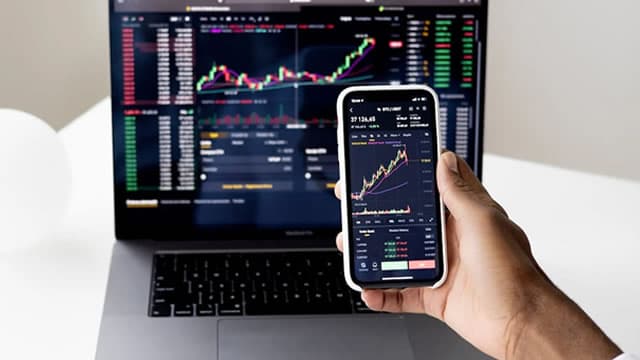
Gold and stocks have seen significant outflows recently, with hedge fund shorts at a relative high and put buying by Goldman Sachs customers hitting never-before-seen levels. I believe that we are witnessing a moment of 'peak fear,' and so I am buying at the current moment, adding to my equity positions.
Stagflation risk has materially increased due to the unprecedented oil shock from the Hormuz Strait closure and recent geopolitical events. My macro dominoes framework—lower inflation, rate cuts, yield curve steepening, small-cap leadership, and S&P 500 bull market—has largely broken down.
Equity markets and oil reacted sharply to Trump's announcement of 'productive' U.S.-Iran talks and a 5-day pause in attacks. I am increasing equity exposure from 60% to 75%, retaining 25% cash to manage volatility amid ongoing geopolitical uncertainty.
Federal Reserve Governor Stephen Miran discusses what it would take for the Fed to raise interest rates.

Rep. James Comer, R-Ky., joins 'Mornings with Maria' to discuss President Donald Trump pausing Iran strikes amid talks, the GOP weighing a $200 billion Pentagon request, and airport chaos from the DHS shutdown and TSA shortages.

The Financial Select Sector SPDR Fund (XLF) edged modestly higher last week.

Burry has repeatedly deactivated or wiped his social media presence after issuing stark bubble or crash warnings, a pattern that dates back several years.
The European Commission's flash consumer-confidence indicator for the eurozone stood at minus 16.3 compared with minus 12.3 in February. A consensus of economists polled by The Wall Street Journal expected a smaller fall to minus 14.1.

For a well-run bank any capital requirement is way too high, while for a poorly run bank no capital requirement is high enough. So, while the Trump administration and the Federal Reserve didn't repeal bank capital requirements altogether last week, the Fed's vote to reduce capital requirements 2.4% for the largest banks is a step in the right, market-oriented direction.

The Dow was up about 1,000 points, or 2.2%, early Monday after President Trump gave markets a reason to hope for a de-escalation of the Iran conflict.

Construction spending in January pulled back, a move "unsurprising" to Kevin Green given typical seasonal slowdowns. What did surprise him and markets was President Trump cooling his rhetoric on military maneuvers in Iran.
President Donald Trump speaks on the Iran conflict in the Middle East and the battle over DHS funding on 'Varney & Co.'
A high-stakes panel at the Exchange conference in Las Vegas revealed a fixed income landscape where, as moderator Katie Greifeld noted, the traditional playbooks for inflation and interest rates are being rewritten. The discussion featured Jeffrey Sherman, deputy CIO of DoubleLine.
U.S. stocks traded higher this morning, with the Dow Jones gaining more than 800 points on Monday.
CNBC's Steve Liesman and Chicago Fed President Austan Goolsbee join 'Squawk Box' to discuss the state of the economy, inflation concerns, impact of the Iran war on the Fed's interest rate outlook, and more.

'Code Red' author and Breitbart social media director Wynton Hall discusses America's AI race against China on 'Mornings with Maria.'

Investors are focusing on the positives from President Trump's Truth Social post pointing to a five-day ceasefire on Iran. Diane King Hall talks about the macro moves investors should stay aware of, with energy taking her prime focus.

Delta, American and United Airlines jump. Travel stocks rally as Trump delays Iran strikes.
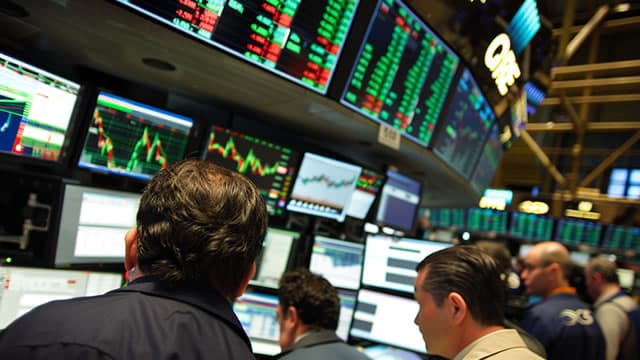
Oil prices in Europe are still over $100 a barrel.